
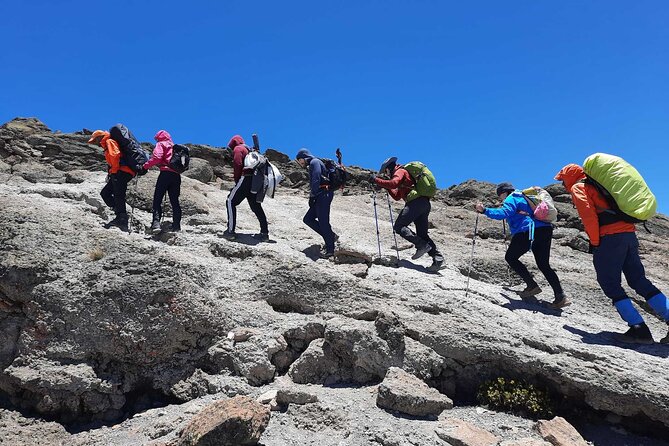
Reviewed · LEMOSHO ROUTE CLIMBS
8 Day Mount Kilimanjaro Trekking Lemosho Route
Kilimanjaro’s Lemosho Route gives you eight days to reach Africa’s highest point, rather than rushing upward on a shorter schedule. You start in forest, cross the Shira Plateau, pass Lava Tower and Barranco Wall, then make the hard midnight push to Uhuru Peak. I like the quieter trail and the built-in acclimatization days, which give your body a fairer chance at high altitude.
I especially like the gentle Shira Plateau day, where you can walk at altitude without gaining much height, and the climb high, sleep lower pattern around Lava Tower and Barranco. The main drawback is simple: this is a demanding camping trek, and accommodation before and after the climb, personal gear, alcohol, and crew tips are not included.
Key points before you book
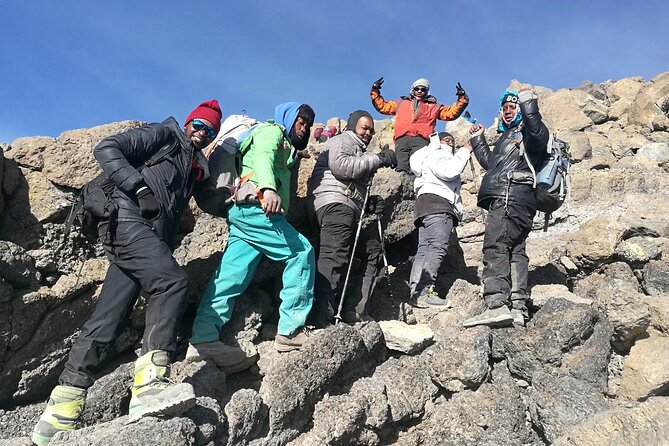
- Eight days helps with altitude: The extra time allows gradual gains and useful rest before the summit attempt.
- The route begins in wildlife country: The forest around Lemosho Glades may require an armed ranger because buffalo, elephant, and other animals live nearby.
- The scenery changes every day: You move from montane forest to heather moorland, semi-desert, alpine desert, and high summit terrain.
- The summit morning is the real test: You leave Barafu Camp between midnight and 2 a.m. and climb scree toward Stella Point.
- The Barranco Wall adds a hands-on section: It is steep, but the climb is relatively short and leads to the Karanga Valley.
- The $2,250 price covers the trek basics: Park fees, meals, taxes, and the organized climb are included, but not lodging before or after the trek or personal equipment.
Why Lemosho is a smart eight-day choice
If you want to climb Kilimanjaro, I would pay close attention to the number of days. Eight days on Lemosho is not a sightseeing holiday with a mountain in the background. It is a serious high-altitude trek, but the schedule is less rushed than many shorter options.
The route gains height in stages. You spend time around the Shira Plateau before reaching the higher camps, then use the Lava Tower and Barranco section to help your body adjust. That matters because altitude sickness is not tied neatly to fitness. A strong hiker can still struggle if the ascent is too quick.
Lemosho is also appealing because the early trail is less used than some other routes. The first day passes through forest near Lemosho Glades, an area where wildlife such as buffalo and elephant may be present. An armed ranger may accompany the group during this part, which is an unusual feature for a mountain trek and a reminder that Kilimanjaro begins in a living wildlife area, not just at a trailhead.
This is a private activity, so only your group participates. That gives you more control over pace and rest stops than a large shared departure. Pickup is offered, and the trek begins and ends in Moshi.
More Lemosho Route climbs:
- Kilimanjaro climb by Lemosho Route (7-day)
★ 5.0 · 651 reviews - 8-Day Small-group Lemosho Kilimanjaro Summit Trekking
★ 5.0 · 186 reviews - Kilimanjaro Climbing Lemosho Route 8 Days.
★ 5.0 · 186 reviews
Day 1: From Moshi to Mti Mkubwa Camp
After breakfast and a briefing, you drive to Lemosho Park Gate. A 4WD vehicle then follows a forest track toward Lemosho Glades before you begin walking through montane forest.
The first day covers about 6 kilometers, with roughly 2 to 5 hours of hiking. You gain from 1,830 meters to 2,650 meters, finishing at Mti Mkubwa, which means big tree. Lunch and dinner are included.
I like this opening because it starts at a measured pace. You do not need to prove anything on day one. The forest offers shade, and the short hiking time leaves room to settle into camp life, meet the crew, and pay attention to how your body feels.
The practical concern is the uneven approach road. The 4WD transfer to the glades is part of the mountain access, not a smooth city ride. Also, because wildlife may be present, you need to follow the ranger and guide instructions rather than wander off for photographs.
Day 2: Crossing the Shira Ridge
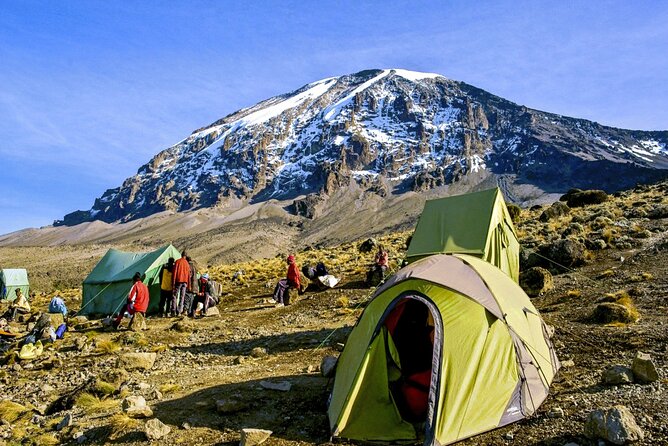
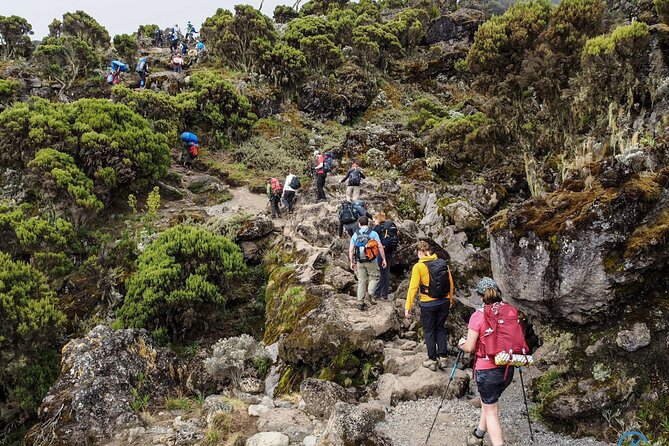
The trail steepens after breakfast as you leave the forest and enter giant heather moorland. Streams, open ground, and the Shira Ridge replace the dense trees. You then descend gently to Shira 1 Camp beside a stream on the Shira Plateau.
This day covers about 8 kilometers in 4 to 5 hours. Elevation rises from 2,650 meters to 3,500 meters. Breakfast, lunch, and dinner are included.
The important change here is not only the scenery. You are now sleeping much higher, and the trail gives you a real first taste of exposed mountain walking. The route remains moderate by Kilimanjaro standards, but you should keep your pace slow and steady.
The Shira Plateau can feel broad and open, with fewer trees to block wind or sun. Carry your rain gear and warm layers in your daypack even if the morning begins pleasantly. The trip operates in all weather, so the right clothing matters more than a perfect forecast.
Day 3: A useful acclimatization day at Shira 2
Day three is one of the best reasons to choose the eight-day version. You walk gently across the plateau to Shira 2 Camp, reaching about 3,850 meters after another 8-kilometer day of 4 to 5 hours.
The route crosses moorland meadows and passes streams. Additional walks on the plateau are available, making this a flexible acclimatization day rather than a hard push toward the next camp.
I would use this day conservatively. The temptation is to treat a relatively easy trail as a chance to walk farther, but altitude rewards patience. Rest when you need to, drink regularly, and tell the guide if you develop a headache, nausea, unusual tiredness, or trouble sleeping.
This is also a good point to check your equipment. You still have time to adjust clothing, pack weight, sleeping arrangements, and foot care before the trail becomes more demanding.
More treks and hikes around Kilimanjaro:
- Kilimanjaro climb, Machame Route (7-day)
★ 5.0 · 262 reviews - Climbing Kilimanjaro – Machame Route
★ 5.0 · 170 reviews - Climbing Kilimanjaro through 7 days Machame Route
★ 5.0 · 151 reviews - Kilimanjaro climb, Lemosho Route (8-day)
★ 5.0 · 148 reviews
Day 4: Lava Tower and the descent to Barranco
Day four is the route’s key altitude-training day. From Shira, you head east along a ridge and pass the junction toward Kibo, Kilimanjaro’s main summit cone. The trail then turns southeast toward Lava Tower, also called the Shark’s Tooth, at about 4,650 meters.
After Lava Tower, the route passes a junction toward Arrow Glacier before descending to Barranco Camp. You begin around 3,850 meters and finish near 4,000 meters, covering about 8 kilometers in 5 to 6 hours.
The value is in the day’s shape: you climb high, then sleep lower than your highest point. Even though the camp elevation is not much higher than where you started, your body has spent time at a greater altitude. That makes this more than a scenic walk.
The terrain shifts into semi-desert, with less vegetation and a harsher feel. The air may be thinner, and the trail can feel slow. Do not judge the trek by distance alone. At this height, a short climb can take real effort.
Day 5: The Barranco Wall and Karanga Valley
After breakfast, you leave Barranco and climb the Barranco Wall. The trail is steep and hands-on in places, then continues toward Karanga Valley and the junction with the Mweka Trail.
The distance is about 5 kilometers, with 3 to 5 hours of climbing. You rise only from about 4,000 meters to 4,050 meters, but the modest elevation gain does not mean an easy day. This section is in alpine desert.
The Barranco Wall is one of the route’s memorable parts because it adds a more physical scramble to an otherwise steady mountain walk. You need to watch your footing and move at the guide’s pace. It is not the place to rush for a photograph or push around another hiker.
Karanga Camp gives you a shorter day before the final approach to Barafu. Breakfast, lunch, and dinner are included, and the limited distance leaves some time to rest. That rest is valuable. Your main goal is not to arrive early at every camp. Your main goal is to arrive at summit morning with enough strength left.
Day 6: Barafu Camp and preparation for the summit
The trail climbs from Karanga to Barafu Camp, covering about 4 kilometers in 3 to 4 hours. You rise from roughly 4,050 meters to 4,700 meters, crossing alpine desert.
Barafu is the launch point for the summit attempt. Once you arrive, you have completed the South Circuit, which gives views of the summit from different angles. The schedule calls for camp, rest, dinner, and preparation for the climb ahead.
This is one of the shortest walking days, but it may not feel easy. Barafu is high, and even simple tasks can take more effort. Organize your warm layers, headlamp, water, snacks, and trekking poles before resting. Keep anything you need for the early start close at hand.
The schedule does not include accommodation before or after the trek, but camping during the mountain program is part of the organized experience. You should confirm exactly what camping equipment the operator supplies before booking, since personal trekking gear is not included.
Day 7: Stella Point, Uhuru Peak, and the long descent
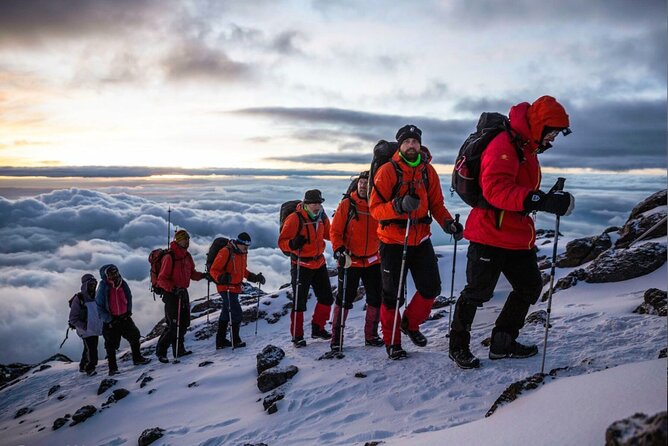
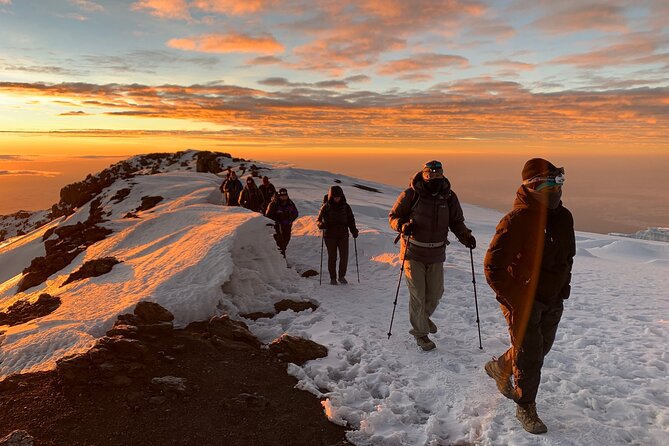
Summit day begins very early, between midnight and 2 a.m. You climb northwest between the Rebmann and Ratzel glaciers, moving slowly through heavy scree toward Stella Point on the crater rim.
This is the most physically and mentally demanding part of the route. The night start means you climb in darkness, and the loose rock makes each step feel deliberate. At Stella Point, you stop briefly and may see sunrise over the mountain. Faster hikers may reach Uhuru Peak in time for sunrise, but the schedule should not make you race.
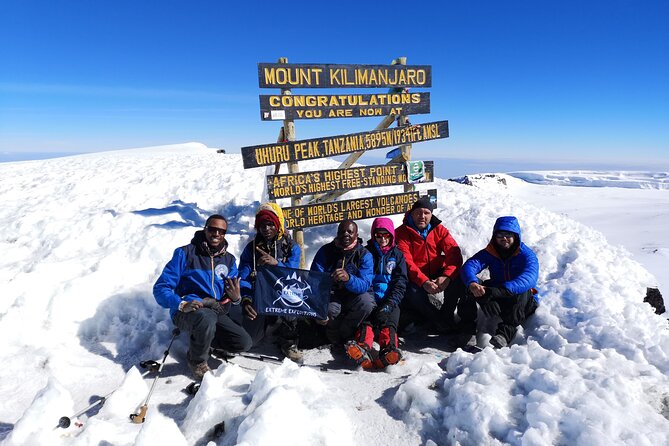
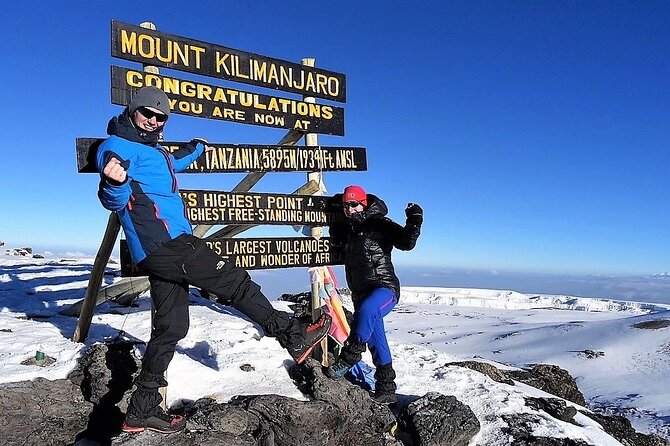
From Stella Point, the trail can remain snowy for the final hour to Uhuru Peak. At 5,895 meters, the summit is the highest point on Kilimanjaro and the highest point in Africa.
The supplied schedule lists about 6 hours for this part of the trek and then continues the descent toward Mweka. Treat the day as a major effort rather than a standard half-day walk. The summit ascent, return from the crater rim, and descent all place demands on tired legs.
Once you leave the summit, the route descends toward Mweka. Going down can be hard on knees and feet, especially after the loose scree of the upper mountain. Trekking poles are useful here. Keep warmer clothing and rain protection accessible because conditions can change as you lose altitude.
Day 8: Mweka Gate and the return to Moshi
After breakfast, you continue down to Mweka Park Gate. The walk covers about 10 kilometers and takes around 3 to 5 hours, descending from about 3,090 meters to 1,680 meters.
The habitat changes back to forest. Lower down, the trail may be wet and muddy, so gaiters and trekking poles are practical rather than decorative. You will probably be comfortable in shorts and a T-shirt at times, but keep rain gear and warmer clothing in your daypack.
At Mweka Gate, you receive summit certificates. A Monkey Adventures vehicle then takes you back to your Moshi hotel, with the drive taking about 60 minutes.
This final transfer is a welcome bit of comfort after several days outside. Remember that the program ends back at the meeting point in Moshi, but your hotel stay before and after the trek is not included in the price.
What the $2,250 price really covers
At $2,250 per person, the price includes the main operational costs of the trek: fees and taxes, breakfast for seven days, lunch for eight days, and dinner for seven days. The organized route, park access, crew support, and return transfer are part of the experience as described.
That is reasonable value for an eight-day Kilimanjaro program if you already have suitable personal equipment and do not need the operator to arrange extra nights in Moshi. The longer schedule is important here. You are paying not only for distance, but also for additional acclimatization time and a better-paced approach to the summit.
Budget separately for:
- Accommodation before and after the trek
- Personal trekking clothing and equipment
- Alcohol and personal purchases
- Tips for the crew
Ask about supplied camping equipment and the precise crew arrangement before paying. The supplied details confirm that personal trekking gear and crew tips are excluded, but they do not give a full equipment inventory.
Food, timing, and practical comfort
Breakfast, lunch, and dinner are included on the first seven days. Day eight includes breakfast only. Vegetarian meals are available if requested at booking, and you should provide any other dietary requirements at that time.
The route operates in all weather. A rain shell, warm layers, gloves, hat, sturdy footwear, and a way to keep small items dry are sensible priorities. The lower forest can be muddy, while the upper mountain can bring cold, wind, snow, and loose rock.
Most people can participate, but this is still a high-altitude climb. The provider allows children only at the child rate when they share with two paying adults, and children must be accompanied by an adult. The information does not give a minimum age or a medical screening policy, so ask before booking if either point matters to your group.
Confirmation is provided at booking, and the activity is available every day during the stated operating period. Free cancellation is available up to 24 hours before the local start time. Changes or cancellations inside that window are not accepted for a refund.
Who should choose this trek?
I would choose this route if you want a serious but carefully paced Kilimanjaro attempt, especially if you prefer a private group and value more acclimatization time. The quieter opening, Shira Plateau walks, Barranco Wall, and full summit schedule give you a varied route rather than a simple uphill march.
It suits people who are comfortable camping for a week and who understand that the summit is not guaranteed by fitness alone. You need patience, proper gear, and a willingness to turn back or slow down if altitude symptoms become serious.
It is less suitable if you want a hotel-based mountain holiday, dislike cold early starts, or expect every cost to be included. The $2,250 price is only part of your trip budget once you add lodging, equipment, and tips.
Should you book the Lemosho Route?
Yes, if your priority is a longer acclimatization schedule and a private climb with a strong variety of terrain. The eight-day format gives you a better rhythm than a rushed itinerary, and the Shira Plateau plus Lava Tower section adds useful time at altitude before the summit attempt.
Book with clear expectations. You will walk in poor weather, sleep at high camps, start the summit climb around midnight to 2 a.m., and handle steep or loose terrain. Confirm the equipment supplied, arrange Moshi accommodation separately, and budget for crew tips. If you can accept those conditions, this is a well-paced way to approach Uhuru Peak.
FAQ
Where does the trek start and finish?
The trek starts in Moshi, Tanzania, and ends back at the meeting point in Moshi. A vehicle takes you from Mweka Gate to your Moshi hotel in about 60 minutes.
How long is the Kilimanjaro trek?
The experience lasts approximately eight days.
Is pickup available?
Yes. Pickup is offered for the experience.
Is this a private trek?
Yes. Only your group participates in the activity.
How much does the trek cost?
The listed price is $2,250 per person.
Are meals included?
Yes. Breakfast, lunch, and dinner are included during the trek according to the daily schedule. Day eight includes breakfast.
Is vegetarian food available?
Yes. A vegetarian option is available if you request it when booking. You should also provide any other dietary requirements at that time.
Is accommodation included?
Accommodation before and after the trek is not included. The supplied information does not provide a full inventory of the camping equipment included during the mountain program.
What time does the summit attempt begin?
The summit climb begins very early, between midnight and 2 a.m. on day seven.
What happens after reaching the summit?
After reaching Uhuru Peak, you descend toward Mweka. On day eight, you continue to Mweka Park Gate, receive your summit certificate, and return by vehicle to Moshi.
More Eight-Day Trips in Kilimanjaro
- Climbing Kilimanjaro through 8 days Lemosho Route
★ 5.0 · 52 reviews - Kilimanjaro climb, Northern Circuit route (8-day)
★ 5.0 · 40 reviews - 8 Days Kilimanjaro Hike via Lemosho Route
★ 5.0 · 39 reviews - 8 Days Climbing Mt.Kilimanjaro (Lemosho Route)
★ 4.5 · 37 reviews
Just added around Kilimanjaro
- 6 days Machame route climbing Mt.Kilimanjaro★ 5.0 · 8 reviews
- machame route★ 5.0 · 16 reviews
- Mt Kilimanjaro 6 days Marangu route hike★ 5.0 · 3 reviews
- Private Cycle to Kilimanjaro Bike Park Safari★ 5.0 · 6 reviews
- West Kilimanjaro cycling Adventures★ 4.5 · 8 reviews
- Kilimanjaro Climb • Marangu Route ~ 9 Day★ 5.0 · 4 reviews
- 3 Days Private E-Bike Tour in West Kilimanjaro★ 5.0 · 3 reviews
- Kilimanjaro Climb • Machame Route ~ 10 Day★ 5.0 · 6 reviews