
Reviewed · LEMOSHO ROUTE CLIMBS
8 Days Kilimanjaro Hike via Lemosho Route
Kilimanjaro’s Lemosho Route gives you the mountain’s grandest approach: rainforest at the start, wide Shira Plateau views, glaciers above Barranco, and a sunrise summit at Uhuru Peak. The eight-day plan moves slowly enough to give your body time to adjust, while the western approach usually feels quieter and more scenic than the shorter routes.
I like two things here. First, the climb includes the valuable high-and-low rhythm of Lava Tower at 4,640 meters followed by a descent to Barranco. Second, Nafika’s team puts real attention on daily health checks, treated water, warm meals, and camp comfort. The main caution is simple: this remains a hard climb, and summit day can last about 13 hours.
Key points at a glance
- Lemosho begins in rainforest at 2,360 meters, then crosses moorland, volcanic rock, upland desert, and glacier country.
- The Lava Tower day helps with acclimatization, taking you high for lunch before dropping you to Barranco Camp.
- Summit day starts around midnight, with 4 to 5 hours to Stella Point and another hour to Uhuru Peak.
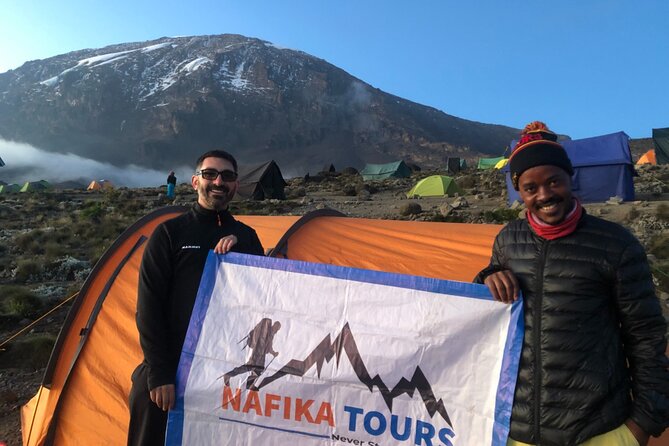
- Nafika supplies camping equipment, including Mountain Hardware tents, sleeping pads, sleeping bags, tables, and chairs.
- Daily health checks and emergency oxygen are included, along with a first aid kit and experienced mountain guides.
- The $2,350 price includes major trip costs, including two hotel nights in Moshi, meals, transport, water, staff, and park-related fees.
Why the eight-day Lemosho Route works well
Lemosho is a strong choice if you want more than a direct march toward the summit. The route approaches Kilimanjaro from the west, then curves around the mountain toward the southern circuit. That gives you changing views and a gradual rise through several climate zones.
The eight-day schedule matters. Kilimanjaro is not a technical climb, but altitude is the serious challenge. A longer itinerary gives you more walking time at moderate heights before the final push. You still need fitness and patience, but this plan is more forgiving than a rushed route.
You begin at Londorossi Gate, at about 2,360 meters, and eventually reach Uhuru Peak at 5,895 meters. That is a large altitude gain, so the guide team’s pace and health checks are not minor details. They are central to the trip.
The group limit is 20 people. That is not an intimate private trek, but it gives you a reasonable chance of joining a smaller working group within the wider party. Recent groups have included families, siblings, and people ranging from 20 to 69 years old. Age alone is not the deciding factor. Your fitness, preparation, and response to altitude matter more.
More Lemosho Route climbs:
- Kilimanjaro climb by Lemosho Route (7-day)
★ 5.0 · 651 reviews - Kilimanjaro Climbing Lemosho Route 8 Days.
★ 5.0 · 186 reviews - 8-Day Small-group Lemosho Kilimanjaro Summit Trekking
★ 5.0 · 186 reviews
Day 1: Londorossi Gate to Big Tree Camp
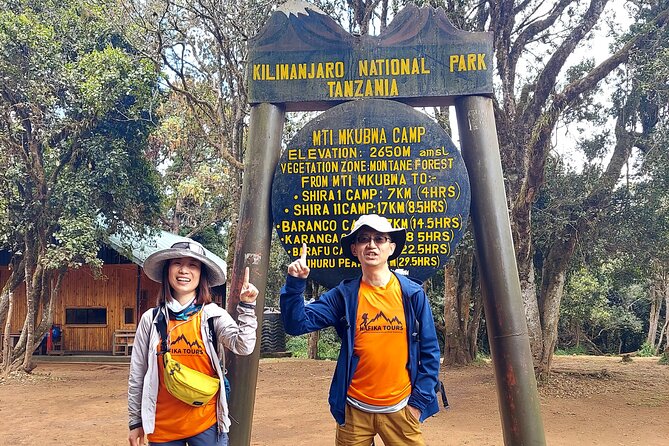
Pickup is scheduled around 8:00 a.m. after breakfast, followed by a private transfer to Lemosho Gate. Nafika handles the entry formalities, then you begin walking through the forest toward Big Tree Camp.
This is a gentle introduction in terms of distance, with about four hours of hiking. The forest is the first big change from ordinary road travel. You are walking beneath thick vegetation, with the mountain still ahead and the air cooler than in Moshi.
The short first day is useful. You have time to settle into your boots, learn the group’s walking pace, and see how your body handles the first increase in altitude. Do not treat it as a warm-up to ignore. Keep your pace easy and drink steadily.
You sleep at Big Tree Camp. Camping equipment is provided, including tents, sleeping bags, and sleeping pads. The company also supplies tables and chairs, a small comfort that becomes surprisingly welcome after a wet or tiring day.
Day 2: Shira 1 and the first wide mountain views
The trail leaves the forest and reaches grassy moorland and heather, scattered with volcanic rock. The feel changes quickly. You have more open sky, fewer trees, and views toward Kibo Peak rising above the clouds.
The day covers about 8.5 kilometers and takes roughly five hours. Some sections are steep, though the schedule presents them as manageable for a reasonably fit climber. Your destination is Shira 1 Camp.
This is where the Lemosho Route begins to show its character. You are not simply following a narrow path uphill. You are crossing a high plateau with broad views and unusual volcanic forms. The open ground can also make weather feel more exposed, so keep rain and warm layers close.
The altitude gain begins to make itself known. Walk slowly, even if you feel strong. The local climbing phrase pole pole, meaning slowly, is good advice here. The goal is not to arrive first. The goal is to keep your body working well for the days ahead.
Day 3: Shira Plateau and the Northern Ice Fields
Day three remains on the Shira Plateau, with about eight kilometers of walking and four hours on the trail. From this western side, you can see toward the Northern Ice Fields and catch less familiar views of Kibo.
The route continues across moorland and helps your acclimatization through steady, controlled climbing. You spend the night at Shira 2 Camp, where the guides plan a short acclimatization walk before dinner.
That extra walk is a useful part of the schedule. It lets you gain a little more height, then return to camp rather than sleeping at the highest point of the day. This high-walking, lower-sleeping pattern is one of the strongest features of the route.
The plateau can feel vast and quiet, but do not mistake the moderate walking time for an easy day. You are already at altitude, and sleep may not feel normal. Eat what you can, report headaches or nausea promptly, and let the guides check your condition.
More treks and hikes around Kilimanjaro:
- Kilimanjaro climb, Machame Route (7-day)
★ 5.0 · 262 reviews - Climbing Kilimanjaro – Machame Route
★ 5.0 · 170 reviews - Climbing Kilimanjaro through 7 days Machame Route
★ 5.0 · 151 reviews - Kilimanjaro climb, Lemosho Route (8-day)
★ 5.0 · 148 reviews
Day 4: Lava Tower, 4,640 meters, then Barranco
This is one of the most important days of the climb. You ascend through upland desert and reach Lava Tower at 4,640 meters, beneath the glacier country of the Western Breach. The day covers about 10 kilometers and takes around seven hours.
Lava Tower is the highest point you reach that day. Lunch there gives you a real test of your response to altitude. Then comes the smart part: you descend to Barranco Camp at about 3,960 meters.
You may feel tired, cold, or headachy at Lava Tower. That does not automatically mean something is wrong, but it is exactly why the guides monitor you. Nafika says guides conduct regular health checks and carry emergency oxygen and a first aid kit. Those provisions cannot remove altitude risk, but they give the team tools to respond.
Barranco Camp sits below tall cliffs with broad views toward the plains. The setting is dramatic without requiring you to stop and pose every five minutes, though you probably will. Keep your camera handy, but protect batteries from the cold.
The drawback is the length and altitude change. Seven hours is a full day, and the descent can be hard on knees. Good trekking poles and careful footwork will help.
Day 5: Barranco Wall to Karanga Valley
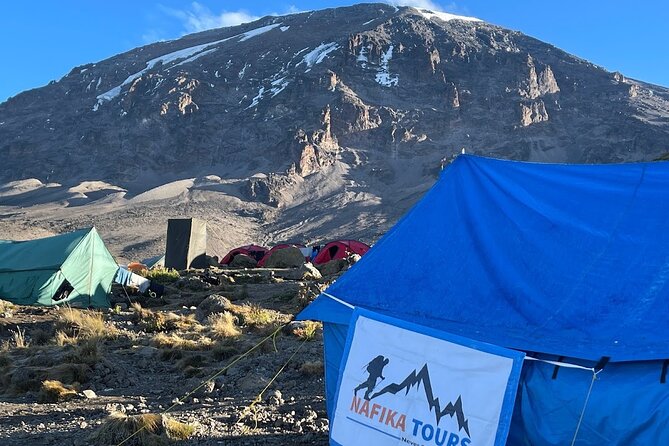
After breakfast, you climb the Barranco Wall. It looks imposing from camp, but the route is described as easier than its appearance suggests. You pass beneath the Heim and Kersten glaciers, then continue toward Karanga Valley.
This is a shorter day of about five hours. The path still rises and falls, and you will notice the effort of moving at altitude. From camp, Mawenzi’s jagged peaks appear to the east, while the glaciers above give the day its mountain drama.
A hot lunch is served at camp, followed by time to rest. That quiet afternoon is not wasted time. Your summit attempt begins soon, and sleep and food now are part of your summit preparation.
For climbers who feel strong, the guides may offer an afternoon acclimatization walk to around 4,200 meters, followed by a return to camp. Take this option only if your guide thinks it makes sense. You do not gain anything by proving how tough you are on a day designed to conserve energy.
Day 6: Barafu Camp and the long wait
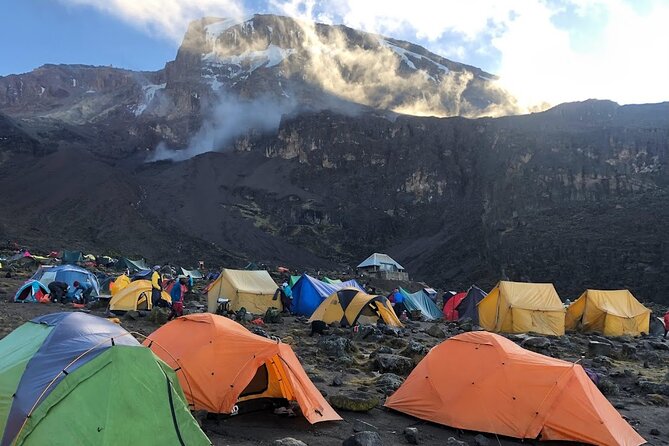
The walk to Barafu Camp covers about four kilometers and takes around four hours. The route passes through alpine desert, with views of both Kibo and Mawenzi peaks.
Barafu is the launch point for the summit push. Lunch is provided, then the plan is to spend a quiet afternoon resting in your tent. Dinner is early, and alarms are set for around midnight.
This day can feel strange. You have walked only a short distance, yet the main event is close enough to occupy every thought. Use the afternoon well. Organize your layers, headlamp, water, gloves, snacks, and camera before lying down.
Do not expect perfect sleep. A short nap still helps. The important thing is to stay calm and conserve energy. Your guides and porters will prepare camp, but your personal equipment still needs to be easy to reach in the dark.
Day 7: Stella Point, Uhuru Peak, and the descent
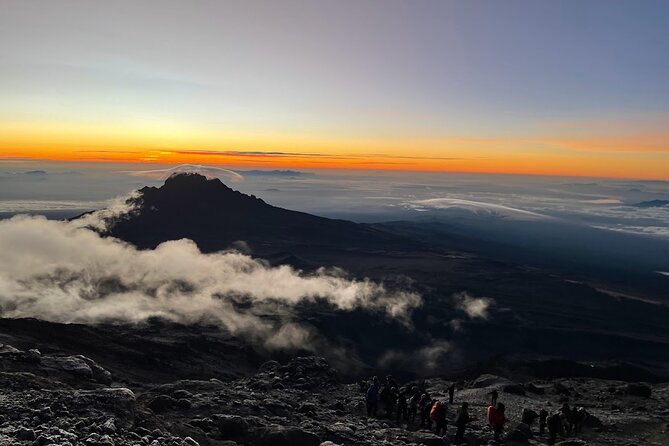
Summit day begins around midnight with tea and a light breakfast. You then start the steep climb toward the crater rim, gaining a great deal of height over a short distance.
The climb to Stella Point at 5,756 meters takes about four to five hours. The timing aims to put you on the rim around sunrise. This is the coldest and most demanding section for many climbers, with darkness, fatigue, and thin air all working against you.
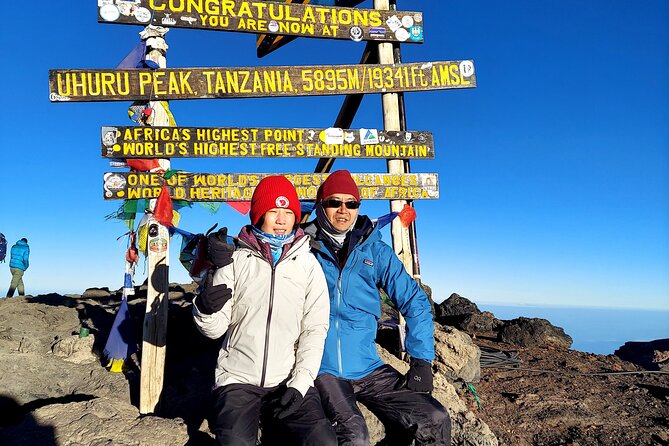
From Stella Point, you continue for about an hour to Uhuru Peak at 5,895 meters, the highest point in Africa. The final stretch may look close on a map, but altitude makes every step count. Move slowly and follow the guide’s pace.
At the summit, you have time for photographs and a brief celebration before returning toward Barafu Camp for lunch and rest. The summit day is listed at about 13 hours, so it is not finished when you reach the top. The descent continues to a lower camp, with the itinerary placing the following morning’s final section through the forest.
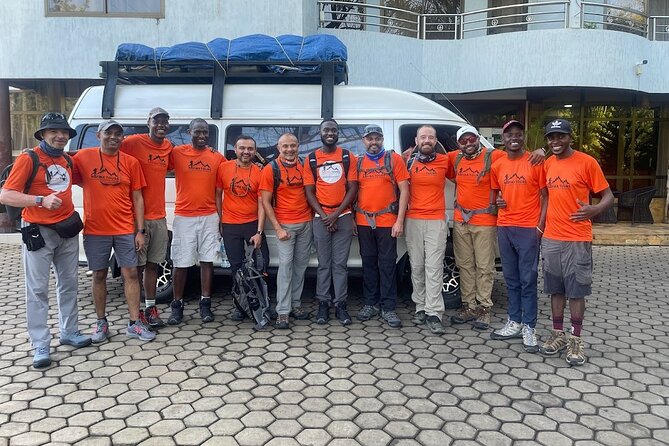
This is where a supportive guide team matters most. Recent climbing groups have worked with guides named Alyce, Meshakii, Eli, Abdala, Inocent, and Musa. Guide assignments can change, but the consistent point is that you should expect close pacing, health checks, and help when fatigue or fear sets in.
Day 8: Mweka Gate and the return to Moshi
After breakfast, you make the final descent toward Mweka Gate. The walk covers about 14 kilometers and takes roughly five hours, passing back into montane forest.
The scenery changes fast on the way down. After days of volcanic rock, open plateau, and alpine desert, trees and warmer air feel almost luxurious. Your knees may disagree, so keep a controlled pace and use trekking poles if you have them.
At Mweka Gate, you collect your certificates and meet the private car for the return to your hotel. A cold drink and a hot shower are not glamorous rewards, but after eight days on the mountain they may be the best part of the afternoon.
The package includes two hotel nights in Moshi. The provided schedule clearly includes a hotel stay before the climb and a return to the hotel afterward, giving you a more comfortable start and finish than a mountain-only arrangement.
What the $2,350 price includes
At $2,350 per person, the cost covers much of what can make a Kilimanjaro trip expensive. You receive private transportation, two hotel nights in Moshi, camping equipment, meals, treated water, park-related fees, guides, porters, and crew wages.
The food allowance is eight breakfasts, eight lunches, and seven dinners. That matches the mountain schedule, though you should confirm the exact hotel meal arrangement before departure if you have special dietary needs.
Equipment includes Mountain Hardware sleeping tents, sleeping pads, sleeping bags, tables, and chairs. Tea breaks with food and a proper table have been part of the camp service described by recent groups, which is a meaningful comfort compared with carrying only a thermos and eating wherever you stop.
The company also includes emergency oxygen and a first aid kit. These are safety provisions, not guarantees of a summit. You still need to disclose symptoms quickly and accept the guide’s advice if your condition changes.
A Tanzanian visa is not included and is listed at $50. That is the clearest extra cost provided. You should also budget for personal items and any tip expected by the mountain crew, since those costs are not specified here.
Food, camping, and the human side of the climb
The practical comforts are stronger than the bare price might suggest. A tent, sleeping bag, sleeping pad, table, and chairs mean you are not improvising a camp setup at the end of each day.
The crew is another important part of the experience. The price includes stated wages for guides and porters, and the company presents fair payment as part of its service. Recent groups have especially valued guides who adjusted the pace, checked health, answered questions, and helped climbers with fears such as heights.
The chef also receives repeated praise for varied meals and small surprises. That matters because appetite often falls at altitude, and a hot meal can make the next morning feel possible.
You should still prepare for basic mountain conditions. This is camping at high altitude, not a lodge-based holiday. The equipment reduces hassle, but it does not remove cold nights, tired legs, limited privacy, or the need to carry your personal day gear.
Who should book this climb?
This route suits you if you want Kilimanjaro’s best scenery and can commit to a long, physically demanding week. It is a good fit for people who prefer a slower altitude schedule, want a local operator, and value guide support and organized camp service.
It may also suit families and mixed-age groups, provided everyone has moderate fitness and understands that the summit day is serious. A 69-year-old climber has reached the summit with this itinerary, but that should encourage preparation, not create false confidence.
You should think twice if you dislike camping, struggle with long walking days, or want a relaxed sightseeing holiday. The route includes steep sections, high-altitude nights, a midnight start, and a 13-hour summit day.
Booking is flexible up to 24 hours before the scheduled start, with a full refund if you cancel by then. Cancellations or changes within 24 hours are not accepted for a refund, and cut-off times use local Tanzanian time.
Should you book Nafika’s eight-day Lemosho climb?
I would choose this trip if your priority is a scenic route, a careful acclimatization plan, and a package that includes the major mountain costs. The combination of Shira Plateau, Lava Tower, Barranco, and the southern approach gives you far more visual variety than a quick up-and-down route.
The strongest reasons to book are the eight-day schedule, daily health checks, emergency equipment, included camping setup, and the repeated emphasis on attentive guides. The main reasons to hesitate are the demanding summit day, group size of up to 20, and the fact that a $2,350 package does not cover your visa or every personal expense.
Before paying, confirm your exact pickup point, hotel dates, equipment sizes, dietary needs, and guide assignment. If you are fit, patient, and ready for cold nights and slow steps, this is a well-rounded way to approach Kilimanjaro.
FAQ
How long is the Kilimanjaro climb?
The experience lasts approximately eight days, including the mountain trek, transport, and hotel arrangements in Moshi.
Which route does the climb use?
The climb follows the Lemosho Route, beginning at Londorossi Gate on the western side of Kilimanjaro and circling toward the southern approach.
What is the highest point reached?
The summit is Uhuru Peak at 5,895 meters. On summit day, you first reach Stella Point at 5,756 meters before continuing to Uhuru Peak.
What time does summit day begin?
You are scheduled to wake around midnight for tea and breakfast, then begin the summit climb.
Is camping equipment included?
Yes. The package includes Mountain Hardware sleeping tents, sleeping pads, sleeping bags, tables, and chairs.
Are meals included?
Yes. The package lists eight breakfasts, eight lunches, and seven dinners, along with treated water during the trek.
Are guides and porters included?
Yes. The package includes professional guides, porters, and mountain crew wages.
Is airport or hotel pickup offered?
Pickup is offered, and the itinerary describes a morning hotel pickup for transfer to Lemosho Gate. The stated meeting point is Kilimanjaro International Airport.
What is not included in the price?
A Tanzanian visa is not included and is listed at $50. The provided details do not list other personal expenses.
What is the cancellation policy?
You can cancel at least 24 hours before the experience start time for a full refund. Cancellations or changes within 24 hours are not accepted for a refund.
More Eight-Day Trips in Kilimanjaro
- Climbing Kilimanjaro through 8 days Lemosho Route
★ 5.0 · 52 reviews - Kilimanjaro climb, Northern Circuit route (8-day)
★ 5.0 · 40 reviews - 8 Days Climbing Mt.Kilimanjaro (Lemosho Route)
★ 4.5 · 37 reviews - 8 Days Great Wildebeest Migration – Mara River Crossing
★ 5.0 · 28 reviews
Just added around Kilimanjaro
- 6 days Machame route climbing Mt.Kilimanjaro★ 5.0 · 8 reviews
- machame route★ 5.0 · 16 reviews
- Mt Kilimanjaro 6 days Marangu route hike★ 5.0 · 3 reviews
- Private Cycle to Kilimanjaro Bike Park Safari★ 5.0 · 6 reviews
- West Kilimanjaro cycling Adventures★ 4.5 · 8 reviews
- Kilimanjaro Climb • Marangu Route ~ 9 Day★ 5.0 · 4 reviews
- 3 Days Private E-Bike Tour in West Kilimanjaro★ 5.0 · 3 reviews
- Kilimanjaro Climb • Machame Route ~ 10 Day★ 5.0 · 6 reviews