
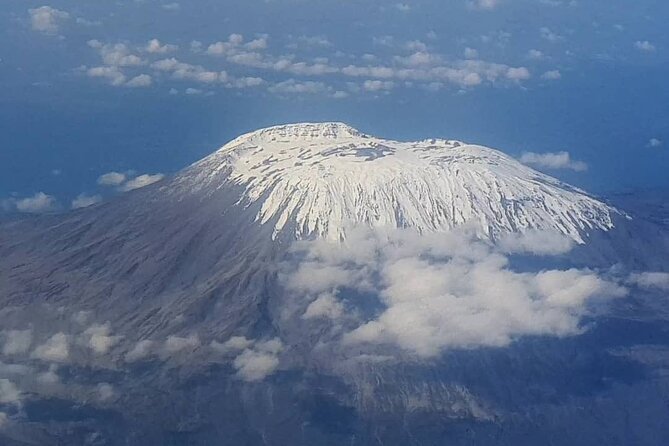
Reviewed · LEMOSHO ROUTE CLIMBS
Mountain Kilimanjaro Climbing 8 Days Lemosho Route
The most memorable part of this climb is its changing scenery. You begin in thick forest, cross the wide Shira Plateau, pass lava formations and glaciers, then reach Kilimanjaro’s summit before sleeping in the crater. That is a lot of mountain in eight days, and the route gives you time to adjust to the altitude.
I like the slow Lemosho approach, which gives your body several days to gain height rather than rushing straight upward. I also like the practical setup: included meals, sleeping equipment, guides, cooks, porters, and transport back to Moshi. The team is limited to 15 people, so you are not part of a giant marching line.
The main caution is the altitude and the hard summit schedule. The route is not technical climbing, but it includes steep rock, long hours, cold nights, and a summit push after very little sleep. The Crater Camp night adds something special, but it also makes an already demanding climb tougher.
Key things to know before climbing Lemosho
- The Shira Plateau is the scenic heart of the route: Expect grassy moorland, heather, volcanic rock, and views of Kibo above the clouds.
- You climb high, then sleep lower: The route reaches Lava Tower at 4,640 meters before dropping to Barranco Camp, a useful altitude-adjustment pattern.
- The Barranco Wall is steep but not technical: You scramble over rock for a long, tiring section, with glaciers above and wide views below.
- Crater Camp changes the summit day: After reaching Uhuru Peak, you descend into the crater for an overnight near Furtwangler Glacier.
- The package is built for supported trekking: Meals can be adjusted to your dietary needs, and sleeping gear and other equipment are provided.
- The hardest stretch comes late: Barafu Camp, the pre-dawn summit start, Uhuru Peak, and Crater Camp create a very full finish.
Why the eight-day Lemosho Route works well
Kilimanjaro is not a technical mountain on this route, but it is a serious endurance climb. The key challenge is altitude. You move from about 2,100 meters at the trailhead to the summit area, with the itinerary including camps at 2,650, 3,500, 3,960, 3,963, and 4,640 meters.
I like that the route does not rush you immediately toward the upper mountain. The first days let you walk through several climate zones and spend time on the Shira Plateau before the final ascent. That steady pattern is one reason Lemosho is known for a high completion rate.
You will still need a moderate level of fitness. You should be ready to walk for several hours a day, manage steep sections, sleep in mountain camps, and keep moving when the air gets thin. The fact that equipment and sleeping gear are provided makes packing easier, but it does not make the climb easy.
The group limit of 15 is also worth noting. That is large enough to share the cost and social side of a guided climb, yet small enough for the guide team to keep track of the group more easily. Previous trips have used guides such as Timothy, and Oscar Swai is identified with the operating company and its airport arrangements.
More Lemosho Route climbs:
- Kilimanjaro climb by Lemosho Route (7-day)
★ 5.0 · 651 reviews - 8-Day Small-group Lemosho Kilimanjaro Summit Trekking
★ 5.0 · 186 reviews - Kilimanjaro Climbing Lemosho Route 8 Days.
★ 5.0 · 186 reviews
Day 1: Forest trail to Mti Mkubwa
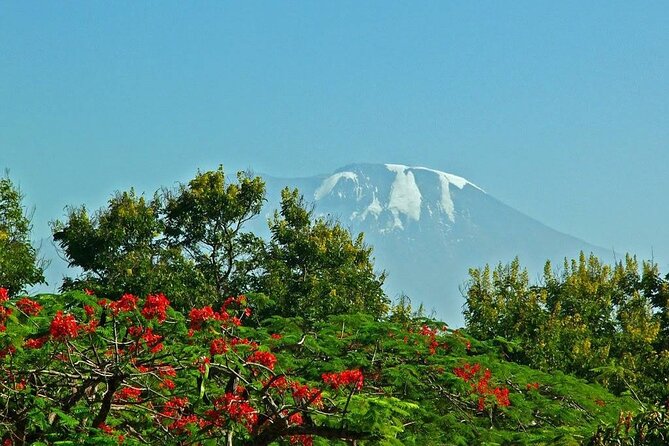
Your climb begins at roughly 2,100 meters on the lower northern side of Kilimanjaro. The trail winds through lush forest, then gradually heads toward the higher slopes and the Shira Plateau.
The first camp is Mti Mkubwa at about 2,650 meters. The walking time is listed as about three hours, while the route description allows four to five hours, so you should treat the schedule as an estimate rather than a promise.
This is a good opening day because the forest gives you shade and a gentle introduction to the mountain. You will also get your first feel for the group pace, camp routine, meals, and support team. Do not make the common mistake of treating this as an easy sightseeing walk. Use the day to settle into slow, regular movement.
Pickup is offered, and the meeting information lists Kilimanjaro International Airport at 7:00 a.m. as the start point. Confirm the precise pickup plan before arrival, especially if your flight schedule does not match that time.
Day 2: Across the Shira Plateau to Shira 1
Day two changes the character of the climb. The forest gives way to grassy moorland and heather, with volcanic rock formations scattered across the plateau. The open setting lets you see farther, but it also leaves you more exposed to weather.
The destination is Shira 1 Camp. From here, Kibo Peak may appear to float above the clouds, a striking first view of the upper mountain. You gain a fair amount of height today, and parts of the trail are fairly steep.
The seven-hour walking time makes this a proper hiking day. I would use it to find a comfortable pace rather than trying to stay with the fastest person in the group. Your guide’s job is not only to lead the trail but also to help you manage effort as the air becomes thinner.
The Shira Plateau is one of the strongest reasons to choose this route. You get broad views and a sense of Kilimanjaro as a volcanic mountain, not simply a summit reached by a narrow path.
Day 3: Shira 1, Shira 2, and an acclimatization walk
The third day continues across the Shira Plateau toward Shira 2 Camp. You will see the northern ice fields from the western side and gain unusual views of Kibo. The route remains scenic, but the steady climb gives the day a clear purpose: helping your body adjust.
An afternoon acclimatization walk takes you higher before you return to camp for dinner and the night. This is a smart part of the schedule. You gain height during the day, then sleep at a lower camp than your highest point, giving you a chance to test how you respond.
The day is listed at about seven hours, so you will need patience. The open moorland can feel repetitive if you expect a new dramatic sight every few minutes, but that steady walking is useful preparation for the harder upper sections.
Pay attention to headaches, unusual fatigue, nausea, or poor balance. The supplied information does not set out a medical protocol, so ask your guide how the team handles altitude symptoms before you leave.
More treks and hikes around Kilimanjaro:
- Kilimanjaro climb, Machame Route (7-day)
★ 5.0 · 262 reviews - Climbing Kilimanjaro – Machame Route
★ 5.0 · 170 reviews - Climbing Kilimanjaro through 7 days Machame Route
★ 5.0 · 151 reviews - Kilimanjaro climb, Lemosho Route (8-day)
★ 5.0 · 148 reviews
Day 4: Lava Tower and the descent to Barranco
Day four is one of the most useful days on the route. You ascend toward the upland desert and walk along lava ridges beneath the western glaciers. The high point is Lava Tower at 4,640 meters, where you stop for lunch.
After reaching that height, you make a steep descent to Barranco Camp at about 3,960 meters. This is the classic climb-high, sleep-lower pattern, and it gives your body valuable exposure to altitude without putting you at the same height overnight.
Barranco Camp sits at the base of the Great Barranco Valley, below tall cliffs and with broad views toward the plains. The walk itself is listed at about four hours, but the height gain and descent can make it feel harder than the time suggests.
This is also where the scenery becomes more severe. Vegetation thins, the rock becomes more dominant, and the glaciers feel close. Bring warm layers and keep your water accessible. Lunch at Lava Tower is not just a scenic break. It is part of the day’s altitude strategy.
Day 5: The Barranco Wall and Karanga Camp
The day begins by dropping into the Great Barranco, then turning upward toward the Barranco Wall. This section involves climbing over rock. It is not technical climbing, but it is steep, long, and tiring.
You pass below the Heim and Kersten Glaciers before heading toward Karanga Valley. From the valley, the route climbs again to Karanga Camp at 3,963 meters. The listed walking time is about four hours, though the rock work and repeated climbs may make the day feel more demanding.
A second acclimatization walk may take strong climbers to around 4,200 meters in the afternoon, followed by a descent to camp. This is optional in the sense that it is aimed at those feeling strong, so you should not treat it as a test of courage. Rest is the better choice if your body is struggling.
I like this day because it combines one of the route’s most memorable physical sections with another chance to gain height during daylight and sleep lower. The drawback is clear: if your legs are already tired, the Barranco Wall can feel like a serious obstacle.
Day 6: Karanga to Barafu Camp
The trail from Karanga to Barafu Camp crosses bare scree slopes with no vegetation. At about 4,640 meters, Barafu is a stark camp, and the steep climb feels harder because of the altitude.
The schedule gives this day about 12 hours, including the approach to camp and preparation for the summit night. You eat, rest, stay hydrated, and keep warm. Dinner comes early, and the plan is to try to sleep before getting up between 11 p.m. and midnight.
This is the day when the climb becomes more than a long walk. You must manage your energy for the summit, and even small tasks can take more effort at this height. Keep your evening simple. Organize what you need before resting so you are not searching through your bag in the middle of the night.
Barafu is not meant to be a place for sightseeing. It is a launch point. The bare slopes and cold conditions make the purpose of the camp obvious.
Day 7: Uhuru Peak and Crater Camp
You start before dawn for the summit approach. The stated plan reaches Uhuru Peak in the early afternoon, when fewer groups may be on the summit. At 5,895 meters, Uhuru Peak is the highest point on Kilimanjaro and the high point of the trip.
The summit day requires both physical effort and careful pacing. You will have slept little, and the air is thin. Follow the guide’s rhythm, drink regularly, and focus on the next manageable section rather than the whole climb.
After the summit, a short descent takes you to Crater Camp. The camp sits in the bowl of the crater, in soft sand near the Furtwangler Glacier. This is not simply another overnight stop. It is a challenging extension that only a small number of climbers add to a Kilimanjaro route.
Crater Camp is the most unusual part of this program, but it is also a point to examine closely before booking. Reaching the summit is already demanding. Spending the night inside the crater adds time at high altitude after a long summit push. If you want the broadest possible Kilimanjaro experience and are comfortable with a tougher schedule, it is a powerful addition. If you mainly want the best chance of reaching the summit, ask how the team handles the plan if you are too tired for the crater overnight.
Day 8: Forest descent and return to Moshi
The final day takes you down through the forest to the park gate, where your vehicle waits. From there, transport returns you to your hotel in Moshi.
The listed walking time is about five hours. Descending can be hard on knees and ankles, especially after the summit and crater night, so trekking poles may be worth discussing with the operator if you use them.
You will also say goodbye to your guides, cooks, and porters at the gate. Tipping is specifically requested, so include it in your trip budget and prepare to thank the team before leaving the mountain.
The return to Moshi is part of the experience. After eight days of walking, eating, sleeping, and managing altitude together, a hotel shower and a proper celebration will feel well earned.
What the $2,756.93 price means
At $2,756.93 per person, this is not a low-cost day hike. It is priced as a supported, multi-day expedition with guides, porters, cooks, meals, sleeping equipment, park access, and transport back to Moshi included in the arrangement.
The value depends on how much support you want. You are not carrying a full camping setup, planning meals, or arranging each park transfer yourself. The package also includes dietary catering, which matters on an eight-day climb when familiar, suitable food helps you keep eating.
Equipment provision is another useful benefit, but ask for the exact equipment list before you arrive. The information says equipment and sleeping gear are provided, yet it does not spell out every personal item. You should not assume clothing, footwear, or every small accessory is covered.
The price also includes a group experience capped at 15 people. That can make the cost more manageable than a private climb while still giving you a defined guide team. Ask what happens if the group is smaller or if you need a slower pace than the rest of the party.
Who should book this climb
I would choose this route if you want a gradual approach, dramatic scenery, and more than a quick summit attempt. It suits people who enjoy long days outdoors and who value guides, porters, cooked meals, and a planned camp system.
It is also a strong choice for someone who wants the Shira Plateau and Crater Camp, not just the summit photograph. The route gives you forest, moorland, lava, glaciers, rock walls, and crater scenery in one continuous trip.
I would think twice if you dislike cold camping, long walking days, or early starts. The summit schedule is especially demanding, and Crater Camp adds another test after reaching Uhuru Peak.
The provider’s past service record is strongest around organization and staff support. Names connected with the operation include Timothy as a main guide on one climb and Oscar Swai in company communication. That is useful context, but you should still confirm your assigned guide team and exact equipment before paying.
Free cancellation is available up to 24 hours before the start time for a full refund. Changes made inside that 24-hour window are not accepted, and bad weather or failure to reach the required minimum group size may lead to a new date, a different experience, or a full refund.
Should you book the 8-day Lemosho climb?
Book it if you want a serious but carefully paced Kilimanjaro route with excellent scenery, included camp support, and the unusual chance to sleep inside the crater. The Shira Plateau, Lava Tower, Barranco Wall, and Furtwangler Glacier give this climb far more variety than a simple up-and-down summit plan.
Before booking, confirm the exact equipment list, pickup timing, guide assignment, tipping expectations, and how the team manages the Crater Camp decision after the summit. If you are physically prepared and understand that eight days still means hard work, this is a strong value for a full-service Kilimanjaro expedition.
FAQ
How long is the Kilimanjaro Lemosho climb?
The experience lasts approximately eight days, including the final descent from the mountain and transport back to Moshi.
Where does the experience start?
The listed meeting point is Kilimanjaro International Airport on Kilimanjaro Airport Road, Tanzania. The stated start time is 7:00 a.m., and pickup is offered.
How large is the group?
The maximum group size is 15 people.
What fitness level is required?
You should have a moderate physical fitness level. The route includes several walking days, steep sections, high altitude, a pre-dawn summit start, and a demanding descent.
Are meals included?
Yes. Meals are included throughout the eight-day experience, and the operator states that dietary requirements can be accommodated.
Is sleeping equipment provided?
Yes. Sleeping gear and other equipment are stated to be provided. Ask for the exact equipment list so you know what personal clothing and accessories you must bring.
Does the route include Uhuru Peak?
Yes. The plan includes a summit attempt at Uhuru Peak on day seven, followed by a descent to Crater Camp.
Can I cancel for a full refund?
You can cancel for a full refund if you cancel at least 24 hours before the experience start time. Cancellations or changes made less than 24 hours beforehand are not accepted for a refund.
More Eight-Day Trips in Kilimanjaro
- Climbing Kilimanjaro through 8 days Lemosho Route
★ 5.0 · 52 reviews - Kilimanjaro climb, Northern Circuit route (8-day)
★ 5.0 · 40 reviews - 8 Days Kilimanjaro Hike via Lemosho Route
★ 5.0 · 39 reviews - 8 Days Climbing Mt.Kilimanjaro (Lemosho Route)
★ 4.5 · 37 reviews
Just added around Kilimanjaro
- 6 days Machame route climbing Mt.Kilimanjaro★ 5.0 · 8 reviews
- machame route★ 5.0 · 16 reviews
- Mt Kilimanjaro 6 days Marangu route hike★ 5.0 · 3 reviews
- Private Cycle to Kilimanjaro Bike Park Safari★ 5.0 · 6 reviews
- West Kilimanjaro cycling Adventures★ 4.5 · 8 reviews
- Kilimanjaro Climb • Marangu Route ~ 9 Day★ 5.0 · 4 reviews
- 3 Days Private E-Bike Tour in West Kilimanjaro★ 5.0 · 3 reviews
- Kilimanjaro Climb • Machame Route ~ 10 Day★ 5.0 · 6 reviews