
Reviewed · MACHAME ROUTE CLIMBS
6 Days Kilimanjaro Climbing Machame route
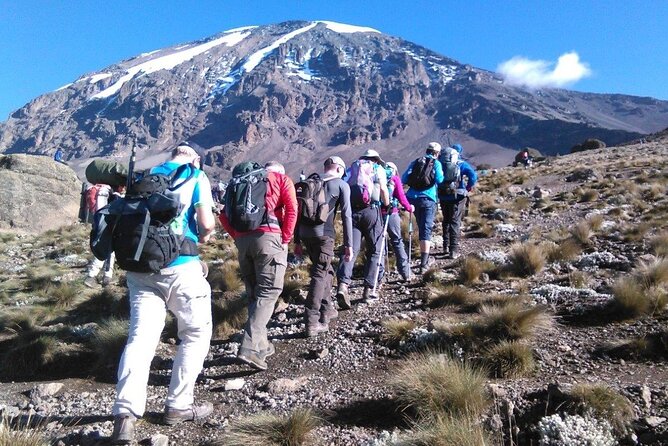
The big draw here is the Machame Route, Kilimanjaro’s scenic Whiskey Route. In six days, you move from forest to high alpine desert, cross the Shira Plateau, scramble up the Barranco Wall, and make a midnight attempt on Uhuru Peak, Africa’s highest point. It is tough, but the route’s ups and downs help your body adjust to altitude.
I like two things right away: the varied scenery and the chance to trek high, then sleep lower at Barranco Camp. I also like that the price includes camping equipment, meals, bottled water, transport, park fees, and a private group. The main caution is the schedule. Six days is short for this mountain, and the summit day lasts about 12 hours after a midnight start.
Key points to know before you book
- The Machame Route uses a helpful acclimatization pattern: You climb to about 4,530 meters on Day 3, then descend to Barranco Camp.
- The Barranco Wall is a hands-on climb: Expect a roughly 90-minute scramble where you may use your hands for balance and pulling upward.
- Summit night is the hardest test: You begin around midnight and spend about six hours reaching the crater rim before continuing to Uhuru Peak.
- The scenery changes fast: Rainforest, high-altitude plants, open plateau, alpine desert, glaciers, and cloud views all appear within six days.
- The $1,950 price covers the basics that matter: Meals, camping gear, water, transport, and park fees are included, but flights, visas, insurance, and tips are not.
- Confirm the practical details early: Pickup is offered, but the exact vehicle, meeting arrangements, and mountain guide’s name are not specified.
Why the Machame Route is worth considering
Kilimanjaro is not a technical mountaineering trip in the sense of ropes and rock-climbing equipment, but it is a serious high-altitude trek. You walk for several hours each day, sleep in tents, and face cold, tiredness, steep paths, and thin air. The reward is a steady change in scenery as you climb toward Kibo, the mountain’s highest volcanic cone.
Machame is often called the Whiskey Route, a nickname that hints at its tougher character compared with the Marangu Route. You do not get a simple uphill walk followed by the same path down. Instead, the route rises and falls across the mountain, with the third day designed to help you adjust to altitude.
That pattern matters. On Day 3, you climb to about 4,530 meters before dropping to Barranco Camp at roughly 110 meters higher than where you began. You gain only a small amount by day’s end, but your body has spent time at a much greater height. I consider that one of the strongest features of the route.
The tradeoff is crowding. Machame is popular, and busy trails can take some of the quiet out of the experience. The route is scenic, but you should not expect solitude on every section.
More Machame Route climbs:
- Kilimanjaro climb, Machame Route (7-day)
★ 5.0 · 262 reviews - Climbing Kilimanjaro – Machame Route
★ 5.0 · 170 reviews - Climbing Kilimanjaro through 7 days Machame Route
★ 5.0 · 151 reviews
Day 1: Forest paths and the Shira Plateau
The first day takes about five hours and includes several uphill stretches. It may be described as the easiest day, but you should not treat it as a warm-up stroll. The trail is exposed in places, and a clear day can feel hot, so carry plenty of drinking water.
As you gain height, the views open toward the plains below and the peaks of Kibo and Mawenzi above. The vegetation changes along the way. Forest trees become smaller, and you begin to see Kilimanjaro’s distinctive high-altitude plants, including Senecio kilimanjari and Lobelia deckenii.
After lunch, you continue onto the Shira Plateau. This broad area was formed when lava from Kibo filled the Shira crater. Shira Camp gives you a first strong view of Kibo to the west and Mount Meru to the east.
I like this opening day because it gives you a clear sense of progress. You are not simply walking through trees. Within hours, you see the mountain’s plant zones change and begin to understand how much height you are gaining.
The practical concern is the sun. The open sections offer little shelter, so sun protection and steady hydration matter. Do not save all your water for later in the day.
Day 2: A second day around Shira
The supplied schedule describes Day 2 as another six-hour trek through Kilimanjaro National Park, again with uphill sections, high-altitude plants, and views toward Kibo and Mawenzi. It repeats much of the description given for Day 1, so you should confirm the exact camp-to-camp route with Avocet Tanzania Safaris before departure.
That detail is worth checking because a standard Machame plan normally uses the second day to continue across the Shira area toward the next camp. The precise trail and sleeping point affect how much you walk, how high you sleep, and how the acclimatization plan works.
You should still expect open ground, changing vegetation, and a gradual move away from the lower forest. The Shira Plateau can feel spacious and stark, with the summit cones becoming more present as you walk.
A six-day schedule leaves little spare time. If your group moves quickly or the route differs from the written description, the day may feel demanding. Ask for the daily walking distance, camp elevation, and expected arrival time in advance.
Day 3: High at Lava Tower, low at Barranco
Day 3 is one of the most important days on the route. You hike east across the Shira Plateau, pass the junction with the Shira and Lemosho routes, and cross increasingly bare ground before lunch.
The unusual part is the climb and descent. By early afternoon, you may reach about 4,530 meters, gaining around 690 meters during the day. You then descend to Barranco Camp, finishing only about 110 meters higher than your starting point.
This is the route’s trek high, sleep low idea in action. You expose your body to more altitude during the day, then rest at a lower camp. No acclimatization plan removes the risk of altitude sickness, but this daily pattern is one reason Machame is considered favorable for adjustment.
A faster group may take a detour toward Lava Tower, a roughly 300-foot volcanic formation. The detour adds height and effort, so your guide should decide whether it fits your pace and condition. You should never feel pressured to take it simply to keep up.
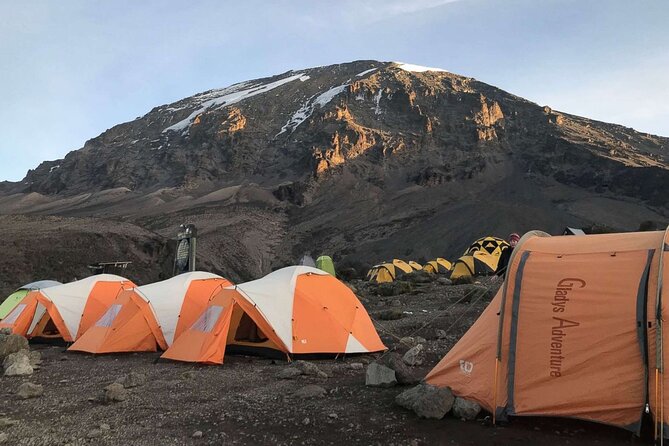
Barranco Camp is often considered the prettiest camp on the route. It sits among Senecio kilimanjari plants, with dramatic mountain surroundings and a strong sense that the summit is getting close. After six hours of walking, this is a good place to eat, rest, and pay attention to how your body feels.
More treks and hikes around Kilimanjaro:
- Kilimanjaro climb by Lemosho Route (7-day)
★ 5.0 · 651 reviews - Kilimanjaro Climbing Lemosho Route 8 Days.
★ 5.0 · 186 reviews - 8-Day Small-group Lemosho Kilimanjaro Summit Trekking
★ 5.0 · 186 reviews - Kilimanjaro climb, Lemosho Route (8-day)
★ 5.0 · 148 reviews
Day 4: The Barranco Wall and Barafu Camp
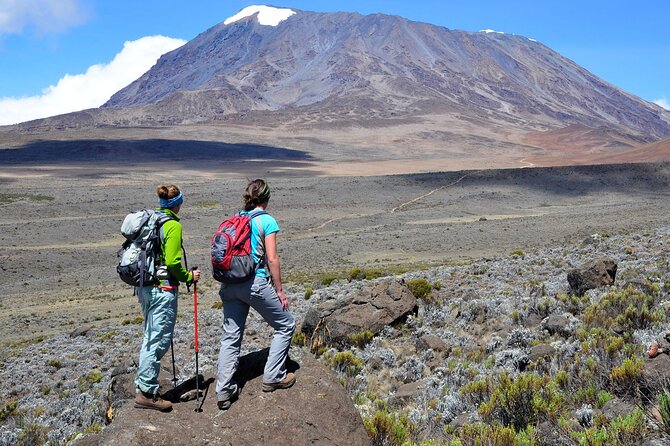
Day 4 takes about seven hours and begins with the Barranco Wall. The climb lasts roughly an hour and a half. In places, you use your hands to help pull yourself upward, though the description does not call for technical climbing gear.
This is the day when the route feels most physical in a direct way. The wall is steep and can look intimidating from below. Move slowly, follow your guide’s instructions, and keep your hands free enough to help with balance.
After the wall, you make a short descent into the greener Karanga Valley. Then the trail rises again toward Barafu Camp. Along the way, you may see the Heim, Kersten, and Decken glaciers, plus the junction where the Mweka descent route connects with the Machame trail.
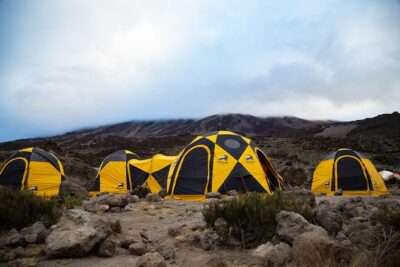
Barafu means ice, but the camp itself is a bleak alpine desert with little vegetation. It offers fine views of Kibo, Mawenzi, and Rebmann Glacier, yet comfort is not the point here. You are at the launch point for summit night.
Dinner should be early, and the practical advice is simple: sleep as soon as you can. You are expected to wake around midnight. At this point, the short six-day format becomes clear. There is little recovery time before the hardest part of the climb.
Day 5: Uhuru Peak and the long descent
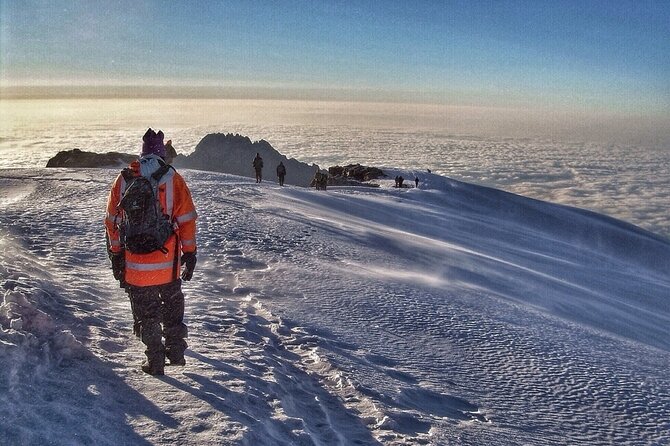
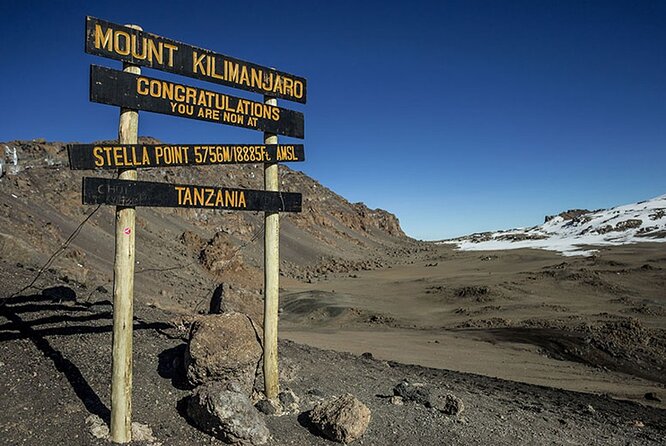
Summit day lasts about 12 hours. You start around midnight with a headlamp and climb for about six hours toward the crater rim at Stella Point.
The route is steep and slow until Stella Point. Cold, darkness, tired legs, and altitude combine to make this the hardest section. Even strong hikers can find the pace frustrating. You should focus on small steps, warm layers, water, and steady breathing rather than the full distance ahead.
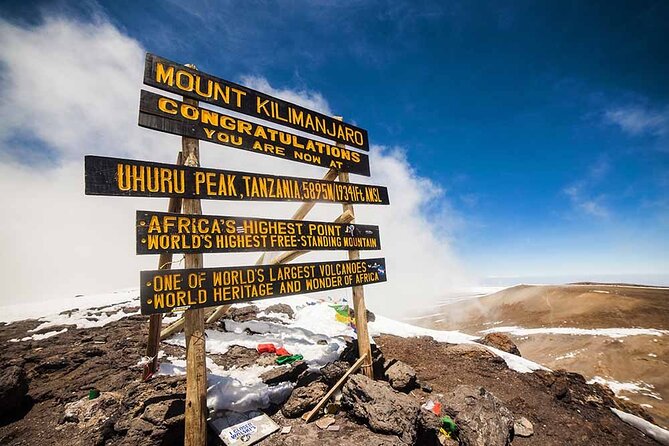
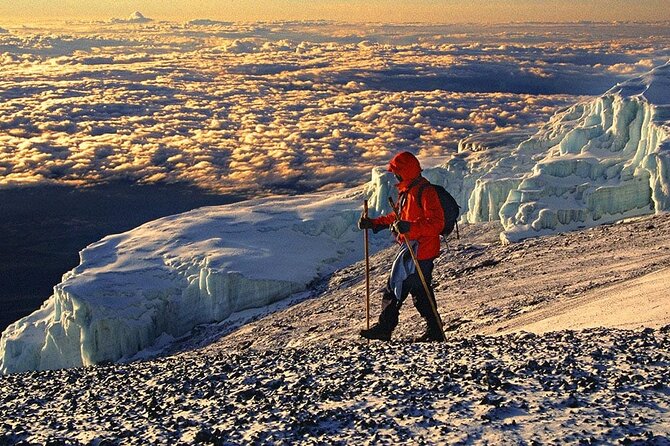
From Stella Point, the trail to Uhuru Peak is more gradual. The walking itself may feel easier, but altitude makes every hour count. The crater-rim section takes about an hour, and the summit is the point where the whole route comes together.
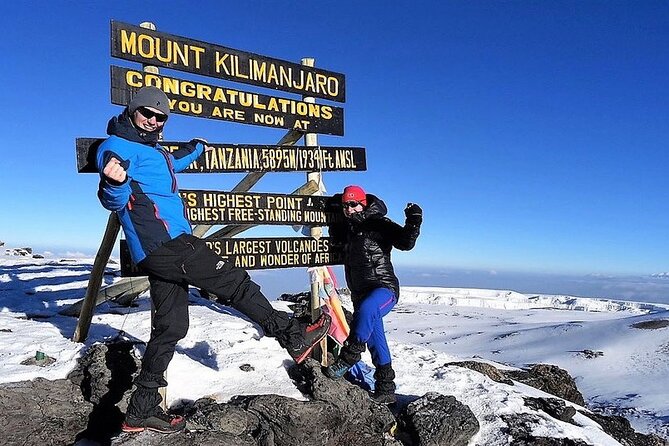
At Uhuru Peak, you have time for photographs with your guide and group before beginning the descent. Views may include the crater, clouds, and the mountain slopes below, though conditions can change quickly.
The descent leads to Mweka Camp. It is a long day, and you may feel more exhausted on the way down than expected. The schedule is demanding because you reach the summit and then continue descending instead of spending a full night recovering at a high camp.
This is the day to judge honestly. If you are unwell at altitude, tell your guide. Reaching the summit is not worth ignoring serious symptoms.
Day 6: Through the cloud forest to Mweka Gate
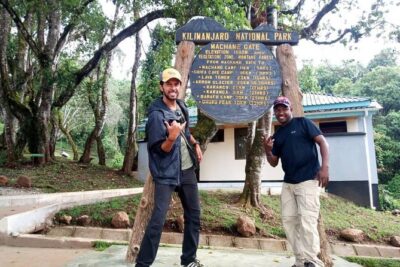
After breakfast, you descend to Mweka Gate in about five hours. The route passes through Kilimanjaro’s cloud forest, bringing you back into thicker vegetation after the bare upper mountain.
The trail can be slippery, so take care even though you are going downhill. Tired knees and a long summit day can make the final descent harder than it appears on paper.
At Mweka Gate, vehicles are scheduled to take you back to Moshi. You may buy T-shirts and sodas at the gate, a small but welcome reminder that normal travel is returning.
The activity begins at 7:00 a.m. and ends back at the meeting point. Pickup is offered, and transportation is included, but confirm the exact pickup location and return arrangements before the trip.
What the $1,950 price includes
At $1,950 per person, this is not a budget walk, but the number is easier to assess when you look at what is bundled into it. The package includes:
- Bottled and mineral water
- All listed fees and taxes
- Camping equipment
- Transportation
- Six lunches
- Five breakfasts
- Six dinners
The inclusion of camping equipment matters because carrying or renting mountain gear can add cost and planning. Meals and water also simplify the trip, especially when you are spending most of the day on the trail.
The price does not include international or local flights, taxes connected to those flights, visa fees, travel insurance, personal accident insurance, tips for the driver, guide, and cook, or a cultural village visit. Budget for those separately.
I would also ask exactly what camping equipment is supplied. The listing confirms that gear is included, but it does not provide a detailed equipment list. You need to know what you must bring yourself, especially for cold summit conditions.
Guides, communication, and private groups
This is described as a private activity, so only your group participates. That can be useful on a demanding climb because the pace and rest breaks can be shaped around your group rather than a large mixed party.
The mountain guide’s name is not provided. The company has a guide named Mike associated with its safari operations, where he is praised for patience and for spotting wildlife, but that does not confirm that he leads this climb. Ask specifically for the name and mountain experience of your Kilimanjaro guide.
Clear communication matters here. There has been at least one reported dispute involving airport pickup, promised vehicle types, and several companies communicating at once for a separate safari booking. To avoid similar confusion, confirm your pickup time, vehicle, meeting point, contact person, and return transport in writing.
Confirmation is provided at booking. The activity is near public transportation, and the information says most people can participate, but the long walking days and altitude make a realistic self-assessment important.
Cancellation and booking details
You can cancel at least 24 hours before the local start time for a full refund. Cancellations or changes made inside that 24-hour window are not accepted for a refund.
The best time to clarify questions is before that deadline. Ask about the Day 2 route, equipment list, guide, pickup vehicle, camp elevations, and what happens if you cannot continue to the summit.
Who should choose this climb?
I would choose this trip if you want a scenic Kilimanjaro route, prefer camping to a hut-based trip, and can handle a demanding six-day schedule. It suits people who value route variety and a private group more than a relaxed pace.
I would think twice if you need extra acclimatization days, dislike early starts, or want a less crowded trail. Machame is popular, and the final summit push is long. The six-day version gives you less margin for slow walking, bad weather, or a difficult reaction to altitude.
Should you book the six-day Machame Route?
Book it if you want a strong mix of scenery, route variety, and included services at a clear per-person price. The Shira Plateau, Barranco Wall, high-altitude plants, glaciers, and Uhuru Peak give this climb plenty of memorable stages.
Before paying, get the missing details in writing. Confirm the Day 2 schedule, the equipment supplied, your mountain guide’s name, pickup arrangements, and the exact camp elevations. If you want a more forgiving acclimatization plan, compare this six-day trip with a longer Kilimanjaro itinerary before deciding.
FAQ
Where does the six-day Machame climb begin?
The tour is based in Arusha, Tanzania. The activity starts at 7:00 a.m., and pickup is offered.
How much does the experience cost?
The listed price is $1,950 per person.
Is this a private tour?
Yes. Only your group participates in the activity.
What meals are included?
The package includes six lunches, five breakfasts, and six dinners.
Is drinking water included?
Yes. Bottled water and mineral water are included.
Is camping equipment included?
Yes. Camping equipment is listed as part of the package, but the exact equipment list is not provided.
Does the price include flights and visas?
No. International and local flights, related taxes, and visa fees are not included.
Are tips included?
No. Tips for the driver, guide, and cook are not included.
How long is the summit day?
Day 5 takes about 12 hours. You begin around midnight, climb to Uhuru Peak, and then descend to Mweka Camp.
Can I cancel for a full refund?
Yes, if you cancel at least 24 hours before the experience’s local start time. Cancellations or changes made less than 24 hours before the start are not accepted for a refund.
More Six-Day Trips in Kilimanjaro
- Kilimanjaro climb, Lemosho Route (6-day)
★ 5.0 · 129 reviews - Kilimanjaro climb, Marangu route (6-day)
★ 5.0 · 72 reviews - 6 Days Tanzania Classic Safari
★ 5.0 · 52 reviews - The Best of Machame Route in 6 Days: Your World’s Summit Guide
★ 5.0 · 44 reviews
Just added around Kilimanjaro
- 6 days Machame route climbing Mt.Kilimanjaro★ 5.0 · 8 reviews
- machame route★ 5.0 · 16 reviews
- Mt Kilimanjaro 6 days Marangu route hike★ 5.0 · 3 reviews
- Private Cycle to Kilimanjaro Bike Park Safari★ 5.0 · 6 reviews
- West Kilimanjaro cycling Adventures★ 4.5 · 8 reviews
- Kilimanjaro Climb • Marangu Route ~ 9 Day★ 5.0 · 4 reviews
- 3 Days Private E-Bike Tour in West Kilimanjaro★ 5.0 · 3 reviews
- Kilimanjaro Climb • Machame Route ~ 10 Day★ 5.0 · 6 reviews
Machame Route Climbs, compared.
The Best of Machame Route in 6 Days: Your World’s Summit Guide
Read our review →Browse the lists this tour appears in