
Reviewed · MARANGU ROUTE CLIMBS
5 Days Marangu Route Kilimanjaro Trekking
The Marangu Route gives you Kilimanjaro in a compact five-day push, moving from thick rainforest to the cold, bare saddle below Kibo. It is the mountain’s only route described here with sleeping huts, though the package also lists tents and camping equipment, so I would confirm your exact sleeping setup before paying.
I like the clear progression through several high-altitude zones, and I like that the price includes park fees, rescue fees, a guide, porters, meals, and accommodation. Guide Walter is specifically praised for patience and for helping with missing clothing and gear. The catch is the schedule: summit day can last 12 to 15 hours, and five days gives you little spare time for acclimatization.
Key points to know before you book
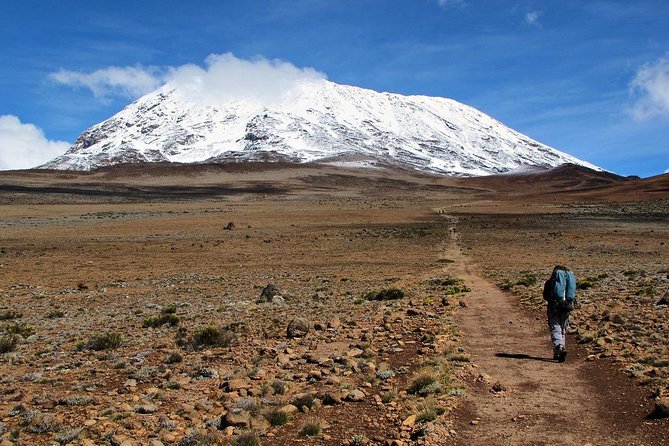
- The summit day is a serious test: You climb from Kibo Hut around midnight, reach Uhuru Peak at 5,895 meters, then walk down to Horombo Hut.
- The route passes through four distinct zones: Rainforest, heath and moor, the open saddle, and the rocky summit area.
- Sleeping arrangements need clarification: Marangu is known for huts, while the inclusions also mention tents, a mess tent, and mattresses.
- The package covers major costs: Park and rescue fees, taxes, porters, guide services, four breakfasts, four dinners, and five lunches are included.
- Walter is a named guide to look for: One account praises his patience and help with gear during a last-minute solo climb.
- The price is $1,800.16 per person: That is useful value if the listed inclusions match your final booking, but flights, tips, sleeping bags, and personal costs remain yours.
Five days from Moshi to Kilimanjaro’s roof
This climb begins in the Moshi area, with the activity information also identifying Arusha as the location. Pickup is offered, and the stated start time is 1:30 am, although the first day description says you will be collected after breakfast. That mismatch matters, so ask the operator to confirm the actual pickup time and whether you need a night before the trek.
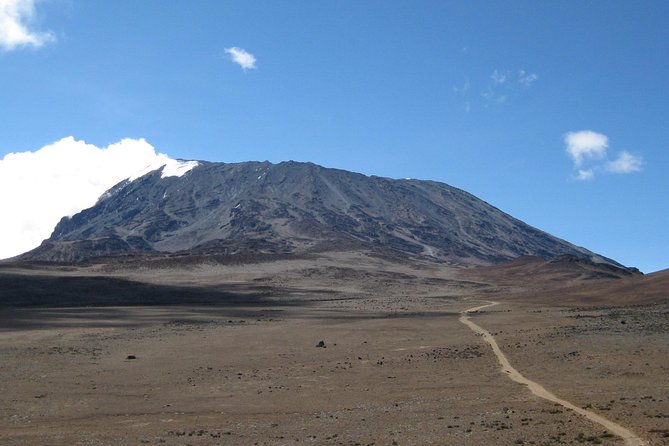
The Marangu Route is often called the Tourist Route or Coca-Cola Route. Those names point to its popularity and its hut system, not to an easy walk. You still face steep ground, thin air, freezing summit conditions, and a long final day.
I would choose this route if you value a straightforward trail and hut-based mountain accommodation. I would think twice if your main aim is a slow ascent with plenty of acclimatization time. The five-day version moves quickly, particularly before the summit attempt.
More Marangu Route climbs:
- Kilimanjaro climb, Marangu route (6-day)
★ 5.0 · 72 reviews - Climbing Kilimanjaro – Marangu Route
★ 5.0 · 65 reviews - Private Full Day Hiking Experience to Marangu Route
★ 5.0 · 61 reviews
Day 1: Rainforest to Mandara Hut, 8.3 kilometers
After the transfer to Marangu Gate, you complete the park paperwork and begin walking through dense rainforest. The first day covers about 8.3 kilometers and takes roughly five hours, making it the gentlest section on paper.
The forest is more than a warm-up. Thick plant growth gives the opening hours a strong sense of place, and you may catch sight of primates along the trail. The change in vegetation helps you understand the mountain’s height as much as the later views do.
Your destination is Mandara Hut. After settling in, the guide can take you to Maundi Crater, where the route description promises views toward the Kenyan interior. That side walk is a useful extra because it lets you see beyond the trees without committing to another major climb.
The first day is manageable for most people who can walk for several hours, but do not treat it as a free pass. Keep your pace easy, drink regularly, and save energy for the next morning. Your meals begin here, with lunch and dinner included in the package.
Day 2: Heath and moorland to Horombo Hut, 12.5 kilometers
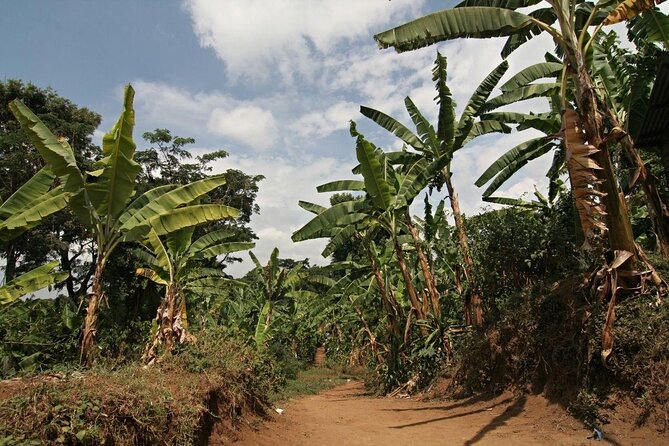
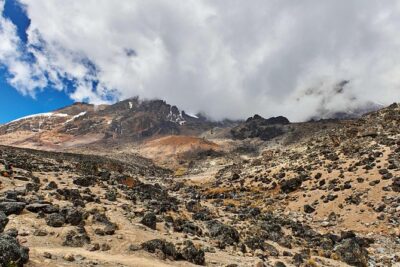
You leave Mandara after breakfast and climb toward the timberline. The rainforest gives way to heath and moor, with much less cover and a more open feel. This is where the route starts to look and feel like a high mountain trek rather than a forest hike.
The day covers about 12.5 kilometers and takes around nine hours. Horombo Hut sits at approximately 3,700 meters, so the distance is only part of the challenge. The rising altitude can make a normal walking pace feel slow and tiring.
Horombo is one of the scenic high points of the route. From the hut, you get views toward Mawenzi, Kibo, and the broad Masai steppe. I like this section because the mountain begins to reveal its scale: Mawenzi has a jagged profile, while Kibo is the main summit you will approach next.
There is no separate acclimatization day in this five-day plan. That is the key concern here. You gain a great deal of height in a short period, so pay attention to how you feel and tell your guide promptly about any problems. The package includes a professional guide and rescue fees, but those inclusions do not make altitude symptoms something to ignore.
Day 3: Across the saddle to Kibo Hut, 9.5 kilometers
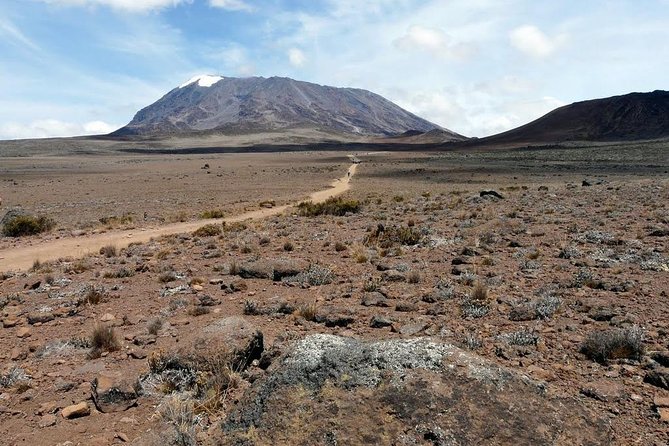
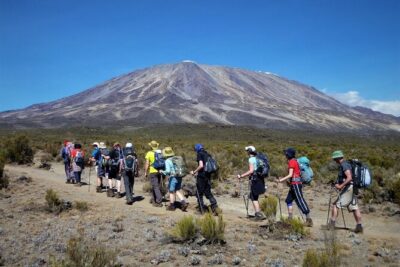
Day three covers about 9.5 kilometers and takes roughly seven hours. You pass the Last Water point, then cross the saddle, a broad, nearly vegetation-free plateau between Mawenzi and Kibo.
This section has a stark beauty. The trees and shrubs are behind you, and the open ground makes the final summit feel very real. It can also feel exposed and monotonous, so the guide’s pace and steady support become especially useful.
Kibo Hut is the night’s destination. It sits high on the mountain, and the plan calls for an early evening meal followed by an early bedtime. That schedule is not a suggestion. You need to rest as much as possible because the summit departure comes around midnight.
The listing describes Kibo Hut as the destination, while the included equipment list refers to tents, a mess tent, mattresses, and cooking gear. Marangu is widely associated with sleeping huts, but this package information does not explain exactly what is provided at each night’s accommodation. Ask whether you sleep in a hut, a tent, or a combination of both, and ask what the mattress arrangement means.
More treks and hikes around Kilimanjaro:
- Kilimanjaro climb by Lemosho Route (7-day)
★ 5.0 · 651 reviews - Kilimanjaro climb, Machame Route (7-day)
★ 5.0 · 262 reviews - 8-Day Small-group Lemosho Kilimanjaro Summit Trekking
★ 5.0 · 186 reviews - Kilimanjaro Climbing Lemosho Route 8 Days.
★ 5.0 · 186 reviews
Day 4: The midnight climb to Uhuru Peak
This is the day that defines the trip. You start around midnight and climb by a slow, strenuous route toward the crater rim. The distance is about 22 kilometers, and the full day can last 12 to 15 hours.
The first target is Hans Meyer Cave at about 5,220 meters. From there, the trail continues upward toward Gillman’s Point, at approximately 5,681 meters. Reaching the crater rim around sunrise gives you the first warmth after the cold night, but Gillman’s Point is not the final summit.
You then continue for another one to two hours toward Uhuru Peak. At 5,895 meters, it is the highest point on Kilimanjaro and the highest destination in this program. The final stretch may feel slow, and the cold, darkness, altitude, and fatigue all add up. I would not judge your success by speed. A controlled pace is more useful than rushing early.
After the summit, you return to Kibo Hut for a warm meal and a one to two-hour rest. Then you continue down to Horombo Hut. That second descent is why this day is so demanding. You do not simply reach the summit and stop; you must still walk a long way after the main goal.
The package includes lunch on this day and the other listed meals, but you should confirm what food is served at which point. The supplied information promises a warm meal at Kibo Hut after the summit, which is welcome after a cold ascent.
Day 5: Descending through three mountain zones
The final day covers about 20.8 kilometers and takes around eight hours. You descend from Horombo through the heath and moor zone to Mandara Hut, where a warm lunch is planned.
From Mandara, the trail returns to tropical rainforest. The vegetation changes quickly as you lose altitude, and the return to trees can feel like a clear sign that the hardest part is over. You continue to the Marangu Gate at about 1,860 meters, where the trek ends after roughly six hours of walking according to the day description.
At the gate, you say goodbye to the mountain guides and transfer back to your Moshi hotel. The description says you can take a warm shower and celebrate your summit success there. Accommodation before and after the trek is not included, so that hotel must be arranged separately.
The last day is easy to underestimate. Your legs have already worked through the summit night, and 20.8 kilometers is a long descent. Trekking poles, good footwear, and a patient pace would be useful, though the tour information does not state whether poles are supplied.
What the $1,800.16 price really covers
At $1,800.16 per person, the price has value because several expensive and important elements are bundled together. It includes:
- Park fees and rescue fees
- All listed taxes and VAT
- Accommodation during the mountain trip
- A professional driver and guide
- Porterage
- Camping equipment, including tents, a mess tent, mattresses, and cooking equipment
- Four breakfasts
- Four dinners
- Five lunches
The inclusion of rescue fees is particularly relevant on a high-altitude climb. It does not remove the need for good preparation, but it means this cost is accounted for in the package rather than left as a surprise.
You still pay for international flights, accommodation before and after the trek, a sleeping bag, climbing gear, bath towels, personal items, travel insurance, visa fees, tips, and any government increase in taxes or park fees. Climbing gear and sleeping bags are available to rent, which can help if you do not want to buy equipment for one mountain trip.
I would ask for a written list of the rental prices and gear available before arrival. I would also confirm whether the accommodation line refers to huts, tents, or both. Those details affect the real value of the package.
Guides, porters, and the human side of the climb
A mountain trip depends heavily on the guide team. One named guide, Walter, is praised for staying patient during a solo climb and for helping with clothing and gear that the climber had not brought. That is useful evidence of the kind of support you should want, especially if you are booking close to departure.
Another named guide, Lucas, is connected to a separate safari experience and should not automatically be assumed to lead this Kilimanjaro climb. The same provider is also described as responsive when arranging a last-minute family trip, with food adapted during the trek.
The practical lesson is simple: ask who will guide your specific departure. Ask how many people will be in your private group, what porter support is included, and who to contact if your size or equipment needs change. This is a private activity, so only your group participates, but the supplied information does not state the maximum group size.
Food receives strong praise in the supplied comments, including plenty of food and meals adapted during a family climb. The package includes five lunches, four dinners, and four breakfasts, which covers the listed mountain schedule. You should still tell the operator about dietary needs before departure because no exact menu is provided.
What to pack and what to rent
The package does not include sleeping bags, bath towels, or climbing gear, although some gear is available for rent. I would not wait until the trailhead to decide what you need. Confirm rental stock, sizes, prices, and pickup arrangements in advance.
Your personal items also include travel insurance, visa fees, and souvenirs. Tips are not included, so budget for them separately. The information does not state a recommended tipping amount, and it is better to request current guidance from the operator than rely on a fixed figure.
Because the summit begins around midnight, keep warm layers and essential items easy to reach. The final approach is cold and strenuous, and you will not want to rummage through a large bag when tired. The operator’s equipment list is broad, but it does not specify every personal clothing item you must bring.
Who should choose this five-day route?
I would recommend it to a reasonably fit person who wants a direct Kilimanjaro climb, values a private group, and prefers the Marangu trail’s established hut reputation. It also suits someone who likes a clear daily structure, included meals, porter support, and a guide handling the park process.
I would be cautious if you have never done a long mountain walk or if you want generous acclimatization time. The jump from Mandara to Horombo, then to Kibo, followed by a midnight summit and long descent, is demanding. Five days is efficient, but efficiency is not the same as comfort.
The route also suits a last-minute booking better than a fully independent attempt because the provider can arrange transport, guides, porters, meals, and permits. Still, last-minute convenience should not replace preparation. Confirm the start time, sleeping arrangement, rental gear, hotel plan, and guide assignment before you travel.
Should you book this Kilimanjaro climb?
Book it if you want a private, tightly scheduled Marangu ascent with major park costs, meals, porters, guide support, and rescue fees already included. The price is reasonable for that bundle, and the named guide feedback points to patient support when a climber needed help.
Do not book without clarification if you need a slower acclimatization plan, guaranteed hut accommodation, or a fixed pickup schedule. The information gives both a 1:30 am start time and a breakfast pickup, and it describes both huts and camping equipment. Get those points settled in writing.
For a fit and prepared climber who accepts a hard summit day, this is a practical route to Uhuru Peak. For anyone prioritizing a gentler ascent, a longer Kilimanjaro program may be the wiser choice.
FAQ
Where does the Kilimanjaro trek start?
The activity is listed in Arusha, Tanzania, with pickup offered from a lodge in Moshi for the transfer to Marangu Gate.
How long is the trek?
The trek lasts approximately five days. The stated daily walking times range from about five hours on day one to 12 to 15 hours on summit day.
What is the highest point reached?
The route reaches Uhuru Peak at 5,895 meters. Gillman’s Point, at approximately 5,681 meters, comes earlier on the summit morning.
Are meals included?
Yes. The package includes four breakfasts, four dinners, and five lunches.
Is accommodation included?
Accommodation during the mountain trip is included. The information also lists tents, a mess tent, mattresses, and cooking equipment, while the Marangu description refers to sleeping huts. Confirm the exact sleeping arrangement before booking.
Is a sleeping bag included?
No. A sleeping bag is not included, but one is available for rent.
Is this a private activity?
Yes. Only your group participates in the activity. The supplied information does not state the maximum number of people in the group.
More Five-Day Trips in Kilimanjaro
- Kilimanjaro Climbing 5 days Marangu route
★ 5.0 · 22 reviews - 5 Days Marangu Route Kilimanjaro hiking
★ 5.0 · 13 reviews - Best 5 Days Marangu Route Climbing on Kilimanjaro
★ 5.0 · 12 reviews - Our Top 5-Day Kilimanjaro Marangu Route: 2025 and 2026 Updates
★ 5.0 · 11 reviews
Just added around Kilimanjaro
- 6 days Machame route climbing Mt.Kilimanjaro★ 5.0 · 8 reviews
- machame route★ 5.0 · 16 reviews
- Mt Kilimanjaro 6 days Marangu route hike★ 5.0 · 3 reviews
- Private Cycle to Kilimanjaro Bike Park Safari★ 5.0 · 6 reviews
- West Kilimanjaro cycling Adventures★ 4.5 · 8 reviews
- Kilimanjaro Climb • Marangu Route ~ 9 Day★ 5.0 · 4 reviews
- 3 Days Private E-Bike Tour in West Kilimanjaro★ 5.0 · 3 reviews
- Kilimanjaro Climb • Machame Route ~ 10 Day★ 5.0 · 6 reviews
Marangu Route Climbs, compared.
Browse the lists this tour appears in