
Reviewed · MACHAME ROUTE CLIMBS
6 Day Machame Route – Climb Mount Kilimanjaro
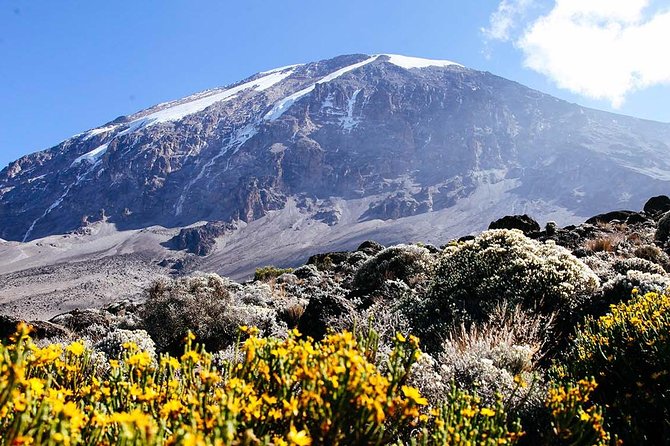
The most striking part of this Kilimanjaro climb is how quickly the scenery changes. You begin in thick rainforest, move onto the open Shira Plateau, pass lava and glacier country, then face a midnight climb to Uhuru Peak at 5,895 meters. It is a serious mountain trip, not a gentle sightseeing walk.
I like the airport pickup and equipment check in Moshi, since they take some stress out of the first day. I also like the route’s walk high, sleep low pattern, which gives you a useful acclimatization day before the summit push. The main concern is simple: the six trekking days are demanding, and summit day can last 12 to 15 hours.
Key points to know before booking
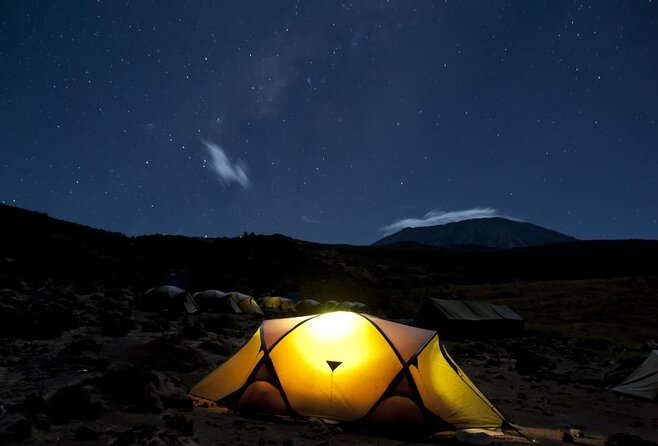
- Six trekking days, eight days total: The climb includes arrival and hotel time before the trek, plus a recovery day after you return to Moshi.
- A varied mountain route: You move from wet rainforest to moorland, volcanic scree, glaciers, and the crater rim.
- A very long summit day: The midnight start includes Stella Point, Uhuru Peak, a return to Barafu Camp, and a further descent to Millennium Camp.
- Personal support matters: Guide Emmanuel is named in the feedback, with particular praise for listening and adapting during the hikes.
- Meals are a strong part of the package: Five dinners, seven breakfasts, and six lunches are included.
- Small-group format: The maximum group size is 15 people, which should allow more direct contact with the guide than a large departure.
What the $2,000 price covers in practical terms
At $2,000 per person, this is not a cheap mountain outing, but it is a substantial trip rather than a one-day excursion. The price covers the guided climb, airport pickup, hotel nights in Moshi, meals during the program, and the organized support of a guide and porter crew. The stated accommodation is Mvuli Hotel, or an alternative, before and after the trek.
The value comes partly from having the trip arranged around the mountain. You do not need to solve the transfer from Kilimanjaro International Airport, find a hotel in Moshi, arrange the first route transport, or organize an equipment check on your own. Missing gear can be rented on arrival day, which is useful if you are trying to avoid buying expensive equipment for one climb.
I would still ask for a written breakdown before paying. The information provided does not spell out every cost included in the $2,000, such as park fees, porter tips, drinks, or personal gear rental. Do not assume that every mountain expense is covered simply because meals and transfers are listed.
The package includes five dinners, seven breakfasts, and six lunches. That is a generous meal schedule for an eight-day program, and the food received especially warm praise for being plentiful and good. A strong food service matters here. You will be walking for many hours at altitude, and regular meals are not a small detail.
More Machame Route climbs:
- Kilimanjaro climb, Machame Route (7-day)
★ 5.0 · 262 reviews - Climbing Kilimanjaro – Machame Route
★ 5.0 · 170 reviews - Climbing Kilimanjaro through 7 days Machame Route
★ 5.0 · 151 reviews
Day 1: Airport pickup, Moshi, and the gear check
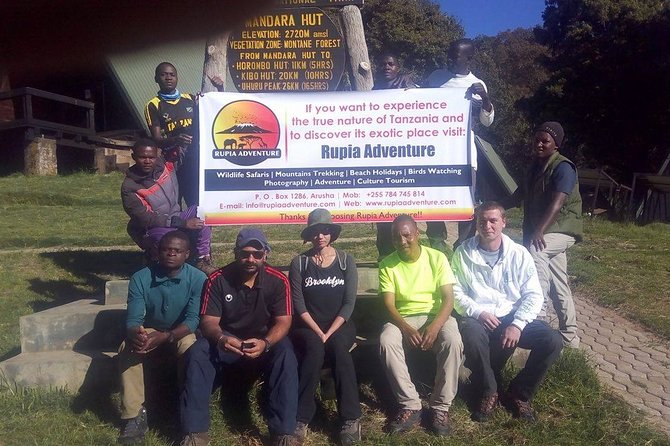
Your trip begins with pickup at Kilimanjaro International Airport and transfer to a hotel in Moshi. The published meeting time is 8:30 am, so confirm how that applies to your arrival and first transfer.
This first day is more useful than it may sound. You meet the guide, receive a briefing, and check your mountain equipment before you reach the trail. If something is missing, you can rent it then. That gives you a chance to deal with a forgotten jacket or unsuitable gear while you are still in town, rather than discovering the problem in the rainforest.
The night is scheduled at Mvuli Hotel, or a similar alternative. You should treat this as an adjustment day, not as wasted time. You are setting up the climb, checking your kit, and preparing for a route where wet ground, cold temperatures, steep paths, and altitude all matter.
Day 2: Machame Gate and the wet rainforest
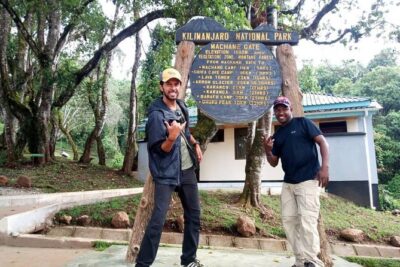
A roughly two-hour drive from Arusha brings you to the gate for the Machame Route. Park formalities take place here, and you meet the porter crew before beginning the climb.
The first walking day covers about 10.8 kilometers and takes around six hours. The path rises steadily through dense rainforest, a dramatic opening to the trip. This is not the dry, bare mountain many people picture when they think of Kilimanjaro. Expect thick vegetation, damp conditions, and a path that can be muddy underfoot.
This section is described as less well-trodden, so parts may be overgrown. That gives the route a more rugged feel, but it also means you should not expect a smooth trail. Good boots with reliable grip are important, and trekking poles could be useful if you find wet or uneven ground difficult.
The first day is a good test of pacing. You want to arrive at camp with energy left, not treat the opening climb as a race. Your guide’s job is especially important here, since a calm pace helps you save strength for the much harder days above the forest.
Day 3: Climbing to the Shira Plateau
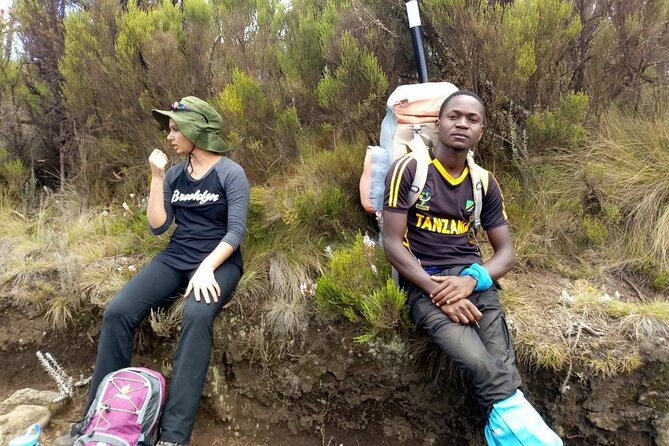
The route continues through the forest before making a steep ascent to the Shira Plateau. The distance is shorter than the previous day, about 5.4 kilometers, with an estimated walking time of five hours.
The reward is the change in scale. You leave the enclosed forest and reach open high ground with views of Kilimanjaro. Looking back, you may see Mount Meru rising above the area around Arusha. This is one of the trip’s first points where the mountain feels vast and exposed.
A shorter day does not mean an easy day. The steep climb to the plateau can feel sharp after the first day’s walking, and your body is beginning to adjust to altitude. I would use this day to watch how you respond to exertion, drink regularly, and tell your guide early if you feel unwell.
More treks and hikes around Kilimanjaro:
- Kilimanjaro climb by Lemosho Route (7-day)
★ 5.0 · 651 reviews - 8-Day Small-group Lemosho Kilimanjaro Summit Trekking
★ 5.0 · 186 reviews - Kilimanjaro Climbing Lemosho Route 8 Days.
★ 5.0 · 186 reviews - Kilimanjaro climb, Lemosho Route (8-day)
★ 5.0 · 148 reviews
Day 4: Lava Tower and the value of sleeping lower
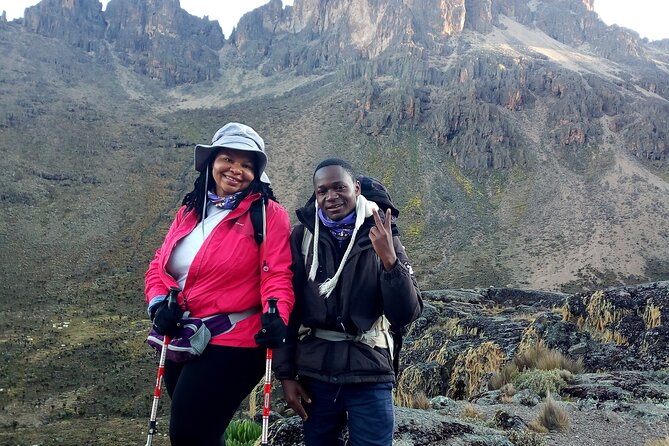
Day 4 is one of the most important acclimatization days. You walk roughly 10.8 kilometers over about eight hours across high moorland, reaching an altitude of up to 4,600 meters near Lava Tower and the Western Breach area.
The scenery changes again. Trees are gone, and the mountain feels more open, stark, and volcanic. You traverse the southwest side of Kilimanjaro beneath Lava Tower before reaching camp.
The key benefit is the route’s walk high, sleep low pattern. You spend time at altitude, then sleep at a lower camp, giving your body a better chance to adjust than a route that simply races upward each day. It does not remove the risk of altitude sickness, but it is a sensible feature of the plan.
This is also a tiring day. Eight hours at high altitude can feel much harder than the same distance at sea level. Keep your pace steady and listen closely during the guide’s checks. The next day brings the Barranco Wall, so you will want to protect your energy.
Day 5: Barranco Wall, Karanga, and Barafu Camp
The day begins with a descent into the Great Barranco, a huge ravine, followed by the steep climb up the Barranco Wall. The route covers about 8.5 kilometers and takes around eight hours.
The Barranco Wall is a climb over rock rather than a technical mountaineering section. Even so, it is long, steep, and tiring. You may need to use your hands at times, and the slow pace can make this feel more like a sustained scramble than a normal hike. The wall divides the ravine from Kilimanjaro’s southeastern slopes.
Beyond the wall, the trail passes beneath the Heim and Kersten glaciers before reaching the Karanga Valley. This is the last stop for fresh water, according to the route plan, so pay attention to your supply needs before moving on.
The final part heads across dry, barren ground toward Barafu Camp. At this point, the mountain feels increasingly serious. The scenery is spare, the air is thin, and the camp serves as the launch point for the summit attempt. Try to rest here, eat what you can, and organize your clothing and headlamp before the midnight start.
Day 6: The midnight summit attempt
Summit day is the hardest part of the entire trip. You begin at about midnight and climb steeply over scree for four to five hours. The goal is Stella Point on the crater rim at 5,739 meters, ideally around sunrise.
The early morning timing is practical. Reaching the crater rim as the sun comes up can bring spectacular views across the ice cliffs and toward Mawenzi Peak. The cold, darkness, steep ground, and altitude will likely matter more than the scenery during the first hours, so focus on one careful step at a time.
From Stella Point, it takes about another hour to reach Uhuru Peak at 5,895 meters. That last section can feel deceptively difficult. You have already climbed for hours, and even a short distance takes work at this height.
After the summit, you return to Stella Point and descend the scree slope to Barafu Camp. You stop there for breakfast before continuing to Millennium Camp. The full day is listed at 13.4 kilometers and 12 to 15 hours, but the time matters more than the distance. This is an endurance day with very little spare energy.
A sensible goal is not to force the summit at any cost. Your guide should help you judge your condition, and you should speak up about symptoms rather than trying to hide them. The mountain will still be there, but altitude problems need prompt attention.
Day 7: Rainforest descent and a welcome shower
The route down to Mweka Gate is gentler, though your legs may not feel fresh. The descent takes about six hours and returns you to rainforest, covering around 12.1 kilometers.
At Mweka Gate, you complete park formalities and receive a certificate. Then vehicles take you back to the hotel in Moshi. The promised shower, meal, and cold drink will probably feel more valuable than any formal celebration.
This is a good reason the post-trek hotel night matters. After a 12 to 15-hour summit day followed by a descent, you will want a proper bed and time to recover. The evening is also set aside for a celebration with the team.
Day 8: A slow ending in Moshi
The final day is free before your flight home. Depending on your departure time, you can explore Moshi and buy souvenirs, or simply keep the day quiet.
Safari and Zanzibar extensions are available if you want to continue through Tanzania. The important practical point is to avoid making this day too tight. The climb can leave you tired, and flight timing should allow for the drive to the airport.
The guide team, meals, and group size
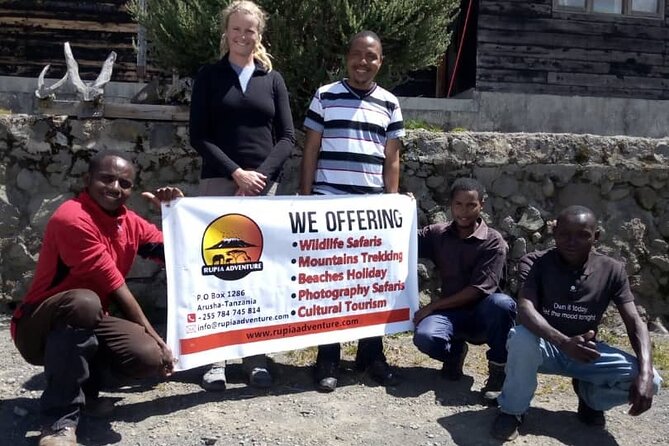
The strongest personal detail connected with this trip is the mention of guide Emmanuel. The useful point is not simply his name, but the description of a guide who listened and adapted during the hikes. On a mountain route, that kind of attention matters. A fixed schedule is helpful, but your pace and condition can change from day to day.
The wider crew also receives strong praise for being friendly and supportive. Food is another repeated strength. Meals are described as good and plentiful, which is particularly valuable on the long walking days and during the summit push.
The group limit is 15 people. That is not an intimate private trek, but it is still small enough for a guide to keep track of the group more easily than on a large departure. Ask how many guides and porters are assigned to your specific date, since the provided details do not give that number.
Who should choose this Kilimanjaro climb?
I would consider this trip if you want a structured Kilimanjaro climb with airport pickup, hotel nights, organized meals, porters, and a named guide contact. It suits someone who prefers a clear schedule and does not want to arrange every transfer and mountain detail independently.
You should also be comfortable with long walking days and a midnight summit attempt. The route includes wet mud, steep climbs, high altitude, scree, and an extended descent after reaching the summit. It is not appropriate to treat this as a casual holiday walk.
The six-day mountain schedule may appeal because it keeps the overall trip fairly compact. The tradeoff is that you have less time than on a longer Kilimanjaro route to adjust gradually. If you are deciding between this and a longer option, ask Rupia Adventure how they assess altitude risk and what support is available if you need to stop or descend.
Should you book it?
I would book this climb if the fixed eight-day schedule suits you, you value airport and hotel support, and you are prepared for a very demanding summit day. The food, attentive guide service, equipment check, and small maximum group size add real practical value.
I would pause before booking if you want a leisurely climb or if your flight schedule leaves no room for rest. Also confirm exactly what the $2,000 covers, how equipment rental is priced, and what happens if you do not reach the summit.
The experience is non-refundable and cannot be changed after booking. Poor weather or failure to meet the minimum group size can lead to a new date, a different experience, or a full refund, but personal cancellation does not qualify. For a high-altitude trip, read those terms carefully before paying.
FAQ
How long is the full experience?
The program lasts approximately eight days, including arrival and hotel time, six trekking days on the Machame Route, and a free day before departure.
How many days are spent trekking?
The mountain itinerary runs from Day 2 through Day 7, for six trekking days.
What time does the tour start?
The stated start time is 8:30 am. Confirm the exact pickup schedule with Rupia Adventure, especially if you are arriving by air that day.
Is airport pickup provided?
Yes. Pickup is offered at Kilimanjaro International Airport, followed by transfer to a hotel in Moshi.
What is the maximum group size?
The maximum group size is 15 people.
Which meals are included?
The package includes five dinners, seven breakfasts, and six lunches.
Is equipment rental available?
Yes. During the first day’s equipment check, missing mountain gear can be rented.
What happens if the experience is canceled?
If poor weather causes cancellation, you will be offered a different date or a full refund. If the minimum number of participants is not reached, you will be offered a different date or experience, or a full refund. Personal cancellations and amendments are non-refundable.
More Six-Day Trips in Kilimanjaro
- Kilimanjaro climb, Lemosho Route (6-day)
★ 5.0 · 129 reviews - Kilimanjaro climb, Marangu route (6-day)
★ 5.0 · 72 reviews - 6 Days Tanzania Classic Safari
★ 5.0 · 52 reviews - The Best of Machame Route in 6 Days: Your World’s Summit Guide
★ 5.0 · 44 reviews
Just added around Kilimanjaro
- 6 days Machame route climbing Mt.Kilimanjaro★ 5.0 · 8 reviews
- machame route★ 5.0 · 16 reviews
- Mt Kilimanjaro 6 days Marangu route hike★ 5.0 · 3 reviews
- Private Cycle to Kilimanjaro Bike Park Safari★ 5.0 · 6 reviews
- West Kilimanjaro cycling Adventures★ 4.5 · 8 reviews
- Kilimanjaro Climb • Marangu Route ~ 9 Day★ 5.0 · 4 reviews
- 3 Days Private E-Bike Tour in West Kilimanjaro★ 5.0 · 3 reviews
- Kilimanjaro Climb • Machame Route ~ 10 Day★ 5.0 · 6 reviews
Machame Route Climbs, compared.
The Best of Machame Route in 6 Days: Your World’s Summit Guide
Read our review →Browse the lists this tour appears in