
Reviewed · MARANGU ROUTE CLIMBS
5 Days Marangu Route Kilimanjaro Climbing
Kilimanjaro’s Marangu Route gives you the mountain’s most straightforward five day plan, with one major comfort you will not get on most routes: a bed in a hut every night. You walk through coffee country, forest, giant heather, high moorland, and volcanic scree before making a torchlit push toward the summit.
I like the communal huts with mattresses and pillows, especially after a long day on your feet. I also like the clear package price of $1,730, which covers guides, park and rescue fees, meals, drinking water, transfers, and hut lodging. The catch is important: five days is the short version, and the schedule gives you limited time to adjust to altitude.
Key points to know before you book
- Hut lodging every night: You sleep in communal bunk rooms with sponge mattresses, pillows, and solar lighting.
- A short five day schedule: The route is physically manageable for many fit hikers, but the fast altitude gain makes the summit day demanding.
- A serious summit push: Day four can involve 11 to 15 hours of walking, beginning around 1 a.m.
- Maundi Crater on day one: This optional outing adds a worthwhile viewpoint without changing the main route.
- Experienced local leadership: Gasto is named in the supplied information as a guide with extensive Kilimanjaro experience.
- Strong practical value: The price includes meals, park fees, rescue fees, water, transfers, guides, and mountain huts, but not visa costs, tips, or personal climbing gear.
What the $1,730 price really covers
At $1,730 per person, this is not simply a guided walk with a park entrance ticket. The cost includes overnight hut stays, professional mountain guides, all park and rescue fees, meals on the mountain, purified drinking water, airport transfers, and the support setup used for meals.
That matters on Kilimanjaro. You are not arranging each piece separately once you are high on the mountain. The package also includes a mess tent with tables and chairs, giving you a proper place to eat and rest even though your sleeping quarters are in huts.
The meals are covered for five breakfasts, five lunches, and five dinners. Specific menus are not provided, but the company’s service description says meals are prepared fresh and served hot. I would still ask about dietary needs before booking, since the information does not explain how special diets are handled.
The price does not include a Tanzania visa, tips, or personal climbing equipment. That last item deserves attention. You need to budget separately for the clothes, footwear, headlamp, warm layers, and other gear required for a high altitude climb. The price is good value if you already have suitable equipment, but your real trip cost will be higher than $1,730.
More Marangu Route climbs:
- Kilimanjaro climb, Marangu route (6-day)
★ 5.0 · 72 reviews - Climbing Kilimanjaro – Marangu Route
★ 5.0 · 65 reviews - Private Full Day Hiking Experience to Marangu Route
★ 5.0 · 61 reviews
Day one: Marangu village to Mandara Hut
The day begins with pickup from Arusha or Moshi, with a stated start time of 7:30 a.m. The drive takes you to the Kilimanjaro National Park gate at about 1,830 meters, near Marangu village.
This opening section gives you a pleasant introduction to the area. Marangu is known for small coffee and banana plantations, and the route soon enters forest. The walking time to Mandara Hut is listed as three to five hours, though the full day is described as about six hours once formalities and other stops are included.
The forest is one of the best parts of this first day. You may see monkeys, and the huts have good birdlife. The path is attractive and relatively gentle compared with the climb still to come.
At about 2,700 meters, Mandara Hut sits near the volcanic remains of Maundi Crater. If you still have energy, the crater makes a good afternoon outing. It is also sensible to rest instead. This first day is not the time to prove anything. Saving energy early can help you later.
The huts have communal sleeping rooms, bunks, sponge mattresses, pillows, and solar lights. You gain comfort compared with tent camping, but you do not get privacy. If you sleep lightly, bring earplugs.
Day two: Mandara Hut to Horombo Hut
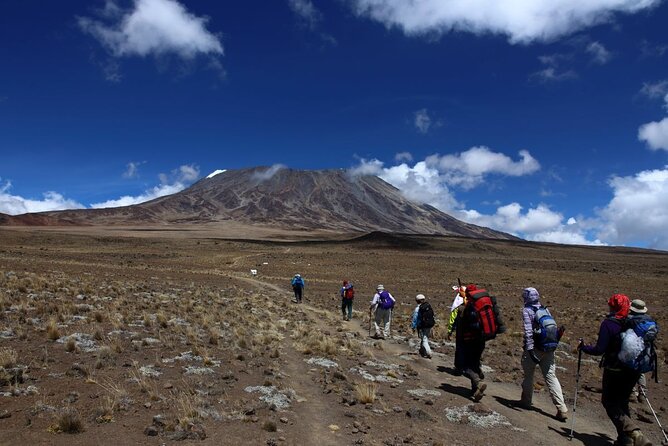
Day two takes you from forest into open grassy moorland. The first section remains steep, then the trees thin out and the setting changes quickly. Giant heather and occasional giant groundsel give the route a distinctly high mountain feel.
The walk to Horombo Hut takes about four to six hours and reaches 3,720 meters. On clear days, you can see the peaks of Kibo and Mawenzi. Sunrises and sunsets from Horombo are often striking, and the hut site can feel as if it is sitting above the clouds.
This is an important altitude day. The distance is not extreme, but you are gaining nearly 1,000 meters from Mandara. Keep your pace slow and steady. Drink the supplied purified water and tell your guide if you feel unwell.
Horombo is also where the longer six day version becomes useful. An extra day can be spent resting here or walking toward the smaller Mawenzi peak. That extra night gives your body more time to adjust before the summit attempt. The five day version is shorter and less forgiving.
Day three: the Saddle and Kibo Hut
From Horombo, the route climbs gradually toward the Saddle, the high, dry area between Mawenzi and Kibo. The trees and heather disappear, replaced by volcanic scree and a stark open setting.
The walk to Kibo Hut takes about four to five hours. The hut sits at approximately 4,700 meters at the foot of the crater wall. Reaching it around midday leaves the afternoon for eating, resting, and preparing for the hardest part of the climb.
This day may look easy on paper, but altitude can make a short walk feel slow. You should not treat the free afternoon as spare sightseeing time. Eat, drink, organize your headlamp and warm clothing, and try to sleep early.
Kibo Hut is the last sleeping point before the summit attempt. The early bedtime is not optional in practical terms, since the wakeup is usually around midnight for a climb beginning at about 1 a.m. Communal huts make this schedule less private, so be ready for other people preparing at the same time.
More treks and hikes around Kilimanjaro:
- Kilimanjaro climb by Lemosho Route (7-day)
★ 5.0 · 651 reviews - Kilimanjaro climb, Machame Route (7-day)
★ 5.0 · 262 reviews - Kilimanjaro Climbing Lemosho Route 8 Days.
★ 5.0 · 186 reviews - 8-Day Small-group Lemosho Kilimanjaro Summit Trekking
★ 5.0 · 186 reviews
Day four: Gillman’s Point, Uhuru Peak, and Horombo
Summit day is the test. You start by torchlight at roughly 1 a.m., climbing loose volcanic scree toward Gillman’s Point at 5,685 meters.
The path uses a series of zigzags, and the pace is deliberately slow. The climb to Gillman’s Point takes around five or six hours. Reaching it near sunrise lets you see the crater rim and the early light over the summit area.
From Gillman’s Point, anyone still feeling strong can continue along the crater rim to Uhuru Peak at 5,896 meters. The round trip is listed as about three hours, and the route passes near glaciers that still occupy much of the summit area.
This is where you should keep your goal flexible. Gillman’s Point is already a major high altitude achievement, and Uhuru Peak requires more time and energy. A good guide should help you make a sensible choice based on your condition, not on pride.
The supplied schedule says the walk from Kibo Hut to Gillman’s Point takes 11 to 15 hours, though the description also includes the continuation toward Uhuru Peak and the return to Horombo Hut. Either way, day four is extremely long. You descend after the summit attempt and spend the night at Horombo, making this the toughest physical day by far.
The return to Horombo is surprisingly quick compared with the ascent, but tired legs and altitude still matter. Take care on loose ground, eat as soon as you can, and do not underestimate the final descent.
Day five: back through the forest
The last day retraces the route through the moorland to Mandara Hut, then continues through the forest to the park gate. The walking time is about five to six hours.
This descent gives you a strong sense of Kilimanjaro’s changing zones. The dry, high volcanic ground gives way to heather and then lush forest. After the hard summit day, the greenery can feel almost unreal.
From the park gate, transport returns you to Moshi or Arusha. Airport transfers are included in the package, but the supplied information does not give a detailed transfer schedule. If you are arranging an international flight on the same day, confirm the timing before booking.
Guides, food, and support on the mountain
Mountain Warriors Tours and Safaris provides professional mountain guides, and Gasto is named as a key guide associated with the company. The information describes him as having climbed Kilimanjaro about 250 times. That level of experience can be valuable on summit day, when pacing, weather, fatigue, and altitude all affect your plans.
The strongest praise attached to the experience focuses on the crew’s support, fresh hot meals, organization, and help with heavy luggage. The service also includes a quality mess tent with tables and chairs, which gives the group a more settled place to eat than a sleeping hut alone.
You should clarify the exact guide and porter arrangement before departure. The supplied details confirm experienced guides and mountain support, but they do not spell out porter limits, group size, or staff welfare standards. Those are fair questions to ask any operator before a Kilimanjaro climb.
The tour is private, meaning only your group participates. That can make the pace and decisions more personal than on a large shared departure. It may also mean the price depends on how many people are in your group, so confirm the final booking terms.
Who will enjoy this route, and who should choose six days
Marangu suits you if you want a clear path, hut lodging, included meals, and a route that does not require camping. It is also a good fit if you prefer a more structured mountain experience and want to spend nights under a roof.
The route is often called the Coca Cola or tourist route. That nickname can make it sound easy. It is the shortest and easiest main route in the supplied description, but Kilimanjaro remains a high altitude mountain. The summit day is long, steep, and tiring.
I would favor the six day option for anyone who can spare the extra time. Resting at Horombo or walking toward Mawenzi gives you a better chance to adjust before heading to Kibo. The five day climb can work for someone with moderate fitness and a strong commitment to pacing, but it offers less margin for altitude problems.
You do not need to be an elite athlete based on the stated requirements, which call for moderate physical fitness. You do need to handle several hours of walking on most days and one very long summit day. If you have concerns about altitude or stamina, discuss them with the operator before paying.
Booking details and cancellation terms
Pickup is offered, the start time is 7:30 a.m., and confirmation is provided when you book. The route is near public transportation, though most people using this package will rely on the arranged pickup.
You can cancel at least 24 hours before the local start time for a full refund. Cancellations or changes made within 24 hours are not accepted for a refund. Since the climb requires planning and equipment, check your dates carefully before the final day.
Should you book the five day Marangu climb?
I would book this tour if hut accommodation matters to you, you want meals and park costs handled in one package, and you can accept a demanding summit schedule. The combination of communal beds, included support, and a private group gives the trip practical appeal at $1,730 per person.
I would not choose the five day version simply because it is called the easiest route. The short schedule still asks you to climb from 4,700 meters to the summit after a very early start, then descend to Horombo. If you can add one day, the six day plan is the smarter choice for acclimatization.
Ask about personal gear, guide assignment, dietary needs, porter arrangements, and the exact transfer plan before booking. If those details suit you, Mountain Warriors offers a practical way to experience Kilimanjaro without carrying a tent or arranging the mountain logistics yourself.
FAQ
How long is the Marangu Route climb?
The experience lasts approximately five days, including the approach to Mandara Hut, the summit attempt, and the descent to the park gate.
Where does the climb begin?
The climb begins at the Kilimanjaro National Park gate near Marangu village, at approximately 1,830 meters.
What time does the tour start?
The stated start time is 7:30 a.m.
Where do I sleep during the climb?
You sleep in communal mountain huts at each campsite. The bunks have sponge mattresses and pillows, and the huts have solar lighting.
Is camping required on this route?
No. This route uses mountain huts rather than tents for overnight accommodation.
What is included in the $1,730 price?
The price includes hut accommodation, professional mountain guides, park fees, rescue fees, meals, purified drinking water, airport transfers, and a mess tent with tables and chairs.
Are meals included?
Yes. The package includes five breakfasts, five lunches, and five dinners while you are on the mountain.
What is not included?
A Tanzania visa, tips, and personal climbing equipment are not included.
Can I cancel for a full refund?
Yes, if you cancel at least 24 hours before the experience start time. Cancellations or changes made less than 24 hours before the start time are not refundable.
More Five-Day Trips in Kilimanjaro
- Kilimanjaro Climbing 5 days Marangu route
★ 5.0 · 22 reviews - 5 Days Marangu Route Kilimanjaro hiking
★ 5.0 · 13 reviews - Best 5 Days Marangu Route Climbing on Kilimanjaro
★ 5.0 · 12 reviews - Our Top 5-Day Kilimanjaro Marangu Route: 2025 and 2026 Updates
★ 5.0 · 11 reviews
Just added around Kilimanjaro
- 6 days Machame route climbing Mt.Kilimanjaro★ 5.0 · 8 reviews
- machame route★ 5.0 · 16 reviews
- Mt Kilimanjaro 6 days Marangu route hike★ 5.0 · 3 reviews
- Private Cycle to Kilimanjaro Bike Park Safari★ 5.0 · 6 reviews
- West Kilimanjaro cycling Adventures★ 4.5 · 8 reviews
- Kilimanjaro Climb • Marangu Route ~ 9 Day★ 5.0 · 4 reviews
- 3 Days Private E-Bike Tour in West Kilimanjaro★ 5.0 · 3 reviews
- Kilimanjaro Climb • Machame Route ~ 10 Day★ 5.0 · 6 reviews
Marangu Route Climbs, compared.
Browse the lists this tour appears in