
Reviewed · LEMOSHO ROUTE CLIMBS
8 Days Kilimanjaro Climbing tour via the Lemosho Route
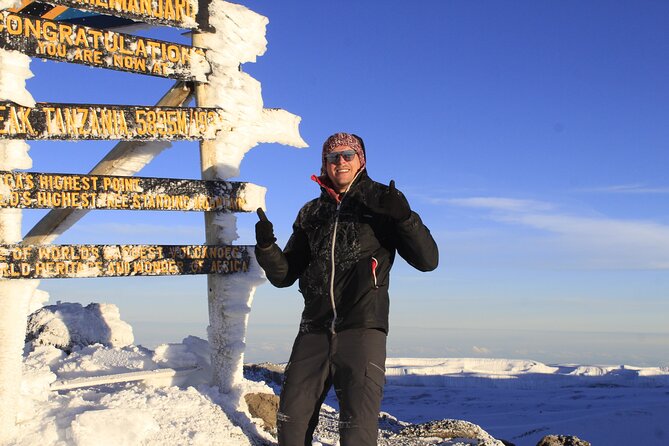
Kilimanjaro’s Lemosho Route gives you the mountain in chapters: wet rainforest first, then open high country, volcanic rock, glaciers, and finally the thin-air push to Uhuru Peak at 5,895 meters. The route takes eight days and uses a slow climb with repeated high-and-low walking, a smart design for getting your body used to altitude.
I like the private group format, since your guide can set a pace for your own team rather than a large mixed crowd. I also like the route’s variety, especially the Shira Plateau, Lava Tower, Barranco Wall, and the descent through forest. The main caution is cost planning: the advertised $1,090 price does not include park fees, personal gear, tips, flights, visas, or personal expenses.
The Kilimanjaro details that matter most
- A full 8-day Lemosho itinerary: You have more time to gain height gradually than on a rushed climb.
- A serious acclimatization plan: The route repeatedly takes you high, then brings you lower to sleep.
- A night summit attempt: You leave Barafu Camp in darkness for Uhuru Peak, the hardest section of the climb.
- Private participation: Only your own group takes part, with a professional mountain guide and support team.
- Meals and transfers included: Breakfast, lunch, dinner, hotel pickup, and the return transfer are part of the package.
- Extra costs remain: Park fees, hiking equipment, tips, flights, visas, and personal needs are not covered.
Why the Lemosho Route is worth eight days
Lemosho approaches Kilimanjaro from the west. That gives you a longer opening section and a gradual change in scenery. You begin in rainforest, cross the Shira Plateau, circle toward the southern side of the mountain, then finish at Uhuru Peak before descending through Mweka.
That shape matters. Kilimanjaro is not mainly a technical climbing test. The biggest challenge is altitude, cold, fatigue, and the need to keep moving when the air gets thin. An eight-day schedule gives you time to adjust, though no itinerary can remove altitude risk.
The route also gives you more than a summit photograph. You see giant volcanic slopes, unusual high-altitude plants, broad views toward Kibo Volcano, and, if the air is clear, Mount Meru. The scenery changes enough that each day feels distinct.
This is a private activity, not a fixed public group. That can be useful if one person needs a slower pace, a longer rest, or extra encouragement. The provided plan says each pair of climbers receives a personal guide during the summit push, with attention to physical and mental condition.
More Lemosho Route climbs:
- Kilimanjaro climb by Lemosho Route (7-day)
★ 5.0 · 651 reviews - 8-Day Small-group Lemosho Kilimanjaro Summit Trekking
★ 5.0 · 186 reviews - Kilimanjaro Climbing Lemosho Route 8 Days.
★ 5.0 · 186 reviews
Day 1: Londorossi Gate to Mti Mkubwa
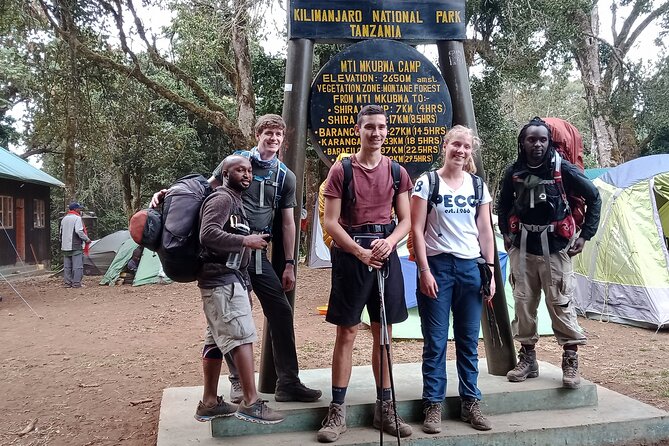
The day begins with a hotel meeting and another briefing. From there, the drive to Londorossi Gate takes about three to four hours. After permits and Search and Rescue registration are handled, you start walking toward Mti Mkubwa Camp at 2,780 meters.
The trek itself is listed at about two hours. Do not mistake the short walking time for an easy travel day. The road transfer is long, and the first trail section is wet rainforest. A rain jacket is essential, not optional decoration for your daypack.
This opening walk is a gentle way to start, but the forest can be damp and muddy. Keep your waterproof layer handy rather than buried under clothes. Admission to the park is included in the activity arrangements, but the separate park-fee payment should be clarified before departure because the price information says those fees are not included.
Day 2: Shira 1 and the first wide views
You wake early, eat breakfast, and climb toward Shira 1 Camp at 3,505 meters. The walk takes about five to six hours and is described as gradual. This is where the route begins to feel like a high mountain journey rather than a forest hike.
The reward is the first broad view of the Shira Plateau and Kibo Volcano. After the enclosed rainforest, the open country can feel surprisingly spacious. Your team prepares lunch at camp, then you can rest in your tent or take a short walk.
This day is important because you gain a substantial amount of height. Pay attention to how you feel, drink as directed by your guide, and avoid treating the moderate trail as a reason to race ahead. A private group helps here, since the guide can keep the pace controlled.
Day 3: Shira 2, Mount Meru, and a high acclimatization walk
Day 3 is a shorter walking day, around four hours, from Shira 1 to Shira 2 Camp at 3,900 meters. The trail is described as manageable, with views across Africa and Kilimanjaro’s distinctive plant life.
Mount Meru may appear from Shira 2 if the weather cooperates. It is Tanzania’s fifth-highest peak, and the sight adds another large volcanic form to the horizon. Weather is a real part of mountain travel, so treat this as a possible reward rather than a promise.
After lunch and a two-hour rest, you take an acclimatization walk toward Lava Tower, gaining about 300 meters before returning to camp. This is the classic high-walk, low-sleep approach. You briefly make your body work at greater height, then return to sleep lower than the highest point reached.
More treks and hikes around Kilimanjaro:
- Kilimanjaro climb, Machame Route (7-day)
★ 5.0 · 262 reviews - Climbing Kilimanjaro – Machame Route
★ 5.0 · 170 reviews - Climbing Kilimanjaro through 7 days Machame Route
★ 5.0 · 151 reviews - Kilimanjaro climb, Lemosho Route (8-day)
★ 5.0 · 148 reviews
Day 4: Lava Tower and the Barranco Wall
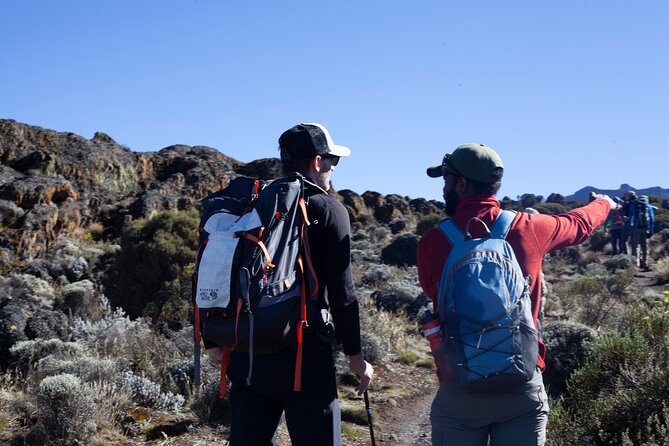
Day 4 brings one of the route’s key altitude tests. You leave Shira 2 at 3,900 meters and climb to Lava Tower at 4,630 meters. The route includes repeated climbs and descents, and you may feel the thin air here.
Lunch is taken at Lava Tower, with a planned stay of roughly one to two hours for acclimatization. This is not wasted time. The purpose is to expose you to height in a controlled way before descending to Barranco Camp at 3,960 meters.
The descent ends at the famous Barranco Wall. It looks much steeper and more intimidating than the trail actually is. You climb it the next morning on a straightforward hiking route, but the wall still demands care, steady feet, and attention to your guide.
The day is listed at about four hours, though altitude and breaks can make any mountain schedule feel longer. Keep warm at Lava Tower, eat even if your appetite is lower, and let your guide set the rhythm.
Day 5: Barranco Wall and Karanga Camp
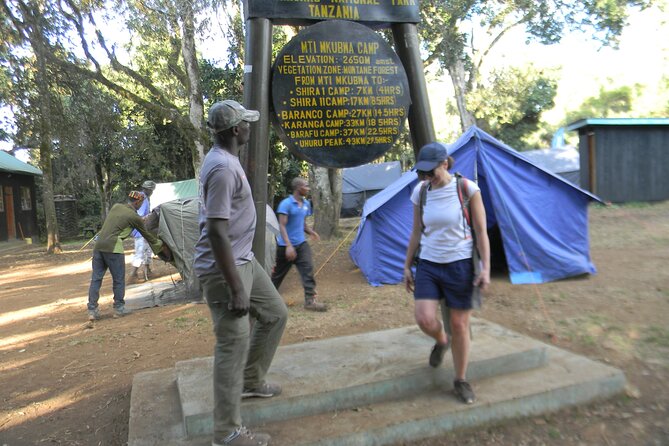
Start early for the Barranco Wall. An early departure is recommended to avoid congestion from other groups, a useful tip on a popular route. The climb takes about an hour and is not described as technically difficult, though you will use your hands in places and should follow the guide’s route.
At the top, there is time to rest and photograph Kibo Volcano. Then the trail turns more demanding as you head toward Karanga Camp at 3,995 meters. The route rises and falls several times, so the distance is not the only measure of effort.
Lunch is served at camp. Later, you take another acclimatization walk toward Barafu Camp, gaining around 200 meters before returning to Karanga. Again, the point is to walk high and sleep lower. The repeated pattern may feel tiring, but it is one of the strongest features of the schedule.
Day 6: Barafu Camp and the quiet before summit night
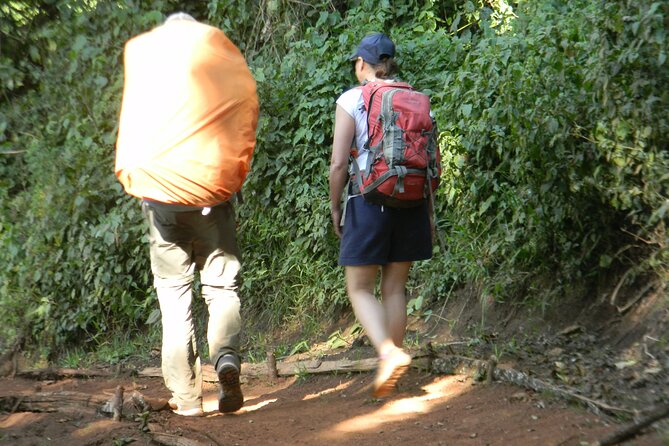
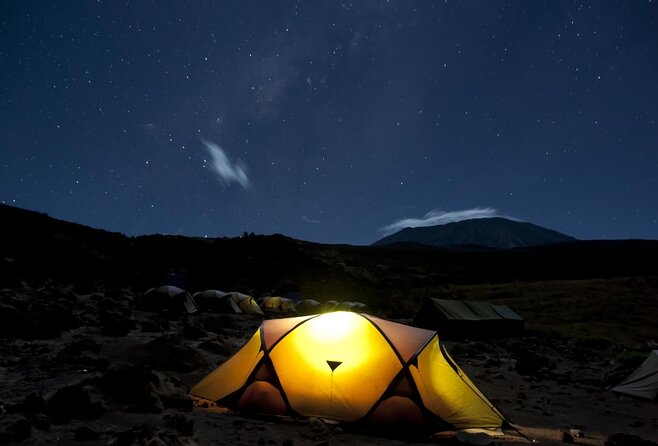
You climb to Barafu Summit Camp at 4,640 meters after breakfast. This is the launch point for the night attempt on Uhuru Peak. The support team sets up camp, including tents and sleeping bags, so you can focus on eating, resting, and preparing.
The day includes an acclimatization walk to Kosovo Summit Intermediate Camp at 4,800 meters, followed by a return to Barafu. A hot dinner is planned before you try to sleep. The listed walking time is about five hours, but the bigger challenge is arranging your body and mind for an overnight start.
Do not expect deep sleep. The best use of this afternoon is simple: organize your layers, keep essential items close, eat what you can, and rest. Your personal hiking gear is not included, so you need to arrive with suitable clothing and equipment.
Day 7: Uhuru Peak and the long descent
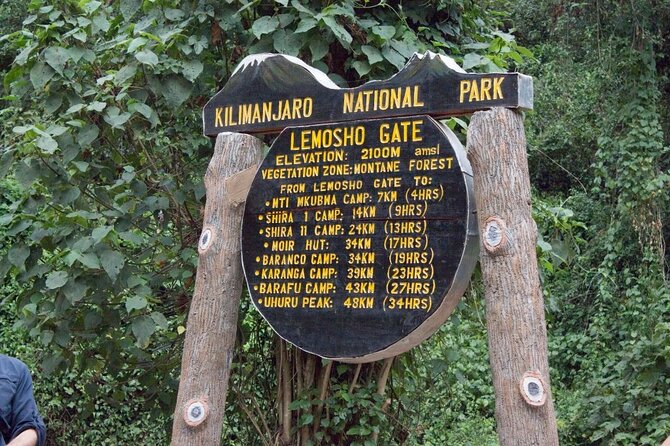
The summit day begins at night from Barafu Camp. The target is Uhuru Peak, at 5,895 meters, the highest point in Africa. The route is not technically difficult in the mountaineering sense, but altitude makes this the hardest day by far.
The climb is slow and steady. Each pair of climbers is assigned a personal guide for the ascent, and the guide monitors your physical and mental state. That close attention is especially useful in darkness, cold, and thin air, when small problems can quickly become serious.
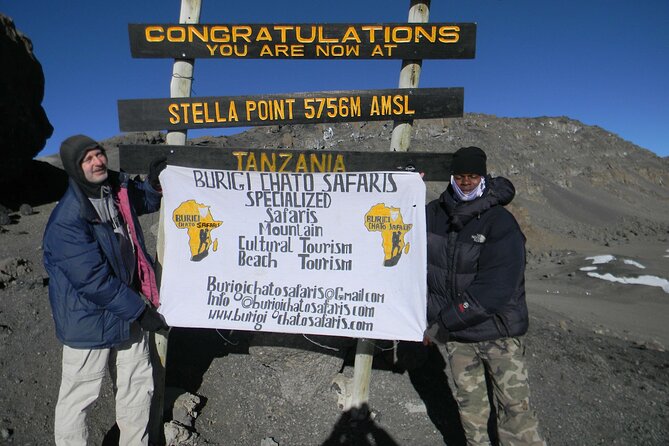
After reaching Uhuru Peak, you may have the option to descend to the nearest glacier. The wording makes this optional, so ask your guide about conditions, timing, and whether your group has enough energy. The summit itself is the main goal.
You return to Barafu Camp, rest for about two hours, then continue down to Millennium Camp at 3,820 meters. The full day is listed at about eight hours, though the summit push and descent can make it feel like the longest day of the trip. Pace yourself from the start. A fast first hour is not a prize.
Day 8: Mweka Gate and the return to Moshi
The final camp sits in tropical rainforest. At 3,820 meters, the lower altitude should feel welcome after the summit day. After a hot breakfast, you descend to Mweka Gate at 1,650 meters.
The walk is listed at about five hours. At the gate, the group gathers to mark the achievement, and you can write about the ascent in the guest book. Commemorative certificates are provided at the company office, followed by a transfer back to your hotel.
This last day is more than a formality. Descending can be hard on tired knees, and wet forest conditions return. Keep your rain layer accessible and do not rush simply because the summit is behind you.
What the $1,090 price really covers
At $1,090 per person, the price has clear value if the park-fee arrangement is transparent and you already own or can rent your mountain gear. It covers private transfer to the activity area, a professional guide, eight lunches, seven dinners, and seven breakfasts.
It also includes the main guiding structure, tents and sleeping bags arranged at Barafu, hotel pickup, and a return transfer. Group discounts may help reduce the per-person cost if several people book together.
The price does not cover the full cost of a Kilimanjaro trip. You still need to budget for:
- Park fees, paid directly to the park or through the tour operator
- Flights and Tanzanian visas
- Tips for the guide and mountain support team
- Personal hiking clothing and equipment
- Personal needs during the climb
Ask for a written breakdown of park fees before paying. This is the single most important price question. Also confirm exactly what sleeping equipment is supplied, what the private transfer covers, and how tipping is handled.
Food, support, and the human side of the climb
Meals are a real practical benefit on a climb. The package provides lunch each day, dinner on seven nights, and breakfast on seven mornings. You should still tell the operator about dietary needs before departure, since the supplied information does not specify menus or special-diet arrangements.
The company’s wider activity record includes friendly drivers, strong hospitality, and local outings involving coffee and village culture around Materuni. Those details do not describe the mountain itinerary itself, but they suggest that the operator also handles more relaxed Kilimanjaro-area days. The important point for this climb is to confirm the names and roles of your mountain guide team before you leave. No individual guide names are supplied here.
Past company activity has also included a well-managed Rongai climb during the Covid-19 period, with careful control of arrangements and fewer climbers on that route. That is not evidence of conditions on Lemosho, which can be busier, but it is useful context when asking how the operator manages logistics and changing conditions.
Who should book this climb
This trip suits you if you want a full Kilimanjaro attempt with a gradual route, private participation, and organized meals and transfers. It is a good match for people who value scenery and acclimatization rather than the shortest possible schedule.
You should be comfortable with long walking days, basic camp living, a night ascent, and uncertain mountain weather. The information says most people can participate, but that should not replace your own medical preparation. Good physical condition, sensible pacing, and an honest conversation with your doctor matter.
This is not a casual hiking holiday. The Barranco Wall may be nontechnical, but the altitude is serious. The summit day is cold, dark, and tiring, and the descent continues after you return to Barafu.
The activity starts at 8:30 a.m. and ends back at the meeting point after the return transfer. Confirmation is provided at booking. Free cancellation is available up to 24 hours before the start time for a full refund. Within 24 hours, changes and refunds are not accepted, and poor weather may lead to a new date or full refund.
Should you book the Lemosho climb?
Book it if you want an eight-day private climb with a strong acclimatization pattern, varied scenery, and a clear route to Uhuru Peak. The combination of Shira Plateau, Lava Tower, Barranco Wall, and the Mweka descent gives you a fuller Kilimanjaro experience than a quick summit schedule.
Pause before booking if the $1,090 price is your total trip budget. Park fees and equipment can change the final figure, and the summit day requires real stamina. Before committing, get the park-fee amount, guide details, equipment list, group size, and tipping expectations in writing.
For a prepared walker who wants time to adjust and prefers a private team, this is a sensible Lemosho plan. Just treat the summit as a demanding mountain objective, not a sightseeing stop with a tall photo backdrop.
FAQ
How long is the Kilimanjaro Lemosho climb?
The climb lasts approximately eight days, beginning at Londorossi Gate and ending at Mweka Gate before the return transfer to your hotel.
Where does the tour start?
The guide and mountain team meet you at your hotel in the morning. The listed activity start time is 8:30 a.m.
Is this a private tour?
Yes. Only your own group participates in the activity.
Is hotel pickup included?
Yes. Private transfer to the activity area and a return transfer to your hotel are included.
Are meals included?
Yes. The package includes eight lunches, seven dinners, and seven breakfasts.
Are Kilimanjaro park fees included in the price?
No. Park fees are not included and can be paid directly to the park or through the tour operator.
Is hiking equipment included?
No. Personal hiking gear is not included. You must arrange your own equipment and other personal needs.
What happens if bad weather cancels the climb?
If poor weather causes the experience to be canceled, you are offered a different date or a full refund. You can also cancel up to 24 hours before the start time for a full refund.
More Eight-Day Trips in Kilimanjaro
- Climbing Kilimanjaro through 8 days Lemosho Route
★ 5.0 · 52 reviews - Kilimanjaro climb, Northern Circuit route (8-day)
★ 5.0 · 40 reviews - 8 Days Kilimanjaro Hike via Lemosho Route
★ 5.0 · 39 reviews - 8 Days Climbing Mt.Kilimanjaro (Lemosho Route)
★ 4.5 · 37 reviews
Just added around Kilimanjaro
- 6 days Machame route climbing Mt.Kilimanjaro★ 5.0 · 8 reviews
- machame route★ 5.0 · 16 reviews
- Mt Kilimanjaro 6 days Marangu route hike★ 5.0 · 3 reviews
- Private Cycle to Kilimanjaro Bike Park Safari★ 5.0 · 6 reviews
- West Kilimanjaro cycling Adventures★ 4.5 · 8 reviews
- Kilimanjaro Climb • Marangu Route ~ 9 Day★ 5.0 · 4 reviews
- 3 Days Private E-Bike Tour in West Kilimanjaro★ 5.0 · 3 reviews
- Kilimanjaro Climb • Machame Route ~ 10 Day★ 5.0 · 6 reviews