
Reviewed · LEMOSHO ROUTE CLIMBS
8 Day Kilimanjaro Lemosho Climb
The best thing about this 8-day Lemosho climb is its gradual route profile. You start in remote western Kilimanjaro rainforest, cross the open Shira Plateau, circle high around Kibo, and reach the summit by way of the southern circuit. That extra day matters: it gives your body more time to adjust before the hard summit night.
I like the quiet start and the changing scenery, from wet forest to giant senecios and bare volcanic ground. I also like the built-in acclimatization day at Lava Tower, where you climb high and sleep lower. The main consideration is effort: this is a serious mountain trek, with long days, cold nights, shared camping, and an 18-hour summit day.
Key points at a glance
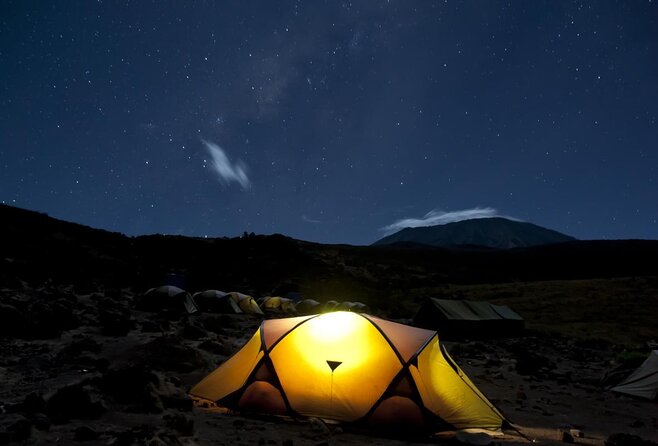
- Remote western start: Lemosho begins away from the busiest eastern approaches, with a forest trek before you reach the Shira Plateau.
- Strong acclimatization plan: The Lava Tower climb reaches 4,630 meters before you descend to Barranco Valley.
- Non-technical Barranco Wall: You use hands and feet on a short scramble, but no climbing equipment or prior technical experience is required.
- Full-service camping: A cook, waiter, tent crew, porters, dining tent, tables, chairs, meals, and boiled water are included.
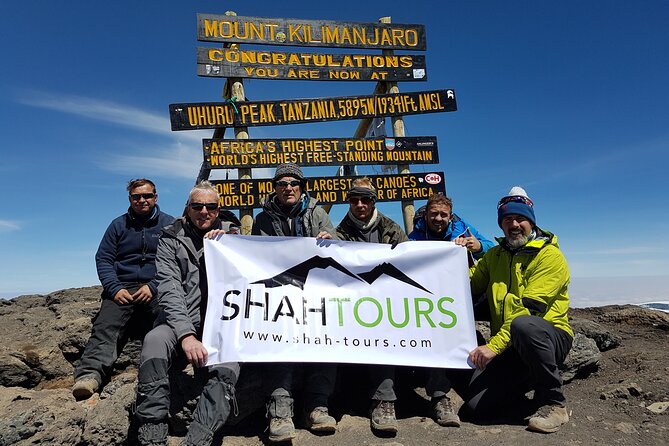
- Midnight summit attempt: You climb through the arctic zone to Stella Point and then Uhuru Peak, at 5,895 meters.
- A well-supported private trip: Only your own group participates, with twice-daily health checks and an oximeter.
Why the Lemosho route earns eight days
Kilimanjaro is not a technical mountain climb, but that does not make it easy. The trouble is altitude. You can be fit and still feel unwell high on the mountain, so a route that allows a slower rise is worth serious attention.
This version starts at Lemosho Gate, on the western side of Kilimanjaro. The first two days move from rainforest into heather and moorland, then across the Shira Plateau. From there, you approach Kibo, the highest volcanic cone, from the west before joining the southern circuit.
The route is popular for good reason. You get broad scenery, quieter early stages, and a useful climb-high, sleep-lower pattern on Day 4. The eight-day schedule also gives you more time than shorter Lemosho versions, although it remains physically demanding.
This is a private activity, so your group does not have to share the trek with unrelated participants. Group discounts are offered, but the supplied details do not state the discount amount. The listed price is $3,125 per person.
More Lemosho Route climbs:
- Kilimanjaro climb by Lemosho Route (7-day)
★ 5.0 · 651 reviews - Kilimanjaro Climbing Lemosho Route 8 Days.
★ 5.0 · 186 reviews - 8-Day Small-group Lemosho Kilimanjaro Summit Trekking
★ 5.0 · 186 reviews
Day 1: Lemosho Gate and the wet rainforest
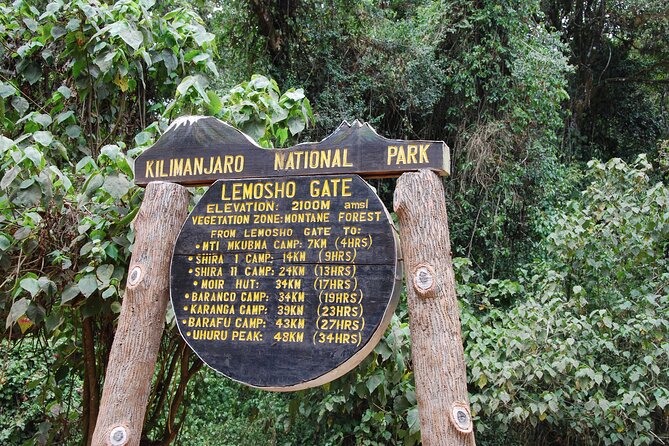
Your day begins with a 9:00 a.m. transfer from Moshi to Lemosho Gate. Registration takes place at the gate, then a 4×4 track carries you farther toward the trailhead before you begin walking.
The first trek takes about four hours through thick rainforest. This is not just a warm-up stroll. The path winds upward, and rain is common, so mud and slippery footing are possible. The forest is dense and varied, with the chance of seeing some wildlife and unusual plant life.
You reach the first camp at the end of a relatively short walking day. That is useful after the road transfer, but do not expect a dry, polished start. Good waterproof layers, pack protection, and shoes with dependable grip are important from the first afternoon.
Water is not included on the first day, so plan for that detail before you set out. From the first camp onward, the operator provides boiled drinking water.
Day 2: Leaving the trees for Shira Ridge
The forest disappears quickly on Day 2. You climb a steeper path into the heather and moorland zone, where the thick green cover opens up and the views begin to stretch.
The five-hour walk follows Shira Ridge. The scenery changes from enclosed forest to volcanic ridges and wide mountain views, including Shira Peak. Shira is one of Kilimanjaro’s three volcanic cones, and its eroded, jagged form gives this part of the climb a character of its own.
This is a good day to settle into the mountain routine. Walk slowly, drink regularly, and do not race simply because you feel strong. The air is getting thinner, even if the trail still feels manageable.
Day 3: Shira Cathedral and the western view of Kibo
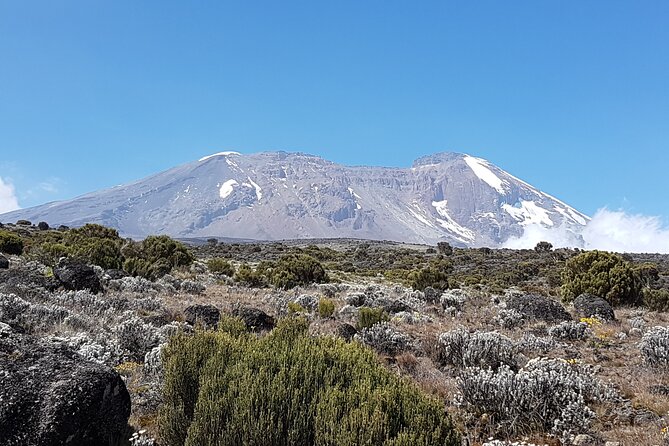
Day 3 crosses the Shira Plateau, still in heather and moorland. The walking time is about five hours, with an optional extra hike to Shira Cathedral at 3,880 meters.
That optional section can add a worthwhile high point to the day, but it should not be treated as compulsory. You are already climbing toward higher camps, and saving energy is sensible if you are feeling tired or developing a headache.
From Shira, Kibo begins to dominate the view. The cone is your final target, but it still looks distant. That distance is part of the experience. Kilimanjaro does not reveal the summit in one dramatic rush. You watch it grow larger over several days.
You finish at Shira Two Camp. This is still a relatively gentle stage compared with what comes later, but the altitude is beginning to matter.
More treks and hikes around Kilimanjaro:
- Kilimanjaro climb, Machame Route (7-day)
★ 5.0 · 262 reviews - Climbing Kilimanjaro – Machame Route
★ 5.0 · 170 reviews - Climbing Kilimanjaro through 7 days Machame Route
★ 5.0 · 151 reviews - Kilimanjaro climb, Lemosho Route (8-day)
★ 5.0 · 148 reviews
Day 4: Lava Tower, the key acclimatization day
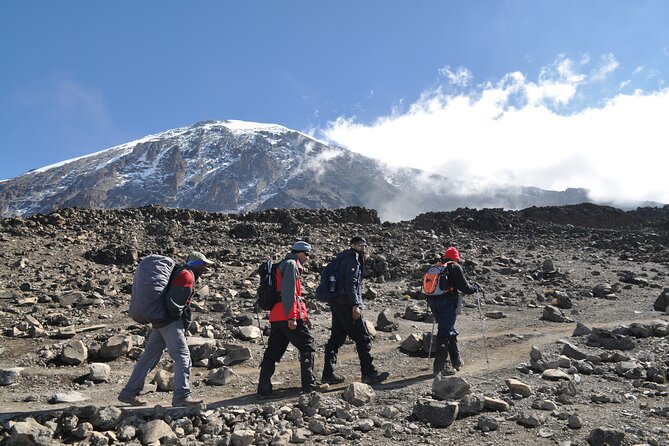
Day 4 is the route’s most important acclimatization stage. You climb steadily across alpine desert to Lava Tower at 4,630 meters, or 15,190 feet.
The path is not described as technical, but this is where you get a useful reading of how your body handles height. You may feel fine, or you may notice breathlessness, fatigue, headache, or nausea. Guides carry an emergency oxygen cylinder for every five passengers, and they conduct health checks twice daily with a high-grade medical oximeter.
After Lava Tower, you descend into Barranco Valley. This is the classic climb-high, sleep-lower pattern, and it is one of the strongest reasons to choose the eight-day schedule.
The descent also brings one of Kilimanjaro’s memorable plant sights, the giant flowering mountain senecios. They look almost prehistoric against the dry volcanic ground. The day lasts about eight hours, so it is long even though you finish at roughly the elevation where you started.
Day 5: Scrambling up Barranco Wall
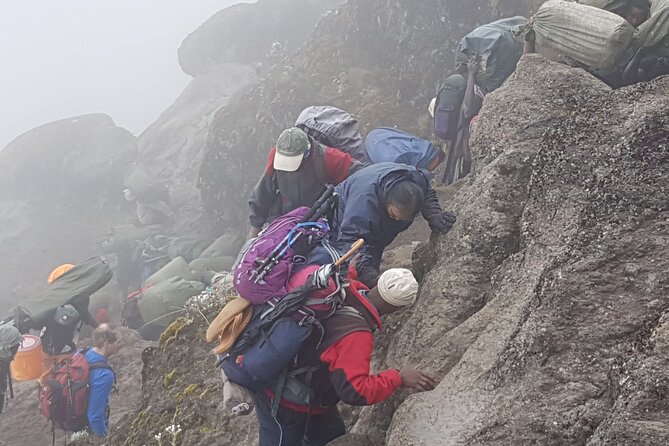
Barranco Wall is the day’s headline feature. You climb it using your hands and feet in places, but it is a non-technical scramble. No ropes, specialist equipment, or previous climbing experience are required.
That distinction matters. You are not facing a rock-climbing pitch, but you should expect uneven footing, close attention to where you place your hands, and occasional slow movement when the route narrows. The reward is a fine view back toward camp and the Heim Glacier.
After the wall, the trail winds around Kibo through alpine desert. You descend into Karanga Valley, then climb back up to camp. The walk takes about five hours.
Karanga is the last water point. From here onward, water logistics become especially important, and your supplied boiled water is a major practical benefit. You should still carry suitable soft water bottles or a hydration system. Metal and hard plastic water bottles are not included, and soft plastics are required on the mountain.
Day 6: A quiet approach to high camp
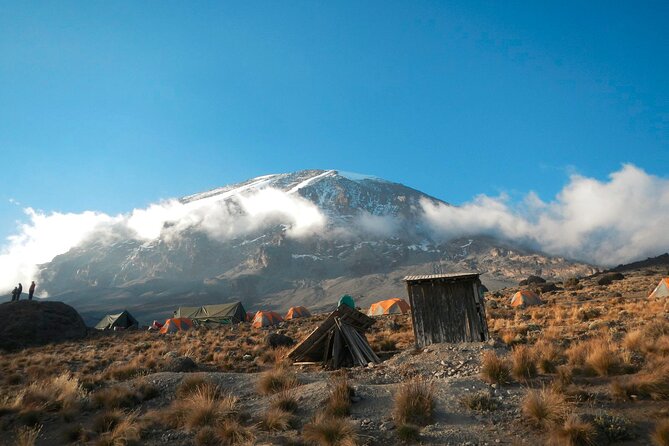
Day 6 is only about four hours, but it is not a throwaway day. You climb slowly through empty alpine desert toward Kibo. The path is not extremely steep, yet the thin air encourages a patient pace.
Mawenzi Peak may appear to the east. It is Kilimanjaro’s second volcanic cone and creates a striking contrast with the rounded bulk of Kibo.
The short walking day gives you time at summit camp to rest, organize clothing, and prepare for the midnight start. Use that time well. Pack your summit layers, headlamp, gloves, water, snacks, and any personal medication before trying to sleep.
The camp setting is basic but supported. You share a four-season tent when the number of people is even, and an odd-numbered group receives one single tent. Extra single tents cost more. A foam mattress is included, but you must bring or rent your own sleeping bag.
Day 7: Stella Point, Uhuru Peak, and the long descent
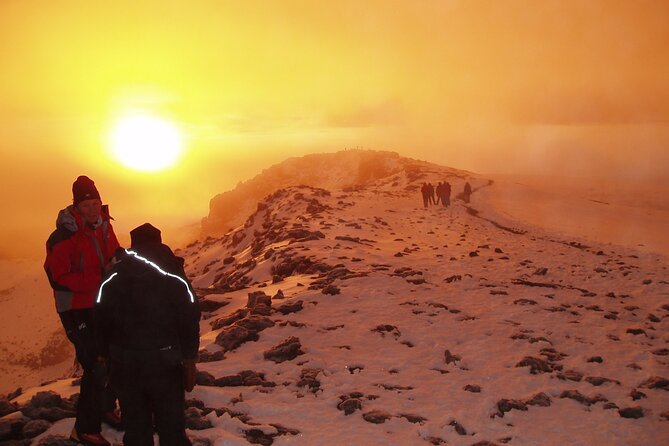
Summit day begins around midnight. You climb through darkness and cold in the arctic zone, following a slow zigzag over loose volcanic scree.
The first major target is Stella Point at 5,685 meters. Reaching the crater rim is a major achievement, but the summit is not quite finished. From Stella Point, you continue along the rim to Uhuru Peak at 5,895 meters, the highest point in Africa.
This final section is short compared with the whole climb, yet altitude makes it difficult. You usually spend only a brief time at the summit because of the extreme height. Take your photographs, enjoy the moment, and follow your guide’s advice about moving on.
You descend to base camp for breakfast or brunch, pack your equipment, then continue downhill through alpine desert. The entire day can last about 18 hours. That number tells you more than any scenic description: summit night is the hardest physical test of the trip.
The support system matters here. Guides monitor your health, the team provides meals, and emergency oxygen and a first-aid kit are carried. Still, no operator can remove the risks of high altitude, cold, exhaustion, or poor footing. You should be ready to turn around if your guide decides it is unsafe.
Day 8: Mweka Gate and the return to Moshi
The final day is a four-hour descent through southern rainforest to Mweka Gate. After the bare upper mountain, the return to trees can feel sudden and welcome.
A vehicle takes you back to Moshi. The crew generally leaves from Mweka Gate, making it the natural point to say goodbye before returning to town.
The tour ends back at the stated meeting point, Shah Tours at 6 Sekou Toure Way in Moshi. The package includes one transfer from a Moshi-based lodge to the park gates and one transfer back, but accommodation before or after the climb is not included.
What the $3,125 price covers
At $3,125 per person, this is not a budget walk. The value comes from how much mountain infrastructure is built into the cost.
Included are national park conservation, entry, camping, and rescue fees. You also get trained English-speaking mountain guides, porters carrying up to 15 kilograms of personal luggage per person, a specialist tent crew, a cook, a waiter, meals, eating equipment, a dining tent, chairs, tables, a basic mattress, and a four-season tent.
The operator also includes crew transport to the remote Lemosho gate, luggage storage while you climb, a pre-climb briefing and equipment check, boiled water from the first camp, hand-washing stations, and small personal wash basins at campsites.
The price includes a 100-liter rubberized holdall or packsack, which helps with mountain packing. It does not include your sleeping bag, walking poles, duffel bag, insurance, visa, flights, beverages, tips, or personal items.
You should also budget for gratuities. The supplied price excludes them, and the large support crew means this is not a minor detail. Ask the operator for current guidance before departure.
Comfort upgrades cost extra. A private portable toilet, foldable bed, upgraded menu, extra guide, personal porter, extra oxygen cylinder, and single tent are not part of the standard package. Flying Doctors emergency evacuation membership is also excluded.
Food, comfort, and crew support
Camping on Kilimanjaro is never a hotel experience, but this setup is more organized than a basic self-supported trek. A cook and waiter prepare seven breakfasts, seven lunches, and seven dinners, with utensils and eating equipment supplied.
The dining tent, tables, and chairs give you a place to sit apart from your sleeping tent. That small separation matters after a long day. Meals are described in the provided experiences as a strong part of the operation, with fresh food and more choice than some climbers expected.
Guide teams associated with Shah Tours include Mathayo, Calvin, Hamza, Isaac, and John. The most useful quality to look for is not a famous name but a guide who controls the pace, watches your condition, and gives clear advice. The supplied experiences repeatedly point to calm encouragement, careful support, and strong attention to safety from these named guides and their assistants.
Porter treatment also deserves attention. The package includes monitoring through the Kilimanjaro Porters Assistance Project, which is intended to support fair-treatment standards on the mountain. That does not replace your own questions about porter welfare, but it is a meaningful part of the package.
Who should book this climb?
You should consider this trip if you have strong physical fitness, enjoy multi-day camping, and want a route with varied scenery rather than the quickest possible ascent. It suits first-time high-altitude climbers who understand that a guided mountain trek still requires patience and preparation.
The route is not recommended for people with lung problems or known altitude-related medical conditions. You should discuss the climb with a medical professional if you have concerns.
I would choose this version over a shorter route if your schedule allows eight days. The Lava Tower acclimatization day, the quieter western start, and the southern approach give you a well-shaped progression. The drawback is the time and cost, plus the very long summit day.
Booking confirmation is provided at the time of reservation. Free cancellation is available up to 24 hours before the local start time. After that point, the amount paid is not refunded, and late changes are not accepted.
Should you book the 8-day Lemosho climb?
I would book it if you want the best balance of scenery, route variety, and acclimatization in this price range. The Barranco Wall adds a touch of real mountain movement without technical climbing, while the Shira Plateau and western approach make the route feel varied from start to finish.
I would not book it if you want a soft adventure, private facilities, or a short summit experience. You need to accept shared tents, basic washing facilities, cold nights, a large support team, and an exhausting summit day.
For a prepared climber who values careful pacing and full mountain support, this is a strong choice. Bring realistic expectations, proper personal gear, and enough time to recover after summit night.
FAQ
Where does the climb start?
The meeting point is Shah Tours at 6 Sekou Toure Way in Moshi, Tanzania. The scheduled start time is 9:00 a.m.
How long does the experience last?
The climb lasts approximately eight days.
Is the tour private?
Yes. Only your own group participates in this activity.
What level of fitness is required?
You should have a strong physical fitness level. The route includes several multi-hour hiking days and an approximately 18-hour summit day.
Is technical climbing experience required?
No. The route is non-technical. The Barranco Wall involves scrambling with your hands and feet, but no special equipment or previous climbing experience is required.
Is accommodation in Moshi included?
No. Pre-climb and post-climb accommodation are not included. The package does include transfers from and to a Moshi-based lodge.
Are meals included?
Yes. Seven breakfasts, seven lunches, and seven dinners are included, along with eating utensils, bowls, cups, and cutlery.
Is drinking water included?
Boiled drinking water is included from the first camp onward. Water on the first trekking day is not included.
Is a sleeping bag included?
No. Personal mountain equipment, including sleeping bags, walking poles, and duffel bags, is not included.
What happens if I need medical support?
The package includes one emergency oxygen cylinder per five passengers, a first-aid kit, twice-daily health checks, and a high-grade medical oximeter. Flying Doctors emergency evacuation membership is not included.
Can I cancel the booking?
You can cancel for a full refund up to 24 hours before the experience start time. Cancellations or changes made less than 24 hours before the start are not accepted for a refund.
More Eight-Day Trips in Kilimanjaro
- Climbing Kilimanjaro through 8 days Lemosho Route
★ 5.0 · 52 reviews - Kilimanjaro climb, Northern Circuit route (8-day)
★ 5.0 · 40 reviews - 8 Days Kilimanjaro Hike via Lemosho Route
★ 5.0 · 39 reviews - 8 Days Climbing Mt.Kilimanjaro (Lemosho Route)
★ 4.5 · 37 reviews
Just added around Kilimanjaro
- 6 days Machame route climbing Mt.Kilimanjaro★ 5.0 · 8 reviews
- machame route★ 5.0 · 16 reviews
- Mt Kilimanjaro 6 days Marangu route hike★ 5.0 · 3 reviews
- Private Cycle to Kilimanjaro Bike Park Safari★ 5.0 · 6 reviews
- West Kilimanjaro cycling Adventures★ 4.5 · 8 reviews
- Kilimanjaro Climb • Marangu Route ~ 9 Day★ 5.0 · 4 reviews
- 3 Days Private E-Bike Tour in West Kilimanjaro★ 5.0 · 3 reviews
- Kilimanjaro Climb • Machame Route ~ 10 Day★ 5.0 · 6 reviews