
Reviewed · MACHAME ROUTE CLIMBS
6 Days Machame Route Kilimanjaro Trekking
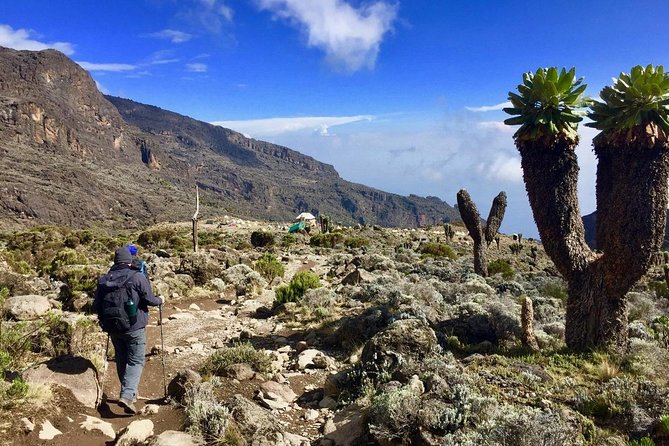
The Machame Route gives you Kilimanjaro in fast-changing stages: wet rainforest, open moorland, high volcanic rock, and the cold Arctic zone around Uhuru Peak. The views are excellent, and the route’s South Circuit lets you see Kibo and Mawenzi from several angles before summit night.
I like the strong value here. The price includes guides, porters, camping equipment, rescue fees, park costs, and all meals, while the team has earned praise for patient support, good English, and capable guides including Matthew, Joshua, Oliver, and Benjamin. I also like the practical acclimatization day at Lava Tower and Barranco. The catch is simple: six days is a tight schedule, and the summit push is hard. If you walk slowly or want more time at altitude, seven days would be the wiser choice.
Key points to know before booking
- The Machame Route changes habitat almost every day, from rainforest at 5,400 feet to Arctic conditions near the summit.
- Day three is the key acclimatization day, climbing to about 13,000 feet before dropping to Barranco Camp.
- Summit night begins around midnight to 2am, with a steep scree climb toward Stella Point and Uhuru Peak.
- The price includes the main trekking costs, including porters, guides, meals, tents, park fees, rescue fees, and taxes.
- You camp every night, and a sleeping bag, climbing gear, towels, travel insurance, visas, flights, and tips cost extra.
- A private group takes part, with pickup offered and the experience beginning at Kilimanjaro International Airport.
Why Machame is Kilimanjaro’s popular route
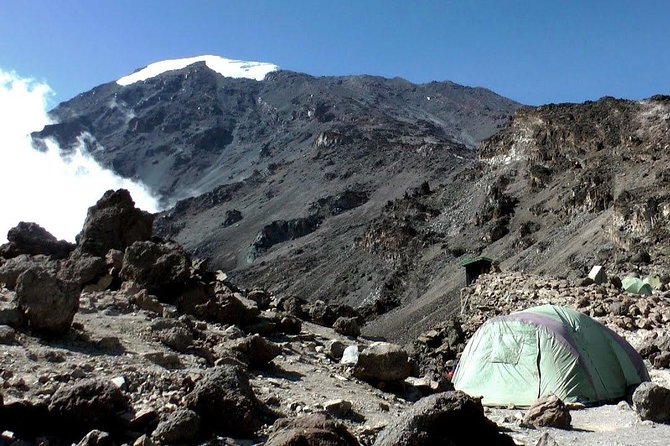
Machame is often called the Whiskey Route, though the real appeal is not the nickname. It is the variety. You start beneath tall forest, cross heather and moorland, pass through volcanic rock and dry high country, then finish among ice, scree, and thin air.
The route is also relatively affordable because access is straightforward and the schedule is shorter than longer routes. That helps explain the price of $1,930.42 per person. It is not a cheap walk, but Kilimanjaro costs quickly rise once park charges, food, porters, camping gear, rescue cover, and staff are included.
Your group is private, so you are not placed into a large shared party. That can make pacing and daily breaks easier to manage. The tradeoff is that a private six-day schedule does not automatically mean an easy one. You still face the same altitude, cold, distance, and steep summit approach.
More Machame Route climbs:
- Kilimanjaro climb, Machame Route (7-day)
★ 5.0 · 262 reviews - Climbing Kilimanjaro – Machame Route
★ 5.0 · 170 reviews - Climbing Kilimanjaro through 7 days Machame Route
★ 5.0 · 151 reviews
Day one: Machame Gate to rainforest camp
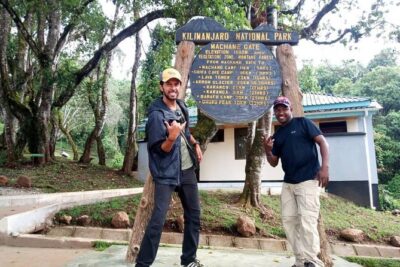
The morning drive from Moshi to Kilimanjaro National Park takes about 50 minutes and passes through Machame village on the mountain’s lower slopes. The walk begins at roughly 5,400 feet and climbs to about 9,400 feet over 11 kilometers.
The first day is not technically extreme, but it can be wet and slippery. The trail winds upward through rainforest, with muddy patches lower down. Gaiters and trekking poles are useful from the start, not just for the descent at the end.
Allow five to seven hours of walking. The forest provides shade and a gentle introduction to the mountain, but you should not treat this as a casual warm-up. You are already gaining about 4,000 feet, and the next morning brings a higher, more exposed route.
You finish at Machame Camp. Camping equipment, a mattress, cooking equipment, dinner, and breakfast are included in the package. A sleeping bag is not included, so arrange a rental or bring your own.
Day two: Heather and moorland at Shira Camp
After breakfast, the forest thins and the route enters moorland. You climb from about 9,400 feet to 12,500 feet, covering only five kilometers but taking four to six hours because the path is steep and rocky.
This shorter distance can be misleading. At altitude, a modest climb takes effort, and the exposed heather zone offers less shelter than the trees below. The trail crosses a small valley and follows a rocky ridge before turning west toward a river gorge.
Shira Camp is a major change from the first night. You are now above the forest, with wider views and cooler conditions. The camp’s open setting makes warm layers important after sunset. Take the evening slowly, eat well, and drink regularly. The next day is longer and goes higher before returning to a similar elevation.
Day three: Lava Tower, 13,000 feet, and Barranco
This is the most important day for acclimatization. From the Shira Plateau, you walk east along the ridge, pass the junction toward Kibo, and continue toward Lava Tower, also known as the Shark’s Tooth. The day covers about 10 kilometers and takes six to eight hours.
The highest point listed for this section is about 13,000 feet, with a route junction leading toward Arrow Glacier at approximately 16,000 feet. You do not need to treat that junction as an extra objective. The value of the day is the climb high, then sleep lower.
You finish at Barranco Hut, around 13,000 feet, so the day begins and ends at roughly the same height. That may seem odd, but it gives your body useful time at altitude without forcing you to sleep at the day’s highest point.
The surroundings are now semi-desert: dry volcanic ground, sparse plants, and broad views across the mountain. It is a striking change from the rainforest. It is also the day when a fast pace can catch up with you. Walk slowly, keep your breathing steady, and tell your guide early if you feel unwell.
More treks and hikes around Kilimanjaro:
- Kilimanjaro climb by Lemosho Route (7-day)
★ 5.0 · 651 reviews - 8-Day Small-group Lemosho Kilimanjaro Summit Trekking
★ 5.0 · 186 reviews - Kilimanjaro Climbing Lemosho Route 8 Days.
★ 5.0 · 186 reviews - Kilimanjaro climb, Lemosho Route (8-day)
★ 5.0 · 148 reviews
Day four: Barranco Wall and Barafu Camp
Day four covers nine kilometers but takes eight to ten hours. You leave Barranco and climb the steep ridge beside the Barranco Wall, then continue through Karanga Valley before reaching the junction with the Mweka Trail.
This is a demanding day even though the distance is not huge. The Barranco Wall requires careful footwork and steady movement. It is not described as a technical rock climb, but you should expect a steep section where balance and confidence matter.
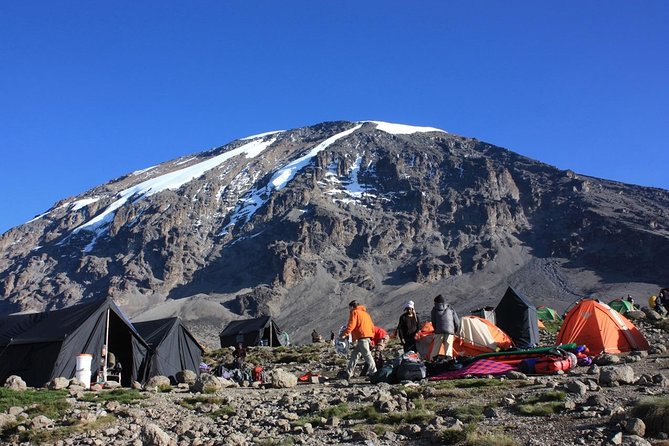
From Karanga, the route continues upward to Barafu Hut at about 15,000 feet. You have now completed the South Circuit, which gives views of the summit from different sides. Mawenzi and Kibo can be seen from the Barafu area.
Barafu is the staging point for the summit. After dinner, you should try to rest as much as possible, though sleeping at 15,000 feet can be difficult. Keep your summit clothing, headlamp, water, snacks, and gloves ready. A midnight start leaves little room for rummaging through bags.
Day five: Stella Point, Uhuru Peak, and the long descent
Summit day begins between midnight and 2am. The ascent covers about five kilometers, but it takes seven to eight hours. You climb in darkness through heavy scree toward Stella Point, between the Rebmann and Ratzel glaciers.
This is the hardest part of the trek for most people. The cold, darkness, altitude, and slow uphill movement make the climb as much a mental test as a physical one. You may feel that every step takes time. Your guide’s pacing and encouragement matter greatly here.
At Stella Point, around 18,600 feet, you can stop briefly and watch sunrise if the weather allows. The view at this hour is one of the great rewards of the route, but do not linger too long in the cold.
From Stella Point, the route continues around the crater rim toward Uhuru Peak, listed here at 19,345 feet. The final section remains difficult because you are already tired and breathing thin air. Reaching the top of Africa is the high point of the experience, but the day is far from over.
You descend about 12 kilometers to roughly 10,000 feet, taking another four to six hours. The descent is a relief for your lungs, but it can be tough on knees and feet. Trekking poles are especially useful now. Keep eating and drinking, even if your appetite has faded.
The total figures for day five are demanding: about five kilometers up, 12 kilometers down, and up to 14 hours of movement when both sections are counted. The listed hiking time separates the ascent and descent, so plan for a very long day.
Day six: Mweka Gate and the return to lower ground
The final day is a 10-kilometer descent from around 10,000 feet to the Mweka Park Gate. It takes about three to four hours and returns you to rainforest.
After breakfast, the path becomes wetter and muddier as you lose height. Keep rain gear and warmer clothing accessible even if the lower forest feels warm. Shorts and a T-shirt may be comfortable lower down, but conditions can change before you reach the gate.
At Mweka Gate, you receive summit certificates. This is also where the trek officially ends before returning to the meeting point. The six days are packed tightly, so the final descent may feel surprisingly tiring despite being downhill.
What the $1,930.42 price covers
The cost has good practical value because many expensive parts of a Kilimanjaro climb are included:
- Professional driver and guide
- Porter support
- Camping equipment, including a mess tent, mattress, and cooking equipment
- Park and parking fees
- Rescue fees
- Accommodation during the trek
- All listed taxes and VAT
- Five breakfasts, five lunches, and five dinners
That package means you are not separately paying for every camp night, meal, porter service, or park entry. It also removes much of the daily packing burden, since porters carry the group equipment and supported luggage.
You still need to budget for international flights, accommodation before and after the trek, a sleeping bag, climbing gear, towels, tips, travel insurance, visa fees, personal purchases, and any government increase in park fees or taxes. Climbing gear and sleeping bags are available for rent, but confirm prices and availability before arrival.
The value is strongest if you need a package that handles the mountain logistics in one booking. It is less attractive if you already own equipment, have arranged accommodation, or want a longer seven-day route for easier acclimatization.
Guides, food, and camp support
The strongest part of the operation is its human support. Mafie Adventures has been associated with guides named Erastus, Matthew, Joshua, Oliver, and Benjamin. The guiding team is described as English-speaking, attentive, and willing to adjust the pace to the person who needs the most help.
That matters most on summit night. A guide who watches your pace, checks your condition, and stays close can make a hard day feel manageable. The team has also been credited with good meals and reliable porter support. Food on a mountain trek does not need to be fancy. It needs to arrive consistently, provide enough energy, and be served when you are tired. This package covers all five breakfasts, lunches, and dinners during the route.
The camping setup is functional rather than luxurious. You should expect a mess tent, mattress, cooking equipment, and basic mountain facilities. Do not book this expecting hotel comforts. You are choosing a route where the reward comes from the changing altitude zones and the summit effort.
Who should choose six days, and who should add time
This trip suits you if you are fit enough for long uphill days, comfortable camping, and ready for a midnight summit attempt. It also works well if you want a direct route with strong scenery and a lower price than some longer options.
The six-day schedule is best for someone who already understands that altitude can slow even a fit person. You need patience, not just fitness. The Machame Route gives you an acclimatization climb on day three, but it still compresses the mountain into a short period.
A seven-day version would be worth considering if you walk slowly, prefer shorter days, or want more time to adjust. One direct comment from the available feedback is especially useful: six days can be enough for a fast walker, while a slower walker may be better served by seven.
This trek is not ideal if you want private rooms, easy walks, or a flexible cancellation arrangement. The experience is non-refundable and cannot be changed after booking, so confirm your dates, health plans, equipment, and insurance first.
Should you book this Kilimanjaro trek?
Book it if you want excellent route variety, a private group, and a package that includes the costly mountain basics. The guides and porters are the real reason to take this particular operation seriously, with repeated praise for care, patience, English communication, food, and summit support.
Think twice if you are unsure about six days at altitude. The route is beautiful, but summit night is long and physically punishing. If you have room in your schedule and budget, a seven-day plan may give you a better margin.
For a capable hiker who accepts basic camping and wants a direct shot at Uhuru Peak, this is a strong-value Kilimanjaro option. Pack gaiters, trekking poles, warm summit clothing, a sleeping bag, and a good attitude. The mountain will supply the rest, including the mud.
FAQ
Where does the trek start?
The activity starts at Kilimanjaro International Airport on Kilimanjaro Airport Road in Tanzania. Pickup is offered.
Where does the trek end?
The activity ends back at the meeting point after the descent to Mweka Park Gate and completion of the trek.
How long is the Machame Route trek?
The trek lasts six days, approximately.
What time does the activity start?
The listed start time is 12:00am. The summit climb on day five begins between midnight and 2am.
Are meals included?
Yes. The package includes five breakfasts, five lunches, and five dinners.
Is camping equipment included?
Yes. Camping equipment includes a mess tent, mattress, and cooking equipment. A sleeping bag is not included, but it is available to rent.
Are climbing guides and porters included?
Yes. The package includes a professional driver and guide as well as porterage.
Is this a private group activity?
Yes. This is a private activity, and only your group takes part.
Can I cancel or change the booking?
No. The experience is non-refundable and cannot be changed for any reason.
More Six-Day Trips in Kilimanjaro
- Kilimanjaro climb, Lemosho Route (6-day)
★ 5.0 · 129 reviews - Kilimanjaro climb, Marangu route (6-day)
★ 5.0 · 72 reviews - 6 Days Tanzania Classic Safari
★ 5.0 · 52 reviews - The Best of Machame Route in 6 Days: Your World’s Summit Guide
★ 5.0 · 44 reviews
Just added around Kilimanjaro
- 6 days Machame route climbing Mt.Kilimanjaro★ 5.0 · 8 reviews
- machame route★ 5.0 · 16 reviews
- Mt Kilimanjaro 6 days Marangu route hike★ 5.0 · 3 reviews
- Private Cycle to Kilimanjaro Bike Park Safari★ 5.0 · 6 reviews
- West Kilimanjaro cycling Adventures★ 4.5 · 8 reviews
- Kilimanjaro Climb • Marangu Route ~ 9 Day★ 5.0 · 4 reviews
- 3 Days Private E-Bike Tour in West Kilimanjaro★ 5.0 · 3 reviews
- Kilimanjaro Climb • Machame Route ~ 10 Day★ 5.0 · 6 reviews
Machame Route Climbs, compared.
The Best of Machame Route in 6 Days: Your World’s Summit Guide
Read our review →Browse the lists this tour appears in