
Reviewed · MACHAME ROUTE CLIMBS
6 Days Machame Route Hike
The Machame Route gives you Kilimanjaro the hard way, but also the scenic way. You begin in the mountain’s montane forest, walk through changing habitats, sleep in tents, and reach the summit after several days on foot. This six-day plan is aimed at fit hikers with some experience, not casual walkers looking for a gentle holiday.
I like the longer schedule because it gives your body more time to adjust to altitude. I also like the practical camping setup: tents are included, meals are served in a dinner tent or outdoors, and the descent uses the Mweka trail rather than retracing every step.
The main caution is simple: summit night is tough. You should expect cold, fatigue, darkness, and sore muscles, particularly on the fifth day. The route is scenic and the success rate is described as fairly high, but six days is still a serious mountain trip.
Key points to know before booking
- Six days on the mountain: The schedule allows more time for altitude adjustment than a shorter climb.
- Machame Gate begins the trek: The drive from Moshi takes about 45 minutes, followed by a forest hike to Machame Camp.
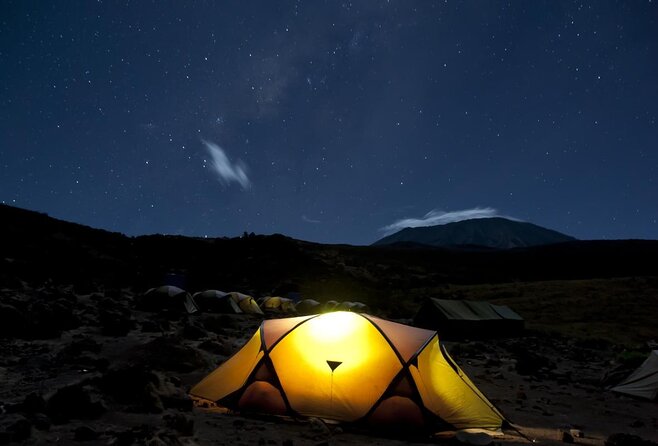
- Camping is part of the deal: You sleep in tents, with meals served in a dinner tent or outside on a blanket.
- The first day is already demanding: The 11-kilometer hike takes about five to six hours and can be muddy or slippery.
- Mweka provides the descent: You come down a different trail and spend the final mountain night at Mweka or Millennium Camp.
- Private group format: Only your group participates, with pickup offered from Moshi and mobile ticketing available.
Why the Machame Route feels different
Kilimanjaro has a reputation for being accessible because you do not need technical climbing equipment for the standard routes. That does not make it easy. The height, cold, long walking days, and thin air demand steady preparation.
Machame is often treated as the more adventurous alternative to Marangu. The comparison is sometimes framed as Coca Cola versus Whiskey, but the useful point is this: Machame uses tents rather than mountain huts and has a more rugged feel. You walk through forest, camp on the mountain, and follow a route known for broad views and changing terrain.
You should choose this route because you want the journey, not only the summit photograph. The camping, daily walking, and gradual change in vegetation are a major part of the reward. If you want a simple bed each night and a more direct setup, this may not be your best fit.
The six-day schedule is important. Altitude is not solved by fitness alone, and a strong runner can still struggle if the ascent is too fast. This itinerary gives you more time than a compressed climb, though it remains shorter than some slower Kilimanjaro programs. The operator describes it as suitable for people with moderate physical fitness and some hiking experience.
More Machame Route climbs:
- Kilimanjaro climb, Machame Route (7-day)
★ 5.0 · 262 reviews - Climbing Kilimanjaro – Machame Route
★ 5.0 · 170 reviews - Climbing Kilimanjaro through 7 days Machame Route
★ 5.0 · 151 reviews
Day one: Moshi to Machame Gate and Machame Camp
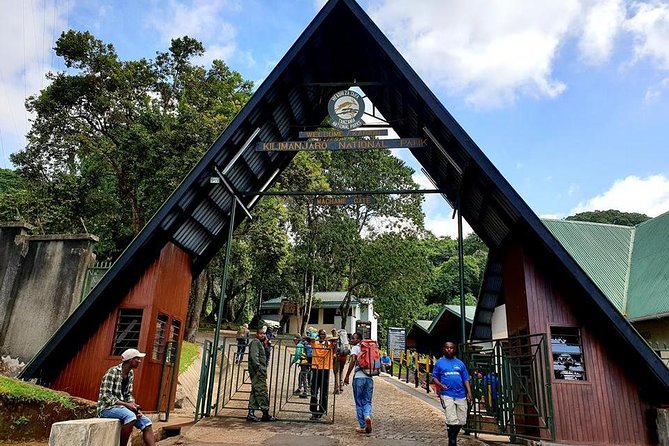
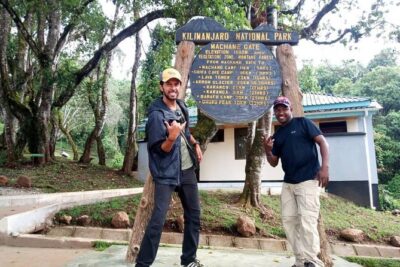
Your first morning begins in Moshi. Pickup is offered, and the drive to Machame Gate takes about 45 minutes. The road passes through Machame village, located on the lower slopes of Kilimanjaro, before you reach the park entrance.
The gate is more than a starting point. It is where the mountain trip shifts from transport to walking. Once you leave the park gate, the trail climbs through montane forest along a winding ridge. The setting is shaded and greener than the higher parts of the route, but the ground can be wet.
The official first-day distance is about 11 kilometers, or seven miles. You should allow five to six hours of hiking, with the endpoint at Machame Camp. The elevation rises from about 1,830 meters, or 6,000 feet, to 3,050 meters, or 9,950 feet.
That is a serious gain for day one. The distance may look manageable on paper, but the climb begins immediately, and the trail can feel slow if it is muddy. Gaiters and trekking poles are sensible choices here. Gaiters help keep wet soil off your lower legs, while poles give you extra balance on slick sections.
The day’s habitat is montane forest, and the route’s character is shaped by that setting. You are not yet on the exposed upper mountain, so the forest gives some shelter from the elements. At the same time, the damp ground and steady uphill walking make this a proper opening day, not a warm-up stroll.
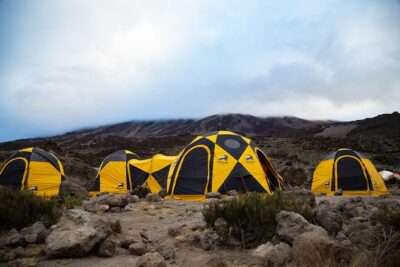
Meals listed for the day are lunch and dinner. Tents are included, and food is served in a dinner tent or outside on a blanket. That arrangement gives you a clear idea of the trip’s style: practical mountain camping rather than lodge-based comfort.
Days two through four: settling into mountain rhythm
The supplied plan does not give the individual names, distances, or camps for days two through four, so you should ask the operator for the exact daily schedule before paying. What is clear is that the climb continues through the Machame Route’s changing habitats, with camping each night and time built in for acclimatization.
This middle stretch is where pacing matters. You may feel strong after the first day and be tempted to walk quickly. Resist that urge. A steady pace helps conserve energy and gives your body a better chance to adjust as the altitude increases.
Your daily routine will be shaped by walking, eating, resting, and preparing for the next morning. The tent-based format means you should be comfortable spending several nights outdoors. Meals are a central part of the support system, and the food received unusually strong praise from climbers who described the cooking as excellent.
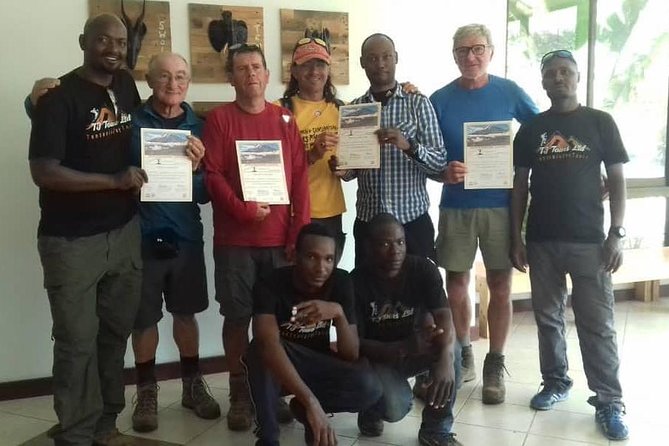
The team also matters here. Guides named in accounts of this operator include Patrick, Michael, Joseph, Kelvin, Baboon, and Cosmas, along with cooks and porters. The names are useful when you confirm your booking, since guide assignments can vary. Patrick is described as a chief guide in one account, while Joseph, Kelvin, and Cosmas are also specifically associated with successful Machame trips.
The most consistent quality attached to these teams is attentive support. Guides are described as kind, funny, supportive, and able to adapt to changing situations. That is valuable on Kilimanjaro, where the best help is often practical: watching your pace, keeping the group moving, and helping you stay focused when the day becomes difficult.
Still, do not treat good guiding as a substitute for preparation. The staff can support you, but they cannot remove the altitude or turn a five-hour hike into an easy walk. Your job is to arrive ready for repeated days on your feet.
Day five: the hardest test of the climb
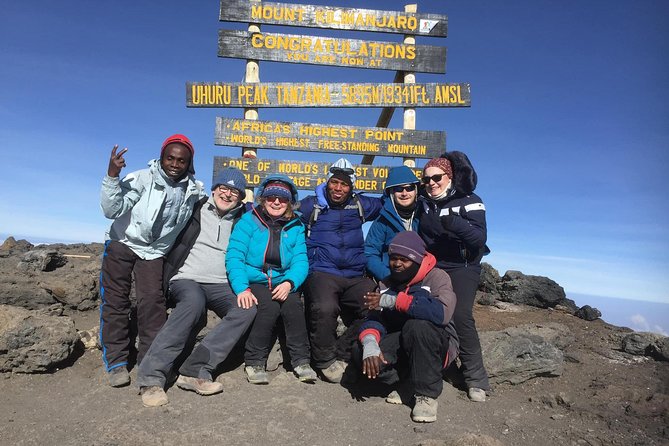
The fifth day is the point to take seriously. Specific day-five distances are not provided, but the trip descriptions identify it as the difficult stage, with muscle pain, fatigue, cold, and darkness all becoming part of the challenge.
Summit preparation and summit walking are not just physical tests. You may need to keep moving when the conditions feel unpleasant and your energy is low. A guide such as Joseph is described as helping a climber through this stage, but you should expect to do your share of the work.
Cold is a major factor. You will need suitable layers, gloves, and warm headwear, but the supplied information does not specify a required packing list. Ask Tanzania Joy Tours for its current equipment guidance, especially for summit clothing and sleeping gear.
Darkness also changes the feel of the day. Make sure you know what lighting equipment the operator expects you to bring or provides. Since the itinerary includes a night or early morning summit push, this is one of the practical details worth confirming before departure.
The strongest reason to choose six days is that the hard summit stage comes after several days of gradual progress. You are not being rushed straight upward. Even so, the schedule is demanding, and some people may prefer a seven-day version for a gentler pace. One account describes a seven-day plan being shortened to six days, which is a reminder that itinerary changes should be discussed carefully and never accepted casually if you are concerned about altitude.
More treks and hikes around Kilimanjaro:
- Kilimanjaro climb by Lemosho Route (7-day)
★ 5.0 · 651 reviews - Kilimanjaro Climbing Lemosho Route 8 Days.
★ 5.0 · 186 reviews - 8-Day Small-group Lemosho Kilimanjaro Summit Trekking
★ 5.0 · 186 reviews - Kilimanjaro climb, Lemosho Route (8-day)
★ 5.0 · 148 reviews
The summit reward and the Mweka descent
The route descends by the Mweka trail. That matters because you do not simply turn around and repeat the ascent route. The descent offers a different walking experience and helps keep the overall trip varied.
The final night on the mountain is at Mweka Camp or Millennium Camp, depending on the schedule. The supplied plan does not specify which camp you will use, so confirm this in advance. It is also worth asking exactly when the group returns to Moshi, since the listing only states that the activity ends back at the meeting point.
Descending can be easier on your breathing than climbing, but it can be hard on your knees and legs. Trekking poles are useful on the way down as well as on the wet forest trail. After the summit effort, do not assume the trip is finished until you have completed the descent.
Camping, food, and the human side of the trip
The included tents are a major part of the price and the character of this climb. You are choosing a mountain camp rather than a hut route, so expect a simpler daily routine and less personal space than you would have at a hotel.
Meals are served in a dinner tent or on a blanket outside. The exact menu is not provided, but the cooking received strong praise, and one account specifically calls the food excellent. That matters more than it may sound. After several hours of walking, a reliable hot meal can make the next morning feel much more manageable.
Porters and kitchen staff also form part of the working team. The people attached to the trip are described as friendly, helpful, and good-humored. You should still ask how porter welfare, tipping, luggage limits, and personal gear handling are managed. Those points are not explained in the supplied details, and responsible mountain travel depends on clear answers.
The private format is another benefit. Only your group participates, so you are not placed with strangers by default. A private group does not guarantee a private guide for every moment, but it does give you a more controlled group setting than a large shared departure.
What $2,342.95 buys you in practical terms
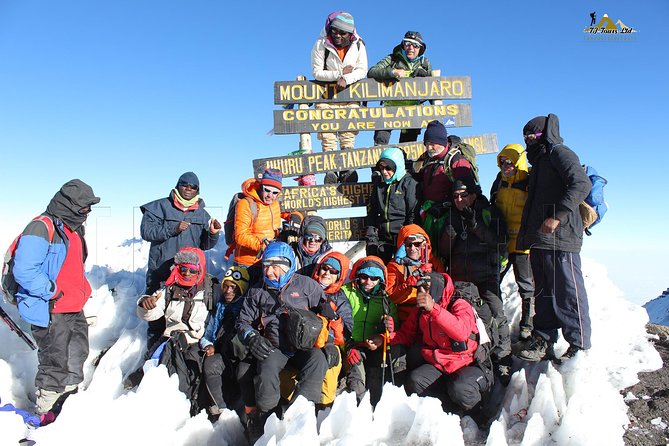
The listed price is $2,342.95 per person. That is a substantial amount, but Kilimanjaro pricing needs to be judged against the support required for a six-day mountain trip, not against the cost of an ordinary day tour.
The package includes tents, meals, guiding, porters and cooking support as reflected in the trip description and accounts of the team. Pickup is offered, and the trip begins and ends in Moshi. Those elements provide real value, particularly because carrying camping equipment and organizing food at altitude would be difficult to handle independently.
You should not assume every possible cost is included. Park fees, transfers outside the stated pickup, gear rental, tips, hotel nights, travel insurance, and personal equipment are not itemized in the information provided. Ask Tanzania Joy Tours for a written list of inclusions and exclusions before booking.
The private arrangement may also explain part of the price. You are paying for a group that only includes your own party, rather than joining an open departure. For a couple, family, or group of friends, that can be worthwhile if you value a more personal pace and direct contact with the guide.
The price is best value for someone who wants a supported climb but does not want a hut-based route. It is less appealing if you are comparing it only with a lower-priced shared trip or if you are not ready to use the camping and walking days that make the package costly.
Who should book the six-day Machame Route
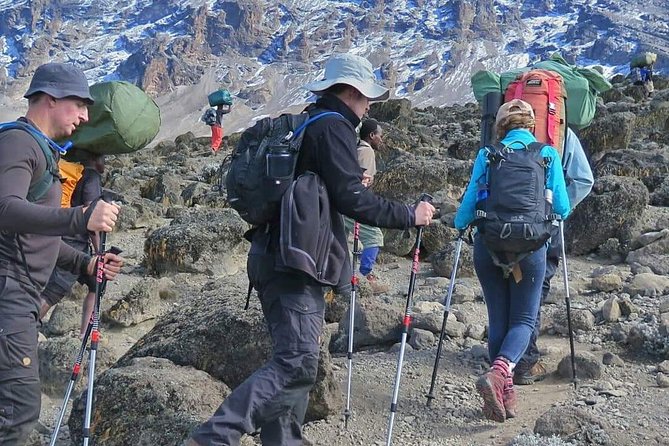
I would point this trip toward a fit adult with some hiking experience, a willingness to camp, and enough time to walk for several hours on repeated days. You do not need to be an expert climber based on the information provided, but you do need a moderate level of fitness and a serious approach to altitude.
This route may suit you if:
- You want a scenic route rather than the simplest route.
- You prefer a private group.
- You like the idea of tents and outdoor meals.
- You want more acclimatization time than a very short climb allows.
- You are comfortable with a demanding summit day and a different trail for the descent.
I would hesitate to recommend it if you dislike camping, have no recent hiking experience, or are looking for a relaxed sightseeing holiday. The first day alone includes a five-to-six-hour climb, and the later summit stage brings cold, darkness, and fatigue.
The cancellation terms are forgiving before departure: you can cancel at least 24 hours ahead for a full refund. Changes or cancellations inside 24 hours are not accepted for a refund, and the local start time controls the cutoff.
Should you book this climb?
Book the six-day Machame Route if you want Kilimanjaro as a real walking journey, with forest trails, mountain camping, strong staff support, and a private group. The route offers a good balance between scenery and acclimatization, while the Mweka descent prevents the trip from feeling like the same trail in reverse.
Before you commit, get the complete day-by-day plan, confirm the exact camp names, and ask for a full list of what the $2,342.95 covers. If you are fit, prepared for cold and fatigue, and happy to trade comfort for a more memorable route, this is a strong choice. If you need a slower ascent or dislike tents, choose a longer itinerary or a different route.
FAQ
Where does the Machame Route hike begin?
The activity begins in Moshi Urban, Tanzania. Pickup is offered, and the drive to Machame Gate takes about 45 minutes.
How long is the tour?
The hike lasts approximately six days.
How far is the first day of hiking?
The first day covers about 11 kilometers, or seven miles, from the park gate to Machame Camp.
How long does the first day take?
The first day takes about five to six hours of hiking.
Where do you sleep during the hike?
All climbers sleep in tents, and the tents are included. The final night on the mountain is at Mweka Camp or Millennium Camp.
Can I cancel for a full refund?
Yes. You can cancel at least 24 hours before the local start time for a full refund. Cancellations or changes made less than 24 hours before the start are not accepted for a refund.
More Six-Day Trips in Kilimanjaro
- Kilimanjaro climb, Lemosho Route (6-day)
★ 5.0 · 129 reviews - Kilimanjaro climb, Marangu route (6-day)
★ 5.0 · 72 reviews - 6 Days Tanzania Classic Safari
★ 5.0 · 52 reviews - The Best of Machame Route in 6 Days: Your World’s Summit Guide
★ 5.0 · 44 reviews
Just added around Kilimanjaro
- 6 days Machame route climbing Mt.Kilimanjaro★ 5.0 · 8 reviews
- Mt Kilimanjaro 6 days Marangu route hike★ 5.0 · 3 reviews
- machame route★ 5.0 · 16 reviews
- Private Cycle to Kilimanjaro Bike Park Safari★ 5.0 · 6 reviews
- West Kilimanjaro cycling Adventures★ 4.5 · 8 reviews
- Kilimanjaro Climb • Marangu Route ~ 9 Day★ 5.0 · 4 reviews
- 3 Days Private E-Bike Tour in West Kilimanjaro★ 5.0 · 3 reviews
- Kilimanjaro Climb • Machame Route ~ 10 Day★ 5.0 · 6 reviews
Machame Route Climbs, compared.
The Best of Machame Route in 6 Days: Your World’s Summit Guide
Read our review →Browse the lists this tour appears in