
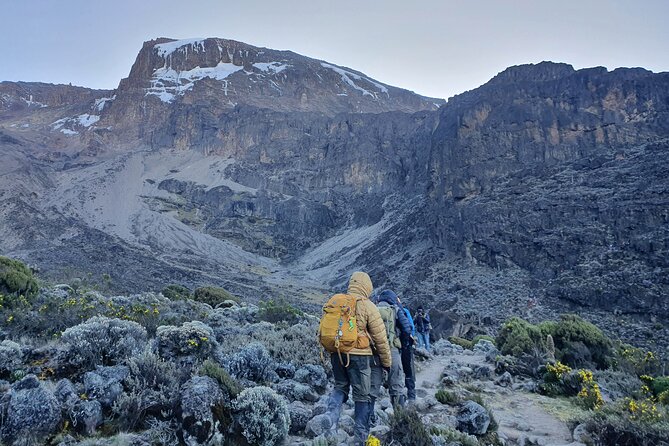
Reviewed · MACHAME ROUTE CLIMBS
6 Days Climbing Mount Kilimanjaro Machame Route
The Machame Route gives you Kilimanjaro in changing acts: wet forest, open moorland, volcanic rock, high alpine desert, then ice and stone near Uhuru Peak. In six days, you cross the mountain’s southern circuit and camp at five different sites before your summit push.
I like the route’s varied scenery and the useful climb-high, sleep-lower pattern on the Shira to Barranco day. I also like that the $2,200 price includes private transport, camping gear, meals, airport pickup, and accommodation before and after the hike. The main caution is time: six days is a demanding schedule at high altitude, and you have less acclimatization time than on longer Kilimanjaro routes.
Key points to know before you book
- Summit at 5,895 meters: The final goal is Uhuru Peak, reached after leaving Barafu Camp in the early morning.
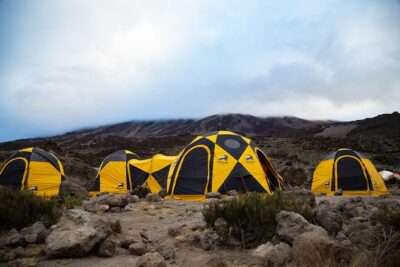
- Five nights under canvas: Camping equipment, including a tent and mattress, is included.
- A fast but scenic schedule: Six days covers the Machame, Shira, Barranco, Barafu, summit, and Mweka sections.
- Private group format: Only your party participates in the activity.
- Full-board mountain meals: Five breakfasts, five lunches, and five dinners are listed, along with accommodation before and after the climb.
- Wet lower slopes: Gaiters and trekking poles are especially useful on the first and last days.
Why the Machame Route is worth considering
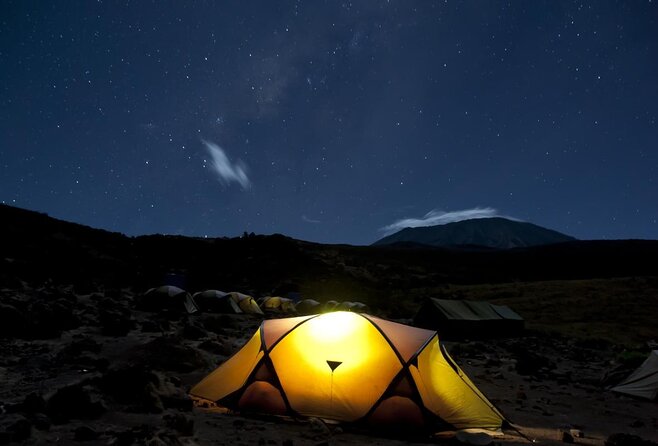
Machame is one of Kilimanjaro’s best-known approaches because it offers more than a steady uphill walk. You pass through several climate zones in a short period, and the route swings around the mountain’s southern side before the summit.
That variety gives the climb a strong sense of progress. On the first day, you are in forest. By the third day, you are among volcanic rock and open high-country views. Near Barafu Camp, the trees are long gone and the air is thin. The mountain keeps changing, which helps the long walking days feel like a series of different adventures rather than one repeated trail.
The tradeoff is that Machame is not a gentle introduction to high-altitude walking. The six-day version covers the same major route sections as longer trips but gives you fewer spare hours for acclimatization. You should arrive with a reasonable level of fitness and a willingness to walk slowly, rest often, and follow your guide’s instructions.
This is a private activity, so your group is not combined with other parties. That can make the pace and daily routine easier to manage, though the supplied details do not state the maximum number of people in your party or the guide-to-climber ratio. Ask the company for those figures before paying.
More Machame Route climbs:
- Kilimanjaro climb, Machame Route (7-day)
★ 5.0 · 262 reviews - Climbing Kilimanjaro – Machame Route
★ 5.0 · 170 reviews - Climbing Kilimanjaro through 7 days Machame Route
★ 5.0 · 151 reviews
Day 1: Machame Gate to Machame Camp
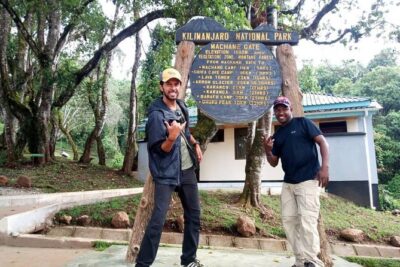
Your climb begins with a drive of about 50 minutes from Moshi to the Kilimanjaro National Park Gate. The road passes through Machame village on the mountain’s lower slopes, then you complete park formalities and start walking.
The first day covers about 11 kilometers, with five to seven hours on foot. The elevation rises from roughly 1,830 meters to 3,100 meters, and the route stays in montane forest.
This is a classic first day in one important way: the trail can be muddy and slippery. Lower sections of the forest receive plenty of rain, and the path winds uphill along a ridge. Good waterproof footwear matters more here than fancy summit gear. Gaiters keep mud and wet vegetation out of your boots, while trekking poles give you extra balance on slick ground.
Machame Camp is your first night on the mountain. The day is long enough to test your legs, but it is not the hardest section. Keep your pace easy. You have several more days ahead, and rushing the first climb gains you nothing.
Day 2: Moorland and the Shira Cave Camp
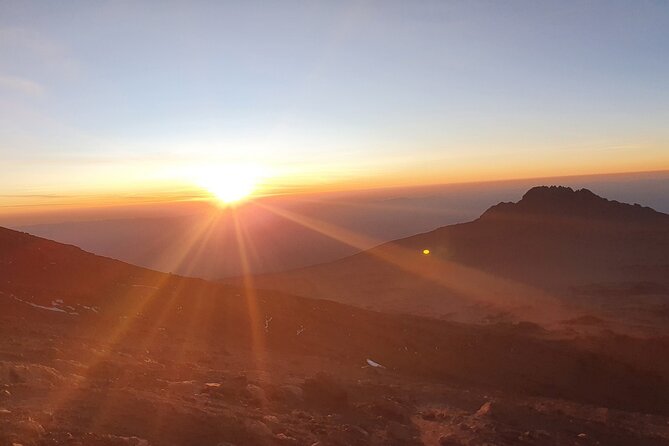
After breakfast, you leave the forest behind and climb toward the moorland zone. The route covers about nine kilometers and takes four to six hours, rising from 3,100 meters to about 3,840 meters.
The trail crosses a valley and follows a steep, rocky ridge before turning west toward a river gorge. The forest feels far away now. Open ground gives you wider views, but it also exposes you to changing weather and stronger sun.
Shira Cave Camp is listed as the night’s base, with full-board meals. At this height, the camp is not simply a place to sleep. It is your first real test of how your body handles thinner air. You might notice a headache, reduced appetite, or unusual tiredness. Those symptoms can have many causes, but you should tell your guide about any change in how you feel.
The distance is modest compared with later days, yet the steep sections can make it feel tougher. Walk slowly and drink regularly. The aim is not to reach camp first. The aim is to arrive with enough energy for the following day.
Day 3: Shira to Barranco by way of Lava Tower
Day three is one of the most useful parts of the route for acclimatization. You walk about 15 kilometers from Shira Camp to Barranco Camp, generally taking five to seven hours.
The route climbs gradually across semi-desert terrain and passes beneath Lava Tower. Lunch is planned at the base of the tower, at about 4,600 meters, before the trail drops to Barranco Valley and camp at roughly 3,950 meters.
That gain and loss of height is important. You spend time walking high, then sleep lower than the highest point reached during the day. It is a demanding day, but the descent to Barranco makes the night more manageable than sleeping at Lava Tower itself.
The views are broad and dramatic, with Kilimanjaro’s volcanic form opening around you. This is also where the route begins to feel more remote and stark. There is little shade, and the weather can shift quickly. Pack sun protection, rain gear, and a warm layer where you can reach them without emptying your bag.
More treks and hikes around Kilimanjaro:
- Kilimanjaro climb by Lemosho Route (7-day)
★ 5.0 · 651 reviews - Kilimanjaro Climbing Lemosho Route 8 Days.
★ 5.0 · 186 reviews - 8-Day Small-group Lemosho Kilimanjaro Summit Trekking
★ 5.0 · 186 reviews - Kilimanjaro climb, Lemosho Route (8-day)
★ 5.0 · 148 reviews
Day 4: Barranco Wall to Barafu Camp
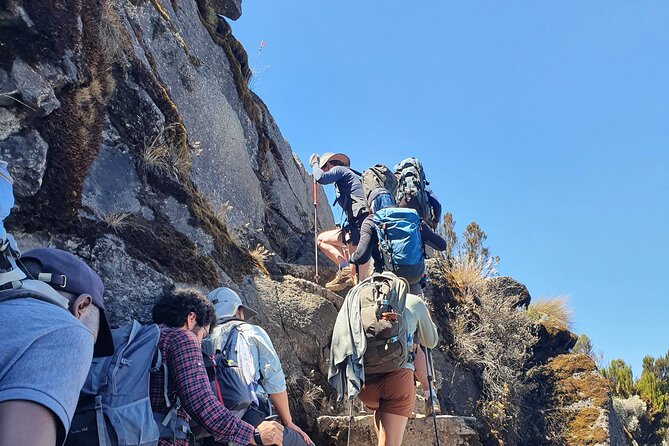
Day four is the final full approach to the summit base. You cover about nine kilometers and walk for six to eight hours, moving through alpine desert from approximately 4,000 meters to 4,700 meters.
The day begins with the Barranco Wall. It is steep, but the supplied route description does not present it as technical climbing. You use the trail and your hands in places, moving carefully over uneven ground. Take your time and let faster groups pass. The wall is more about balance, effort, and patience than speed.
After the wall, the route passes through Karanga Valley at about 4,050 meters and joins the Mweka Trail. From there, you continue upward to Barafu Camp. Reaching camp means you have completed the southern circuit, which gives you summit views from several angles.
Barafu is a functional high camp, not a place for a leisurely evening. You eat, organize your summit clothing, and rest as much as possible. The summit attempt begins during the early morning hours, so keep headlamp batteries, gloves, warm layers, water, and snacks close at hand. The itinerary does not list a headlamp or personal snacks among the inclusions, so plan to bring them or confirm availability.
Day 5: Uhuru Peak and the long descent
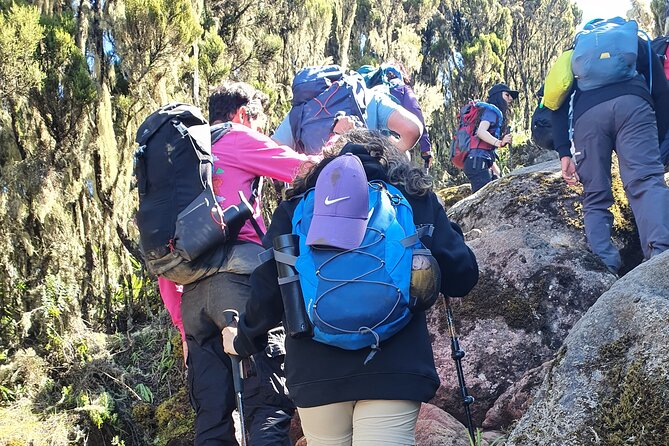
Summit day is the hardest part of the trip. You walk about six kilometers uphill, then 13 kilometers downhill. The listed walking time is five to seven hours up and another five to six hours down.
From Barafu, at about 4,000 meters, you climb toward Uhuru Peak at 5,895 meters. The final section is described as stone scree and ice-capped summit terrain. The pace is slow, and the early start is designed to put you near the top around sunrise.
The sunrise is one of the great rewards of this route, but do not let the picture in your head pressure you into unsafe choices. Cold, fatigue, and altitude make the final hours serious. Your guide will be important here, and you should report symptoms rather than trying to hide them.
After time at the summit, you descend to Mweka Camp at about 3,090 meters. This is a major relief. The downhill is easier on your breathing but can be hard on knees and toes, especially after the uphill effort. Trekking poles are useful, and you should have already tested your boots before arriving in Tanzania.
The day ends at Mweka Camp, where you rest before the final walk out. It is a long day by any standard, so the six-day schedule suits people who accept a full summit day rather than those seeking a relaxed mountain holiday.
Day 6: Mweka Camp to the park gate
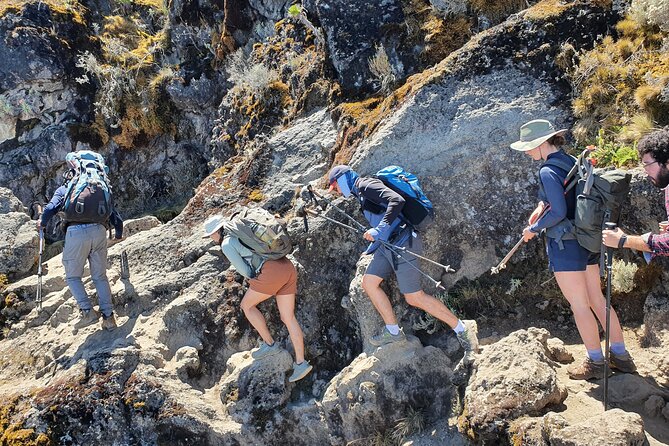
The final walk covers about 10 kilometers and takes three to four hours. You descend from Mweka Camp at 3,090 meters to Mweka Gate at about 1,680 meters, returning to the forest zone on the way.
The lower trail can be wet and muddy. Gaiters and poles are useful again, though the clothing needs are different from summit day. Shorts and a T-shirt may be comfortable lower down, but keep rain gear and a warmer layer handy until you know what the weather is doing.
At Mweka Gate, you receive summit certificates before transport returns you to your hotel in Moshi or Arusha. The information also lists airport pickup and drop-off, so confirm how those transfers fit with your arrival and departure flights. The stated meeting point is Kilimanjaro International Airport at 7:00 a.m.
What the $2,200 price covers
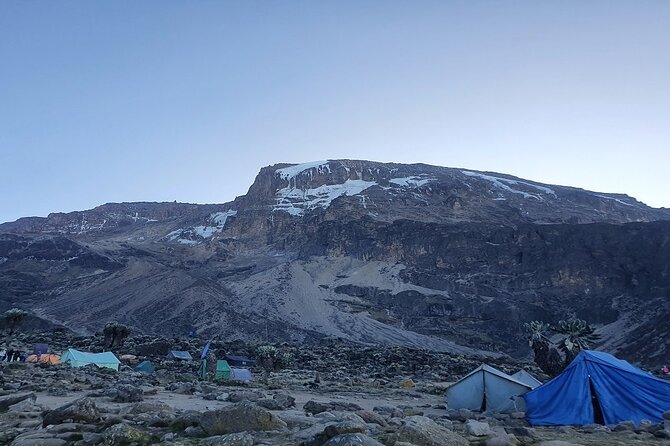
At $2,200 per person, this is not a budget walk, but the package includes several costs that can add up quickly on a Kilimanjaro trip. You receive private transportation, airport pickup and drop-off, accommodation before and after hiking, camping equipment, park fees and taxes, and mountain meals.
The listed equipment includes a tent and mattress. It does not describe the tent size, sleeping bag, dining setup, luggage transport, or the condition and brand of the mattress. Ask for a full equipment list before you travel, particularly if you are deciding what to rent locally.
Food is listed as five breakfasts, five lunches, and five dinners. That matches the five nights on the mountain and the six-day schedule, but the information does not specify drinks, snacks, vegetarian options, or special diets. Tell the company about dietary needs before arrival.
The package does not include visas, medical insurance, laundry, flights, personal items, or tips for the mountain crew. Tips are a normal part of the total cost for many climbers, so budget for them separately rather than treating the advertised price as the final amount.
What to pack for this particular schedule
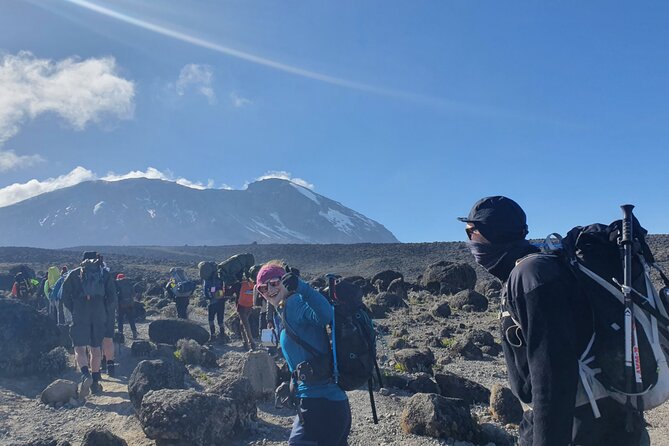
You need clothing for wet forest, warm lower slopes, cold camps, and a summit near 5,895 meters. The exact personal packing list is not provided, but the itinerary makes a few items especially clear.
Bring gaiters and trekking poles. They are useful on both muddy forest sections and the wet trail below Mweka Gate. You also need sturdy, broken-in hiking boots, waterproof clothing, warm summit layers, gloves, a hat, and sun protection.
Keep a small day bag with water, snacks, rain gear, a warm layer, and personal medication. A headlamp is sensible for the early summit start, though it is not listed among the included items. Confirm if a sleeping bag, walking poles, or other equipment must be supplied by you.
Do not pack only for the summit. The lower mountain can be warm enough for shorts and a T-shirt, while Barafu and summit morning require serious cold-weather clothing. The quick change in conditions is part of the mountain’s character, and also part of the planning challenge.
Who should choose this six-day climb
This trip suits you if you want the Machame Route, prefer a private group, and have enough fitness for five to eight hours of walking on several days. You should be comfortable camping and handling a very early summit start.
It can work well for friends, couples, or families with an appropriate fitness level, but the information only specifies a moderate physical fitness requirement. It does not give a minimum age, maximum age, or child policy, so families should confirm those points.
The route is less suitable if you want a slow acclimatization plan or dislike repeated long walking days. A six-day itinerary is efficient, but it leaves less room for weather delays, illness, or a slower pace. Ask if the operator can extend the route if you prefer more time on the mountain.
The company has also arranged safari and beach combinations, including Tanzania safari programs and Zanzibar stays. If you are building a longer trip, you can ask about combining Kilimanjaro with those options, but they are not part of this $2,200 climb.
Booking details and cancellation terms
Confirmation is provided at booking, and the activity is private. Pickup is offered, with Kilimanjaro International Airport listed as the starting point and 7:00 a.m. as the start time.
You can cancel for a full refund if you do so at least three full days before the local start time. Cancellations or changes made inside that period are not accepted for a refund.
Before booking, ask the company to confirm the exact hotel, airport transfer timing, guide and crew details, equipment list, dietary arrangements, and tip guidance. Those questions matter more on a high-altitude trip than they do on a short sightseeing tour.
Should you book this Machame Route climb?
Book it if you want a private, well-organized Kilimanjaro package with camping, meals, transfers, and pre- and post-climb lodging included. The changing terrain, Barranco Wall, Lava Tower section, sunrise summit attempt, and Mweka descent give you a full mountain experience in six days.
Think carefully if your priority is the highest possible acclimatization margin. Six days is a brisk plan, and the route includes several long days followed by a demanding summit push. If you are fit, prepared, and realistic about the effort, the package offers good value for the services included. If you prefer a gentler pace, ask about a longer Machame itinerary before committing.
FAQ
How long is the Kilimanjaro Machame Route experience?
The climb lasts approximately six days, starting and ending in the Kilimanjaro area of Tanzania. The listed meeting point is Kilimanjaro International Airport, with a 7:00 a.m. start time.
What is the highest point reached?
The summit goal is Uhuru Peak at 5,895 meters, or 19,343 feet.
Is camping equipment included?
Yes. Camping equipment, including a tent and mattress, is included.
Are meals included during the climb?
Yes. The package lists five breakfasts, five lunches, and five dinners.
Is airport pickup available?
Yes. Airport pickup and drop-off are included, and the stated starting point is Kilimanjaro International Airport.
Is this a private tour?
Yes. Only your group participates in the activity.
What fitness level is required?
A moderate physical fitness level is required. The itinerary includes walking days of up to eight hours, plus a summit day with five to seven hours uphill and five to six hours downhill.
More Six-Day Trips in Kilimanjaro
- Kilimanjaro climb, Lemosho Route (6-day)
★ 5.0 · 129 reviews - Kilimanjaro climb, Marangu route (6-day)
★ 5.0 · 72 reviews - 6 Days Tanzania Classic Safari
★ 5.0 · 52 reviews - The Best of Machame Route in 6 Days: Your World’s Summit Guide
★ 5.0 · 44 reviews
Just added around Kilimanjaro
- 6 days Machame route climbing Mt.Kilimanjaro★ 5.0 · 8 reviews
- machame route★ 5.0 · 16 reviews
- Mt Kilimanjaro 6 days Marangu route hike★ 5.0 · 3 reviews
- Private Cycle to Kilimanjaro Bike Park Safari★ 5.0 · 6 reviews
- West Kilimanjaro cycling Adventures★ 4.5 · 8 reviews
- Kilimanjaro Climb • Marangu Route ~ 9 Day★ 5.0 · 4 reviews
- 3 Days Private E-Bike Tour in West Kilimanjaro★ 5.0 · 3 reviews
- Kilimanjaro Climb • Machame Route ~ 10 Day★ 5.0 · 6 reviews
Machame Route Climbs, compared.
The Best of Machame Route in 6 Days: Your World’s Summit Guide
Read our review →Browse the lists this tour appears in