
Reviewed · MARANGU ROUTE CLIMBS
5 Day Mount Kilimanjaro Climbing via Marangu Route
The Marangu Route gives you one of the simplest ways to experience Kilimanjaro: a direct trail, fixed sleeping huts, and no tent to pitch after a long day. You’ll walk from rainforest to high moorland, then make the hard midnight push toward Uhuru Peak.
I like the hut accommodation and the attentive climbing crew. I also like the clear rhythm of the trip, with meals, transport, park fees, and mountain lodging bundled into the $1,650 price. The main concern is the five-day schedule. Marangu is gradual, but it gives you little spare time to adjust to altitude.
Key points before you book
- Hut beds replace camping: Mandara and Kibo Huts have 60 bunk beds each, while Horombo Hut has 120.
- The summit day starts around midnight to 2 a.m.: Expect cold, darkness, scree, and a long descent on the same day.
- The route is easy to follow but not easy overall: Its steady slope helps, but the short altitude schedule can make the climb harder.
- You return by the same path: This means less variety in scenery than routes that use separate ascent and descent trails.
- The crew earns strong praise: The team is described as professional, attentive, safe, and good at preparing meals.
- Bring gaiters and trekking poles: Mud is likely in the rainforest and during the final descent.
Why the Marangu Route appeals to many climbers
Marangu is Kilimanjaro’s oldest established route and the only one in this itinerary that uses sleeping huts rather than tents. That matters after a wet or tiring day. You still need a sleeping bag, but you have a bunk, a mattress, a pillow, and a communal dining hall waiting at the hut.
The route is often called the Coca-Cola Route. The nickname points to its popularity and relatively direct trail, not to an easy holiday walk. You’ll still climb from 1,830 meters to 5,895 meters, a huge change in air and temperature over five days.
I think Marangu suits you if you value basic shelter and a clear trail more than remote scenery. The tradeoff is that you use the same path up and down, and the five-day version allows less time for altitude adjustment than longer Kilimanjaro itineraries.
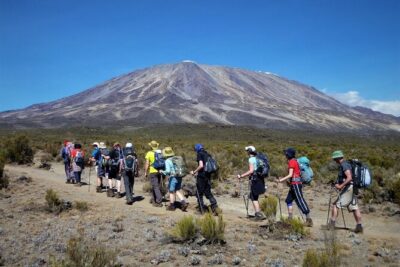
The group can include up to 15 people. That is large enough for a social climb but still small enough for the crew to keep track of the group. The activity begins in Moshi, and private transport to the Marangu gate is included.
More Marangu Route climbs:
- Kilimanjaro climb, Marangu route (6-day)
★ 5.0 · 72 reviews - Climbing Kilimanjaro – Marangu Route
★ 5.0 · 65 reviews - Private Full Day Hiking Experience to Marangu Route
★ 5.0 · 61 reviews
Day 1: Moshi to Mandara through the rainforest
The first day begins with a roughly one-hour drive from Moshi through the village of Marangu to the Kilimanjaro National Park gate. The gate is more than a formality. You’ll wait while permits are issued and watch guides, porters, and other climbing teams organize supplies for the mountain.
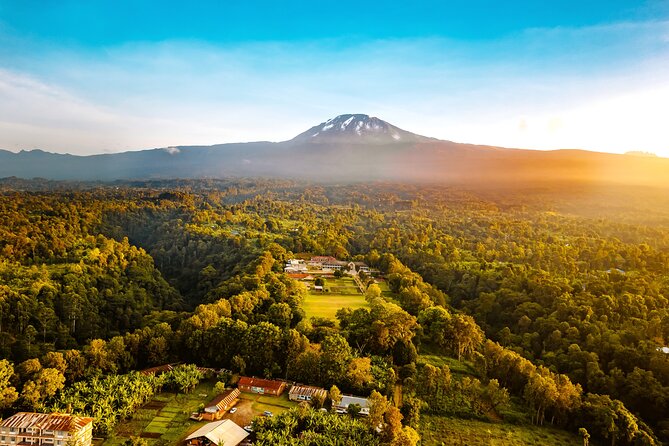
The walk begins at about 1,830 meters and ends near 2,740 meters. Allow around five hours for the hike. The trail passes through rainforest, where the air is damp and the path may be muddy and slippery.
This is a pleasant start because the forest gives you plenty to notice. Your guide points out local plants, wildlife, and the change in vegetation as you gain height. The trail is not yet severe, but wet footing can slow you down.
Pack gaiters for this section. Trekking poles are also useful, especially if rain has made the trail slick. Good shoes matter more here than speed. You want to reach Mandara Huts with energy left, not prove anything on the first afternoon.
At Mandara, you sleep in a dormitory hut with bunk beds. There are 60 beds at the hut, along with mattresses and pillows. You still need your own sleeping bag. A communal dining hall gives the group a place to eat and settle in, while basic washrooms make this more comfortable than tent camping.
Day 2: Heathland, giant plants, and Horombo Hut
After breakfast, the route climbs from about 2,740 meters to 3,690 meters. The day takes around seven hours, so an early start and a slow pace help.
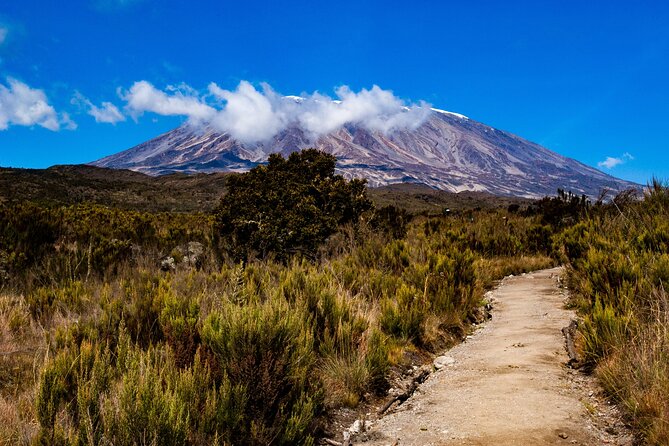
You leave the rainforest behind and enter heathland. Giant lobelias and groundsels make this section feel unlike an ordinary mountain walk. The vegetation becomes shorter and more open, and the views widen as the trees fade away.
A lunch stop gives you time to look across toward Mawenzi, Kilimanjaro’s rugged second summit. That view is one of the rewards of the day. You are also beginning to see how quickly the mountain changes with height.
Horombo Huts sit below the Kibo summit area. The hut has 120 bunk beds, making it the largest sleeping stop on this route. Temperatures drop by late afternoon, so keep a warm layer in your daypack rather than buried in your luggage.
The washrooms are basic but better at the lower huts, with running water and flushing toilets available in this part of the route. Conditions become simpler higher up. That change is worth understanding before you start, since this is a mountain trek, not a lodge-to-lodge trip with hotel facilities.
Day 3: The saddle between Mawenzi and Kibo
Day 3 takes you from Horombo at about 3,690 meters to roughly 4,695 meters. The walk lasts around six hours and crosses one of the most unusual sections of the climb.
The heathland thins out, then gives way to a broad, almost moonlike area called the saddle. This open ground connects Mawenzi and Kibo. You’ll have a clear view of the summit climb ahead, which can be both exciting and unsettling. From here, the mountain looks very real.
You stop for lunch during the crossing. Keep drinking water and follow the guide’s pace. At this height, a steady walk is more useful than a fast one. The day is not the summit push, but it places you high enough that altitude can affect sleep, appetite, and energy.
Kibo Hut is basic. It has 60 bunk beds, but the washrooms are limited to long-drop toilets and buckets of water. There is no running water at this upper hut. You should organize your clothing, water, headlamp, and summit layers before trying to sleep.
The summit attempt begins only a few hours later. That is the central weakness of the five-day Marangu plan. You reach high altitude on Day 3, then have little time to rest before the hardest climb. If you know you adjust slowly to altitude, this short schedule deserves serious thought.
More treks and hikes around Kilimanjaro:
- Kilimanjaro climb by Lemosho Route (7-day)
★ 5.0 · 651 reviews - Kilimanjaro climb, Machame Route (7-day)
★ 5.0 · 262 reviews - Kilimanjaro Climbing Lemosho Route 8 Days.
★ 5.0 · 186 reviews - 8-Day Small-group Lemosho Kilimanjaro Summit Trekking
★ 5.0 · 186 reviews
Day 4: The midnight push to Uhuru Peak
Day 4 is the hardest day by far. The start is between midnight and 2 a.m., followed by a climb from about 4,695 meters to 5,895 meters. After reaching the summit area, you descend all the way to Horombo at about 3,690 meters.
The exact duration is listed at around seven hours, but the summit day combines the pre-dawn climb, time near the crater rim, and the descent. You should think of it as a long, demanding mountain day rather than a normal walking day.
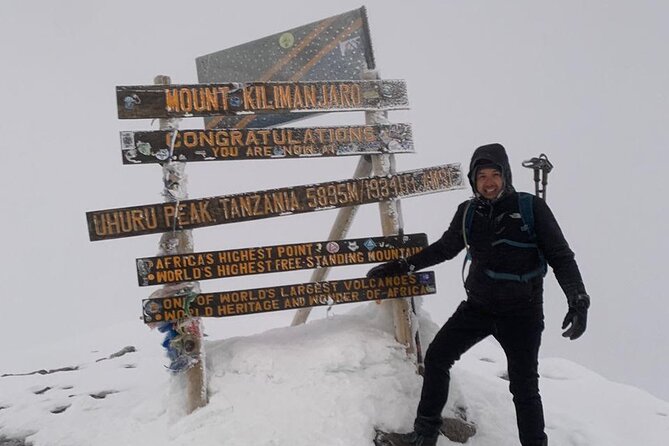
The trail rises in switchbacks over heavy scree. Snow is possible. It is dark, cold, and mentally demanding, and progress can feel slow. Your guide and crew help you keep moving at a controlled pace.
The first major goal is Gillman’s Point on the crater rim. A short rest there brings one of the day’s best rewards: sunrise over Kilimanjaro. Faster climbers may see the sunrise from the summit area, but Gillman’s Point can still provide a remarkable view after the night climb.
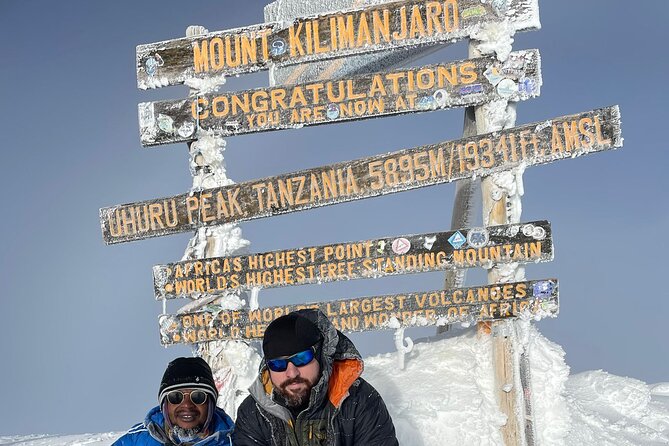
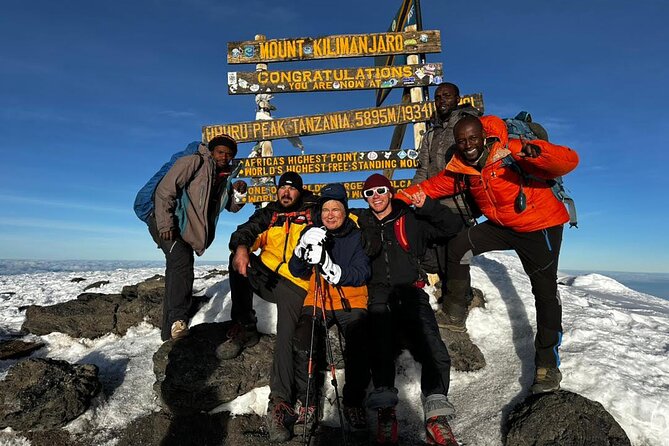
From there, you continue toward Uhuru Peak, the highest point on Kilimanjaro. The supplied itinerary identifies the summit elevation as 5,895 meters, or 19,340 feet. Reaching it gives you the strongest sense of achievement on the trip, but the climb is not finished when you arrive.
You still need to descend. The loose scree that slowed your ascent can make the way down awkward, and fatigue increases the chance of a slip. Keep your poles ready and do not rush simply because the uphill work is over.
Kibo Hut provides the short break before the descent continues toward Horombo. The combination of summit effort, limited sleep, and altitude is why fitness alone does not guarantee success. You also need patience, warm clothing, water, and a willingness to follow a slow pace.
Day 5: A muddy descent and a proper farewell
After breakfast at Horombo, you have a team appreciation and bonding ceremony before saying goodbye to the mountain crew. This is a thoughtful part of the trip, since guides, cooks, and porters have supported the climb from the gate to the summit attempt.
The descent passes Mandara Huts for lunch, then continues to the Marangu gate at about 1,830 meters. The full day takes around six hours. The lower trail can be wet, muddy, and steep, even if the weather has changed sharply and feels much warmer.
This is another day for gaiters and trekking poles. Tired legs make downhill footing less forgiving, and mud can quickly soak shoes and trousers. Keep a clean change of clothes available for the ride back.
At the gate, you receive summit certificates before a vehicle takes you back to your Moshi hotel. The drive takes about 45 minutes. The return feels short after five days on foot, but do not underestimate how good a hot shower and a real bed may feel.
What the $1,650 price covers
At $1,650 per person, this is not a budget walk, but the price includes many of the large costs that make a Kilimanjaro climb practical. You get private transport to and from the trailhead, park entry fees, taxes, hut accommodation, meals, safety and hiking equipment, and the climbing crew.
The listed meals include four dinners, five lunches, and four breakfasts. That covers the mountain portion of the trip, including the final descent day. The positive comments about the meals matter here. Food is not just a pleasant extra at altitude. A warm, filling meal can make the next section feel manageable.
You still need to budget for crew tips. Tips are not included, and the final day is the natural time to give them to guides, cooks, and porters before they leave you at Mandara. Visas and internal or international flights are also outside the price.
The value is strongest if you want a package that handles the main mountain logistics. You do not need to arrange separate hut bookings, park fees, transfers, or a support crew. The price is less attractive if you already have access to some of those services or if you want a longer itinerary focused on altitude adjustment.
The crew and the small practical details
The most strongly praised part of this experience is the support team. The crew is described as experienced, attentive, professional, and reassuring. That was especially important for a solo woman who felt safe and comfortable while climbing with a male support team.
You should still ask your guide questions and speak up if you feel unwell. The route is demanding, and no guide can remove the effects of high altitude. The crew’s role is to help you move safely, keep the group organized, provide meals, and support the summit attempt.
The meal preparation also receives clear approval. That is useful information because simple mountain food can become a major part of your day. You will appreciate knowing that breakfast, lunch, and dinner are included rather than having to carry all food yourself.
Mobile tickets are provided, and confirmation is received at booking. The activity has a maximum group size of 15. The stated start time is 12:00 a.m., so check the exact pickup arrangement in advance, especially if you are staying in Moshi.
The tour requires a moderate level of physical fitness. You do not need to be a technical climber based on the information provided, but you should be ready for several hours of uphill walking, cold temperatures, loose scree, muddy trails, and a midnight summit start.
What to pack for this route
The operator supplies mattresses and pillows in the huts, but you must bring a sleeping bag. The huts do not remove the need for proper mountain clothing.
I would give special attention to:
- Warm layers for Horombo, Kibo, and the summit morning
- Gaiters for wet rainforest and muddy descent trails
- Trekking poles for slippery ground and loose scree
- A headlamp for the midnight climb
- Water and a daypack for each walking section
- Dry clothing for the ride back to Moshi
- Shoes suitable for mud, steep ground, and long downhill walking
Only the first and final days specifically call out gaiters and poles, but both items can help throughout the route. Conditions vary, and a clear morning does not guarantee a dry trail later.
Who should choose the five-day Marangu climb?
This trip is a good fit if you want the most established Kilimanjaro route, prefer hut beds to tents, and like having transport, meals, park fees, and a climbing crew arranged together. It also suits you if a direct route matters more than seeing a new trail on the descent.
It is less suitable if you want a slow altitude schedule. The five-day plan reaches high ground quickly, then sends you toward the summit after only a short rest at Kibo. A longer climb may give your body more time to adjust, although no alternate itinerary is included here.
You should also think about the same-path return. The rainforest, heathland, saddle, and summit views are worthwhile, but you will see much of the route twice. If changing scenery is a top priority, that may be a drawback.
Kentau Safaris has earned strong marks for organization, food, safety, and crew support. The feedback includes a solo climber who felt comfortable and a group that booked on short notice without trouble. Those details suggest a useful level of flexibility, but the mountain itself remains the final judge.
Should you book this Kilimanjaro experience?
Book it if you want hut accommodation, a clear five-day plan, and a supportive crew at a price that includes the main mountain costs. The Marangu Route is straightforward to follow, and its gradual trail can feel less intimidating than steeper alternatives.
Think twice if you are concerned about altitude or want a relaxed summit schedule. The short itinerary is the key weakness. You should be prepared for a midnight start, a cold scree climb, limited facilities at Kibo, and a long descent after reaching the summit area.
For a fit person who accepts those limits, this can be a practical and memorable way to climb Kilimanjaro. Pack for mud and cold, save room in your budget for crew tips, and treat the slow pace as part of the safety plan rather than a delay.
FAQ
Where does the climb begin?
The experience begins in Moshi, Tanzania, with transport to the Marangu entrance of Kilimanjaro National Park.
How long is the climb?
The activity lasts approximately five days.
What time does the activity start?
The stated start time is 12:00 a.m.
How many people can join the group?
The maximum group size is 15 people.
Do I sleep in tents?
No. The Marangu Route uses dormitory-style mountain huts. You receive a mattress and pillow, but you still need a sleeping bag.
How many beds are in the huts?
Mandara Hut and Kibo Hut each have 60 bunk beds. Horombo Hut has 120 bunk beds.
Are meals included?
Yes. The package includes four dinners, five lunches, and four breakfasts.
Is the summit attempt at night?
Yes. The summit climb begins early, between midnight and 2 a.m.
Are park fees and transport included?
Yes. The price includes park entry fees, taxes, private transport, and transfer to the trailhead and back to Moshi.
Is crew tipping included?
No. Tips for the guides, cooks, and porters are not included in the price.
Can I cancel for a full refund?
Yes, if you cancel at least 24 hours before the experience start time. Cancellations made within 24 hours are not refunded, and changes made within 24 hours are not accepted.
More Five-Day Trips in Kilimanjaro
- Kilimanjaro Climbing 5 days Marangu route
★ 5.0 · 22 reviews - 5 Days Marangu Route Kilimanjaro hiking
★ 5.0 · 13 reviews - Best 5 Days Marangu Route Climbing on Kilimanjaro
★ 5.0 · 12 reviews - Our Top 5-Day Kilimanjaro Marangu Route: 2025 and 2026 Updates
★ 5.0 · 11 reviews
Just added around Kilimanjaro
- 6 days Machame route climbing Mt.Kilimanjaro★ 5.0 · 8 reviews
- Mt Kilimanjaro 6 days Marangu route hike★ 5.0 · 3 reviews
- machame route★ 5.0 · 16 reviews
- Private Cycle to Kilimanjaro Bike Park Safari★ 5.0 · 6 reviews
- West Kilimanjaro cycling Adventures★ 4.5 · 8 reviews
- Kilimanjaro Climb • Marangu Route ~ 9 Day★ 5.0 · 4 reviews
- 3 Days Private E-Bike Tour in West Kilimanjaro★ 5.0 · 3 reviews
- Kilimanjaro Climb • Machame Route ~ 10 Day★ 5.0 · 6 reviews
Marangu Route Climbs, compared.
Browse the lists this tour appears in