
Reviewed · RONGAI ROUTE CLIMBS
Rongai Route 6 Days 5 Nights/Kilimanjaro climb
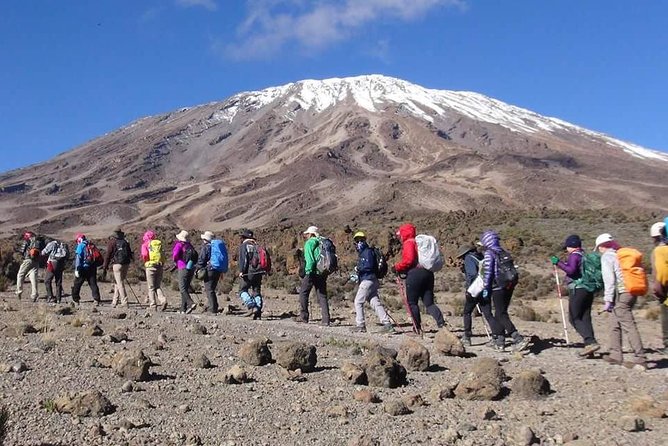
The Rongai Route approaches Kilimanjaro from the Kenyan side, where maize fields and pine forest give way to open moorland, Mawenzi’s jagged peak, and the stark saddle leading to Kibo. It is called Rongai by almost everyone, though the current trail is also known as Loitokitok or Nalemoru. Names aside, this is Kilimanjaro’s northern route, with a quieter feel than some southern approaches.
I like the route’s changing scenery and the way it descends through Marangu rather than retracing its steps. I also like the practical package: park fees, meals, crew pay, camping equipment, hotel and airport transfers, and a small maximum group of 15 are included in the $1,850 price.
The main caution is the summit day. You may walk for 10 to 16 hours, beginning around 1 a.m., reaching 5,895 meters at Uhuru Peak, then dropping to Horombo. This is a serious high-altitude climb, not a long weekend stroll.
Key points to know before booking
- Northern approach: Begin near Nale Moru and cross Kilimanjaro from the quieter Kenyan side.
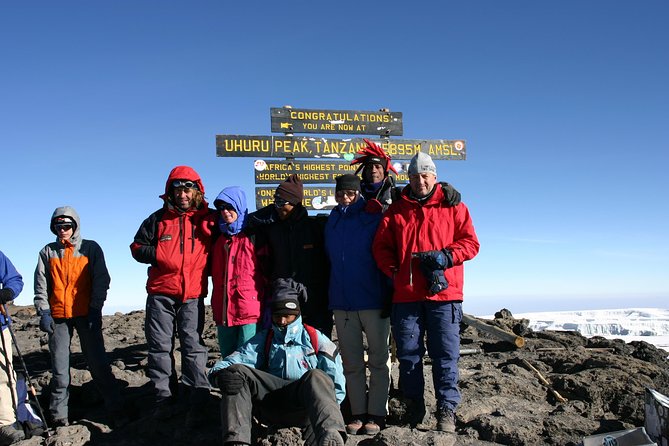
- Uhuru Peak attempt: The summit day includes Gilman’s Point at 5,685 meters and Uhuru Peak at 5,895 meters.
- Big scenery shift: Walk from cultivated fields and pine forest to moorland, alpine desert, and the Mawenzi-Kibo saddle.
- Different descent route: Finish through lush forest at Marangu Park Gate instead of returning by the same trail.
- Price includes major costs: Park fees, crew salary, meals, accommodation, camping equipment, and transfers are included.
- Small-group limit: The maximum is 15 people, with guides such as Vitalis, Eric, Size Mrema, and Nicholas Wiso named in past trips with the company.
Why the Rongai Route feels different
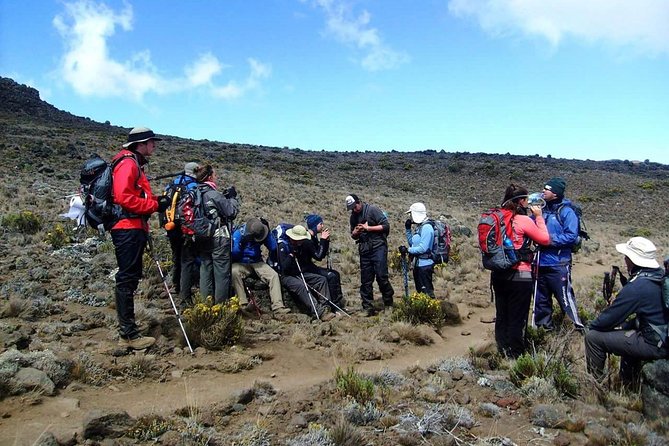
Many Kilimanjaro climbs begin on the mountain’s southern or western sides. Rongai starts in the north, near Nale Moru, and gives you a different first impression of Africa’s highest mountain. The opening hours pass through working farmland, with maize and potatoes growing beside the trail, before the path enters pine forest.
That beginning feels more gradual and rural than dramatic. You do not step straight into high mountain scenery. Instead, the route lets you build momentum, one steady climb at a time, while views toward the Kenyan plains open up around the edge of the forest.
The route’s name needs a small footnote. The original Rongai trail began at the border village of Rongai and was closed several years ago. The current northern trail is often called the Rongai Route, but you may see Loitokitok or Nalemoru on signs and maps. This matters mainly for planning and navigation. Your operator handles the route details, but it is useful to know why the names do not always match.
I like this route for two clear reasons. First, it offers broad views and a sense of space, especially before the trail joins the higher mountain paths. Second, the descent through Marangu gives you fresh scenery at the end, when your legs may not welcome another look at the same trail.
The tradeoff is that the northern approach can feel less packed with dramatic landmarks in its first days than routes that pass quickly through famous valleys. Its appeal is space, gradual change, and the unusual crossing toward Mawenzi and Kibo.
More Rongai Route climbs:
- Kilimanjaro climb, Rongai Route (7-day)
★ 5.0 · 40 reviews - Kilimanjaro climb, Rongai Route (6-day)
★ 5.0 · 15 reviews - Mount Kilimanjaro Rongai Route
★ 5.0 · 10 reviews
Day 1: Nale Moru, pine forest, and Kenyan views
After breakfast, pickup is arranged for the drive to Kilimanjaro National Park. You register, continue by vehicle to Nale Moru at about 1,950 meters, and begin walking from there. The day covers roughly three to four hours.
The trail first winds through fields of maize and potatoes. Then it enters pine forest and climbs steadily toward the moorland zone. The views across the Kenyan plains are the day’s reward, so keep your camera handy, but do not let the camera distract you from the footing.
Rain is possible in the forest. Keep waterproof clothing in your daypack rather than buried in your main luggage. That small choice can make the first afternoon much more comfortable.
The day is short compared with what comes later, but do not treat it as unimportant. It is your chance to settle into the guide’s walking pace, check your clothing, and notice how your body handles the first altitude gain. Dinner and overnight accommodation are provided at camp.
Day 2: Second Cave and the first big view of Kibo
Day two is longer, with about 9 kilometers of walking and six to seven hours on the trail. You climb steadily toward Second Cave at around 3,450 meters, then continue toward an overnight camp near Kikelelwa Caves at about 3,800 meters.
Weather permitting, you can see Kibo, the summit cone, along with the eastern ice fields on the crater rim. This is the first time the mountain’s upper scale becomes clear. The summit is no longer an idea on the horizon. It is now part of the route ahead.
The altitude gain is about 950 meters, or 3,110 feet. That is a substantial day, and the instruction to walk slowly is not empty advice. A steady pace gives you a better chance to arrive with energy for the following days.
You may find the campsite near Kikelelwa more exposed than the forest camp from day one. Conditions can change quickly at this height, so warm layers, a waterproof shell, and easy access to water matter. Dinner and camping are included.
Day 3: Mawenzi Tarn and a useful acclimatization walk
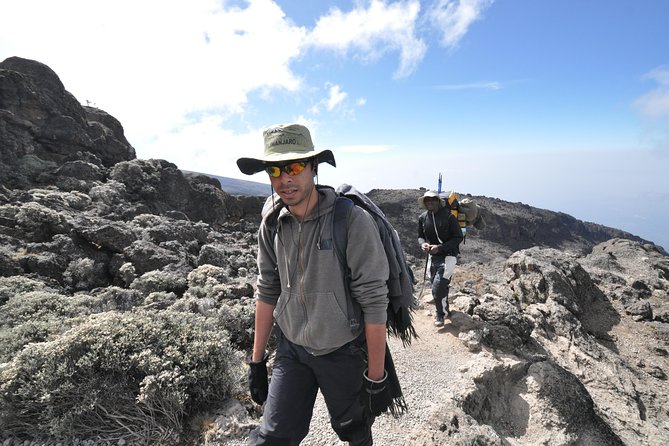
The third day is shorter, at roughly six kilometers and three to four hours, but the route becomes steeper. You leave camp with a sharp climb up grassy slopes and are rewarded with wider views and a stronger sense of being in the high mountain zone.
The vegetation thins out as you climb. The night is spent at Mawenzi Tarn Hut, at approximately 4,330 meters. Mawenzi is Kilimanjaro’s second-highest peak, and its broken, pointed rock formations give this part of the route a more rugged character than the rounded slopes of Kibo.
An afternoon acclimatization walk reaches about 4,500 meters before you return to camp. This extra climb is valuable because it lets your body experience higher altitude without committing to a higher sleeping place that night. Follow your guide’s pace and tell the crew early if you develop a headache, nausea, unusual tiredness, or trouble breathing.
The hut reference is worth clarifying before you go. The trip details refer to campsites, camping equipment, and huts at different points. Ask Migration Venture Africa exactly where you will sleep each night and what type of bedding is supplied. The listed package does include accommodation and camping equipment, but the day-by-day wording does not spell out every sleeping arrangement.
More treks and hikes around Kilimanjaro:
- Kilimanjaro climb by Lemosho Route (7-day)
★ 5.0 · 651 reviews - Kilimanjaro climb, Machame Route (7-day)
★ 5.0 · 262 reviews - 8-Day Small-group Lemosho Kilimanjaro Summit Trekking
★ 5.0 · 186 reviews - Kilimanjaro Climbing Lemosho Route 8 Days.
★ 5.0 · 186 reviews
Day 4: The lunar saddle to Kibo Hut
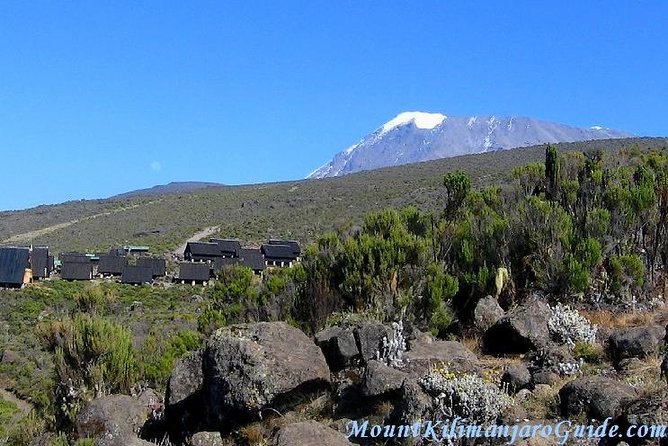
Day four crosses the saddle between Mawenzi and Kibo, Kilimanjaro’s two highest peaks. The walk is about 9 kilometers and takes four to five hours, with an altitude gain of roughly 370 meters.
This is the alpine desert section. The vegetation fades, the ground becomes sparse and pale, and the broad space between the two peaks can feel almost lunar. It is not a day packed with diversions. Its value is the scale of the mountain and the quiet preparation for the summit.
You finish at Kibo Hut, around 4,700 meters, and have an early dinner. This is when the schedule becomes strict. You need to eat, organize summit clothing, prepare your headlamp or torch, and sleep as much as possible before the early wake-up.
The short distance can be misleading. Walking at nearly 5,000 meters takes effort, and you are saving strength for the hardest day. Keep your pace easy. Do not race to Kibo Hut simply because the day’s mileage looks modest.
Day 5: A 14-hour summit day to Uhuru Peak
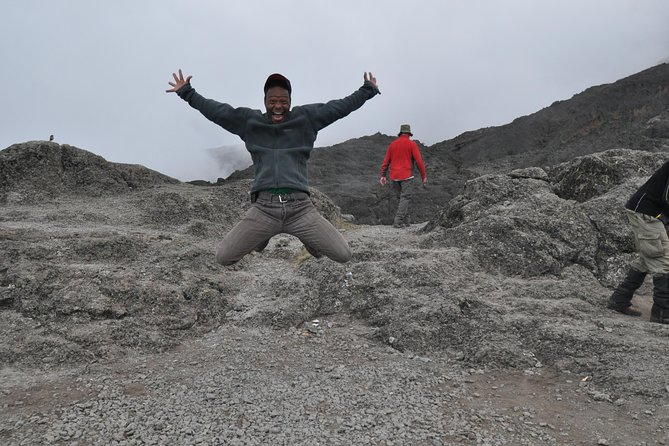
The summit attempt begins around 1 a.m. with a hot drink and snack. You climb slowly by torchlight toward Gilman’s Point on the crater rim, at 5,685 meters.
Reaching Gilman’s Point is a major achievement, but the route continues. After a short rest, you proceed toward Uhuru Peak at 5,895 meters, the highest point in Africa. Sunrise over Mawenzi can be spectacular from the crater rim, but the cold, altitude, and fatigue may limit how long you can stop.
The ascent from Kibo Hut to the summit is listed as five to six hours, though actual timing varies. After the summit, you descend to Kibo Hut at 4,700 meters for brunch and a rest. Then you continue down to Horombo Hut at about 3,720 meters.
Altogether, the day may take 10 to 16 hours. The listed distance is about 5 kilometers up and 15 kilometers down. The descent is not an afterthought. Loose ground, tired knees, and the sudden drop in elevation can make the second half feel just as demanding as the climb.
I would treat this day as the decisive factor in your booking choice. You need moderate physical fitness, patience, and a willingness to walk slowly for hours. Reaching the summit is never guaranteed, and a responsible guide should put your health ahead of the peak.
The guide team is central here. Previous groups on this company’s Kilimanjaro trips have been led by people including Vitalis, Eric, Size Mrema, and Nicholas Wiso. If you have a guide preference or want to confirm who will lead your departure, ask before booking. The company’s strongest praise centers on the support provided before and during the climb, as well as its handling of permits, transfers, and logistics.
Day 6: Marangu descent and the ride back
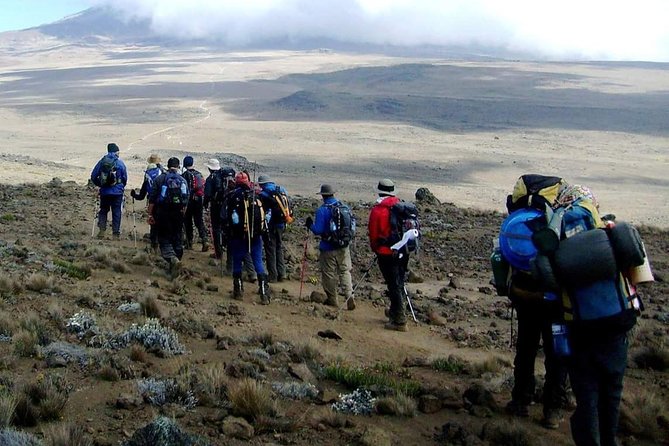
The final day descends through lush forest to Marangu Park Gate at about 1,700 meters. The walk is around 20 kilometers and takes roughly five to seven hours, though the schedule lists about five hours of walking.
The forest is a welcome change after the bare upper slopes. The paths are described as good, but the long distance still demands care. Your knees and feet may be tired after summit day, so use trekking poles if you carry them and keep your pace controlled.
At the gate, you sign out of the mountain. A driver then takes you to your hotel in Moshi or Arusha. This transfer is especially useful after the summit push, when arranging transport on your own would be an unpleasant final task.
What the $1,850 price covers
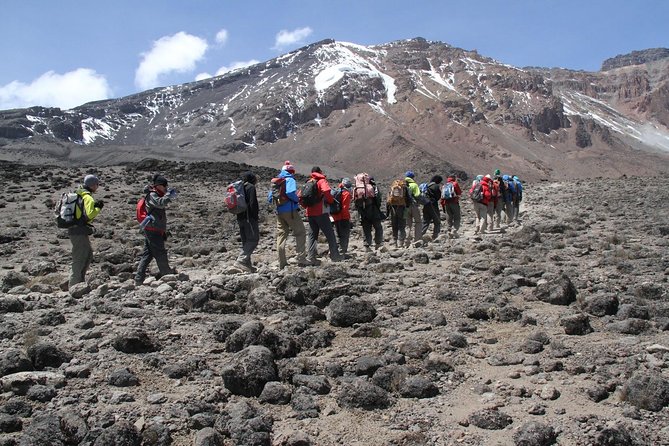
At $1,850 per person, the package includes many of the unavoidable costs of a Kilimanjaro climb:
- Park fees
- Crew salary
- Camping equipment
- Accommodation
- Airport transfers
- Six lunches
- Five dinners
- Five breakfasts
The value is strongest if you want one company to manage the permits, mountain crew, meals, transport, and sleeping arrangements. Park fees alone are a major part of any Kilimanjaro budget, and crew pay should never be treated as a minor extra.
The inclusion list has a small detail worth checking. It lists six lunches, five dinners, and five breakfasts for a six-day trip. That may reflect the travel schedule, but ask exactly where each meal is served and what happens on the final descent day.
International flights, visas, alcohol, and soft drinks are not included. You should also confirm the exact airport transfer terms, especially if your arrival and departure plans involve different airports or extra hotel nights.
Group size, pickup, and practical planning
The maximum group size is 15 people. That is large enough for a social climb but still more manageable than a very large departure. A smaller group can also make it easier to hear the guide, maintain a shared pace, and coordinate the summit start.
Pickup is offered, and the stated start time is 9 a.m. The first day begins after breakfast at your hotel, followed by the drive to the park and Nale Moru. Confirm your pickup location and timing in advance if you are staying outside Moshi or Arusha.
Children must be accompanied by an adult. The activity is intended for people with a moderate level of physical fitness, but the summit day is considerably harder than the first few days. You should prepare for long walking days, cold conditions, and altitude rather than judging the climb by day one.
A mobile ticket is available, and confirmation is provided at booking. Cancellation is free up to 24 hours before the experience begins. Inside that 24-hour period, payment is not refunded and changes are not accepted.
Who should book this climb?
I would choose this route if you want Kilimanjaro scenery without following the same trail up and down. The northern start, Kenyan views, Mawenzi Tarn, the Kibo crossing, and the Marangu descent create a varied six-day journey.
It also suits you if you value a package that handles the main logistics. Meals, park fees, crew salary, equipment, accommodation, and transfers are already included, which makes budgeting easier.
I would be cautious if you want a relaxed mountain holiday. The summit day is long, the altitude is severe, and the final descent is still lengthy. You should also clarify the hut and camping arrangements, meal schedule, and assigned guide before paying.
Should you book the Rongai Route?
Book it if you want a northern approach, broad Kenyan views, a quieter-feeling trail, and a different descent route. The $1,850 cost is reasonable for a package that includes park fees, crew pay, meals, equipment, accommodation, and transfers, provided the sleeping arrangements match your expectations.
Do not book it simply because six days sounds short or because the first stages look gentle. The climb becomes demanding at Mawenzi Tarn, and day five is an all-day test of stamina and altitude tolerance. If you are prepared for that, Migration Venture Africa offers a well-organized structure with a group limit of 15 and a guide team that has handled successful Rongai departures.
FAQ
Where does the Rongai Route climb begin?
The current northern approach begins near the village of Nale Moru, at about 1,950 meters. It is commonly called the Rongai Route, though Loitokitok and Nalemoru also appear as names for the trail.
How long is the Kilimanjaro climb?
The experience lasts six days and five nights.
What is the highest point reached?
The summit attempt reaches Uhuru Peak at 5,895 meters. The route also passes Gilman’s Point at 5,685 meters on the crater rim.
How difficult is the climb?
You should have a moderate level of physical fitness. Summit day may take 10 to 16 hours, including the ascent to Uhuru Peak and the descent to Horombo Hut.
What is included in the price?
The package includes camping equipment, park fees, crew salary, accommodation, airport transfers, six lunches, five dinners, and five breakfasts.
What is not included?
International flights, visas, alcohol, and soft drinks are not included.
Is pickup available?
Yes. Pickup is offered, and the stated start time is 9 a.m. The trip details specify transfer to and from hotels in Moshi or Arusha.
What happens if I need to cancel?
You can receive a full refund if you cancel at least 24 hours before the experience begins. Cancellations or changes made within 24 hours are not refunded or accepted.
More Six-Day Trips in Kilimanjaro
- Kilimanjaro climb, Lemosho Route (6-day)
★ 5.0 · 129 reviews - Kilimanjaro climb, Marangu route (6-day)
★ 5.0 · 72 reviews - 6 Days Tanzania Classic Safari
★ 5.0 · 52 reviews - The Best of Machame Route in 6 Days: Your World’s Summit Guide
★ 5.0 · 44 reviews
Just added around Kilimanjaro
- 6 days Machame route climbing Mt.Kilimanjaro★ 5.0 · 8 reviews
- machame route★ 5.0 · 16 reviews
- Mt Kilimanjaro 6 days Marangu route hike★ 5.0 · 3 reviews
- Private Cycle to Kilimanjaro Bike Park Safari★ 5.0 · 6 reviews
- West Kilimanjaro cycling Adventures★ 4.5 · 8 reviews
- Kilimanjaro Climb • Marangu Route ~ 9 Day★ 5.0 · 4 reviews
- 3 Days Private E-Bike Tour in West Kilimanjaro★ 5.0 · 3 reviews
- Kilimanjaro Climb • Machame Route ~ 10 Day★ 5.0 · 6 reviews