
Reviewed · CAMPING SAFARIS
Mt Kilimanjaro 360° Trek with Once-in-a-Lifetime Crater Camping
Kilimanjaro’s Northern Circuit saves its biggest surprise for the top: after reaching Uhuru Peak, you descend into the crater for a night beneath the mountain’s glaciers. That is a rare experience, and it gives this climb a strong sense of place beyond simply checking Africa’s highest summit off your list.
I like the quiet route, which crosses the Shira Plateau and the northern slopes with less foot traffic than the better-known trails. I also like the careful altitude plan, with several days of gradual climbing and a high point near Lava Tower before sleeping lower at Barranco. The main caution is simple: this remains a serious high-altitude climb, and the crater night adds cold, exposure, and another demanding day near the summit.
Key points to know before you book
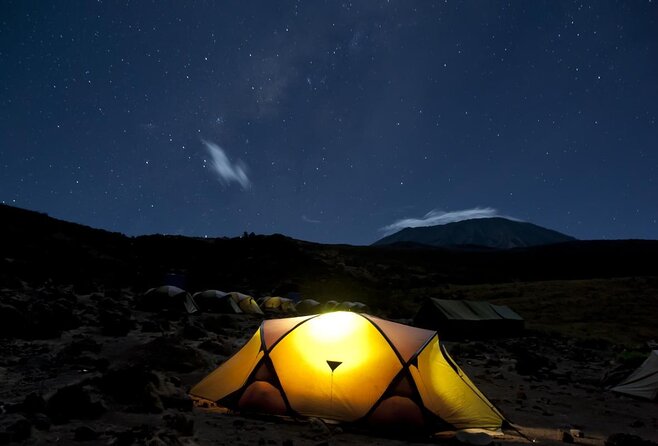
- Crater camping after the summit: Spend a night inside Kilimanjaro’s crater, close to its glaciers, rather than descending straight away.
- A quieter northern route: Expect low traffic, broad views toward Kenya and Tanzania, and long stretches away from the busiest trails.
- A private climb: Only your own group takes part, with a guide, assistant guides, porters, and a cook.
- A gradual altitude schedule: The route includes Shira Plateau, Lava Tower, Barranco, and the northern slopes before summit night.
- A full support package: Meals, tents, mattresses, hot washing water, airport transfers, and a post-climb hotel night are included.
- A high price with real inclusions: At $4,211.27 per person, you are paying for ten days of staffing, permits, meals, transfers, and logistics, not just a summit walk.
Why the Northern Circuit is worth your time
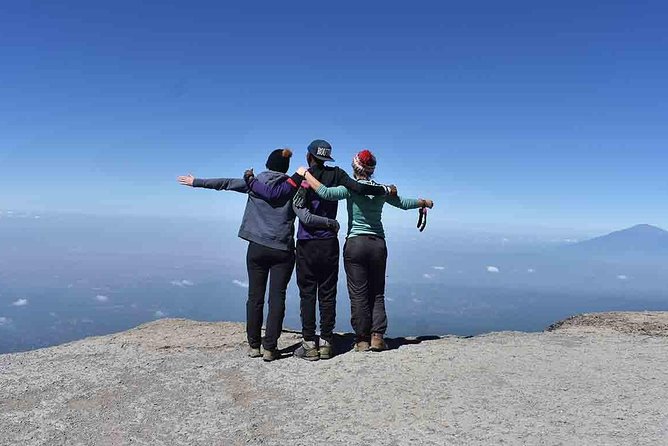
The Northern Circuit is Kilimanjaro’s long game. Instead of rushing upward on a short route, you spend more days moving through different plant zones and sleeping at changing elevations. The route begins in rainforest, crosses open high country, reaches the alpine desert, circles the northern side of Kibo, and then turns toward the summit.
That extra time matters. Altitude affects people differently, and no schedule can guarantee success. Still, the plan gives you more room to adjust than a very short climb. Day four is especially useful: you climb toward Lava Tower at about 4,650 meters, then descend to Barranco Camp. This is the classic climb high, sleep lower pattern, and it gives your body a better chance to adapt.
The route is rated medium, but do not read that as easy. You need a moderate level of fitness, and summit night is strenuous even for fit people. The route takes about nine or ten days, depending on the exact arrangement, with roughly 10 days shown in the full schedule.
More camping safaris in Kilimanjaro:
- 6-day Private Camping Safari Tour from Kilimanjaro Airport
★ 5.0 · 27 reviews - 4 Days Group Camping Safari
★ 5.0 · 1,101 reviews - 5 Days Group Camping Safari
★ 5.0 · 730 reviews
Day 1: rainforest trails to Mti Mkubwa Camp
Your day begins with a roughly 45-minute drive from Moshi to Kilimanjaro National Park’s gate. Permit work and crew preparations can take time, so this is not a dramatic leap from hotel to wilderness. It is a useful first look at how much organization supports a mountain climb.
From the gate, you walk through rainforest to Mti Mkubwa Camp, climbing from about 2,389 to 2,785 meters. The trek takes around four hours. Expect a damp, muddy trail in places, especially at this lower elevation. Gaiters and trekking poles are sensible additions, not fancy extras.
The forest is one of the pleasures of the opening day. Your guide can point out plants and wildlife as the trail winds upward. The short distance helps you settle into the slow pace that Kilimanjaro demands.
Days 2 and 3: leaving the forest for Shira Plateau
Day two climbs from Mti Mkubwa to Shira Camp One at about 3,504 meters. The six-hour walk leaves the rainforest behind and opens into wider views. Temperatures drop as the trail rises, so keep a warm layer in your daypack rather than burying it in your duffel.
On day three, you cross the high Shira Plateau to Shira Camp Two at roughly 3,895 meters. The walking time is about four hours, but the altitude makes the day feel more serious than the distance suggests. Shira is exposed, and temperatures can fall below freezing at night.
This is a good place to slow down and pay attention to hydration, appetite, sleep, and headaches. You can also walk a little higher around the plateau for views across the valley and toward Kilimanjaro’s Western Breach. Those extra steps are optional, so save your energy if your body is still adjusting.
Day 4: Lava Tower, then the descent to Barranco
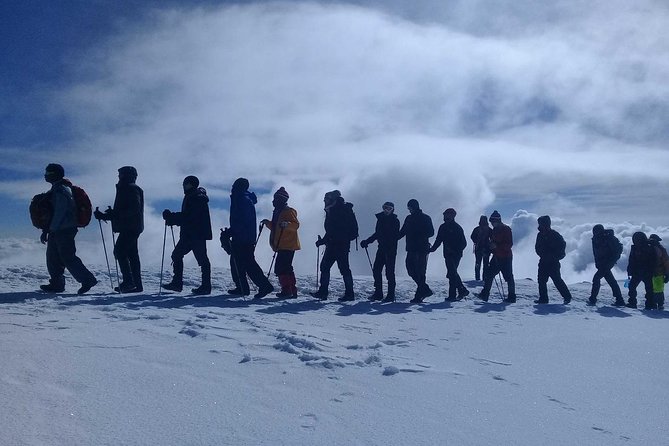
Day four is one of the best-designed days on the route. You leave Shira and climb toward Lava Tower, known locally as the Shark’s Tooth, at approximately 4,650 meters. You then pass junctions for Kibo and the Arrow Glacier before descending to Barranco Camp.
The official overnight elevation is about 3,986 meters, close to where you started the day. That may look inefficient on paper, but it is exactly the point. You spend time at a higher altitude, then sleep lower. The seven-hour schedule can be tiring, yet it gives you useful acclimatization without pushing the night too high.
The alpine desert around Lava Tower is stark and spare. Plant life thins out, the air feels colder, and the mountain takes on a more severe character. Bring sun protection as well as cold-weather clothing. High altitude can mean strong sun by day and freezing conditions after dark.
More treks and hikes around Kilimanjaro:
- Kilimanjaro climb by Lemosho Route (7-day)
★ 5.0 · 651 reviews - Kilimanjaro climb, Machame Route (7-day)
★ 5.0 · 262 reviews - Kilimanjaro Climbing Lemosho Route 8 Days.
★ 5.0 · 186 reviews - 8-Day Small-group Lemosho Kilimanjaro Summit Trekking
★ 5.0 · 186 reviews
Days 5 and 6: across the northern slopes
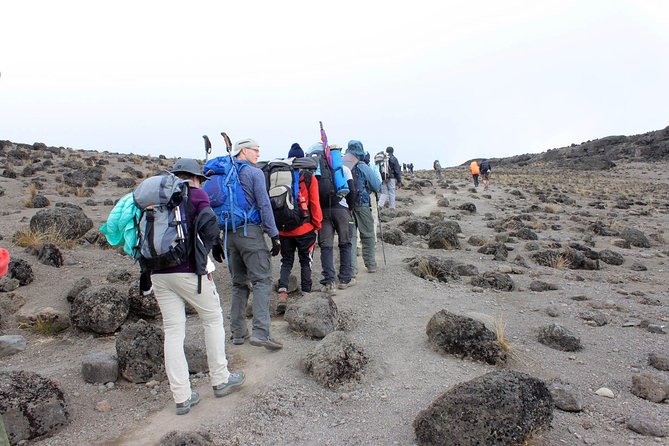
Day five starts with a climb out of Moir Valley. You can take a short detour to Little Lent Hill at 4,375 meters, but this should be treated as optional. The main route continues around Kibo’s northern slopes, with repeated inclines and declines before reaching Buffalo Camp.
This is not a simple uphill march. You gain and lose elevation, which can be tiring in a different way from a steady climb. The reward is a broad view toward the plains and the Kenya-Tanzania border. You reach Buffalo Camp around midday, giving you time for lunch and rest.
Day six crosses Buffalo Ridge, drops toward Pofu Camp for lunch, then continues east to Rongai Third Cave. The walking time is listed at about seven hours, though this day is shorter in character than the one before it. By now, you may feel more settled at altitude, but do not let a better day tempt you into walking too fast.
This section is a major reason to choose the Northern Circuit. It is quieter than the southern approaches and gives you views that feel different from the classic Kilimanjaro photographs. You are circling the mountain, not simply walking straight at the summit.
Day 7: the Saddle and preparation for summit night
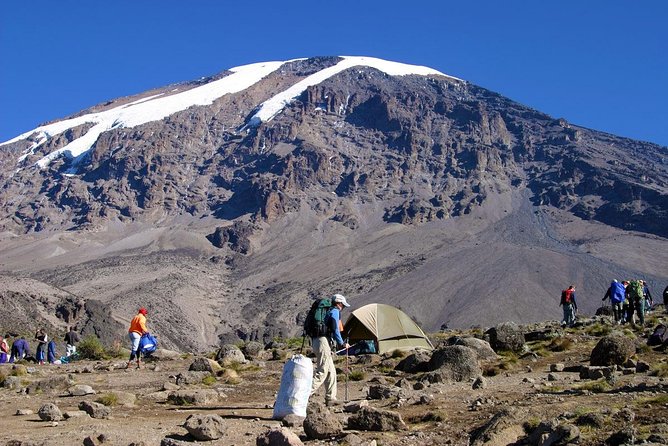
The route climbs from Rongai Third Cave toward School Hut, reaching about 4,717 meters. You cross the Saddle between Kibo and Mawenzi Peak, an exposed high area with little shelter from the elements. The walking time is around seven hours.
You will have an early dinner and rest before beginning the summit attempt just before midnight. This is the point where organization makes a real difference. Put your warm clothes, headlamp, insulated water bottles, snacks, and camera in order before lying down. You may have little patience for packing later.
The schedule creates a difficult rhythm: a long day, a short rest, then the summit push. Keep expectations realistic. The goal is not speed. It is steady movement, careful breathing, and listening to your guide.
Day 8: Uhuru Peak and the crater night
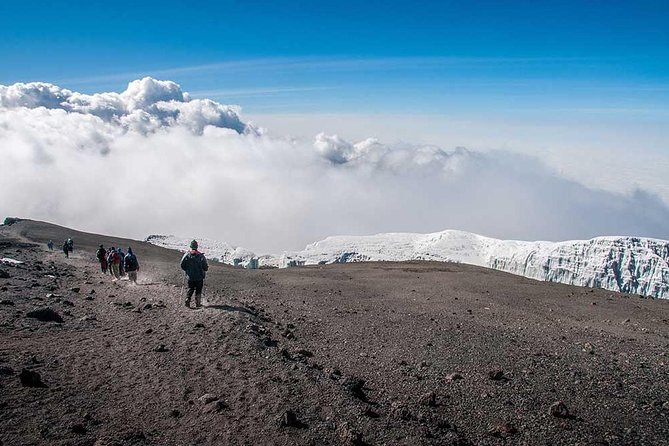
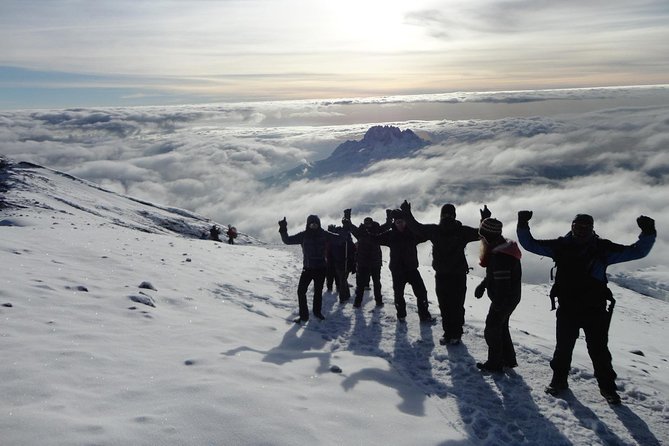
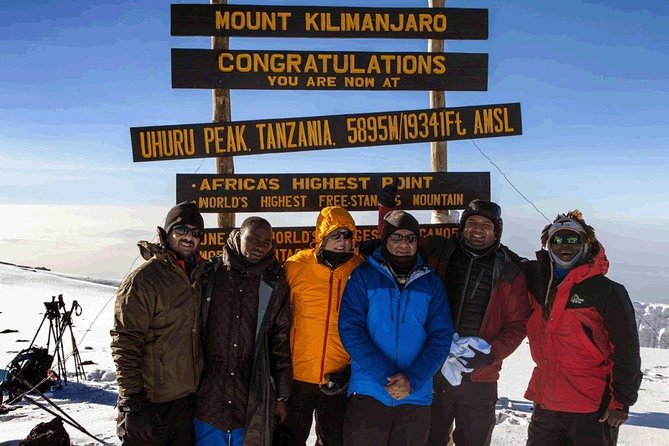
You begin the summit ascent before dawn and climb to Uhuru Peak at 5,895 meters, the highest point in Africa. The summit section takes about seven to nine hours, according to the schedule, and it is likely to be the hardest physical part of the trip.
After celebrating at the summit, you descend into Kilimanjaro’s crater for the night. This is the tour’s signature feature. Crater Camp places you beneath the glaciers, close to the mountain’s volcanic interior, rather than sending you immediately back down to a lower camp.
The setting is extraordinary, but it is not a luxury night. You remain at very high altitude after an exhausting summit climb. Cold, fatigue, and thin air are part of the experience. Emergency oxygen is carried for emergencies only, not as a way to help you reach the summit. You should also bring any personal medication you need, since personal medicines are not included.
Day 9: Ash Pit and the descent to Millennium Camp
The morning gives you time to explore the Ash Pit inside the crater before descending to Millennium Camp. The crater visit adds another unusual layer to the climb, but the day is still physically demanding. The descent takes about five to six hours.
Reaching Millennium Camp is a welcome change after the summit and crater. You finally move to a lower elevation and have time to recover. Your legs may feel the strain more clearly on the way down, so trekking poles can help, especially if you used them in the muddy forest at the start.
Day 10: rainforest, certificate, and Moshi
The final descent passes through rainforest to Mweka Gate, taking around four to five hours. At the gate, you receive a certificate of achievement before returning to Moshi for celebration and rest.
The package includes a hotel night after the climb, with breakfast. That is valuable. A shower, a proper bed, and a slower morning are not minor comforts after a summit attempt and crater camp. Return transfers between Kilimanjaro Airport and Moshi are also included, which simplifies the beginning and end of the trip.
What the $4,211.27 price covers
At $4,211.27 per person, this is a major purchase. I would judge the value by looking at what is bundled into the price rather than comparing it with a basic mountain-only rate.
You receive park fees and taxes, airport transfers in both directions, a post-climb hotel night, camping equipment, a mattress, camp chairs, tables, fresh drinking water, and hot water for washing each day. The food package includes nine breakfasts, ten lunches, and nine dinners. A cook, mountain guide, assistant guides, and porters are part of the support team.
That level of staffing matters on a private climb. You are not carrying the full camp or preparing meals after a long day. The company also states that wages follow the standard set by the Kilimanjaro National Park Authority. Still, ask for a clear explanation of tipping expectations before departure, since tips are not listed among the inclusions.
You must pay separately for flights, visas, travel and health insurance, personal gear, personal medicine, water-purifying tablets, snacks, and unspecified meals or drinks. Yellow fever vaccination is listed as compulsory. A portable toilet is optional but strongly recommended, and it costs extra.
The support team and private format
This is a private activity, so only your group participates. That gives you more control over walking pace, rest stops, and the general feel of the climb than a large shared departure. Group discounts are also offered, which may improve the value if you are booking with friends or family.
Pinnacle Adventures and Safaris has used guides named JT, Jobeth, Jacob, and Kennedy on past Kilimanjaro trips. Your assigned guide is not specified here, so confirm the names and roles before you travel if that matters to you. The important practical point is that the package includes a lead guide, assistant guides, porters, and a cook rather than a guide working alone.
The operator’s strongest reputation is for close attention from airport pickup through the climb and return to the hotel. That kind of continuity is useful on a trip with many moving parts. It does not remove the need to check details yourself, especially the exact day count, crater-camp arrangements, equipment rental, and final tipping plan.
What to pack for this particular route
You need clothing for wet rainforest, strong sun, wind, and freezing nights. Gaiters and trekking poles are specifically useful on the muddy opening trail. Warm clothing becomes essential from Shira onward, especially at the exposed plateau and crater.
Pack an insulated water bottle for summit night, a headlamp, snacks, and a camera. Keep these items ready before the early rest period on day seven. Personal medicine and water-purifying tablets are not supplied, so bring them yourself.
You can rent personal hiking and trekking gear from equipment shops in Moshi. That is helpful if you do not want to transport bulky equipment internationally, but confirm rental availability and condition before relying on it. The included sleeping mattress and camping equipment do not mean every personal item is covered.
Who should book this climb?
I would choose this trip if you want a quieter route, a long acclimatization schedule, and a rare crater night. It suits a fit person who values scenery and time on the mountain more than the shortest possible route to the summit.
It is also a good match for a private group that wants a dedicated support team and airport transfers handled in one package. The full food and camping setup reduces the number of practical details you need to manage yourself.
I would hesitate if you want a simple, low-cost trek or if high-altitude camping sounds unpleasant. The price is substantial, the itinerary is long, and the crater night comes after the hardest summit effort. You should also be comfortable with cold, basic camps, early starts, and several days far above normal sleeping altitude.
The cancellation terms are strict close to departure: cancel at least three full days before the start time for a full refund. Within three days, the payment is not refunded, and late changes are not accepted.
Should you book the Mt Kilimanjaro 360° Trek?
Book it if the crater is the reason you are interested in Kilimanjaro, not just a decorative extra. You will get a quieter northern route, excellent scenery, extensive crew support, and a schedule built around gradual acclimatization. The chance to stand at Uhuru Peak and then sleep inside the crater is the rare feature that justifies much of the premium.
Think twice if you are mainly looking for the cheapest reliable summit route. You are paying for ten days, private logistics, a large support team, and the crater experience. For the right person, that is a fair trade. For someone who wants a shorter climb with fewer nights outdoors, it may be more trip than necessary.
FAQ
How long is the Kilimanjaro trek?
The experience lasts approximately 10 days, with the trek described as a 9 or 10-day Northern Circuit route.
Where does the experience start and finish?
It starts in Moshi Urban, Tanzania, and ends back at the meeting point after the descent and return from Mweka Gate.
Is the climb private?
Yes. Only your group participates in the activity.
Is airport transportation included?
Yes. Return transfers between Kilimanjaro Airport and Moshi are included.
Is accommodation in Moshi included?
One hotel night after the climb is included, along with breakfast.
What meals are included?
The package includes nine breakfasts, ten lunches, and nine dinners.
Is personal hiking gear included?
No. Personal hiking and trekking gear is not included, but you may rent equipment from stores in Moshi. Personal medicine, water-purifying tablets, and snacks are also not included.
Just added around Kilimanjaro
- 6 days Machame route climbing Mt.Kilimanjaro★ 5.0 · 8 reviews
- machame route★ 5.0 · 16 reviews
- Mt Kilimanjaro 6 days Marangu route hike★ 5.0 · 3 reviews
- Private Cycle to Kilimanjaro Bike Park Safari★ 5.0 · 6 reviews
- West Kilimanjaro cycling Adventures★ 4.5 · 8 reviews
- Kilimanjaro Climb • Marangu Route ~ 9 Day★ 5.0 · 4 reviews
- 3 Days Private E-Bike Tour in West Kilimanjaro★ 5.0 · 3 reviews
- Kilimanjaro Climb • Machame Route ~ 10 Day★ 5.0 · 6 reviews
Camping Safaris, compared.
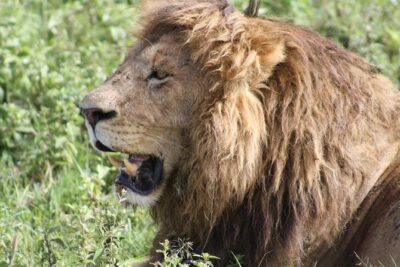
3 Day Serengeti National Park & Ngorongoro Crater Camping Safari
Read our review →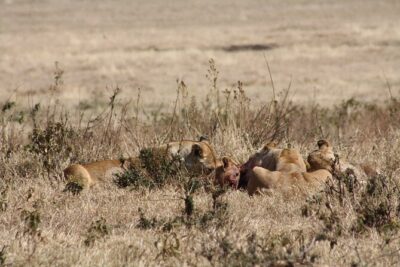
5-Day private Camping Safari Tour in Tanzania
Read our review →
5 Days Camping Tarangire, Serengeti & Ngorongoro crater & Visiting Maasai
Read our review →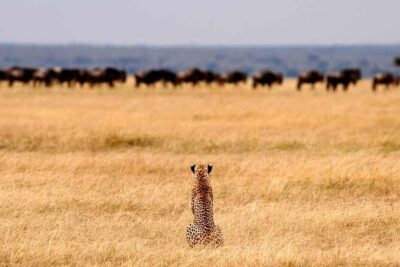
Multi-Day Camping Safari Experience in Arusha
Read our review →
3-Day Tarangire, Ngorongoro and Lake Manyara Camping Safari
Read our review →Browse the lists this tour appears in