
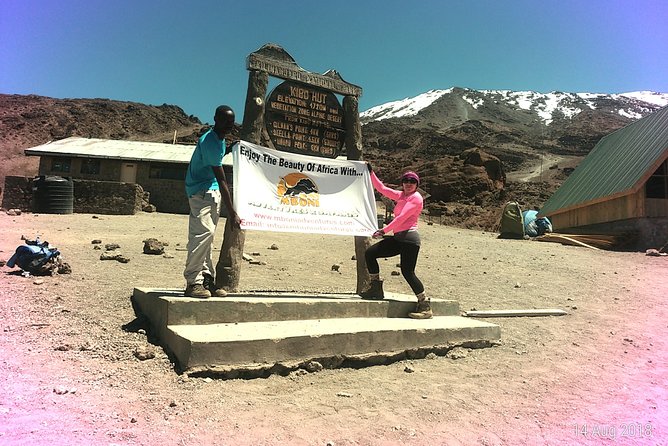
Reviewed · MARANGU ROUTE CLIMBS
Marangu Route
The Marangu Route gives you one of the more straightforward ways to approach Mount Kilimanjaro, Africa’s highest mountain. You begin near Marangu village and climb through changing scenery toward the summit, sleeping in huts rather than tents along the way. That makes the route feel more sheltered and organized, especially if you prefer a bed and roof after a long day on foot.
I like two things right away: hut accommodation removes the need to sleep in a tent, and the route involves no technical climbing. I also like the private format, since your group travels with its own guides and support team rather than being folded into a large public departure.
The main caution is simple: easy is a relative word here. Marangu may be less demanding in its walking style than some other Kilimanjaro routes, but reaching the summit still requires solid fitness, patience, and the ability to handle high altitude. The advertised duration is approximately five days, while some past trips connected with this operator lasted six days, so confirm the exact schedule before paying.
Key points to know before booking
- Marangu begins at Marangu village: The route starts on the mountain’s lower slopes, giving you a clear sense of progress from village to summit.
- Huts replace camping: You sleep in mountain huts, a major advantage if you dislike carrying or sleeping in a tent.
- No technical climbing is required: You walk rather than use ropes or specialized climbing equipment, but the physical effort remains serious.
- Private group format: Only your party takes part, which can make the pace and support feel more personal.
- Mboni Adventures has a praised support team: Guide names associated with past climbs include Julius, Brad, Festus, Jackson, Khatib, Frank, and Juma, along with cooks and porters.
- The price is $2,051.29 per person: That is a substantial outlay, so check exactly what the fee covers beyond the stated taxes and fees.
What the Marangu Route feels like
Marangu is often called the Coca-Cola Route. The nickname points to its reputation as the most accessible and popular route on Kilimanjaro, not to any guarantee that the climb will be easy. You still spend several days walking uphill, sleeping at altitude, and saving energy for the hardest part near the summit.
The route starts at Marangu village, where the mountain experience begins in a settled community rather than at a remote trailhead. That gives the trip a useful sense of place. You are not simply dropped beside a path. You begin at the base, then move upward through the mountain environment.
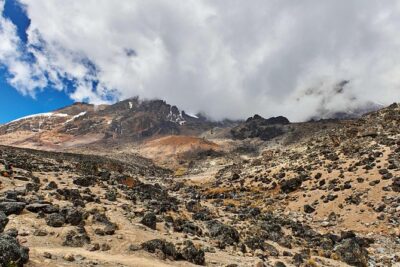
The scenery is one of the route’s main rewards. The supplied description calls Marangu scenic and highlights its changing slopes and escarpment. Exact daily stopping points are not provided, so I would not book this expecting a fixed list of named sights. Instead, think of the attraction as the gradual change in views and terrain as you climb higher.
The route’s reputation for comfort comes from its huts. This matters after a long walking day. A hut gives you a roof and a fixed place to sleep, which can be easier than setting up camp or spending every night in a tent. It does not turn the mountain into a hotel, though. You should still expect basic mountain accommodation rather than private rooms or resort-style comfort.
More Marangu Route climbs:
- Kilimanjaro climb, Marangu route (6-day)
★ 5.0 · 72 reviews - Climbing Kilimanjaro – Marangu Route
★ 5.0 · 65 reviews - Private Full Day Hiking Experience to Marangu Route
★ 5.0 · 61 reviews
A practical five-day climb
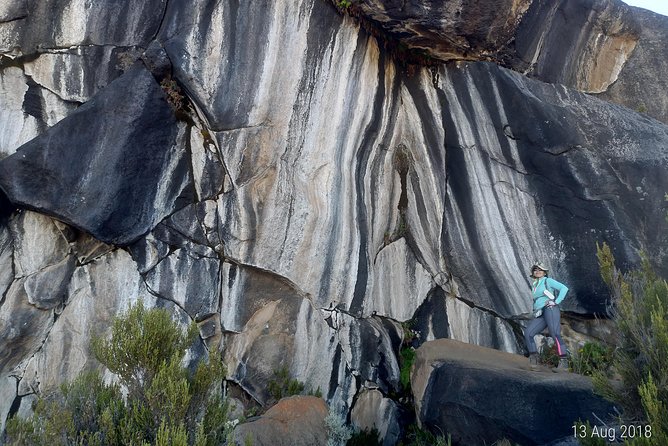
The experience is advertised as approximately five days. The available details do not provide a full day-by-day schedule, hut names, summit timing, or daily distances, so you should request those items from Mboni Adventures before booking. That information will help you judge the pace and prepare properly.
Day one: Starting from Marangu village
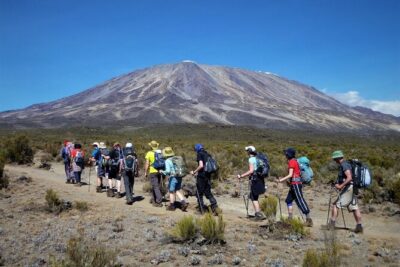
Your climb begins at Marangu village near the base of Kilimanjaro. This opening stage is important because it sets the rhythm for the rest of the trip. You meet the support team, begin walking, and enter the mountain setting gradually.
Pickup is offered, which simplifies the start if you are staying in the Moshi area or arriving with transport arranged through the operator. The listing does not specify the pickup zone, time, or vehicle details, so ask for those details in advance.
At this point, your main task is not speed. A steady pace helps you conserve energy, and a private group may make it easier to discuss breaks with the guide. The route is described as non-technical, but you should not mistake that for a casual day hike.
Middle days: Scenic walking and hut nights
The middle section is where the hut system earns its keep. You walk during the day and return to basic mountain lodging rather than camping. For many people, this is the key reason to choose Marangu over another route.
The hut arrangement may also appeal if you are new to multi-day mountain trips. You do not need to plan around tent living, and the group’s cooks and porters can handle important support tasks. Past accounts connected with Mboni Adventures give particular credit to the cooks, with one person describing good meals each day. That matters because food and rest become central once the walk stretches over several days.
Still, the hut format has limits. The supplied information does not state the number of people per hut, bathroom arrangements, bedding, electricity, or dining facilities. Ask direct questions before departure. If you need privacy, special food, or a particular sleeping setup, confirm what is available rather than assuming.
A few more Kilimanjaro trips worth comparing
- Kilimanjaro climb by Lemosho Route (7-day)
★ 5.0 · 651 reviews - Kilimanjaro climb, Machame Route (7-day)
★ 5.0 · 262 reviews - Kilimanjaro Climbing Lemosho Route 8 Days.
★ 5.0 · 186 reviews - 8-Day Small-group Lemosho Kilimanjaro Summit Trekking
★ 5.0 · 186 reviews
Final climb: The physical test
The upper part of Kilimanjaro is where the word easy stops being useful. Even a non-technical route can be exhausting, and the altitude can make a normal walking pace feel much harder. The tour requires a moderate fitness level, but you should treat that as a minimum rather than a full preparation plan.
The guide’s role becomes especially important here. Past trips connected with the company credit guides with keeping groups safe and focused, including Julius, Brad, Festus, Khatib, Frank, Jackson, and Juma. The material does not promise a specific guide for your departure, so ask who will lead your group and how many guides will be present.
A few past groups also included two guides, a chef, and porters. That suggests the support structure can be substantial, but you should confirm the staffing for your own booking. A stronger guide-to-climber ratio can be valuable if someone needs to slow down or adjust the pace.
Why the private format matters
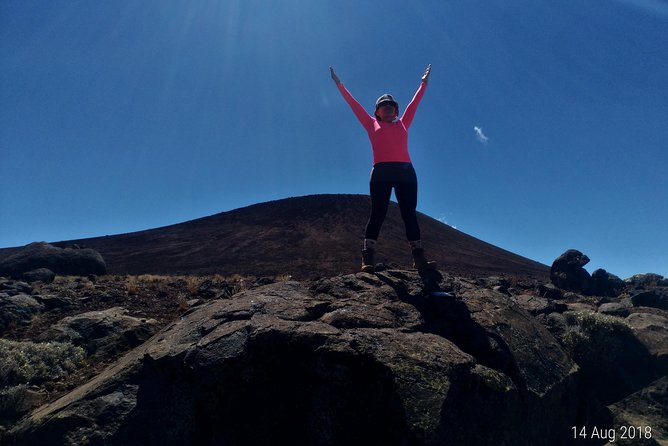
This is a private activity, meaning only your group participates. I like that arrangement for a climb because pace matters. A fast walker can become frustrated in a slow group, while a cautious climber can feel pressured by people who want to push ahead.
With a private departure, you have a better chance of discussing the daily rhythm with your guides. You can ask for measured walking, more rest, or extra attention if the altitude begins to affect you. The private format does not remove the physical challenge, but it can make the experience feel less like a race.
The support team is another important part of the value. Past accounts connected with Mboni Adventures describe guides, porters, and cooks working as a unified crew. One group was accompanied from airport arrival through departure, while another praised the equipment check and the warm welcome. Those details suggest that the operator may provide more than trail guidance, although the exact airport and pre-climb services are not listed as included benefits.
Ask what happens before the first walking day. Find out if there is an equipment check, a briefing, airport pickup, hotel transfer, or an extra night in Moshi. Do not assume those services are part of the $2,051.29 price unless the company confirms them.
The people behind the climb
A Kilimanjaro trip depends heavily on the team. The route itself may be fixed, but the experience can change with the guide’s patience, communication, and judgment.
The names associated with past Mboni Adventures climbs include Julius and Brad, who led one successful summit attempt, and Festus, whose wider team was praised for working hard and staying united. Jackson was part of a larger crew that supported a group from arrival through departure. Khatib and Frank were credited with guiding people in their fifties to Uhuru Peak, and Juma led a well-regarded full-day Kilimanjaro outing.
You should not read those names as a guarantee that one of them will lead your group. Staff assignments can change. Instead, use them as useful prompts when you contact the company. Ask who is available, how many years of mountain experience the lead guide has, and how the team handles altitude problems.
The food service also deserves attention. One past account singled out the cook and described meals as tasty and consistent. That is a small detail with a large effect on a multi-day climb. Ask what meals are supplied, whether vegetarian or other dietary needs can be handled, and whether snacks are included.
What the $2,051.29 price means
At $2,051.29 per person, this is not a budget day trip. You are paying for a multi-day Kilimanjaro experience with a private group, hut accommodation, and a support operation involving guides, porters, and cooks in at least some past departures.
The listed inclusions are limited to all fees and taxes. Alcoholic drinks are specifically excluded. The wording does not clearly say that meals, lodging before or after the climb, airport transfers, equipment rental, park fees, tips, flights, or personal insurance are included. Some of these may be covered in practice, but the supplied price details do not establish that.
That makes the value hard to judge without a written breakdown. The price may be reasonable if it covers the main mountain costs and a well-staffed private climb. It may be less attractive if many essentials are extra. Before booking, ask for an itemized list and confirm the total cost, including any required gear, tips, transfers, and accommodation outside the mountain.
The hut system can also affect value. If you specifically want to avoid camping, paying more for a hut-based route may make sense. If your priority is the highest possible summit success rate, ask about the route’s acclimatization schedule and exact number of days. The five-day duration is relatively short in the context of a major high-altitude climb, though the information supplied does not provide enough detail to judge the schedule fully.
Fitness, preparation, and comfort
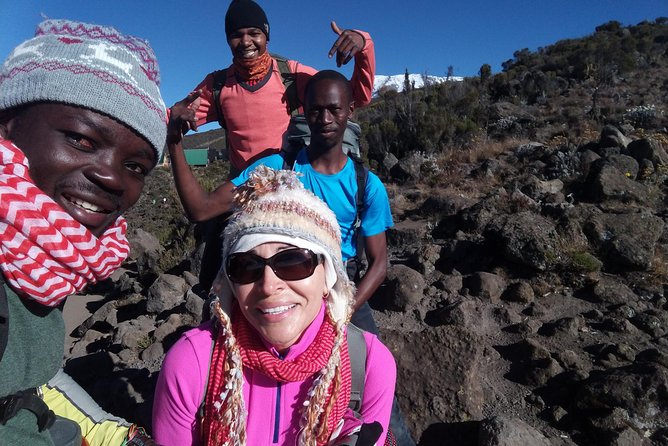
The official requirement is moderate physical fitness. You should be able to walk uphill for several hours and recover well enough to do it again the next day. You also need patience, since the final ascent can be slow even for fit people.
No technical climbing skills are required. That means you are not expected to use climbing ropes or specialized mountaineering techniques. It does not mean the route is suitable for someone who rarely exercises.
I would prepare with regular uphill walking, long weekend hikes, stair sessions, and time carrying the daypack you expect to use. Build gradually rather than trying to prove your fitness in one huge workout. Also ask what clothing and equipment the operator expects you to bring. The past accounts refer to a professional readiness and equipment check, but no official packing list is provided here.
The most useful preparation question concerns altitude. The information confirms a Kilimanjaro summit attempt but does not explain the operator’s altitude procedures, emergency plan, or medical support. Ask how guides monitor climbers, what happens if someone cannot continue, and how the team responds to illness.
Cancellation and booking details
You can cancel free of charge up to 24 hours before the experience begins for a full refund. Cancellation within 24 hours is not refundable, and changes made during that period are not accepted. The cut-off follows local time.
Confirmation is provided at booking. The ticket redemption point is listed as Mount Kilimanjaro in Tanzania, and the stated operating hours are 7:00 AM to 6:00 PM daily for the published date range. Those hours do not tell you your actual departure time, so confirm the pickup and start details directly.
The activity is marked as available from May 27, 2019 through June 18, 2026. Since the listed duration is approximately five days, make sure your requested dates fit the operator’s current schedule.
Who should choose Marangu?
I would choose this route if you want a well-known Kilimanjaro approach, prefer huts to tents, and like the idea of a private support team. It also suits people who want a non-technical climb and may appreciate a route described as scenic and relatively accessible.
It is a good match for a first major mountain climb only if you take the fitness requirement seriously. The hut accommodation can make the trip more comfortable, but it does not remove altitude, cold, fatigue, or the need for steady preparation.
I would look elsewhere if you want a quiet or highly remote route, since Marangu is known for its popularity. I would also pause if the five-day schedule feels rushed or if the price remains unclear after asking for an itemized breakdown.
Should you book the Marangu Route?
Book this climb if hut accommodation, private guiding, and a non-technical route matter more to you than a wilderness-style camping experience. The strongest reasons to choose it are the practical sleeping setup, the private group format, and the record of well-regarded guide, porter, and cooking teams associated with Mboni Adventures.
Before committing, get the exact itinerary, guide assignment, inclusions, hut details, meal plan, equipment requirements, and total price in writing. If the answers are clear and you are ready for a genuine high-altitude challenge, this can be a sensible way to take on Kilimanjaro. If you are choosing it only because it is called easy, stop and reconsider.
FAQ
Where does the Marangu Route begin?
The route begins at Marangu village near the base of Mount Kilimanjaro in Tanzania.
How long does the experience last?
The advertised duration is approximately five days. Some past trips connected with the operator lasted six days, so confirm your exact schedule before booking.
Do I sleep in tents?
No. The Marangu Route provides hut accommodation, which is one of its main differences from routes that use camping.
Is technical climbing required?
No. The route is described as requiring no technical climbing. You still need moderate physical fitness for the multi-day mountain ascent.
Is this a private tour?
Yes. Only your group participates in the activity.
Is pickup available?
Yes. Pickup is offered, although the supplied information does not specify the exact pickup area or time.
What is included in the price?
The listed inclusion is all fees and taxes. Alcoholic beverages are not included. Ask Mboni Adventures for a complete cost breakdown before booking.
What is the cancellation policy?
You can cancel at least 24 hours before the start time for a full refund. Cancellations or changes made within 24 hours are not accepted for a refund.
How fit should I be?
You should have a moderate level of physical fitness. The climb is non-technical, but reaching the summit of Kilimanjaro remains a demanding multi-day effort.
Just added around Kilimanjaro
- 6 days Machame route climbing Mt.Kilimanjaro★ 5.0 · 8 reviews
- machame route★ 5.0 · 16 reviews
- Mt Kilimanjaro 6 days Marangu route hike★ 5.0 · 3 reviews
- Private Cycle to Kilimanjaro Bike Park Safari★ 5.0 · 6 reviews
- West Kilimanjaro cycling Adventures★ 4.5 · 8 reviews
- Kilimanjaro Climb • Marangu Route ~ 9 Day★ 5.0 · 4 reviews
- 3 Days Private E-Bike Tour in West Kilimanjaro★ 5.0 · 3 reviews
- Kilimanjaro Climb • Machame Route ~ 10 Day★ 5.0 · 6 reviews
Marangu Route Climbs, compared.
Browse the lists this tour appears in