
Reviewed · MACHAME ROUTE CLIMBS
Machame Route 7-Day Private Kilimanjaro Trek
The best part of this climb is the changing scenery. In seven days, you move from thick rainforest to open moorland, then across rocky alpine terrain and icy upper slopes before reaching Uhuru Peak at 5,895 meters. The route also uses a useful altitude pattern: climb high to Lava Tower, then sleep lower at Barranco Camp.
I like the private format, since your group can focus on its own pace and needs. I also like the clear support package, with guides, porters, meals, tents, safety gear, airport transfers, and two hotel nights included. Staff members named in the trip feedback include Jackson, Innocent, Kenny, Shafii, Emmanuel, William, Issa, and Martin.
The main caution is the summit day. It can last 12 to 15 hours, beginning around midnight, and includes loose ground, steep walking, a short rest at Barafu, and a further descent to Mweka Camp. A moderate fitness level is required, and good travel insurance is essential because medical, evacuation, and trip cancellation cover are not included.
Key points before you book
- Lava Tower to Barranco Camp: This climb-high, sleep-lower day gives your body valuable time to adjust.
- A genuine seven-day summit plan: The schedule includes five approach days, the summit push, and a final descent through rainforest.
- Private group setup: Only your own party takes part, rather than joining a fixed public group.
- A full camping package: Tents, sleeping bags, sleeping mats, a portable toilet, meals, drinking water, and safety supplies are included.
- Strong personal support: The team handles park permits, trailhead transport, porters, airport transfers, and hotel nights.
- Price of $2,209 per person: This is a substantial package, but many major climbing costs are already covered.
Why the Machame Route earns its nickname
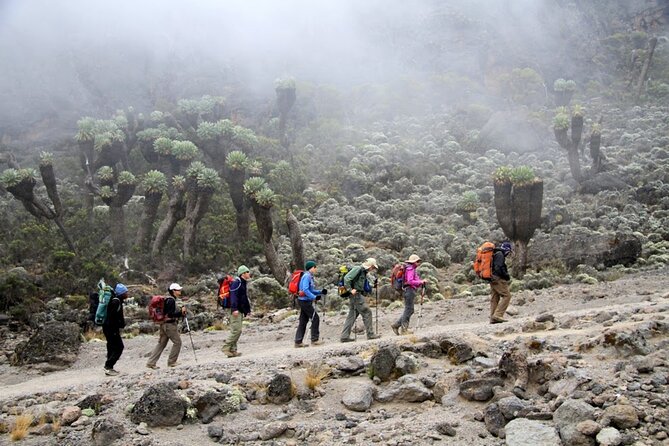
Machame is often chosen for its changing scenery and gradual route design. You begin at Machame Gate in the forest zone, then climb through moorland before reaching the high volcanic terrain around Barafu Camp.
The route is not easy. Machame includes steep sections, uneven ground, and a long summit day. But its seven-day schedule gives you more time than shorter Kilimanjaro programs, which matters when altitude is the main challenge rather than simple walking distance.
The route also gives you several memorable landmarks. The Barranco Wall adds a steep, hands-on section without requiring technical climbing skills. Lava Tower provides a high point for altitude practice. Uhuru Peak delivers the main prize, while the descent through Mweka forest gives you a softer ending after the hardest day.
I would choose this route if you want a classic Kilimanjaro experience with strong scenery and a sensible acclimatization pattern. I would not choose it if you want a relaxed holiday with short hiking days. This is a serious physical undertaking from start to finish.
More Private Tours in Kilimanjaro
- Private Full Day Hiking Experience to Marangu Route
★ 5.0 · 61 reviews - Private Kilimanjaro Hike 7 Day Lemosho Route
★ 5.0 · 60 reviews - Kilimanjaro 7 Day Private Trekking Experience
★ 5.0 · 40 reviews
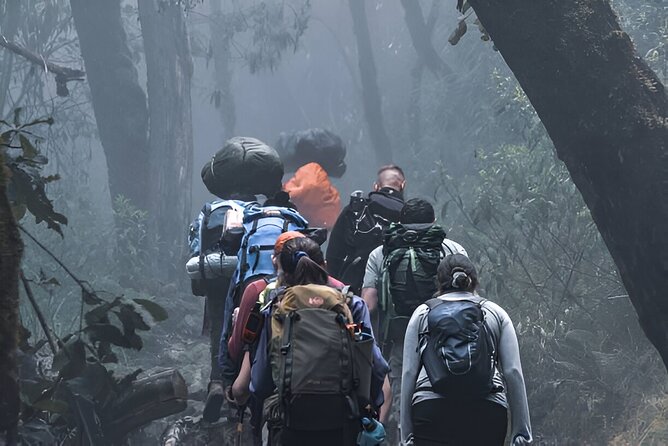
Day 1: Machame Gate and six hours in the rainforest
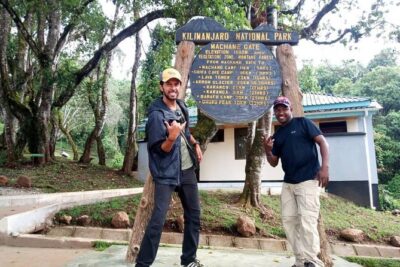
Your day begins with transport from Moshi to Machame Gate. After registration and a short briefing, you enter the thick rainforest and walk toward Machame Camp at 3,010 meters.
The stated distance is about 11 kilometers, or 7 miles, with roughly 5 to 7 hours on foot. The forest is the most enclosed part of the route, with dense green growth and the possibility of seeing animals along the way.
This is a full first day, especially if you are still adjusting to the effort of carrying a daypack. The trail can feel steady rather than dramatic at first, but it gives you a gradual start before the route becomes more exposed.
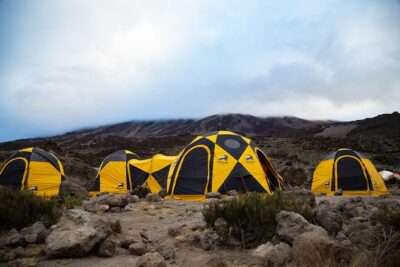
At camp, the advantage of having porters and a support crew becomes clear. You are not expected to carry the full camping setup, food, or group equipment. The package includes tents, sleeping bags, sleeping mats, and a portable toilet, though you still need to bring your personal hiking gear.
Day 2: Leaving the forest for Shira Camp
The route steepens on Day 2 as you leave the rainforest and enter the moorland zone. The walk covers about 5 kilometers and takes around 4 to 6 hours, ending at Shira Camp at 3,840 meters.
This is a shorter day by distance, but the altitude makes it more demanding than the numbers suggest. The scenery opens up, with views toward Mount Meru and the Shira Plateau. You will notice a major change from the enclosed forest of Day 1 to broader, more open surroundings.
Shira Camp is already high, so pay attention to how you feel. The schedule gives you time to walk slowly and settle into the altitude, but no itinerary can remove the effects of thin air. A steady pace and careful attention to your guide’s advice matter more than trying to finish early.
The camp also marks the point where the route begins to feel more remote and exposed. Bring warm layers and keep rain protection accessible. Conditions can change quickly at high elevations, and your daypack should hold anything you may need during the walk.
Day 3: Lava Tower and the important descent to Barranco
Day 3 is one of the most useful days in the plan. You climb to Lava Tower at 4,630 meters, eat lunch there, rest, and then descend to Barranco Camp at 3,960 meters.
The total walk covers about 10 kilometers and takes 6 to 8 hours. The point is not simply to reach a higher camp. You spend time at a greater elevation, then sleep lower, giving your body a better chance to adjust before the summit attempt.
This is also where the scenery becomes rockier and more severe. The forest is far behind you, and the route feels like a high mountain crossing rather than a long woodland walk. The Lava Tower section can be uncomfortable if altitude affects you, so do not treat lunch as a rushed stop.
The descent to Barranco is a practical feature, not wasted effort. It can be tempting to think that every step should take you higher, but altitude success depends on how your body responds. This up-and-down rhythm is one reason the seven-day version makes sense.
More Machame Route climbs:
- Kilimanjaro climb, Machame Route (7-day)
★ 5.0 · 262 reviews - Climbing Kilimanjaro – Machame Route
★ 5.0 · 170 reviews - Climbing Kilimanjaro through 7 days Machame Route
★ 5.0 · 151 reviews - 7-Day Machame Kilimanjaro Summit Tour from Arusha
★ 5.0 · 125 reviews
Day 4: The Barranco Wall and Karanga Camp
The day begins with the Barranco Wall. It looks steep, but the provided trip details state that no special climbing skills are needed. You will use a careful hiking pace as the trail rises to the top, where the surrounding views open up.
After the wall, the trail crosses dry, open ground to Karanga Camp at 4,035 meters. The distance is about 5 kilometers, with 4 to 5 hours of walking.
This is a relatively short day, which helps after the longer altitude work of Day 3. It is still not a rest day. The Barranco Wall demands concentration, and the thin air makes even short climbs feel slower.
I like this section because it gives you a clear sense of progress. You face a visible obstacle early, then reach camp at a moderate distance. If you are nervous about the wall, ask your guide for pacing advice and take the route one careful step at a time.
Day 5: Barafu Camp and the wait for summit night
The walk to Barafu Camp is only about 4 kilometers, but it is steep and takes around 4 to 5 hours. The route passes through rocky alpine desert and reaches 4,640 meters.
Barafu is the launch point for the summit push. After an early dinner, you rest and prepare to leave around midnight. This is not a normal camping night. You will need to organize clothing, water, snacks, and other personal gear before trying to sleep.
The short distance can be misleading. You are now high, and the terrain is rough. The goal is to conserve energy rather than prove how quickly you can walk. Follow the guide’s instructions and use the afternoon to rest.
The included camping setup and meal service reduce some of the work at this stage. Still, you are responsible for your personal clothing and hiking equipment. Boots, warm layers, a backpack, and suitable mountain clothing are not included in the price.
Day 6: Uhuru Peak and a very long descent
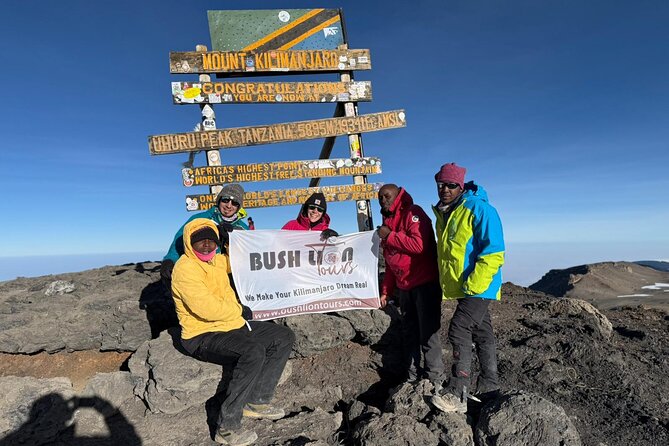
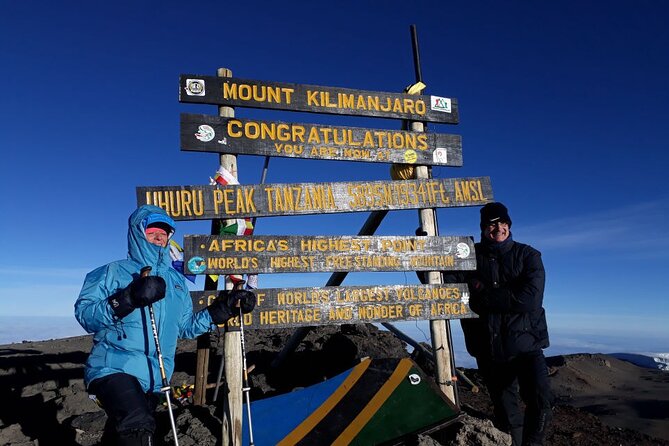
The summit day starts at about midnight. You climb for roughly 7 to 8 hours over steep, loose ground before reaching Uhuru Peak at 5,895 meters, the highest point in Africa.
This is the hardest part of the trek. The timing means you walk through darkness at first, and the effort comes after several days at altitude. Your pace will likely be slow. The key goal is steady movement, not speed.
At the summit, you have time to celebrate before beginning the descent. The route returns to Barafu Camp for a short rest, then continues down to Mweka Camp at 3,110 meters.
The full day covers about 17 kilometers and can last 12 to 15 hours. That figure deserves serious attention. You are not simply reaching the top and finishing. You must descend for several more hours, often with tired legs and sore feet.
This is where the guide team and porters matter most. The trip feedback repeatedly highlights supportive staff and careful organization. Names connected with the guiding team include Innocent, Kenny, Shafii, Emmanuel, and William. The exact team assigned to your climb should be confirmed before departure, but the operating approach clearly places strong emphasis on support.
Day 7: Mweka Gate and the return to Moshi
The final walk leads from Mweka Camp through rainforest to Mweka Gate. It covers about 10 kilometers and takes 3 to 4 hours.
After the bare upper slopes, the green forest feels like a major change. You may see animals along the way, and the air becomes easier to handle as you lose altitude. The trail can still be tiring after summit day, so do not underestimate the final descent.
At Mweka Gate, you receive your summit certificate. Transport then returns you to Moshi, where the included post-trek hotel night gives you time to shower, eat, and rest.
That final hotel night is a valuable part of the package. After a 12 to 15-hour summit day, having a planned place to recover is far more useful than heading straight to an airport or arranging a separate room at the last minute.
What the $2,209 price covers
At $2,209 per person, this is not a budget walk. But the price includes many of the costs that can make a Kilimanjaro climb expensive.
The package includes airport transfers to and from Kilimanjaro International Airport, a pre-climb briefing, transport to and from the trailhead, park fees, permits, guides, porters, meals, drinking water, tents, sleeping bags, sleeping mats, a portable toilet, safety equipment, and the summit certificate.
You also receive one hotel night before the trek and one night afterward. Breakfast, lunch, and dinner are listed for the seven-day program.
That makes the price easier to judge. You are not paying only for guiding. You are paying for permits, transport, food, camp support, equipment, staff, and the systems needed to operate on the mountain.
You still need to budget for international flights, travel insurance, personal clothing and hiking gear, staff tips, extra accommodation, and extra meals. Lunch and dinner at the hotel are not included, so set aside money for those meals before and after the climb.
Group discounts are offered, which may improve the per-person value for a larger private party. The activity is also private, so your group does not have to share the experience with unrelated participants.
Guides, porters, meals, and safety
The human support is a major part of this trek. The supplied equipment includes oxygen tanks and first aid kits, but those items do not replace proper altitude planning or travel insurance.
You should ask how the company handles daily health checks, altitude symptoms, and emergencies before you depart. The information confirms that safety equipment is provided, but it does not give a detailed evacuation procedure. Your insurance should cover medical care and evacuation, since those costs are excluded.
The trip feedback gives the staff high marks for clear communication and practical care. Jackson is singled out for planning and fast responses before the climb. That kind of preparation matters because the trek requires the right clothing, airport arrangements, hotel nights, and trailhead transport.
Food is another repeated strength. Meals are included throughout the climb, and the feedback describes them as satisfying. You should still tell the company about dietary needs before booking, since no special menu details are provided.
Tips for guides, porters, and other staff are not included. Treat tipping as a separate cost and ask the operator for current guidance.
Who should choose this private trek
This trip suits you if you want a structured Kilimanjaro climb with a private group, full camp support, and a route that includes time for altitude adjustment.
It can work well for couples, families with suitable fitness, solo clients who want a dedicated team, and friends who prefer to climb together. One documented trip included a parent and a 13-year-old child, but the activity only states that participants need moderate physical fitness. You should confirm age and fitness suitability directly before booking for a child.
You should be comfortable walking for several hours on most days. Summit day is the real test, with a midnight start and up to 15 hours of total movement.
This is not the right choice if you dislike tents, steep trails, early starts, cold conditions, or uncertain weather. The trip requires good weather, and poor conditions can lead to a change of date or a full refund.
Booking details worth checking
Confirmation is provided when you book. The listed operating hours are Monday through Friday from 7:30 AM to 6:30 PM, for the stated period from July 9, 2024, through June 18, 2026.
Free cancellation is available if you cancel at least 24 hours before the experience start time. Changes or cancellations inside that window are not accepted for a refund. Cutoff times use local Tanzanian time.
Before paying, confirm the airport transfer details, hotel names, room arrangements, personal gear list, tipping guidance, and the exact guide team. The main package is clearly set out, but these practical points can affect how smooth your arrival and departure feel.
Should you book the Machame Route trek?
I would book this trek if reaching Kilimanjaro’s summit is your main goal and you want a private, well-supported seven-day plan. The route has strong scenery, a helpful Lava Tower descent, full meal and camp support, and a clear structure from Moshi to Uhuru Peak.
I would pause if you are unsure about a 12 to 15-hour summit day or lack proper insurance and mountain clothing. The price is reasonable for the number of services included, but this remains a demanding climb, not a standard sightseeing tour.
For a fit person who wants personal support, a classic route, and time to adjust to altitude, Bush Lion Trekking and Tours offers a solid package at $2,209 per person. Confirm the small details before booking, then prepare for the mountain rather than treating the trek as a simple holiday activity.
FAQ
How long is the Machame Route trek?
The trek lasts approximately seven days, including the approach to Kilimanjaro, the summit attempt, and the final descent to Mweka Gate.
Where does the trek begin?
The experience begins with pickup and transport from Moshi to Machame Gate in Kilimanjaro National Park.
Is this a private tour?
Yes. Only your own group takes part in the private activity.
What is the highest point reached?
You reach Uhuru Peak at 5,895 meters, or 19,341 feet, above sea level.
How difficult is the trek?
A moderate level of physical fitness is required. The most demanding section is summit day, which starts around midnight and can last 12 to 15 hours in total.
Are meals included?
Breakfast, lunch, and dinner are included during the climb. The package lists seven breakfasts, seven lunches, and seven dinners.
Are tents and camping equipment provided?
Yes. Camping equipment includes tents, sleeping bags, sleeping mats, a portable toilet, and other listed camp supplies.
Are airport transfers included?
Yes. Transfers to and from Kilimanjaro International Airport are included, along with transport to and from the Kilimanjaro trailhead.
Is travel insurance included?
No. Airfare, travel insurance, personal hiking gear, staff tips, extra accommodation, and additional meals are not included.
More Seven-Day Trips in Kilimanjaro
- 7 Days Kilimanjaro via Machame route affordable price
★ 5.0 · 110 reviews - 7 Days Machame route – Kilimanjaro
★ 5.0 · 45 reviews - Best Kilimanjaro Adventure 7 days Machame route Trekking
★ 5.0 · 42 reviews - Kilimanjaro climb, Rongai Route (7-day)
★ 5.0 · 40 reviews
More Trekking Tours in Kilimanjaro
- Kilimanjaro climb by Lemosho Route (7-day)
★ 5.0 · 651 reviews - 8-Day Small-group Lemosho Kilimanjaro Summit Trekking
★ 5.0 · 186 reviews - Kilimanjaro Climbing Lemosho Route 8 Days.
★ 5.0 · 186 reviews - Kilimanjaro climb, Lemosho Route (8-day)
★ 5.0 · 148 reviews
Just added around Kilimanjaro
- 6 days Machame route climbing Mt.Kilimanjaro★ 5.0 · 8 reviews
- Mt Kilimanjaro 6 days Marangu route hike★ 5.0 · 3 reviews
- machame route★ 5.0 · 16 reviews
- Private Cycle to Kilimanjaro Bike Park Safari★ 5.0 · 6 reviews
- West Kilimanjaro cycling Adventures★ 4.5 · 8 reviews
- Kilimanjaro Climb • Marangu Route ~ 9 Day★ 5.0 · 4 reviews
- 3 Days Private E-Bike Tour in West Kilimanjaro★ 5.0 · 3 reviews
- Kilimanjaro Climb • Machame Route ~ 10 Day★ 5.0 · 6 reviews
Machame Route Climbs, compared.
The Best of Machame Route in 6 Days: Your World’s Summit Guide
Read our review →Browse the lists this tour appears in