
Reviewed · MACHAME ROUTE CLIMBS
Climb Kilimanjaro Machame Route 7 Days
The seven-day Machame Route gives you something many Kilimanjaro schedules do not: a short day before the summit push. That extra breathing room matters. You still face a hard climb, but you are not rushing straight from a long trekking day into the midnight start for Uhuru Peak.
I like the route’s changing scenery, from wet forest to bare volcanic slopes, and I like that the price includes the working team, camping gear, meals, park fees, airport transfers, and two hotel nights. The main drawback is simple: this is a serious physical challenge, and the summit day alone can take up to 14 hours including the descent.
Key points to know before booking
- A seven-day acclimatization plan: The Barranco to Barafu section is split into two days, giving you a shorter day before the summit attempt.
- Four major climate zones: Expect rainforest, moorland, semi-desert, alpine desert, and Arctic conditions as you climb.
- A midnight summit start: The final ascent begins between midnight and 2 a.m., usually aiming for sunrise near Stella Point or Uhuru Peak.
- Useful inclusions: Park fees, mountain meals, camping equipment, guides, porters, a cook, oxygen, airport transfers, and two hotel nights are included.
- Private group format: Only your group takes part, which may make communication and pacing easier.
- A demanding price comparison: At $2,200 per person, the package has solid inclusions, but you still need to budget for tips, drinks, visa costs, personal climbing gear, and flights.
Why the seven-day Machame Route works well
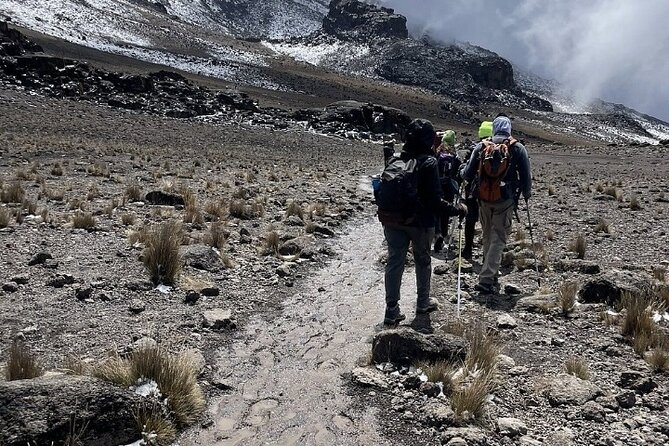
Machame is often called the scenic route because it gives you a broad cross-section of Kilimanjaro. You begin in thick forest, cross open moorland, pass volcanic formations such as Lava Tower, and finish among rock, snow, and loose gravel near the summit.
The seven-day version is especially sensible because it avoids turning the approach to Barafu Camp into a rushed march. Days 4 and 5 are short by mountain standards. That does not make the climb easy, but it gives your body more time to adjust before the hardest night.
You start with an airport pickup and meet a company representative at the arrival point. The representative carries a company sign, gives you a short briefing, and drives you to your hotel in Moshi. The stated starting point is Honey Badger Lodge in Moshi, at M92P+CP, Kiboriloni 1258.
This setup is useful if you are arriving in Tanzania without your own transport plan. The package also includes two hotel nights in Moshi or Arusha, although you should confirm exactly which nights and hotel location apply to your booking.
More Machame Route climbs:
- Kilimanjaro climb, Machame Route (7-day)
★ 5.0 · 262 reviews - Climbing Kilimanjaro – Machame Route
★ 5.0 · 170 reviews - Climbing Kilimanjaro through 7 days Machame Route
★ 5.0 · 151 reviews
Day 1: Machame Gate to Machame Camp
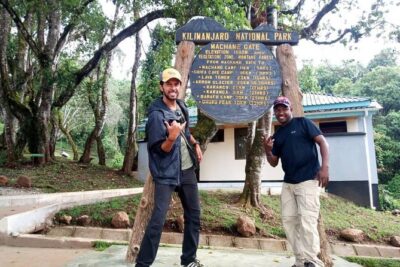
The first drive from Moshi to Mount Kilimanjaro National Park Gate takes about 50 minutes. You pass through Machame village, located on the lower slopes, before beginning the formal park entry and trail walk.
The route climbs through rainforest along a winding ridge. The figures are straightforward: about 11 kilometers, five to seven hours of hiking, and a rise from roughly 5,400 feet to 9,400 feet.
This first day can feel damp and slippery. Lower sections of the trail may be muddy, so gaiters are not decorative extras here. Trekking poles can also help with balance, especially if rain has made the trail slick.
The forest is the pleasant surprise of the opening day. You are not yet looking at the stark summit world. Instead, you are walking beneath dense vegetation while the trail steadily gains height. The main challenge is resisting the urge to walk too fast. A slow start is a smart start on Kilimanjaro.
You sleep at Machame Camp. Camping equipment, food, porters, a cook, and guides are included in the package, but personal clothing and climbing items are not.
Day 2: Machame Camp to Shira Camp
After breakfast, you leave the forest and enter moorland. The day covers about five kilometers and takes four to six hours, with elevation rising from 9,400 feet to 12,500 feet.
The trail becomes more open as you cross a small valley and climb a steep, rocky ridge covered with heather. The route then turns west toward a river gorge and Shira Camp.
This is a shorter day, but the altitude begins to matter. You may find the distance easy compared with the previous day, yet the thinner air can make every uphill section feel slower. Keep your pace modest and follow the guide’s rhythm rather than trying to match your low-altitude walking speed.
Shira Camp is important because it marks your first night well above 12,000 feet. Dinner and overnight camping are provided. At this point, the scenery feels less enclosed than on Day 1, and the mountain begins to look more severe.
Day 3: Shira Camp to Lava Tower and Barranco Camp
Day 3 is one of the most useful days in the itinerary. It covers about 10 kilometers and takes six to eight hours. You climb from 12,500 feet to Lava Tower at about 13,000 feet, then descend to Barranco Camp at the same approximate elevation.
The trail crosses the Shira Plateau and heads east along a ridge. Near the junction toward Kibo, the route turns southeast toward Lava Tower, also known as the Shark’s Tooth. A further junction leads toward the Arrow Glacier at about 16,000 feet, although the itinerary then continues down toward Barranco rather than treating that point as a destination.
The value of this day is the climb high, sleep lower pattern. You gain altitude during the day, then finish at roughly the same elevation where you began. That gives your body useful exposure to higher ground before the summit attempt.
The semi-desert setting is a sharp change from the forest. Plant life thins out, the trail feels more exposed, and the volcanic character of Kilimanjaro becomes clearer. The drawback is that this can be a tiring day even though there is no huge net gain in sleeping elevation.
Barranco Camp sits at about 13,000 feet. Eat well, drink as directed by your team, and use the evening to prepare clothing and equipment for the following day.
More treks and hikes around Kilimanjaro:
- Kilimanjaro climb by Lemosho Route (7-day)
★ 5.0 · 651 reviews - 8-Day Small-group Lemosho Kilimanjaro Summit Trekking
★ 5.0 · 186 reviews - Kilimanjaro Climbing Lemosho Route 8 Days.
★ 5.0 · 186 reviews - Kilimanjaro climb, Lemosho Route (8-day)
★ 5.0 · 148 reviews
Day 4: Barranco Camp to Karanga Camp
Day 4 is short: about five kilometers and four to five hours. You climb only slightly, from approximately 13,000 feet to 13,100 feet, in alpine desert terrain.
The main feature is the Barranco Wall. The trail leaves camp and crosses a steep ridge beside the wall before reaching the Karanga Valley campsite. The word wall can sound alarming, but the itinerary describes a trekking route rather than technical rock climbing. Your guide will control the pace and help the group handle the steep section.
This is exactly the kind of day that makes the seven-day schedule attractive. You are still working at altitude, but you are not forced into a long march. You have time to rest, organize your pack, and think about the summit night ahead.
The setting is stark, with little of the sheltering forest you knew at the start. Keep your warm layers close. Conditions can change quickly at high altitude, and your personal clothing is not included in the package.
Day 5: Karanga Camp to Barafu Camp
The walk to Barafu Camp is only about four kilometers and takes four to five hours. Even so, this is a meaningful day because you climb from 13,100 feet to about 15,300 feet.
You join the junction connecting with the Mweka Trail and continue upward toward Barafu Hut. Reaching this camp means you have completed the Southern Circuit section of the climb, with views of Kibo and Mawenzi from different angles.
Barafu is the staging point for the summit. You eat, rest, and prepare for a very early start. The short approach is valuable because summit night begins between midnight and 2 a.m. You do not want to arrive at your high camp after a punishing full-day walk, then immediately begin the hardest part of the trip.
This is also where good packing pays off. Keep your summit clothing, headlamp if you bring one, water, snacks, gloves, and other personal items ready. The tour supplies camping equipment and mountain food, but the package excludes personal climbing items, so confirm what you need to bring or hire before departure.
Day 6: Barafu Camp to Uhuru Peak and Mweka Hut
This is the big day, and the schedule is demanding. You ascend about five kilometers from 15,300 feet to Uhuru Peak at 19,345 feet, then descend around 12 kilometers to Mweka Hut at approximately 10,000 feet.
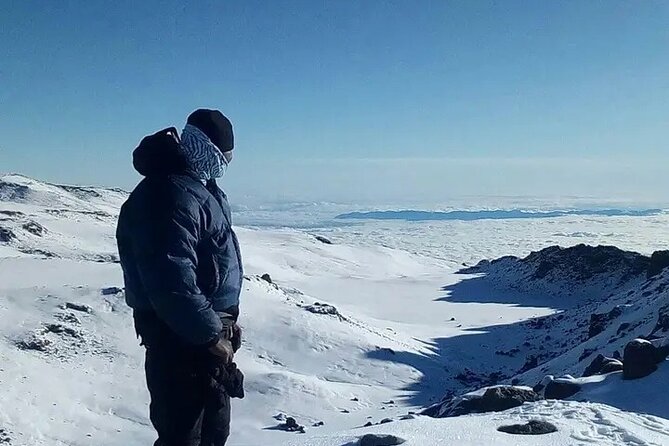
The climb begins in darkness. You move northwest through heavy scree toward Stella Point on the crater rim, passing between the Rebmann and Ratzel glaciers. This is described as the most mentally and physically challenging section of the trek, and the figures explain why: seven to eight hours of ascent followed by four to six hours of descent.
Stella Point sits at about 18,600 feet. If the weather cooperates, sunrise here can be one of the strongest moments of the climb. Some faster hikers may see sunrise from Uhuru Peak itself, but you should not race for that result. A steady pace gives you a better chance of continuing safely.
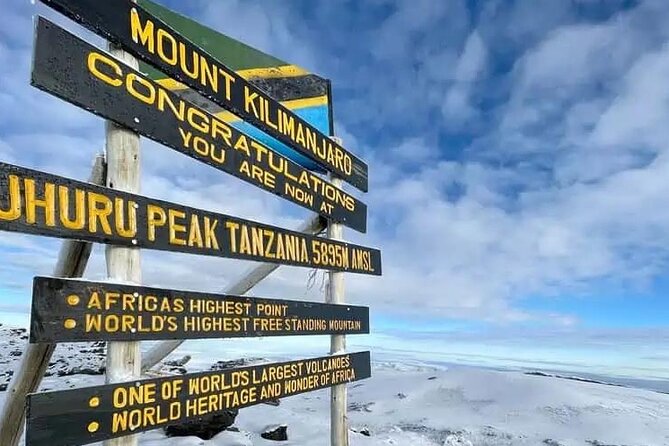
From Stella Point, the route may remain snowy for the final hour to Uhuru Peak. At 19,345 feet, you reach the highest point on Kilimanjaro and the highest point in Africa. The summit is a celebration, but it is not the end of the day.
You descend toward Mweka Hut, stopping at Barafu for lunch. Loose gravel makes gaiters and trekking poles useful on the way down. The descent can be hard on tired knees, and the trail does not become easy simply because you are going downhill.
Mweka Camp sits in the upper forest. Mist or rain may arrive in the late afternoon, so keep rain protection handy. After dinner, you can finally sleep without the midnight alarm waiting for you.
Day 7: Mweka Camp to Moshi
The final walk descends about 10 kilometers from roughly 10,000 feet to 5,400 feet. It usually takes three to four hours and returns you to rainforest.
At lower elevations, the trail may be wet and muddy. Gaiters and poles remain useful, though shorts and a T-shirt may be comfortable once the air warms. Keep rain gear and warmer clothing accessible until you know what the weather is doing.
You continue to Mweka Park Gate to receive your summit certificate. From there, the itinerary says you walk for another hour to Mweka Village, where a vehicle meets you and drives you back to your Moshi hotel.
That final vehicle transfer is a welcome touch after a week on foot. The package also includes an air-conditioned vehicle, which should make the return more comfortable, though you should confirm the exact transfer arrangements with the operator before starting.
What the $2,200 price really covers
At $2,200 per person, the price is not just paying for a guide to point toward the mountain. It covers a full support system: park entry fees, camping equipment, mountain meals, guides, a cook, porters, team salaries, airport transfers, an oxygen tank, an air-conditioned vehicle, and two hotel nights in Moshi or Arusha.
That is a useful bundle for first-time Kilimanjaro climbers. You do not have to arrange a separate airport pickup, park entry, mountain kitchen, or support crew. The stated focus on safety, professional guiding, and equipment is important on a route where altitude and weather can change the day quickly.
Still, $2,200 is not the final amount you should plan for. Tips and beverages are excluded, as are your visa, flights, and personal climbing items. Ask for a clear packing list and a tipping guideline before you pay. Also confirm what type and condition of camping equipment is supplied.
The inclusion of oxygen is reassuring, but it should not be treated as a guarantee against altitude problems. Your physical fitness matters, and the company states that you should have a strong fitness level.
The people behind the climb
The operation includes a guide, cook, and porters, not just a single mountain leader. That team structure is a major part of the experience because the group can focus on walking while the crew handles meals, camp duties, and equipment support.
Mussa and Frankie are named guides connected with the company’s Kilimanjaro work. If having one of them lead matters to you, ask directly before booking. Guide assignments should never be assumed simply because a name appears in company material.
The strongest praise connected with this company centers on care, preparation, food, and support. One account describes help with planning transport from Nairobi to Moshi and advice about safari arrangements after the climb. That suggests you can ask for wider Tanzania planning help, though you should confirm which services are included in your own booking.
The private format is another practical advantage. Only your group participates, so you may have more room to discuss pace, comfort, and individual goals. It does not remove the physical demands of the route, but it can make communication easier than in a large mixed group.
Who should book this climb
I would choose this route if you want a scenic Kilimanjaro climb with a sensible acclimatization pattern and strong logistical support. It suits people who are comfortable walking for several hours a day, sleeping in mountain camps, and facing a long summit night.
It is also a good match if you want the operator to handle airport transfers, park fees, meals, porters, and hotel nights in one package. The private group arrangement may appeal to families, friends, or couples who want to climb together.
I would think twice if you are looking for a casual hiking holiday. The summit day starts around midnight and can involve up to eight hours going up, followed by as much as six hours descending. The route also reaches 19,345 feet, where even fit people can feel the effects of altitude.
The cancellation terms are fairly flexible: you can cancel at least 24 hours before the start time for a full refund. Changes or cancellations inside that window are not accepted for a refund. Service animals are allowed, and the starting point is near public transportation, but the climb itself remains a demanding mountain activity.
Should you book the Machame Route?
Yes, if you want a well-paced seven-day route rather than the shortest possible Kilimanjaro schedule. The split between Barranco, Karanga, and Barafu gives you a better rest pattern before the summit, while the scenery changes dramatically from forest to Arctic terrain.
Book it only after confirming the personal gear requirements, hotel details, guide assignment, tipping expectations, and the exact airport transfer plan. If your fitness is solid and you are prepared for the midnight summit start, the $2,200 package offers a practical way to tackle Kilimanjaro with food, transport, equipment, and a full mountain team arranged for you.
FAQ
How long is the Machame Route experience?
The climb is scheduled for seven days, with the itinerary running from Machame Gate to Mweka Camp and then back to Moshi. The tour information also describes the overall duration as approximately one to seven days.
What is included in the $2,200 price?
The price includes camping equipment, park entry fees, team salaries, two hotel nights in Moshi or Arusha, airport transfers, an oxygen tank, food on the mountain, guides, a cook, porters, and an air-conditioned vehicle.
What is not included?
Flights, visas, beverages, tips, and personal climbing items are not included. Ask for the required personal gear list before departure.
Where does the climb start?
The stated meeting point is Honey Badger Lodge in Moshi, at M92P+CP, Kiboriloni 1258, Tanzania. Airport pickup is offered, and a company representative meets you at the arrival point with a sign.
How difficult is the summit day?
The summit day begins between midnight and 2 a.m. The ascent is about five kilometers and takes seven to eight hours, followed by a descent of about 12 kilometers taking four to six hours.
Can I cancel for a full refund?
Yes. You can cancel at least 24 hours before the experience start time for a full refund. Cancellations or changes made less than 24 hours before the start time are not accepted for a refund.
More Seven-Day Trips in Kilimanjaro
- 7-Day Machame Kilimanjaro Summit Tour from Arusha
★ 5.0 · 125 reviews - 7 Days Kilimanjaro via Machame route affordable price
★ 5.0 · 110 reviews - Private Kilimanjaro Hike 7 Day Lemosho Route
★ 5.0 · 60 reviews - 7 Days Machame route – Kilimanjaro
★ 5.0 · 45 reviews
Just added around Kilimanjaro
- 6 days Machame route climbing Mt.Kilimanjaro★ 5.0 · 8 reviews
- machame route★ 5.0 · 16 reviews
- Mt Kilimanjaro 6 days Marangu route hike★ 5.0 · 3 reviews
- Private Cycle to Kilimanjaro Bike Park Safari★ 5.0 · 6 reviews
- West Kilimanjaro cycling Adventures★ 4.5 · 8 reviews
- Kilimanjaro Climb • Marangu Route ~ 9 Day★ 5.0 · 4 reviews
- 3 Days Private E-Bike Tour in West Kilimanjaro★ 5.0 · 3 reviews
- Kilimanjaro Climb • Machame Route ~ 10 Day★ 5.0 · 6 reviews
Machame Route Climbs, compared.
The Best of Machame Route in 6 Days: Your World’s Summit Guide
Read our review →Browse the lists this tour appears in