
Reviewed · MACHAME ROUTE CLIMBS
7 days Kilimanjaro climb via Machame route (Whiskey route)
Kilimanjaro’s Machame Route gives you the mountain in full color: wet rainforest, open moorland, volcanic rock, glaciers, and a sunrise from near the roof of Africa. It is the popular Whiskey Route, but do not confuse popular with easy. The trail is steep, and the short seven-day schedule leaves little room for a slow start.
I like the way the route uses a high climb to Lava Tower followed by a lower night at Barranco, which gives your body a useful acclimatization pattern. I also like the strong human side of this climb: guides such as Gasto, James, and David are repeatedly singled out for encouragement, summit support, and good judgment. The main drawback is simple: you must be ready for cold, altitude, mud, rough sleep, and a very long summit night.
Key points at a glance
- The most scenic route: Rainforest, Shira Plateau, Lava Tower, Barranco Wall, glaciers, and high volcanic slopes all appear in one climb.
- A demanding seven-day plan: The Machame route is harder than the gentler Marangu approach and suits fit hikers with some mountain or backpacking experience.
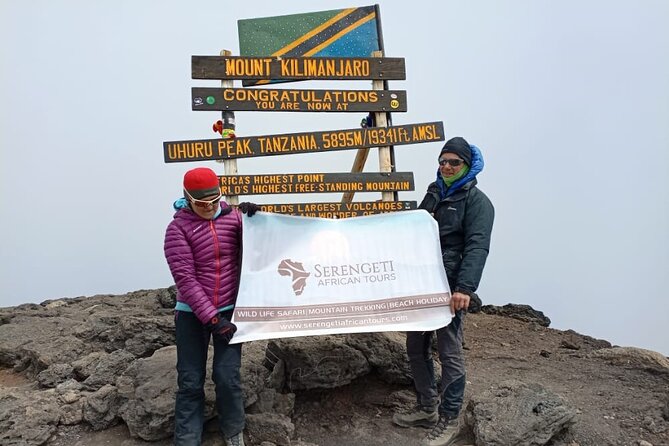
- A serious summit night: You leave around 11:30 p.m. for a slow climb through scree to Stella Point, then continue toward Uhuru Peak at 5,895 meters.
- Strong group support: Professional guides, cooks, and porters handle camp work, meals, water, and mountain logistics.
- Useful inclusions: Park and rescue fees, tents, meals, purified water, and a mess tent are included in the $2,300 price.
- Small-group format: The maximum group size is 16, large enough for company but still manageable on a narrow trail.
Why the Machame Route earns its Whiskey Route nickname
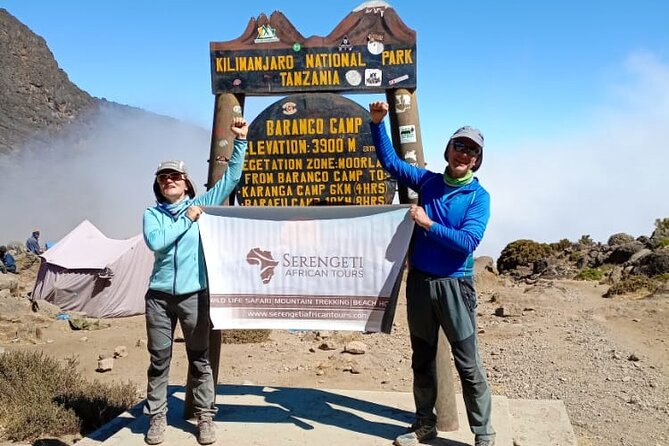
The Machame Route is Kilimanjaro’s most popular path for good reason. It has more visual variety than the broad, hut-based Marangu Route, and it approaches the summit through a chain of distinct mountain zones.
You begin in the forest, where rain can turn the trail into a slippery brown trench. Above the trees, the route opens into moorland and the Shira Plateau. Then come the dry volcanic slopes around Lava Tower, the dramatic Barranco Wall, the exposed Barafu camp, and the final snow and rock of the summit ridge.
The price of that scenery is effort. You are not simply walking uphill for seven days. You are repeatedly gaining and losing altitude, sleeping in tents, dealing with thin air, and managing your energy for summit night. I would choose this route for someone who enjoys a physical challenge and accepts that comfort is not the main point.
More Machame Route climbs:
- Kilimanjaro climb, Machame Route (7-day)
★ 5.0 · 262 reviews - Climbing Kilimanjaro – Machame Route
★ 5.0 · 170 reviews - Climbing Kilimanjaro through 7 days Machame Route
★ 5.0 · 151 reviews
Day 1: From Arusha to the muddy Machame forest
The climb begins with pickup in Arusha, listed at about 1,400 meters. After breakfast, you drive toward Machame Village, where you can buy mineral water and receive a packed lunch.
Depending on road conditions, the vehicle may continue toward the Machame Gate. If the road is too muddy, you walk roughly 3 kilometers from the village, a transfer that can take about an hour. This is a small but important detail. Your trek may begin before you reach the official gate, so keep your daypack ready and wear footwear that can handle mud.
After registration, the rainforest arrives almost at once. The first hiking day takes about seven hours, though the exact pace depends on the group, trail conditions, and stops. The forest is thick, damp, and often slippery. Rain is common enough that waterproof clothing should not be an afterthought.
A welcome lunch stop comes about halfway. The first camp is reached within the forest zone, giving you a cool, wet opening to the climb rather than a gentle warm-up. I like this immediate change from town to mountain, but it can feel tough if you arrive without proper rain protection. Pack your waterproof jacket where you can reach it quickly, not buried at the bottom of your bag.
Day 2: Moorland and the open Shira Plateau
Day two covers about 9 kilometers in roughly six hours. You start by climbing for about an hour through the upper forest, then the gradient eases as you enter moorland.
This is one of the most rewarding transitions on the route. The enclosed forest gives way to open ground, volcanic ridges, and wide views. After lunch and a rest, you continue along a rocky ridge toward the Shira Plateau. The Western Breach and its glaciers may be visible to the east, while Kibo, Kilimanjaro’s main summit cone, begins to dominate the view.
Shira Camp sits at about 3,840 meters. The camp is exposed, and temperatures can fall well below freezing at night. Porters boil water for drinking and washing, then dinner is served. That arrangement is practical, but it does not mean you will have a hot shower or running water. You should expect basic mountain camping, with water provided for essential washing.
The shorter walking day does not necessarily mean an easy day. Altitude often becomes more noticeable at camp, especially after the rise from Arusha. Move slowly, drink the purified water provided, and tell your guide if you feel unwell.
Day 3: Lava Tower and the route’s key acclimatization test
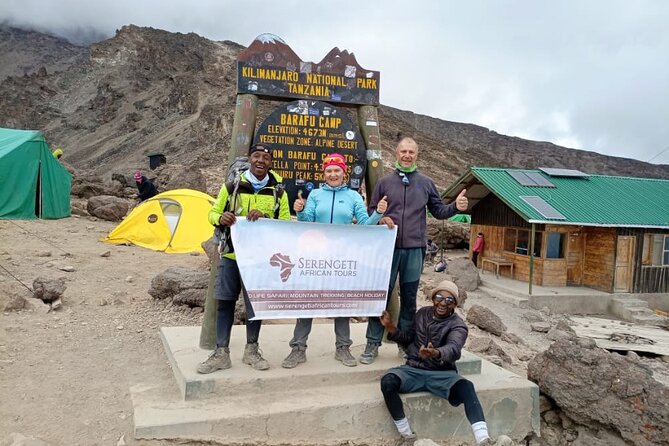
Day three is the route’s great altitude lesson. You walk into a semi-desert zone of rock and scree, reaching Lava Tower at about 4,630 meters after roughly five hours.
This is where breathlessness, headache, or irritability may first appear. The goal is not to race to the tower. You climb slowly, eat lunch at the designated area, and allow your guide to watch how you are handling the height.
After lunch, the route descends by about 680 meters to Barranco Camp. That up-and-down pattern is one of the best features of the seven-day plan. You reach a high point during the day, then sleep lower. It does not remove the risk of altitude illness, but it gives your body a better chance to adjust than a route that simply climbs higher each afternoon.
This is also likely to be the toughest walking day before the summit push. The ground is rocky, the air is thin, and the scenery becomes stark. You need patience here. A slow day is not wasted time. It is part of your preparation for the final ascent.
More treks and hikes around Kilimanjaro:
- Kilimanjaro climb by Lemosho Route (7-day)
★ 5.0 · 651 reviews - 8-Day Small-group Lemosho Kilimanjaro Summit Trekking
★ 5.0 · 186 reviews - Kilimanjaro Climbing Lemosho Route 8 Days.
★ 5.0 · 186 reviews - Kilimanjaro climb, Lemosho Route (8-day)
★ 5.0 · 148 reviews
Day 4: The Barranco Wall and the Karanga Valley
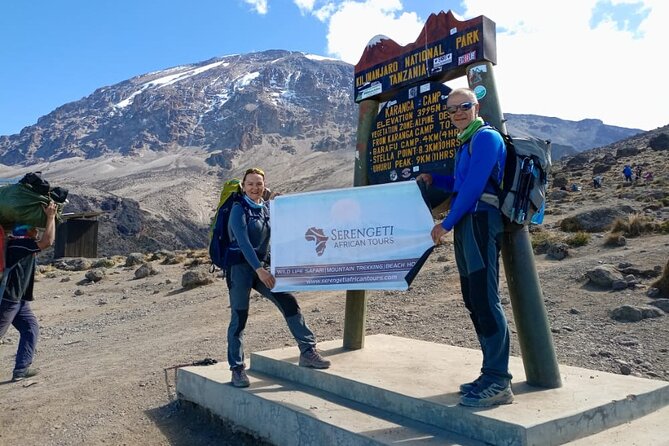
Day four covers only about 5 kilometers and takes roughly four to five hours. The main event is the Great Barranco Wall.
From below, the wall looks intimidating. In practice, it is described as a Class 2 scramble, meaning you may use your hands for balance and support on sections of the rock. This is not a technical climbing route, but it is steep enough to require care. Your guide will set the pace, and the narrow sections can make the morning feel more dramatic than the distance suggests.
At the top, you get views toward Heim Glacier and a striking position above the clouds. The trail then rises and falls through the Karanga Valley. This stop-and-start profile is useful for acclimatization, but it can also be tiring because the day is not one continuous uphill walk.
The short distance is a welcome break after Lava Tower. Still, do not treat it as a rest day. You remain at high altitude, and the Barranco Wall demands concentration. Keep your hands free, use trekking poles if you carry them, and avoid rushing for photos.
Day 5: Karanga to exposed Barafu Camp
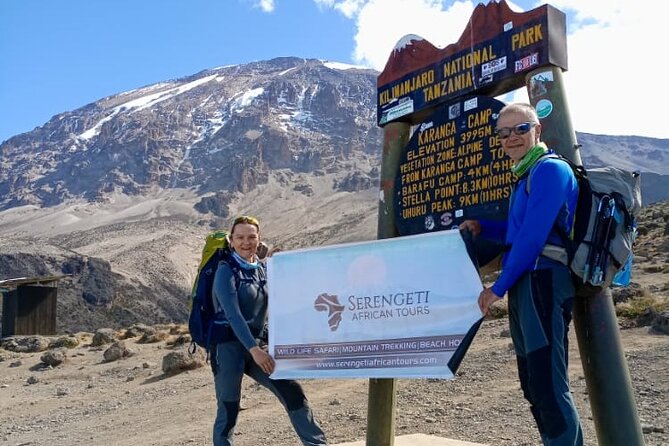
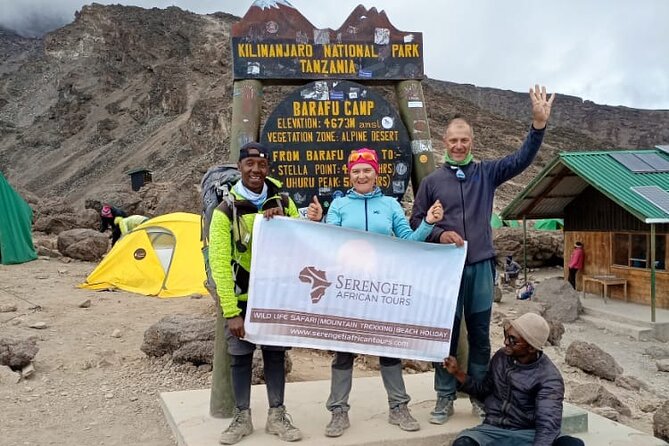
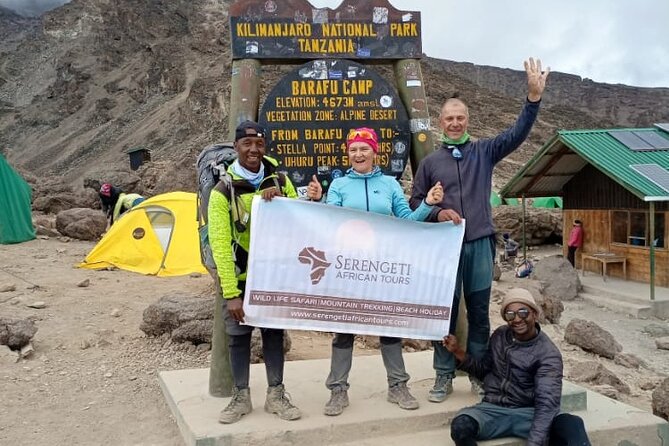
Day five is short on paper, about 4 kilometers and two to three hours. You leave Karanga Camp at approximately 3,959 meters and follow the trail toward Barafu Hut at about 4,550 meters.
The route joins the Mweka Route, which you use for the descent. Barafu is the final water stop for the porters because no accessible water is available at the camp itself. That detail explains why water logistics matter so much on Kilimanjaro. The team must carry what is needed for camp life and the summit push.
Barafu means ice in Swahili. The camp sits on a rocky, exposed ridge, with tents subject to wind and uneven ground. Arrive with enough daylight to understand where you are sleeping, organize your summit clothing, and keep important items close.
Dinner is served early, followed by an attempt to rest before the midnight wake-up. This is often an awkward sleep period. You have gained more than 4,500 meters, your tent may be cold, and the biggest day is still ahead. Prepare your summit pack before dinner so you are not sorting gloves and headlamps while half asleep.
Day 6: Stella Point, sunrise, and Uhuru Peak
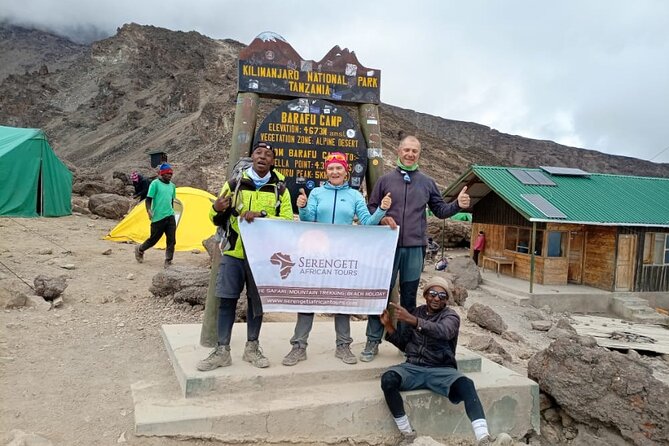
Summit day begins around 11:30 p.m. with tea and biscuits. You head northwest through heavy scree toward Stella Point on the crater rim.
The climb to Stella Point takes about six hours and is often the hardest part of the entire route. You walk in darkness, take short steps, and manage the cold as well as the altitude. The slow pace can feel frustrating, but it is exactly what you need. Save energy for the upper ridge.
At Stella Point, about 5,685 meters, you may pause for sunrise if the weather allows. This is one of the great payoffs of the route. From there, you continue for about two hours toward Uhuru Peak at 5,895 meters, usually across snow near the summit.
You should not assume that reaching Stella Point guarantees a summit certificate for Uhuru Peak. The provided details distinguish between the two: climbers who reach Stella Point receive green certificates, while those who reach Uhuru Peak receive gold certificates.
Time at the summit depends on weather. Do not linger unnecessarily. Cold, wind, altitude, and exhaustion can become serious quickly. After the summit attempt, you descend to camp, rest, and continue down the mountain according to the group’s condition and schedule. The supplied schedule identifies this as a six-hour activity, but summit day is the part of the trip most affected by pace and conditions.
The guides are especially important here. Several climbers credit Gasto, James, and David with encouragement and practical summit help. One account specifically describes a main guide carrying a climber’s bag for part of the night. That kind of support can matter, but you should still train to carry your own essential items and avoid treating guide assistance as a substitute for preparation.
Day 7: Mweka Gate and the return to ordinary life
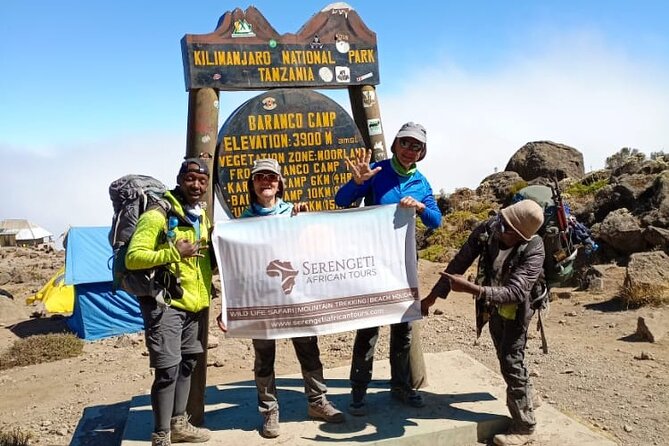
After breakfast, the mountain team holds a celebration with dancing and singing. It is also the time to present tips to the guide, assistant guides, cook or cooks, and porters.
That tipping moment deserves planning. Tips are not included in the $2,300 price, and the mountain crew does much of the physical work that makes a camping climb possible. Set aside cash before you start and ask the operator for current guidance on how tips should be divided.
The descent to Mweka Gate takes about three hours through forest, covering roughly 15 kilometers. Your knees may notice the downhill more than your lungs did on the way up. At the gate, you sign your name and receive a certificate if you have completed the required point.
The listed activity then continues to Mweka Village, about an hour and 3 kilometers farther. The tour ends back at the meeting point in Arusha, according to the provided details.
What the $2,300 price covers
At $2,300 per person, this is not a cheap hike, but the price includes several large costs that are easy to overlook when comparing operators.
You receive park fees and rescue fees, professional mountain guides, private waterproof four-season sleeping tents, a dining tent with tables and chairs, all mountain meals, and clean purified drinking water. Breakfast, lunch, and dinner are listed for the mountain portion, with seven breakfasts and seven lunches plus six dinners specified in the package details.
Food matters more than many first-time climbers expect. The operator promises large portions of fresh, healthy food, which is useful when you are walking for several hours a day and sleeping at altitude. You should still tell the company about dietary needs before departure, since no special meal arrangements are stated here.
The package also highlights fair and ethical treatment of porters. That is a meaningful point to check when comparing Kilimanjaro operators. The porter team carries camp equipment and water, while the guides, cooks, and assistants keep the group moving and fed.
You still pay for flights, personal climbing gear, and tips. Personal gear can be a sizeable extra cost if you need waterproof layers, warm sleeping equipment, boots, trekking poles, or a headlamp. The tour includes tents, but it does not say that sleeping bags or personal clothing are supplied.
Who should book this climb
I would recommend this trip to a fit person who has some hiking, backpacking, or high-altitude experience and wants scenery as much as a summit certificate. It can suit a group of friends, couples, or solo climbers comfortable joining a group of up to 16.
The climb is not a good match if you want a relaxed walking holiday, a private room each night, or a route with minimal steep ground. The rain forest can be muddy, the Shira and Barafu camps can be below freezing, and the summit night is long and physically demanding.
A moderate fitness level is the stated requirement, but I would treat that as a minimum rather than a target. Build endurance for long uphill days, practice walking slowly, and prepare for a night section. Altitude affects people differently, so no operator can promise a summit result.
The company’s published rating is 5 out of 5 from 16 ratings, with a 100 percent recommendation figure. The strongest praise centers on the guides, cooks, and porters, along with prompt communication from Lucas during planning. That is useful because good pre-trip communication can make a major difference when you are asking about gear, airport transfers, meals, or altitude concerns.
Small practical details worth knowing
Pickup is offered from Arusha, and the activity has a mobile ticket. The meeting point is in Arusha, and the listed start time is 12:00 a.m., although the day-one instructions describe an early breakfast and pickup. Confirm the exact pickup time directly before you go, since the displayed midnight start may refer to the overall booking system rather than the vehicle departure.
Free cancellation is available up to 24 hours before the local start time. Cancellations or changes made inside that 24-hour window are not accepted for a refund.
The group limit of 16 gives you company without creating a huge procession. Still, hiking speed can vary widely in a group. Ask how the operator handles different paces and how many guides are assigned to the group before booking.
FAQ
How long is the Kilimanjaro Machame Route climb?
The climb lasts approximately seven days, beginning and ending in the Arusha meeting area.
Where does the climb start?
Pickup and the meeting point are in Arusha, Tanzania. The first mountain transfer goes to Machame Village and then toward the Machame Gate.
What is the highest point reached?
Uhuru Peak is the highest point at 5,895 meters. Stella Point on the crater rim is about 5,685 meters.
Is the Machame Route difficult?
Yes. It is described as steep, difficult, and challenging, particularly because of the shorter seven-day schedule. It suits people with moderate fitness and some hiking, backpacking, or high-altitude experience.
Is food included?
Yes. Breakfast, lunch, and dinner are included during the mountain climb. The package also specifies large portions of fresh, healthy food.
Is drinking water included?
Yes. Clean, purified drinking water is included while you are on the mountain.
Are tents included?
Yes. The tour provides private, waterproof, four-season mountain sleeping tents and a mess tent with tables and chairs.
Are tips and climbing gear included?
No. Tips, flights, and personal climbing gear are not included.
What happens if I reach Stella Point but not Uhuru Peak?
The provided details state that climbers reaching Stella Point receive green certificates, while climbers reaching Uhuru Peak receive gold certificates.
Should you book the seven-day Machame climb?
Book it if you want Kilimanjaro’s most varied scenery, accept basic camping, and are ready for a steep route capped by a midnight summit attempt. The included park fees, rescue fees, tents, meals, water, and mountain crew make the $2,300 price a reasonable package for a properly supported climb.
Think twice if you are new to long hikes, dislike wet and cold conditions, or want a generous acclimatization schedule. For the right person, the Machame Route offers a hard-earned summit and a changing mountain story each day. Just arrive prepared, walk slowly, listen to your guide, and save something for the final night.
More Seven-Day Trips in Kilimanjaro
- 7-Day Machame Kilimanjaro Summit Tour from Arusha
★ 5.0 · 125 reviews - 7 Days Kilimanjaro via Machame route affordable price
★ 5.0 · 110 reviews - Private Kilimanjaro Hike 7 Day Lemosho Route
★ 5.0 · 60 reviews - 7 Days Machame route – Kilimanjaro
★ 5.0 · 45 reviews
Just added around Kilimanjaro
- 6 days Machame route climbing Mt.Kilimanjaro★ 5.0 · 8 reviews
- machame route★ 5.0 · 16 reviews
- Mt Kilimanjaro 6 days Marangu route hike★ 5.0 · 3 reviews
- Private Cycle to Kilimanjaro Bike Park Safari★ 5.0 · 6 reviews
- West Kilimanjaro cycling Adventures★ 4.5 · 8 reviews
- Kilimanjaro Climb • Marangu Route ~ 9 Day★ 5.0 · 4 reviews
- 3 Days Private E-Bike Tour in West Kilimanjaro★ 5.0 · 3 reviews
- Kilimanjaro Climb • Machame Route ~ 10 Day★ 5.0 · 6 reviews
Machame Route Climbs, compared.
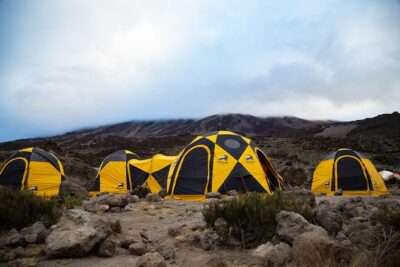
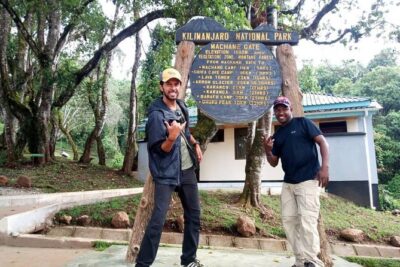
The Best of Machame Route in 6 Days: Your World’s Summit Guide
Read our review →Browse the lists this tour appears in