
Reviewed · MACHAME ROUTE CLIMBS
7 Day Trek To The Roof Of Africa Kilimanjaro via Machame Route
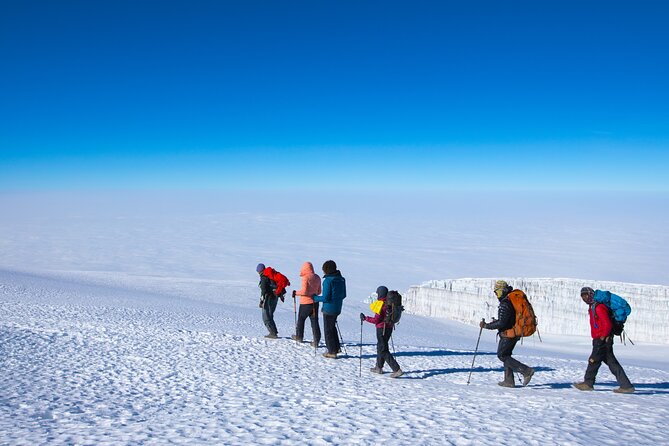
The real appeal of this Kilimanjaro trek is the changing scenery. You start beneath tall rainforest, cross open heather and moorland, pass through alpine desert, and finish among glaciers and snow near Uhuru Peak at 19,341 feet. The route is hard, but its seven mountain days give you useful time to adjust to altitude.
I like the practical support: two health checks each day, emergency oxygen, and Wilderness First Responder guides. I also like the meal flexibility, with vegetarian, gluten-free, halal, and kosher plans available. The main drawback is simple: summit day is a huge effort, with an overnight or very early start, a climb to the top, and a long descent to Mweka Camp.
Key points
- Seven hiking days on the Machame Route, with rainforest, moorland, alpine desert, glaciers, and high-altitude camps.
- Lava Tower acclimatization hike at 15,190 feet, followed by sleep at Barranco Camp.
- Small group size of up to 15 people, with guides, porters, tents, meals, and camp equipment included.
- Daily health monitoring, emergency oxygen, and certified Wilderness First Responder guides.
- Two hotel nights in Moshi, with airport pickup and drop-off included.
- $3,190 per person, a substantial price that covers park fees, rescue fees, camping fees, food, transport, tents, guides, and porters.
Why the Machame Route earns its reputation
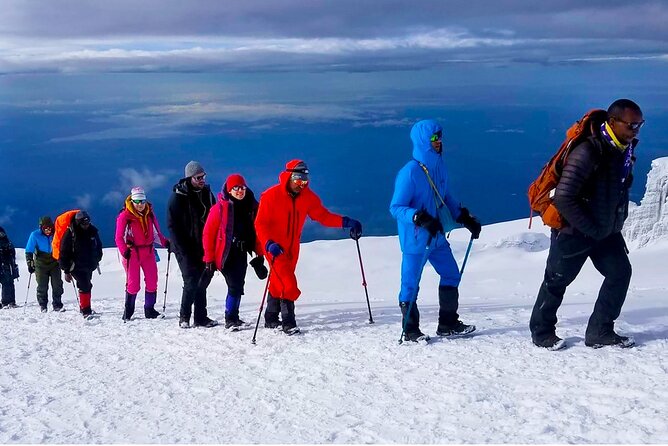
The Machame Route is a good choice if you want Kilimanjaro to feel like a proper trek rather than a quick uphill march. The route gives you seven days on the mountain, and the camps rise gradually enough to include an acclimatization day pattern.
That does not make it easy. The route includes steep ground, the famous Barranco Wall, thin air, cold nights, and a demanding summit push. Still, the mix of scenery and the time allowed for altitude adjustment make this route appealing to fit beginners as well as experienced hikers.
You should think of this as a serious physical challenge, not a casual holiday walk. A moderate fitness level is required, and the hardest part is often not the distance alone. It is the combination of steep climbing, altitude, cold, limited sleep, and a long descent after reaching the summit.
More Machame Route climbs:
- Kilimanjaro climb, Machame Route (7-day)
★ 5.0 · 262 reviews - Climbing Kilimanjaro – Machame Route
★ 5.0 · 170 reviews - Climbing Kilimanjaro through 7 days Machame Route
★ 5.0 · 151 reviews
Day 1: Arrival in Moshi and airport pickup
Your experience begins with pickup at Kilimanjaro International Airport. Ground transportation is included, along with two hotel nights at Kili Wonders Hotel or a similar property.
The first hotel night gives you a useful buffer before the climb. You can rest, organize your personal gear, and meet the mountain team. Breakfast is included at the hotel, but lunch and dinner there are not, so plan for those meals separately.
The nine-day schedule includes arrival, seven days on the mountain, and the final transfer day. The core trek is seven hiking days, but the full experience is listed as approximately nine days.
Day 2: Machame Gate to Machame Camp
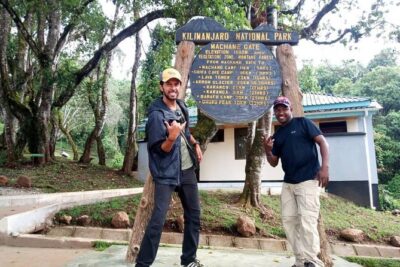
The first mountain day begins at Machame Gate, at roughly 5,905 feet. From there, you climb through the rainforest toward Machame Camp at about 9,875 feet.
This is one of the most enjoyable stages visually. The forest is a clear change from the town below, and the gradual climb gives your legs time to settle into the rhythm of walking. You will spend several hours gaining height, so slow and steady is the sensible approach.
The camp is nearly 4,000 feet higher than the gate. That gain is manageable for many fit hikers, but you should not treat the first day as a warm-up with no consequences. Drink regularly, walk at the guide’s pace, and save energy for the days ahead.
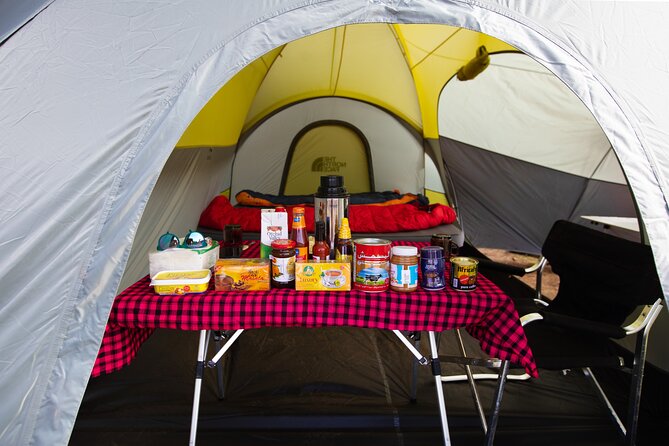
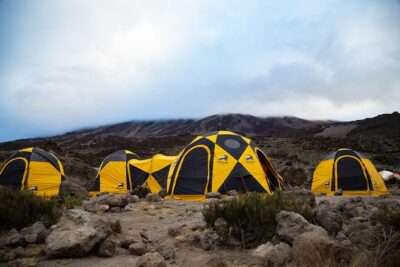
Your mountain package includes a tent shared by two people, a sleeping mat, a dining tent, tables, chairs, and cutlery. Single accommodation is available for an extra charge. The arrangement is more supported than a bare-bones camping trip, but you still need to bring personal equipment such as a sleeping bag and hiking boots.
Day 3: Machame Camp to Shira Camp
The trail leaves the rainforest and enters the heather and moorland zone. You climb from 9,875 feet to Shira Camp at around 12,600 feet.
This change in plant life is one of the route’s rewards. The thick forest gives way to more open ground, and the mountain begins to feel larger and more exposed. The air also starts to thin, so your walking speed matters more than it did on day one.
The jump in sleeping altitude is significant. You may feel fine, or you may notice headache, fatigue, poor appetite, or disturbed sleep. The guides conduct two health checks daily using an oximeter and questions aimed at your condition. That does not remove the risks of altitude, but it gives the crew a regular way to monitor changes.
The meals are freshly prepared three times a day on the mountain. That is an important part of the price, since food becomes both fuel and comfort when the days get longer. Dietary plans can include vegetarian, gluten-free, halal, and kosher meals, but you should state your needs when booking.
More treks and hikes around Kilimanjaro:
- Kilimanjaro climb by Lemosho Route (7-day)
★ 5.0 · 651 reviews - Kilimanjaro Climbing Lemosho Route 8 Days.
★ 5.0 · 186 reviews - 8-Day Small-group Lemosho Kilimanjaro Summit Trekking
★ 5.0 · 186 reviews - Kilimanjaro climb, Lemosho Route (8-day)
★ 5.0 · 148 reviews
Day 4: Shira Camp, Lava Tower, and Barranco Camp
Day four is the key acclimatization stage. You climb from Shira Camp to Lava Tower at about 15,190 feet, then continue down to Barranco Camp at roughly 12,960 feet.
This is a classic climb-high, sleep-lower pattern. You reach a much higher point during the day, then spend the night at a lower altitude than Lava Tower. That design gives your body a better chance to adjust than a straight climb to a 15,000-foot camp.
The route also brings some of the most memorable mountain views. From this area, you may see the Western Breach and Southern Glacier. The terrain is more spare and rocky than the lower forest, and the sense of isolation increases.
Do not underestimate this day because you sleep lower. You still climb high, and you may feel the altitude at Lava Tower. A slow pace and honest communication with your guide matter here. The emergency oxygen canister and medical kit are carried as safety equipment, but they are not a substitute for reporting symptoms early.
Barranco Camp is also the setup for the next day’s famous section, the Barranco Wall. If you dislike exposure or steep scrambling, ask the guide what to expect before setting out. The route is challenging, but the crew support is a major part of the experience.
Day 5: The Barranco Wall to Karanga Camp
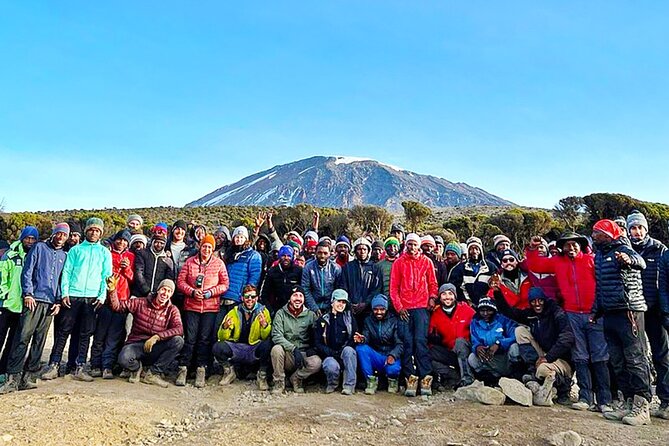
The trail climbs the Barranco Wall before continuing to Karanga Camp at about 13,270 feet. This is one of the route’s signature days.
The wall looks intimidating from camp, but the climb is not simply a straight vertical ascent. You will use hands and feet in places, and the guide helps set a safe pace through the more awkward sections. Reaching the top gives you fine views back across the route and toward the high mountain.
The day is shorter in altitude gain than the previous stage, but the terrain can be tiring. It is a good example of why Kilimanjaro is not judged by distance alone. Uneven ground, thin air, and repeated climbs can wear you down.
The crew carries out the camp work, prepares meals, and helps with the daily routine. One of the strongest features of this arrangement is that you are not responsible for hauling the full camp or cooking after a long day. You still need to carry your personal day gear, but the support lets you focus on walking and recovery.
Day 6: Karanga Camp to Barafu Camp
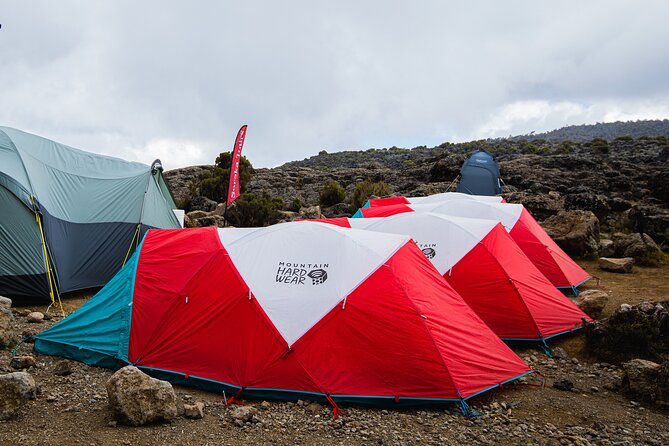
From Karanga Camp, you climb through high alpine desert to Barafu Camp at around 15,190 feet. Barafu is the final camp before the summit attempt.
There is less plant life here, and the surroundings feel stark and exposed. The camp’s main purpose is practical: eat, drink, rest, and prepare your personal gear for the summit push.
You should expect a limited rest period before summit day. The itinerary does not specify an exact departure time, but the summit attempt is timed so you can reach Uhuru Peak around sunrise. That means you may sleep early and wake in the very early hours, depending on the guide’s plan.
This is where personal organization helps. Keep warm layers, headlamp, water, snacks, gloves, and other summit items ready before you lie down. Your sleeping bag, boots, and other personal climbing equipment are not included, so check your packing list well before arrival.
Day 7: Barafu Camp to Uhuru Peak and Mweka Camp
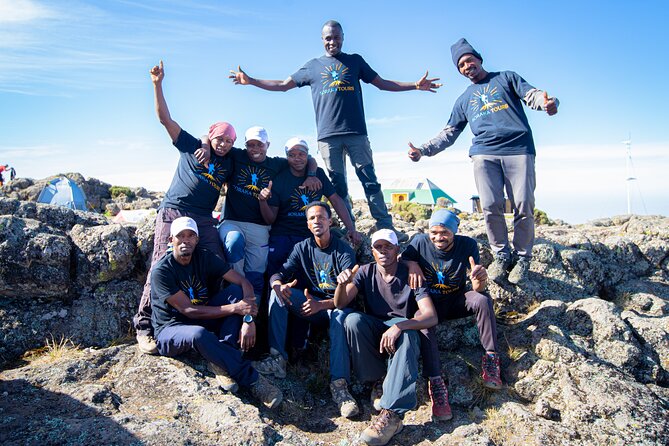
Summit day is the emotional and physical center of the trek. You climb from Barafu Camp at 15,190 feet to Uhuru Peak at 19,341 feet, then descend all the way to Mweka Camp at about 10,170 feet.
The final climb is slow and demanding. The altitude is high, the air is cold, and the route requires steady effort rather than speed. Reaching the summit gives you views of glaciers and the surrounding mountain, especially as the sun rises.
The descent is the part many people fail to picture clearly. After reaching the highest point in Africa, you still have a long way to go. Your legs may be tired, and loose or uneven ground can make the downhill harder than expected. The overnight at Mweka Camp is welcome because it breaks up the return to the gate.
The support crew matters most on this day. Guides and porters assist with the long summit schedule, and the safety system includes health checks, an emergency oxygen canister, and a medical kit. Your guide may also adjust the plan if your condition changes. A successful summit is never worth ignoring serious altitude symptoms.
Several people completing this trek have described the experience as personally important as well as physically difficult. That is not a promise that the route will change your life, but the combination of effort, uncertainty, and a clear goal can make the summit feel deeply personal.
Day 8: Mweka Camp to Mweka Gate
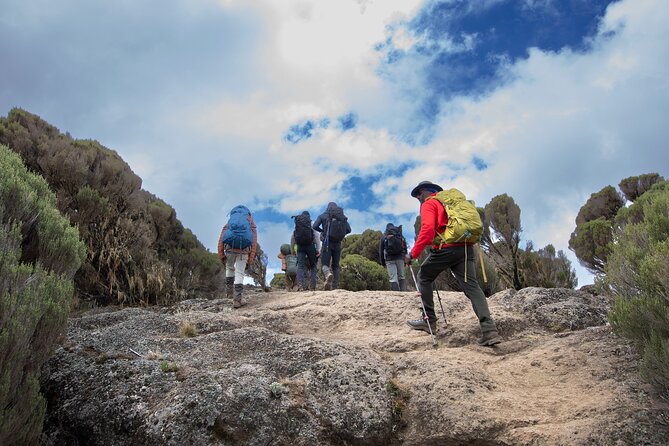
The final mountain morning takes you from Mweka Camp at about 10,170 feet down to Mweka Gate at roughly 5,380 feet. The lower altitude usually feels easier on your breathing, but your legs may still be tired from summit day.
At the gate, the mountain portion ends and you return to the hotel. This is the point to collect any personal items left behind, enjoy a proper shower, and rest. The package includes the transfer and hotel accommodation, but lunch and dinner at the hotel are not included.
The descent through lower forest also gives you a final reminder of how much the environment has changed since Machame Gate. In less than a week, you have crossed several climate zones on foot.
Day 9: Airport transfer or onward safari
The final day includes transfer to the airport or onward travel for safari adventures. Airport drop-off is included, which makes the end of the trip simpler if you are flying out.
The schedule also works for people adding a safari after the climb. The information provided does not specify safari routes, prices, or extra nights, so those plans would need to be arranged separately.
What the $3,190 price covers
At $3,190 per person, this is not a cheap mountain holiday. It is also more than a basic guided hike because the price includes the costly infrastructure required on Kilimanjaro.
Included costs cover:
- Kilimanjaro National Park fees
- Rescue and camping fees
- Airport pickup and drop-off
- Ground transportation
- Two hotel nights with breakfast
- Seven days of mountain meals
- Shared four-season Mountain Hardware tent accommodation
- Sleeping mats
- Dining tent, tables, chairs, and cutlery
- Certified Wilderness First Responder guides
- Emergency oxygen and medical kit
- Porters and the wider climbing crew
- Two daily health checks
The value is strongest if you would otherwise need to arrange park permits, camping, food, transport, guides, and safety support separately. The package also includes dietary flexibility and hotel transfers, which reduce the number of details you must manage.
Budget separately for your visa, flights, travel insurance, sleeping bag, boots, personal climbing equipment, alcoholic drinks, hotel lunches and dinners, and tips for the mountain staff. Tips are not included, and they should be treated as a real part of your trek budget.
The crew is described as being paid fair wages under KINPA standards. That is worth noting when comparing operators, since porters carry much of the camp equipment and do the work that makes the trek possible.
Guides, group size, and safety
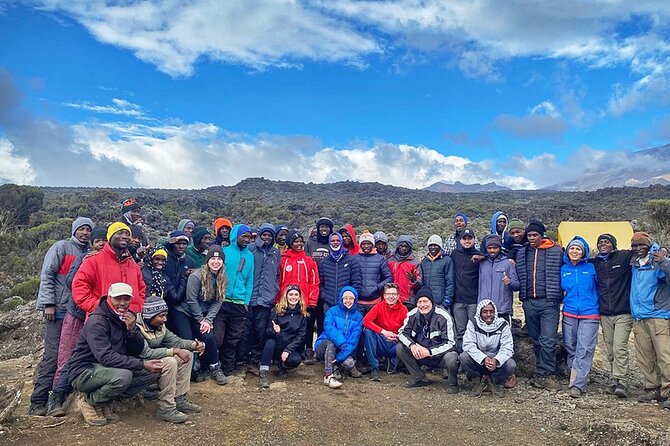
The tour accepts a maximum of 15 people. That is large enough to bring a social feel but small enough for the guides to keep track of the group more easily than on a large departure.
Named guides connected with successful climbs include Baraka and Baltasari. The guiding team is described as having Wilderness First Responder certification and more than 10 years of climbing experience each.
The two daily health checks are one of the strongest practical features. The oximeter reading is only one piece of information, so you should also answer the guide’s questions honestly about headache, nausea, appetite, sleep, balance, and energy.
The tour carries emergency oxygen and a medical kit, and the national park fees include rescue fees. That is reassuring, but no safety system can make high-altitude trekking risk-free. Travel insurance is not included, so you need to arrange your own cover.
Who should book this Kilimanjaro trek?
I would recommend this trek to you if you want a full mountain experience with a clear support structure, shared camp facilities, cooked meals, airport transfers, and time for acclimatization.
It suits an active beginner who is willing to train and follow the guide’s pace. You do not need to arrive as an elite mountaineer, but you should be comfortable with long uphill days, cold nights, camping, and sustained effort.
It may not suit you if you want a short, gentle hike, private facilities, or a fixed hotel bed every night. The Barranco Wall, high camps, summit-day schedule, and long descent are serious commitments.
Free cancellation is available when you cancel at least 24 hours before the experience begins. Changes or cancellations made inside that window are not accepted for a refund.
Should you book the Machame Route with Soraka Tours?
Book this trek if you value route variety, careful altitude planning, and strong mountain support more than a low headline price. The seven-day route gives you time to move from rainforest to Uhuru Peak without compressing the climb into an unnecessarily short schedule.
The package is especially appealing if you want airport transfers, hotel nights, cooked meals, tents, porters, and regular health checks bundled together. I would still buy travel insurance, confirm your personal equipment list, ask about the exact summit departure plan, and budget properly for staff tips before paying.
If your fitness is only moderate, begin preparing well before arrival. The guides can help with pacing and safety, but they cannot do the walking for you. For a determined hiker who wants a supported route with varied scenery and a genuine summit goal, this is a strong Kilimanjaro option.
FAQ
How long does the complete Kilimanjaro experience last?
The full schedule is approximately nine days. It includes arrival, seven mountain hiking days, and a final transfer day.
How many days are spent hiking on the mountain?
You spend seven days on the Machame Route, from Machame Gate to Mweka Gate.
What is the highest point reached?
The summit is Uhuru Peak at 19,341 feet, also known as the Roof of Africa.
Is airport transportation included?
Yes. Pickup and drop-off at Kilimanjaro International Airport are included, along with ground transportation.
Where do you stay before and after the trek?
Two hotel nights are included at Kili Wonders Hotel in Moshi or a similar hotel. Breakfast is included, but hotel lunch and dinner are not.
Are meals included during the climb?
Yes. Three freshly prepared meals are included each day on the mountain. Vegetarian, gluten-free, halal, and kosher meal plans can be accommodated.
Is camping equipment provided?
A shared four-season Mountain Hardware tent, sleeping mat, dining tent, tables, chairs, and cutlery are included. You must provide personal items such as a sleeping bag, hiking boots, and other climbing equipment. Single tent accommodation costs extra.
What happens if I need to cancel?
You can receive a full refund if you cancel at least 24 hours before the experience start time. Cancellations or changes made less than 24 hours before the start time are not accepted for a refund.
More Seven-Day Trips in Kilimanjaro
- 7-Day Machame Kilimanjaro Summit Tour from Arusha
★ 5.0 · 125 reviews - 7 Days Kilimanjaro via Machame route affordable price
★ 5.0 · 110 reviews - Private Kilimanjaro Hike 7 Day Lemosho Route
★ 5.0 · 60 reviews - 7 Days Machame route – Kilimanjaro
★ 5.0 · 45 reviews
Just added around Kilimanjaro
- 6 days Machame route climbing Mt.Kilimanjaro★ 5.0 · 8 reviews
- Mt Kilimanjaro 6 days Marangu route hike★ 5.0 · 3 reviews
- machame route★ 5.0 · 16 reviews
- Private Cycle to Kilimanjaro Bike Park Safari★ 5.0 · 6 reviews
- West Kilimanjaro cycling Adventures★ 4.5 · 8 reviews
- Kilimanjaro Climb • Marangu Route ~ 9 Day★ 5.0 · 4 reviews
- 3 Days Private E-Bike Tour in West Kilimanjaro★ 5.0 · 3 reviews
- Kilimanjaro Climb • Machame Route ~ 10 Day★ 5.0 · 6 reviews
Machame Route Climbs, compared.
The Best of Machame Route in 6 Days: Your World’s Summit Guide
Read our review →Browse the lists this tour appears in