
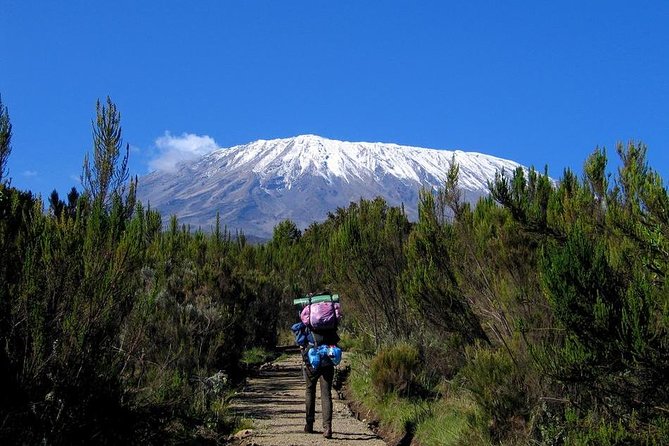
Reviewed · MACHAME ROUTE CLIMBS
Mt.kilimanjaro-machame Route
The clever part of this six-day Machame Route is its built-in altitude pattern. You climb high to Lava Tower, then sleep lower at Barranco, giving your body a useful acclimatization lesson before summit night. You also get the classic Kilimanjaro sequence: wet rainforest, open high country, the Barranco Wall, and a final push to Uhuru Peak.
I like the private group format, since your guides can watch your pace and condition instead of moving you along with a large crowd. I also like the personal summit support, with one guide assigned to each pair of climbers during the hardest ascent. The main drawback is the schedule: six days is a serious, tightly packed climb, and the rapid gain in height can be demanding even for fit hikers.
Key points before you book
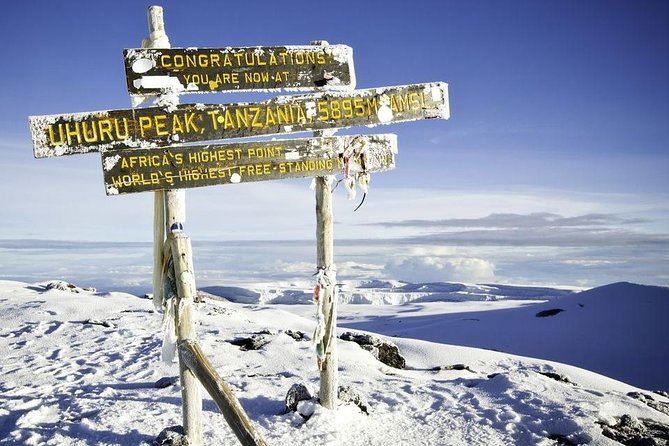
- Machame Gate to Uhuru Peak: You climb from 1,800 meters to 5,895 meters in five nights, then descend through Mweka.
- Altitude practice on day two: A hike toward Lava Tower adds 300 meters before you return to sleep at Shira Camp.
- Lava Tower and Barranco: You spend time at 4,630 meters, then descend to Barranco Camp at 3,960 meters.
- One guide for every two climbers on summit night: This gives the team close supervision during the high-altitude push.
- A real mountain crew: Guides and support staff handle the climb with meals, camp arrangements, and pacing support.
- Pickup and private transport: The day begins with hotel pickup in Moshi, and the final transfer returns you to your hotel.
Why the Machame Route works in six days
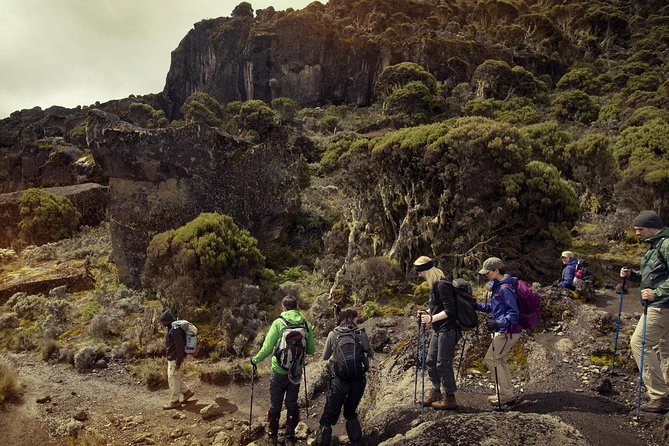
The Machame Route is a direct, demanding way to reach Kilimanjaro’s highest point. You start in the forest and finish among high volcanic slopes, with several sharp changes in scenery along the way.
The route is also designed around a useful mountaineering rule: climb high, then sleep lower when possible. On day two, you walk up toward Lava Tower before returning to Shira Camp. On day three, you spend time at Lava Tower before descending to Barranco. These sections may feel tiring, but they give your body time to adjust before summit night.
The six-day length keeps the cost and time commitment lower than longer Kilimanjaro routes, but it leaves less room for slow acclimatization. I would treat the moderate fitness requirement as a minimum, not a guarantee that the climb will feel moderate. You need steady endurance, patience, and the willingness to walk slowly when your body asks for it.
The price is $1,743.59 per person. That is a serious expense, but the value rests in the support around you: hotel pickup, park entry arrangements, mountain crew assistance, meals described throughout the route, private participation, and guides who monitor the group. The information provided does not spell out every inclusion, such as equipment rental, tips, or airport transfers, so ask for a full cost sheet before paying.
More Machame Route climbs:
- Kilimanjaro climb, Machame Route (7-day)
★ 5.0 · 262 reviews - Climbing Kilimanjaro – Machame Route
★ 5.0 · 170 reviews - Climbing Kilimanjaro through 7 days Machame Route
★ 5.0 · 151 reviews
Day one: Machame Gate and the rainforest
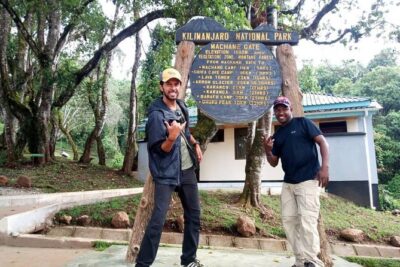
Your morning begins with hotel pickup in Moshi. The guide and mountain crew meet you for a short briefing, then drive you to Machame Gate at 1,800 meters.
The gate involves permits and registration with the search and rescue service. Once those formalities are complete, you begin walking toward Machame Camp at 3,010 meters.
This first section passes through rainforest. It is a striking introduction to Kilimanjaro, but it is also the wettest part of the climb. Tropical showers are highly likely, so a raincoat and spare clothes are not optional extras. Keep rain protection easy to reach rather than buried at the bottom of your pack.
The climb from the gate to Machame Camp sets the tone for the trip. You gain more than 1,200 meters on the first day, which is a substantial start. The walking itself may not feel technical, but the combination of humidity, uphill ground, and a full day on foot can leave you tired.
The day is listed as approximately 12 hours, though that figure should not be read as 12 hours of nonstop walking. It includes the transfer, gate procedures, hiking, breaks, meals, and camp time. Still, expect a long day and a prompt start.
Day two: Shira Plateau and a useful altitude lesson
After breakfast, you leave the rainforest behind and climb toward Shira Camp at 3,845 meters. The trees thin out, and the open views of the Shira Plateau become one of the first major rewards of the route.
Physically, this day is described as manageable, but the height begins to matter. You may notice a headache, unusual breathlessness, reduced appetite, or general discomfort. The best response is not to race through it. Let the guides set a slow, even pace, drink as advised, and tell them clearly how you feel.
The most useful part of the day comes after lunch and a rest at camp. You walk toward Lava Tower, gaining another 300 meters, then return to Shira Camp for dinner and sleep. This short acclimatization hike adds effort, but it also helps your body experience higher ground before the route takes you there for real.
I like this design because it gives you a proper chance to test your response to altitude. The drawback is that the extra hike can feel unnecessary when you are already tired. It is still an important part of the six-day plan, so do not treat it as a casual optional stroll.
Day three: Lava Tower, 4,630 meters, then Barranco
Day three is the route’s key altitude day. From Shira Camp, you climb through a series of ascents and descents toward Lava Tower at 4,630 meters.
This is where the mountain begins to feel serious. You may feel discomfort at this height, and the route can seem harder than the previous day even if the distance is not extreme. The group spends at least one to two hours here, with lunch at Lava Tower, before descending.
That descent to Barranco Camp is one of the reasons this route can work. You gain height during the day, then sleep at 3,960 meters instead of staying at Lava Tower. It is a good example of the route using altitude changes for acclimatization rather than simply pushing upward every hour.
Barranco Camp also gives you your first close view of the famous Barranco Wall. It looks steep and imposing from below, but the trail is described as straightforward rather than technical. You will climb it the next morning, and seeing it in advance gives you a chance to understand the shape of the route.
The day again carries an approximate 12-hour block. Plan for a long mountain day with a mixture of uphill and downhill walking, a high lunch stop, and a late arrival at camp.
A few more Kilimanjaro trips worth comparing
- Kilimanjaro climb by Lemosho Route (7-day)
★ 5.0 · 651 reviews - Kilimanjaro Climbing Lemosho Route 8 Days.
★ 5.0 · 186 reviews - 8-Day Small-group Lemosho Kilimanjaro Summit Trekking
★ 5.0 · 186 reviews - Kilimanjaro climb, Lemosho Route (8-day)
★ 5.0 · 148 reviews
Day four: Barranco Wall, Karanga, and Barafu
An early breakfast gets you onto Barranco Wall before the route becomes crowded with other groups. That early start is practical advice worth following. It can make the climb feel less congested and lets you enjoy the rock formations at a quieter time.
The wall takes around an hour to climb and is not described as difficult hiking. You will use the trail rather than technical climbing equipment. Once over the wall, take time for photographs with Kibo, the main volcanic peak, before continuing.
The route to Karanga Camp is more tiring than the wall itself. It includes repeated ascents and descents, the kind of terrain that can wear down your legs even when no single section seems extreme. This is where a guide’s pacing matters. The stated approach is to keep the group moving at an optimal speed rather than forcing a fast climb.
At Karanga, you receive a warm lunch before making the final climb to Barafu Camp at 4,640 meters. Barafu is the staging point for summit night. Dinner comes before a period of rest and sleep, though the timing makes that rest difficult for many people.
This is one of the most demanding days because it combines the Barranco Wall, rolling high-country ground, and the final gain to Barafu. Save energy. Do not spend the morning treating the wall as a race or the photo stops as an excuse for a long delay.
Day five: The night climb to Uhuru Peak
The summit attempt begins at night from Barafu Camp. The target is Uhuru Peak at 5,895 meters, Africa’s highest point.
The technical climbing is described as relatively simple. The real test is altitude, cold, darkness, and fatigue. The route requires a slow pace and careful attention to your physical and mental state.
A particularly strong feature is the summit staffing plan. Each pair of climbers receives a personal guide for the ascent. That close supervision can help with pacing, morale, and early recognition of trouble. It also gives you someone focused on your condition instead of only on the group’s general progress.
After reaching Uhuru Peak, you can descend to the nearest glacier if you wish. The provided details do not say how long that option takes or whether conditions always allow it, so treat it as dependent on time, weather, and your condition. The summit itself should remain the priority.
You then return to Barafu Camp for about two hours of rest before continuing down to Millennium Camp at 3,820 meters. This is a demanding descent after the summit, but dropping to a lower altitude is welcome. The day is listed at approximately 12 hours, and it may feel like the longest day of the entire climb.
Your guides’ role matters most here. The company emphasizes guides as the people who can turn a standard trek into a memorable one, and the named team members include Qamrish, Ayoub, Fred, and Nancy. The available accounts also single out support, organization, food preferences, and the chef’s work as important parts of the experience. Ask in advance which guide team will lead your departure, since the named guides may not all be assigned to every group.
Day six: Mweka Gate and the return to Moshi
You wake at Millennium Camp in rainforest, now at a much lower elevation than Barafu. The physical relief can be immediate, and breakfast gives you a calmer start after the intensity of summit day.
The final walk takes you to Mweka Gate at 1,650 meters. This is a major descent from the high camps, but the lower height makes it more comfortable than the upper mountain sections.
At the gate, the group gathers to celebrate the climb. You can share comments in the guestbook, receive a commemorative certificate at the company office, and transfer back to your hotel.
The certificate is a small touch, but it gives the trip a clear ending. You have not simply completed a hike and walked away. The final gathering marks the transition from mountain routine back to ordinary life in Moshi.
Guides, food, and the private format
The strongest part of this experience is the attention promised by its guide system. The company places great weight on its mountain leaders, and the plan for one guide per pair during summit night is more specific than a general promise of support.
The available feedback also points to a well-organized team, flexible handling of last-minute changes, food suited to individual preferences, and a chef who made a strong impression. Those details matter on a six-day climb. A warm meal, a clear schedule, and a guide who notices when you are struggling can change how manageable the mountain feels.
The activity is private, so only your group participates. That gives you more control over pace and conversation than a large shared departure. It does not make the climb easy, and it may not remove waiting at busy points such as Barranco Wall. Still, a private group is useful if your party has a particular pace or wants closer contact with the guides.
What to pack and how to prepare
The information specifically calls for raincoats and spare clothes because of the rainforest showers. Keep both accessible on day one.
You should also prepare for a sharp change in conditions, from wet forest to high-altitude camps. The provided details do not include a full packing list, equipment rental policy, or temperature guide, so request those before departure.
Your best preparation is steady fitness work, not a last-minute burst of hard exercise. Build comfort with long uphill walks, then practice descending while tired. The climb requires more than strength. You need to walk slowly, rest when told, and communicate symptoms honestly.
At booking, confirmation is provided immediately. Pickup is available, the meeting time is 7:00 am, and the activity is near public transportation, though the normal start is hotel pickup. Free cancellation applies if you cancel at least 24 hours before the local start time. Poor weather can lead to a new date or a full refund.
Who should choose this climb
I would choose this route if you want Kilimanjaro’s major highlights in six days and prefer a private team with close guide support. It suits people who value clear camp-to-camp structure, serious altitude planning, and a direct route to the summit.
I would think twice if you want a relaxed mountain holiday. The first day is long, the summit attempt begins at night, and the six-day schedule gives you less acclimatization time than a longer climb would.
The route is also a good fit if you plan to combine Kilimanjaro with a Tanzania safari. The company has arranged climbing and safari trips for some clients, including visits involving Tarangire, Ngorongoro, and Serengeti. That does not mean a safari is included here, so arrange it separately and confirm the timing before booking.
Should you book the six-day Machame Route?
Book it if you are fit, comfortable with a demanding schedule, and want a private climb with strong attention from the guides. The combination of Lava Tower acclimatization, Barranco Wall, personal summit guidance, and a full mountain crew gives the price practical value.
Before committing, ask for the full list of inclusions, the assigned guide team, equipment arrangements, tipping guidance, and the exact plan for weather delays. If you want more time to adjust to altitude, choose a longer Kilimanjaro program instead.
For a focused six-day ascent with the classic Machame scenery and a close-knit support team, this is a solid choice. Just respect the mountain. The guides can help you manage the climb, but no guide can remove the effects of nearly 6,000 meters.
FAQ
Where does the climb begin?
The trip begins with hotel pickup in Moshi at about 7:00 am. You then travel to Machame Gate in Kilimanjaro National Park, located at 1,800 meters.
How long is the Kilimanjaro climb?
The experience lasts approximately six days. Each itinerary day is shown as a roughly 12-hour activity block, including the mountain schedule and related time at camp.
What route does the climb use?
The route goes from Machame Gate to Machame Camp, Shira Camp, Lava Tower, Barranco Camp, Karanga Camp, Barafu Camp, Uhuru Peak, Millennium Camp, and finally Mweka Gate.
What is the highest point reached?
The summit is Uhuru Peak at 5,895 meters.
Is this a private activity?
Yes. Only your group participates in the activity.
What level of fitness is required?
You should have a moderate level of physical fitness. The climb includes long days, repeated ascents and descents, high altitude, and a night summit attempt.
What happens if the weather cancels the climb?
If poor weather causes the experience to be canceled, you will be offered another date or a full refund. For your own cancellation, you must cancel at least 24 hours before the local start time to receive a full refund.
Just added around Kilimanjaro
- 6 days Machame route climbing Mt.Kilimanjaro★ 5.0 · 8 reviews
- machame route★ 5.0 · 16 reviews
- Mt Kilimanjaro 6 days Marangu route hike★ 5.0 · 3 reviews
- Private Cycle to Kilimanjaro Bike Park Safari★ 5.0 · 6 reviews
- West Kilimanjaro cycling Adventures★ 4.5 · 8 reviews
- Kilimanjaro Climb • Marangu Route ~ 9 Day★ 5.0 · 4 reviews
- 3 Days Private E-Bike Tour in West Kilimanjaro★ 5.0 · 3 reviews
- Kilimanjaro Climb • Machame Route ~ 10 Day★ 5.0 · 6 reviews
Machame Route Climbs, compared.
The Best of Machame Route in 6 Days: Your World’s Summit Guide
Read our review →Browse the lists this tour appears in