
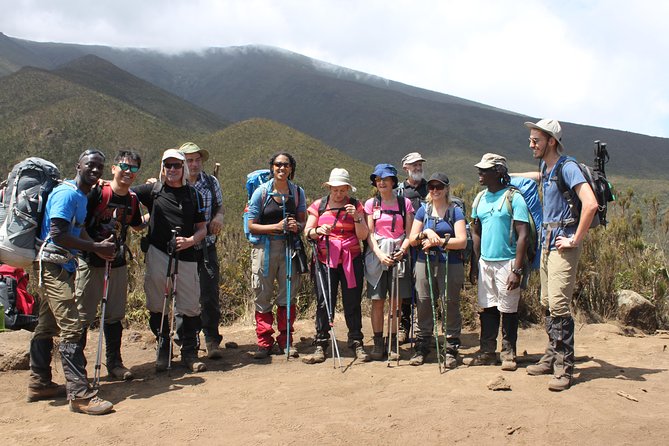
Reviewed · MACHAME ROUTE CLIMBS
Kilimanjaro Machame Route 6 Days
Kilimanjaro’s Machame Route gives you a compact but serious climb through rainforest, high camps, volcanic slopes, and the final glacial zone near Uhuru Peak. In six days, you cover about 62 kilometers from gate to gate, reaching 5,895 meters before descending through Mweka.
I like the route’s changing scenery and the amount of practical support built into the price. You get meals, tents, purified water, safety equipment, hotel nights, transfers, and a porter for your day-pack during the summit attempt. The main caution is the short schedule: six days allows less time for acclimatization than longer Kilimanjaro routes.
Key points at a glance
- 5,895-meter summit attempt: Reach Uhuru Peak, Africa’s highest point, before descending to Mweka Camp.
- Rainforest to glacial zone: The route passes through several climate zones in less than a week.
- 62 kilometers on foot: Expect long hiking days, with the hardest day combining the summit and descent.
- Serious safety equipment: Oxygen, a Gamow Bag, VHF radios, pulse-oximeter, and rescue fees are included.
- Full mountain support: Meals, tents, warm washing water, purified drinking water, and porter help are provided.
- Private six-day format: Only your group participates, with pickup, transfers, and hotel nights included.
What the Six-Day Machame Route Really Feels Like
The Machame Route is often called the Whiskey Route, a name that hints at its more demanding character compared with easier walking routes. This six-day version is designed for people with moderate fitness and some hiking experience, though first-time climbers also use it successfully.
You will not be strolling from viewpoint to viewpoint. The route gains height quickly, includes a long day between Shira and Barranco, and finishes with a summit push followed by a major descent. The reward is variety: the trail begins in rainforest and finishes in cold, thin air near the top of Kilimanjaro.
The tour is private, so your group is not folded into a large mixed party. That matters on a climb. You can walk at your group’s pace within the guide’s safety limits, ask questions without competing for attention, and keep the same support team throughout.
More Machame Route climbs:
- Kilimanjaro climb, Machame Route (7-day)
★ 5.0 · 262 reviews - Climbing Kilimanjaro – Machame Route
★ 5.0 · 170 reviews - Climbing Kilimanjaro through 7 days Machame Route
★ 5.0 · 151 reviews
Day One: Machame Gate to Machame Camp
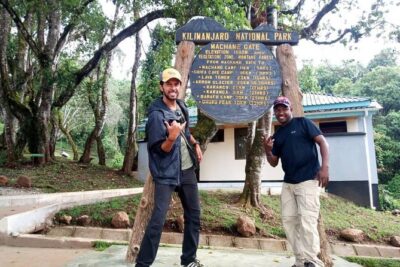
Your climb begins with a drive from Moshi to Machame Gate at about 1,640 meters. After the park entrance process, you walk 11 kilometers through the rainforest to Machame Camp at roughly 2,850 meters.
The listed hiking time is five to six hours. This is a steady first day rather than a summit test, but the forest can feel warm and damp, and the trail gains height continuously. Keep your rain protection easy to reach, since the route starts in one of Kilimanjaro’s wetter zones.
I like this opening because it gives you a clear sense of the mountain’s scale. You begin among trees and moisture, not bare volcanic rock. By camp, the air is cooler and the vegetation has begun to change.
Your support package starts working immediately. Park fees, rescue fees, tents, meals, purified water, and transport are included. The crew also provides warm water for washing each day, a small comfort that matters after several hours on foot.
Day Two: Machame Camp to Shira Camp Two
Day two covers only about five kilometers, but the altitude rises to approximately 3,810 meters at Shira Camp Two. The walk takes around five to six hours and moves from rainforest into the low alpine zone.
The shorter distance does not mean an easy day. The climb is steeper in places, and your body is beginning to respond to thinner air. Walk slowly, drink regularly, and follow the guide’s pace instead of trying to prove how fast you can go.
Shira Camp Two gives you your first strong sense that this is a high-mountain trip. Trees fall away, the air becomes sharper, and the ground feels more exposed. The route’s quick change in surroundings is one of its best features.
This is also where the six-day schedule deserves honest attention. A short itinerary saves time and may suit people with limited holiday days, but it leaves fewer spare days for acclimatization. Your fitness helps, but fitness alone does not guarantee an easy response to altitude.
Day Three: Shira Camp Two to Barranco Camp
Day three is one of the longest walking days. You cover about 10 kilometers in eight to nine hours, moving from the low alpine zone toward the high alpine zone and ending at Barranco Camp.
The trail may feel less dramatic in distance than the summit day, yet the time on foot makes it a major test. You need patience here. A slow, steady rhythm is more useful than pushing hard early and arriving exhausted.
Barranco is important because it places you close to one of the route’s best-known challenges, the Barranco Wall. The supplied schedule ends the day at Barranco Camp, so you have a night there before the next section.
Meals are included throughout the climb, with breakfast, lunch, and dinner provided. The food is described as fresh, healthy, nutritious, and served in large portions. That does not guarantee every meal will suit your taste, but it removes the need to carry your main food supply.
More six-day trips in Kilimanjaro:
- Kilimanjaro climb, Lemosho Route (6-day)
★ 5.0 · 129 reviews - Kilimanjaro climb, Marangu route (6-day)
★ 5.0 · 72 reviews - 6 Days Tanzania Classic Safari
★ 5.0 · 52 reviews - The Best of Machame Route in 6 Days: Your World’s Summit Guide
★ 5.0 · 44 reviews
Day Four: Barranco, Karanga Valley, and Barafu
Day four covers the short listed distance of four kilometers and takes about four to five hours. You climb from Barranco Camp to Karanga Valley Camp at approximately 3,995 meters, then continue after lunch to Barafu at about 4,673 meters.
This is a high-altitude day despite the modest distance. The route gains a lot of height, and Barafu is the launch point for the summit attempt. You should expect the thin air to affect your walking speed and appetite.
The schedule places you at Barafu after lunch, giving you time to prepare for the summit push. The exact amount of rest depends on the group and guide plan, but this is the point where you organize clothing, water, and anything needed for the next stage.
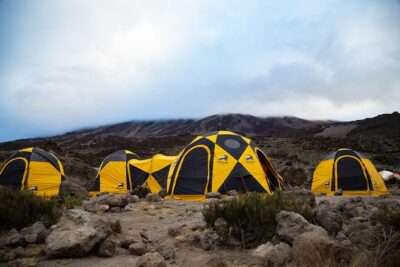
The camping arrangement is more substantial than a basic tent-only setup. The package includes waterproof sleeping tents, a separate mess tent, crew tents, cold-weather sleeping mats, aluminum dining tables, and chairs with backs and armrests. Those chairs may sound like a small detail, but sitting properly after a long day is welcome.
Day Five: Uhuru Peak and Mweka Camp
Day five is the central challenge. You climb to Uhuru Peak at 5,895 meters, then descend to Mweka Camp at about 10,000 feet. The listed hiking time is four to six hours, with a total distance of 12 kilometers.
You pass through the glacial zone and then back through the earlier zones on the descent. The route is physically demanding because you are combining the highest climb with a long loss of altitude on tired legs.
This is the day when the safety provisions matter most. The crew carries emergency oxygen, VHF handheld radios, and a pulse-oximeter for checking oxygen levels. A Gamow Bag, which is a portable hyperbaric chamber, is also included, along with mountain rescue fees.
Those items do not make altitude harmless. They do give the guide team tools for an emergency, and they show that the operator has planned for more than ordinary tiredness. You still need to report symptoms promptly and follow instructions from the guide.
A porter carries your day-pack during the summit attempt. That is useful because the summit morning requires warm layers, water, and personal essentials, while your legs are already dealing with the mountain. Pack light, but do not treat the porter support as a reason to bring unnecessary gear.
Reaching Uhuru Peak is the obvious high point, but the descent deserves equal respect. Do not mentally finish the climb at the summit sign. You still need to reach Mweka Camp, eat, drink, and recover.
Day Six: Mweka Camp to the Gate
The final day brings you down from Mweka Camp to Mweka Gate. The walk covers about 10 kilometers and takes three to four hours through the rainforest.
After several days above the tree line, returning to thick vegetation feels like a sharp change. The air is warmer, the route is lower, and the walking is easier than the summit day, though tired knees can make downhill steps uncomfortable.
At Mweka Gate, you transfer back to the hotel. The package includes a hotel night before and after the trek, on a bed-and-breakfast basis. After the descent, you receive the summit certificate and take part in a celebration party before spending the night at the previous hotel.
The full route distance is about 62 kilometers, or 37 miles. That number is useful when judging the trip: this is not an overnight hike with a dramatic final morning. You spend nearly a week walking, sleeping at altitude, and managing your energy.
Safety Support That Has Real Value
The safety equipment is one of the strongest parts of this package. It includes:
- Emergency oxygen tanks
- VHF handheld radios
- A pulse-oximeter
- A Gamow Bag
- Mountain rescue fees
- A portable personal flush toilet
The VHF radios help the crew communicate along the route. The pulse-oximeter can provide a basic reading of oxygen levels, while the Gamow Bag is intended for serious altitude emergencies. Rescue fees being included also reduces the risk of a major surprise cost if evacuation becomes necessary.
The portable toilet may sound less exciting, but it improves camp privacy and comfort. On a six-day climb, small practical features have a way of becoming important.
The operator also states that porters receive fair and ethical treatment. You should still budget for tips, since gratuities are not included. Ask the team for current tipping guidance before departure so you can plan responsibly.
Food, Water, Tents, and Hotel Nights
All mountain meals are included, with breakfast, lunch, and dinner listed for the six-day program. The food is described as fresh and nutritious, with generous portions. You should still tell the operator about any dietary needs before the climb, since the provided information does not promise specific dietary arrangements.
Clean, purified drinking water is supplied, and warm water is available for washing each day. You will not have a full shower on the mountain, but warm washing water is a useful middle ground.
The tents are waterproof, and cold-weather sleeping mats are included. The mess tent, dining furniture, and crew tents create a more organized camp setup than carrying only a personal tent and basic mat.
Two hotel nights are included, one before and one after the mountain portion. Both are listed as classic standard accommodation with bed and breakfast. The package also includes arrival and departure transfers and transportation within the destination location, which makes the first and last days simpler.
Is the $2,326.61 Price Good Value?
The price is $2,326.61 per person. At first glance, that is a large amount for six days, but the comparison should include what is bundled into it.
You are paying for park entrance fees and government taxes, mountain rescue fees, guides, porters, cooks, tents, meals, drinking water, safety gear, transfers, and two hotel nights. A cheaper-looking climb may not include all of those items, especially rescue support, hotel accommodation, or transport.
The private format adds value if you prefer a smaller, more personal setup. Group discounts are offered, so the per-person cost may work better for a party booking together. The exact discount is not specified, so ask for the current group rate before paying.
You still need money for tips, a Tanzania visa on arrival, laundry, phone use, drinks, and personal purchases. Optional extras, such as a short safari after the climb, are also separate.
I would judge this as a package for someone who values organization and safety support more than the lowest possible price. It is less attractive if your main goal is to find the cheapest route to the summit.
The Guide Team and Personal Service
English-speaking mountain guides lead the climb, and the operation is described as a local Tanzanian company. Guides named Mawra and Samson are associated with the team, and their work includes pacing, route support, and summit-day assistance.
The guide team received especially strong praise for support during the hikes and on the summit attempt. The porters and cook were also singled out for making the climb easier and keeping meals on schedule.
That matches what you should want from a Kilimanjaro operator: not theatrical commentary, but steady decisions about pace, rest, food, weather, and altitude. The most important question is not whether a guide is cheerful at the gate. It is how clearly the team communicates when you are tired or unwell.
You should confirm the guide-to-climber arrangement and porter duties before departure. The experience says it is private, but it does not provide a precise group-size limit.
Who Should Book This Climb?
This route suits you if you have moderate physical fitness and at least some hiking experience. You do not need to be an expert mountaineer based on the information provided, and first-time trekkers do use the route.
You should be comfortable walking five to nine hours on several days, sleeping in tents, and dealing with cold at high camp. The summit day combines a major climb with a descent, so your preparation should include sustained walking rather than only short gym sessions.
The six-day version suits people with limited time. It does not suit you as well if you want the greatest possible time for acclimatization or prefer a slower mountain schedule. The listed itinerary is fixed and has no extra acclimatization day.
The route is also a good fit if you want your logistics handled. Pickup, transfers, hotel accommodation, park charges, meals, water, tents, and safety equipment are already included. You can focus more on training and packing instead of arranging separate suppliers.
Booking is flexible from a cancellation point of view: you can receive a full refund if you cancel at least 24 hours before the start time. Changes made within 24 hours are not accepted, and poor weather may lead to a new date or a full refund.
Should You Book the Six-Day Machame Route?
Book it if you want a private, well-supported Kilimanjaro climb with dramatic changes in scenery and a clear six-day schedule. The included safety equipment, meals, transfers, mountain lodging, and hotel nights give the $2,326.61 price a reasonable foundation.
Think twice if you are new to long hikes, uneasy about camping, or hoping for a gentle acclimatization plan. The Machame Route is demanding, and six days gives you little spare time if altitude affects you.
My practical advice is to choose this climb for its local support and complete package, not simply because it reaches Uhuru Peak quickly. Go in prepared, walk slowly, listen closely to the guides, and keep money aside for tips, visas, and personal costs. For a fit climber who values strong camp support, this is a serious but workable route to Kilimanjaro’s summit.
FAQ
How long is the Kilimanjaro Machame Route experience?
The climb lasts approximately six days. The mountain portion covers about 62 kilometers, or 37 miles, from gate to gate, with five nights on the mountain described in the tour information.
What is the highest point reached?
The summit is Uhuru Peak at 5,895 meters, or 19,341 feet.
How fit do I need to be?
A moderate level of physical fitness is required. The route is designed for physically fit people with some hiking experience, although first-time trekkers also use it.
Is this a private tour?
Yes. Only your group participates in the activity.
Are meals included?
Yes. Breakfast, lunch, and dinner are included during the mountain climb. The package lists six breakfasts, six lunches, and six dinners.
Is drinking water provided?
Yes. Clean, purified drinking water is included.
What safety equipment is included?
The package includes emergency oxygen tanks, VHF handheld radios, a pulse-oximeter, a Gamow Bag, mountain rescue fees, and a portable personal flush toilet.
Are hotel nights included?
Yes. Two nights at a classic standard hotel are included, one before and one after the trek, with bed and breakfast.
What costs are not included?
Tips, a Tanzania visa on arrival, personal expenses such as laundry, telephone use, and beverages, and optional tours such as a safari are not included.
Just added around Kilimanjaro
- 6 days Machame route climbing Mt.Kilimanjaro★ 5.0 · 8 reviews
- machame route★ 5.0 · 16 reviews
- Mt Kilimanjaro 6 days Marangu route hike★ 5.0 · 3 reviews
- Private Cycle to Kilimanjaro Bike Park Safari★ 5.0 · 6 reviews
- West Kilimanjaro cycling Adventures★ 4.5 · 8 reviews
- Kilimanjaro Climb • Marangu Route ~ 9 Day★ 5.0 · 4 reviews
- 3 Days Private E-Bike Tour in West Kilimanjaro★ 5.0 · 3 reviews
- Kilimanjaro Climb • Machame Route ~ 10 Day★ 5.0 · 6 reviews
Machame Route Climbs, compared.
The Best of Machame Route in 6 Days: Your World’s Summit Guide
Read our review →Browse the lists this tour appears in