
Reviewed · MACHAME ROUTE CLIMBS
Climb Mount Kilimanjaro: 7 Days Machame Route
Mount Kilimanjaro saves its hardest work for the final night. This seven-day Machame Route climb takes you from rainforest to Uhuru Peak, Africa’s highest point, with an overnight summit push that can last 13 hours. The reward is a sunrise from Stella Point and the long-awaited walk onto the summit.
I like the small private-group format, since your pace and needs stay with your own party. I also like the practical support: a cook, guide, porters, modern tents, thick sleeping pads, meals, park permits, rescue fees, and oxygen equipment are all part of the package. The drawback is simple: this is a serious physical test, not a sightseeing stroll, and summit day is long, cold, and demanding.
Key points at a glance
- Machame Gate begins the climb through dense rainforest, then the route changes each day as you gain height.
- Day three is built for acclimatization, taking you as high as 4,600 meters before sleeping lower.
- The Barranco Wall requires a steep rock climb, though it is not a technical climbing route.
- Summit night starts between midnight and 2 a.m., followed by the ascent to Stella Point and Uhuru Peak.
- Your crew includes a guide, cook, and porters, with each climber’s porter carrying up to 15 kilograms.
- The $3,034 price covers major climbing costs, but personal gear, gratuities, insurance, flights, some hotel meals, and certain fees remain separate.
What the $3,034 package really gives you
At $3,034, this is not a cheap mountain holiday. It is also much more than a permit and a place to pitch your own tent. The price includes accommodation before and after the climb in a shared twin room, airport transfers, transport to the trailhead, park permits, rescue fees, camping fees, meals on the mountain, tents, sleeping pads, and a professional mountain crew.
That matters on Kilimanjaro. You are not carrying the full camp, arranging park paperwork, cooking dinner, or finding your own way between camps. Porters carry up to 15 kilograms for each climber, while a cook prepares breakfast, lunch, and dinner during the climb. Tea, coffee, and bottled water are also included.
The package includes six breakfasts, six lunches, and six dinners, plus one night before and one night after the climb at the arranged hotel. Hotel lunches, dinners, and drinks are not included, so keep money aside for those meals.
You also need to budget for personal equipment rental if you do not own suitable mountain clothing and gear. Gratuities are listed separately at $15 to $20 per day for a guide, $10 to $15 per day for a cook, and $8 to $10 per day for a porter. International flights and insurance are also your responsibility. The additional $100 for US nationals and $50 for other nationalities should be clarified before booking, since the supplied details do not identify the exact fee.
More Machame Route climbs:
- Kilimanjaro climb, Machame Route (7-day)
★ 5.0 · 262 reviews - Climbing Kilimanjaro – Machame Route
★ 5.0 · 170 reviews - Climbing Kilimanjaro through 7 days Machame Route
★ 5.0 · 151 reviews
Day 1: Machame Gate and the rainforest
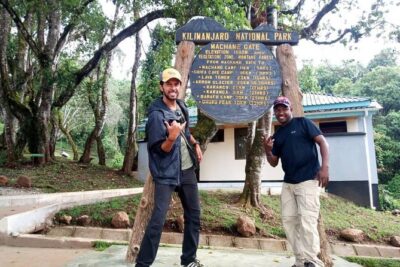
The first morning begins with transport from Moshi to Machame Gate, normally about an hour by car. Airport pickup at Kilimanjaro International Airport is included, along with hotel transfers, so the basic arrival plan is handled for you.
At the gate, you meet your guide, cook, and porters while park formalities are completed. There is usually a busy sorting period as equipment is weighed and divided. This is where the organized support becomes real: your crew prepares the camp while you begin walking.
The first trek lasts about six hours. The path climbs steadily through dense rainforest, with thick vegetation and a damp, shaded feel. It is a gentler introduction than the summit night, but do not waste it by walking too fast. You are already beginning the acclimatization process.
Your overnight camp is in the forest zone. Accommodation is in a modern tent, shared with one or two other climbers. A two-inch sleeping pad is supplied, which should be more comfortable than a thin basic mat, though you still need a suitable sleeping bag and personal warm clothing.
Day 2: Shira Camp and the first wide views
Day two takes about five hours and moves into the low alpine zone. The forest gives way to moorland and grassland, so the route feels more open and exposed. The walking is relatively steep, but the shorter day gives you useful time to settle into the mountain routine.
Shira Camp 2 sits on a plateau. From here, you get your first views of Kibo, Kilimanjaro’s main summit cone, to the northwest, and Mount Meru to the east. This is one of the first points where the scale of the climb becomes clear.
The practical lesson is to protect your energy. Eat even when your appetite is not strong, drink regularly, and keep your pace steady. Your cook provides the meals, while your guide should help you manage the walking speed and watch for signs of altitude trouble.
Day 3: High altitude, lower camp
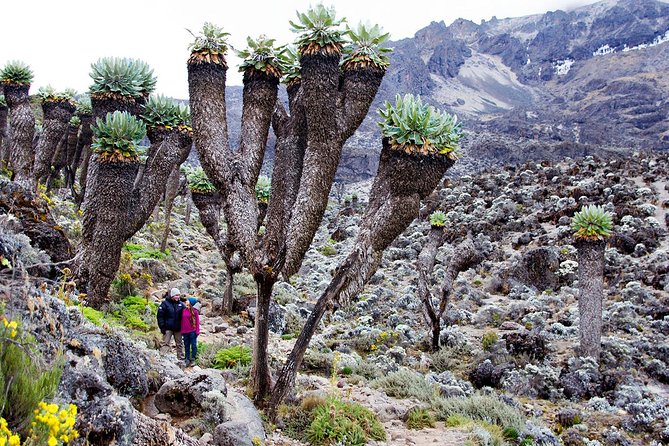
Day three is one of the most useful days in the schedule. You walk for about six hours across high moorland, reaching as high as 4,600 meters, but finish at roughly the same elevation where you began.
That climb high and sleep lower pattern is valuable for acclimatization. It gives your body time to adjust without forcing you to sleep at the highest point reached that day. The scenery also changes again as the route becomes more rugged and spare.
This day can feel strange because the walking is not simply an uphill march toward a higher camp. You gain height, then give some of it back. That apparent detour is part of the design, and it is one reason the seven-day schedule is more sensible than trying to rush the mountain.
More treks and hikes around Kilimanjaro:
- Kilimanjaro climb by Lemosho Route (7-day)
★ 5.0 · 651 reviews - 8-Day Small-group Lemosho Kilimanjaro Summit Trekking
★ 5.0 · 186 reviews - Kilimanjaro Climbing Lemosho Route 8 Days.
★ 5.0 · 186 reviews - Kilimanjaro climb, Lemosho Route (8-day)
★ 5.0 · 148 reviews
Day 4: Barranco Wall and Karanga Camp
Day four lasts about four hours, but it is not an easy day. You first descend into the beginning of the Great Barranco, a large ravine, then climb the Barranco Wall.
The wall is steep and tiring, but it is described as a rock climb rather than a technical climbing section. You do not need to treat it like a specialist mountaineering pitch, yet you do need balance, patience, and a willingness to use your hands at times. The route then climbs from Karanga Valley to camp at about 3,963 meters.
This is a good example of why distance alone does not tell you how hard a day will feel. Four hours on a steep, uneven route can be more demanding than a longer walk on gentle ground. Keep your daypack light and let the porters handle the heavy load assigned to them.
Day 5: Barafu Camp and summit preparation
The fifth day is another four-hour climb, this time to Barafu Camp. By now, you have completed the Southern Circuit and seen the summit from several angles.
Barafu is the staging point for the most difficult section. After reaching camp, you eat, rest, and prepare for the summit attempt. The early bedtime can be awkward because the summit push begins between midnight and 2 a.m. You may not sleep much, so use the rest period well.
This is also the time to organize your clothing, water, headlamp, snacks, and personal equipment. The crew supplies group gear, tents, tables, chairs, crockery, oxygen systems, and pulse oximeters. Those items provide useful support, but they do not remove the need for proper clothing and physical preparation.
Day 6: Stella Point, Uhuru Peak, and the long descent
Summit day is the heart of the climb and the hardest part by far. You start in darkness and ascend through heavy scree between the Rebmann and Ratzel glaciers, heading toward Stella Point on the crater rim.
The route is physically slow and mentally demanding. At Stella Point, you take a short rest and may see sunrise over the mountain. Faster climbers can reach the summit in time for sunrise, but the exact timing depends on pace and conditions.
From Stella Point, the final hour to Uhuru Peak may include snow. Reaching the summit means you have arrived at the highest point on Kilimanjaro and in Africa. The summit moment may be brief because of cold, fatigue, and the need to keep moving, but it is the clear payoff for the week.
The descent begins soon after. You continue down toward Mweka, making day six roughly 13 hours in total. That long return is easy to underestimate. Your knees and feet may feel worse on the way down, so trekking poles, careful foot placement, and a controlled pace are useful if you have them.
The supplied oxygen systems and pulse oximeters are reassuring safety tools, but they are not a guarantee of success or a substitute for proper acclimatization. Tell your guide promptly if you feel unwell.
Day 7: Rainforest descent and Mweka Gate
The final day is a gentler four-hour trek down through rainforest to Mweka Gate. After the exposed upper mountain, the return to thicker vegetation can feel like a major change.
At the gate, park formalities are completed and international certificates are provided for a successful ascent. You then spend the night at the arranged hotel, with breakfast included.
This final night is useful. You have a place to wash, rest, and recover instead of heading straight to an airport or another long transfer. Return transport to Kilimanjaro Airport is included, but you should still confirm the timing of your flight and transfer with the operator.
Camp life, food, and shared equipment
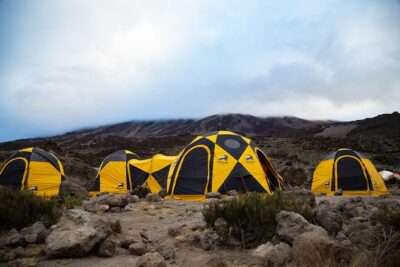
You share a tent with one or two other climbers, so privacy is limited. Modern tents and warm sleeping pads make the nights more manageable, but mountain camping remains basic. The portable flush toilet can be provided at no extra charge if you request it, which is worth arranging before departure.
The dining setup includes a tent, tables, chairs, and crockery. That gives your group a more orderly place to eat and rest than sitting inside a sleeping tent. The cook prepares all six mountain breakfasts, lunches, and dinners, with coffee and tea available.
A vegetarian option is available, but you need to request it when booking. If you have other food requirements, the supplied details do not confirm what can be arranged, so ask before paying.
The crew and the human side of the climb
The strongest point in the available feedback is the crew. One climber described the experience as a physical challenge but praised the team for being helpful, friendly, and supportive throughout. That matters more on a mountain than polished marketing language.
The crew structure is clear: a professional guide leads the route, a cook handles meals, and porters carry equipment. The listed crew has more than six years of climbing experience, although individual guide names are not provided. Ask for the guide and crew details before departure if that is important to you.
Remember that gratuities are separate. Budget them from the start rather than treating them as an afterthought. The porter system also deserves respect. Your porter carries up to 15 kilograms, but you still need to pack carefully and avoid bringing unnecessary items.
Fitness, altitude, and who should book
The operator asks for a moderate level of physical fitness. In practical terms, you should be comfortable walking for several hours, climbing steep ground, and continuing when the route becomes slow and tiring. The summit day is the real test, lasting about 13 hours and beginning in the middle of the night.
You should also be ready for changing conditions. The route moves through rainforest, moorland, grassland, high-altitude scree, rock, and possible snow near the summit. Temperatures and comfort can change quickly as you gain height.
This climb suits you if you want a supported ascent with a private group, prefer a route with an acclimatization day, and are willing to camp for six nights. It is less suitable if you want a short, comfortable sightseeing trip or dislike early starts, shared tents, and long days on foot.
The listing gives a five-star rating from three reviews, so the praise is encouraging but based on a small sample. The most useful takeaway is not the number itself. It is the repeated emphasis available here on a supportive crew and the clear warning that the climb is physically demanding.
Booking details worth checking
The tour starts at 8:00 a.m., and pickup is offered. Confirmation is provided at booking, and the activity is private, so only your own group participates.
Free cancellation is available if you cancel at least 24 hours before the local start time. Cancellations or changes inside that window are not accepted for a refund.
Before booking, confirm the hotel names, the extra national fee, the exact transfer schedule, equipment rental options, and the gratuity plan. Also request a portable flush toilet if you want one, and give advance notice for vegetarian meals.
Should you book the Machame Route climb?
I would choose this trip if you want the main Kilimanjaro experience with a full support team and a seven-day schedule that makes room for acclimatization. The combination of porters, cook, camping equipment, permits, meals, airport transfers, and rescue fees gives the $3,034 price real substance.
I would not choose it without preparing for the summit night. The route is not technical, but it is long, steep, cold, and tiring. If you can accept that tradeoff, this is a well-supported way to take on Kilimanjaro, with the Barranco Wall, the high moorland, the sunrise near Stella Point, and Uhuru Peak providing clear milestones along the way.
FAQ
Where does the Kilimanjaro climb begin?
The trek begins at Machame Gate, normally about an hour’s drive from Moshi.
How long does the experience last?
The climb lasts seven days, with accommodation before and after the trek included.
Is airport pickup included?
Yes. Pickup from Kilimanjaro International Airport and return transport to the airport are included.
What route does the climb use?
The experience uses the Machame Route, finishing at Mweka Gate after the summit descent.
How long is summit day?
Summit day takes about 13 hours, beginning between midnight and 2 a.m.
Does the climb reach Uhuru Peak?
Yes. The route continues from Stella Point to Uhuru Peak, the highest point on Mount Kilimanjaro and in Africa.
Are porters included?
Yes. Each climber is provided porters, with up to 15 kilograms carried per climber.
Is camping equipment included?
Yes. Modern tents, warm two-inch sleeping pads, group dining equipment, and crockery are included.
Are meals included?
Yes. Six breakfasts, six lunches, and six dinners are included during the climb. Coffee, tea, and bottled water are also provided.
Is a vegetarian meal available?
Yes. You need to request the vegetarian option when booking.
More Seven-Day Trips in Kilimanjaro
- 7-Day Machame Kilimanjaro Summit Tour from Arusha
★ 5.0 · 125 reviews - 7 Days Kilimanjaro via Machame route affordable price
★ 5.0 · 110 reviews - Private Kilimanjaro Hike 7 Day Lemosho Route
★ 5.0 · 60 reviews - 7 Days Machame route – Kilimanjaro
★ 5.0 · 45 reviews
Just added around Kilimanjaro
- 6 days Machame route climbing Mt.Kilimanjaro★ 5.0 · 8 reviews
- machame route★ 5.0 · 16 reviews
- Mt Kilimanjaro 6 days Marangu route hike★ 5.0 · 3 reviews
- Private Cycle to Kilimanjaro Bike Park Safari★ 5.0 · 6 reviews
- West Kilimanjaro cycling Adventures★ 4.5 · 8 reviews
- Kilimanjaro Climb • Marangu Route ~ 9 Day★ 5.0 · 4 reviews
- 3 Days Private E-Bike Tour in West Kilimanjaro★ 5.0 · 3 reviews
- Kilimanjaro Climb • Machame Route ~ 10 Day★ 5.0 · 6 reviews
Machame Route Climbs, compared.
The Best of Machame Route in 6 Days: Your World’s Summit Guide
Read our review →Browse the lists this tour appears in