
Reviewed · RONGAI ROUTE CLIMBS
6 Days Kilimanjaro climbing | Hiking Tour via the Rongai Route
The Rongai Route gives you a quieter way up Kilimanjaro, with forests, heather, alpine desert, Mawenzi’s jagged peaks, and a long summit night. This six-day plan also gives you more time to adjust to altitude than a rushed climb.
I like the changing scenery and the useful camping rhythm: porters prepare tents, hot water, meals, and drinks while you focus on walking. I also like the private-group format, since the guide can judge your pace and help you aim for the summit. The catch is the price: $930 per person does not include park fees, tips, flights, visas, or hotel nights, so your final cost will be higher.
Key points to know before booking
- Rongai starts near the Kenyan border side of Kilimanjaro, then joins the Marangu route near the saddle between Mawenzi and Kibo.
- Mawenzi Tarn at 4,330 meters is one of the most memorable camps, with a lake and striking views toward Kibo.
- Summit day lasts about 14 hours, beginning around 11:00 or 11:30 p.m. and ending at Horombo Hut.
- The route finishes at Marangu Gate, not at the Rongai trailhead, so the included gate transfer matters.
- Meals and camp support are included, with six lunches, five breakfasts, and six dinners listed.
- A 24-hour cancellation deadline applies, and poor weather may lead to a new date or full refund.
Why six days on Rongai can work well
Kilimanjaro is not a technical climb in the information provided here, but it is a serious high-altitude hike. The summit reaches 5,895 meters, and the program asks you to move from 1,950 meters at the Rongai trailhead to the summit in only a few days.
That is why the six-day schedule matters. It gives you a steady rise through several altitude zones rather than rushing straight upward. Day 2 reaches 3,600 meters, Day 3 reaches 4,330 meters, and Day 4 ends at roughly 4,700 meters. You get time to rest at Mawenzi Tarn before the final push.
I would choose this route if you want a quieter start and a private trip rather than the busiest possible mountain approach. The private format is especially useful for a solo participant or a small party with mixed hiking speeds. One previous solo participant was paired with another solo climber through the company, so ask how your group will be organized if you book alone.
The route is not an easy option. The summit night is long, cold, and physically demanding. The supplied price also needs careful checking because park fees are separate. Ask for a full written cost before paying, including the park charge, transfers, accommodation, crew tips, and any airport service you need.
More Rongai Route climbs:
- Kilimanjaro climb, Rongai Route (7-day)
★ 5.0 · 40 reviews - Kilimanjaro climb, Rongai Route (6-day)
★ 5.0 · 15 reviews - Mount Kilimanjaro Rongai Route
★ 5.0 · 10 reviews
Day 1: From Marangu Gate to the first Cave Camp
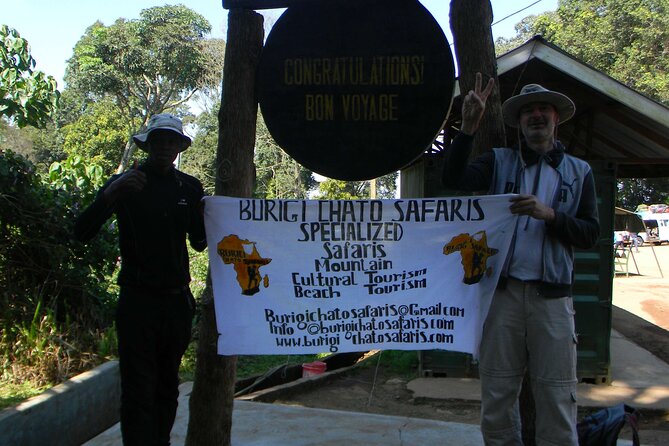
The trip begins with an 8:30 a.m. meeting at the operator’s office on Mkwawa Street in Shanty Town, Moshi. The listed starting point is Marangu Park Gate, followed by about three hours of transport to the Rongai trailhead at roughly 1,950 meters.
That transfer is an important detail. You are not walking from Marangu Gate on the first day. You are using Marangu for administration and transport, then starting the actual climb on the Rongai side.
The first walk takes around five hours. The trail passes through cypress plantations and mountain forest before reaching the first Cave Camp at about 2,600 meters. You might spot giant monkeys in the forest, though wildlife sightings are never guaranteed.
The day is moderate in length, but do not waste it racing uphill. Your porters and cooks may reach camp before you, set up the tent, and prepare popcorn, a hot drink, and hot water for washing. That kind of support changes the feel of a camping climb. You carry your day bag, then arrive to a prepared camp rather than a second job setting up after a tiring walk.
A packed lunch may be taken to Nelemoru if conditions allow. Since the weather can affect that plan, keep a few snacks in your day pack. The first night introduces you to the basic routine: walk, wash, eat, organize clothing, and sleep.
Day 2: Heather country and the cold Kikelelwa camp
Day 2 covers about seven hours, taking you from Cave Camp 1 through moorland and heather to Cave Camp 2 at approximately 3,450 meters. Lunch comes there, followed by a rest before you continue to the third camp, Kikelelwa Cave, at around 3,600 meters.
This is a useful acclimatization day because you gain altitude in stages. The route also becomes more open as the forest falls away. You will notice the mountain changing from trees to heather and moorland, with wider views and less shelter from wind.
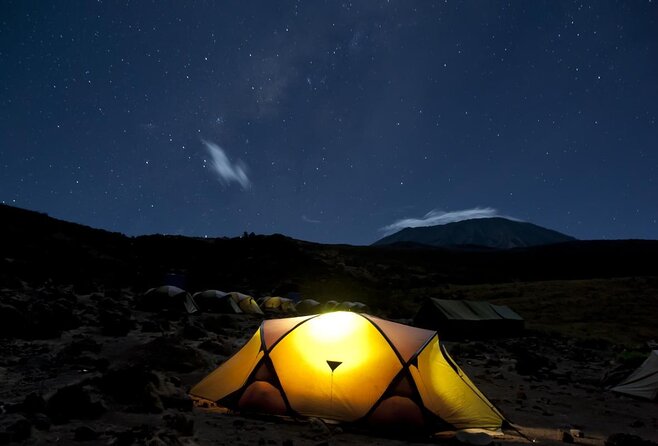
Kikelelwa Cave sits in a valley with small caves below the saddle. The camp has the same practical support as the first night: a tent prepared by the porters, hot water for washing, tea or coffee, snacks, and dinner.
The drawback is the cold. The schedule specifically warns of a very cold night here. Bring warm sleeping gear and keep clothing organized before sunset. You do not want to search through your bag when the temperature drops and you are already tired.
The longer six-day plan earns its value here. Instead of treating altitude as something to ignore, it places you at 3,600 meters before the higher Mawenzi camp. Pay attention to how you feel and tell your guide about problems early. A private group makes that conversation easier.
Day 3: Mawenzi Tarn and the best camp setting
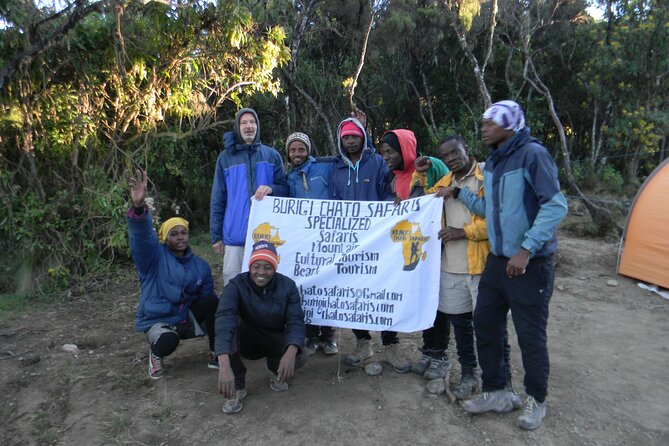
Day 3 is shorter, about four hours, but it is not a throwaway day. From Kikelelwa, the trail climbs on a moderate slope, then becomes steeper as you approach Mawenzi Tarn Camp at 4,330 meters.
Mawenzi Tarn is one of the most memorable places on the route. The camp sits below Mawenzi Peak, near a small lake, in a natural depression among the high volcanic terrain. After lunch, you have several hours to rest or take short walks toward nearby ridges and towers.
Those short walks are valuable for two reasons. They let you see more of Mawenzi’s dramatic rock formations, and they offer views toward Kibo, the summit cone you will approach next. Do not turn the afternoon into a hard hike. The point is to adjust, not to spend all your energy before summit day.
This camp also gives the trip a sense of place that a faster itinerary can miss. You are not simply checking off elevation numbers. You are spending an afternoon in a high mountain setting, watching the light change and preparing for the final stages.
Dinner and overnight come at altitude, so sleep may be less comfortable. That is normal for the schedule, but it is another reason to avoid adding extra activity. Rest is the main task.
More treks and hikes around Kilimanjaro:
- Kilimanjaro climb by Lemosho Route (7-day)
★ 5.0 · 651 reviews - Kilimanjaro climb, Machame Route (7-day)
★ 5.0 · 262 reviews - 8-Day Small-group Lemosho Kilimanjaro Summit Trekking
★ 5.0 · 186 reviews - Kilimanjaro Climbing Lemosho Route 8 Days.
★ 5.0 · 186 reviews
Day 4: Across the alpine desert to Kibo Hut
After breakfast, the trail climbs a small ridge before continuing across the northern part of the saddle between Mawenzi and Kibo. The walking time is about five hours, and the surroundings become alpine desert, with sparse grass and occasional hardy flowers.
This is a stark change from the forest on Day 1. There is little cover, and the open ground can make the walk feel exposed. In clear conditions, the views across the saddle are a strong reward.
Near this point, the Rongai route joins the Marangu route. From here to the summit, you follow the same broad approach used by climbers coming from Marangu. The last section to Kibo Hut is steeper, and the camp sits at approximately 4,700 meters.
The schedule places arrival around lunchtime. That gives you time to wash, eat, rest, and prepare for the summit attempt. Use the afternoon quietly. Lay out your warm layers, headlamp, snacks, water, and any personal items before trying to sleep.
There is a small altitude figure problem in the supplied description, which gives the camp as 47.00 meters in one place. The route details clearly indicate roughly 4,700 meters, matching the high-altitude position before the summit. Confirm the final itinerary with the operator, but plan for a very high camp.
Day 5: The 14-hour summit push
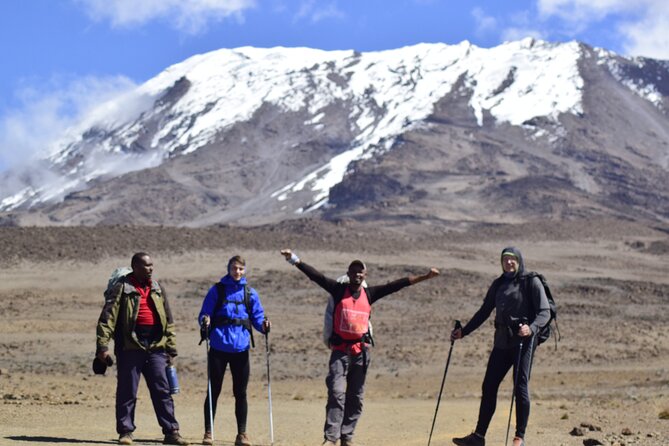
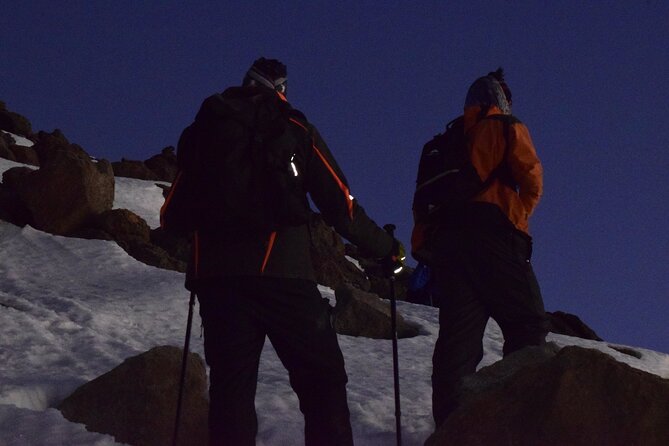
Summit day begins around 11:00 or 11:30 p.m. This schedule is designed to get you to the crater rim around sunrise or in the early morning, then onward to Uhuru Peak.
The walk from Kibo Hut toward Gillman’s Point is the hardest part for many people. The trail is steep, and the combination of darkness, cold, thin air, and fatigue makes the climb slow. The information provided gives about 1.5 hours from Gillman’s Point to the top, but the full summit attempt is much longer when you include the ascent from Kibo Hut.
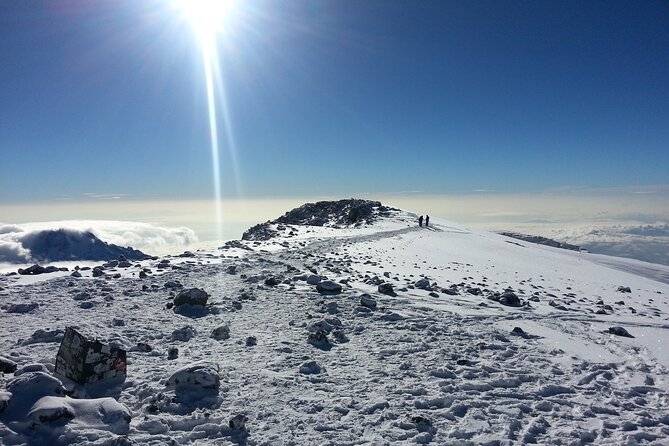
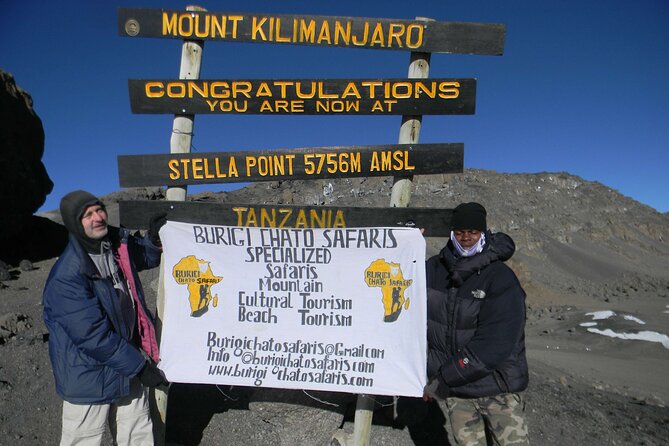
After reaching the crater rim, you continue along the rim toward Uhuru Peak. The route passes Stella Point at 5,752 meters, where other routes join the rim. From there, Uhuru Peak is close in distance but still demanding because you remain at extreme altitude.
The plan is to spend only a few minutes at the summit. That is sensible. Take your photographs, enjoy the achievement, and begin descending. Reaching Uhuru Peak earns the gold summit certificate. Reaching Gillman’s Point earns the green certificate.
Lunch is served back at Kibo Hut, then you continue down to Horombo Hut at about 3,720 meters. The total day is listed as 14 hours. That number should guide your decision to book. You need enough fitness and patience for a very long day, not just a strong first few hours.
The summit is the main goal, but safety has to come first. Your guide will assess your condition and pace. The most useful feedback about this trip points to the guide’s ability to understand a climber’s limits and help that person work toward the goal. No operator can promise the summit, and you should be comfortable turning back if your condition requires it.
Day 6: The long descent to Marangu Gate
After breakfast at Horombo Hut, you descend through Mandara Hut at about 2,700 meters and continue to Marangu Gate at roughly 1,980 meters. The listed walking time is only six minutes, clearly a formatting error, so do not plan around that figure. The descent from Horombo to the gate is a substantial final walking day.
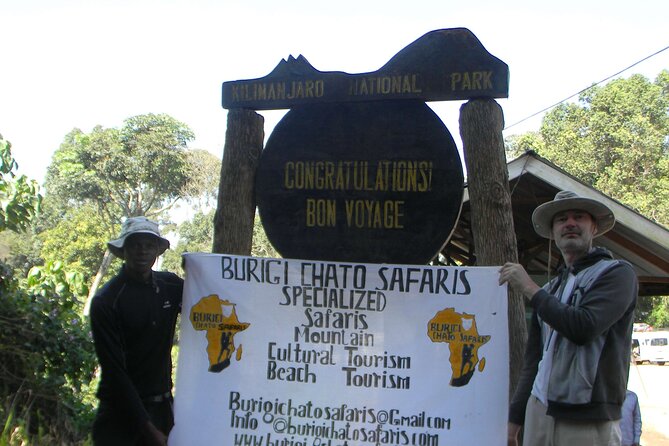
At the gate, you sign the register and receive your certificate. The crew may celebrate with songs and dancing at Horombo or after the certificate ceremony. Your driver then returns you to Moshi for a hot shower and, if arranged, your next overnight stay.
Finishing at Marangu Gate makes the included gate transfer useful. You start near Marangu, drive to Rongai, cross the mountain, and return to the Marangu side. Confirm exactly where the vehicle will meet you and whether the transfer to your hotel is included in your booking.
Meals, porters, and the value of $930
At $930 per person, this trip looks reasonable for a six-day climb with private guiding, porters, cooks, camp support, transport between trailheads, and meals. The package includes six lunches, five breakfasts, and six dinners. It also lists airport pickup and drop-off, gate transfer, and crew wages.
Read the crew wages line carefully. It does not necessarily mean gratuities are covered. Tips are explicitly excluded, along with park fees, visas, flights, and hotel accommodation before and after the hike. Park fees can be paid directly to the park or through the operator, so request a clear breakdown.
The food routine appears practical rather than elaborate. You can expect hot meals, hot drinks, snacks, and hot water for washing. Popcorn at camp is a small but welcome touch after a long walk.
The strongest value comes from the support system. Porters carry camp equipment and set up before you arrive, while the cook keeps meals moving through a difficult environment. Ask about the company’s porter practices and the exact amount recommended for tips before departure. That makes your budget more honest and your expectations clearer.
Who should book this climb
I would recommend this route to a reasonably fit hiker who wants a quieter approach, changing scenery, and a six-day acclimatization plan. It suits solo climbers who are comfortable joining another person or a small private group, as well as friends who want the trip reserved for their own party.
It is not the right choice if you want a relaxed walking holiday. Day 5 is a major physical test, and the route includes cold nights, high camps, steep ground, and a very long descent after the summit.
A previous Meru hike was used as preparation before Kilimanjaro, and that is a practical idea if you have the time. The information available does not say that Meru is required, but a prior high mountain outing can help you learn how your body responds to long climbs and altitude.
The experience has received a five-star overall rating from four recorded reviews, with particular praise for guides, cooks, porters, changing scenery, and successful summit attempts. The repeated lesson is simple: a good guide matters. Ask who will lead your group, how the guide handles different abilities, and what happens if someone needs to stop.
Booking details and cancellation terms
The meeting point is the company office on Mkwawa Street in Shanty Town, Moshi, with an advertised start time of 8:30 a.m. Pickup is offered, but confirm whether that means airport pickup, hotel pickup, or both for your booking.
Confirmation is provided when you book, and the activity is listed as suitable for most people. It is a private activity, so only your group participates.
You can cancel for a full refund up to 24 hours before the local start time. Inside 24 hours, the payment is not refunded and changes are not accepted. If poor weather causes cancellation, you will be offered another date or a full refund.
Should you book the six-day Rongai climb?
Book it if you want a quieter route, strong camp support, and a schedule that allows more time to adjust before the summit. The Mawenzi Tarn camp, varied scenery, private-group format, and included meals give the trip real appeal.
Before paying, get the complete price in writing. Add park fees, tips, visas, flights, hotel nights, and any airport transfer not covered by your booking. If you accept that extra cost and prepare for a cold, 14-hour summit day, this is a solid way to attempt Africa’s highest peak.
FAQ
Where does the Kilimanjaro climb start?
The meeting point is the operator’s office on Mkwawa Street in Shanty Town, Moshi, at 8:30 a.m. The mountain approach begins at Marangu Park Gate, followed by transport to the Rongai trailhead at about 1,950 meters.
Where does the trek finish?
The trek ends at Marangu Gate at approximately 1,980 meters. A driver is listed to take you back to your hotel in Moshi.
How long is the tour?
The tour lasts six days. The longest day is the summit day, listed at about 14 hours.
Is the tour private?
Yes. Only your group participates in the activity.
Are meals included?
Yes. The package lists six lunches, five breakfasts, and six dinners.
Are park fees included in the $930 price?
No. Mount Kilimanjaro park fees are excluded and can be paid directly to the park or through the tour operator.
What happens if bad weather cancels the climb?
You will be offered a different date or a full refund if the experience is canceled because of poor weather.
More Six-Day Trips in Kilimanjaro
- Kilimanjaro climb, Lemosho Route (6-day)
★ 5.0 · 129 reviews - Kilimanjaro climb, Marangu route (6-day)
★ 5.0 · 72 reviews - 6 Days Tanzania Classic Safari
★ 5.0 · 52 reviews - The Best of Machame Route in 6 Days: Your World’s Summit Guide
★ 5.0 · 44 reviews
Just added around Kilimanjaro
- 6 days Machame route climbing Mt.Kilimanjaro★ 5.0 · 8 reviews
- machame route★ 5.0 · 16 reviews
- Mt Kilimanjaro 6 days Marangu route hike★ 5.0 · 3 reviews
- Private Cycle to Kilimanjaro Bike Park Safari★ 5.0 · 6 reviews
- West Kilimanjaro cycling Adventures★ 4.5 · 8 reviews
- Kilimanjaro Climb • Marangu Route ~ 9 Day★ 5.0 · 4 reviews
- 3 Days Private E-Bike Tour in West Kilimanjaro★ 5.0 · 3 reviews
- Kilimanjaro Climb • Machame Route ~ 10 Day★ 5.0 · 6 reviews