
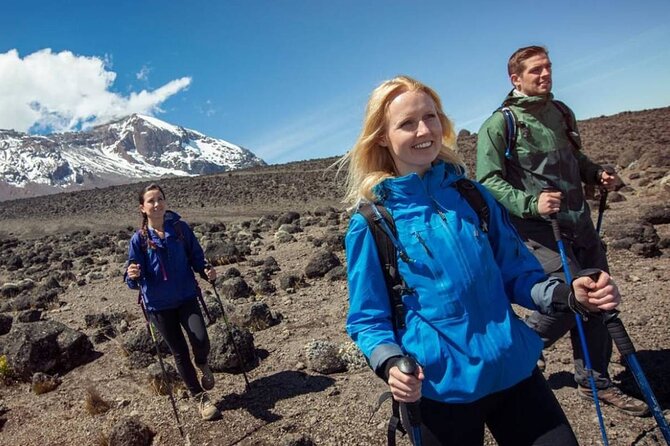
Reviewed · MACHAME ROUTE CLIMBS
7-Day Kilimanjaro Climbing Via Machame Route
Machame earns its Whiskey Route nickname with a demanding but scenic path up Kilimanjaro. I like the steady altitude progression, especially the high Lava Tower to lower Barranco section, and I like how quickly the trail moves from tropical forest to moorland and Arctic desert. The main consideration is the summit day: you start around midnight after only a short sleep, then walk for roughly 13 to 15 hours including the descent.
The strongest part of this seven-day plan is its pacing. You get an extra acclimatization day compared with the six-day option, and guides such as William, Rama, David, Zach, and others have been praised for encouragement, organization, and care. Still, this is a serious high-altitude trek, not a casual walk, and the quoted $2,565 price should be checked carefully against what is included beyond meals.
Key points to know before booking
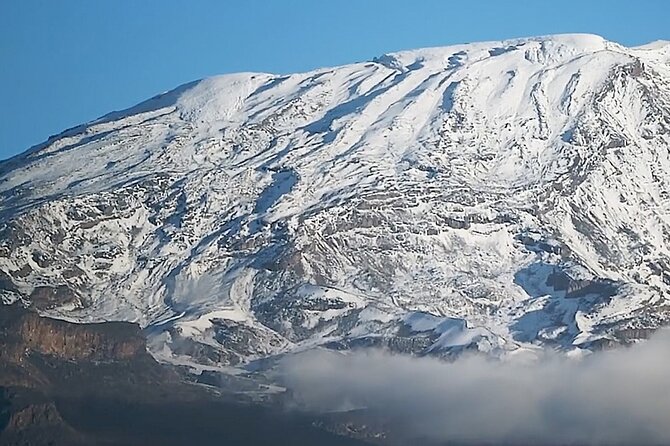
- The route crosses five climate zones: You begin in tropical rainforest and finish in the cold, dry Arctic desert near Uhuru Peak.
- Day three is the acclimatization test: You climb toward Lava Tower for lunch, then descend to Barranco Camp.
- Barranco Wall looks tougher than it is: The climb is nontechnical, though you need steady footing and help from the guides.
- Summit morning begins at midnight: Expect a long night climb to Uhuru Peak followed by a full descent to Mweka Camp.
- The support team is a major part of the experience: William, Rama, David, Zach, Joseph, Paul, Izadini, and others are named in customer accounts connected with Spirit of Kilimanjaro.
- The price includes meals, not international travel: Visa costs and international flights are extra, and the exact handling of park fees, gear, transfers, and tips should be confirmed before payment.
Why the seven-day Machame Route works
Machame is a good match for you if you want scenery, a traditional camping trek, and a route with time for your body to adjust. It is not the shortest way up Kilimanjaro, but the seven-day schedule gives you more breathing room than the six-day version.
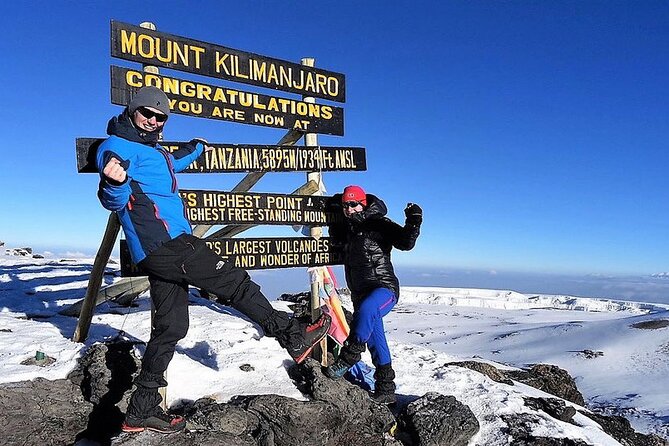
The trail starts at 5,718 feet, or 1,748 meters, and finishes at Uhuru Peak at 19,341 feet, or 5,895 meters. That is a huge change in altitude. The route tries to manage it by taking you higher during the day, then dropping you to sleep lower at Barranco on the third day.
I especially like that design. Walking toward Lava Tower before descending to Barranco gives you a useful acclimatization pattern without adding a separate rest day. It also brings some of the best scenery of the climb, with views toward the Great Breach Wall and a gradual change from heather to dry mountain terrain.
The route is still physically demanding. The daily times range from about four to eight hours before the summit, and the final day includes a night ascent plus a long descent. A moderate fitness level is required, but you should read that as a minimum, not a promise that the climb will feel easy.
More Machame Route climbs:
- Kilimanjaro climb, Machame Route (7-day)
★ 5.0 · 262 reviews - Climbing Kilimanjaro – Machame Route
★ 5.0 · 170 reviews - Climbing Kilimanjaro through 7 days Machame Route
★ 5.0 · 151 reviews
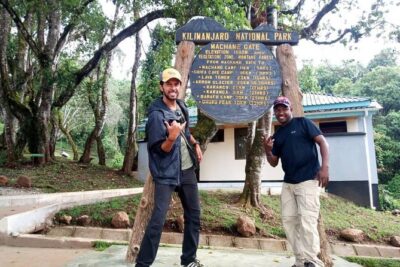
Day one: Machame Gate to Machame Camp
Your climb begins with a drive from Moshi to Machame Gate on Kilimanjaro’s southern side. The supplied schedule describes the drive as approximately 45 hours, which is clearly inconsistent with the rest of the day plan, so confirm the exact transfer time before setting out. The gate is also described as roughly a 20-minute drive from Aishi Machame Hotel.
At the gate, you begin at 5,718 feet and walk for about five to seven hours to Machame Camp at 9,350 feet. This first section passes through the Tropical Rainforest Zone, with dense vegetation and a damp, shaded trail.
The first day is less about distance than about finding your pace. You will likely be carrying a daypack while the support crew handles camp equipment, though you should confirm the porter arrangement and baggage limits directly with the operator.
Machame Camp is a useful first night because it gives you a clear change in altitude without sending you too high too soon. It also sets the rhythm for the week: walk slowly, eat regularly, drink often, and settle into camp before the next morning.
Day two: Heather country and Shira 2 Camp
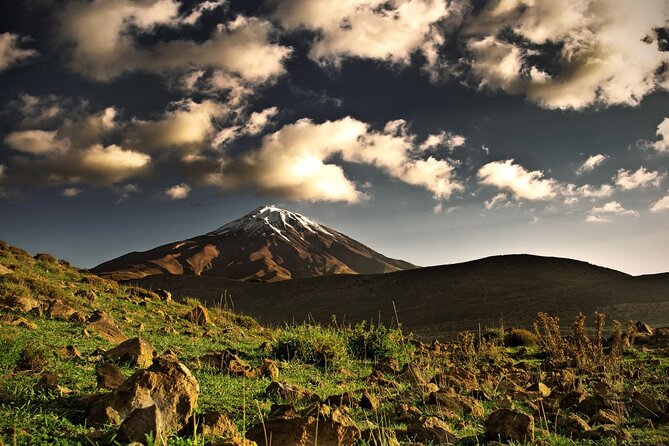
The trail leaves the rainforest and climbs into the Moorland and Heather Zone. Trees become less common, and smaller plants take over. This change is one of the route’s pleasures because you can see the mountain opening up around you.
You walk from Machame Camp to Shira 2 Camp, at 12,621 feet, or 3,847 meters. The day is listed at about eight hours, so it is a substantial climb rather than a gentle transfer between camps.
This is the point where the altitude may begin to affect you. You might notice a headache, slower breathing, or reduced appetite. The itinerary gives you a night at Shira 2 before the higher camps, but there is no spare day built into the schedule. Tell the guide early if you feel unwell rather than trying to hide it.
Shira 2 is also where the trip begins to feel more remote. The forest is behind you, the air is thinner, and the summit still looks far away. That distance is useful: it reminds you that the climb is a gradual process, not one long race to the top.
Day three: Lava Tower, Barranco, and the best acclimatization move
Day three is the route’s cleverest section. From Shira 2, you climb toward Lava Tower for lunch, reaching roughly 15,239 feet, or 4,644 meters, before descending to Barranco Camp at 13,066 feet, or 3,983 meters.
The walking time is about eight hours. You spend part of the day at a higher altitude but sleep lower. That pattern is one reason the seven-day route is preferable to rushing the mountain in fewer days.
After lunch, the scenery becomes drier and more severe. Heather gives way to open, rocky ground, and the mountain begins to feel less like a forest hike and more like a high-altitude expedition.
Barranco is one of the most memorable camps on the route. The Great Breach Wall rises above the camp, and the setting gives you a strong sense of scale. You can study part of tomorrow’s route from camp, which may either excite you or make you wonder what you signed up for.
The main drawback is fatigue. You climb high, descend, and arrive at camp after a long day. Eat even if your appetite is weak, prepare your warm layers before dark, and keep your water close.
More treks and hikes around Kilimanjaro:
- Kilimanjaro climb by Lemosho Route (7-day)
★ 5.0 · 651 reviews - Kilimanjaro Climbing Lemosho Route 8 Days.
★ 5.0 · 186 reviews - 8-Day Small-group Lemosho Kilimanjaro Summit Trekking
★ 5.0 · 186 reviews - Kilimanjaro climb, Lemosho Route (8-day)
★ 5.0 · 148 reviews
Day four: Crossing Barranco Wall to Karanga
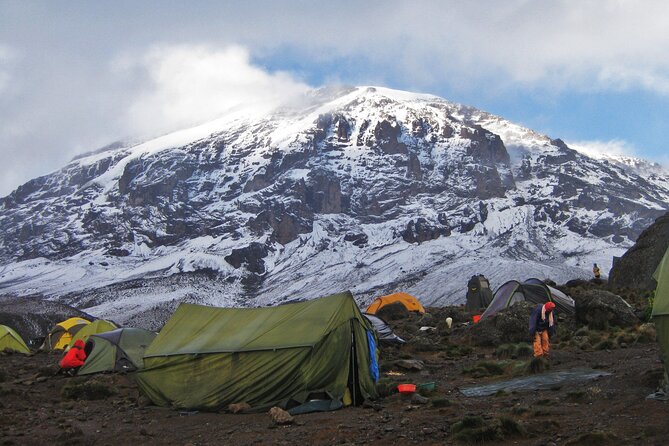
The morning begins with the Barranco Wall. Despite its imposing appearance, the climb is described as nontechnical. You do not need rock-climbing equipment, but you do need balance, patience, and a willingness to move at the guide’s pace.
The guides assist you across the wall, which is especially helpful when the trail narrows or you need to use your hands for stability. This is one of the most engaging parts of the route because it feels more involved than a standard uphill path.
From Barranco, you continue to Karanga Camp at 13,106 feet, or 3,994 meters. The altitude gain is small on paper, and the walking time is listed as four to five hours, though the overall day entry says seven hours. Either way, it is a shorter day than the previous one.
That shorter schedule matters. You can reach camp, rest, eat, and prepare for the higher stages without rushing. Customer accounts connected with Spirit of Kilimanjaro repeatedly praise the guides and the food, with Hussein named as a cook in one account. Meals are included, with seven breakfasts, seven lunches, and six dinners listed.
Day five: Karanga to Barafu Camp
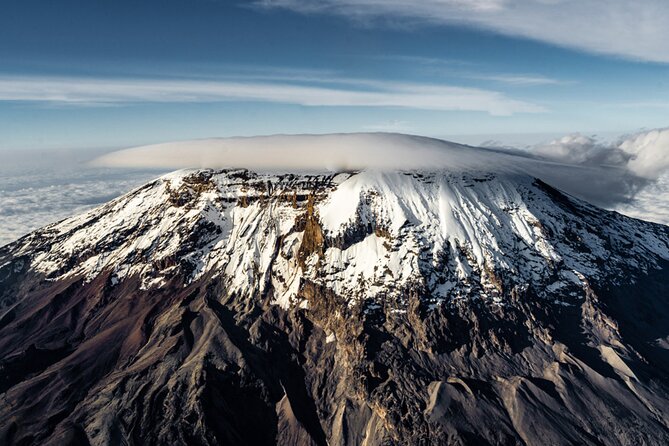
From Karanga, you climb to Barafu Camp at 15,239 feet, or 4,644 meters. The walking time is about four to five hours, with the full day listed at seven hours.
Barafu means ice in Swahili, and the camp marks the final staging point before the summit. The terrain is high, dry, and exposed. You are now close enough to Uhuru Peak to feel the pressure of the next day, but not close enough to underestimate it.
The plan is to rest after reaching camp and go to sleep around 7 p.m. You then wake at about 11 p.m. to prepare for the summit climb. This schedule is awkward by normal standards. A short sleep followed by a night ascent can be one of the hardest parts of the entire trip.
Use the afternoon well. Organize your headlamp, warm clothing, water, snacks, gloves, and any personal items before trying to sleep. The more preparation you finish early, the less you need to think about at 11 p.m.
Day six: Uhuru Peak and the long descent
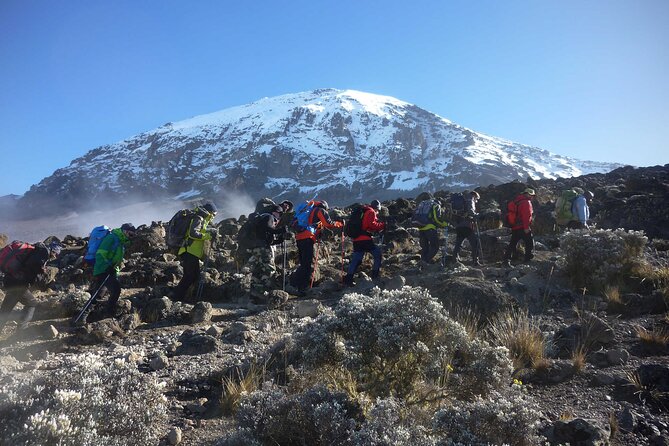
Summit day begins around midnight. From Barafu, the ascent to Uhuru Peak takes about seven hours, putting you near the summit around sunrise.
The schedule describes the climb to the top as roughly five minutes in one place, but that figure plainly applies to a brief stop rather than the full ascent. The realistic timing provided elsewhere is about seven hours up, followed by six to eight hours down to Mweka Camp.
Uhuru Peak sits at 19,341 feet, or 5,895 meters. Reaching it is a major physical effort, and the final hours can feel slow. You may be cold, tired, short of breath, and focused on one step at a time. The guides’ role is especially important here, and customer accounts repeatedly single out the Spirit of Kilimanjaro team for motivation and support.
You spend only a few minutes at the summit before beginning the descent. That is sensible. Photos matter, but staying at the highest point longer than necessary is not the goal.
The descent to Mweka Camp drops you to 10,204 feet, or 3,110 meters, in the Moorland and Heather Zone. It is a very long day, but getting lower is welcome after the summit. Do not assume the descent will feel easy. Tired legs and loose ground can make downhill walking hard on your knees.
Day seven: Mweka Gate and the return to Moshi
After breakfast, you continue down to Mweka Gate at 5,423 feet, or 1,653 meters. The final walk takes about three to four hours.
At the gate, you sign the official Kilimanjaro National Park register and receive a certificate from the head guide. A cold drink follows, then you return by vehicle to the hotel in Moshi. The schedule estimates arrival around mid-afternoon, about 3 p.m., though the stated drive time of roughly three hours should be confirmed with the operator.
This final day is more than paperwork. It gives you time to come down from the summit, say goodbye to the crew, and recognize how much altitude you covered in one week. The route begins in thick forest and ends with a certificate at the park gate, a satisfying finish to a demanding trip.
Guides, porters, food, and group size
Spirit of Kilimanjaro is the named provider. Customer accounts connected with the company praise William and guide teams that include Rama, David, Zachariah, Joseph, Paul, Izadini, and Donovan. One account describes William as having completed hundreds of ascents, while several accounts praise the guides’ encouragement and the cook’s meals.
Names and crew assignments can change, so ask who will lead your departure. Also confirm how many people will be in your group. The stated maximum is 100, which is a very large possible group for a mountain trek, though your actual departure may be much smaller.
Meals are listed clearly: seven breakfasts, seven lunches, and six dinners. Guides, porters, and cooks are described in customer accounts, but the supplied price details do not spell out every staffing or equipment item. Ask about porter support, luggage weight limits, park fees, camping gear, airport or hotel transfers, and customary tips before booking.
Is $2,565 a fair price?
At $2,565 per person, this is a major purchase, but the value depends on what is covered. Seven days on the mountain, daily meals, route guiding, camps, and the logistics of moving from Moshi to the gate and back can make the price reasonable.
The problem is not necessarily the amount. It is the missing detail. Visa costs and international flights are excluded, and the supplied information does not clearly list every park charge, transfer, equipment item, or tip. Compare the final cost, not just the headline price.
The seven-day schedule itself is worth paying for if it improves your chance of adjusting to altitude. Saving money with a shorter climb can be false economy if the faster pace leaves you exhausted or unable to continue.
Who should book this climb?
I would point this trip toward a physically active person who wants the classic Machame approach and can accept basic camping conditions. You need enough stamina for repeated five-to-eight-hour walking days and the mental toughness for a midnight start followed by a long summit day.
It is also a good choice if scenery matters to you. The route gives you rainforest, heather, open moorland, volcanic rock, the Barranco Wall, and the dry Arctic zone near the summit.
I would be cautious if you dislike camping, struggle with long uphill walks, or want a relaxed holiday in Tanzania. The start time is unusual, the altitude is serious, and the final summit day is punishing even with a strong support team.
The operator offers pickup, confirmation is received at booking, and the activity is near public transportation. Free cancellation is available when you cancel at least 24 hours before the local start time. Changes or cancellations inside that window are not accepted for a refund.
Should you book the seven-day Machame climb?
Book it if you want a scenic, well-paced route and you value the extra acclimatization day. The Lava Tower to Barranco section, the Barranco Wall, and the sunrise summit attempt give this climb a strong mix of scenery and challenge.
Before paying, ask for the exact transfer schedule, group size, inclusions, porter arrangements, park fees, gear list, and guide assignment. If those answers are clear and you are prepared for the midnight summit start, the seven-day plan is the more sensible Machame choice over six days.
FAQ
How long is the Kilimanjaro Machame Route experience?
The climb lasts approximately seven days, beginning near Moshi and ending at Mweka Gate before the return to a hotel in Moshi.
What time does the experience start?
The stated start time is 12:00 a.m. The summit section begins around midnight after you wake at Barafu Camp at approximately 11 p.m. the previous night.
What is included in the price?
The listed inclusions are seven breakfasts, seven lunches, and six dinners. Pickup is offered. International flights and a visa are not included.
How high is Uhuru Peak?
Uhuru Peak is listed at 19,341 feet, or 5,895 meters.
Is the Barranco Wall a technical climb?
No. The Barranco Wall section is described as nontechnical, and guides assist you across it.
What level of fitness do I need?
You should have a moderate level of physical fitness. The route includes several five-to-eight-hour walking days, a midnight summit ascent, and a six-to-eight-hour descent to Mweka Camp.
Can I cancel for a full refund?
Yes, if you cancel at least 24 hours before the experience start time. Cancellations or changes made less than 24 hours before the local start time are not accepted for a refund.
More Seven-Day Trips in Kilimanjaro
- 7-Day Machame Kilimanjaro Summit Tour from Arusha
★ 5.0 · 125 reviews - 7 Days Kilimanjaro via Machame route affordable price
★ 5.0 · 110 reviews - Private Kilimanjaro Hike 7 Day Lemosho Route
★ 5.0 · 60 reviews - 7 Days Machame route – Kilimanjaro
★ 5.0 · 45 reviews
Just added around Kilimanjaro
- 6 days Machame route climbing Mt.Kilimanjaro★ 5.0 · 8 reviews
- Mt Kilimanjaro 6 days Marangu route hike★ 5.0 · 3 reviews
- machame route★ 5.0 · 16 reviews
- Private Cycle to Kilimanjaro Bike Park Safari★ 5.0 · 6 reviews
- West Kilimanjaro cycling Adventures★ 4.5 · 8 reviews
- Kilimanjaro Climb • Marangu Route ~ 9 Day★ 5.0 · 4 reviews
- 3 Days Private E-Bike Tour in West Kilimanjaro★ 5.0 · 3 reviews
- Kilimanjaro Climb • Machame Route ~ 10 Day★ 5.0 · 6 reviews
Machame Route Climbs, compared.
The Best of Machame Route in 6 Days: Your World’s Summit Guide
Read our review →Browse the lists this tour appears in