
Reviewed · MACHAME ROUTE CLIMBS
Mountain Kilimanjaro Climbing 7 Days Machame Route
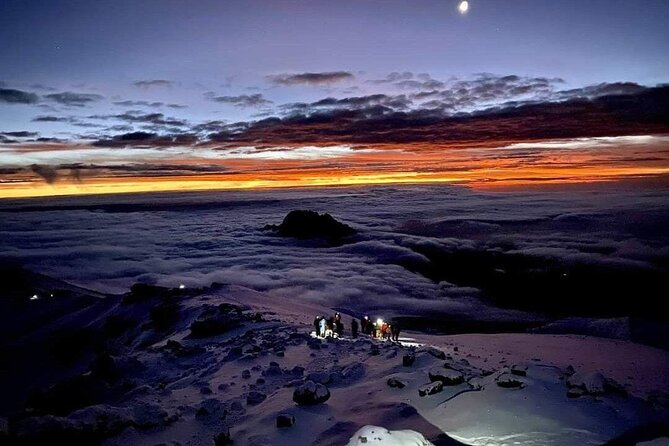
The hardest and most memorable part comes on Day 6, when you leave Barafu Camp around midnight for a long climb to Uhuru Peak at 5,895 meters. You hike by headlamp over steep scree, reach Stella Point near sunrise, then continue along the crater rim before descending to camp.
I like the seven-day schedule, which gives you more time to adjust to thin air than the shorter version. I also like the southern circuit, with changing views of Kibo, Mawenzi, Mount Meru, glaciers, and the Shira Plateau.
The main drawback is plain: this is a demanding trek. You sleep in tents, walk for up to 15 hours on summit day, and spend several days above 3,900 meters. The route is not technical climbing, but fitness and altitude tolerance matter.
Key points to know
- Midnight summit start: Expect a steep, cold, exhausting climb from Barafu Camp to Stella Point and Uhuru Peak.
- Machame means camping: You sleep in tents instead of mountain huts, with a crew of porters supporting the climb.
- Seven days helps with altitude: The route uses the walk-high, sleep-low approach on Day 3.
- The route keeps changing: Rainforest, moorland, high scree, glaciers, ravines, and crater views all appear along the way.
- A small maximum group: The activity accepts no more than 15 climbers.
- Moshi is the base: Pickup is offered, and the climb begins and ends with transport connected to Moshi.
Why the Machame Route feels like a real mountain journey
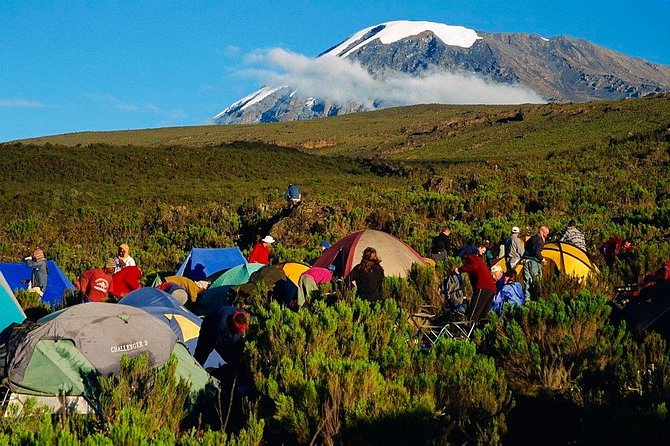
The Machame Route is often called the Whiskey route, a nickname that reflects its tougher reputation beside the easier Marangu route. That comparison is useful, but do not treat Machame as a technical mountaineering trip. You do not need rock-climbing skills for the Barranco Wall or the summit trail.
You do need patience, steady legs, and a willingness to move slowly. The route climbs through several distinct zones, and each day asks something different from you. The forest is damp and sometimes muddy. The upper mountain is dry, exposed, and cold. Summit night is a test of endurance more than speed.
The route also circles the southern side of Kilimanjaro before approaching the summit from the east. That gives you changing views instead of repeating the same path every day. You may see Mount Meru rising behind Arusha and Moshi, then later face Mawenzi’s sharp profile from the upper mountain.
Exceed Expectations Tours and Safari handles the trip from Moshi. Oscar Swai is identified as the company’s director, and the company’s past correspondence places strong attention on care, preparation, and crew support. The available information does not name individual mountain guides, so you should ask for the guide and porter details before departure.
More Machame Route climbs:
- Kilimanjaro climb, Machame Route (7-day)
★ 5.0 · 262 reviews - Climbing Kilimanjaro – Machame Route
★ 5.0 · 170 reviews - Climbing Kilimanjaro through 7 days Machame Route
★ 5.0 · 151 reviews
Day 1: Machame Gate and the wet rainforest
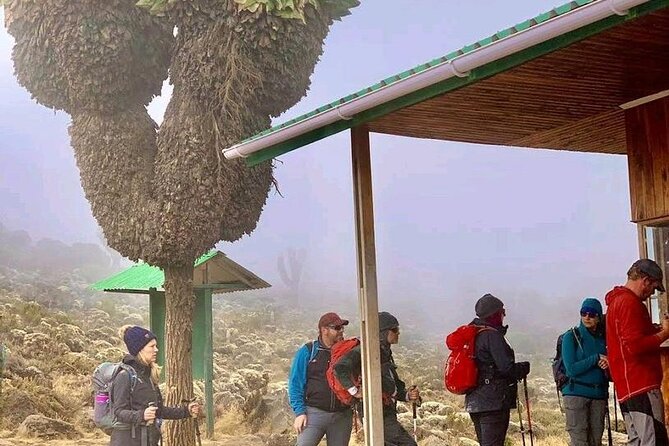
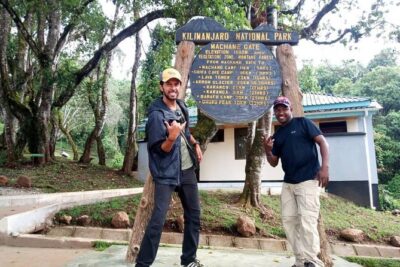
Your day begins with roughly a one-hour drive from Moshi to Machame Gate. Park formalities take place there, and you meet the porter crew before setting off into the forest.
The first climb lasts about six hours. The trail rises steadily through dense rainforest, one of the most pleasant sections for anyone who enjoys shade, birds, and thick plant growth. It also gives you a gentle introduction to the pace you will use for the rest of the week.
Do not expect a polished walking path. This section is less heavily used than some other routes, so parts may feel overgrown. Rain can leave the trail wet and muddy underfoot. Waterproof boots, gaiters, and trekking poles would be sensible choices, though the supplied information does not specify equipment requirements.
The first day is valuable because it sets the rhythm. You are not racing toward altitude yet. You are learning how slowly you need to walk, how much water you want to carry, and how your body responds to a full day on foot.
Day 2: Shira Plateau and the first wide views
The second day continues upward through the forest before a steeper climb leads onto the Shira Plateau. The walking time is about five hours, so this is shorter than Day 1, but the gain in height makes it no easy stroll.
The reward is a major change in scenery. Trees thin out, the air feels cooler, and views open toward Kilimanjaro’s upper slopes. Looking back, you can see Mount Meru rising in the distance above the Arusha area.
I like this part of the route because it shows how quickly Kilimanjaro changes. In two days, you move from damp forest to open high country. That shift also reminds you that every scenic gain comes with thinner air.
The plateau camp can feel exposed compared with the forest. You may want warm layers close at hand, even if the morning began in mild conditions near Moshi.
Day 3: Lava Tower and a useful altitude lesson
Day 3 is one of the most important days for acclimatization. You walk for about eight hours across high moorland, traverse the southwest side of Kilimanjaro, and pass below Lava Tower and the final section of the Western Breach.
The route reaches about 4,600 meters before you sleep lower. This is the classic walk-high, sleep-low pattern, and it is one reason the seven-day plan is more appealing than the six-day minimum. Your body gets time at altitude without spending the night at the highest point reached that day.
This is also where the Machame Route begins to feel serious. The scenery is open and stark, with little shelter and fewer trees. The walking may not be technically difficult, but the height can make ordinary uphill movement feel slow.
Pay attention to your body and communicate clearly with the mountain crew. A schedule can help your chances, but it cannot guarantee that you will avoid altitude problems. The information supplied does not state a medical protocol, so ask the operator how they handle symptoms before you book.
More treks and hikes around Kilimanjaro:
- Kilimanjaro climb by Lemosho Route (7-day)
★ 5.0 · 651 reviews - 8-Day Small-group Lemosho Kilimanjaro Summit Trekking
★ 5.0 · 186 reviews - Kilimanjaro Climbing Lemosho Route 8 Days.
★ 5.0 · 186 reviews - Kilimanjaro climb, Lemosho Route (8-day)
★ 5.0 · 148 reviews
Day 4: Barranco Wall and Karanga Camp
Day 4 starts with a descent into the Great Barranco, a huge ravine, followed by the climb up Barranco Wall. The wall divides you from the southeastern slopes of Kibo and is one of the route’s best-known sections.
This is a climb over rock, but it is not described as technical climbing. You use your hands and feet at times, and the work is long and tiring. A slow pace is your friend here. You will be surrounded by steep rock and high mountain scenery rather than forest.
After the wall, the trail passes below the Heim and Kersten glaciers before reaching Karanga Valley. From there, you climb again to Karanga Camp at about 3,963 meters. The walking time is listed at roughly five hours, though the height and rough ground can make the day feel longer.
If you are feeling strong, the schedule includes an acclimatization walk to about 4,200 meters in the afternoon, followed by a return to camp. That extra climb is useful, but it should not become a contest. Rest matters more than proving a point at this stage.
Day 5: The stark climb to Barafu Camp
Day 5 is shorter on paper, about three hours, but it takes you to Barafu Camp at approximately 4,640 meters. The trail crosses steep, barren scree with no vegetation. At this point, the mountain feels stripped down to rock, dust, wind, and sky.
The climb can feel tough because of the altitude. Once you reach camp, the plan is to eat, rest, stay hydrated, and keep warm. Dinner comes early, and you try to sleep before waking around 11 p.m. or midnight.
This is not a sightseeing afternoon. Save your energy. Organize your summit clothing and headlamp, drink what you can, and keep your sleeping area ready for a fast departure. The supplied details do not state what meals, sleeping gear, or equipment are included, so confirm those points with Exceed Expectations Tours and Safari.
Barafu is the psychological turning point. You are close to the summit, but the hardest day is still ahead. Resting well here may matter more than squeezing in extra photographs or wandering around camp.
Day 6: Stella Point, Uhuru Peak, and a 15-hour push
Summit day begins around midnight. You climb steeply over scree toward the glaciers, gaining a great deal of height over a short distance. The ascent to Stella Point typically takes four to five hours in the stated schedule.
The timing aims to put you on the crater rim at Stella Point around sunrise, at an altitude of about 5,739 meters. From there, the route continues for about another hour to Uhuru Peak, the summit at 5,895 meters.
The setting is the payoff: ice cliffs inside the crater, views toward Mawenzi Peak, and the feeling of reaching Africa’s highest point. The emotional reward is large, but you should not underestimate the physical cost. Cold, darkness, low oxygen, and a long climb all arrive at once.
After reaching the summit, you return to Stella Point, descend the scree to Barafu Camp for breakfast, and continue down to Millennium Camp. The total walking time is listed at 15 hours. That number tells you more than any dramatic description could. You need to be prepared for a very long day with little chance to relax until the final camp.
The summit is not the end of the effort. The descent can be hard on tired knees, and the loose scree requires care. Trekking poles may help, but equipment advice should be confirmed with the operator.
Day 7: Mweka Gate and the return to Moshi
The final day takes about six hours as you descend through rainforest to Mweka Gate. After completing park formalities, you receive a certificate and meet the vehicle for the return to your Moshi hotel.
This is a kinder finish than another high-altitude day, but your legs may still feel the effects of the summit push. The forest also feels different on the way down. After the exposed upper mountain, shade and thicker air are welcome.
The return to Moshi is part of the value here. A hot shower and a proper hotel room become a small luxury after nearly a week of tents, cold mornings, and long walks.
What the $2,564.11 price means
At $2,564.11 per person, this is a major trip expense, but the price needs to be judged against the length and structure of the climb. You receive a seven-day mountain program, park access for each listed day, a porter crew, transport connected with the gates, and the support of a tour company based in Moshi.
The seven-day format also offers practical value. The extra day compared with the six-day minimum gives you a more gradual adjustment schedule and places less pressure on the climb. On Kilimanjaro, that can matter more than saving a day.
Still, do not assume the price covers every item you need. The supplied details do not specify flights, hotel nights, meals throughout the trip, tips, personal gear, travel insurance, medical evacuation cover, or airport transfers. Ask for a written list of inclusions before paying.
Past booking correspondence connected with Oscar Swai and Exceed Expectations Tours and Safari describes pricing as reasonable and competitive. That is useful context, but you should compare the actual inclusions rather than comparing headline prices alone.
Group size, pickup, and cancellation details
The maximum group size is 15 climbers. That is small enough to keep the trip from feeling like a mass procession, though the size of your actual departure group is not stated. Ask how many climbers are booked for your dates.
Pickup is offered, and the meeting time is listed as 12:00 a.m. That midnight time applies to the summit schedule, so confirm the exact pickup time and location with the operator. You receive a mobile ticket, and confirmation is provided at booking.
Free cancellation is available if you cancel at least 24 hours before the experience start time. Cancellations inside that window are not refunded, and late changes are not accepted. The cut-off follows local time.
Who should book this Kilimanjaro climb?
This trip suits you if you want the classic Machame Route experience, prefer a longer acclimatization plan, and accept tent camping and demanding walking days. It is a good fit for someone who values changing scenery and a full mountain crossing rather than a short, easy approach.
You should have a moderate level of physical fitness, as stated by the operator. That phrase should not be read as permission to arrive unprepared. The itinerary includes steep trails, muddy forest, high scree, a rocky wall, and a 15-hour summit day.
You may want a different option if you dislike camping, struggle with steep descents, or need a fixed guarantee of reaching the summit. Altitude affects people differently, and even a well-designed schedule cannot promise success.
Should you book it?
I would choose this seven-day Machame climb if you want the Whiskey route and can give yourself time to prepare for the altitude. The strongest reasons are the changing route, the walk-high, sleep-low day near Lava Tower, and the extra acclimatization time built into the schedule.
Before booking, get clear answers about meals, tents, equipment, guide names, porter arrangements, tips, insurance, and emergency procedures. If those details match your needs, the price offers a serious, well-supported route to Uhuru Peak. If your main goal is comfort or a short itinerary, this is probably not the mountain plan for you.
FAQ
Where does the Kilimanjaro climb begin?
The climb begins at Machame Gate, about a one-hour drive from Moshi.
How long is the Machame Route tour?
The experience lasts approximately seven days, with six nights on the mountain according to the route description.
What time does the experience start?
The listed start time is 12:00 a.m. Confirm the exact meeting and pickup details with the operator.
Is pickup offered?
Yes. Pickup is offered, and the climb returns you to your Moshi hotel after reaching Mweka Gate.
How high is Uhuru Peak?
Uhuru Peak is listed at 5,895 meters.
How long is summit day?
Day 6 is listed at about 15 hours, beginning around midnight and ending at Millennium Camp after the summit descent.
How large can the group be?
The maximum group size is 15 climbers.
What is the cancellation policy?
You can cancel for a full refund up to 24 hours before the experience start time. Cancellations made less than 24 hours before the start are not refunded.
More Seven-Day Trips in Kilimanjaro
- 7-Day Machame Kilimanjaro Summit Tour from Arusha
★ 5.0 · 125 reviews - 7 Days Kilimanjaro via Machame route affordable price
★ 5.0 · 110 reviews - Private Kilimanjaro Hike 7 Day Lemosho Route
★ 5.0 · 60 reviews - 7 Days Machame route – Kilimanjaro
★ 5.0 · 45 reviews
Just added around Kilimanjaro
- 6 days Machame route climbing Mt.Kilimanjaro★ 5.0 · 8 reviews
- machame route★ 5.0 · 16 reviews
- Mt Kilimanjaro 6 days Marangu route hike★ 5.0 · 3 reviews
- Private Cycle to Kilimanjaro Bike Park Safari★ 5.0 · 6 reviews
- West Kilimanjaro cycling Adventures★ 4.5 · 8 reviews
- Kilimanjaro Climb • Marangu Route ~ 9 Day★ 5.0 · 4 reviews
- 3 Days Private E-Bike Tour in West Kilimanjaro★ 5.0 · 3 reviews
- Kilimanjaro Climb • Machame Route ~ 10 Day★ 5.0 · 6 reviews
Machame Route Climbs, compared.
The Best of Machame Route in 6 Days: Your World’s Summit Guide
Read our review →Browse the lists this tour appears in