
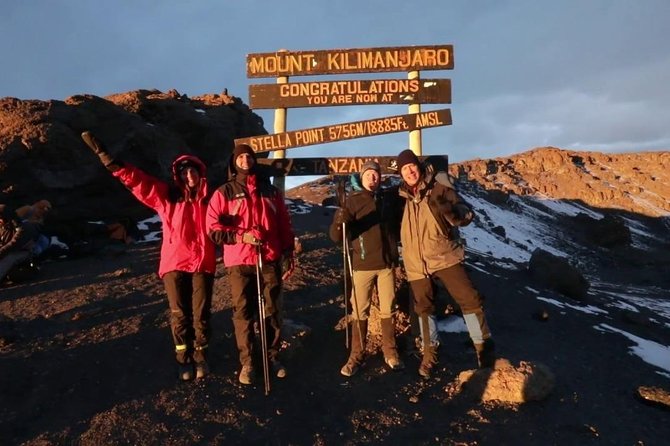
Reviewed · MACHAME ROUTE CLIMBS
Mount Kilimanjaro 6 days – Machame route
The most memorable part of this climb is the route’s changing scenery: rainforest, high plateau, volcanic rock, glaciers, and sunrise above 5,895 meters. The Machame Route gives you a real mountain journey rather than a quick summit attempt, with an important acclimatization day at Lava Tower and Barranco.
I like the thoughtful five-night camping plan and the large amount included for $2,220. I also like the strong crew setup, with guide Emmanuel leading one successful group and Wence handling arrangements in Moshi. The main drawback is the schedule: six days is demanding, and summit day can last about 14 hours.
Key points to know before booking
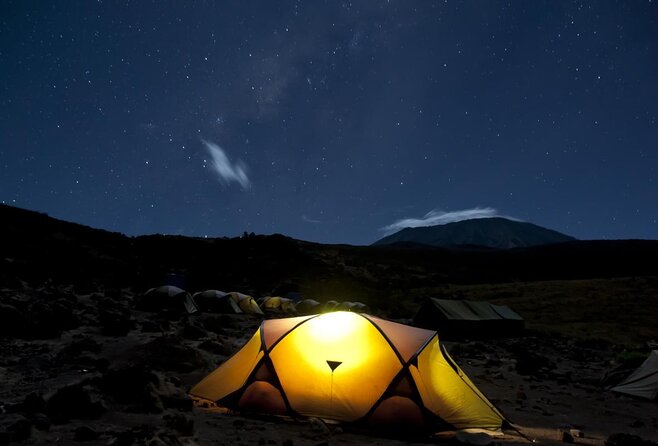
- Machame Gate to Mweka Gate: The route covers about 62 kilometers, or 37 miles, from start to finish.
- A serious summit day: You begin around midnight to 2 a.m., climb to 5,895 meters, then descend for a total of about 14 hours.
- Useful acclimatization: Day three climbs to Lava Tower at roughly 4,650 meters before dropping to Barranco Camp.
- Much is included: Airport transfers, two Moshi hotel nights, camping gear, meals, guides, porters, a cook, and emergency oxygen are covered.
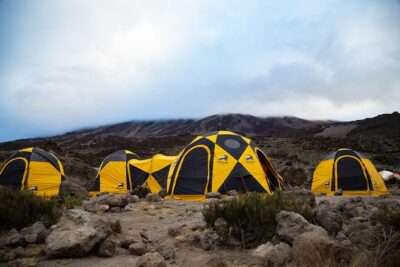
- Camping comfort: Tents, sleeping mattresses, camp chairs, tables, and daily wash water are provided.
- Bring your own extras: Personal trekking gear, snacks, medicine, water-purifying tablets, drinks, and a portable toilet are not included.
What the $2,220 price really covers
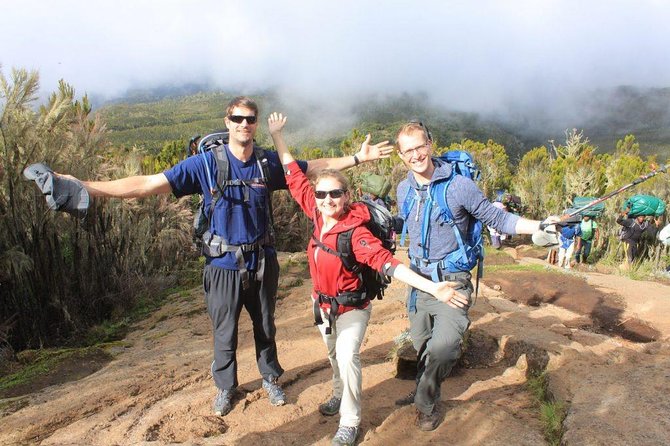
At $2,220 per person, this is not simply a guided hike. The price covers the mountain crew, park fees, tents, meals, transfers, hotel nights, and the practical work needed to move a camp up and down Kilimanjaro.
You receive airport transfers from Kilimanjaro International Airport to Moshi and back again. You also get the night before and the night after the climb at a Moshi hotel, with dinner and breakfast included. That saves you from arranging separate transport and accommodation around a physically exhausting trip.
On the mountain, the package includes a qualified guide, assistant guides, porters, and a cook. It also includes camping equipment, sleeping mattresses, camp furniture, and water for washing each day. Emergency oxygen and a basic first aid kit are supplied for emergencies only, not as tools to help you reach the summit.
That last point matters. Oxygen is not a substitute for acclimatization, and this six-day schedule still asks a lot of your body. You need moderate physical fitness, and some hiking experience will help, although the route is also used by fit first-time trekkers.
The price does not include flights, visas, health or travel insurance, personal clothing and equipment, alcoholic or non-alcoholic drinks, snacks, medicine, or water-purifying tablets. A portable toilet is optional, but strongly recommended. I would treat it as a serious comfort upgrade, especially during five nights of camping.
More Machame Route climbs:
- Kilimanjaro climb, Machame Route (7-day)
★ 5.0 · 262 reviews - Climbing Kilimanjaro – Machame Route
★ 5.0 · 170 reviews - Climbing Kilimanjaro through 7 days Machame Route
★ 5.0 · 151 reviews
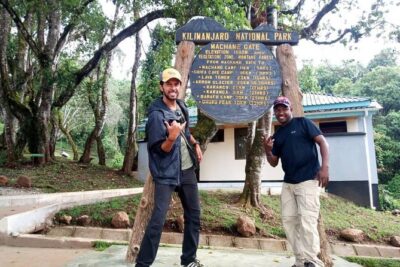
Day 1: Machame Gate to rainforest camp
Your climb begins with a drive from Moshi to Mount Kilimanjaro National Park. The journey takes about 45 minutes and passes through Machame village on the mountain’s lower slopes.
From Machame Gate, the trail enters rainforest and follows a winding ridge toward Machame Camp. The climb runs from about 1,830 meters to 3,050 meters, covering 11 kilometers in roughly five to six hours.
This is a beautiful opening, but it is not always a dry or easy walk. Lower sections can be muddy and slippery, so gaiters and trekking poles are useful from the start. Keep rain gear handy even if the morning begins clear.
The first day gives you a gentle introduction to the crew system. Porters carry the main camping equipment, while you hike with your personal daypack. At camp, you can expect tents, a sleeping mattress, camp chairs, tables, dinner, and a place to wash up.
Day 2: Shira Camp and the end of the forest
After breakfast, you leave the forest behind and continue uphill across a rocky ridge. The route covers about 5 kilometers and takes four to five hours, climbing from 3,050 meters to approximately 3,850 meters.
The trail crosses a valley and follows a steep, rocky section before turning west toward a river gorge. Compared with day one, the vegetation becomes more open and the mountain begins to feel larger. You no longer have the same cover from the forest, so sun protection and warm layers matter more.
The short distance does not mean the day is effortless. The gain in altitude is noticeable, and you should keep your pace slow. On Kilimanjaro, rushing early can make later days harder.
Shira Camp is important because it marks your first night on the high plateau. The route now feels more exposed, and the air is thinner. Follow the guide’s pace rather than trying to prove anything to the group.
Day 3: Lava Tower, Barranco, and the best acclimatization day
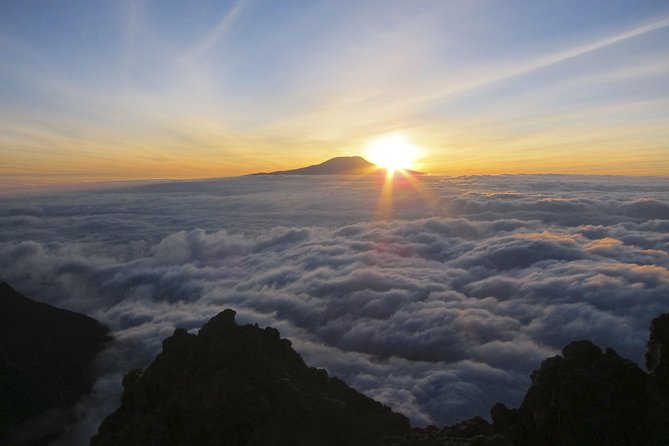
Day three is one of the smartest parts of the route. You walk about 10 kilometers in five to six hours, starting at roughly 3,850 meters and finishing at about 4,000 meters. The highest point during the day is Lava Tower, also called the Shark’s Tooth, at approximately 4,650 meters.
The trail heads east across the Shira Plateau, passes a junction toward Kibo, and then turns southeast toward Lava Tower. After the tower, another junction leads toward Arrow Glacier before the path descends to Barranco Camp.
Although you finish near the same altitude where you started, your body has spent time higher up. That climb high and sleep lower pattern is valuable preparation for the summit. It is also the day when you may start to understand how altitude affects your walking rhythm.
Barranco Camp is one of the more memorable overnight locations on the route. You arrive after a long climb and descent, with the Barranco Wall nearby and the summit area visible in the distance. The day asks for patience, but it gives you a useful chance to adapt before the harder stages.
More six-day trips in Kilimanjaro:
- Kilimanjaro climb, Lemosho Route (6-day)
★ 5.0 · 129 reviews - Kilimanjaro climb, Marangu route (6-day)
★ 5.0 · 72 reviews - 6 Days Tanzania Classic Safari
★ 5.0 · 52 reviews - The Best of Machame Route in 6 Days: Your World’s Summit Guide
★ 5.0 · 44 reviews
Day 4: Barranco to Barafu Camp
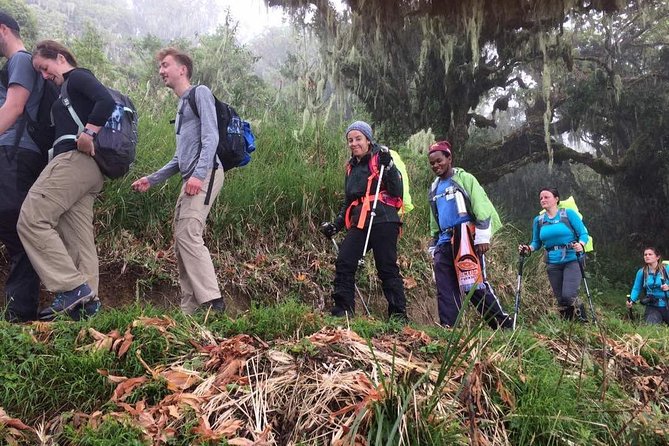
Day four covers 9 kilometers and takes about seven hours. You climb from approximately 4,050 meters to Barafu Camp at about 4,700 meters.
The route completes the southern circuit, giving you views of the summit from different angles. This is a good day for steady walking rather than speed. The altitude makes every uphill section feel longer, and you need to save energy for the following night.
Barafu is the launch point for the summit attempt. Once you arrive, the plan is simple: eat, rest, organize your clothes and equipment, and try to sleep before the midnight start. That rest period can be awkward because dinner comes early and your body may not feel ready for bed. Still, even a few hours of quiet rest helps.
You should prepare your summit clothing before lying down. Keep warm layers, gloves, a headlamp, water, snacks, and any personal medicine close by. The early start means you do not want to search through bags in the dark.
Day 5: The midnight climb to Uhuru Peak
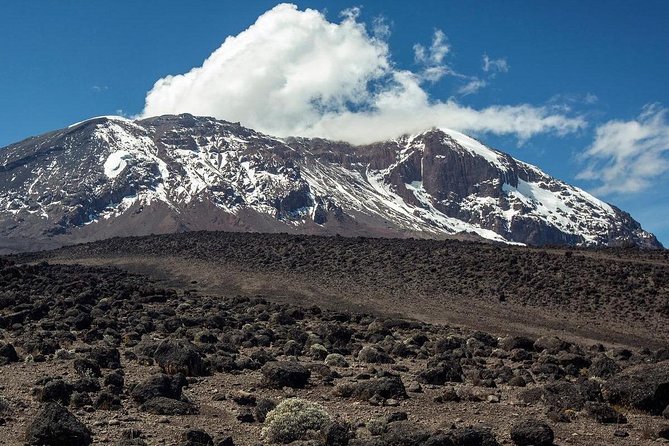
Summit day is the heart of the trip and the hardest section by a wide margin. You begin between midnight and 2 a.m., climb from Barafu at 4,700 meters to Uhuru Peak at 5,895 meters, and then descend all the way to about 3,090 meters.
The summit ascent covers roughly 5 kilometers, but it takes several hours because of the altitude and steep scree. The route heads northwest between the Rebmann and Ratzel glaciers toward Stella Point on the crater rim.
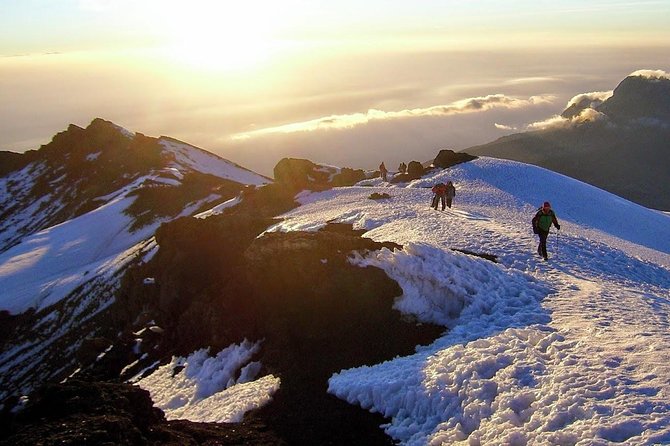
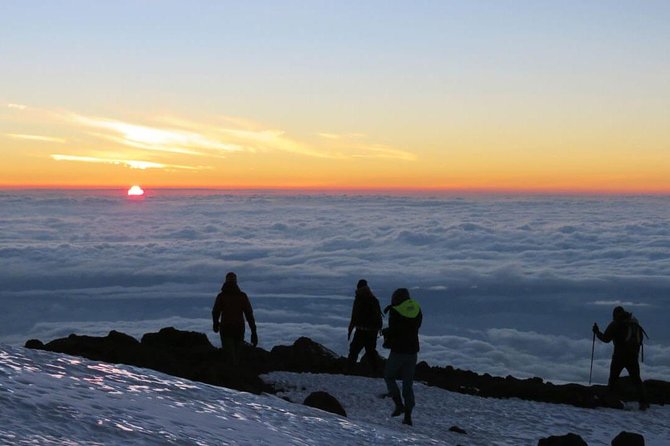
Stella Point is reached after the most demanding part of the climb. You stop briefly there, and the sunrise can be spectacular. Faster walkers may see the sun from the summit, while others watch it appear from the crater rim. Do not treat the timing as a race. Reaching Stella Point safely is already a major achievement.
From Stella Point, the summit is about another hour away. Snow may appear along this section, and conditions can change quickly. At Uhuru Peak, you reach the highest point in Africa at 5,895 meters before beginning the descent.
The full day lasts about 14 hours. After the summit, you descend 13 kilometers to the next camp, a long drop that can be hard on tired knees. This is where trekking poles become especially useful.
Emergency oxygen is available if needed, but it is intended for emergencies only. The trip does not promise oxygen-assisted summiting, and you should understand that altitude sickness can force a descent. The mountain decides the outcome more than determination does.
Day 6: Mweka Trail and the return to Moshi
The final day descends from about 3,090 meters to 1,680 meters. You walk approximately 10 kilometers in three to four hours along the Mweka Trail.
The lower section can be wet and muddy, much like the first day. Gaiters and trekking poles remain useful. You may be comfortable in shorts and a T-shirt at lower elevations, but keep rain gear and warmer clothing in your daypack because conditions can change as you descend.
At Mweka Park Gate, you receive your summit certificates. From there, the route continues for about another hour to Mweka Village, where a vehicle meets you for the roughly 30-minute drive back to your Moshi hotel.
That transfer is a welcome finish. After the long summit day and final descent, you will want a shower, a proper meal, and a bed. The included post-climb hotel night gives you time to recover before your onward journey.
The crew and camp routine
A Kilimanjaro climb depends heavily on the mountain crew. This trip includes a lead guide, assistant guides, porters, and a cook, with salaries set according to Kilimanjaro National Park guidelines.
Wence handles the local arrangements, and Emmanuel has led a successful Machame group. Other crew members praised for their work include Isaya, Jumanne, Ngwasuma, the cook, the porters, and Yahya. The strongest pattern in the feedback is clear: the crew’s motivation, food, and camp service are major parts of the experience.
Meals are included for five dinners, six lunches, and five breakfasts. Food on a mountain is not a minor detail. A good meal gives you energy and helps make the cold evenings and long walking days easier. You should still bring your own snacks, since snacks are not included.
Daily washing water is provided, but do not expect hotel-style facilities. You are camping at high altitude. The portable toilet costs extra, yet it is highly recommended for comfort and privacy.
Who should choose this six-day route
This trip suits you if you want a classic Kilimanjaro route with varied scenery and a private group arrangement. The activity is listed as private, so only your group participates. That can make pacing and communication simpler than joining a large mixed group.
You should have moderate physical fitness and be comfortable walking for several hours on consecutive days. Previous trekking experience helps, but it is not presented as a strict requirement. First-time trekkers can manage the route if they prepare properly and accept a slow pace.
The six-day format is appealing because it keeps the trip compact. The tradeoff is that you have less time to adapt to altitude than on a longer itinerary. Day three helps, but you still need to take symptoms seriously and follow the guide’s instructions.
This is not a good choice if you want a relaxed holiday with short walks. It is also not ideal if you dislike camping, early starts, mud, long descents, or uncertain summit conditions.
Practical preparation before you arrive
Use proper hiking boots, warm layers, rain gear, gloves, and a headlamp. Bring gaiters and trekking poles, since both the rainforest and Mweka descent can be wet and slippery.
Pack personal medicine, snacks, and water-purifying tablets because they are not supplied. Alcoholic and non-alcoholic drinks are also your responsibility. Keep a warm layer and rain gear in your daypack instead of burying them in luggage carried by porters.
The meeting point is Machame Gate in Mount Kilimanjaro National Park. Airport pickup and the return airport transfer are included, along with Moshi hotel nights before and after the climb. Confirmation is provided at booking, and free cancellation is available up to 24 hours before the scheduled start time.
Should you book the Machame Route?
I would choose this trip if you want a well-supported Kilimanjaro climb with a clear six-day plan, strong camping provisions, and airport and hotel logistics handled for you. The crew structure, included meals, and acclimatization day give the package solid value at $2,220.
I would pause if you are new to high-altitude hiking and can afford extra time. Six days is workable, but it leaves little room for a slow summit attempt or an unexpected delay. You should also budget for personal equipment, snacks, drinks, insurance, and the optional portable toilet.
Book it if you are fit, ready for a very long summit day, and willing to walk slowly. Choose a longer climb instead if altitude is your main concern or you want a larger margin for acclimatization.
FAQ
How long is the Machame Route?
The route is approximately 62 kilometers, or 37 miles, from gate to gate.
How many days does the climb take?
The climb takes approximately six days, including five nights on the mountain and the return to Moshi.
What is the highest point reached?
The summit is Uhuru Peak at 5,895 meters.
How long is summit day?
Summit day takes about 14 hours. You climb approximately 5 kilometers to the summit and descend about 13 kilometers to the next camp.
Are airport transfers included?
Yes. Return transfers between Kilimanjaro Airport and Moshi are included.
Are hotel nights included?
Yes. The night before and the night after the climb are included, with dinner and breakfast.
Is camping equipment provided?
Yes. Tents, camp chairs, tables, sleeping mattresses, and daily washing water are provided.
Is a portable toilet included?
No. A portable toilet is optional, but it is highly recommended.
Just added around Kilimanjaro
- 6 days Machame route climbing Mt.Kilimanjaro★ 5.0 · 8 reviews
- Mt Kilimanjaro 6 days Marangu route hike★ 5.0 · 3 reviews
- machame route★ 5.0 · 16 reviews
- Private Cycle to Kilimanjaro Bike Park Safari★ 5.0 · 6 reviews
- West Kilimanjaro cycling Adventures★ 4.5 · 8 reviews
- Kilimanjaro Climb • Marangu Route ~ 9 Day★ 5.0 · 4 reviews
- 3 Days Private E-Bike Tour in West Kilimanjaro★ 5.0 · 3 reviews
- Kilimanjaro Climb • Machame Route ~ 10 Day★ 5.0 · 6 reviews
Machame Route Climbs, compared.
The Best of Machame Route in 6 Days: Your World’s Summit Guide
Read our review →Browse the lists this tour appears in