
Reviewed · MACHAME ROUTE CLIMBS
Kilimanjaro Climb Via Machame Route
Kilimanjaro’s Machame Route earns its Whiskey nickname honestly: it is scenic, demanding, and not meant to be rushed. You climb from rainforest to Shira Plateau, cross the Southern Circuit, tackle Barranco Wall, then make the hard midnight push from Barafu Camp to Uhuru Peak at 19,341 feet.
I like two things here. First, the scenery changes almost daily, from damp forest to open moorland and strange alpine desert. Second, the route gives you a useful acclimatization pattern by climbing to Lava Tower before dropping to Barranco Camp. The catch is simple: seven days is a tough schedule, especially for anyone new to high-altitude hiking.
Key points at a glance
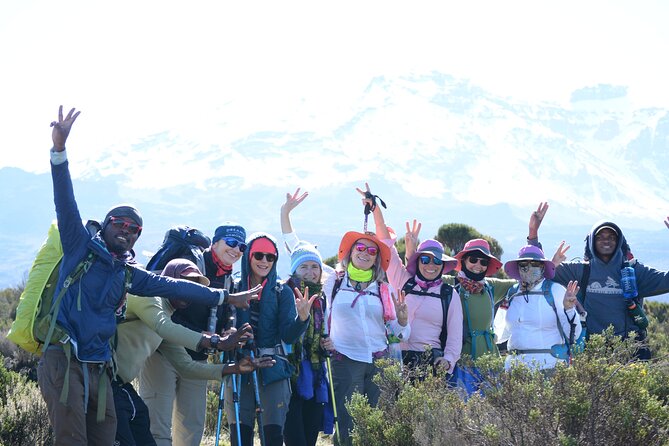
- Five distinct habitats: Walk from rainforest through heath, moorland, alpine desert, and finally the Arctic summit zone.
- The climb-high, sleep-lower day: Reaching Lava Tower before descending to Barranco gives your body valuable time at altitude.
- A technical-looking but non-technical wall: Barranco Wall is steep and exposed in places, but no climbing skills are required according to the itinerary.
- A very long summit day: Day six combines a 7 to 8-hour ascent with a 4 to 6-hour descent.
- Small-group format: The maximum group size is 10, useful for a long trek where pace and support matter.
- Strong staff reputation: The company is associated with names including Ole and Oinoth, while past clients repeatedly praise the guides, porters, organization, patience, and encouragement.
What the $2,550 price covers
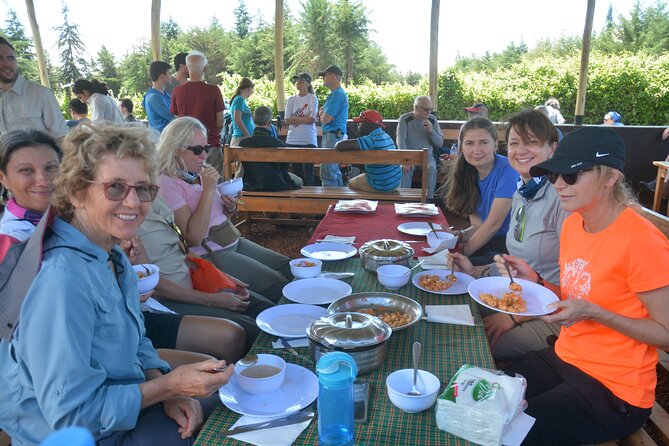
The listed price is $2,550 per person for roughly seven days. That is not a casual mountain walk. It covers transportation, a tour guide, and breakfast, lunch, and dinner for all seven days.
That meal provision matters. On a climb like this, you do not want to spend your evenings worrying about finding food or arranging supplies. Vegetarian meals are available if you request them when booking, and you should provide any other dietary requirements at that point.
The price does not list every possible cost. The terms say anything not mentioned is excluded, so ask for a written breakdown before paying. Confirm details such as accommodation before and after the climb, park and rescue fees, porter tips, equipment rental, airport transfers, and personal spending. Some services may be arranged as part of your wider trip, but they are not clearly included in the information provided here.
That makes the value good for someone who wants an organized climb with food and transport handled, but only if you confirm the missing details. A low headline price can become less attractive when essential extras appear later.
More Machame Route climbs:
- Kilimanjaro climb, Machame Route (7-day)
★ 5.0 · 262 reviews - Climbing Kilimanjaro – Machame Route
★ 5.0 · 170 reviews - Climbing Kilimanjaro through 7 days Machame Route
★ 5.0 · 151 reviews
Day 1: Machame Gate to Machame Camp
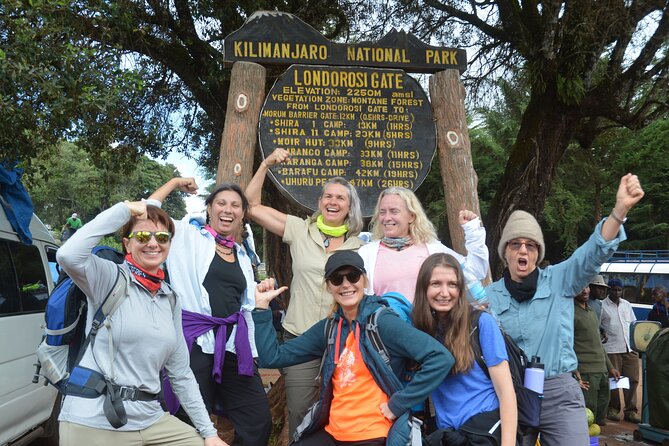
The climb begins with a drive of about 50 minutes from Moshi to Machame Gate. The road passes through Machame village on Kilimanjaro’s lower slopes, giving you a first look at the community below the mountain before the walking begins.
From the gate, the trail enters dense rainforest. The path winds upward along a ridge for about 11 kilometers, with an elevation gain from 5,380 to 9,350 feet. The stated walking time is 5 to 7 hours.
This first day is less about dramatic views than adjustment. The forest is thick, humid, and green, and the steady uphill work quickly reminds you that this is a serious climb. Your destination is Machame Camp, where you spend the night.
The practical challenge is wet ground. Rainforest trails can be muddy, and the final descent on day seven is also described as wet and muddy at lower elevations. Carry waterproof protection for your boots, clothing, and day bag.
Day 2: Shira Plateau and the first open views
You leave the rainforest behind and climb toward heath and open moorland. The route covers about 5 kilometers, rising from 9,350 to 12,500 feet, with 4 to 6 hours of hiking listed.
The trail becomes steeper and rockier as it approaches the Shira Plateau. You cross a large river gorge before reaching Shira 2 Camp. This is where the mountain begins to feel wide and exposed rather than enclosed by trees.
The distance is short on paper, but altitude changes the meaning of short. You may walk only three miles and still feel the effort. Keep your pace slow, drink regularly, and let the guide set the rhythm. The schedule lists about eight hours for the day, which likely includes breaks and camp routines as well as walking.
Day 3: Lava Tower, then down to Barranco
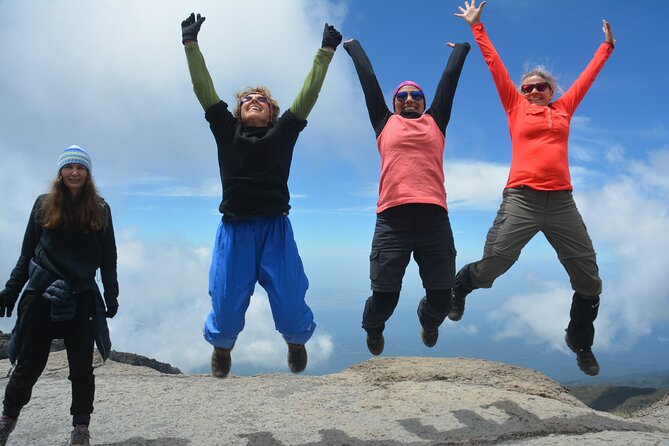
Day three is one of the route’s most useful and memorable sections. From Shira 2 Camp, you climb east toward Lava Tower, a 300-foot volcanic rock formation. The route reaches 15,190 feet before descending to Barranco Camp at about 13,044 feet.
The total walking distance is about 10 kilometers, split between a 7-kilometer climb and a 3-kilometer descent. Hiking time is listed at 4 to 5 hours to Lava Tower, followed by 2 to 3 hours down to Barranco.
This is the classic climb high, sleep lower pattern. You spend time at a greater altitude, then return to a lower sleeping elevation. That does not remove the risk of altitude illness, but it gives the schedule a sensible acclimatization feature.
The scenery also changes sharply. Alpine desert replaces the softer moorland, and the Senecio Forest adds an odd, almost prehistoric look to the descent. You begin and finish the day at nearly the same elevation, but the middle section is important preparation for the summit attempt.
Do not mistake the short distances for an easy day. You are already above 12,000 feet, and the thin air can affect sleep, appetite, energy, and judgment.
More treks and hikes around Kilimanjaro:
- Kilimanjaro climb by Lemosho Route (7-day)
★ 5.0 · 651 reviews - Kilimanjaro Climbing Lemosho Route 8 Days.
★ 5.0 · 186 reviews - 8-Day Small-group Lemosho Kilimanjaro Summit Trekking
★ 5.0 · 186 reviews - Kilimanjaro climb, Lemosho Route (8-day)
★ 5.0 · 148 reviews
Day 4: The Barranco Wall and Karanga Valley
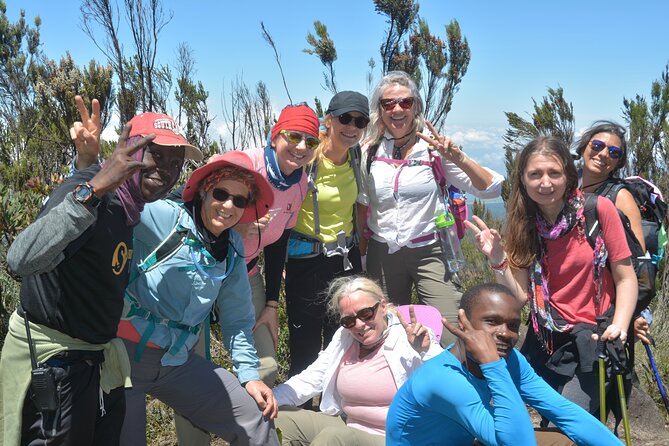
The route starts by dropping into a ravine at the foot of the Great Barranco Wall. Then comes a steep climb up the nearly 900-foot cliff.
This sounds alarming, but the itinerary describes the wall as non-technical. You do not need technical rock-climbing skills, though you should expect steep ground and careful foot placement. The guide’s pace and instructions matter here, especially if you dislike heights or need extra time on uneven rock.
From the top, the trail crosses a series of hills and valleys before dropping into Karanga Valley. One final steep climb brings you to Karanga Camp. The day covers about 5 kilometers and takes 4 to 5 hours of walking, with the full schedule again listed at around eight hours.
I like this shorter day because it gives your body a chance to adjust before the summit push. It is still strenuous, but the schedule is not built around covering a huge distance. Use the afternoon to eat, drink, organize your summit clothing, and rest.
Day 5: Karanga to Barafu Camp
You leave Karanga and reach the junction with the Mweka Trail before continuing through rocky terrain to Barafu Hut. The distance is only about 4 kilometers, but the route climbs from 13,106 to 15,331 feet.
Barafu is the launch point for summit night. You complete the Southern Circuit here, a route section that gives views of Kilimanjaro from different angles. Mawenzi and Kibo, the mountain’s two main peaks, can be seen from this position.
The short walking distance is deceptive. At 15,331 feet, simply moving around camp can feel tiring. You are expected to rest and eat an early dinner before starting the summit attempt around midnight.
This is one of the moments when organization matters most. Keep your headlamp, warm layers, water, snacks, gloves, and other summit items ready before lying down. You may get only a short period of rest.
Day 6: Midnight to Uhuru Peak, then all the way to Mweka
Day six is the hardest part of the climb. You begin around midnight and ascend from Barafu Camp at 15,331 feet to Uhuru Peak at 19,341 feet. The ascent covers about 5 kilometers and takes 7 to 8 hours.
You climb in darkness and extreme cold may be present. The pace is slow, with frequent short breaks. Near Stella Point, at about 18,900 feet, sunrise over Mawenzi Peak provides one of the day’s major rewards.
From there, you continue toward Uhuru Peak, the summit of Kilimanjaro. The high point is not the end of the day. After reaching the summit, you descend 12 kilometers to Mweka Camp at 10,065 feet, with another 4 to 6 hours of hiking listed.
That creates a total day of roughly 12 hours. It is the key fact to understand before booking. The summit itself may be your main goal, but the descent still requires concentration. Tired legs, loose ground, cold, and altitude can all make the second half difficult.
You need realistic expectations. A successful climb is not just about determination. It also depends on your physical condition, your response to altitude, the weather, and the guide’s decisions. The published requirements call for moderate physical fitness, but I would treat this as the minimum rather than a full description of the challenge.
Day 7: Mweka Gate and the return to Moshi
The final walking day descends from Mweka Camp at 10,065 feet to Mweka Gate at 5,380 feet. The distance is about 10 kilometers, with 3 to 4 hours of hiking through rainforest.
At the gate, you collect summit certificates. You then continue for about another hour to Mweka village, where a vehicle takes you back to your hotel in Moshi.
The descent may feel easy compared with summit day, but muddy conditions can slow you down. Trekking poles, shoes with good grip, and waterproof clothing remain useful until the end.
This final transfer is more than a convenience. After seven days of walking, getting into a vehicle at Mweka village means you do not need to arrange your own way back from the mountain.
Guides, porters, and the human side of the climb
The strongest praise connected with this operator concerns the staff. Names associated with the company include Ole and Oinoth, and the team is repeatedly described as helpful, patient, professional, encouraging, and well organized.
That support is not a minor extra on Kilimanjaro. Guides control the pace, monitor how you are coping, explain the route, and help keep the group moving during difficult sections. Porters are also part of the local mountain operation, and the company is described as using local guides and porters.
The group limit is 10 people. That gives you more personal space than a very large commercial departure, though your actual group may be smaller. Ask how many guides and porters will accompany your departure, how medical checks are handled, and what safety procedures apply if someone becomes ill.
Some past clients specifically praised evening medical checks and careful attention to acclimatization. Confirm whether those practices are included in your booking, rather than assuming every departure follows exactly the same routine.
Who should choose this Machame itinerary
This climb suits you if you want:
- A route with major scenery changes rather than the shortest possible path
- A small-group format with a maximum of 10 people
- Organized meals, transport, and guide support
- A demanding trek that includes a strong acclimatization day
- A route with famous sections such as Lava Tower and Barranco Wall
- The chance to work with a local Tanzanian operator
It is less suitable if you want a gentle introduction to mountain walking. The route is steep, the summit night is long, and the seven-day schedule leaves less room than a longer itinerary. The description specifically points to adventurous people and those with hiking, backpacking, or high-altitude experience.
Children must be accompanied by an adult. A current valid passport is required on the day of travel. The stated dress code is smart casual, though for the mountain itself you should focus on functional hiking clothing and proper cold-weather gear.
Booking details worth checking
Pickup is offered, and the experience uses a mobile ticket. Confirmation is provided at booking, and free cancellation is available up to 24 hours before the local start time. Changes or cancellations inside that window are not accepted for a refund.
The booking information says the activity is near public transportation, though the main climb begins with the included drive from Moshi to Machame Gate. You should still confirm the exact pickup point and time.
Ask the operator to clarify accommodation, park fees, rescue coverage, gear, tips, airport transfers, and any hotel nights. These details affect the real cost far more than a small difference in the advertised price.
Should you book it?
I would recommend this Machame climb if you want Kilimanjaro’s most scenic route and are ready for a real physical test. The rainforest, Shira Plateau, Lava Tower, Senecio Forest, Barranco Wall, and summit approach give the week plenty of variety.
Book with care if you have limited hiking experience. The price includes useful basics, and the staff have a strong reputation for encouragement and organization, but the seven-day schedule is still demanding. If you can manage long uphill days, prepare for cold and wet conditions, and confirm the excluded costs in advance, this is a solid choice for a supported Kilimanjaro attempt.
FAQ
How long is the Kilimanjaro Machame climb?
The climb lasts approximately seven days, including the descent to Mweka Gate and the return to Moshi.
How much does the experience cost?
The listed price is $2,550 per person.
What meals are included?
Breakfast, lunch, and dinner are included for all seven days.
Is transportation included?
Yes. Transportation is included, including the mountain transfers described in the itinerary.
What is the maximum group size?
The maximum group size is 10 people.
How difficult is the Machame Route?
It is considered difficult, steep, and challenging, especially because the itinerary is completed in seven days. Moderate physical fitness is required.
When does the summit attempt begin?
The summit push begins very early, at around midnight on day six.
Is a vegetarian meal available?
Yes. You must request the vegetarian option when booking. You should also provide any other dietary requirements at that time.
What is the cancellation policy?
You can cancel up to 24 hours before the local start time for a full refund. Cancellations or changes made less than 24 hours before the start are not accepted for a refund.
Just added around Kilimanjaro
- 6 days Machame route climbing Mt.Kilimanjaro★ 5.0 · 8 reviews
- machame route★ 5.0 · 16 reviews
- Mt Kilimanjaro 6 days Marangu route hike★ 5.0 · 3 reviews
- Private Cycle to Kilimanjaro Bike Park Safari★ 5.0 · 6 reviews
- West Kilimanjaro cycling Adventures★ 4.5 · 8 reviews
- Kilimanjaro Climb • Marangu Route ~ 9 Day★ 5.0 · 4 reviews
- 3 Days Private E-Bike Tour in West Kilimanjaro★ 5.0 · 3 reviews
- Kilimanjaro Climb • Machame Route ~ 10 Day★ 5.0 · 6 reviews
Machame Route Climbs, compared.
The Best of Machame Route in 6 Days: Your World’s Summit Guide
Read our review →Browse the lists this tour appears in