
Reviewed · MACHAME ROUTE CLIMBS
7 Days Kilimanjaro trek via Machame route
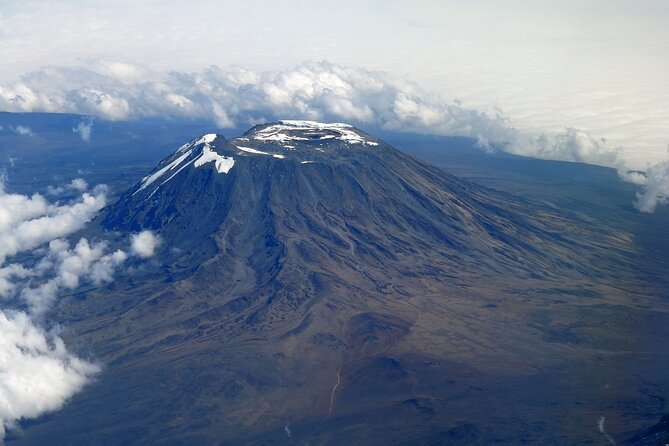
Kilimanjaro’s Machame Route gives you a full mountain story in seven days: mossy cloud forest, open high country, glaciers, a hard midnight summit push, and a final walk through the trees. The route climbs from the west and uses the useful high-and-low rhythm that helps your body adjust to altitude.
I like the varied scenery and the practical camp setup, including private waterproof sleeping tents, a dining tent, chairs, cooked meals, and purified water. I also like the strong guide presence. Gasto James is repeatedly singled out for calm encouragement, mountain skill, cultural stories, and even singing during the final climb.
The main drawback is that Machame is the most popular camping route, so you will share the trail and campsites with many other climbing groups. Seven days also leaves little room for a slow pace, and summit day is a serious physical test, not a sightseeing stroll.
Key points to know before you book
- The Barranco Wall is the route’s signature scramble: Expect about 90 minutes of hands-on climbing after leaving Barranco Camp.
- Day three is built for acclimatization: You climb to about 4,530 meters before descending to Barranco Camp.
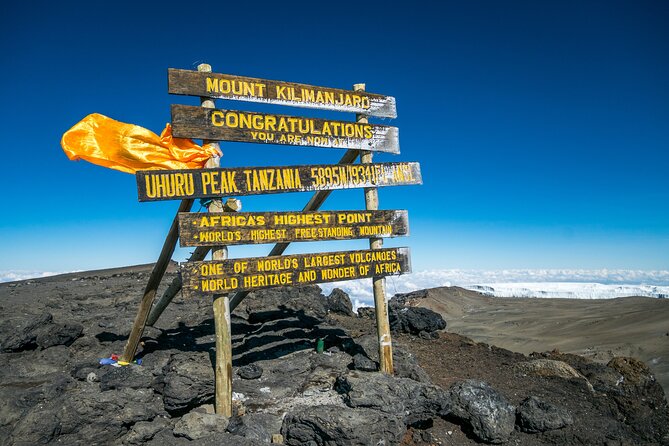
- Summit day begins around midnight: The climb to Stella Point takes roughly six hours, followed by the ridge walk to Uhuru Peak.
- The $2,800 price covers the core mountain operation: Park and rescue fees, guides, porters, cooks, tents, meals, water, and airport transfers are included.
- You must bring or rent personal climbing gear: Gear, tips, and visa fees are not included.
- The trip is private: Only your own group participates, though the busy route means other groups will be nearby.
What the seven-day Machame Route feels like
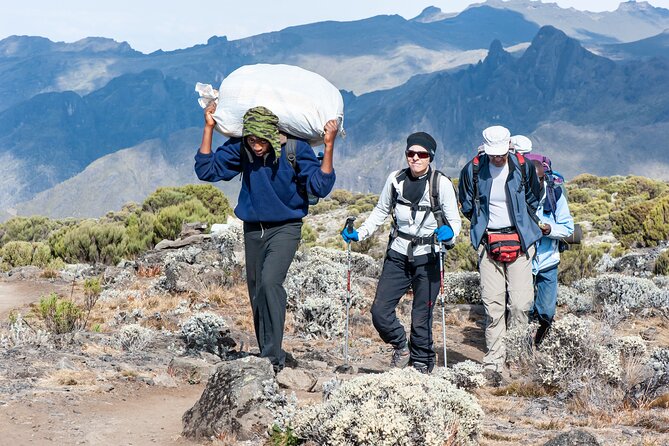
This is a camping climb, not a lodge-to-lodge walk. Your mountain crew handles the heavy camp equipment, prepares meals, purifies drinking water, and sets up the dining area while you hike. That division of work matters on Kilimanjaro, where simply carrying your daypack and managing your energy can take plenty of attention.
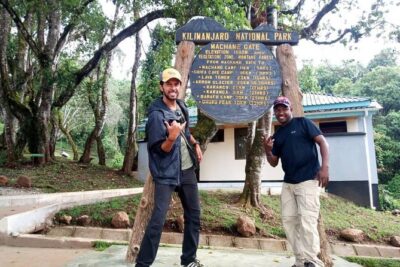
The route starts near Arusha, with a drive of about 90 minutes to Machame Gate. The road passes coffee farms and villages before reaching the park entrance. At the gate, your climb is registered and the guides, porters, and cooks make final preparations.
The advertised meeting time is 7:30 pm, while the first hiking day says to leave Arusha at 9 am. Ask Mountain Warriors Tours and Safaris to confirm the exact pickup and meeting time before you travel. That small check can prevent a very early start from turning into a scramble.
More Machame Route climbs:
- Kilimanjaro climb, Machame Route (7-day)
★ 5.0 · 262 reviews - Climbing Kilimanjaro – Machame Route
★ 5.0 · 170 reviews - Climbing Kilimanjaro through 7 days Machame Route
★ 5.0 · 151 reviews
Day one: Machame Gate to Machame Camp
The first hike takes about six hours through Kilimanjaro’s cloud forest. Moss-covered trees give the lower trail a cool, almost storybook feel, while tall grasses, heathers, and wildflowers appear as the forest begins to thin.
If clouds stay away, you may get early views of Kibo Peak, the mountain’s highest cone and your eventual destination. The first day is not mainly about altitude or dramatic climbing. It is about settling into the walking rhythm, meeting the support crew, and learning how the mountain day works.
Your porters and cooks go ahead to prepare camp. That means you should carry water and personal essentials for the trail, then arrive to a prepared sleeping area and meal service. The park entry is included in the tour price.
Day two: Shira Camp and the first high views
The second day takes about six hours and includes several uphill stretches. A clear day can feel hot, so carry plenty of drinking water and do not treat the moderate distance as an easy walk. Altitude begins to change the character of the climb.
The forest gives way to smaller high-altitude plants, including Senecio kilimanjari and Lobelia deckenii. Viewpoints open toward the plains and lower forests, while Kibo and Mawenzi appear above you. After lunch, you climb onto the Shira Plateau, a broad high area formed when Kibo’s lava flows filled the old Shira crater.
Shira Camp gives you views toward Kibo to the west and Mount Meru to the east. This is one of the route’s rewards: the mountain stops feeling enclosed by trees and begins to feel wide open. It can also be a demanding night, since you are sleeping higher than before.
Day three: the Shira Plateau, Lava Tower option, and Barranco
Day three is the route’s key acclimatization day. The total gain by Barranco Camp is only about 110 meters, but you climb roughly 690 meters during the day, reaching around 4,530 meters before descending.
That up-and-down pattern is useful because you spend time at a higher elevation without sleeping there. The hike takes about seven hours and crosses increasingly bare ground after leaving the Shira Plateau. You pass the junction with the Shira and Lemosho Routes and stop for lunch before reaching the day’s highest point.
Faster hikers may take a detour to Lava Tower, a roughly 300-foot lava formation. The itinerary presents this as an option, so confirm with your guide whether it fits your group’s pace and condition. The descent to Barranco Camp is not wasted effort. It sets up the next day and gives your body valuable exposure to higher altitude.
Barranco is a favorite camp for the mountain staff, and it is easy to see why from the route description. The camp sits beneath the Barranco Wall, giving you an immediate preview of tomorrow’s main challenge.
More treks and hikes around Kilimanjaro:
- Kilimanjaro climb by Lemosho Route (7-day)
★ 5.0 · 651 reviews - Kilimanjaro Climbing Lemosho Route 8 Days.
★ 5.0 · 186 reviews - 8-Day Small-group Lemosho Kilimanjaro Summit Trekking
★ 5.0 · 186 reviews - Kilimanjaro climb, Lemosho Route (8-day)
★ 5.0 · 148 reviews
Day four: hands on at the Barranco Wall
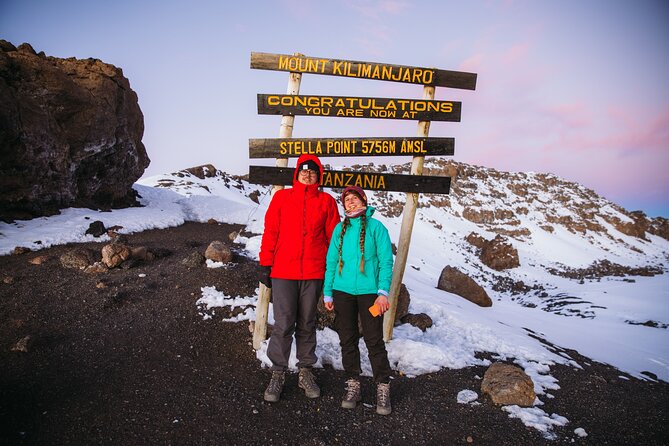
The day from Barranco Camp to Karanga Valley takes about seven hours. It begins with the route’s most distinctive scramble, an approximately hour-and-a-half climb up the Barranco Wall.
This is not described as technical climbing, but you may use your hands in places. Your guide’s pacing and positioning matter here, especially if you feel uneasy on steep, uneven ground. The reward is a high point above the wall, followed by fairly level walking and then a short, steep descent into the green Karanga River Valley.
The distance is manageable on paper, yet the wall can make this day feel more demanding than the numbers suggest. Keep your daypack compact, follow the guide’s instructions, and avoid rushing to pass other groups. Machame’s popularity is especially noticeable at narrow sections like this.
Day five: Karanga to Barafu Camp
The hike to Barafu Camp takes about seven hours and crosses alpine desert with little vegetation. You pass views of several Kibo glaciers and the junction where the Mweka descent route meets the Machame trail.
The route passes the Heim, Kersten, and Decken Glaciers. Their presence adds drama to an otherwise spare section of the mountain, though the day is more about positioning yourself for the summit than sightseeing at a relaxed pace.
Barafu Camp offers views of both Kibo and Mawenzi. This is your launch point for the summit attempt, and the schedule asks you to eat dinner and sleep as soon as possible because you will wake before midnight. Rest can be difficult at this stage, so keep the evening quiet and organize your headlamp, warm layers, water, and personal gear before bed.
Day six: Stella Point, Uhuru Peak, and Mweka Camp
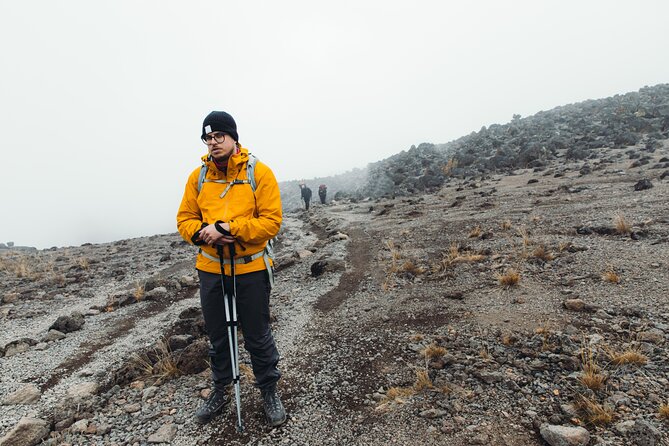
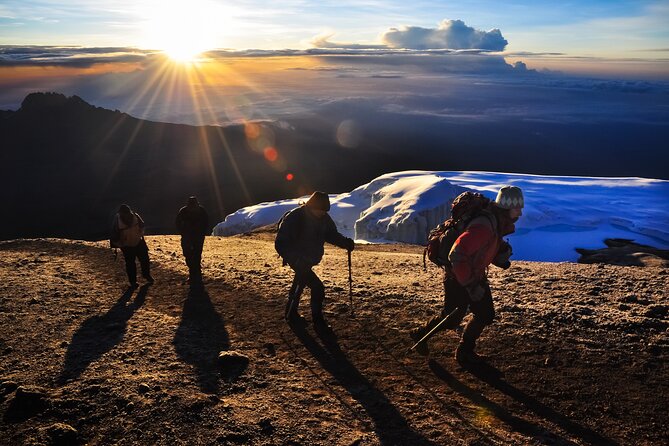
Summit day starts around midnight. You climb by headlamp for about six hours toward Stella Point, the crater rim. This is the steepest and hardest part of the entire trek, and altitude makes every step slower.
The climb from Stella Point to Uhuru Peak is more gradual, but the high elevation still makes it tiring. The crater-rim walk takes about an hour. At Uhuru Peak, you have time for photographs with your guide and group before starting the descent.
The return route gives you changing views of the mountain, crater, clouds, and glaciers. You then descend to Mweka Camp. The supplied itinerary is cut off during the descent description, so confirm the exact day-six timing and camp arrangements with the operator before booking.
The guide team’s role is especially important here. Gasto James is praised for keeping people moving pole pole, the Swahili phrase for slowly, and for providing encouragement when the climb becomes difficult. Several comments also highlight singing during the early-morning ascent. That may sound like a small detail, but steady group spirit can matter when the trail is steep, cold, dark, and tiring.
Day seven: the forest descent to Mweka Gate
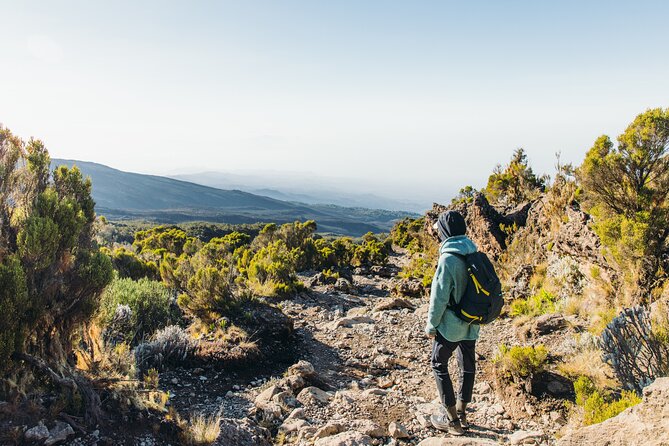
The final day takes about six hours through the forest to Mweka Gate. The trail can be slippery after rain, so footwear with reliable grip is important.
Vehicles meet you at the lower Mweka Gate station for the return drive to Arusha. After the strain of summit day, this is a long descent rather than a quick finish, but the lower forest provides a clear change from the barren upper mountain.
The tour includes airport transfers, which adds value if your arrival and departure plans fit the operator’s schedule. Confirm the transfer details directly, especially if you have flights close to the end of the trek.
What the $2,800 price buys you
At $2,800 per person, this is not a bare-bones mountain package. The price includes private waterproof sleeping tents, professional mountain guides, porters and cooks as part of the operating team, all park fees, rescue fees, meals on the mountain, a mess tent with tables and chairs, purified drinking water, and airport transfers.
The meal coverage is listed as seven breakfasts, seven lunches, and six dinners. That matches a seven-day trip finishing after breakfast and the final descent. The dining tent is a useful comfort rather than a luxury. It gives you a place to eat, organize your kit, and get out of poor weather.
You still need to budget for personal climbing gear, tips, and visa fees. The listing does not give a gear rental price or a recommended tipping amount, so ask for those figures before you commit. The trip description also says you need a moderate level of physical fitness. That is an important warning: the summit section is long, steep, and high, and the itinerary moves forward each day without a spare acclimatization day.
Guide support and the human side of the climb
The strongest theme in the feedback is the mountain crew’s encouragement. Gasto James is named repeatedly, with praise for his enthusiasm, singing, attention to safety, and ability to help people who were struggling. One account also highlights his stories about Tanzanian culture and Maya, adding a human layer to the long walking days.
The practical value is clear. A good guide does more than point out the route. On this climb, your guide helps control pace, makes the summit effort feel manageable, and watches how the group is coping. The repeated emphasis on moving slowly is exactly right for high-altitude trekking.
The tour is private, so only your own group participates in the booked activity. That can make communication easier and may allow the guide team to focus closely on your party. It does not mean you will have the mountain to yourself. Machame is a popular camping route, and other climbing groups will share the trail and campsites.
Who should choose this trek
I would consider this trip if you want Kilimanjaro’s main scenic changes in one week and prefer a private operation with meals, tents, water, and park fees arranged. It suits someone who is comfortable walking for six to seven hours on most days and who understands that summit day is the hardest part by a wide margin.
It is less suitable if you want quiet trails, a relaxed schedule, or hotel-style comfort. The camps are designed for mountain travel, and the route’s popularity can mean queues and crowded areas. You also need to arrive with the right personal gear, a plan for tips and visas, and enough fitness for repeated uphill and downhill walking.
The company has been arranging Kilimanjaro and Meru climbs for nearly 20 years, according to the tour information. That long operating history, combined with the detailed support setup and strong feedback about the guide team, is reassuring. Still, ask direct questions about group size, personal gear, tipping, the exact meeting time, and the full summit-day schedule before paying.
Free cancellation is available if you cancel at least 24 hours before the experience start time. Within 24 hours, the payment is not refunded, and late changes are not accepted.
Should you book the Machame Route?
Book it if you want a well-supported, private seven-day climb with changing scenery and a serious but established route to Uhuru Peak. The included park and rescue fees, food, purified water, tents, camp dining setup, and airport transfers make the $2,800 cost easier to justify.
I would pause if the crowded Machame trail bothers you or if you are hoping for a gentle introduction to high-altitude hiking. For the right climber, the Barranco Wall, Shira Plateau, glacier views, and midnight summit push create a memorable mountain journey. Just treat the seven-day schedule with respect, confirm the unclear meeting time, and prepare properly for the cold, steep final ascent.
FAQ
Where does the Kilimanjaro trek begin?
The trip is based in Arusha, Tanzania. Day one includes transport from Arusha to Machame Gate, which takes about 1.5 hours.
How long does the experience last?
The trek lasts approximately seven days.
Is the Machame Route a private tour?
Yes. The activity is private, meaning only your own booked group participates. The route itself is popular, so other climbing groups may be nearby.
What time does the experience start?
The meeting information lists a 7:30 pm start time. The first hiking day says to leave Arusha at 9 am, so confirm the exact pickup and meeting schedule with Mountain Warriors Tours and Safaris.
Are airport transfers included?
Yes. Airport transfers are included in the tour price.
Are meals included?
Yes. The package includes seven breakfasts, seven lunches, and six dinners while on the mountain.
Is drinking water provided?
Yes. Clean, purified drinking water is included.
Are park and rescue fees included?
Yes. All park fees and rescue fees are included.
Is personal climbing gear included?
No. Personal climbing gear is not included, so you need to arrange it separately.
Are visa fees and tips included?
No. Visa fees and tipping are excluded from the price.
What fitness level is required?
The tour advises a moderate physical fitness level. Hiking days last about six to seven hours, and the summit climb begins around midnight and includes a steep ascent to Stella Point.
More Seven-Day Trips in Kilimanjaro
- 7-Day Machame Kilimanjaro Summit Tour from Arusha
★ 5.0 · 125 reviews - 7 Days Kilimanjaro via Machame route affordable price
★ 5.0 · 110 reviews - Private Kilimanjaro Hike 7 Day Lemosho Route
★ 5.0 · 60 reviews - 7 Days Machame route – Kilimanjaro
★ 5.0 · 45 reviews
Just added around Kilimanjaro
- 6 days Machame route climbing Mt.Kilimanjaro★ 5.0 · 8 reviews
- machame route★ 5.0 · 16 reviews
- Mt Kilimanjaro 6 days Marangu route hike★ 5.0 · 3 reviews
- Private Cycle to Kilimanjaro Bike Park Safari★ 5.0 · 6 reviews
- West Kilimanjaro cycling Adventures★ 4.5 · 8 reviews
- Kilimanjaro Climb • Marangu Route ~ 9 Day★ 5.0 · 4 reviews
- 3 Days Private E-Bike Tour in West Kilimanjaro★ 5.0 · 3 reviews
- Kilimanjaro Climb • Machame Route ~ 10 Day★ 5.0 · 6 reviews
Machame Route Climbs, compared.
The Best of Machame Route in 6 Days: Your World’s Summit Guide
Read our review →Browse the lists this tour appears in