
Reviewed · MACHAME ROUTE CLIMBS
7 Days Kilimanjaro Climb Machame Route
Machame gives you Africa’s highest summit by way of five climate zones, from thick rainforest to bare volcanic rock and ice-cold summit slopes. I like the seven-day schedule, which gives your body more time to adjust, and the route’s changing scenery, especially the Shira Plateau, Barranco Wall, and sunrise near Stella Point.
I also like that this is a private climb rather than a fixed group departure. Daniel has been praised for patient planning and steady communication, while guides such as John have earned strong marks for mountain support. The catch is simple: Machame is difficult, tent-only, and not the right pick if you want hut beds or an easy uphill walk.
Key points
- Seven days for better acclimatization: The extra mountain day helps break up the climb before the summit push.
- Five climate zones in one route: You move from rainforest and heath to alpine desert and Arctic conditions.
- Private guiding: Only your group takes part, with a dedicated guide, cook, and porters.
- Camping from gate to gate: Three-season tents, sleeping mats, meals, water, and camping fees are included.
- A serious summit day: You start shortly after midnight and may hike seven to eight hours to Uhuru Peak.
- Broad package value: Park and rescue fees, hotels, airport transfers, meals, and mountain transport are included.
Why the seven-day Machame Route works
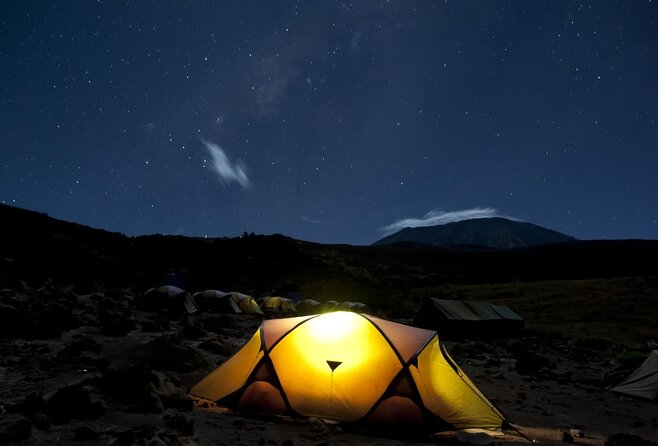
Machame is known as the Whiskey Route, a nickname that hints at its harder nature. Unlike the gentler Marangu Route, it has no mountain huts. You sleep in tents, climb steeper sections, and spend more time exposed to changing weather.
That effort pays off in scenery. The trail begins in lush forest, reaches the open Shira Plateau, circles around the southern side of Kilimanjaro, and approaches the summit from the east. The descent uses the Mweka Trail, so you do not simply retrace your steps.
I like this route for people who want variety and can accept a little discomfort. The gate-to-gate distance is about 62 kilometers, but altitude is the real challenge. You may be fit at home and still struggle above 15,000 feet. A slow pace, careful hydration, and listening to your guide matter more than speed.
The seven-day version is preferable to the shorter six-day plan for many people. Day 3 takes you high to Lava Tower before dropping to Barranco Camp. That climb high and sleep lower pattern gives your body useful time at altitude. It does not remove the risk of altitude sickness, but it gives you a better setup than rushing upward.
More Machame Route climbs:
- Kilimanjaro climb, Machame Route (7-day)
★ 5.0 · 262 reviews - Climbing Kilimanjaro – Machame Route
★ 5.0 · 170 reviews - Climbing Kilimanjaro through 7 days Machame Route
★ 5.0 · 151 reviews
What the $2,564.11 price covers
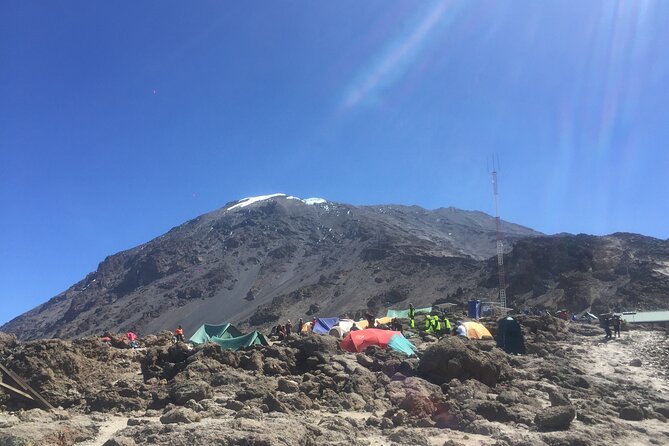
At $2,564.11 per person, this is not a low-cost walk in the park. But the price includes many expenses that can add up quickly on a Kilimanjaro climb.
Your package includes:
- Park, camping, and rescue fees
- Three-season mountain tents
- Double-layer sleeping mats
- Professional guides, cooks, and porters
- Three meals each day on the mountain
- Filtered water throughout the trek
- Transport to and from the mountain gates
- Hotel accommodation before and after the climb
- Two-way private airport transfers
- Breakfast, lunch, dinner, snacks, bottled water, coffee, and tea
- 18 percent VAT on tour services
That makes the package easier to compare with cheaper-looking climbs that add permits, transfers, food, or hotel nights later. The two hotel stays in Moshi are particularly useful. You get a place to rest and organize your equipment before the climb, then return to a bed and shower after the descent.
Tips for the mountain crew are not included. Neither are flights, laundry, personal items, or services not listed. A portable flush toilet with a toilet tent costs an extra $65 per toilet and tent. For most people, the standard camping toilet arrangement will be the less expensive choice, but you should decide before departure if privacy is a major concern.
Day 1: Machame Gate and the first rainforest climb
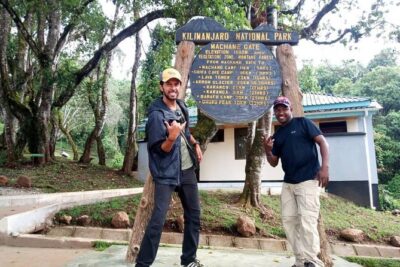
After breakfast, you receive a briefing before the drive from Moshi to Machame village and the park gate. The village sits at about 1,490 meters, and this is where the guides and porters organize food and equipment. You receive a packed lunch and mineral water before the walk begins.
The first day takes you through dense rainforest toward Machame Camp. The listed hiking time is about seven hours, though your exact pace will depend on weather, trail conditions, and how the group handles the climb. The forest is a gentle introduction to the mountain’s changing habitats, with thick growth and the possibility of seeing monkeys and birds.
The main drawback is that this can be a long first day. You have a gate registration process, equipment preparation, and several hours of walking before reaching camp. Keep your rain protection handy. Wet conditions in the forest can make the trail muddy, and wet clothing is more than an inconvenience when you are camping.
Day 2: Leaving the forest for Shira Plateau
The forest thins as the trail climbs toward a rocky ridge. You then reach the Shira Plateau, where heather and open moorland replace the dense trees. The setting feels much wider here, with fewer plants and more open views.
The walk from Machame Camp to Shira 2 Camp covers about 5 kilometers and takes roughly four to six hours. You rise from about 9,350 feet to 12,500 feet, entering the heath zone.
This is a shorter day by distance, but the gain in elevation is significant. Do not judge the day only by its mileage. You may feel fine at the start and notice the thinner air by afternoon. Your private guide can adjust the pace and breaks to suit your group, one of the practical advantages of booking privately.
More treks and hikes around Kilimanjaro:
- Kilimanjaro climb by Lemosho Route (7-day)
★ 5.0 · 651 reviews - Kilimanjaro Climbing Lemosho Route 8 Days.
★ 5.0 · 186 reviews - 8-Day Small-group Lemosho Kilimanjaro Summit Trekking
★ 5.0 · 186 reviews - Kilimanjaro climb, Lemosho Route (8-day)
★ 5.0 · 148 reviews
Day 3: Lava Tower, altitude practice, and Barranco
Day 3 is one of the most useful parts of the route. From Shira 2, you follow a ridge east and then southeast toward Lava Tower, a volcanic rock formation about 300 feet tall. The trail reaches approximately 15,190 feet, entering the alpine desert zone.
The climb to Lava Tower covers about 7 kilometers and takes four to five hours. You then descend 3 kilometers to Barranco Camp, normally another two to three hours. Barranco sits at about 13,044 feet, close to the elevation where you began the day.
This is not wasted effort. You spend time high, then sleep lower. That pattern helps your body adjust to altitude, even though you may feel tired by the end. It is also a day when a moderate level of physical fitness is important. The surface can be rocky, and the thin air makes ordinary uphill walking feel harder.
Barranco Camp is memorable for its position below the Barranco Wall. You can study part of the next day’s route before dinner, which is useful if steep terrain makes you nervous.
Day 4: Climbing the Barranco Wall to Karanga
The day begins with a descent into a ravine at the foot of the Barranco Wall. Then comes the steep climb up the wall, which rises about 900 feet. It is described as non-technical, so you do not need climbing equipment or technical climbing skills, but it is still a serious uphill section.
After the wall, the route rolls through hills and valleys before dropping into the Karanga Valley. Another steep climb brings you to Karanga Camp at about 13,106 feet.
The distance is not listed for this day, but the schedule is intentionally short. That matters because the mountain is not only a test of legs. It is also a test of recovery, appetite, sleep, and your ability to stay patient. A short day gives you time to eat, drink, dry clothing, and prepare for the higher camps.
The Barranco Wall may be the most exciting walking of the route, but do not expect a smooth path. Your hands may help with balance on parts of the climb, and a steady pace is better than trying to keep up with a stronger companion.
Day 5: Karanga to Barafu Camp
From Karanga, you connect with the Mweka Trail and continue over rocky ground to Barafu Camp. The camp sits at approximately 15,331 feet, and this is where the southern circuit is completed.
The distance is about 4 kilometers. The short mileage can fool you. At this height, every climb takes more effort, and you need to conserve energy for the summit attempt. The route gives broad views toward Mawenzi and Kibo, two of Kilimanjaro’s major peaks.
At Barafu, the schedule changes from ordinary trekking to summit preparation. You eat dinner, organize warm layers, check your headlamp, and try to sleep before a midnight start. Sleep can be difficult at altitude, and the early departure is one of the clearest reminders that this is a demanding climb.
Your guide and crew handle the camp, cooking, and equipment, but you still need to manage your personal gear. Keep only the essentials for the summit push close at hand. Anything you do not need before morning will only add clutter and weight.
Day 6: Stella Point, Uhuru Peak, and the long descent
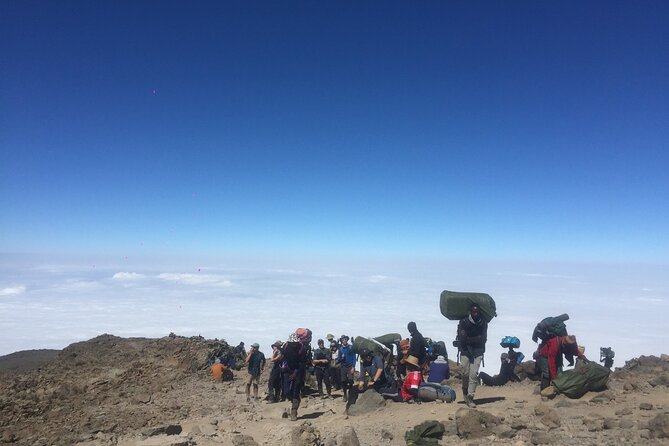
Summit day begins shortly after midnight. The cold and wind can be severe, and the ascent is made in darkness with frequent short breaks. The trail rises from Barafu at 15,331 feet to Uhuru Peak at 19,341 feet.
The listed hiking time to the summit is seven to eight hours. Your first major goal is Stella Point at about 18,900 feet. If the weather cooperates, sunrise over Mawenzi is the reward for the night walk. From Stella Point, you continue along the crater rim toward Uhuru Peak, the highest point in Africa.
This is the hardest part of the trip. The altitude, cold, darkness, and length of the climb can affect even strong hikers. A successful summit depends less on racing and more on a slow rhythm. Follow your guide’s instructions, take small sips of water, and tell the guide early if you feel unwell.
After time at the summit, you descend to Mweka Camp, stopping at Barafu for lunch. The descent from Uhuru to Mweka covers about 12 kilometers and drops to 10,065 feet. The trail is hard on the knees, so trekking poles are especially useful here.
The final camp lies in the upper forest, where mist and afternoon rain are common. You have a last dinner on the mountain before resting. It is a long day, and you should expect to be tired rather than plan anything else for the evening.
Day 7: Mweka Gate and the return to Moshi
The final walk goes from Mweka Camp to Mweka Gate, dropping from about 10,065 feet to 5,380 feet. The distance is approximately 10 kilometers, with three to four hours of hiking.
The lower trail can be muddy and wet. The change from cold summit conditions to damp forest can happen quickly, so keep rain gear available until you reach the gate. At Mweka Gate, you collect your summit certificate before continuing to Mweka Village.
A Youth Adventures and Safaris vehicle meets you at the gate and returns you to your Moshi hotel. That transfer is a welcome part of the package. After seven days of walking and camping, you will appreciate not having to arrange a taxi or negotiate transport while tired.
The guides, crew, and private format
The strongest part of this arrangement is the personal support built into a private climb. Daniel has handled detailed pre-trip communication, including airport pickup, hotel arrangements, and repeated questions before departure. John has led mountain teams, and Godfrey has also managed trip planning for this operator.
Names can change depending on the departure, so confirm your actual lead guide before you go. The important point is that this is not a self-guided route. Your team includes mountain guides, cooks, and porters, with meals and camp equipment handled along the way.
Only your group participates. That gives you more control over the walking pace and makes it easier to discuss health, fatigue, and food with the guide. The tradeoff is that a private trip can feel less social than a larger departure. If you want to meet other climbers every day, a shared group may suit you better.
You should also budget for tips to the mountain crew. Tips are not included, and the porters, cooks, and guides do much of the work that makes the climb possible.
Who should book this climb?
I would recommend it to a physically fit person with some trekking experience who wants the full Machame route and does not mind camping. You do not need technical mountaineering skills for the Barranco Wall, but you do need to handle long days, steep ground, cold weather, and altitude.
It also suits couples, families with older children who meet the fitness demands, and solo climbers who want a private arrangement. One solo climber returned to Kilimanjaro for a second summit using this type of personalized setup, after previously climbing by the Marangu Route.
I would hesitate to recommend it if you want hut accommodation, short daily walks, or a flexible holiday with lots of spare time. The summit day alone is a major physical effort, and the seven-day itinerary leaves little room for a casual approach.
The operator offers free cancellation if you cancel at least 24 hours before the local start time. Cancellation within 24 hours is not refunded, and late changes are not accepted.
Should you book it?
Book this climb if you want a serious, scenic Kilimanjaro route with a private guide and most major costs bundled into one price. The seven-day schedule, southern circuit views, hotel nights, rescue fees, food, water, equipment, and transfers give the package solid value at $2,564.11.
Choose another option if you prefer mountain huts, a shorter route, or a less demanding climb. Before paying, confirm the hotel name, the lead guide, the tipping expectations, and the exact arrangements for airport pickup. For a fit person who accepts cold nights and a very long summit day, this is a well-rounded way to reach Uhuru Peak.
FAQ
How long is the Kilimanjaro climb?
The experience lasts about six to seven days, with this itinerary planned as a seven-day climb. The mountain section runs from Machame Gate to Mweka Gate, followed by transport back to the hotel in Moshi.
Where does the climb begin?
The route begins at Machame Gate in Kilimanjaro National Park, after transport from Moshi through Machame village.
Where do I sleep during the mountain portion?
You sleep in three-season mountain tents. Tent camping is used throughout the climb, and hut accommodation is not provided on the Machame Route.
Are meals and water included?
Yes. Three meals per day are included while you are on the mountain, along with filtered water, snacks, bottled water, coffee, and tea.
Is this a private tour?
Yes. Only your group participates. The package includes professional mountain guides, cooks, and porters.
What is not included in the price?
Flights, tips for the mountain crew, personal items, laundry, and services not listed are excluded. A portable flush toilet with a toilet tent costs an additional $65 per toilet and tent.
More Seven-Day Trips in Kilimanjaro
- 7-Day Machame Kilimanjaro Summit Tour from Arusha
★ 5.0 · 125 reviews - 7 Days Kilimanjaro via Machame route affordable price
★ 5.0 · 110 reviews - Private Kilimanjaro Hike 7 Day Lemosho Route
★ 5.0 · 60 reviews - 7 Days Machame route – Kilimanjaro
★ 5.0 · 45 reviews
Just added around Kilimanjaro
- 6 days Machame route climbing Mt.Kilimanjaro★ 5.0 · 8 reviews
- machame route★ 5.0 · 16 reviews
- Mt Kilimanjaro 6 days Marangu route hike★ 5.0 · 3 reviews
- Private Cycle to Kilimanjaro Bike Park Safari★ 5.0 · 6 reviews
- West Kilimanjaro cycling Adventures★ 4.5 · 8 reviews
- Kilimanjaro Climb • Marangu Route ~ 9 Day★ 5.0 · 4 reviews
- 3 Days Private E-Bike Tour in West Kilimanjaro★ 5.0 · 3 reviews
- Kilimanjaro Climb • Machame Route ~ 10 Day★ 5.0 · 6 reviews
Machame Route Climbs, compared.
The Best of Machame Route in 6 Days: Your World’s Summit Guide
Read our review →Browse the lists this tour appears in