
Reviewed · MACHAME ROUTE CLIMBS
7 Days Kilimanjaro Trekking Machame Route
Kilimanjaro’s Machame Route gives you the mountain in changing chapters: dripping rainforest, open moorland, volcanic rock, a steep Barranco Wall, and a freezing midnight push to Uhuru Peak. It is a tougher and more scenic choice than the gentler Marangu Route, with tent camping instead of huts.
I like the careful acclimatization pattern, especially the high Lava Tower day followed by a lower night at Barranco. I also like the personal support reported from guides such as Sebastian Shirima and Henry, whose encouragement, songs, and good humor helped climbers keep moving. The catch is simple: this is a serious physical undertaking, not a casual week in the hills.
Key points to know before booking
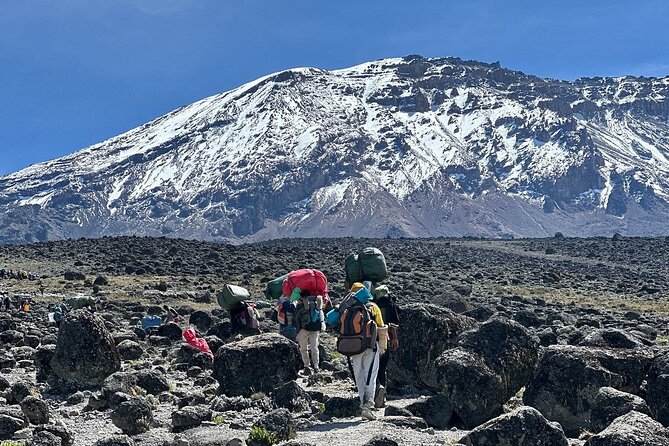
- Seven days on the Machame Route: A roughly 62-kilometer route from gate to gate, with changing habitats and long hiking days.
- A private group experience: Only your group participates, with pickup offered and a 7:00 am start time.
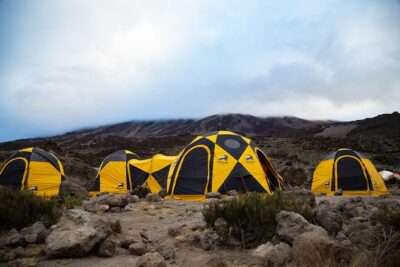
- Tent camping throughout the climb: You sleep at Machame, Shira, Barranco, Karanga, Barafu, and Mweka camps rather than in mountain huts.
- A demanding summit night: You begin between midnight and 2:00 am, reach Stella Point, then continue to Uhuru Peak before a long descent.
- Strong personal support: Sebastian Shirima, Sebastian, Henry, and the wider guide and porter team are named in the experience feedback.
- A $2,500 price point: The value depends on what your booking includes, so confirm transport, park fees, meals, equipment, porter support, and hotel arrangements before paying.
Why the Machame Route feels worth the effort
Machame is popular for good reason. You see more than one side of Kilimanjaro, and the route gives your body time to adjust to altitude through a climb-high, sleep-lower rhythm. That does not make the mountain easy, but it gives the seven-day schedule a sensible shape.
I like the way this route moves through several habitats rather than repeating the same view. Your first day is green and enclosed. By the third day, the trees are gone and the mountain feels bare, broad, and exposed. Later, the route becomes a test of stamina, balance, and patience.
The private format matters. Your group does not have to match the speed or mood of a large mixed party, and the guide team can focus on your progress. The supplied experiences repeatedly praise the support of Sebastian, Henry, and the wider Kiwoito team. One especially useful detail is the emphasis on motivation and encouragement. On Kilimanjaro, that human side is not decoration. It can decide how well you handle a hard hour.
The main drawback is the route’s physical demand. Machame includes steep trails, long distances, tent nights, and a summit day that combines an early start with a long descent. You should have a moderate level of fitness and some hiking experience. The route is designed for people who can cope with sustained uphill walking, rocky ground, and basic scrambling.
More Machame Route climbs:
- Kilimanjaro climb, Machame Route (7-day)
★ 5.0 · 262 reviews - Climbing Kilimanjaro – Machame Route
★ 5.0 · 170 reviews - Climbing Kilimanjaro through 7 days Machame Route
★ 5.0 · 151 reviews
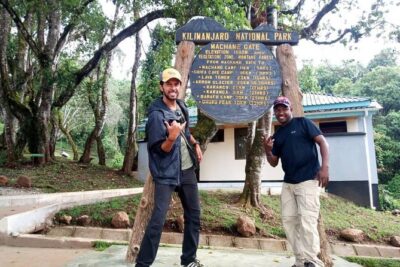
Day 1: Machame Gate to Machame Camp through rainforest
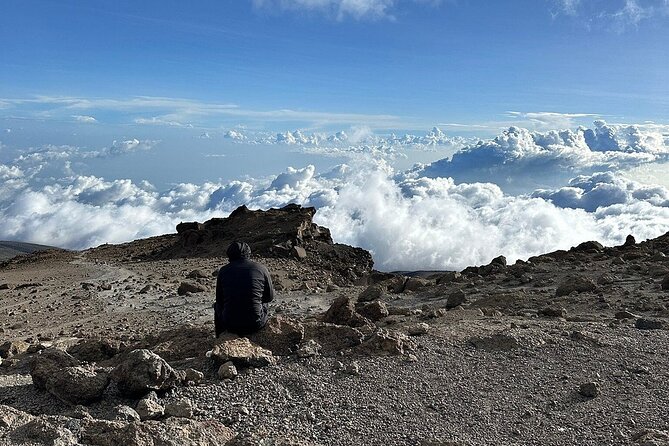
Your morning begins after breakfast, with a transfer to Machame Gate. The listed start time is 7:00 am. At the gate, you sign in and prepare for the first walking day, which covers about 11 kilometers and takes five to seven hours.
The route climbs through montane forest, where the atmosphere is cooler, wetter, and more enclosed than the open slopes above. You finish at Machame Camp at about 3,000 meters, where the team sets up camp and serves dinner.
This is a solid first day, not just a warm-up stroll. The distance is manageable, but the climb begins at once, and wet ground can make the trail feel slower. Keep rain gear easy to reach. You do not want to bury it at the bottom of your pack during the first afternoon.
The forest is one reason to choose Machame over routes with a more gradual opening. You get a clear sense of moving from ordinary mountain woodland toward a high volcanic world. The drawback is that the first day can feel busy and tiring if you are not used to carrying a daypack uphill.
Day 2: Shira Plateau and the first real altitude gain
After breakfast, you leave the rainforest behind and climb through heather and open moorland. The route crosses a valley, follows a steep rocky ridge, and continues toward the Shira Plateau. You cover around nine kilometers in four to six hours.
The altitude rises from about 3,000 meters to 3,850 meters. That 850-meter increase is enough for you to notice the thinner air, even if your legs still feel fresh. The day ends at Shira Camp after a river-gorge crossing and a turn toward the western side of the route.
This is where the trip begins to feel like a high mountain climb. The trees thin out, the views open, and the ground becomes more exposed. You also get your first clear lesson in pacing: the best approach is slow, steady walking rather than trying to win the morning.
The Shira night is useful because it places you high before the route later brings you down to Barranco. That pattern helps the body adjust. Still, altitude affects people differently, so you should tell your guide promptly if you feel unwell. The supplied information sets a moderate fitness expectation, but fitness alone does not guarantee a comfortable response to height.
Day 3: Lava Tower, Shark’s Tooth, and Barranco Camp
Day three is one of the most important days on the route. From Shira, you move east along a ridge and pass a junction leading toward Kibo, the volcanic summit area. The route then turns southeast toward Lava Tower, also called the Shark’s Tooth.
The day covers about 10 kilometers and takes six to eight hours. You reach roughly 4,800 meters at Lava Tower before descending to Barranco Camp at about 3,960 meters, or close to the stated 13,000 feet. Although the day finishes near the height where it began, the high point gives your body a valuable altitude workout.
This is the classic climb-high, sleep-lower day. You may feel tired by the time you reach Barranco, but the schedule makes sense. The short-term discomfort serves a purpose, and the descent to camp gives you a better chance to rest than sleeping at the highest point reached that day.
The setting becomes semi-desert, with volcanic rock and sparse plant life replacing the forest. The route is less sheltered, so sun, wind, and cold can all matter. Keep water, warm layers, and sun protection accessible.
More treks and hikes around Kilimanjaro:
- Kilimanjaro climb by Lemosho Route (7-day)
★ 5.0 · 651 reviews - 8-Day Small-group Lemosho Kilimanjaro Summit Trekking
★ 5.0 · 186 reviews - Kilimanjaro Climbing Lemosho Route 8 Days.
★ 5.0 · 186 reviews - Kilimanjaro climb, Lemosho Route (8-day)
★ 5.0 · 148 reviews
Day 4: Scrambling over the Barranco Wall
The Barranco Wall is the most distinctive obstacle before summit night. It rises about 257 meters and requires basic scrambling skills. You use hands as well as feet in places, though the day is not described as technical climbing.
After breakfast, you work your way up the wall and into the Karanga Valley. The trail then rises and falls several times before reaching Karanga Camp at about 3,960 meters. The distance is only seven kilometers, but the hiking time is listed at around seven hours.
That combination tells you something important: distance does not equal ease here. Steep sections, uneven rock, and repeated inclines can make a short day feel long. Take your time on the wall and let the guide set a safe pace.
I like this day because it adds variety. You are not simply walking uphill on a broad trail. You are choosing footholds, using your balance, and working with the shape of the mountain. If you dislike exposed or scrambly terrain, ask about the exact trail conditions before booking.
Day 5: Karanga to Barafu Base Camp
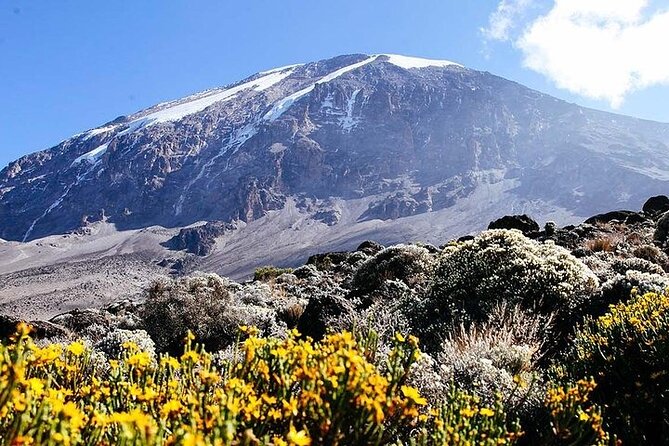
Day five is shorter, covering about six kilometers in roughly three hours. The route leaves Karanga, joins the Mweka Trail, and climbs to Barafu Camp at 4,680 meters.
The short schedule is welcome. You are advised to walk easily, rest, and prepare for the summit push. Barafu is the launch point for the midnight-to-2:00 am start, so this afternoon is less about sightseeing and more about conserving energy.
At this height, even small tasks can feel slow. Organize your warm clothes, headlamp, water, and summit-day snacks before resting. The supplied details do not specify an equipment list, so ask Kiwoito exactly what you must bring and what the company supplies.
Barafu lies in the alpine desert zone. You should expect a stark, exposed setting rather than trees or soft ground. The camp itself is functional, and the main luxury is having a few hours to sleep before the hardest part of the climb.
Day 6: Stella Point, Uhuru Peak, and the long descent
Summit day begins very early, between midnight and 2:00 am. You climb between the Rebmann and Ratzel Glaciers toward Stella Point at about 18,600 feet. If weather permits, the sunrise from Stella Point can be one of the most striking moments of the whole trip.
From Stella Point, you continue for about another hour to Uhuru Peak. Snow may appear on this section, and faster walkers may reach the summit in time to see sunrise from the highest point. Reaching Uhuru Peak means standing on Kilimanjaro’s summit and the highest point in Africa.
The emotional high point comes with a physical price. You have climbed through the night, so cold, darkness, tired legs, and thin air all arrive together. Slow pacing matters more than speed. Your guide’s encouragement becomes particularly important here, which helps explain why Sebastian Shirima, Sebastian, Henry, and the wider support team receive such strong praise.
After the summit, you descend toward Mweka Hut Camp, stopping at Barafu for lunch. The loose gravel on the descent can slide under your boots and punish your knees. Gaiters and trekking poles are useful, especially on this section.
The descent is not an afterthought. It takes you all the way down to Mweka, and the combination of summit fatigue and downhill movement can be harder than expected. Keep drinking, eat when offered, and use your poles if you have them.
Day 7: Mweka Camp to the gate and back to town
The final walking day descends about 10 kilometers from Mweka Camp, at roughly 10,000 feet, to Mweka Park Gate, around 5,400 feet. The hike takes three to four hours through rainforest.
The lower trail may be wet and muddy. Gaiters and trekking poles help, while shorts and a T-shirt may be comfortable lower down. Keep rain gear and warmer clothing close, since conditions can change before you reach the gate.
At the gate, you receive your summit certificates. The itinerary then describes another hour of walking to Mweka Village, where a vehicle meets you for the drive back to your hotel in Arusha.
There is an important practical point here. The experience is based in Moshi, but the return description refers to Arusha. Confirm your exact hotel transfer before departure, especially if you plan to stay in Moshi or have a flight to catch.
What the $2,500 price means
At $2,500 per person, this is a significant purchase. The private format and seven-day schedule can make the price worthwhile if the package includes the major costs that come with a Kilimanjaro climb.
The supplied details confirm admission tickets, pickup offered, a private group, and an organized guide and porter operation. They do not spell out every inclusion. Before booking, ask for a written list covering park fees, meals, drinking water, tents, sleeping arrangements, porter support, transfers, hotel nights, certificates, and any equipment rental.
The value is not just the number of days. Seven days gives you a more gradual route than a rushed climb, and the Shira to Lava Tower to Barranco pattern supports acclimatization. A cheaper short itinerary may leave less time for your body to adjust.
You should also confirm how large your private group is. The booking is private, but the supplied information does not give a maximum number of participants. That detail affects how much personal attention you receive and how quickly the group moves.
Guides, porters, and the human side of the climb
The strongest personal detail from the supplied feedback is the repeated appreciation for Kiwoito’s support team. Sebastian Shirima is named as a special source of support, while Sebastian and Henry are praised for motivation, encouragement, and teaching along the way.
You can also expect a wider guide and porter team. The experiences describe the staff as punctual, reliable, and available, with some groups enjoying songs, dancing, and shared moments on the mountain. Those details matter because a seven-day climb is also a group experience, not just a route marked on a map.
At the same time, do not book on personality alone. Ask about guide-to-climber ratios, emergency procedures, altitude checks, porter welfare, and what happens if someone cannot continue. The supplied information gives you a positive picture of support, but it does not provide those operating details.
Who should choose this Machame climb?
I would recommend this route to you if you:
- Have some hiking experience and a moderate fitness level
- Prefer scenery and varied habitats over hut accommodation
- Can handle seven days of tent camping
- Want a private group rather than a shared departure
- Appreciate close encouragement from guides and a support team
- Can manage a midnight summit start and a long descent
I would be cautious if you want short walks, guaranteed comfort, or a simple holiday schedule. The Barranco Wall requires basic scrambling, the route reaches high altitude, and summit day begins while most people are asleep.
The route can suit first-time Kilimanjaro climbers who prepare properly, but the word trekking should not fool you. This is a demanding mountain trip with real altitude and changing weather.
Practical packing and preparation advice
Bring layers that can be adjusted as the temperature changes. The route moves from wet forest to cold, exposed high ground, so the clothes you want at Machame Camp will not be enough for Uhuru Peak.
Pay special attention to your feet and hands. Gaiters help with mud and loose gravel, while trekking poles reduce strain on the descent. Keep warm clothing and rain gear within reach rather than buried in your main bag.
Practice walking uphill for several hours before the trip. You do not need to race, but you do need to stay comfortable at a slow pace for long periods. Train with a loaded daypack if possible, since even a light pack feels different after hours on a steep trail.
Finally, discuss altitude concerns with your doctor before you go. The itinerary reaches about 4,800 meters at Lava Tower and continues to Uhuru Peak, so preparation should include more than buying boots.
Should you book the seven-day Machame Route?
I would book this experience if you want a scenic, demanding Kilimanjaro climb with a private group and a support team known for encouragement. The seven-day schedule has a sound rhythm, the route offers far more habitat variety than a simple up-and-down trail, and the named guides give the trip a personal feel.
I would not book until Kiwoito confirms every price inclusion and the exact return transfer. You should also be comfortable with tent camping, the Barranco Wall, and the midnight summit push.
For a fit hiker with realistic expectations, this is a strong choice. You get the classic rainforest-to-summit progression, a useful acclimatization day at Lava Tower, and a full descent through Mweka. Just remember that the mountain sets the timetable, not your wish list.
FAQ
How long is the Kilimanjaro Machame Route experience?
The climb lasts approximately seven days. The route is about 62 kilometers, or 37 miles, from gate to gate.
Where does the experience begin?
The experience is based in Moshi, Tanzania. Pickup is offered, and the listed start time is 7:00 am.
Is this a private tour?
Yes. Only your group participates in the activity.
Do I sleep in huts or tents?
You sleep in tents at the mountain camps. The Machame Route does not use the hut accommodation associated with the Marangu Route.
What fitness level is required?
The experience is intended for people with a moderate physical fitness level. It is also designed for people who are physically fit and have some hiking experience.
When does the summit walk begin?
The summit attempt begins very early, between midnight and 2:00 am on day six.
Does the route reach Uhuru Peak?
Yes. The route continues from Stella Point to Uhuru Peak, the highest point on Mount Kilimanjaro and in Africa.
Is the Barranco Wall technical climbing?
The Barranco Wall requires basic scrambling skills. The supplied information does not describe it as technical climbing.
What happens after reaching the summit?
You descend toward Mweka Hut Camp, stopping at Barafu for lunch. The following day, you continue to Mweka Park Gate to receive your summit certificate.
Can I cancel for a full refund?
You can cancel at least 24 hours before the experience start time for a full refund. Cancellations within 24 hours are not refunded, and changes within 24 hours are not accepted.
More Seven-Day Trips in Kilimanjaro
- 7-Day Machame Kilimanjaro Summit Tour from Arusha
★ 5.0 · 125 reviews - 7 Days Kilimanjaro via Machame route affordable price
★ 5.0 · 110 reviews - Private Kilimanjaro Hike 7 Day Lemosho Route
★ 5.0 · 60 reviews - 7 Days Machame route – Kilimanjaro
★ 5.0 · 45 reviews
Just added around Kilimanjaro
- 6 days Machame route climbing Mt.Kilimanjaro★ 5.0 · 8 reviews
- machame route★ 5.0 · 16 reviews
- Mt Kilimanjaro 6 days Marangu route hike★ 5.0 · 3 reviews
- Private Cycle to Kilimanjaro Bike Park Safari★ 5.0 · 6 reviews
- West Kilimanjaro cycling Adventures★ 4.5 · 8 reviews
- Kilimanjaro Climb • Marangu Route ~ 9 Day★ 5.0 · 4 reviews
- 3 Days Private E-Bike Tour in West Kilimanjaro★ 5.0 · 3 reviews
- Kilimanjaro Climb • Machame Route ~ 10 Day★ 5.0 · 6 reviews
Machame Route Climbs, compared.
The Best of Machame Route in 6 Days: Your World’s Summit Guide
Read our review →Browse the lists this tour appears in