
Reviewed · MARANGU ROUTE CLIMBS
7 days, 6 Nights – Private Marangu Route
Mount Kilimanjaro rises to 5,895 meters, making the summit day the heart of this private Marangu Route climb. You begin in Moshi, walk through rainforest and giant heather, cross a stark alpine desert, then set off before dawn for Uhuru Peak and its famous sunrise over Africa.
I like the gentle start at Keys Hotel and the slow hiking pace, which gives you time to settle into the altitude. I also like having your own private group, so the guide can focus on your pace and condition. The main drawback is the short acclimatization schedule: reaching the summit after only a few nights on the mountain is physically demanding.
Key points to know before booking
- Uhuru Peak reaches 5,895 meters: The final ascent begins in darkness and can take five to six hours to Gilman’s Point before you continue along the crater rim.
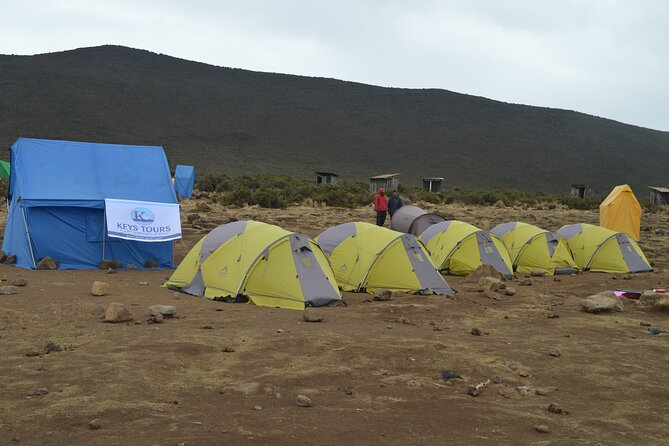
- Marangu uses mountain huts: You sleep at Mandara, Horombo, and Kibo huts rather than in tents.
- Keys Hotel provides a practical base: You stay in Moshi before the climb and return there for a hot shower after descending.
- The private format matters: Only your group takes part, allowing the pace and rest stops to be handled more personally.
- The route changes dramatically: Expect wet rainforest, giant heather, high alpine desert, volcanic scree, and a lush forest descent.
- Named guides and staff are part of the appeal: Moses, John Bosco, Swai, Trizer, and Frank are specifically associated with attentive guiding and friendly support.
Why Kilimanjaro feels different from an ordinary mountain hike
Kilimanjaro is Africa’s highest mountain and the world’s highest free-standing volcanic summit. Its main peak, Kibo, reaches 5,895 meters. Mawenzi rises to 5,149 meters, while Shira reaches 3,962 meters.
The mountain’s name is often explained as a combination of the Swahili word kilima, meaning mountain, and the Kichagga word njaro, loosely linked with whiteness. The snowy summit is not guaranteed to look the same in every season, but the mountain’s scale is constant. It rises alone above the surrounding region, without a chain of neighboring peaks competing for attention.
Kilimanjaro became a national park in 1973, opened officially for tourism in 1977, and gained UNESCO World Heritage status in 1987. You are not simply walking to a high point. You are crossing several ecological zones in a matter of days, with each one bringing different plants, weather, and walking conditions.
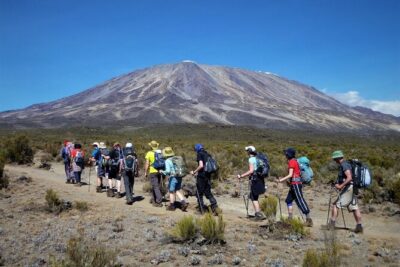
The Marangu Route is often called the Coca-Cola Route. This tour uses it for both the ascent and the descent. The advantage is a straightforward trail and hut accommodation. The tradeoff is that the route gives you less time for gradual acclimatization than longer options, so you need to take the slow pace seriously.
More Private Tours in Kilimanjaro
- Private Full Day Hiking Experience to Marangu Route
★ 5.0 · 61 reviews - Private Kilimanjaro Hike 7 Day Lemosho Route
★ 5.0 · 60 reviews - Kilimanjaro 7 Day Private Trekking Experience
★ 5.0 · 40 reviews
Keys Hotel gives you a soft landing in Moshi
Your experience begins with pickup at Kilimanjaro International Airport at about 7:30 a.m. You are taken to Keys Hotel in Moshi, a family-run property about a 10-minute walk from the town center.
That first night matters. A mountain climb is easier when you are not trying to solve transport, meals, and hotel arrangements at the last moment. Keys Hotel provides accommodation, meals, a swimming pool, and friendly service before you head uphill. After the climb, you return there for a hot shower and an overnight rest.
I like this setup because it gives the trip a clear beginning and end. You can arrive, settle in, and meet the operation’s team before walking into the park. At the finish, you return to a familiar place instead of moving straight on to another hotel.
The price is $1,965 per person. That is a serious sum, but it covers more than a park visit or a guided day hike. You are paying for airport pickup, hotel accommodation, mountain guiding, porter support, hut nights, meals during the climb, and a private arrangement. Drinks and tips are extra, so budget for those separately.
One detail needs checking before you pay: the promotion is described as seven days and six nights, while the day-by-day schedule runs from Day 1 through Day 6 and is also described as approximately six days. Ask Keys Tours to confirm the exact number of hotel and hut nights, along with the included meals. The stated inclusions list five breakfasts, three dinners, and four lunches, which does not perfectly match every meal implied by the schedule.
Day 2: four hours from Marangu Gate to Mandara Hut
After breakfast, you transfer to Marangu Gate at Kilimanjaro National Park. This is where the walking begins.
The first section passes through dense rainforest. Expect a lush setting, tall trees, muddy sections, and a trail that may feel slippery after rain. The pace is intentionally slow and comfortable. That is good mountain practice, not wasted time. You want to conserve energy and give your body a chance to begin adjusting to altitude.
Mandara Hut sits at about 2,700 meters. The walk from the gate takes roughly four hours, with a packed lunch provided. Your guide and porters prepare the meals during the climb, so you do not need to carry a full camp kitchen.
A waterfall detour is available in the rainforest. Discuss it with your guide before setting off, since a side trip adds time and effort on a day when you may prefer to keep the main route simple. I would consider it if your legs feel good and the weather is kind. The forest itself offers plenty to look at, including moss-covered trees and dense plant growth.
This is an approachable first mountain day, but do not mistake the short distance for a free pass. Mud, humidity, and uphill walking can still tire you. Keep your rain protection handy.
Day 3: Mandara to Horombo and the first big change in scenery
The route to Horombo Hut takes about five hours, though the full walking day is described as roughly seven hours. You climb toward 3,700 meters, leaving most of the rainforest behind.
A steep section through the upper forest can be wet. After about two kilometers, the vegetation opens into tall giant heather mixed with tussock grass. Farther on, the heather becomes shorter and more scattered. Lobelia and groundsels occupy wetter patches, and small everlasting flowers add color without making the high country feel gentle.
Horombo is an important stop because you are now high enough for altitude to become a real concern. Walk slowly. Drink according to your guide’s instructions, eat even if your appetite drops, and tell the guide promptly if you feel unwell. The private format helps here, since your group does not need to match the speed of a larger party.
This day is longer than the first. You may feel the air thinning, especially on steeper sections. The goal is not to prove how quickly you can walk. It is to arrive at Horombo with enough energy for the demanding days ahead.
More Marangu Route climbs:
- Kilimanjaro climb, Marangu route (6-day)
★ 5.0 · 72 reviews - Climbing Kilimanjaro – Marangu Route
★ 5.0 · 65 reviews - From Arusha/Moshi: Kilimanjaro Hike Marangu Route Day Trip
★ 4.5 · 54 reviews - Mount Kilimanjaro Day Hike Through Marangu Route to Mandara Hut
★ 5.0 · 37 reviews
Day 4: Kibo Hut and the mountain’s moonlike upper zone
From Horombo, you follow a path west before turning north toward Middle Red Hill and the Triplets. The final three kilometers to Kibo Hut continue westward.
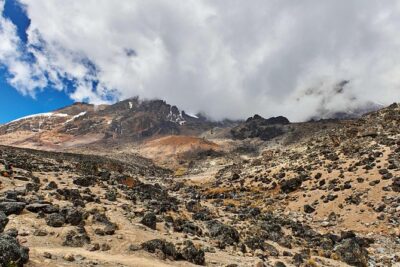
Kibo Hut sits at about 4,700 meters. The day takes around seven hours, and the setting changes sharply. The trees and heather are gone. You cross an alpine desert scattered with rocks, with the ground described as resembling the surface of the moon.
Mawenzi Peak provides the strongest visual reward on this section. Its jagged profile rises to the east, creating a striking contrast with Kibo’s broad volcanic mass. This is a good day for keeping your camera accessible, but do not let photography dictate the pace. At this altitude, a simple walk can feel surprisingly hard.
The night at Kibo is short in practical terms, because the summit attempt begins very early. You need a quick meal and a warm drink before setting out in darkness. Keep your warm layers, headlamp, gloves, and water ready before you lie down. The less you have to organize before dawn, the better.
Day 5: the hard push to Uhuru Peak
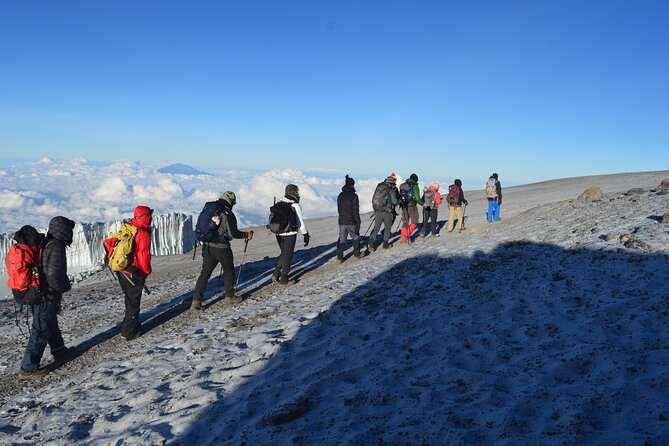
Summit day is the toughest part of the climb. You leave Kibo Hut in darkness and spend roughly five to six hours making the slow ascent to Gilman’s Point on volcanic scree.
Scree shifts under your boots, so every step can feel inefficient. The correct pace is small and steady. The line of headlamps ahead may look like a row of fireflies moving up the slope, but do not let the sight tempt you to hurry. Your guide’s job is to keep the effort controlled.
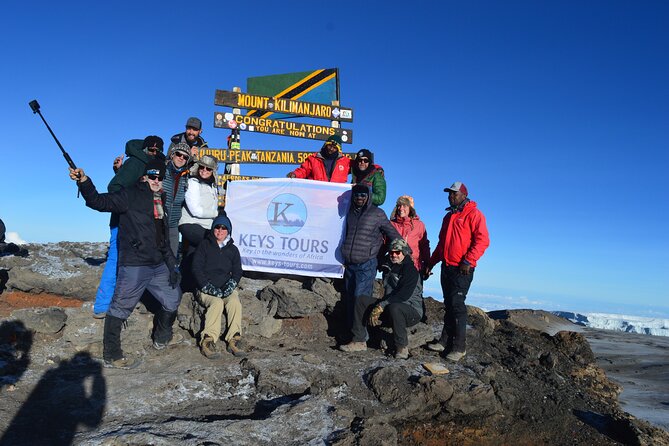
The route reaches Gilman’s Point on the crater rim. From there, you continue toward Uhuru Peak, the highest point in Africa, at 5,895 meters. The sunrise is the great reward for the early start. From the high rim, the horizon can curve subtly, and the first light gives the volcanic summit a memorable sense of scale.
The schedule gives about five hours to the Uhuru Peak section, though the exact time depends on conditions and your pace. Keep your camera ready, but protect it from cold and handle it only when you can do so safely. At high altitude, even small tasks can use more energy than expected.
After the summit, you descend toward Horombo Hut. The loose scree allows some hikers to slide and skid down in large steps, but this is only sensible if your guide considers it safe and your knees feel stable. A controlled descent is more important than a bit of fun.
You may rest briefly at Kibo Hut before continuing to Horombo. The lower you go, the easier breathing should become. That relief can lift your mood quickly, but fatigue is still a concern. Eat, drink, and keep your footing careful.
The day is listed as about six hours for the descent to Horombo, in addition to the summit ascent. It is a very long mountain day. This is where a private guide and a supportive porter team can make a practical difference.
Day 6: five hours down through the forest to Marangu
The final walk takes you from Horombo to Marangu Gate in about five hours. The route returns through the upper forest, where giant ferns and moss known as Old Man’s Beard hang from the trees.
There are many steps on the way down. Descending may feel easier than climbing, but tired legs and knees can make this section uncomfortable. Use trekking poles if you have them, shorten your stride, and stop briefly when needed.
At Marangu Gate, you transfer back to Keys Hotel. A hot shower and a proper rest are simple pleasures after the summit attempt. You have gone from humid forest to volcanic desert and back again in only a few days.
The schedule provided ends here, but the trip is marketed as seven days and six nights. Confirm if an additional hotel night or transfer day is included. That small point affects both your onward travel and the total value of the package.
The guide and porter team matters more than the hotel
A Kilimanjaro climb depends heavily on the people who manage the walking days. Specific staff praised for making the experience feel safe and well cared for include Moses, John Bosco, Swai, and Trizer. Frank is also associated with a fun waterfall hike, which may be relevant if you arrange that forest detour or another activity through the hotel.
You cannot assume that every named person will be assigned to your group, so ask who your lead guide will be. Ask how many porters are included, what they carry, and how the team handles a slow or unwell climber. These questions are more useful than simply asking how many stars the hotel has.
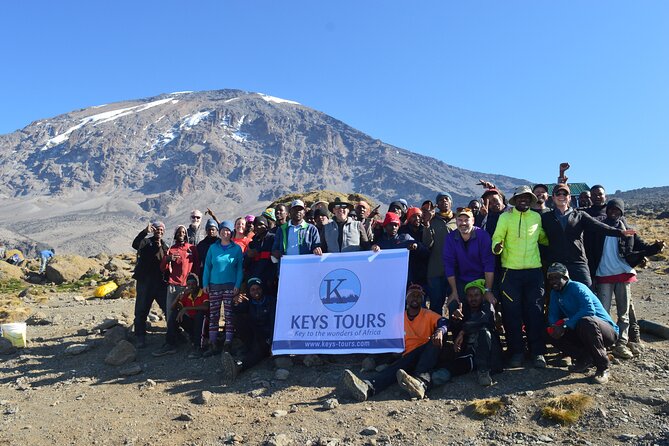
The tour is private, meaning only your own group participates. That can be a real advantage on a mountain. You can start slowly, pause for photographs, or discuss a side trip without negotiating with a large party. It may also cost more than a shared climb, but the price includes the benefit of personal attention.
Who will get the most from this climb
This trip suits you if you want Kilimanjaro with a clear hotel base, hut accommodation, organized transfers, and a private guide team. It is also a good match if you prefer the Marangu Route’s established huts and do not want to sleep in tents.
You should have a moderate level of physical fitness. That phrase should not be read as meaning easy. You need to manage several hours of uphill walking, a long summit day, uneven volcanic ground, and a substantial descent.
The main question is acclimatization. The schedule reaches Kibo after only a few mountain nights and goes for the summit soon after. If you are worried about altitude or prefer a slower progression, ask if the itinerary can be extended before booking. Do not treat the listed six-day schedule as a promise that your body will adapt on command.
Practical details to settle before you book
Pickup is offered from Kilimanjaro International Airport, with a stated start time of 7:30 a.m. The activity is near public transportation, but the supplied plan centers on arranged transfers, not independent bus travel.
The package includes parking fees, five breakfasts, three dinners, and four lunches. Drinks and tips are not included. Clarify which meals are served at Keys Hotel and which are prepared on the mountain, since the published meal count and day-by-day plan do not line up perfectly.
Confirmation is received at booking. Cancellation is allowed for a full refund if you cancel at least three full days before the local start time. Later cancellations and late changes are not refundable or accepted. The climb also depends on good weather. If poor weather forces cancellation, you are offered another date or a full refund.
Should you book this Marangu Route climb?
I would consider this tour if you want a private Kilimanjaro attempt with a family-run Moshi base, hut accommodation, and a route that gives you a clear ecological progression. The hotel, airport pickup, meal support, and named guide team make the package easier to manage than arranging every part separately.
I would not book it without first confirming the duration, exact meal plan, guide assignment, porter arrangements, and altitude strategy. The biggest challenge is not the price. It is the compressed schedule and the long summit day.
Book it if you are reasonably fit, comfortable with an early summit start, and willing to walk slowly. Ask for a longer acclimatization plan if you want more time on the mountain. With those points settled, the $1,965 price can offer solid value for a private climb that begins and ends with the practical comfort of Keys Hotel.
FAQ
How long is the Kilimanjaro experience?
It is promoted as seven days and six nights, while the detailed schedule runs through six days and is described as approximately six days. Confirm the exact duration with Keys Tours before booking.
What route does the climb use?
The climb uses the Marangu Route. You ascend and descend through Marangu Gate, staying at Mandara Hut, Horombo Hut, and Kibo Hut during the mountain portion.
How high is Uhuru Peak?
Uhuru Peak is listed at 5,895 meters above sea level. It is the summit of Kibo and the highest point on Mount Kilimanjaro.
Where does pickup take place?
Pickup is offered from Kilimanjaro International Airport, Kilimanjaro Airport Road, Tanzania. The stated start time is 7:30 a.m.
Is this a private tour?
Yes. Only your own group participates in the activity.
What meals are included?
The listed inclusions are five breakfasts, three dinners, and four lunches. Drinks and tips are not included.
What level of fitness is required?
You should have a moderate level of physical fitness. The climb includes several hours of walking, a steep summit ascent on volcanic scree, and a long descent.
Can I cancel for a full refund?
You can cancel for a full refund if you cancel at least three full days before the local start time. If poor weather causes the experience to be canceled, you are offered another date or a full refund.
More Seven-Day Trips in Kilimanjaro
- Kilimanjaro climb by Lemosho Route (7-day)
★ 5.0 · 651 reviews - Kilimanjaro climb, Machame Route (7-day)
★ 5.0 · 262 reviews - Climbing Kilimanjaro through 7 days Machame Route
★ 5.0 · 151 reviews - 7-Day Machame Kilimanjaro Summit Tour from Arusha
★ 5.0 · 125 reviews
Just added around Kilimanjaro
- 6 days Machame route climbing Mt.Kilimanjaro★ 5.0 · 8 reviews
- machame route★ 5.0 · 16 reviews
- Mt Kilimanjaro 6 days Marangu route hike★ 5.0 · 3 reviews
- Private Cycle to Kilimanjaro Bike Park Safari★ 5.0 · 6 reviews
- West Kilimanjaro cycling Adventures★ 4.5 · 8 reviews
- Kilimanjaro Climb • Marangu Route ~ 9 Day★ 5.0 · 4 reviews
- 3 Days Private E-Bike Tour in West Kilimanjaro★ 5.0 · 3 reviews
- Kilimanjaro Climb • Machame Route ~ 10 Day★ 5.0 · 6 reviews
Marangu Route Climbs, compared.
Browse the lists this tour appears in