
Reviewed · MACHAME ROUTE CLIMBS
7-Day Mt. Kilimanjaro Hiking: Machame Route
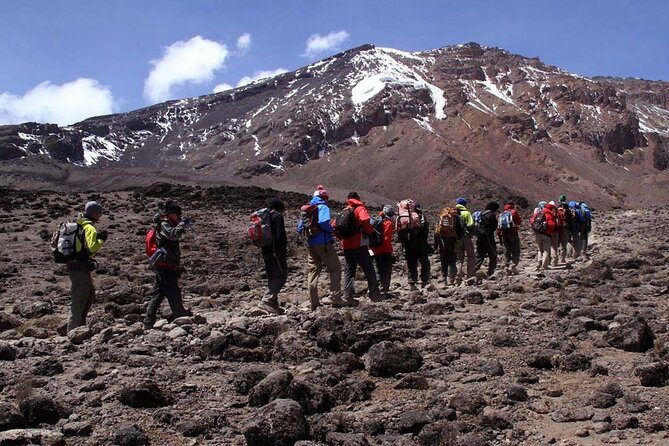
The best thing about this 7-day Machame Route climb is the changing scenery. You move from wet rainforest to open moorland, volcanic rock, alpine desert, and finally snow near Uhuru Peak. It is Kilimanjaro in a compact, scenic package, but the short schedule makes the climb demanding.
I like the built-in acclimatization day at Lava Tower and Barranco, where you climb high and sleep lower. I also like the strong guide support: Abouh, Samuel, Justin, and Edgar are named as guides connected with this trip, and the available feedback repeatedly points to a caring, encouraging crew. The drawback is simple: seven days is a tough timetable, especially for anyone new to altitude or long hikes.
Key points at a glance
- Rainforest to glacier views: The route changes habitat almost every day, with the Western Breach, Heim Glacier, and summit snow along the way.
- Lava Tower at 4,630 meters: You climb high on day three, then sleep at Barranco, giving your body a useful altitude adjustment.
- A true summit night: You leave around 11:30 p.m. for a steep, cold climb to Stella Point and Uhuru Peak.
- Small-group format: The maximum group size is 15 people, large enough for support but not a huge expedition.
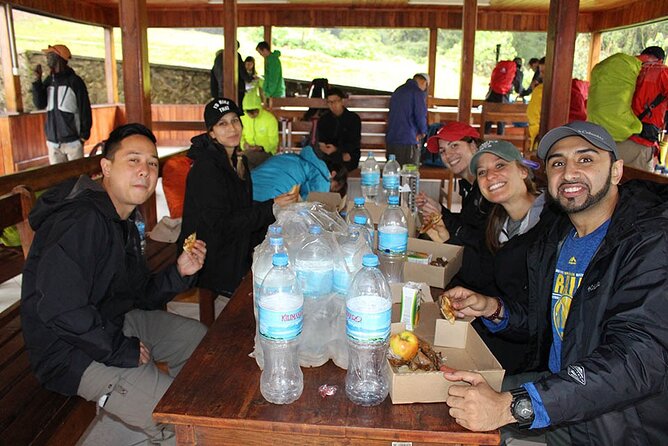
- Good logistical coverage: Park fees, camping equipment, portage, meals, bottled water, and English-speaking mountain staff are included.
- Bring your own mountain gear: Clothing and equipment are not included, and tips, flights, and visas are extra.
Why the Machame Route earns its Whiskey nickname
Machame is Kilimanjaro’s most popular route for a reason: it offers some of the mountain’s best scenery without using the same trail for both ascent and descent. You climb through the Machame side and return by the Mweka route, which gives the week a sense of progress rather than repetition.
The route is also called the Whiskey route, a playful contrast to the gentler Marangu route. Do not let the nickname make it sound easy. Machame is steep, rocky, and tiring, with long days and a hard summit push. The seven-day version gives you some time to adjust, but it remains better suited to someone with hiking, backpacking, or high-altitude experience.
The price is $2,500 per person. That is a serious amount, but it covers the main costs that can make a Kilimanjaro climb expensive: national park fees, camping equipment, porters, a professional English-speaking mountain guide, a cook, meals, and at least three liters of bottled water per day. You still need to budget for tips, visas, flights, and mountain clothing and equipment.
More Machame Route climbs:
- Kilimanjaro climb, Machame Route (7-day)
★ 5.0 · 262 reviews - Climbing Kilimanjaro – Machame Route
★ 5.0 · 170 reviews - Climbing Kilimanjaro through 7 days Machame Route
★ 5.0 · 151 reviews
Starting from Arusha at 7 a.m.
The listed meeting point is Arusha Airport, with a 7 a.m. start. The trip information also describes pickup from Arusha, so confirm your exact pickup arrangement before setting out. After breakfast, you drive toward Machame Village, where you can buy mineral water and receive a packed lunch.
The road may take you close to Machame Gate, but conditions can change. If the vehicle cannot continue, you may walk about three kilometers from the village to the gate. The walk can take about an hour, and muddy conditions are possible.
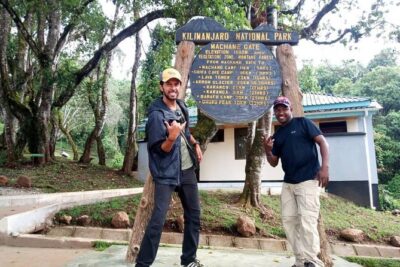
At the gate, you register with the national park before starting uphill. This is one reason an early start matters. Registration, packing, and the road transfer all take time, and day one is already a full hiking day.
The group limit is 15 people. That is worth noting because a group of this size can feel quite different from a private climb. You have company on the trail and a larger support team, but you may not move at exactly your own pace.
Day 1: Mud, roots, and the Machame rainforest
The first hike takes about eight hours and leads into the rainforest almost at once. The trail is wet and can become muddy, slippery, and slow, especially if rain has fallen. Good footwear matters here, as does keeping spare clothing protected inside your pack.
You stop for a welcome lunch roughly halfway through the day. The forest is not just a warm-up. It can be tiring because of the mud, uneven ground, and steady climb. The reward comes from the sudden change in feeling as you leave the lower forest and head toward the first camp.
The exact camp description is cut off in the supplied details, but the day clearly ends in the Machame area after a long ascent. You should treat this first day as a serious hike, not a gentle introduction.
Day 2: Moorland and the open Shira Plateau
Day two covers about nine kilometers in roughly six to seven hours. You begin by climbing out of the upper forest, then continue through moorland at a gentler gradient before crossing onto the Shira Plateau.
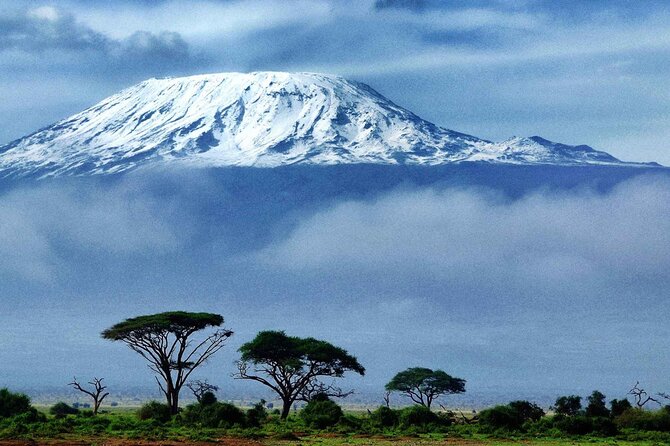
This is where the route starts to feel wide and exposed. You can look east toward the Western Breach and its glaciers, while Kibo rises ahead. The setting becomes rockier and less sheltered, and the Shira campsite sits at about 3,840 meters.
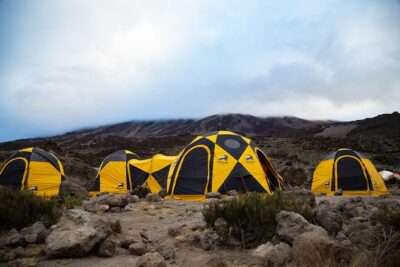
Cold is a real factor. The camp is exposed, and temperatures can fall well below freezing. The porters boil water for drinking and washing, which is useful after a dusty or wet day, but do not expect hotel-style comfort. Camping on Kilimanjaro means you need to be organized with layers, sleeping gear, and the small items you want close at night.
More treks and hikes around Kilimanjaro:
- Kilimanjaro climb by Lemosho Route (7-day)
★ 5.0 · 651 reviews - 8-Day Small-group Lemosho Kilimanjaro Summit Trekking
★ 5.0 · 186 reviews - Kilimanjaro Climbing Lemosho Route 8 Days.
★ 5.0 · 186 reviews - Kilimanjaro climb, Lemosho Route (8-day)
★ 5.0 · 148 reviews
Day 3: Lava Tower gives the climb its first real test
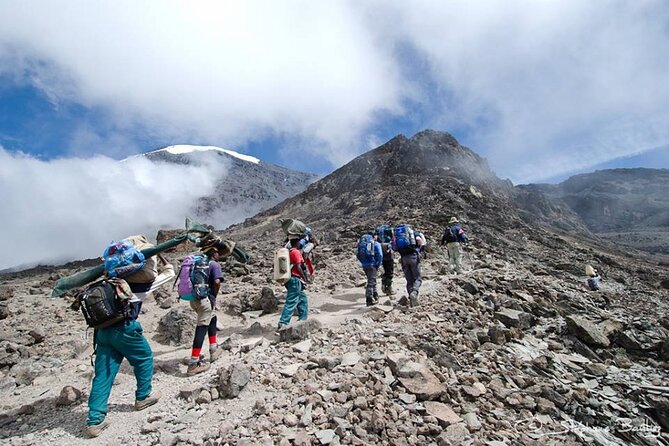
Day three is one of the most useful days on the route and one of the hardest. You walk for about five hours through semi-desert and volcanic rock toward Lava Tower, reaching 4,630 meters.
The steep scree path and altitude can bring breathlessness, headaches, and irritability. These symptoms are not unusual at this height, but they should be taken seriously. Keep your guide informed about how you feel, and do not try to hide symptoms to appear strong.
After lunch near Lava Tower, you descend about 680 meters to Barranco Camp. This is the route’s classic altitude strategy: climb high, then sleep lower. The long climb to Lava Tower is tiring, but the descent helps your body adjust before summit day.
Barranco Camp sits below the tower in a dramatic rocky setting. At this point, the trek begins to feel less like a forest hike and more like a high mountain crossing. You have gained altitude quickly, so this is a day when patience matters more than speed.
Day 4: The Barranco Wall and a useful rest rhythm
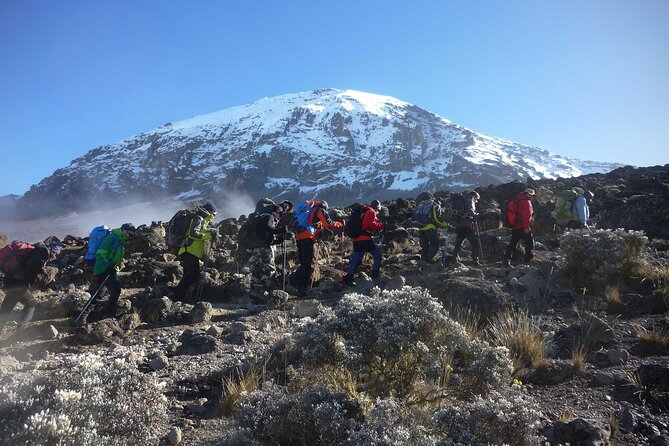
Day four is shorter, with about four to five hours of hiking over roughly five kilometers. Its main feature is the Great Barranco Wall, which looks intimidating from below.
The route is described as a Class 2 scramble. That means you should expect to use your hands in places, but it is not presented as technical climbing. The wall is often easier than it first appears, though you still need to move carefully and follow your guide’s instructions.
At the top, you can see Heim Glacier and look out above the clouds. The trail then rises and falls through the Karanga Valley. This up-and-down pattern can be tiring on the legs, but the shorter day is valuable. You have time to recover, eat, and prepare for the higher camps ahead.
This is also a good point to check your clothing, water, headlamp, and personal items. Once you reach the upper camps, wind and cold become more serious concerns.
Day 5: Karanga to Barafu Camp at 4,550 meters
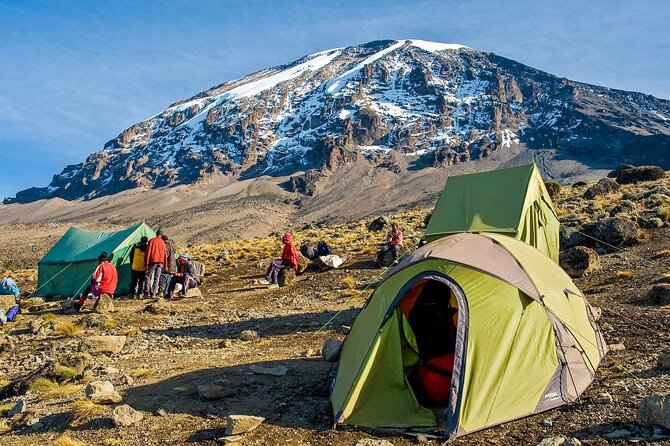
The hike from Karanga Camp to Barafu is only about two to three hours and four kilometers, but the short distance does not make it an easy day. You climb to Barafu Camp at about 4,550 meters, the final camp before the summit attempt.
The trail meets the Mweka route here. You will use that route for the descent, so Barafu is where the ascent and return paths connect.
Barafu means ice in Swahili. The camp is on a rocky, exposed ridge with no accessible water for the porters. Wind and rocks are part of the setting, and it is wise to learn where everything is before darkness arrives. The staff serves an early dinner, then you rest before the midnight start.
This is a strange part of the climb. You have spent only a few hours walking, but your body is tired from the altitude and the accumulated days. Try to use the afternoon quietly. The summit attempt is not a normal morning hike.
Day 6: Stella Point, sunrise, and Uhuru Peak
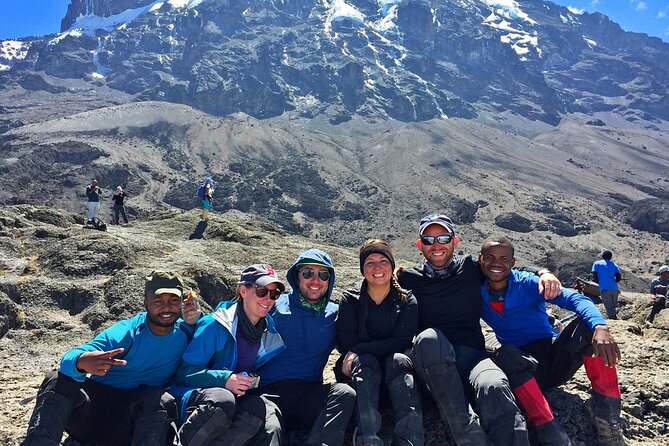
Summit day begins around 11:30 p.m. with tea and biscuits. You start in the dark and climb northwest over heavy scree toward Stella Point, at 5,685 meters.
The six-hour ascent to Stella Point is likely to be the most mentally and physically difficult part of the route. The cold, darkness, thin air, and slow progress can make the distance feel longer than it is. This is where the guide team matters most. The available feedback gives special attention to Abouh, Samuel, Justin, and Edgar for staying encouraging, attentive, and reassuring during the ascent.
At Stella Point, you may reach the crater rim in time for sunrise, weather permitting. From there, the trail continues for about two hours toward Uhuru Peak. Snow is normally present along this final stretch, and the summit sits at 5,895 meters.
Your time at the top depends on weather conditions. Do not plan on a long stay. The cold and altitude can become dangerous, so photos and celebration should be brief before you begin the descent.
The information provided does not give exact hiking times for the full return to camp, but day six is clearly an exceptionally long day. Expect the summit climb, time at the top, and a descent that will test tired legs. This is the point where a steady pace and close communication with the guides are more useful than enthusiasm alone.
Day 7: Certificates, celebration, and the Mweka descent
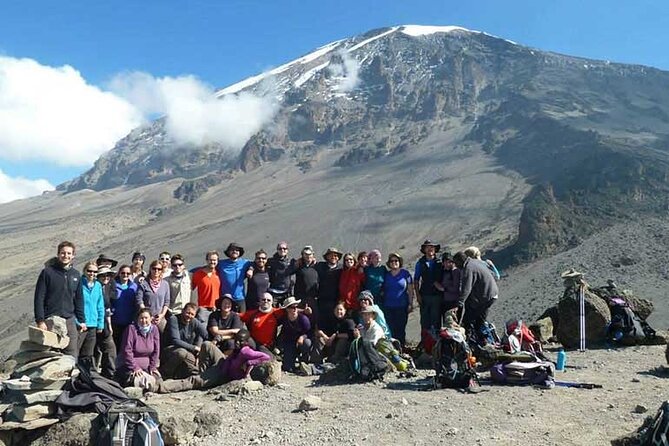
After a well-earned breakfast, the mountain staff holds a celebration with singing and dancing. You also present tips to the guides, assistant guides, cook or cooks, and porters. Tips are not included in the $2,500 price, so plan for this extra cost.
You then descend for about three hours to Mweka Gate through the forest. The listed distance is roughly 15 kilometers, followed by a further one-hour, three-kilometer descent to Mweka Village.
At the park gate, you sign your name to receive a completion certificate. Reaching Stella Point earns a green certificate, while reaching Uhuru Peak earns a gold certificate. That distinction gives the final day a clear sense of achievement, even if fatigue has taken over.
The descent is shorter in duration than the summit push, but it can be hard on knees and feet. Keep water handy and take care on wet sections. The day ends with transport arrangements after the Mweka Village section, though the supplied details do not specify the exact return transfer.
What the $2,500 price really covers
The package includes:
- National park fees and taxes
- Camping equipment
- Porters
- Professional English-speaking mountain guide
- Cook
- Breakfast for five days
- Lunch for six days
- Dinner for six days
- At least three liters of bottled water each day
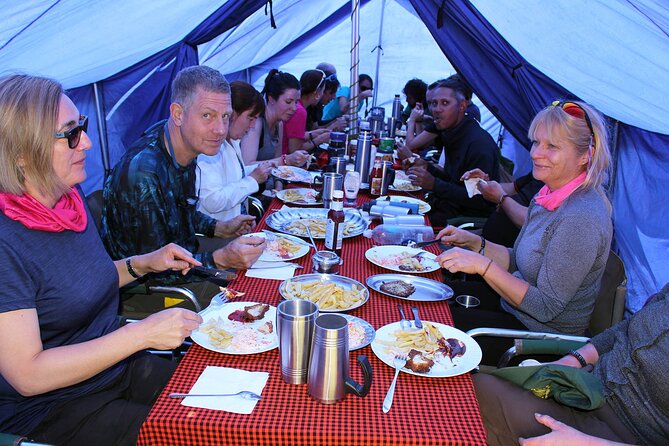
This is a useful list because food, park access, and portage are not minor expenses on Kilimanjaro. Porters carry camping supplies and other group equipment, while the cook handles meals during the trek. You are paying for a working mountain operation, not just a guide walking beside you.
You still need to pay for flights, a visa, tips, and mountain gear. The last item can be costly if you do not already own suitable cold-weather clothing, waterproof layers, gloves, and footwear. The price looks stronger if you already have your equipment or can rent it separately at a sensible rate.
The guide team and support crew
The strongest theme in the available feedback is the human support. Abouh is identified as head guide in one account, while Samuel, Justin, and Edgar are named as guides in another. The descriptions emphasize care, good humor, motivation, and reassurance.
That matters on this route. A seven-day climb gives you less time than a longer itinerary to adjust to altitude, so guides must watch how you are doing and help the group keep a controlled pace. A cheerful crew can also make wet forest mornings and freezing camps feel more manageable.
Porters and cooks are part of the experience too. You should recognize that their work is central to the trip and budget for tips. The celebration on the final morning is a direct reminder that reaching the summit is a team effort.
Who should book this climb?
I would recommend this trip to a fit hiker who is comfortable with long days, steep ground, camping, cold nights, and an overnight summit attempt. Previous high-altitude or backpacking experience would make the schedule easier to handle.
You should think twice if you want a relaxed mountain holiday or have never spent several days hiking in a row. The itinerary is scenic, but it is not gentle. The biggest concerns are the short seven-day schedule, the altitude on day three, the exposed cold camps, and the demanding summit night.
The free cancellation policy gives you a useful safety net before the deadline. Cancel at least 24 hours before the local start time for a full refund. Within 24 hours, no refund is provided, and late changes are not accepted.
Is this Machame climb worth booking?
Book it if you want the classic Machame scenery, prefer a route that descends by Mweka, and value an organized package with porters, camping gear, meals, water, and an English-speaking guide team. The named guides and repeated praise for their care are encouraging, especially on a route where steady support matters.
Choose a longer Kilimanjaro itinerary if altitude is your main worry or you want more time to adjust. Choose this seven-day version if you are prepared for a hard week and want a direct, scenic challenge rather than an easy introduction to mountain hiking.
FAQ
Where does the climb start?
The listed meeting point is Arusha Airport in Tanzania, with a 7 a.m. start. Pickup is also offered from Arusha, so confirm the exact pickup point when booking.
How long is the Machame Route experience?
The climb lasts approximately seven days. Hiking times vary by day, from about two to three hours on day five to a demanding summit day that begins around 11:30 p.m.
Is bottled water included?
Yes. The package includes at least three liters of bottled water per day, along with meals during the trek.
What meals are included?
The package includes five breakfasts, six lunches, and six dinners.
Is mountain equipment included?
No. Mountain gear is not included. You must also arrange your own flights and visa, and tips are extra.
What happens if I cancel?
You can receive a full refund if you cancel at least 24 hours before the experience start time. Cancellations or changes made within 24 hours are not accepted, and the payment is not refunded.
More Seven-Day Trips in Kilimanjaro
- 7-Day Machame Kilimanjaro Summit Tour from Arusha
★ 5.0 · 125 reviews - 7 Days Kilimanjaro via Machame route affordable price
★ 5.0 · 110 reviews - Private Kilimanjaro Hike 7 Day Lemosho Route
★ 5.0 · 60 reviews - 7 Days Machame route – Kilimanjaro
★ 5.0 · 45 reviews
Just added around Kilimanjaro
- 6 days Machame route climbing Mt.Kilimanjaro★ 5.0 · 8 reviews
- machame route★ 5.0 · 16 reviews
- Mt Kilimanjaro 6 days Marangu route hike★ 5.0 · 3 reviews
- Private Cycle to Kilimanjaro Bike Park Safari★ 5.0 · 6 reviews
- West Kilimanjaro cycling Adventures★ 4.5 · 8 reviews
- Kilimanjaro Climb • Marangu Route ~ 9 Day★ 5.0 · 4 reviews
- 3 Days Private E-Bike Tour in West Kilimanjaro★ 5.0 · 3 reviews
- Kilimanjaro Climb • Machame Route ~ 10 Day★ 5.0 · 6 reviews
Machame Route Climbs, compared.
The Best of Machame Route in 6 Days: Your World’s Summit Guide
Read our review →Browse the lists this tour appears in