
Reviewed · MACHAME ROUTE CLIMBS
7-Day Kilimanjaro Trekking Tour via Machame Route
Kilimanjaro’s Machame Route earns its nickname as the mountain’s scenic route honestly. You move from ancient rainforest to heath, moor, alpine desert, and the stark summit zone, with sunset at Shira and stars above Barranco. I like the route’s changing scenery and the built-in acclimatization day at Lava Tower and Barranco Valley. The catch is simple: this is not a gentle stroll. Steep climbs, rough descents, and a long summit night demand solid fitness and patience.
I also like that the tour begins with a Moshi briefing and ends with a hot shower, certificate, and farewell ceremony. The local team is another strength, with guides and crew members such as Mwinyi, Gloria, Kelvin, David, James, Maulid, Ombeni, Prosper, and Amiri associated with the operation. You should also know that the price is substantial, at $2,850 per person, though the long mountain support package helps explain the cost.
Key points to know before booking
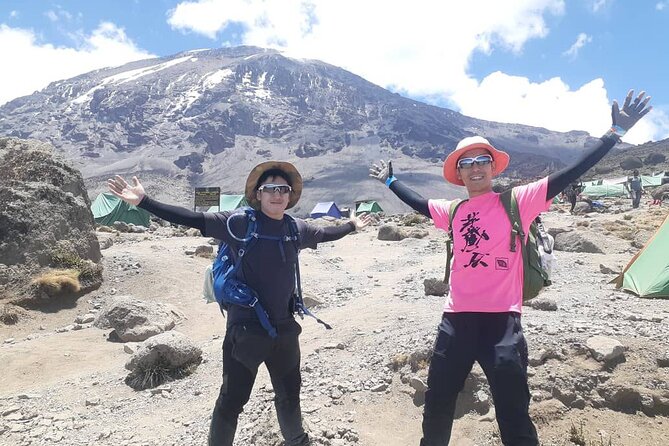
- Machame gives you major scenery changes: rainforest, Shira Plateau, alpine desert, Barranco Valley, and glacial summit views.
- The Lava Tower day helps with acclimatization: you climb high to about 4,640 meters, then sleep lower at Barranco Camp.
- Summit night is the hardest part: expect a midnight start, 5 to 7 hours to Stella Point, and another 1 to 2 hours to Uhuru Peak.
- The Barranco Wall looks serious but is manageable: you use hands and feet in places, with safety support if needed.
- Porters and cooks make the expedition possible: the setup includes a separate dining tent, tables, chairs, and substantial multi-course meals.
- This is a private activity: only your own group participates, with pickup available and a Moshi hotel night before and after the climb.
Why the Machame Route is worth the effort
The Machame Route is a good fit if you want Kilimanjaro to feel like a real mountain journey rather than a simple uphill walk. The scenery changes quickly, and each camp has its own character. You begin under tall forest, sleep beneath wide open skies, cross dry volcanic country, then make the final push over ash and rock to Africa’s highest point.
The route also creates a useful rhythm. Day 4 takes you up to Lava Tower, around 4,640 meters, but you sleep at Barranco Camp, only slightly higher than the previous night. That high-climb, lower-sleep pattern gives your body a chance to adjust before the hard days ahead.
Still, seven days is not a casual schedule. You will walk for roughly 4 to 10 hours a day, with the summit day extending to about 10 hours. The guides set a slow pace, known locally as pole pole, but no guide can remove the altitude, cold, fatigue, or steep ground.
More Machame Route climbs:
- Kilimanjaro climb, Machame Route (7-day)
★ 5.0 · 262 reviews - Climbing Kilimanjaro – Machame Route
★ 5.0 · 170 reviews - Climbing Kilimanjaro through 7 days Machame Route
★ 5.0 · 151 reviews
Moshi arrival and the first night
Your experience begins with arrival at Kilimanjaro International Airport, followed by a transfer to Keys Hotel in Moshi. The planned start time is 8:00 am, and the first day includes a briefing and overnight stay.
That first night matters more than it may seem. You can meet the team, check your equipment, and hear the plan before stepping onto the mountain. It also keeps the airport arrival separate from the first walking day, which is much more sensible than trying to reach the gate immediately after a long flight.
The hotel is described as a base for briefing and rest, not as a major attraction. Think of it as a practical launch point. You will want to use the evening for sleep, hydration, and a final check of warm clothing, headlamp, daypack, and personal supplies.
Day 2: rainforest from Machame Gate to Machame Camp
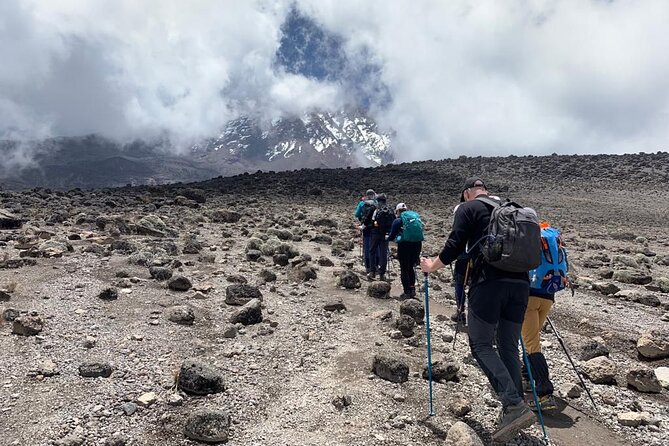
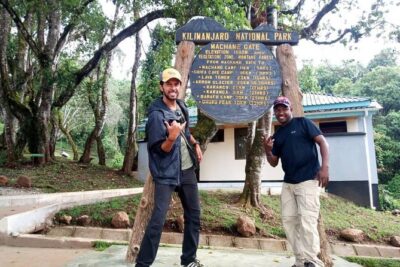
After breakfast, the drive from Keys Hotel to Kilimanjaro National Park gate takes about an hour. Your guide handles entrance forms while you watch mountain crews prepare food, tents, and equipment. This loading process gives you a useful look at how much work happens behind the scenes.
The walk to Machame Camp takes about 5 to 6 hours. The first part is through rainforest, with old trees and thick vegetation creating a cool, shaded start. After the airport transfer and formalities, this is your first real test of rhythm. Walk steadily, keep your pace easy, and do not treat the opening hours as a race.
Machame Camp is your first mountain night. The main drawback is that the first day can feel longer than expected because the excitement, humidity, and unfamiliar footing all add to the effort. Your reward is a strong sense of transition. You have left Moshi and entered a high mountain environment.
Day 3: Shira Plateau and a wide-open sunset
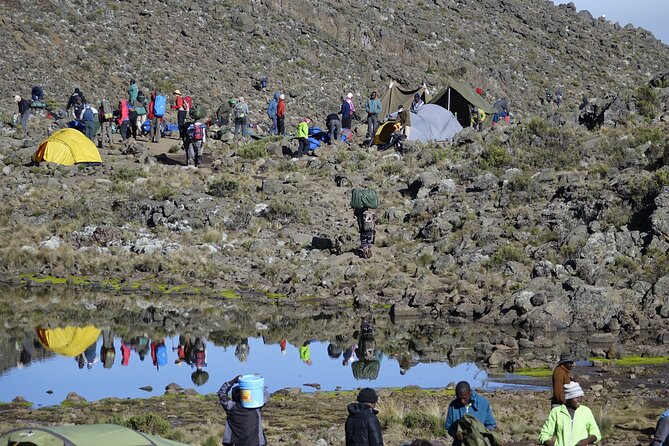
Day 3 is shorter in distance than the opening climb, but you still start early. The forest gives way to heath and moor, so the route feels dramatically more open. The mountain’s vegetation becomes lower and tougher, and the views begin to stretch across the surrounding ranges.
You reach the Shira Plateau and camp around mid-afternoon. This is one of the route’s special nights. The campsite offers broad mountain views, and the Kibo glacier can catch the evening light as the sun goes down. A clear sunset here is one of the strongest visual rewards on the trip.
The open plateau also exposes you to more wind and changing weather. Do not assume a warm afternoon will last. Keep layers close, and use the camp arrival as a chance to eat, drink, and rest instead of wandering far from camp.
More treks and hikes around Kilimanjaro:
- Kilimanjaro climb by Lemosho Route (7-day)
★ 5.0 · 651 reviews - 8-Day Small-group Lemosho Kilimanjaro Summit Trekking
★ 5.0 · 186 reviews - Kilimanjaro Climbing Lemosho Route 8 Days.
★ 5.0 · 186 reviews - Kilimanjaro climb, Lemosho Route (8-day)
★ 5.0 · 148 reviews
Day 4: Lava Tower, alpine desert, and Barranco
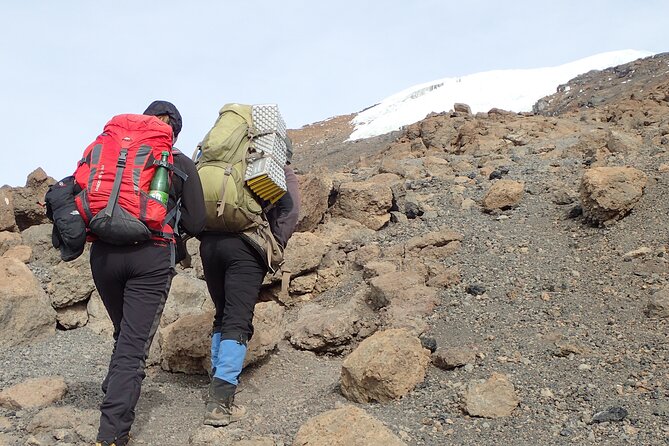
Day 4 is the clever part of the itinerary. You climb from Shira to Lava Tower at about 4,640 meters, rest there, then descend through the Barranco Valley to camp. The total walking time is about 6 to 7 hours.
This day moves through alpine desert, with small lobelia plants and giant Senecio plants adding odd, memorable shapes to the dry terrain. The Barranco Valley is less lush than the lower forest but far more dramatic. You can feel the mountain becoming harsher and more exposed.
The value here is not only scenery. You spend time at a higher elevation before sleeping lower, giving your body a better chance to adjust. You may feel tired or develop altitude symptoms, so tell your guide exactly how you feel. The guides are there to monitor the group, not just point out the trail.
Barranco Camp is also prized for its night sky. If the weather is clear, stargazing can be excellent. The drawback is that the day includes a substantial high point before the descent, and some people feel the altitude here more sharply than on earlier days.
Day 5: the Barranco Wall and Barafu Camp
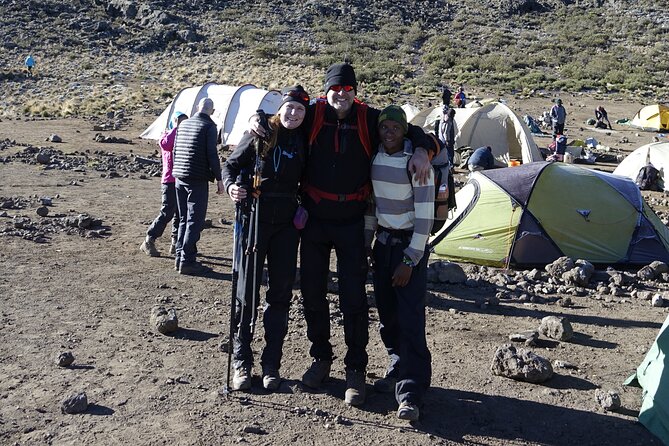
The day begins with the Barranco Wall. It looks intimidating from below, but the route is more about careful movement than technical climbing. You use hands and feet in places, and the itinerary notes that you can be secured if needed. Wear gloves if you have them, since the rock can require steady hand placement.
After the wall, the trail rises and falls several times. You cross streams, work through the Karanga Valley, and stop for lunch before the final 2 to 3 hour climb to Barafu Camp. The day takes about 8 hours, making it one of the more demanding regular walking days.
Barafu means snow, though the camp itself is a high, exposed staging point for the summit. At about 4,640 meters, it is not a place for a relaxed evening. Eat what you can, drink plenty of fluids, organize your summit clothing, and try to sleep early.
That last point is easier to advise than to achieve. You will be tired, excited, and likely thinking about the summit. Keep your gear simple and close at hand. A midnight start leaves little room for a frantic search through bags.
Day 6: the midnight push to Uhuru Peak
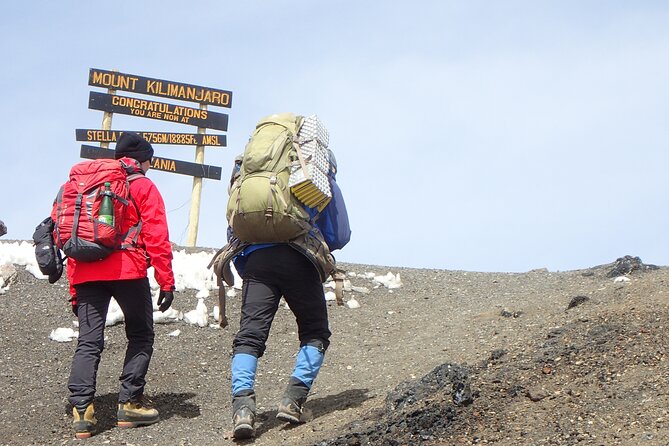
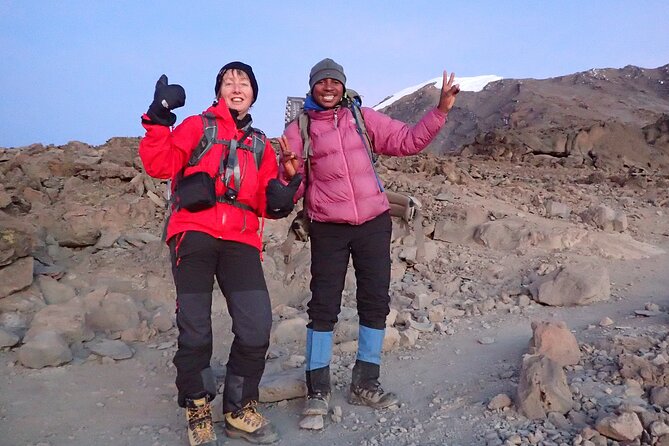
Summit day starts in the midnight hours with tea and a biscuit. You leave in warm clothing with a headlight and a small daypack. The climb to Stella Point takes about 5 to 7 hours at a slow, steady pace.
This is the toughest section of the trek. The darkness hides the scale of the climb, but the cold, altitude, and long hours are real. Your goal is not speed. You keep moving carefully, drink when instructed, and let the guide manage the pace.
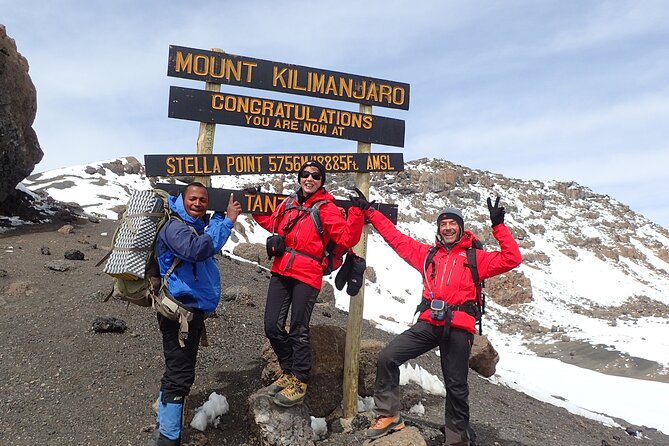
At Stella Point, you reach the crater rim. The final 1 to 2 hours follow the crater edge to Uhuru Peak at 5,895 meters. Early morning light can reveal the surrounding terrain below, and reaching the Roof of Africa is the defining moment of the entire trip.
The descent is described as easier, but it can be dusty because volcanic ash thaws after sunrise. You return along the same route toward Barafu Camp. The total day is listed at about 10 hours, though the actual length can feel different depending on pace and conditions.
Do not measure success only by reaching the very top. The guides will assess your condition, and altitude can make the final decision for you. A safe return matters more than a photograph at the sign.
Day 7: rainforest descent and a proper finish
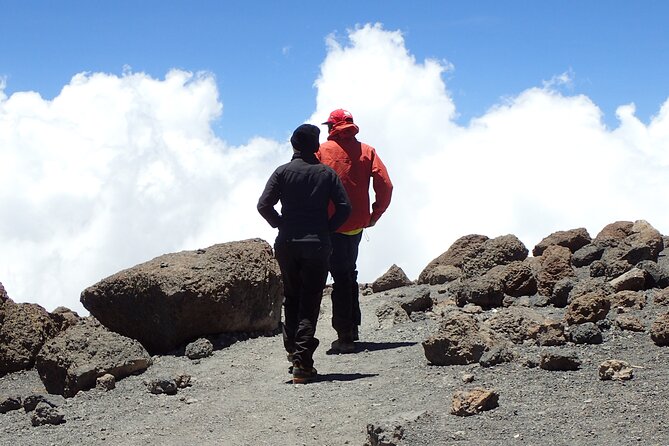
After breakfast, you take part in a farewell ceremony with the mountain crew. Then you walk for about 2 to 3 hours through rainforest to Mweka Gate, where a driver meets you.
The transfer returns you to Keys Hotel for a shower, cold drink, debrief, and certificate of achievement. That order is perfect. After several days of sleeping in camps and climbing at altitude, a shower and clean clothes will feel like major comforts.
The final day is shorter, but descending can be hard on tired knees. Trekking poles may be useful if you already use them, and you should avoid rushing simply because the summit is behind you. The rest of the day is free for recovery and reflection in Moshi.
Guides, porters, food, and camp comfort
The human support is a major part of the value here. Names connected with the guiding team include Mwinyi, Gloria, Kelvin, David, James, Maulid, Ombeni, Prosper, and Amiri. Your exact crew may differ, so confirm the assigned guide before departure.
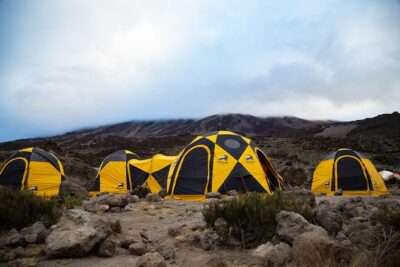
Porters carry food and much of the gear, leaving you with a daypack rather than the full expedition load. That does not make the trek easy, but it makes the long days more realistic. The camp setup also includes a separate dining tent with a table and chairs.
Meals are described as generous and multi-course, with enough food to support long walking days. This matters at altitude, where appetite can fade even as your body needs fuel. You should still bring any personal snacks you rely on, since no menu details are provided.
The operation has been praised for attentive guides, organized support, and a strong sense of team. That is especially useful on a private trip, where the pace and decisions focus on your own group rather than a large mixed party.
What $2,850 buys you
At $2,850 per person, this is a serious purchase. The value comes from the length of the expedition and the amount of support required: airport pickup, Moshi hotel nights, park access, guiding, porters, cooks, camping, meals, transfers, and the post-climb debrief are all built into the planned experience.
The price is easier to justify if you value a private group, local staff, full camp support, and a seven-day schedule rather than a shorter, more compressed climb. The extra day compared with a six-day version gives you a little more time on the mountain, though it does not remove the physical challenge.
Ask for a precise list of inclusions before paying. The supplied details confirm the major structure, but they do not spell out every personal expense, tip, equipment rental, or insurance requirement. At this price, clear written answers are reasonable.
Who should choose this trek?
I would point this tour toward someone with moderate physical fitness who wants a scenic, fully supported climb and accepts that the summit day will be demanding. It suits people who prefer a private group and want the reassurance of guides, cooks, porters, and organized transfers.
It is less suitable if you want a relaxed holiday with short walks, dislike early starts, or have not prepared for several consecutive days on steep ground. The Machame Route is attractive precisely because it is more challenging than some alternatives, so you should not book it for scenery alone.
The route also suits people who care about mountain variety. If you want rainforest, moor, volcanic desert, dramatic valleys, open camps, and a crater-rim summit in one trip, this itinerary delivers a strong sequence of environments.
Should you book the 7-day Machame Route?
I would book it if you want Kilimanjaro with strong scenery, a private setup, and substantial local support. The Shira sunset, Barranco night sky, Barranco Wall, and summit morning give the route plenty of memorable moments beyond simply reaching the top.
I would hesitate only if the price strains your budget or if you are underestimating the physical demands. Before booking, confirm the exact guide team, inclusions, tipping expectations, and equipment arrangements. If those details are clear and you are ready for long days, the seven-day Machame Route offers a well-paced way to attempt Uhuru Peak without reducing the mountain to a rushed climb.
FAQ
Where does the tour begin?
The tour begins with pickup at Kilimanjaro International Airport in Tanzania. The listed start time is 8:00 am.
How long does the Kilimanjaro Machame trek last?
The experience lasts approximately seven days. It includes a Moshi hotel night before the climb, five mountain walking days, and the descent to Mweka Gate on the final day.
Is the tour private?
Yes. This is a private activity, so only your own group participates.
What fitness level is required?
A moderate physical fitness level is required. The route includes walking days of roughly 4 to 10 hours, steep sections, a midnight summit start, and high-altitude trekking.
What is the highest point reached?
The summit is Uhuru Peak at 5,895 meters. The route also reaches Lava Tower and Barafu Camp at about 4,640 meters.
Is airport pickup available?
Yes. Pickup is offered, and the itinerary includes a transfer from Kilimanjaro International Airport to Keys Hotel in Moshi.
What is the cancellation policy?
You can receive a full refund if you cancel at least 24 hours before the experience start time. Cancellations or changes made within 24 hours are not accepted for a refund.
More Seven-Day Trips in Kilimanjaro
- 7-Day Machame Kilimanjaro Summit Tour from Arusha
★ 5.0 · 125 reviews - 7 Days Kilimanjaro via Machame route affordable price
★ 5.0 · 110 reviews - Private Kilimanjaro Hike 7 Day Lemosho Route
★ 5.0 · 60 reviews - 7 Days Machame route – Kilimanjaro
★ 5.0 · 45 reviews
Just added around Kilimanjaro
- 6 days Machame route climbing Mt.Kilimanjaro★ 5.0 · 8 reviews
- machame route★ 5.0 · 16 reviews
- Mt Kilimanjaro 6 days Marangu route hike★ 5.0 · 3 reviews
- Private Cycle to Kilimanjaro Bike Park Safari★ 5.0 · 6 reviews
- West Kilimanjaro cycling Adventures★ 4.5 · 8 reviews
- Kilimanjaro Climb • Marangu Route ~ 9 Day★ 5.0 · 4 reviews
- 3 Days Private E-Bike Tour in West Kilimanjaro★ 5.0 · 3 reviews
- Kilimanjaro Climb & Safari – Lemosho Route – 13 Day★ 5.0 · 10 reviews
Machame Route Climbs, compared.
The Best of Machame Route in 6 Days: Your World’s Summit Guide
Read our review →Browse the lists this tour appears in