
Reviewed · MACHAME ROUTE CLIMBS
7 Day Kilimanjaro Machame climb
Machame earns its whisky route nickname honestly: it is popular, direct, and physically demanding. You move from thick rainforest to volcanic desert, scramble up the Barranco Wall, then make a cold midnight push for Uhuru Peak, Africa’s highest point.
I like the route’s careful climb-high, sleep-lower pattern, especially the Lava Tower to Barranco descent, which gives your body useful altitude practice. I also like the strong support package: tents, meals, porters, boiled water, oxygen, first aid, and twice-daily health checks are included.
The main drawback is the summit night. You may hike for about 18 hours that day, beginning around midnight over loose volcanic rock in freezing conditions. This is not a technical climb, but it is still a serious physical test.
Key points at a glance
- The Barranco Wall adds real mountain drama: You use your hands and feet on a non-technical scramble, with no special climbing equipment required.
- The route is built for acclimatization: Lava Tower reaches 4,630 meters before you descend to Barranco Valley.
- Uhuru Peak is a midnight effort: The final climb reaches 5,895 meters and includes Stella Point on the crater rim.
- The support system is substantial: A guide team, porters, cook, waiter, tents, meals, water, oxygen, and health checks are included.
- KPAP monitoring is included: The operator says its porters are monitored through the Kilimanjaro Porters Assistance Project.
- The price is $2,580 per person: That is a large outlay, but many core mountain costs are already covered.
What the 7-day Machame climb is really like
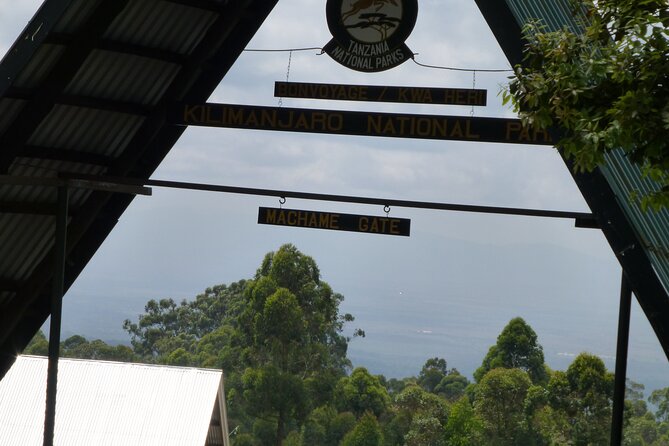
This is a camping ascent up Kilimanjaro’s southern circuit. You start near Moshi at 9:00 a.m., drive to Machame Gate, and walk through several climate zones before reaching the summit.
The route is non-technical, so you do not need ropes, harnesses, or previous climbing experience. You do need solid fitness, patience, and a willingness to walk slowly for many hours. Altitude, not steepness alone, is the main challenge.
The route’s design is one of its strongest features. Several days take you higher than your sleeping camp before bringing you down again. That repeated change in height gives you time to adjust before summit night.
This is a private activity, so only your own group participates. The exact size of the guide and porter team depends on your group, but the operator says guides work within KINAPA minimum ratios. Extra guides and porters can be added for an additional charge.
More Machame Route climbs:
- Kilimanjaro climb, Machame Route (7-day)
★ 5.0 · 262 reviews - Climbing Kilimanjaro – Machame Route
★ 5.0 · 170 reviews - Climbing Kilimanjaro through 7 days Machame Route
★ 5.0 · 151 reviews
Day 1: Machame Gate to the forest edge
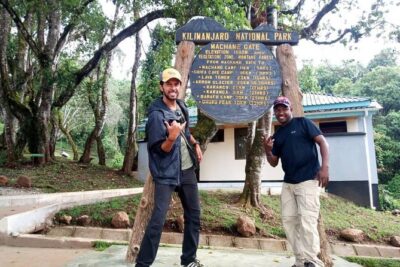
Your morning transfer leaves Moshi or your agreed pickup point at about 9:00 a.m. At Machame Gate, you register, meet the mountain team, and begin walking through Kilimanjaro’s rainforest zone.
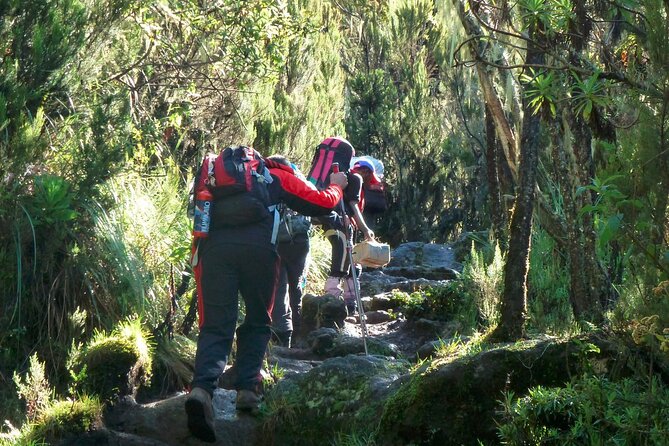
This first day takes about seven hours. The forest is thick, varied, and often damp. Rain is common, and the trail can become slippery, so waterproof clothing and shoes with reliable grip matter here.
The climb is steady and fairly steep. You are not yet dealing with extreme altitude, but the first day still sets the tone. Keep your pace controlled, drink regularly, and do not burn energy trying to walk ahead of the guide.
You finish near the edge of the forest and the heather zone. The change is noticeable: trees give way to shorter plants and wider views. The trail may feel muddy and tiring, but this opening section gives you a gradual start rather than sending you straight into bare rock.
Day 2: Heather, moorland, and Shira views
Day two lasts about seven hours and continues upward through heather and moorland. The climb follows a steep ridge to Picnic Rock, a useful viewpoint on a clear day.
From here, you may see Kibo, Kilimanjaro’s tallest cone and the summit target. To the west are the jagged forms of the Shira Plateau, shaped by lava flow, erosion, and volcanic activity. Mount Meru, Tanzania’s second-highest mountain at 4,563 meters, may appear in the distance.
The rest of the day becomes gentler and flatter as you approach camp. That change is welcome after the early ridge climb. You have time to look around rather than stare only at the trail in front of you.
The practical lesson is simple: do not judge the whole climb by day two. The scenery opens up, but the altitude is beginning to matter. Walk slowly, eat even if your appetite is fading, and use the easier sections to settle into the mountain rhythm.
Day 3: Lava Tower and the Barranco Valley
Day three is the key acclimatization day. You climb steadily toward Kibo, crossing the alpine desert until you reach Lava Tower at about 4,630 meters.
This is a useful check on how your body handles height. You may feel fine, or you may notice a headache, shortness of breath, nausea, or unusual fatigue. Tell your guide promptly about any symptoms. The schedule is designed to expose you to a higher altitude before bringing you down to sleep lower.
From Lava Tower, the trail descends around Kibo toward Barranco Valley. This climb-high, descend-lower pattern is one of the best reasons to choose the seven-day Machame route instead of rushing up the mountain.
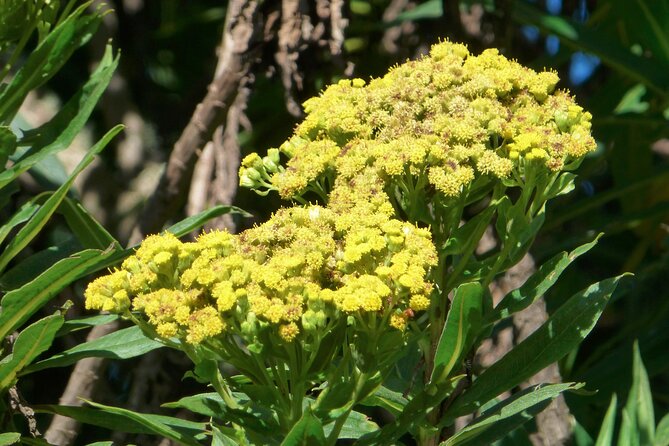
The day takes about eight hours. You pass Kilimanjaro senecios, large flowering plants that are strongly associated with the mountain. The descent can be hard on tired legs, but reaching camp at roughly the same height where you began helps prepare you for the days ahead.
More treks and hikes around Kilimanjaro:
- Kilimanjaro climb by Lemosho Route (7-day)
★ 5.0 · 651 reviews - Kilimanjaro Climbing Lemosho Route 8 Days.
★ 5.0 · 186 reviews - 8-Day Small-group Lemosho Kilimanjaro Summit Trekking
★ 5.0 · 186 reviews - Kilimanjaro climb, Lemosho Route (8-day)
★ 5.0 · 148 reviews
Day 4: Scrambling over the Barranco Wall
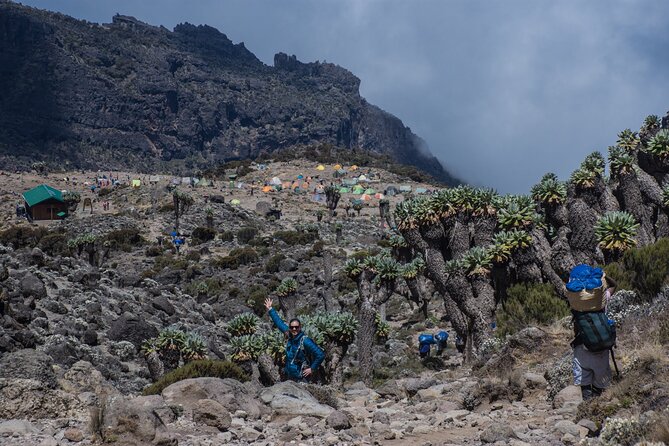
The Barranco Wall is the route’s most memorable technical-looking section, even though it is not a technical climb. You ascend using both hands and feet in places, moving carefully over rock with your guide’s help.
No advanced equipment or prior climbing experience is required according to the tour details. Still, it can feel exposed and demanding if you are uncomfortable with steep ground. Take your time and avoid treating it like a race.
At the top, you get a fine view back toward camp and the Heim Glacier on Kibo. This is one of those mountain moments that makes the route feel like more than a long walk uphill.
The rest of day four takes about five hours. You cross the alpine desert, descend into Karanga Valley, then climb again to camp. Karanga is the last water point, so the support team’s water arrangements become especially important from here onward.
Day 5: A short approach to summit camp
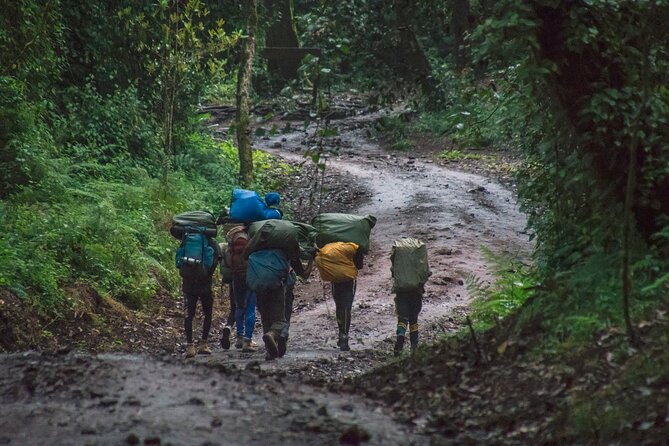
Day five is the shortest full walking day, at about four hours. The trail rises gradually through the empty alpine desert toward Kibo.
The pace is deliberately slow, even though the path is not especially steep. Mawenzi Peak, Kilimanjaro’s second summit, may come into view to the east. Kibo begins to feel much closer, and the surroundings become increasingly bare.
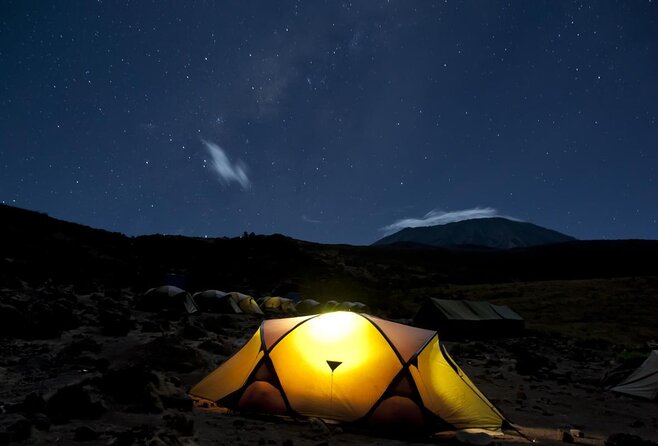
The short day is valuable because it gives you time to rest before the summit attempt. Use it well. Organize warm layers, headlamp batteries, water, snacks, gloves, and any personal items before bedtime.
You will not have a normal night’s sleep. The final ascent starts around midnight, so this camp is best treated as a place to pause and prepare rather than relax for a full evening.
Day 6: Stella Point, Uhuru Peak, and a very long descent
Summit day is the hardest part of the climb. You start around midnight and walk into the arctic zone in darkness and cold.
The trail rises steeply over loose volcanic scree. Your guide sets a slow zigzag pace toward Stella Point at 5,685 meters, located on the rim of Kibo’s crater. This section can feel endless because the darkness hides the distance and the altitude makes every step costly.
At Stella Point, the final walk to Uhuru Peak remains. It is shorter than the approach, but the height still makes it difficult. Uhuru Peak sits at 5,895 meters, the highest point in Africa.
You generally spend only a short time at the summit because of the extreme altitude. After photographs and a brief pause, you descend to base camp for breakfast or brunch. Once your gear is packed, the descent continues through the alpine desert.
The total day can last about 18 hours. That figure is crucial when planning this trip. You are not simply climbing to the summit and stopping. You still need to descend a long way after breakfast, while tired muscles and poor sleep catch up with you.
Emergency oxygen and a first aid kit are provided, with one oxygen cylinder listed for every five participants. Guides also conduct health checks twice daily using a medical oximeter. These provisions are reassuring, but they do not remove the need for travel insurance or a realistic assessment of your health.
Day 7: Mweka Gate and the return to Moshi
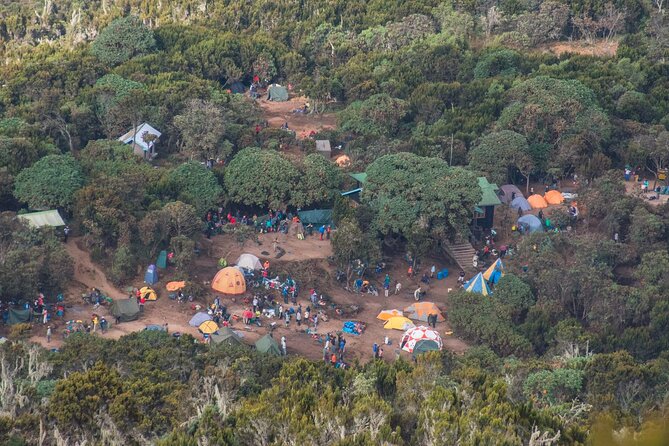
The final day is a four-hour descent through the southern rainforest to Mweka Gate. After the bare upper slopes, trees and softer air will feel like a reward.
A vehicle waits at the gate for the transfer back to Moshi or your agreed drop-off point. The mountain crew generally leaves directly from Mweka Gate, so this is the natural time to say goodbye to the guides, porters, cooks, and camp staff who supported the climb.
The final transfer is included. Luggage storage while you are on the mountain is also included, which means you do not need to carry every item from your Moshi accommodation.
What the $2,580 price covers
At $2,580 per person, this is not a budget walk. The value comes from how many unavoidable Kilimanjaro expenses are bundled into the price.
Included costs cover national park conservation, entry, camping, and rescue fees. You also get a trained English-speaking mountain guide or guides, porters carrying up to 15 kilograms of personal luggage per person, specialist tent staff, a cook, and a waiter.
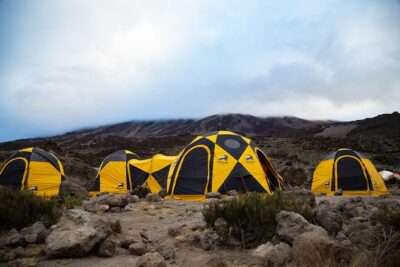
The camp setup includes a four-season tent, sleeping mattress, chairs, tables, and a dining tent. Meals, eating utensils, bowls, cups, and cutlery are supplied. The package lists six breakfasts, six lunches, and six dinners.
Boiled drinking water is supplied from the first camp onward. You need to provide water for the first day. Soft plastic is not permitted on the mountain, so plan for suitable reusable containers. Metal and hard plastic bottles are specifically excluded from the price.
The package also includes a hand-washing station, a small personal wash basin, shared public toilets, and an approximately 100-liter rubberized holdall. These are basic facilities, not hotel comforts.
You pay extra for tips, drinks, insurance, visas, personal items, sleeping bags, walking poles, extra tents, portable toilets, foldable beds, additional guides, or extra porters. A portable toilet costs $45 per day for up to five people, while an extra single tent costs $20 per day.
The inclusion of KPAP monitoring is worth noting. It signals attention to porter welfare, an important issue on Kilimanjaro. The strongest practical value here is not luxury. It is having the main park, staff, camp, meal, and safety costs organized in one package.
The guide and crew experience
The guide team is central to this climb. Names connected with recent departures include Calvin Shayo, Augustin, Isaac, Acasio, Baraka, Vincent, Matej, Denis, John, Musa, and Isa.
You should confirm your own guide team before departure, since these names do not guarantee who will lead your group. Still, the repeated praise for organized communication, safety checks, guide support, food, and camp service gives you useful expectations.
A large crew may support even a small climbing group. That can feel unusual if you are used to independent hiking, but Kilimanjaro’s porter system is built around moving camping equipment, food, water, and luggage up the mountain.
The operator lists a 15-kilogram personal luggage limit for each porter. Pack carefully and ask for the equipment guide before arrival. Your daypack still needs to carry items you want during the walk, while the porter luggage may not reach camp until later.
Who should choose this route
I would choose this climb if you want a well-supported route with varied scenery and a proper acclimatization pattern. It suits a fit hiker who can manage several long days, basic camping, steep trails, and one exceptionally long summit day.
It is also a good choice if you want the Barranco Wall experience without technical climbing. The scramble gives the route character, but it does not require ropes or specialist climbing skills.
This is not suitable for someone with a lung problem or a known altitude-related medical condition. The tour also asks for a strong fitness level, and that requirement should be taken seriously.
You should be comfortable with cold nights, shared campsite toilets, changing weather, and simple washing facilities. A private group gives you control over who climbs with you, but it does not make the mountain easier.
Practical details before you book
The meeting point is Shah Tours at 6 Sekou Toure Way in Moshi. Pickup is available from a Moshi-based lodge or agreed location, with the transfer to the park gate included. The activity finishes back at the meeting point or an agreed Moshi drop-off location.
Confirmation is provided at booking. Free cancellation is available up to 24 hours before the local start time. Changes or cancellations inside that period are not accepted for a refund.
Before paying, ask for the current packing guidance, confirm what your insurance covers, and check how many people will be in your private group. Also clarify tipping expectations, since gratuities are not included.
Should you book the 7-day Machame climb?
Book it if you want Kilimanjaro’s classic southern route, a real scramble at Barranco, organized camping, and a schedule that gives altitude some respect. The included guides, porters, meals, park fees, water, health checks, and camp support make the $2,580 price easier to justify.
Think twice if you dislike long summit nights or want private facilities and a lighter physical challenge. The 18-hour summit day is the price of reaching Uhuru Peak on this schedule.
For a fit climber who accepts basic conditions and prepares properly, Shah Tours’ seven-day Machame climb offers a strong balance of scenery, support, and mountain challenge. Pack for rain, cold, mud, and altitude, then keep your pace slow from the first morning.
FAQ
How long does the Kilimanjaro Machame climb take?
The climb lasts approximately seven days, including the final descent from the mountain to Mweka Gate and the transfer back to Moshi.
Where does the activity start?
It starts at Shah Tours, 6 Sekou Toure Way, Moshi, Tanzania, at about 9:00 a.m. Pickup from a Moshi-based lodge or agreed location is offered.
Is the Machame Route a technical climb?
No. It is described as a non-technical route. The Barranco Wall includes a scramble using your hands and feet, but no special equipment or previous climbing experience is required.
How high is Uhuru Peak?
Uhuru Peak is 5,895 meters, or 19,341 feet, above sea level.
What is the most difficult day?
Day six is the most demanding. You begin around midnight, climb to Stella Point and Uhuru Peak, then descend to base camp and continue down the mountain. The day can last about 18 hours.
Are meals included?
Yes. The package includes breakfast, lunch, and dinner on the mountain, as well as eating utensils, bowls, cups, and cutlery.
Is drinking water included?
Boiled drinking water is included from the first camp onward. Water for the first day is not included.
Are sleeping bags and walking poles provided?
No. Personal mountain equipment, including sleeping bags and walking poles, is not included. The tour operator provides a basic foam sleeping mattress.
Is this activity private?
Yes. Only your own group participates. Group discounts are offered, and extra guides or porters can be arranged for an additional fee.
More Seven-Day Trips in Kilimanjaro
- 7-Day Machame Kilimanjaro Summit Tour from Arusha
★ 5.0 · 125 reviews - 7 Days Kilimanjaro via Machame route affordable price
★ 5.0 · 110 reviews - Private Kilimanjaro Hike 7 Day Lemosho Route
★ 5.0 · 60 reviews - 7 Days Machame route – Kilimanjaro
★ 5.0 · 45 reviews
Just added around Kilimanjaro
- 6 days Machame route climbing Mt.Kilimanjaro★ 5.0 · 8 reviews
- Mt Kilimanjaro 6 days Marangu route hike★ 5.0 · 3 reviews
- machame route★ 5.0 · 16 reviews
- Private Cycle to Kilimanjaro Bike Park Safari★ 5.0 · 6 reviews
- West Kilimanjaro cycling Adventures★ 4.5 · 8 reviews
- Kilimanjaro Climb • Marangu Route ~ 9 Day★ 5.0 · 4 reviews
- 3 Days Private E-Bike Tour in West Kilimanjaro★ 5.0 · 3 reviews
- Kilimanjaro Climb • Machame Route ~ 10 Day★ 5.0 · 6 reviews
Machame Route Climbs, compared.
The Best of Machame Route in 6 Days: Your World’s Summit Guide
Read our review →Browse the lists this tour appears in