
Reviewed · MACHAME ROUTE CLIMBS
6-Day Guided Tour in Machame Route Mt Kilimanjaro
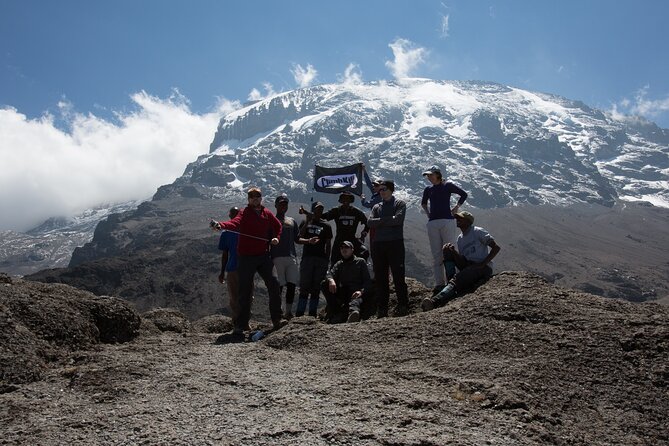
Mount Kilimanjaro gives you five climate zones in less than a week, from dripping rainforest to a cold, rocky summit. This six-day Machame Route trek is built around that dramatic change, with a small group of up to six and a guide team that includes names such as Goodluck, Herment, Amani, and Minja.
I like the careful camp routine, with tents set up before you arrive and three hot meals reported during the climb. I also like the early summit arrangement, which can give you a quieter start than groups leaving from lower camps. The main caution is simple: six days is demanding, and the short schedule leaves less time for altitude adjustment than longer Kilimanjaro routes.
Key points at a glance
- Rainforest to Arctic zone: You pass through rainforest, heather-covered moorland, high desert, and icy summit terrain.
- Small maximum group: The advertised limit is six climbers, useful if you want direct contact with your guides.
- Lava Tower acclimatization: Day 3 takes you high before dropping to Barranco Camp, an important altitude-training day.
- Midnight summit push: The final ascent begins around midnight and includes Stella Point, Uhuru Peak, and a long descent.
- Strong crew support: Guides, porters, cooks, and camp staff handle much of the practical work.
- $2,495 per person: The price reflects a full guided climb with transport, camp support, meals, and a small-group format, but you should confirm exactly what is included before paying.
Why the Machame Route is such a memorable climb
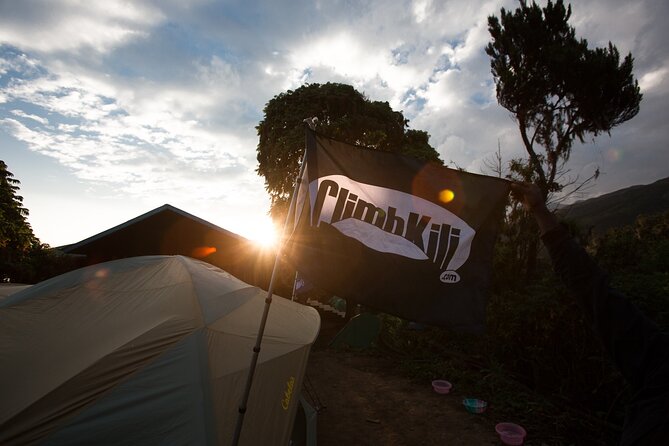
Machame is often called the Whiskey Route, a nickname that hints at its tougher, more adventurous feel compared with easier walking routes. You do not need technical climbing skills for the path described here, but you do need stamina, patience, and a willingness to walk slowly for several days.
The route earns its appeal from the changing scenery. On the first morning, you walk beneath tall rainforest growth, where the trail can be wet and slippery. By the second day, the forest gives way to heather and open moorland. Later, you pass giant senecio plants, steep valleys, loose volcanic scree, glaciers, and the bare upper slopes near the summit.
That variety gives the climb a real sense of progress. You are not simply walking uphill for six days. The vegetation changes, the air thins, and the mountain gradually strips away familiar comforts.
The advertised summit success rate is 98 percent. Treat that as the company’s stated figure, not a promise. Kilimanjaro success depends on weather, altitude response, fitness, pacing, and the guide’s decisions. A strong support team helps, but no operator can remove the mountain’s risks.
More Machame Route climbs:
- Kilimanjaro climb, Machame Route (7-day)
★ 5.0 · 262 reviews - Climbing Kilimanjaro – Machame Route
★ 5.0 · 170 reviews - Climbing Kilimanjaro through 7 days Machame Route
★ 5.0 · 151 reviews
Day 1: Machame Gate and the wet rainforest
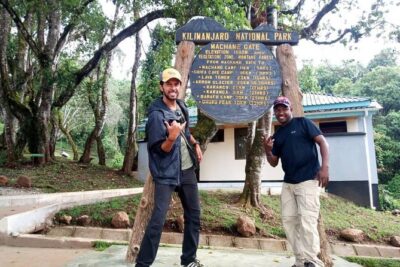
The day begins with an 8:00 am start from Summit Lodge in Sakina, Arusha. Pickup is offered, and the crew transfers you to Machame Gate before you begin walking.
The first day reaches Machame Camp at about 9,400 feet, or 2,865 meters. The walk covers roughly 6.8 miles and takes about five to seven hours, although the schedule also lists four hours, so you should expect the exact timing to vary with trail conditions and group pace.
This opening section is a good test of your preparation. The trail winds upward through rainforest and can be muddy and slick near the lower sections. Gaiters and trekking poles are practical choices, not fancy extras. Shoes that handle wet ground matter as well.
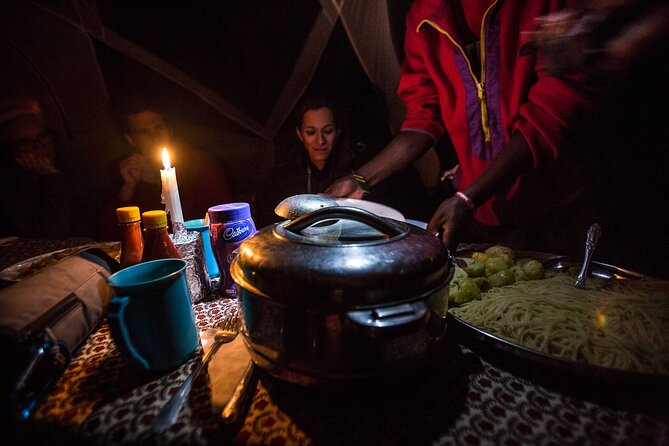
The camp routine is one of the strongest parts of this trip. Your tent is set up while you walk, and your personal belongings are meant to be ready when you arrive. That saves energy and lets you focus on eating, drinking, and resting instead of wrestling with camp gear after a long day.
Day 2: Heather, moorland, and Shira Camp
After breakfast, the route leaves the forest behind. You cross a small valley and climb along a steep, rocky ridge before entering the moorland zone, where heather replaces the dense greenery of Day 1.
The destination is Shira Camp at about 12,500 feet, or 3,810 meters. The listed walking distance is only 2.8 miles, with four to six hours on the trail. That short distance can still feel hard because the route climbs sharply and your body is beginning to notice the altitude.
The path eventually turns west into a dry river gorge. This is a more exposed setting than the rainforest, with wider views and less shelter. You should be ready for changing conditions, including sun, wind, and cold once the day fades.
Shira is one of the first places where the climb feels high and serious. You may still feel strong here, but it is wise not to spend that energy proving anything. Eat well, drink often, and keep your pace steady.
Day 3: Lava Tower and the Barranco drop
Day 3 is the cleverest part of the route from an acclimatization point of view. You climb toward Lava Tower, listed at around 15,000 feet, or 4,500 meters, then descend to Barranco Camp at approximately 13,000 feet.
The itinerary gives two different distance and timing figures for this day, including a shorter 4.3-mile section and another figure of about 5.6 miles. That inconsistency is worth clarifying with Climb Kili before departure. The important point is the shape of the day: climb high, rest near Lava Tower, then sleep lower.
You pass a huge senecio forest on the descent and reach a waterfall before Barranco Camp. The camp sits beneath the Barranco Wall, a massive dark face that becomes the next morning’s challenge.
This day can feel strange. You work hard to gain height, then give some of it back. That is not wasted effort. It gives your body time at a higher elevation without asking you to sleep at the highest point reached that day.
More six-day trips in Kilimanjaro:
- Kilimanjaro climb, Lemosho Route (6-day)
★ 5.0 · 129 reviews - Kilimanjaro climb, Marangu route (6-day)
★ 5.0 · 72 reviews - 6 Days Tanzania Classic Safari
★ 5.0 · 52 reviews - The Best of Machame Route in 6 Days: Your World’s Summit Guide
★ 5.0 · 44 reviews
Day 4: Barranco Wall and Karanga Camp
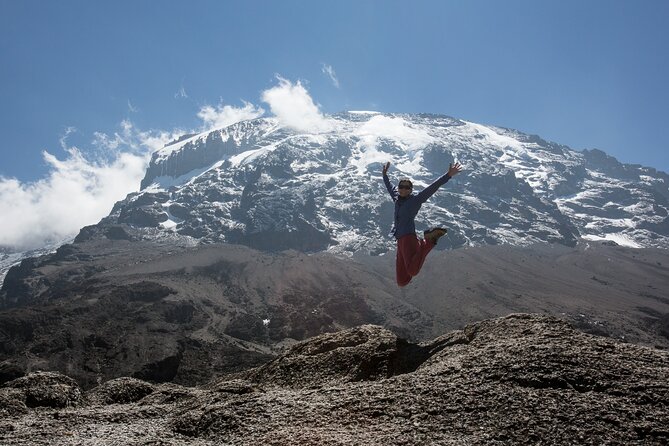
Day 4 begins with the Barranco Wall. The route is described as adventurous, but it is not presented as a technical climbing pitch. You use hands and feet on sections of uneven rock, and the group’s guides help with route choices and pacing.
From the top, the trail continues along the South Circuit toward Karanga Valley. The day ends at Karanga Camp, around 13,100 feet, or 3,992 meters. The listed distance is about 2.2 miles, with four to five hours of walking.
Do not let the short mileage fool you. The Barranco Wall and repeated ups and downs can make this day feel more tiring than the numbers suggest. It is also a day when the mountain begins to look increasingly bare and cold.
I like the way this section breaks up the climb. You get a memorable physical challenge early in the day, then a shorter route to camp. That leaves some room for rest before the summit attempt, though you should still expect a cold evening and a nervous wait.
Day 5: Stella Point, Uhuru Peak, and Mweka Camp
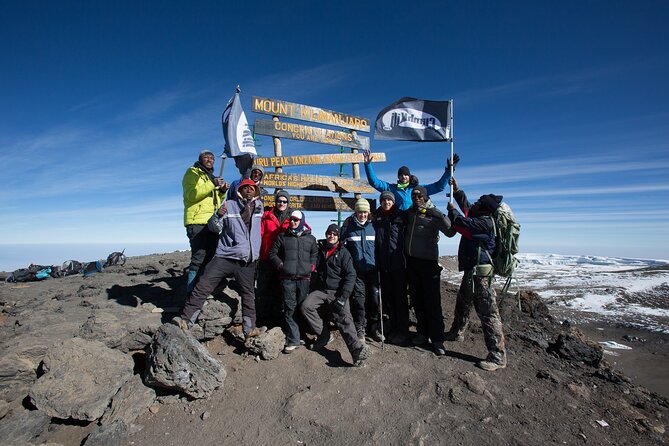
This is the decisive day. You begin around midnight, climb through the dark, and aim to reach Stella Point for sunrise. The listed route covers about 13 miles in total, with roughly five kilometers uphill and 12 kilometers downhill.
The ascent to Stella Point takes six to seven hours. You move through heavy scree between the Rebmann and Ratzel glaciers, heading toward the crater rim. This is usually the slowest and most mentally demanding part of the trip because you are tired, cold, and walking in darkness.
From Stella Point, the itinerary allows about another hour to Uhuru Peak, at 19,340 feet, or 5,895 meters. Reaching the summit is the obvious goal, but the route does not end there. You then descend to Mweka Camp, which adds another four to six hours.
That descent is easy to underestimate. Your knees and feet have already worked hard, and loose ground can make going down awkward. The total day is listed at about 11 hours, so a strong physical base is important.
The early start may be an advantage. One account describes Climb Kili having permission to begin the final ascent an hour before some groups camped lower down. Confirm the current arrangement before booking, but an earlier departure could mean less crowding during the first part of the summit push.
Day 6: Mweka Gate and a welcome shower
The final morning is a walk to Mweka Gate, at about 5,400 feet, or 1,645 meters. The distance is listed at 6.4 miles and the walk at three to four hours.
By now, you will probably be ready for the route to end. The trail takes you out of the high mountain environment and back toward the vehicle, which transfers you to your hotel in Arusha.
The final day is not dramatic in the same way as the summit morning, but it matters. You still need to descend carefully, and tired legs can make a simple path feel long. The promise of a shower and a proper bed is useful motivation.
What the crew adds to the experience
A Kilimanjaro climb is a team effort. Guides set the pace and watch how you respond to altitude. Porters move camp equipment. Cooks prepare meals. Drivers handle the transfers. The reviews connected with this operator repeatedly praise the full crew, not just one lead guide.
Goodluck is named as a supportive lead guide, while Herment is repeatedly singled out for strong leadership. Amani, Minja, Gabby, Florian, Minja, Emanuel, Godlove, Leberatos, Lede, Gabi, and Omi are also named in accounts of different climbs.
That list does not mean you can choose a particular guide when booking. It does tell you something useful about the company’s staffing culture. The experience appears to depend heavily on a large, attentive mountain crew rather than a single guide working alone.
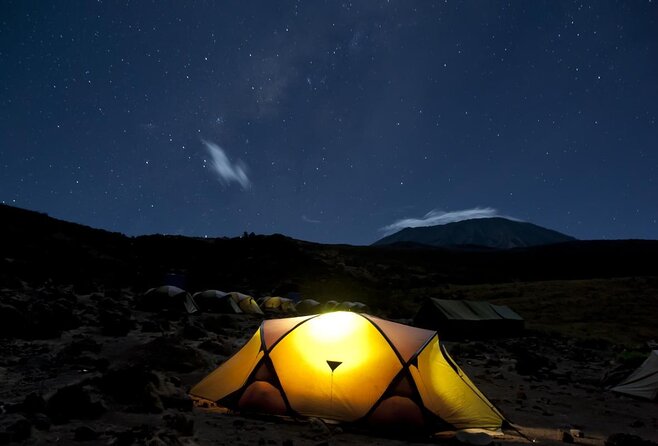
Camp organization is another clear benefit. Tents are set up before climbers arrive, and hot meals are prepared during the trek. Food is especially important on summit day, when appetite can fade but your body still needs fuel.
You should also ask about porter welfare, tipping guidance, equipment provided, emergency procedures, and the exact meal plan. The supplied details show a well-supported climb, but they do not spell out every inclusion.
Is $2,495 a fair price?
At $2,495 per person, this is not a budget mountain walk. You are paying for a guided Kilimanjaro expedition rather than a simple day hike. The value comes from transport from Arusha, mountain guides, porters, camp setup, cooking, route management, and a small group capped at six.
The small group is worth noting. Six climbers can move more efficiently than a large party, and you should have more direct access to the lead guide. It may also make the summit morning easier to manage if one person needs a slower pace or extra attention.
The price becomes more attractive if it includes the expected climb logistics without many add-on charges. Before booking, ask for a written list covering park fees, tents, sleeping arrangements, meals, airport or hotel transfers, porter support, and any hotel nights.
The strong success-rate claim and excellent recommendation record may appeal to first-time climbers. Still, price alone does not guarantee a summit. The most useful value here is the apparent level of crew support and the company’s experience managing climbers with different ages and fitness levels.
Fitness, altitude, and who should book
The operator requires a strong physical fitness level, and that is appropriate. The climb includes long days, steep sections, a midnight start, a summit at nearly 20,000 feet, and a long descent immediately afterward.
You do not need to be an advanced climber in the technical sense. The route is described as suitable for beginners as well as experienced climbers, but beginner-friendly does not mean easy. You need to be comfortable walking for several hours on uneven ground and continuing when the air becomes thin.
This trip suits you if you want a classic Kilimanjaro route, prefer a guided climb, and value having camp work handled for you. It also suits families and mixed-age groups when everyone has been assessed honestly. Accounts include parents climbing with teenagers and adults over 50 reaching the summit.
The six-day schedule is the main point to weigh. A longer Kilimanjaro itinerary generally gives you more time to adjust, but no longer route is offered in the supplied details. If you know you respond poorly to altitude, ask whether a longer version is available before committing.
Practical details to settle before departure
The meeting point is Summit Lodge, Sakina Raskazone, Arusha, and the stated start time is 8:00 am. Pickup is offered, and the activity ends back at the meeting point after transfer from Mweka Gate.
Confirmation is sent within 48 hours, subject to availability. The maximum group size is six. The activity has a mobile ticket, which is useful when you are moving between hotels and transport.
The cancellation terms are friendly if your plans change early. You can cancel at least 24 hours before the local start time for a full refund. Cancellations or changes inside that window are not accepted for a refund.
Your packing choices matter. Bring waterproof protection for the rainforest, warm layers for high camps, sun protection, sturdy footwear, and a headlamp for the midnight summit attempt. The route description specifically recommends gaiters and trekking poles for the muddy lower trail.
Should you book the six-day Machame Route?
I would consider this climb if you want a strongly supported Kilimanjaro attempt with a small group and a clear route through all five climate zones. The crew support, hot meals, organized camps, and named guides such as Goodluck and Herment are meaningful advantages for a first summit.
I would hesitate if you want a relaxed schedule or have little experience with long uphill days. The summit day is especially tough, and the six-day format gives you limited time to adjust to altitude.
Book it if you are fit, prepared for discomfort, and willing to walk slowly under your guide’s direction. Before paying $2,495, confirm the day-three schedule, inclusions, porter arrangements, and whether the early summit start is available for your departure. Those details will tell you more about the trip’s value than the success-rate claim alone.
FAQ
Where does the climb start?
The meeting point is Summit Lodge in Sakina Raskazone, Arusha, Tanzania. The stated start time is 8:00 am, and pickup is offered.
How long is the tour?
The experience lasts approximately six days. It includes five days of ascent and descent activity, followed by the walk from Mweka Camp to Mweka Gate on Day 6.
What is the maximum group size?
The maximum group size is six travelers.
Is the Machame Route suitable for beginners?
The operator describes the route as suitable for beginning trekkers and advanced climbers. You still need a strong physical fitness level because the climb includes steep trails, high altitude, and a midnight summit attempt.
How high is Uhuru Peak?
Uhuru Peak is listed at 19,340 feet, or 5,895 meters.
How long is the summit day?
The summit day is listed at about 11 hours. The ascent takes roughly six to seven hours, followed by a descent of about four to six hours to Mweka Camp.
Where do you sleep during the climb?
The itinerary names Machame Camp, Shira Camp, Barranco Camp, Karanga Camp, and Mweka Camp. Tents are set up at camp, and personal belongings are intended to be ready when you arrive.
Are meals provided?
The experience includes camp meal service, and the operating details describe hot meals during the trek. You should confirm the full meal plan and any dietary arrangements before booking.
What equipment is recommended for the first day?
Gaiters and trekking poles are recommended because the lower rainforest trail can be muddy and slippery.
What is the cancellation policy?
You can cancel at least 24 hours before the experience start time for a full refund. Cancellations or changes made less than 24 hours before the local start time are not accepted for a refund.
Just added around Kilimanjaro
- 6 days Machame route climbing Mt.Kilimanjaro★ 5.0 · 8 reviews
- machame route★ 5.0 · 16 reviews
- Mt Kilimanjaro 6 days Marangu route hike★ 5.0 · 3 reviews
- Private Cycle to Kilimanjaro Bike Park Safari★ 5.0 · 6 reviews
- West Kilimanjaro cycling Adventures★ 4.5 · 8 reviews
- Kilimanjaro Climb • Marangu Route ~ 9 Day★ 5.0 · 4 reviews
- 3 Days Private E-Bike Tour in West Kilimanjaro★ 5.0 · 3 reviews
- Kilimanjaro Climb • Machame Route ~ 10 Day★ 5.0 · 6 reviews
Machame Route Climbs, compared.
The Best of Machame Route in 6 Days: Your World’s Summit Guide
Read our review →Browse the lists this tour appears in