
Reviewed · LEMOSHO ROUTE CLIMBS
Private 7 Days Kilimanjaro Climbing via Lemosho Route
The best part of this seven-day Lemosho climb is its steady change of scenery. You start beneath tall forest, cross open moorland and the Shira Plateau, then work through stark volcanic country before the midnight push to Uhuru Peak. I like the slow start and the carefully placed acclimatization day at Lava Tower and Barranco.
I also like the small private group, limited to five people, and the strong support team of guides, cooks, and porters. Guides named in past trips include Sebastian, Paschal, Evans, Kessy, and Valency. The main caution is simple: this is a serious high-altitude trek, not a long sightseeing walk. Day six can take about seven hours before you even count the descent.
Key points to know before booking
- Seven days on the Lemosho Route: You approach Kilimanjaro through forest, moorland, semi-desert, and alpine desert.
- A real acclimatization day: Lava Tower and Barranco keep you high before dropping you to camp, helping prepare you for the summit attempt.
- Small private party: The group limit is five people, useful when you need a slower pace or close contact with your guide.
- Full mountain support: A guide, cook, porters, meals, park fees, and an oxygen bottle are included.
- Midnight summit start: You climb through the night toward Stella Point, then continue to Uhuru Peak for sunrise views.
- $2,800 per person: The price covers the core climb, but tipping, visa, flights, and laundry are extra.
Why Lemosho is a smart seven-day route
Kilimanjaro is not a technical climb in the mountaineering sense, but the altitude makes it demanding. The summit reaches 5,895 meters, and the route asks you to walk for several hours each day while sleeping at high camps. Your success depends less on speed than on pacing, rest, hydration, and paying attention to how you feel.
This seven-day plan gives you a useful rhythm. The first day is short. The second day is long. The third day takes you high to Lava Tower before dropping you to Barranco Camp. That high-point day is valuable because it lets your body spend time at altitude without forcing you to sleep at the same height.
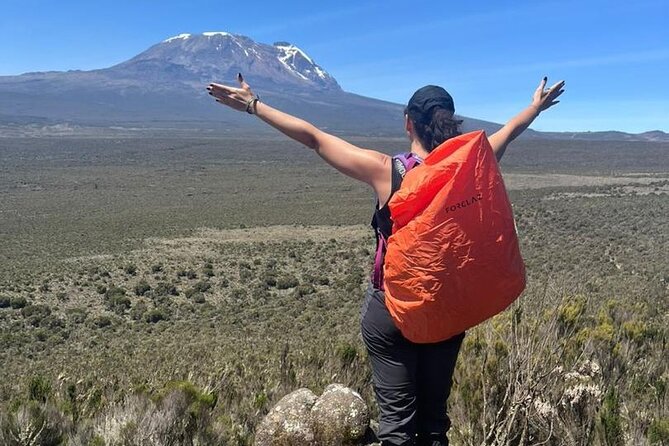
The Lemosho approach also gives you a sense of progression. The forest feels enclosed and damp. The Shira Plateau opens the view. By the time you reach Barafu, the trees are gone and the mountain feels much more exposed. I prefer this route to a rushed itinerary because the scenery changes along with the physical challenge.
Still, seven days is not the longest possible schedule for Kilimanjaro. You should have a moderate level of fitness and be ready for long walking days. If you know that altitude affects you strongly, ask about a longer plan before booking.
More Private Tours in Kilimanjaro
- Private Full Day Hiking Experience to Marangu Route
★ 5.0 · 61 reviews - Private Kilimanjaro Hike 7 Day Lemosho Route
★ 5.0 · 60 reviews - Kilimanjaro 7 Day Private Trekking Experience
★ 5.0 · 40 reviews
Day 1: Lemosho Gate to Mti Mkubwa
After breakfast and a briefing, you drive from the Moshi area to Lemosho Park Gate. The final approach uses a forest track that requires a four-wheel-drive vehicle, then you begin walking through montane forest toward Mti Mkubwa, also called Big Tree Camp.
This is a gentle opening by Kilimanjaro standards. You gain from 1,830 meters to 2,650 meters and walk about six kilometers in two to three hours. Lunch and dinner are included, so you can settle into the camp routine without needing to arrange food yourself.
The forest is the special part of this first day. You are not yet looking at glaciers or a summit ridge. Instead, you get shade, damp trails, and the feeling of entering a large protected mountain area. The short distance also gives your legs a sensible start.
Do not treat this day as a free pass. Use it to check your boots, pack, clothing layers, and water system. If something rubs or feels awkward, tell your guide early. A small problem at Big Tree Camp can become a major nuisance several days later.
Day 2: Shira Ridge and the open moorland
Day two is the first real test. The trail steepens as you leave the forest and enter the giant heather moorland zone. You cross several streams, pass over Shira Ridge, go by Shira 1 Camp, and finish at Shira 2 Camp beside a stream.
The figures tell the story: about 16 kilometers, seven to eight hours, and a climb from 2,650 meters to 3,850 meters. Breakfast, lunch, and dinner are included. You will want all three.
This is one of the most rewarding days for scenery, but also one of the days when pacing matters most. The open moorland gives you broad views and fewer trees for shade. Walk slowly, keep your breathing even, and resist the urge to race ahead during the easier sections.
Shira 2 Camp sits on open meadows, so conditions can feel more exposed than they did in the forest. Have warm clothing ready for the evening. Your guide and porters handle the camp support, but you should keep your personal essentials accessible rather than buried in a larger bag.
Day 3: Lava Tower, the Shark’s Tooth, and Barranco
Day three is the route’s key acclimatization day. From the Shira Plateau, you climb east along a ridge toward the junction for Kibo, then turn southeast toward Lava Tower, known here as the Shark’s Tooth. The high point reaches about 4,650 meters.
After Lava Tower, you pass a junction toward Arrow Glacier and descend to Barranco Camp at roughly 4,000 meters. The day covers about eight kilometers and takes five to six hours. You gain only a little in sleeping altitude, but the value is in going high and then sleeping lower.
I like this design because it gives you a practical altitude check. You get to see how your body responds above 4,500 meters while still ending the day at Barranco. Your guide can watch your pace and condition, and you can make sensible decisions before summit day.
The terrain changes again here. You leave the moorland behind and enter semi-desert, with volcanic ground and fewer signs of plant life. Lava Tower can feel imposing, but the route is not presented as a technical rock climb. The bigger issue is thin air and accumulated fatigue.
If you develop strong symptoms of altitude sickness, tell the guide immediately. The provided information does not promise a particular evacuation plan, so ask the operator about emergency procedures before departure. An oxygen bottle is included, but oxygen is not a substitute for careful altitude management.
More Lemosho Route climbs:
- Kilimanjaro climb by Lemosho Route (7-day)
★ 5.0 · 651 reviews - 8-Day Small-group Lemosho Kilimanjaro Summit Trekking
★ 5.0 · 186 reviews - Kilimanjaro Climbing Lemosho Route 8 Days.
★ 5.0 · 186 reviews - Kilimanjaro climb, Lemosho Route (8-day)
★ 5.0 · 148 reviews
Day 4: The Barranco Wall to Karanga Valley
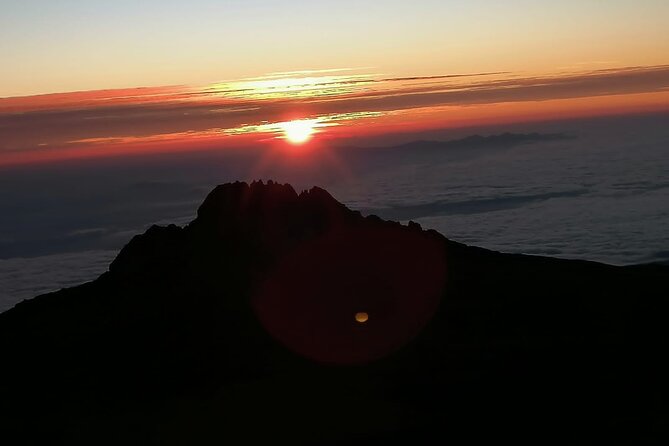
After breakfast, you tackle the Barranco Wall and continue toward Karanga Valley. The route covers about five kilometers and takes three to four hours, with only a modest rise from 4,000 to 4,050 meters.
The short distance does not mean this is an easy day. The Barranco Wall is steep, and you will need to use your hands at points as you move over the ridge. Your guide controls the pace and helps you choose a steady line. The challenge is more about careful movement and confidence than rushing.
This is also a day when a small group helps. With no more than five people, the guide can keep the party together and offer more direct help on the steeper sections. You have time to stop, take in the views, and avoid turning a manageable climb into a stressful scramble.
The scenery is alpine desert, with bare volcanic ground replacing the richer vegetation below. Karanga is part of the southern circuit and links with the Mweka Trail. Lunch and dinner are included, so your main task is to walk, eat, drink, and rest.
Day 5: Barafu Camp and preparation for the summit
The trail climbs from Karanga to Barafu Camp, gaining from 4,050 meters to 4,700 meters over roughly four kilometers. You usually need three to four hours. By reaching Barafu, you have completed the South Circuit and seen the summit from several angles.
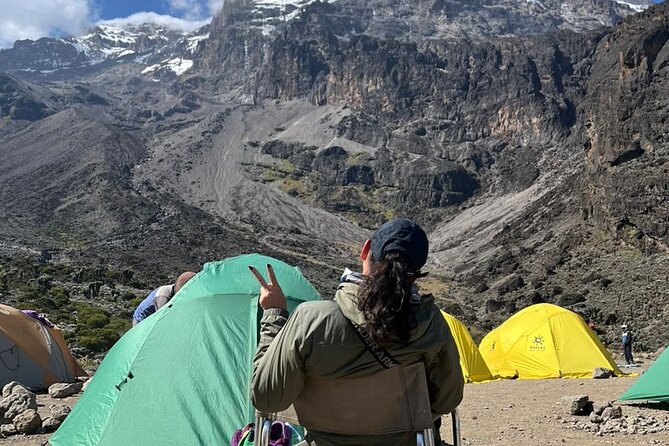
Barafu means ice in Swahili, though the camp experience is less about comfort than readiness. This is alpine desert, with little shelter from the elements. You have dinner, rest, and prepare for the summit attempt.
This afternoon is a good time to organize your summit clothing. Keep your warm layers, headlamp, gloves, water, and any personal medication close at hand. The summit start comes between midnight and 2 a.m., so you do not want to search through a packed duffel when you should be sleeping.
The short hiking distance can feel misleading. You are already high, and the next stage is the hardest. Eat what you can, follow the guide’s instructions, and accept that you may not sleep much before the climb.
Day 6: Stella Point and Uhuru Peak
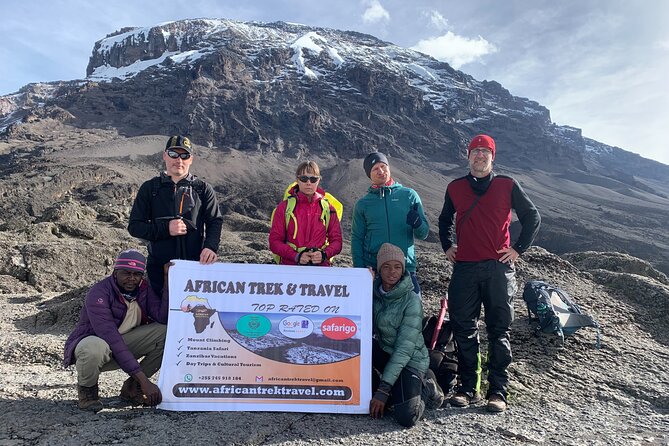
Summit day begins in darkness. You climb between the Rebmann and Ratzel glaciers, heading northwest through heavy scree toward Stella Point on the crater rim. This section is described as the most physically and mentally demanding part of the trek, and that is a fair warning.
The summit section takes about seven hours according to the schedule, though your actual pace may vary. At Stella Point, you get a short rest and, if timing and weather cooperate, a sunrise over the mountain. Faster climbers may see the sunrise from Uhuru Peak itself.
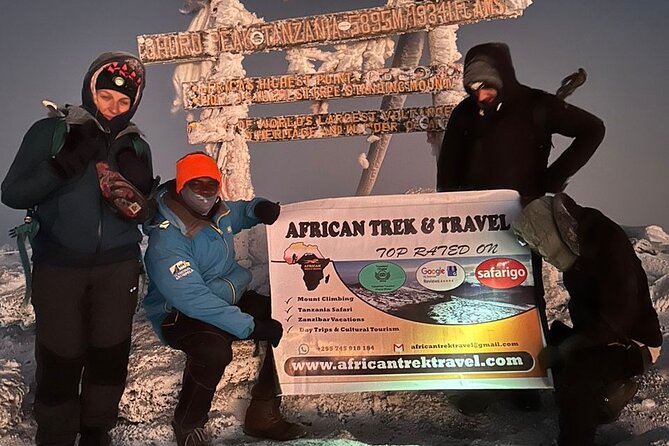
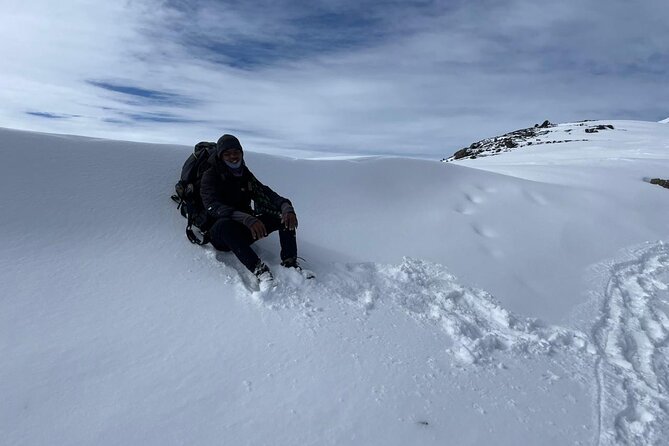
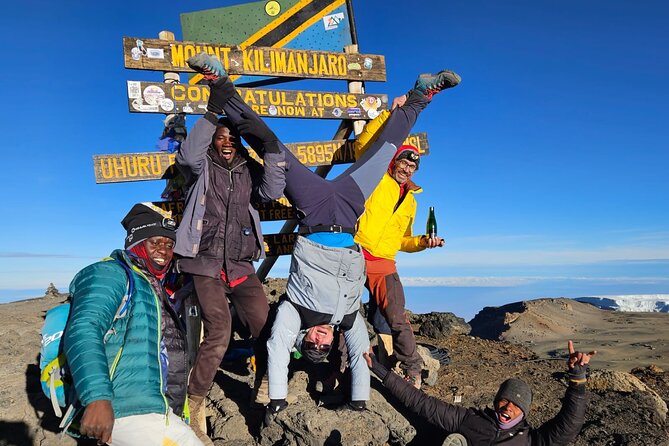
From Stella Point, you continue for about an hour toward Uhuru Peak. Snow may appear along this upper section. At 5,895 meters, Uhuru Peak is the highest point on Mount Kilimanjaro and the highest point in Africa.
Do not judge yourself by another person’s pace. The guide’s job is to help you move safely and steadily, not to turn the summit into a race. One past account describes a guide staying closely involved when a climber struggled with altitude. That kind of support matters more than a cheerful photo at the sign.
After the summit, you descend to lower camp areas. The schedule then continues toward Mweka, making this a very long day in practical terms. You should expect fatigue, loose ground, cold at the top, and a sharp contrast between the dark summit start and the warmer descent.
Day 7: Mweka Gate and the return to Moshi
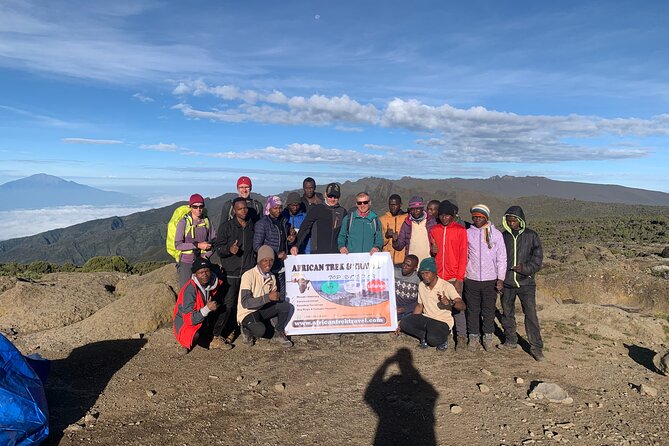
The final day descends from about 3,090 meters to 1,680 meters at Mweka Park Gate. The walk covers approximately 10 kilometers and takes three to four hours through forest.
The lower trail can be wet and muddy. Gaiters and trekking poles are specifically useful here, and you should keep rain gear and warmer clothing within reach even if shorts and a T-shirt feel comfortable lower down.
At Mweka Gate, you receive your summit certificates. An African Trek & Travel vehicle then takes you back to your hotel in Moshi, with the drive listed at about 60 minutes. This simple return transfer is welcome after the summit effort.
The final forest walk is not merely a formality. It gives your body time to come down gradually and lets you notice how quickly the air feels easier. Pack a clean change of clothes if you can, since the difference between summit gear and a Moshi hotel room will be considerable.
What the $2,800 price covers
At $2,800 per person, this is not a budget day hike. It is a seven-day private mountain expedition with park fees, a cook, porters, an English-speaking guide, meals, and an oxygen bottle included.
You receive breakfast, lunch, and dinner for six days. That matters because food logistics on Kilimanjaro are not simple, and a cook allows the guide team to focus on the climb while you receive regular meals at camp.
The language offering is broad. Guides are listed for English, Spanish, French, German, Italian, and Simplified Chinese. Confirm your preferred language before paying, since the information does not assign one specific guide to every departure.
The price does not include tipping, a Tanzanian visa, flights, or laundry. Those costs can change your final budget. Tipping also deserves advance planning because the operation includes several roles: guides, cooks, and porters.
I see the price as reasonable if you value private support and a small group. It is less attractive if you are comparing only the headline number with a large shared departure. Ask exactly how the tip is handled, what transport is included before and after the trek, and who will lead your specific climb.
Guide support and group size
The company’s strongest practical feature is the support structure. Names connected with these climbs include Sebastian, Paschal, Evans, Kessy, and Valency. Sebastian is also described as handling pre-trip questions, gear checks, hotel transfers, and last-minute arrangements, which can be useful if you arrive in Tanzania with limited preparation time.
The listed group maximum is five people. That is small enough for a guide to notice changes in your pace, mood, or breathing. It also keeps the camp routine more personal than a large group departure.
Porters carry shared equipment, and a cooker is included in the package. The wording indicates cooking support and porters, but it does not specify porter numbers or exact baggage limits. Ask those questions before you leave home.
You should also treat the oxygen bottle as safety equipment, not a selling point. Altitude remains the central risk, and a careful pace is more important than any piece of equipment.
Who should book this climb
This route suits you if you want a scenic approach, a private group, and a structured seven-day schedule. It is a good fit for someone who can walk for up to eight hours on a regular day and accept a much longer summit day.
It may also work well if you want a guide who can help with gear preparation and travel planning around Moshi. The pickup option and return vehicle make the basic transport easier, though the exact pickup details should be confirmed.
You should think twice if you want a relaxed holiday with only a little exercise. The route includes steep ground, high camps, scree, cold, mud, and a night climb. A seven-day schedule is helpful, but it does not make Kilimanjaro easy.
The experience is also a strong choice for people who care about the route itself. Lemosho offers a clear progression from forest to summit and includes the excellent high-and-low acclimatization pattern at Lava Tower and Barranco.
Booking details and cancellation
Pickup is offered, the ticket is mobile, and confirmation is provided at booking. The meeting point is listed at M84R+V94, Shantytown 7582, Tanzania, and the activity ends back there after the Moshi transfer.
The experience operates daily from midnight until 11:30 p.m. during the listed operating period, from August 21, 2024, through June 18, 2026. The midnight opening time reflects the summit schedule, not a promise that every day begins at midnight.
You can cancel for a full refund up to 24 hours before the local start time. Changes or cancellations made inside that 24-hour window are not accepted for a refund.
FAQ
How long is the Kilimanjaro Lemosho climb?
The experience lasts approximately seven days, including the approach to Lemosho, the summit attempt, and the descent to Mweka Gate.
How many people can join the private group?
The maximum group size is five travelers.
Where does the climb start?
The meeting point is M84R+V94, Shantytown 7582, Tanzania, in the Moshi area.
Where does the experience end?
The activity ends back at the meeting point after a vehicle transfer from Mweka Gate to the hotel in Moshi.
Is pickup included?
Pickup is offered. Confirm the exact pickup location and time when booking.
What meals are included?
Breakfast, lunch, and dinner are included for six days. The final day includes breakfast.
Are park fees included?
All fees and taxes are included in the price.
Is an oxygen bottle provided?
Yes. An oxygen bottle is included.
What is not included in the $2,800 price?
Tipping, a Tanzanian visa, flights, and laundry are not included.
Can I cancel for a full refund?
Yes. You can cancel at least 24 hours before the experience start time for a full refund. Cancellations or changes made less than 24 hours before the start time are not accepted for a refund.
Should you book the seven-day Lemosho climb?
I would choose this climb if you want a small private party, a scenic route, and a support team that can help with the practical details before and during the trek. The Lava Tower acclimatization day, full meal plan, porters, and Moshi return transfer add real value.
I would not book it casually. You need moderate fitness, patience with altitude, and the willingness to start the summit climb around midnight. Before paying, confirm your guide’s name, language, tipping plan, gear requirements, porter arrangements, and emergency procedures.
If those details suit you, the seven-day Lemosho Route offers a strong balance of scenery, support, and summit preparation. It gives you a real mountain challenge without rushing every stage into a few exhausting days.
More Seven-Day Trips in Kilimanjaro
- 7-Day Machame Kilimanjaro Summit Tour from Arusha
★ 5.0 · 125 reviews - 7 Days Kilimanjaro via Machame route affordable price
★ 5.0 · 110 reviews - 7 Days Machame route – Kilimanjaro
★ 5.0 · 45 reviews - Best Kilimanjaro Adventure 7 days Machame route Trekking
★ 5.0 · 42 reviews
More Trekking Tours in Kilimanjaro
- Kilimanjaro climb, Machame Route (7-day)
★ 5.0 · 262 reviews - Climbing Kilimanjaro – Machame Route
★ 5.0 · 170 reviews - Climbing Kilimanjaro through 7 days Machame Route
★ 5.0 · 151 reviews - Kilimanjaro climb, Lemosho Route (6-day)
★ 5.0 · 129 reviews
Just added around Kilimanjaro
- 6 days Machame route climbing Mt.Kilimanjaro★ 5.0 · 8 reviews
- machame route★ 5.0 · 16 reviews
- Mt Kilimanjaro 6 days Marangu route hike★ 5.0 · 3 reviews
- Private Cycle to Kilimanjaro Bike Park Safari★ 5.0 · 6 reviews
- West Kilimanjaro cycling Adventures★ 4.5 · 8 reviews
- Kilimanjaro Climb • Marangu Route ~ 9 Day★ 5.0 · 4 reviews
- 3 Days Private E-Bike Tour in West Kilimanjaro★ 5.0 · 3 reviews
- Kilimanjaro Climb • Machame Route ~ 10 Day★ 5.0 · 6 reviews