
Reviewed · LEMOSHO ROUTE CLIMBS
Mt.kilimanjaro Lemosho Route
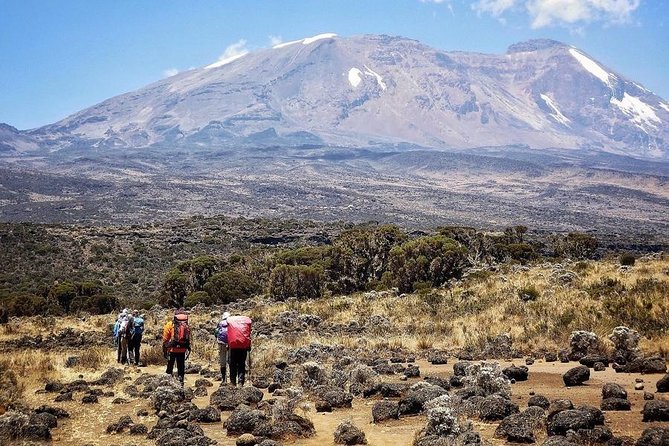
The best part of this 7-day Lemosho Route climb is its gradual approach to Kilimanjaro. You begin high on the western side, cross the Shira Plateau, sleep at several useful acclimatization points, and finish with a night climb to Uhuru Peak at 5,895 meters.
I like the built-in altitude hikes, especially the Lava Tower visit before dropping to Barranco. I also like the private format, where the guide can set the pace for your own group. The main drawback is plain: this is a demanding high-altitude trek, and the final summit night can be physically and mentally tough.
Key points to know before booking
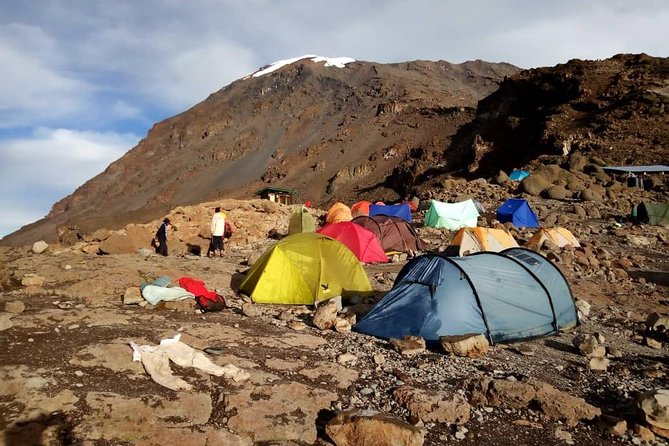
- High start at Londorossi Gate: A vehicle carries you toward 3,500 meters, giving you early views across the Shira Plateau.
- Useful acclimatization pattern: You climb high to Lava Tower, then sleep lower at Barranco, a smart rhythm for handling altitude.
- Barranco Wall looks worse than it is: The climb takes about an hour and follows a simple hiking trail, though the steep setting may unsettle some hikers.
- Personal summit support: Each pair of climbers receives a personal guide during the Uhuru Peak ascent.
- Private group format: Only your own party takes part, allowing the pace to be adjusted to the group.
- Strong guide and food focus: Ayubu, Qamrish, Edwin, Panta, and Fred are names connected with especially warm and capable service.
Why the Lemosho Route is a good seven-day choice
Kilimanjaro is not a technical mountain in the mountaineering sense, but it is a serious altitude challenge. The Lemosho Route works well because it gives you time to gain height instead of rushing straight toward the summit.
The route begins on the western side of the mountain and crosses the Shira Plateau before joining the upper mountain paths. You move through several different plant zones, from forest to high moorland and then to the stark volcanic slopes near the summit.
This seven-day plan also uses a useful climb-high, sleep-lower pattern. You visit Lava Tower at 4,630 meters, spend time there for acclimatization, and then descend to Barranco Camp at 3,960 meters. That does not make altitude sickness impossible, but it gives your body a better chance to adjust.
I also like the private arrangement. You are not tied to the walking speed of a large mixed group. The guides can keep the pace steady, add patience on difficult sections, and pay closer attention to how you are feeling.
More Lemosho Route climbs:
- Kilimanjaro climb by Lemosho Route (7-day)
★ 5.0 · 651 reviews - 8-Day Small-group Lemosho Kilimanjaro Summit Trekking
★ 5.0 · 186 reviews - Kilimanjaro Climbing Lemosho Route 8 Days.
★ 5.0 · 186 reviews
Day 1: Londorossi Gate and the Shira Plateau
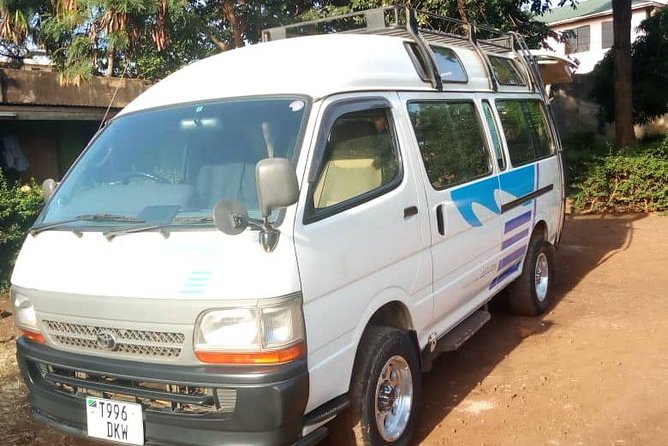
Your guide and mountain support crew meet you at your hotel in the morning for another briefing. From Moshi, the drive to Londorossi Gate takes roughly three to four hours.
At the gate, the team handles climbing permits and registration with the search and rescue service. You then continue by off-road vehicle toward the starting point, reaching about 3,500 meters. This vehicle access saves you a long low-altitude approach and puts you quickly into the high mountain setting.
The first reward is the view across the Shira Plateau. From the drop-off point, the walk to Shira 1 Camp involves only a small gain in height and is described as a fairly gentle opening day.
That sounds easy, but do not treat it as a free pass. You start high, and even a modest walk can feel different at altitude. Keep your pace slow, drink as directed by your guide, and use the first day to watch how your body responds.
The long day includes the drive, gate formalities, the vehicle transfer, and the trek to camp. A 12-hour day is listed, so this is not simply a short walk followed by an early dinner.
Day 2: Shira 1 to Shira 2 and the first altitude walk
You leave Shira 1 Camp at about 3,505 meters and walk to Shira 2 Camp at 3,900 meters. The route is described as light trekking, with open views, unusual Kilimanjaro plants, and broad views toward Africa.
Shira 2 is also a good place to look for Mount Meru, Tanzania’s fifth-highest summit, if the weather is clear. Mountains are not known for keeping appointments, so consider that view a bonus rather than a promise.
After lunch at camp, you have about two hours to rest. Then comes an acclimatization walk toward Lava Tower, gaining another 200 meters before returning. This short extra climb is one of the most useful parts of the day. It lets you feel the effect of more height without committing to sleeping at the highest point.
The two-hour rest matters. Kilimanjaro is not won by racing between camps. It is won by managing energy over a full week, and this schedule gives you a chance to eat, rest, and learn how your body handles the air.
Day 3: Lava Tower and the descent to Barranco
Day 3 is the route’s key acclimatization day. After breakfast, you leave Shira 2 and climb through repeated ascents and descents toward Lava Tower at 4,630 meters.
This section may feel difficult. You may notice discomfort from the altitude, and the plan deliberately keeps you at Lava Tower for one to two hours. Lunch is served there before you descend to Barranco Camp at 3,960 meters.
The logic is simple: gain height during the day, then sleep lower. You still climb high enough to give your body a useful test, but you avoid spending the night at Lava Tower.
The descent ends at Barranco Camp, where the famous Barranco Wall comes into view. It looks imposing, with a steep face rising above camp, but the route up it is described as a straightforward hiking trail.
This is one of those mountain moments where appearance can be misleading. The wall may make you wonder if you need climbing skills. You do not need technical climbing for the route described here, but you should still expect a steep and exposed-feeling walk in places.
A few more Kilimanjaro trips worth comparing
- Kilimanjaro climb, Machame Route (7-day)
★ 5.0 · 262 reviews - Climbing Kilimanjaro – Machame Route
★ 5.0 · 170 reviews - Climbing Kilimanjaro through 7 days Machame Route
★ 5.0 · 151 reviews - Kilimanjaro climb, Lemosho Route (8-day)
★ 5.0 · 148 reviews
Day 4: Barranco Wall and Karanga Camp
The day begins early. Leaving Barranco Camp as soon as possible is recommended to avoid congestion from other groups. That is practical advice, since the wall is a major pinch point on the route.
The climb takes about an hour. Afterward, you have time to rest and take photographs with Kibo, Kilimanjaro’s main volcanic cone, behind you.
The next section to Karanga Camp is more tiring than the wall itself. The trail rises and falls several times, and the repeated changes in height can drain your legs. This is where a good guide earns trust by setting a measured pace rather than pushing for speed.
The support crew prepares a warm lunch at Karanga. Later, you make another acclimatization walk toward Barafu Camp, gaining about 200 meters before returning to sleep at Karanga.
This day is a useful reminder that summit preparation is not only about distance. You are training your body to move at height, then returning to camp before the major summit effort.
Day 5: Barafu Camp and the quiet before summit night
After breakfast, you climb to Barafu Summit Camp at about 4,640 meters. This is the launch point for the night ascent to Uhuru Peak.
The camp is prepared ahead of time, including tents and sleeping bags, so you can focus on eating, resting, and conserving strength. The team also schedules another acclimatization walk toward Kosovo Summit Camp at roughly 4,800 meters, followed by a return to Barafu.
That extra walk may sound like a nuisance when you want to rest, but it has a purpose. It gives you another controlled taste of the altitude before summit night.
Dinner is served hot at Barafu, and the rest of the day should be quiet. You are expected to sleep before leaving at night, though at 4,640 meters sleep may not come easily. Keep your expectations realistic. Resting in your tent still helps, even if you do not sleep deeply.
Day 6: Uhuru Peak at 5,895 meters
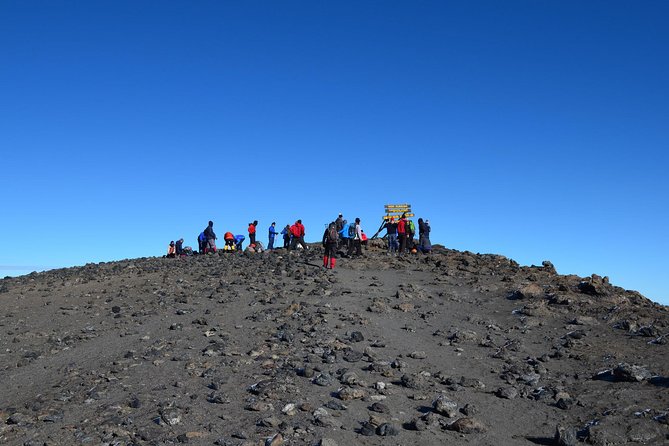
The summit attempt begins at night from Barafu. Technically, the climb is relatively simple, but the altitude makes it the hardest part of the trip.
Each pair of climbers receives a personal guide for the ascent. That arrangement is valuable. Your guide can watch your physical and mental condition, help keep your rhythm steady, and identify when you need to slow down or stop.
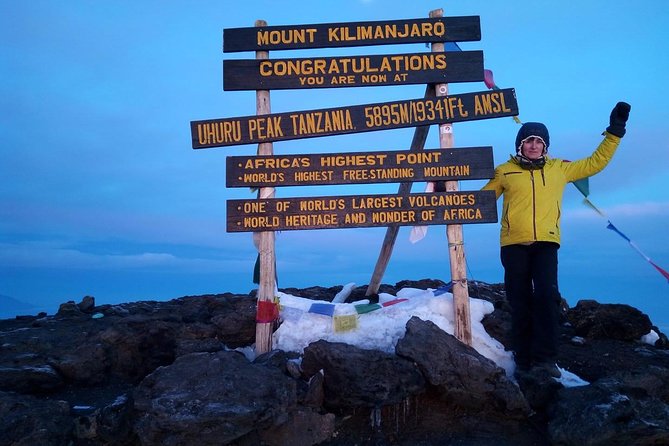
The destination is Uhuru Peak, at 5,895 meters. If conditions allow and you want to do so, you can descend to the nearest glacier after reaching the summit. The plan then takes you back to Barafu for about two hours of rest before continuing down to Millennium Camp at 3,820 meters.
This is an extremely full day, listed at about 12 hours. The summit is only one part of it. You must also descend to Barafu and then continue to Millennium Camp, so saving energy for the second half is important.
The strongest practical advice here is to follow the guide’s pace. Do not spend your best energy trying to reach the top quickly. The goal is not speed. The goal is to reach the summit safely and still have enough strength to descend.
Day 7: Rainforest, Mweka Gate, and the return to Moshi
You wake at Millennium Camp in the tropical rainforest zone, much lower than the summit. The drop in height should bring relief, and breakfast gives you a chance to recover before the final walk.
The descent continues to Mweka Gate at about 1,650 meters. The setting changes again as the high, open mountain gives way to thicker forest.
At the gate, the group gathers to celebrate the climb. You can write in the guestbook, receive a commemorative certificate, and transfer back to your hotel.
This final day is less dramatic than summit morning, but it completes the experience properly. You have time to mark the achievement instead of simply walking out and disappearing into a vehicle.
Guides, crew, and the human side of the climb
The strongest feature of this experience is its guide support. Names associated with the operation include Ayubu, Qamrish, Edwin, Panta, and Fred.
Ayubu and Qamrish are connected with the summit guiding team, while Edwin is associated with keeping a difficult, changeable-weather climb on track. Panta is mentioned for delivering pizza on the mountain, a small but memorable touch when the food and altitude begin to wear on you. Fred is associated with a warm and professional camp experience.
You should not assume one of these specific people will lead your departure unless the company confirms it. Still, the pattern is useful: this operation places clear importance on guide care, food, comfort, and encouragement.
The support crew sets up tents and sleeping bags ahead of your arrival at Barafu. Warm meals are part of the experience, including lunch at Lava Tower, lunch at Karanga, and hot dinner before summit night. Exact inclusions should be confirmed before payment, but the itinerary clearly relies on a substantial mountain team rather than a bare-bones guiding service.
Price and value at $2,256.42
At $2,256.42 per person, this is a major trip expense. The price makes the most sense if you value a private group, a support crew, multiple acclimatization walks, prepared camp equipment, and close summit supervision.
The private format is important here. You are paying for more than transportation and a route plan. You are also paying for a team that can adjust the walking pace to your group and provide one guide for each pair during the summit attempt.
Before booking, ask for a precise list of what the price covers. The supplied details mention permits, search and rescue registration, guides, support crew, tents, sleeping bags, meals at specified points, park exit arrangements, certificates, and hotel transfers. Confirm the exact scope, especially meals, equipment, transfers, and any hotel arrangements.
I see the price as reasonable for someone who wants a supported private climb rather than the cheapest possible way up Kilimanjaro. It may not suit a strict-budget climber, but the safety attention and camp organization can be worth more than saving a few hundred dollars.
Who should choose this climb
This trip suits you if you have moderate physical fitness and can handle long walking days, repeated climbs and descents, cold high camps, and a night summit attempt.
You do not need technical climbing experience for the route as described. The Barranco Wall uses a simple hiking trail, and the summit climb is technically straightforward. The main test is altitude, endurance, patience, and your ability to keep moving when the air feels thin.
This is not a good choice if you want a relaxed holiday with only occasional walking. The schedule lists roughly 12-hour days, and the summit day is especially demanding.
It also suits people who care about personal attention. Since only your own group participates, you can expect a more focused pace than on a large shared departure. Families or mixed-ability groups should still discuss fitness levels in advance, since the route remains physically serious even with guide support.
Pickup is offered, and the tour uses a mobile ticket. Confirmation is received at booking. Public transportation is nearby, but most of your route is handled through the organized mountain transfer and trek.
Cancellation and weather details
Free cancellation is available if you cancel at least 24 hours before the local start time. Cancellations made within 24 hours are not refunded, and late changes are not accepted.
The experience requires suitable weather. If poor weather causes cancellation, you are offered another date or a full refund. Since mountain conditions can change, keep some flexibility in your wider Tanzania plans.
Should you book the Lemosho Route?
I would choose this climb if you want a carefully paced seven-day route with strong guide involvement and a private group. The Shira Plateau opening, Lava Tower acclimatization stop, Barranco Wall, and personal summit guide create a well-planned progression.
I would hesitate if your fitness is only occasional or if you dislike long, demanding days. Kilimanjaro may look like a simple walk on paper, but the altitude and summit night are serious.
For the right person, the value is in the structure and human support. Confirm the exact price inclusions, ask which guide will lead your group, and be honest about your fitness before you commit. If you can handle the effort, this Lemosho plan gives you a sound route to Uhuru Peak without turning the climb into a rushed race.
FAQ
How long is the Lemosho Route experience?
The climb lasts approximately seven days, beginning with the transfer to Londorossi Gate and ending with the descent to Mweka Gate and a hotel transfer.
What is the highest point reached?
The summit is Uhuru Peak at 5,895 meters.
Is this a private tour?
Yes. Only your own group participates in the activity.
What physical fitness level is required?
A moderate physical fitness level is required. The route includes long walking days, repeated ascents and descents, high camps, and a night summit attempt.
Is the Barranco Wall a technical climb?
The route description says the Barranco Wall has a simple hiking trail and takes about an hour to climb. It is steep in appearance, but technical climbing is not described as necessary.
Is pickup available?
Yes. Pickup is offered, and the tour includes a transfer back to the hotel after the descent.
What happens if bad weather cancels the climb?
You are offered a different date or a full refund if poor weather causes the experience to be canceled.
Just added around Kilimanjaro
- 6 days Machame route climbing Mt.Kilimanjaro★ 5.0 · 8 reviews
- machame route★ 5.0 · 16 reviews
- Mt Kilimanjaro 6 days Marangu route hike★ 5.0 · 3 reviews
- Private Cycle to Kilimanjaro Bike Park Safari★ 5.0 · 6 reviews
- West Kilimanjaro cycling Adventures★ 4.5 · 8 reviews
- Kilimanjaro Climb • Marangu Route ~ 9 Day★ 5.0 · 4 reviews
- 3 Days Private E-Bike Tour in West Kilimanjaro★ 5.0 · 3 reviews
- Kilimanjaro Climb • Machame Route ~ 10 Day★ 5.0 · 6 reviews