
Reviewed · RONGAI ROUTE CLIMBS
Mountain Kilimanjaro Climbing 7 Days Rongai Route
The Rongai Route gives you a different Kilimanjaro experience. You approach Africa’s highest mountain from the north, near Kenya, then cross remote country before joining the Marangu descent. I like the quieter trail and the gradual seven-day schedule, which gives your body more time to adjust to altitude. The wide views toward the Kenyan plains are another strong point.
The main drawback is that the scenery changes less dramatically than on some western routes. You also face a very long summit day, listed at about 15 hours, so this is still a serious high-altitude climb even though Rongai is considered moderately difficult.
Key points to know before booking
- The only northern approach: Start near NaleMuru, close to the Kenyan border, and trek through a quieter side of Kilimanjaro.
- Seven days is the sensible choice: The route can be done in six days, but this seven-day plan gives you more time for acclimatization.
- A midnight summit attempt: Expect a long, cold climb to Gillman’s Point and Uhuru Peak before descending the same day.
- Two volcanoes in view: The trail passes beneath Mawenzi and later crosses the saddle toward Kibo, Kilimanjaro’s highest cone.
- Small group size: The maximum group size is 15 people, with pickup offered from the Moshi area.
- Strong planning support: Oscar is named as the main tour contact, and the booking feedback places particular emphasis on his help with questions and trip planning.
Why Rongai is a smart route choice
Kilimanjaro has several routes, and your choice affects the feel of the climb. Rongai is the only route that approaches from the north. That matters because the north side receives less rain than the southern and western slopes, making it an appealing option during wetter months.
It is also quieter than the popular Marangu Route. You will not have the same level of traffic as on Kilimanjaro’s busiest path, and the first few days pass through genuine wilderness before the route joins the Marangu trail near Kibo Camp.
I especially like the way this route changes direction over the week. You begin among farmland and pine trees, move through moorland, reach the stark high country beneath Mawenzi, then cross the pale saddle toward Kibo. The views are not as varied as those on some western routes, but the sense of distance and solitude is a fair trade.
Rongai is described as moderately difficult and is recommended for people with less backpacking experience. That does not mean easy. You still climb to 5,895 meters, and altitude can affect anyone. The seven-day schedule is important because the extra day gives you more time to walk slowly, rest, and use the acclimatization walks built into the plan.
More Rongai Route climbs:
- Kilimanjaro climb, Rongai Route (7-day)
★ 5.0 · 40 reviews - Kilimanjaro climb, Rongai Route (6-day)
★ 5.0 · 15 reviews - Mount Kilimanjaro Rongai Route
★ 5.0 · 10 reviews
Day 1: NaleMuru to Simba Camp at 2,625 meters
The climb begins with a drive from Moshi to the village of NaleMuru, the northern trailhead. The first walking section leads through farmland and pine forest, which makes for a gentle introduction rather than an immediate mountain slog.
The stated walking time is about four hours. Your camp is Simba Camp, at the edge of the moorland zone. From here, you get broad views across the Kenyan plains, a fine first look at how far north you are.
Wildlife sightings are possible along this early stretch. You might see colobus monkeys, and there is also a chance of elephants or buffalo. These sightings are not guaranteed, so treat them as a bonus rather than a reason to book the route.
This day is useful for settling into the group rhythm. You will be walking slowly, carrying what you need for the day, and getting used to the pattern of hiking, resting, eating, and sleeping at camp. The trail is not yet the hardest part, but do not burn energy early. The mountain rewards a patient pace.
Day 2: Second Cave and the first acclimatization walk
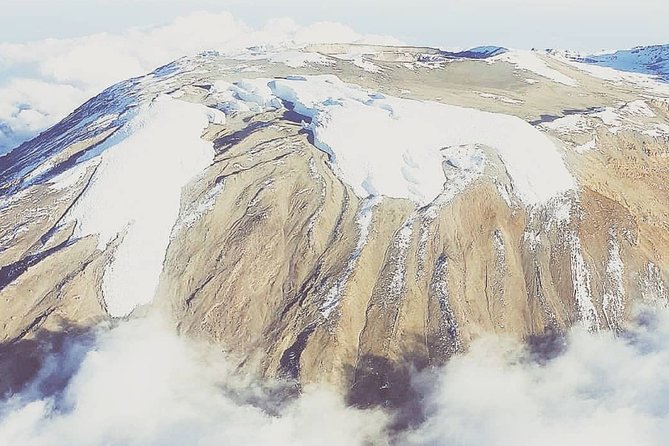
Day two brings a steady climb to Second Cave at 3,450 meters. The walk takes about four hours, and the reward is a clear view toward Kibo, the highest of Kilimanjaro’s three volcanic cones, along with the eastern ice fields near its crater rim.
After a hot lunch, you can rest at camp or take an afternoon walk toward Third Cave. This short extra outing is one of the best features of the schedule. It helps you spend more time at altitude without committing to a major gain in sleeping elevation.
You should use this day to watch how your body responds. A headache, unusual tiredness, or poor appetite can be important signs to report to the guide. The route is designed around slow progress, and rushing ahead will not help you reach the summit.
The camp setting is more exposed than the forest below, and nights will become colder as you climb. Keep warm layers close rather than buried in your bag. The itinerary mentions hot lunches and time to rest, but you should still confirm the full equipment, meal, and sleeping arrangements before departure.
Day 3: Moorland and Kikelewa Cave at 3,630 meters
The pine forest falls behind as you continue through moorland. The walking time is again about four hours, with views toward Kibo’s eastern ice fields and the broad upper slopes of the mountain.
At this point, the route leaves the main trail and follows a smaller path toward Mawenzi, Kilimanjaro’s second volcanic cone. This change gives Rongai much of its character. You are no longer simply following the busiest line uphill. The trail angles toward a more rugged part of the mountain.
Camp is set in a sheltered valley near Kikelewa Caves at 3,630 meters. The shelter is welcome because the higher camps can feel stark and exposed. You will also be close enough to Mawenzi to appreciate its jagged peaks and steep rock walls.
This is a good day to conserve strength. Four hours of walking may sound modest, but the altitude changes how your body works. Move slowly, drink as directed by your mountain team, and resist the temptation to treat a short stage as an invitation to race.
More treks and hikes around Kilimanjaro:
- Kilimanjaro climb by Lemosho Route (7-day)
★ 5.0 · 651 reviews - Kilimanjaro climb, Machame Route (7-day)
★ 5.0 · 262 reviews - 8-Day Small-group Lemosho Kilimanjaro Summit Trekking
★ 5.0 · 186 reviews - Kilimanjaro Climbing Lemosho Route 8 Days.
★ 5.0 · 186 reviews
Day 4: Mawenzi Tarn Hut beneath the cliffs
Day four is short in distance but includes a steep section over grassy slopes. The climb is rewarded with a view north toward the Kenyan plains, a reminder that the mountain rises from a much wider world than the trail beneath your boots.
Vegetation fades shortly before you reach Mawenzi Tarn Hut, at the foot of Mawenzi’s towering cliffs. The setting is one of the trip’s strongest moments. Kibo is the summit goal, but Mawenzi gives the route its most dramatic mountain shape.
The afternoon is left for rest or a short acclimatization walk. Use that time carefully. You are now high enough for altitude to become the central concern, and the next two days bring the saddle crossing and summit attempt.
This is also where the seven-day format earns its keep. A shorter itinerary would compress these stages and give you less time to adjust before summit night. The extra night does not remove the risks of altitude, but it creates a better pace than trying to force the route into the minimum six days.
Day 5: Across the saddle to high camp
The trail crosses the lunar desert between Mawenzi and Kibo. After roughly two hours, you reach the saddle, a broad, stark stretch with Kibo ahead and the route to high camp visible in the distance.
The word lunar fits the feel of this section. Vegetation is largely gone, and the openness can make the mountain seem both close and very far away. You will see the summit ahead, but the sight should encourage patience rather than confidence. The hard work is still coming.
The day takes about six hours, then the main job is rest. You will have an early night because the final ascent begins around midnight. This early bedtime can be difficult at altitude, and you may not sleep well. That is normal enough, but it makes preparation important.
Have your warm clothing, water, headlamp, and summit layers ready before lying down. The itinerary does not provide a detailed packing list, so ask the operator for one. A cold start and a long night climb are easier when you are not searching through bags in the dark.
Day 6: The 15-hour push to Uhuru Peak
Summit day is the test. You start around midnight and climb slowly toward Hans Meyer Cave at 5,220 meters. The route then continues upward to Gillman’s Point at 5,681 meters, on the crater rim, around sunrise.
This section is long, cold, and strenuous. The slow pace matters. The climb is less about speed than steady movement, controlled breathing, and listening to your guide. From Gillman’s Point, you still have another one to two hours to Uhuru Peak.
At 5,895 meters, Uhuru Peak is the highest point on Kilimanjaro. Reaching it is a major physical achievement, but the summit moment may feel brief. Cold, thin air and fatigue tend to focus your attention. Take the photographs you want, then follow the guide’s instructions for the descent.
You return to Kibo Hut for a warm meal and a one to two hour rest. Then you continue down to Horombo Hut. The full day is listed at about 15 hours, making it the clearest reason to take the summit seriously when judging your fitness.
This is not a casual sightseeing walk. You need a moderate level of physical fitness, and you should be comfortable with long days on foot. The route may be considered moderately difficult, but the summit day is plainly demanding.
Day 7: Marangu descent and the return to Moshi
The final morning passes through heath and moorland toward Mandara Hut at 2,700 meters, where a warm lunch is scheduled. From there, the trail enters tropical rainforest and continues to the Kilimanjaro National Park Gate at 1,860 meters.
The listed walking time is about seven hours. After the open upper slopes, the return to forest feels like a major change. Trees, shade, and warmer air signal that the climb is ending, though your knees may remind you that descending is work too.
At the park gate, you say goodbye to the mountain guides. A short transfer then takes you back to your hotel in Moshi, where a hot shower and a proper celebration should feel well earned.
Tipping is specifically requested for the guides, cooks, and porters before you leave them. Bring enough local currency or confirm the preferred method in advance. This is one of those practical details that is easy to forget when you are tired and pleased to be back.
What the $2,628.72 price means
At $2,628.72 per person, this is a major trip expense. The value depends on what is included in your final booking confirmation, since the supplied details do not spell out every inclusion, such as equipment, park fees, transfers, meals, or porter arrangements.
The itinerary does show admission tickets as included for each stage, and it includes transport from the trailhead back to Moshi. Pickup is offered, and the group limit is 15 people. Those details reduce some of the planning burden.
The strongest practical value is the seven-day pacing and the route itself. You are paying for a structured climb with a northern approach, acclimatization time, camp-to-camp support, and a defined summit plan. Before paying, ask for a written list of inclusions, the exact pickup point, accommodation in Moshi, and the guide-to-climber ratio.
The booking support also matters. Oscar is named as the main contact and is praised in the supplied feedback for answering questions through WhatsApp and helping arrange custom plans. That kind of access is useful for a climb where packing, timing, airport transfers, and altitude concerns all need clear answers.
Who should choose this climb?
I would point you toward Rongai if you want a quieter approach, prefer wilderness to heavy trail traffic, or are considering Kilimanjaro during the rainy season. The north side receives less precipitation, and the seven-day plan gives you a more measured schedule.
It also suits you if this is your first major multi-day mountain trek and you want a route described as moderately difficult. You still need decent fitness, patience, and a willingness to spend a very long day climbing and descending.
I would think twice if your top priority is the greatest variety of scenery. Rongai’s western routes offer more changes in scenery, while this route spends several days in similar high moorland before the Mawenzi and Kibo sections.
The group cap of 15 is reasonable, but it is not an intimate private climb. If you want a private trip, ask for that arrangement directly. One supplied booking involved a private seven-day Rongai climb followed by a safari, so customized planning may be possible, but you should confirm the added cost and exact structure.
Practical details before you commit
The listed start time is 12:00 am, while the first day describes a morning drive to NaleMuru. Confirm the actual pickup time with Exceed Expectations Tours & Safari, especially if you are staying in Moshi.
Confirmation is provided at booking, and cancellation is free if you cancel at least 24 hours before the experience begins. Changes or cancellations inside that window are not accepted for a refund.
The activity is listed for people with moderate physical fitness and accepts a maximum of 15 participants. The operator is Exceed Expectations Tours & Safari. The experience has a listed rating of 4.7 from three pieces of feedback, with the most favorable points focused on Oscar’s communication, trip planning, and the support provided during difficult climbs.
FAQ
How long is the Kilimanjaro Rongai Route experience?
The experience lasts approximately seven days, with the final summit day listed at about 15 hours of walking.
Where does the Rongai Route begin?
The trek begins near the village of NaleMuru in northern Tanzania, close to the Kenyan border.
What is the highest point reached?
The summit goal is Uhuru Peak at 5,895 meters. The route also passes Gillman’s Point at 5,681 meters on the crater rim.
Is the Rongai Route difficult?
It is described as moderately difficult and is recommended for people with less backpacking experience. You still need a moderate level of physical fitness, especially for the long summit day.
How large can the group be?
The maximum group size is 15 people.
Is pickup available?
Yes. Pickup is offered, though you should confirm the exact pickup time and location because the listed start time is 12:00 am while the first day describes a morning departure.
Can I cancel for a full refund?
Yes, if you cancel at least 24 hours before the experience start time. Cancellations or changes made less than 24 hours in advance are not refunded or accepted.
Should you book the seven-day Rongai climb?
Book this climb if you want a quieter northern route, a gradual seven-day schedule, and a real summit attempt rather than a quick mountain visit. I like the remote opening stages, the time spent near Mawenzi, and the clear rest period before summit night.
Before booking, get the inclusions in writing and confirm the pickup time, gear requirements, sleeping arrangements, and tipping expectations. If you can handle a 15-hour summit day and prefer a less crowded trail, Rongai offers a strong balance of solitude, scenery, and sensible pacing.
More Seven-Day Trips in Kilimanjaro
- Climbing Kilimanjaro through 7 days Machame Route
★ 5.0 · 151 reviews - 7-Day Machame Kilimanjaro Summit Tour from Arusha
★ 5.0 · 125 reviews - 7 Days Kilimanjaro via Machame route affordable price
★ 5.0 · 110 reviews - Private Kilimanjaro Hike 7 Day Lemosho Route
★ 5.0 · 60 reviews
Just added around Kilimanjaro
- 6 days Machame route climbing Mt.Kilimanjaro★ 5.0 · 8 reviews
- machame route★ 5.0 · 16 reviews
- Mt Kilimanjaro 6 days Marangu route hike★ 5.0 · 3 reviews
- Private Cycle to Kilimanjaro Bike Park Safari★ 5.0 · 6 reviews
- West Kilimanjaro cycling Adventures★ 4.5 · 8 reviews
- Kilimanjaro Climb • Marangu Route ~ 9 Day★ 5.0 · 4 reviews
- 3 Days Private E-Bike Tour in West Kilimanjaro★ 5.0 · 3 reviews
- Kilimanjaro Climb • Machame Route ~ 10 Day★ 5.0 · 6 reviews