
Reviewed · LEMOSHO ROUTE CLIMBS
Lemosho Route 7 Days Trekking at Mount Kilimanjaro
Mount Kilimanjaro’s Lemosho Route gives you a long, scenic approach to Africa’s highest peak, beginning in rainforest and ending among rock, ice, and thin air. The seven-day plan includes a useful acclimatization stop at Lava Tower before you reach Barranco Camp, a smart feature for such a demanding climb.
I like the quieter start, the varied scenery, and the small advertised group size of no more than eight trekkers. I also like that guides such as Freddy, Mike, Modest, and Teacher are part of the operating team, with strong praise for their care, judgment, and support during difficult weather.
The main caution is simple: summit day is extremely hard. You will climb from 4,600 meters to 5,895 meters after waking around midnight, then descend for hours. A moderate fitness level is required, but fitness alone cannot remove the effects of altitude.
Key points at a glance
- A quieter route to Shira Plateau: Lemosho begins on the western side of Kilimanjaro and avoids the busiest opening stages found on some other routes.
- Seven days with useful altitude changes: The route reaches Lava Tower at 4,600 meters before sleeping lower at Barranco Camp.
- A midnight summit attempt: Expect hot drinks and snacks before a six to seven-hour climb to Uhuru Peak.
- A small advertised group: The tour lists a maximum of eight trekkers, though the wider support team may be much larger.
- Experienced guide team: Freddy, Mike, Modest, and Teacher are among the guides associated with the operation.
- Meals and park admission included: Breakfast, lunch, dinner, and admission tickets are covered, while insurance and flights are not.
Why Lemosho is a good seven-day choice
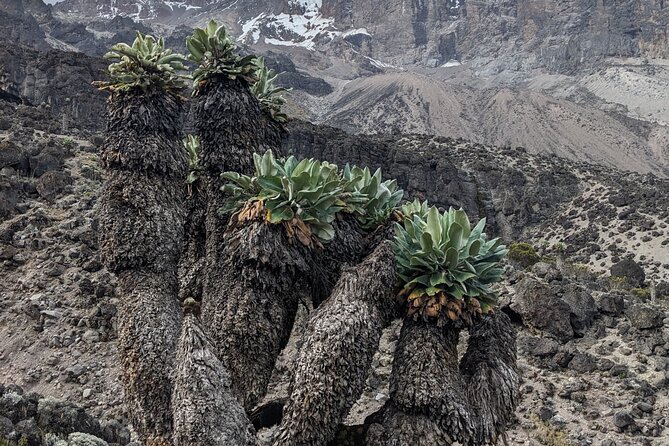
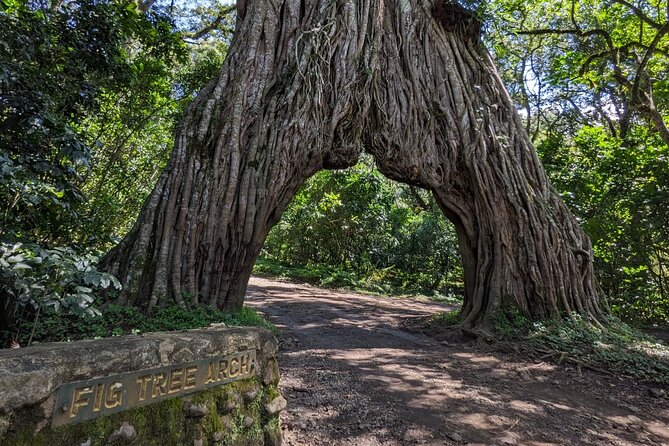
The Lemosho Route earns its reputation from the way it changes scenery. You start in thick rainforest, move into heath and moorland, cross the Shira Plateau, and then enter the stark alpine desert near Barafu Camp. This gives you more than a steep walk to a summit. You get a gradual tour through Kilimanjaro’s distinct ecological zones.
The route is also quieter at the start. That matters because the first day feels less like joining a crowd and more like entering a large mountain park. You still share camps and trails with other climbing groups, but the western approach provides a more spacious beginning.
Seven days is a workable schedule, though it is not leisurely. The itinerary includes altitude gains of 1,100 meters on day two and 1,100 meters around the Lava Tower section on day three. The route then gives you shorter walking days before the summit attempt. That rhythm is useful, but you should not mistake shorter distances for easy days.
More Lemosho Route climbs:
- Kilimanjaro climb by Lemosho Route (7-day)
★ 5.0 · 651 reviews - Kilimanjaro Climbing Lemosho Route 8 Days.
★ 5.0 · 186 reviews - 8-Day Small-group Lemosho Kilimanjaro Summit Trekking
★ 5.0 · 186 reviews
Day 1: Arusha to Big Tree Camp
Your morning begins with a drive from Arusha in a 4×4 Land Cruiser or Land Rover. The trip to Londorossi Gate takes about an hour, followed by registration, payment, and permit arrangements. You then continue to the Lemosho starting point at about 2,100 meters.
The first hike covers roughly 6 kilometers and takes about three hours. You gain 650 meters before reaching Mti Mkubwa Camp, also called Big Tree Camp, at 2,750 meters. The route passes through rainforest, which makes this first stage feel cool, shaded, and relatively gentle compared with what lies ahead.
This is a good day for you to settle into the walking pace and learn how the support system works. Keep your first day slow, even if you feel fresh. The mountain rewards restraint. Your evening meal and overnight stay are at the campsite.
The driving and registration process can make this a longer day than the three-hour hike suggests. Keep essential items close rather than buried in larger luggage, especially water, rain protection, and a warm layer.
Day 2: Heath and moorland to Shira One
After breakfast, the path leaves the forest and enters heath and moorland. You walk about 13 kilometers to Shira One Camp at 3,500 meters, with a gain of 1,100 meters. The listed walking time is around six hours.
This is one of the more demanding regular hiking days because the distance and altitude gain arrive together. The practical rule is to walk slowly and keep your effort even. Do not race stronger members of the group early in the day. You will need that energy later.
Shira One gives you your first real sense of Kilimanjaro’s broad upper slopes. The vegetation becomes lower and more open, and the air feels thinner. You will notice the altitude more here than on day one, even if your legs still feel strong.
Dinner and camping follow at Shira One. The appeal of this stop is not comfort. It is the gradual change in air, vegetation, and scale. This is where you begin to understand that the summit will be an endurance test, not simply a long hill walk.
Day 3: Lava Tower acclimatization and Barranco Camp
Day three is the key acclimatization day. You climb from Shira One toward Lava Tower at 4,600 meters, then descend to Barranco Camp at 3,940 meters. The total walking time is about six to seven hours, and a picnic lunch is provided.
The route covers approximately 10.75 kilometers. The stated elevation gain is 750 meters to Lava Tower, followed by a further 660 meters on the route toward Barranco. The important point is that you reach a higher altitude during the day but sleep lower at night. That pattern gives your body useful exposure without forcing you to camp at the highest point reached.
Lava Tower can feel like a serious test. You may notice headache, tiredness, or shortness of breath. Your guide should be told about any symptoms early, not after they become severe. The itinerary’s use of Lava Tower before Barranco is one of the strongest parts of this seven-day plan.
Barranco Camp sits below the dramatic Barranco Wall. The camp’s setting gives you one of the trip’s memorable views, with the wall rising above the tents and the upper mountain beyond. The day is long, but it prepares you for the height ahead.
More treks and hikes around Kilimanjaro:
- Kilimanjaro climb, Machame Route (7-day)
★ 5.0 · 262 reviews - Climbing Kilimanjaro – Machame Route
★ 5.0 · 170 reviews - Climbing Kilimanjaro through 7 days Machame Route
★ 5.0 · 151 reviews - Kilimanjaro climb, Lemosho Route (8-day)
★ 5.0 · 148 reviews
Day 4: Over Barranco Wall to Karanga Camp
After breakfast, you climb the Barranco Wall and continue to Karanga Camp at about 4,000 meters. The walking distance is only 4.25 kilometers, with an elevation gain of roughly 250 meters. The scheduled walking time is three to four hours, followed by a hot lunch and an acclimatization walk.
The Barranco Wall looks intimidating from camp, but the route is not described as a technical rock climb. You should still expect uneven footing and a need to use your hands at points. Move carefully, follow your guide’s instructions, and give people space on tighter sections.
This is the shortest regular hiking day. That is valuable because your body has already spent several days adjusting to altitude. The afternoon rest is not wasted time. It helps you recover before the push to Barafu and the summit.
The provided itinerary lists this stop as four minutes in one place, which is clearly inconsistent with the stated three to four-hour hike. Plan on a half day of walking, not a few minutes. Dinner and the night are at Karanga Camp.
Day 5: Karanga to Barafu Camp
The route continues through heath and moorland to Barafu Camp at 4,600 meters. You begin after breakfast, listed at around 8:30 in the morning, and walk for about three to four hours. The distance is approximately 4.25 kilometers, with a 600-meter gain.
Barafu is the launch point for the summit attempt. The camp is high, exposed, and functional rather than cozy. After a hot lunch, you rest, eat an early dinner, and sleep for a few hours before the midnight wake-up.
This schedule requires mental discipline. You may not sleep well at altitude, and the short rest period can feel frustrating. Pack the items you need for the summit before you lie down. That way, you avoid searching through bags when the alarm rings.
The hot lunch and early dinner matter here because you need calories before the longest and hardest day. Meals are included throughout the trip, with six breakfasts, seven lunches, and six dinners listed. Ask about any dietary needs before departure, since the supplied information does not specify special meal arrangements.
Day 6: Uhuru Peak and the long descent
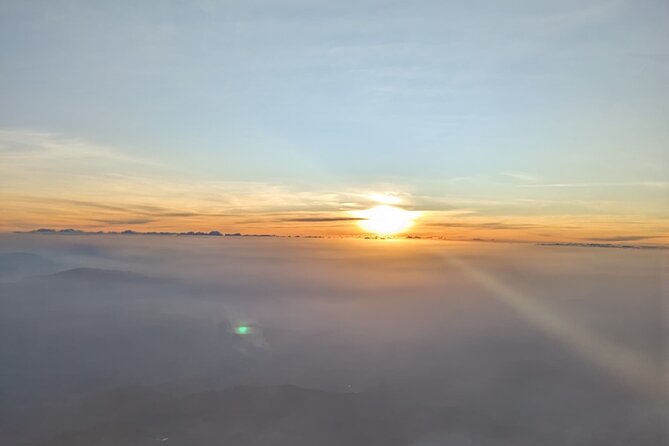
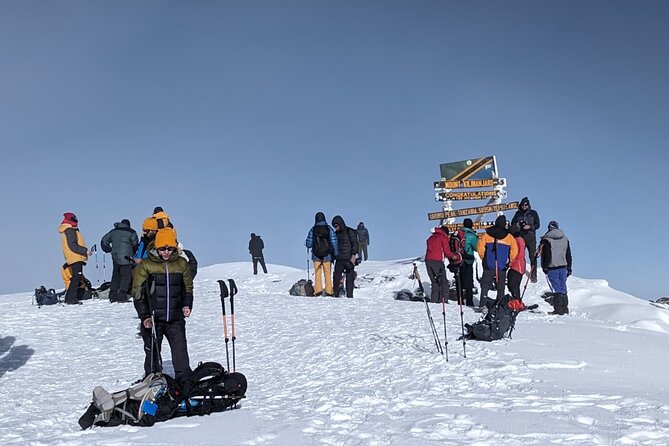
Around midnight, you wake, pack essential summit items, and have hot drinks and snacks. The climb to Uhuru Peak, at 5,895 meters, takes about six to seven hours and covers 4.86 kilometers. You gain approximately 1,295 meters.
This is the day that decides the trip. The distance does not look large on paper, but the altitude, darkness, cold, and steep climb make it punishing. The goal is slow, steady movement. Guides such as Freddy and Mike have been praised for their support and mountain judgment, qualities that matter most during this stretch.
At the summit, you reach the highest point in Africa. Expect a short period for photographs and recognition of the achievement, but do not linger beyond what your guide considers sensible. You then descend to Barafu Camp in about three hours for breakfast.
The day is not finished. After several hours of rest and a hot lunch, you continue down through alpine desert, heath, and moorland to Mweka Camp at 3,100 meters. The total descent from Uhuru Peak through Barafu to Mweka covers about 11.5 kilometers and drops 2,795 meters.
This is a very long day, and the itinerary’s seven-hour figure describes the summit climb rather than the full start-to-finish effort. In practice, you should treat day six as an all-day physical challenge. If you are fit but not acclimatized, altitude can still stop you. A successful summit depends on health, pacing, and guide decisions, not just willpower.
Day 7: Rainforest descent and return to Arusha
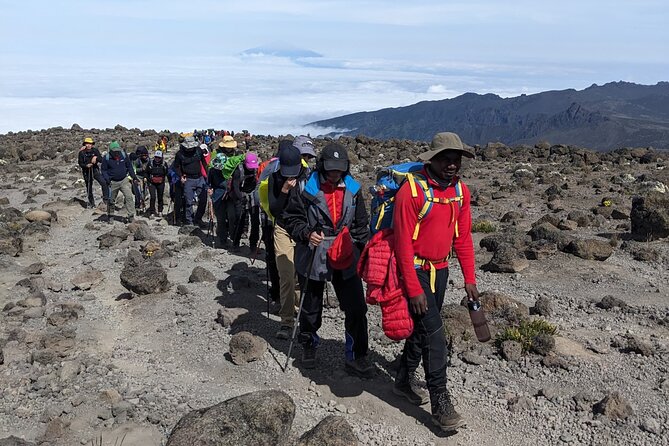
After breakfast at Mweka Camp, you descend through rainforest to Mweka Gate at 1,800 meters. The walk covers about 9.1 kilometers and takes roughly three to four hours, though the full day is listed at around six hours.
The forest feels different after the high mountain. You are lower, warmer, and surrounded by thicker vegetation again. Your knees may be more tired than your lungs by this point, so trekking poles or careful footing can be useful, though the tour information does not state that equipment is supplied.
At the gate, successful summiters receive a certificate. You then meet the vehicle and transfer to Jevas Hotel in Arusha for drop-off. This closes the trip without adding another mountain night, which is welcome after the summit descent.
Guides, porters, and the human side of the climb
The guiding team is a major part of this experience. Freddy, Mike, Modest, and Teacher are names connected with the operation, and the strongest praise focuses on calm support, experience, and care during difficult conditions.
You should also understand that a small trekking group does not mean a tiny mountain workforce. The tour advertises a maximum of eight trekkers, while one reported party had nine porters and a cook alongside two guides. Another account described a total team of 25 people. That larger number reflects the support needed to move food, camping supplies, and equipment up and down the mountain.
Rain can affect the trip. Accounts connected with this operation describe several days of near-continuous rain, including difficult work for the crew. Pack your own waterproof layers and protect important belongings. The supplied details do not list personal gear, porters, tents, sleeping bags, or trekking poles as included, so confirm exactly what the company provides before paying.
What the $2,800 price means
The price is $2,800 per person. That is a substantial sum, but Kilimanjaro costs reflect park admission, permits, transport, guides, cooks, porters, meals, camping operations, and the logistical work of supporting a high-altitude climb.
This package includes a certified guide, six breakfasts, seven lunches, six dinners, and admission tickets. Pickup is offered, the trip begins and ends in Arusha, and mobile ticketing is available. Those inclusions make the price easier to assess than a bare guiding fee.
The exclusions matter. International flights, departure taxes, medical insurance, travel insurance, and luggage insurance are not covered. You should also confirm equipment, porterage, airport transfers, hotel nights beyond the stated Arusha drop-off, and any gratuities before booking. None of those details is specified here, so they may affect your true budget.
For a seven-day Kilimanjaro climb with a certified guide and organized meals, the value depends heavily on what the operator supplies beyond the listed items. Ask for a written packing and inclusions list. That is more useful than comparing headline prices alone.
Who should book this trek
This route suits you if you want varied mountain scenery, a quieter opening, and a structured climb with a guide team. It is a good match for someone who can handle several hours of walking on consecutive days and accept that summit night will be far harder than the earlier stages.
It is less suitable if you want a relaxed camping holiday or a short scenic hike. The route involves high altitude, an overnight summit start, long descents, and basic campsite living. A moderate fitness level is listed, but you should prepare beyond that minimum.
The trip is also a fit for people who value a personal support team. The group limit is eight trekkers, while the wider crew can be sizable. That may feel reassuring, though it also means you should ask how group organization and porter arrangements work.
Cancellation is flexible up to 24 hours before the experience start time for a full refund. Inside that 24-hour period, payment is not refunded, and changes are not accepted. The stated operating period runs from November 12, 2024, through June 18, 2026, with availability listed every day.
Should you book the Lemosho Route with Suricata Safaris?
I would consider this trek if your priority is a scenic western approach, a seven-day schedule, and hands-on support from guides such as Freddy, Mike, Modest, and Teacher. The Lava Tower acclimatization day and the shorter Karanga day are especially useful features.
Book it only after confirming the practical details that are not spelled out, including personal equipment, porter support, accommodation before and after the climb, dietary arrangements, and insurance expectations. If you are prepared for a midnight start and a very long summit day, this offers a strong route to Kilimanjaro’s highest point. If altitude or consecutive strenuous days worry you, choose a longer itinerary instead of treating seven days as an easy option.
FAQ
How long is the Kilimanjaro trek?
The experience lasts approximately seven days, beginning and ending in Arusha.
What route does the trek use?
The trek uses the Lemosho Route, with camps including Mti Mkubwa, Shira One, Barranco, Karanga, Barafu, and Mweka.
What is the highest point reached?
The summit is Uhuru Peak at 5,895 meters, the highest point in Africa.
How many people can join the tour?
The advertised maximum is eight trekkers.
Are meals included?
Yes. The package lists six breakfasts, seven lunches, and six dinners.
Is park admission included?
Yes. Admission tickets are included in the experience.
What is not included in the price?
International flights, departure taxes, medical insurance, travel insurance, and luggage insurance are not included.
More Seven-Day Trips in Kilimanjaro
- 7-Day Machame Kilimanjaro Summit Tour from Arusha
★ 5.0 · 125 reviews - 7 Days Kilimanjaro via Machame route affordable price
★ 5.0 · 110 reviews - Private Kilimanjaro Hike 7 Day Lemosho Route
★ 5.0 · 60 reviews - 7 Days Machame route – Kilimanjaro
★ 5.0 · 45 reviews
Just added around Kilimanjaro
- 6 days Machame route climbing Mt.Kilimanjaro★ 5.0 · 8 reviews
- machame route★ 5.0 · 16 reviews
- Mt Kilimanjaro 6 days Marangu route hike★ 5.0 · 3 reviews
- Private Cycle to Kilimanjaro Bike Park Safari★ 5.0 · 6 reviews
- West Kilimanjaro cycling Adventures★ 4.5 · 8 reviews
- Kilimanjaro Climb • Marangu Route ~ 9 Day★ 5.0 · 4 reviews
- 3 Days Private E-Bike Tour in West Kilimanjaro★ 5.0 · 3 reviews
- Kilimanjaro Climb • Machame Route ~ 10 Day★ 5.0 · 6 reviews