
Reviewed · MACHAME ROUTE CLIMBS
Kilimanjaro 7 Days Machame Route Private Tour
Africa’s highest summit is the main event here, but the route earns its nickname, the Whiskey Route, through hard walking and steep ground. Over seven mountain days, you move from rainforest to moorland, alpine desert, and ice before a midnight push to Uhuru Peak at 5,895 meters. I like the gradual altitude gain and the careful Lava Tower to Barranco route, two features that give your body useful time to adjust.
I also like the practical support: tents are set up ahead of you, a kitchen crew prepares three meals a day, and the guides carry pulse oximeters, oxygen, and a first-aid kit. The drawback is plain enough: this is a serious high-altitude trek, not a scenic stroll. The long summit day can take 12 to 14 hours, and the package price does not cover your boots, sleeping bag, personal clothing, or tips.
Key points to know before you book
- Seven mountain days, nine calendar days: The climb includes a pre-trek hotel day and a recovery day after descending.
- Machame’s useful acclimatization profile: You climb high to Lava Tower, then sleep lower at Barranco.
- Uhuru Peak requires a midnight start: Expect 12 to 14 hours of walking on summit day and descent day combined.
- Private group format: Only your party takes part, with pickup available and a 9:00 a.m. start time listed.
- Strong crew support: Certified wilderness first responder guides, porters, cooks, oxygen, and pulse oximeters are included.
- Budget beyond the advertised price: Personal gear and crew tips are extra, so plan your real cost before booking.
What the $1,895 price really covers
At $1,895 per person, this is not simply a guide leading you up a trail. The price includes park fees and taxes, mountain crew wages, camping equipment, dining equipment, sleeping pads, tents, meals, and safety supplies. That matters on Kilimanjaro, where the mountain team handles much of the camp work and carries equipment that would otherwise slow you down.
The package includes eight breakfasts, seven lunches, and six dinners. That matches the pre-trek and post-trek hotel rhythm as well as the seven mountain days, though I would confirm the exact hotel arrangements and meal schedule before paying.
Your personal equipment remains your responsibility. Hiking clothes, boots, and a sleeping bag are not included. Tips are also separate. I would treat these as real costs, not minor extras, especially if you need to buy or rent cold-weather equipment.
The package can be good value for a private climb because it combines transport, park access, food, camping gear, safety equipment, and a full support crew. It is less attractive if you already own your equipment and prefer a very stripped-down trek. The main value here is organization and support, not luxury.
More Private Tours in Kilimanjaro
- Private Full Day Hiking Experience to Marangu Route
★ 5.0 · 61 reviews - Private Kilimanjaro Hike 7 Day Lemosho Route
★ 5.0 · 60 reviews - Kilimanjaro 7 Day Private Trekking Experience
★ 5.0 · 40 reviews
Day 1: Moshi briefing and equipment check
You should arrive at least one day before the mountain trek begins. If you book the optional airport transfer, the company can collect you at Kilimanjaro Airport and take you to your hotel in Moshi or Arusha.
The first day is practical rather than scenic. You meet your guide, review the route, check your gear, and rent anything missing from the company’s store. I like this setup because it gives you one last chance to discover that your boots are unsuitable, your sleeping bag is too light, or your rain gear is still sitting at home.
The listed start time is 9:00 a.m. This is also the point to ask clear questions about your pack weight, water arrangements, tipping, emergency procedures, and the exact transfer plan. A private tour gives you more room to discuss concerns before the group reaches the mountain.
Day 2: Machame Gate to Machame Camp
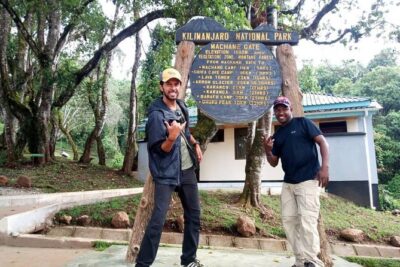
The first mountain day begins with a vehicle ride to Machame Gate, where registration takes place. From there, the route enters montane forest and climbs from about 1,200 meters to 3,000 meters over roughly 13 kilometers.
Expect five to seven hours of walking. The forest is a gentle introduction in terms of scenery, but the steady climb can still feel demanding if you arrive tired or underprepared. The trail may feel busy around the gate and early forest sections, though the private format means your own walking group remains small.
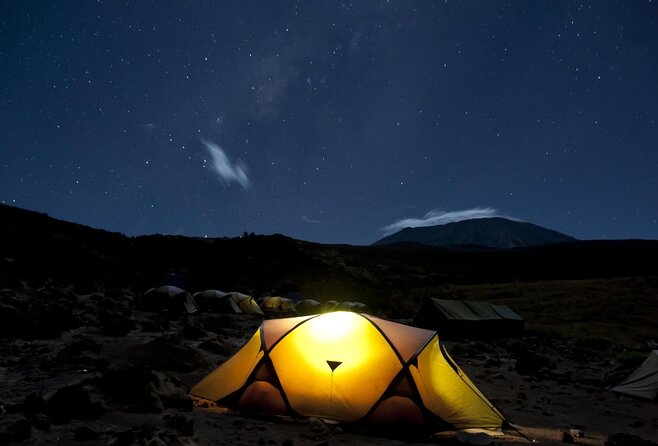
At Machame Camp, the tents should already be set up. You eat dinner and sleep at about 3,000 meters. That prepared camp is one of the better parts of a supported trek: you can focus on eating, drinking, and resting instead of pitching a tent after a full day on foot.
Day 3: Moorland views at Shira Camp
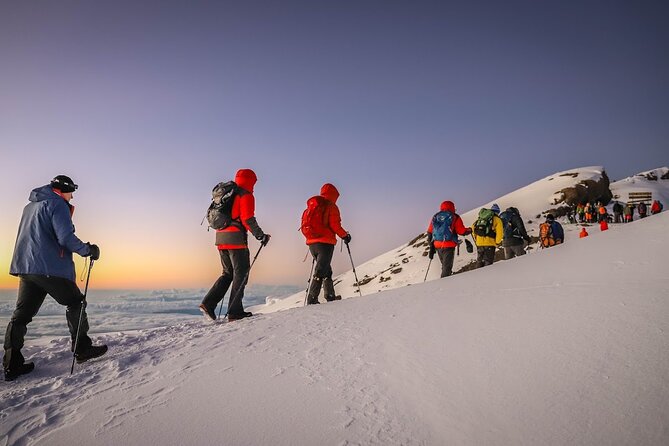
You leave the forest behind and enter moorland. The day covers about nine kilometers, with five to six hours of trekking, and climbs from 3,000 to 3,800 meters.
The route crosses small valleys and a steep rocky ridge covered with heather. The reward is a broader view of the mountain. From camp, the itinerary points to views of Mount Meru, the Shira Plateau, Kibo Peak, and sunset.
This is a shorter day than the first, but the altitude begins to matter more. You may feel fine while walking and then notice a headache or low appetite at camp. The best approach is slow walking, steady hydration, and honest communication with your guide. The mountain crew’s pulse oximeters can add useful information, but they do not replace how you feel or the guide’s judgment.
More Machame Route climbs:
- Kilimanjaro climb, Machame Route (7-day)
★ 5.0 · 262 reviews - Climbing Kilimanjaro – Machame Route
★ 5.0 · 170 reviews - Climbing Kilimanjaro through 7 days Machame Route
★ 5.0 · 151 reviews - 7-Day Machame Kilimanjaro Summit Tour from Arusha
★ 5.0 · 125 reviews
Day 4: Lava Tower acclimatization and Barranco Camp
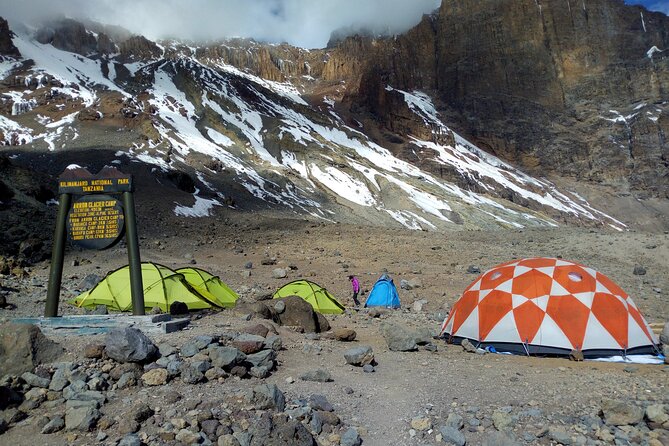
This is one of the most important days on the route. You climb from about 3,800 meters toward Lava Tower at 4,600 meters, then descend to Barranco Camp at roughly 3,950 meters.
The total distance is about 13 kilometers, with seven to eight hours of walking. The point is not only to cover ground. You spend time at a higher elevation, then sleep lower. That climb high and sleep lower pattern gives your body a better chance to adjust before the summit attempt.
The descent to Barranco is especially useful, but it does not make the day easy. You gain altitude, lose it, and keep walking for much of the day. The moorland is more exposed than the forest, and the air is thinner. At Barranco, you camp below the famous Barranco Wall, with the valley rising around you.
I consider this the route’s key acclimatization day. It is also a good test of pacing. If you rush early, the final hours can feel long.
Day 5: Barranco Wall to Karanga
The morning begins by descending into the Great Barranco, followed by a steep climb up the Barranco Wall. This section is not described as technical climbing, but it is a long, tiring scramble over rock.
You pass below the Heim and Kersten glaciers before heading toward the Karanga Valley. The distance is only about 5.5 kilometers, and the walking time is listed at four to five hours, but the steep wall makes this a physical day despite the short mileage.
Karanga Camp sits at about 3,963 meters. If you are feeling strong, the schedule allows for an afternoon acclimatization walk to around 4,200 meters, followed by a descent to camp. That extra walk is optional in practice and should depend on your condition. There is no prize for forcing it when you are already struggling.
This day offers a good balance of effort and recovery. You face a memorable section of trail, then have time to rest before the final base camp.
Day 6: Karanga to Barafu Camp
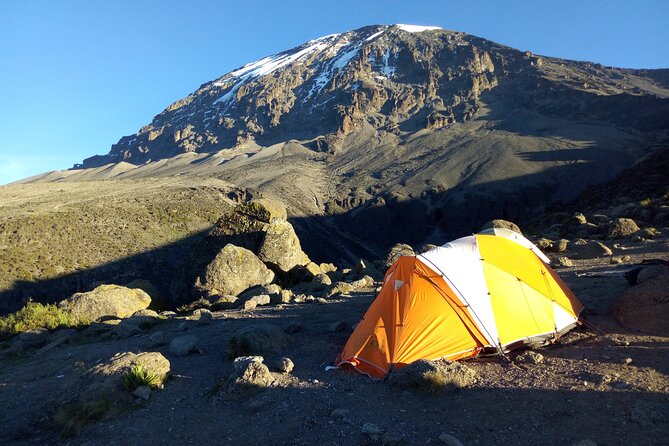
The trail climbs from about 3,963 meters to Barafu Camp at 4,643 meters. The distance is only three kilometers, but the route crosses steep, barren scree with almost no vegetation.
The walking time is listed at three to four hours. Altitude makes this short day feel tougher than the distance suggests. At Barafu, you eat, rest, and prepare for the summit attempt. The summit is still about 1,342 meters higher, and you will begin the final climb during the night.
This afternoon is not free time in the usual sense. You need to organize warm clothing, headlamp, camera, water, and walking poles. The itinerary specifically advises preparing thermal clothing and even carrying a replacement headlamp and camera. That is sensible advice. A dead headlamp is a small problem at home and a serious nuisance on a midnight summit climb.
Barafu is a functional high camp, not a place for comfort. The terrain is barren and the altitude is severe. Eat what you can, drink as instructed, and rest even if sleep is difficult.
Day 7: Uhuru Peak and the long descent
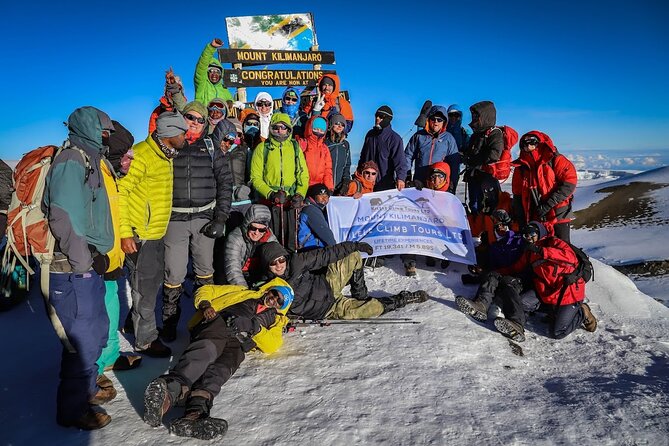
Summit day begins around midnight with a light breakfast. The goal is to climb before dawn and reach the crater rim near Stella Point at about 5,861 meters between 4 and 5 a.m.
The trail uses switchbacks over steep scree and may include snow. This is the coldest, slowest, and most demanding part of the climb. Your guide will set the pace, and the private format can help because the group does not need to match a larger party’s speed.
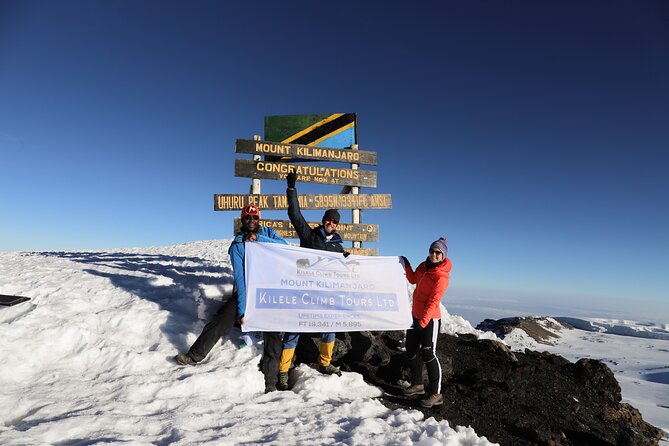
At Stella Point, you can see the crater and glaciers. From there, about an hour of walking along the Kibo crater rim leads to Uhuru Peak, the summit at 5,895 meters. The summit moment may be brief. Wind, cold, altitude, and fatigue make it more sensible to take a few photographs, appreciate the view, and begin descending rather than linger.
The day continues after reaching the top. You descend to about 3,100 meters, covering roughly 15 kilometers in 12 to 14 hours. This is the point where conditioning and pacing matter most. You may feel proud at the summit, then find the descent surprisingly hard on tired legs.
The tour includes oxygen, pulse oximeters, and a first-aid kit. Those are reassuring safeguards, but no equipment makes altitude risk disappear. The right mindset is to treat safety decisions as more important than reaching a particular point.
Day 8: Mweka descent and certificate presentation
After breakfast, you descend through montane forest toward Mweka Gate. The route covers about nine kilometers and takes three to four hours.
Compared with summit day, this is mercifully short, but your knees and feet may still be tired. At the gate, you sign out and board the vehicle back to the hotel. The company presents your certificate there, followed by a well-earned celebration.
This return to the forest gives you a clear change in temperature and vegetation. It is also the first time since the summit push that you can properly relax. I would avoid scheduling a flight immediately after this descent. The itinerary sensibly includes another day in Moshi.
Day 9: Recovery in Moshi and onward plans
The final day is left open for rest before your flight home. Breakfast is included, with hotel checkout listed at 10:00 a.m.
If you need to stay in the room during the day, a day-room booking may be available at an extra cost until 6:00 p.m. Airport transfers can also be arranged if you booked them. If you continue to safari, Zanzibar, or another Tanzanian destination, a guide is scheduled to provide a pre-safari briefing.
I like this buffer day. After a summit day followed by a descent, you may want nothing more ambitious than a shower, food, and a quiet afternoon. It also reduces the pressure of connecting directly from the mountain to a flight.
Food, camping, and mountain crew
The camp kitchen provides breakfast, lunch, and dinner across the trek. The strongest practical praise for this operator centers on food, cooking, organization, and the care provided by the guides and porters.
You should still keep expectations realistic. This is camping at altitude, not a lodge-based holiday. Meals are designed to keep you moving and warm, not to offer a restaurant menu. If you have allergies or dietary restrictions, ask about them before booking because the supplied details do not specify special meal arrangements.
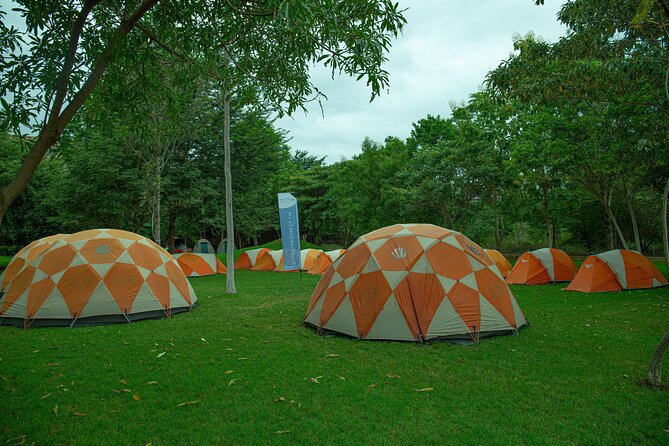
Camping equipment includes sleeping tents, a dining tent, tables, chairs, sleeping pads, crockery, and cutlery. Porters carry equipment while your guide manages the route and group. The listed crew wages follow rates approved by the Kilimanjaro National Park Authority, which is a useful sign that the operator has considered the labor behind the trip.
Tips are not included. Ask for current tipping guidance before the climb and budget for it separately.
Safety, fitness, and who should book
The tour is described as suitable for people with moderate physical fitness, but I would not confuse that with easy. You need to manage repeated long walks, steep trails, cold conditions, and a summit day that can last up to 14 hours.
The route suits you best if you want:
- A private group rather than a shared departure
- A classic Machame ascent with varied vegetation and views
- A structured acclimatization plan
- Full camp support with porters and cooks
- A company that includes basic mountain safety equipment
- Time in Moshi before and after the climb
It is a poor fit if you want a short, gentle hike, dislike camping, or cannot commit to a midnight summit start. The phrase all levels should not override the physical demands listed in the schedule.
The overall rating is 4.9 from 15 ratings, with 100 percent recommending the experience. The most consistently praised qualities are organization, professional guides, food, porters, and personal care. One especially striking account describes four veterans with prosthetics reaching the summit, showing that the crew has supported ambitious participants. That should encourage you, but it should not lead you to underestimate altitude or assume the same result without careful preparation.
Practical booking details and cancellation
Pickup is available, and the experience uses a mobile ticket. You should arrive at least one day before the climb and confirm whether your transfer, hotel, and airport arrangements are included or optional.
The tour is private, so only your group participates. That can make pacing and communication easier, though it may also mean a higher per-person price than joining a larger departure.
Free cancellation is available up to 24 hours before the experience start time for a full refund. Changes made inside that 24-hour window are not accepted, and the local time in Tanzania controls the cutoff.
Should you book the Machame Route climb?
I would choose this tour if you want a well-supported Kilimanjaro attempt with a classic route, clear acclimatization days, prepared camps, and a private group. The price is reasonable once you count park fees, food, camping equipment, porters, safety supplies, and transport support.
I would not book it casually. You need to budget for personal gear and tips, arrive rested, and accept that summit success is never guaranteed. If you prepare well and respect the mountain’s pace, the Lava Tower acclimatization day, Barranco Wall, and sunrise approach to Uhuru Peak give this route a strong sense of progression.
For a serious first high-altitude climb, this is a practical choice. Just remember that the seven-day mountain itinerary is part of a nine-day trip, and the summit day is the real test.
FAQ
How long is the full Kilimanjaro experience?
The trip lasts about nine calendar days. Seven days are spent climbing the mountain, with one pre-trek day in Moshi and one post-trek recovery day.
Where does the Machame Route climb begin?
The mountain trek begins at Machame Gate after a vehicle transfer from your hotel. Registration takes place at the gate before you enter the rainforest.
What time does the tour start?
The listed start time is 9:00 a.m. You should arrive in Tanzania at least one day before the mountain trek begins.
Is airport pickup included?
Airport pickup is available as an optional transfer. The provided details do not state that it is included in the $1,895 price.
Is this a private tour?
Yes. Only your group takes part in the activity.
What meals are included?
The package includes eight breakfasts, seven lunches, and six dinners. The mountain kitchen prepares the meals during the trek.
What camping equipment is provided?
The package includes sleeping tents, a dining tent, tables, chairs, sleeping pads, crockery, and cutlery.
Are hiking boots and sleeping bags included?
No. Personal equipment such as hiking clothing, boots, and a sleeping bag is not included. You also pay crew tips separately.
How high is Uhuru Peak?
Uhuru Peak is listed at 5,895 meters. The summit attempt begins around midnight from Barafu Camp and can form part of a 12 to 14-hour day.
What safety equipment is available?
The crew includes certified wilderness first responder guides and carries pulse oximeters, portable oxygen tanks, and a first-aid kit.
What level of fitness do I need?
The tour recommends a moderate level of physical fitness. You should still be prepared for steep trails, high altitude, long walking days, and a summit day lasting up to 14 hours.
Can I cancel for a full refund?
You can cancel up to 24 hours before the experience start time for a full refund. Cancellations and changes made less than 24 hours before the start time are not accepted for a refund.
More Seven-Day Trips in Kilimanjaro
- Kilimanjaro climb by Lemosho Route (7-day)
★ 5.0 · 651 reviews - 7 Days Kilimanjaro via Machame route affordable price
★ 5.0 · 110 reviews - 7 Days Machame route – Kilimanjaro
★ 5.0 · 45 reviews - Best Kilimanjaro Adventure 7 days Machame route Trekking
★ 5.0 · 42 reviews
Just added around Kilimanjaro
- 6 days Machame route climbing Mt.Kilimanjaro★ 5.0 · 8 reviews
- machame route★ 5.0 · 16 reviews
- Mt Kilimanjaro 6 days Marangu route hike★ 5.0 · 3 reviews
- Private Cycle to Kilimanjaro Bike Park Safari★ 5.0 · 6 reviews
- West Kilimanjaro cycling Adventures★ 4.5 · 8 reviews
- Kilimanjaro Climb • Marangu Route ~ 9 Day★ 5.0 · 4 reviews
- 3 Days Private E-Bike Tour in West Kilimanjaro★ 5.0 · 3 reviews
- Kilimanjaro Climb • Machame Route ~ 10 Day★ 5.0 · 6 reviews
Machame Route Climbs, compared.
The Best of Machame Route in 6 Days: Your World’s Summit Guide
Read our review →Browse the lists this tour appears in