
Reviewed · LEMOSHO ROUTE CLIMBS
Kilimanjaro Climb & Safari – Lemosho Route – 13 Day
Kilimanjaro’s Lemosho Route gives you the mountain in chapters: thick forest, open moorland, volcanic rock, giant senecios, and the final cold push to Uhuru Peak. I like the slow altitude profile and the route’s changing scenery, which give you more time to adjust before summit night. I also like Tusker Trail’s serious attention to food, medical training, and crew welfare.
The main catch is the cost: $8,188 per person is a major investment, and climbing gear rental is not included. The safari portion also needs careful clarification, since the final days describe several possible parks and flight options rather than one fixed wildlife itinerary.
Key details before you book
- A seven-day mountain climb: You spend seven nights moving from the Lemosho forest to the summit and then down through Millennium Camp.
- A gradual route with a hard summit day: The itinerary builds altitude carefully, but Day 9 still brings a steep seven-hour push to the crater rim and Uhuru Peak.
- High-altitude support: Tusker Trail uses guides trained as High Altitude First Responders, with custom walk-in tents and mountain cooks.
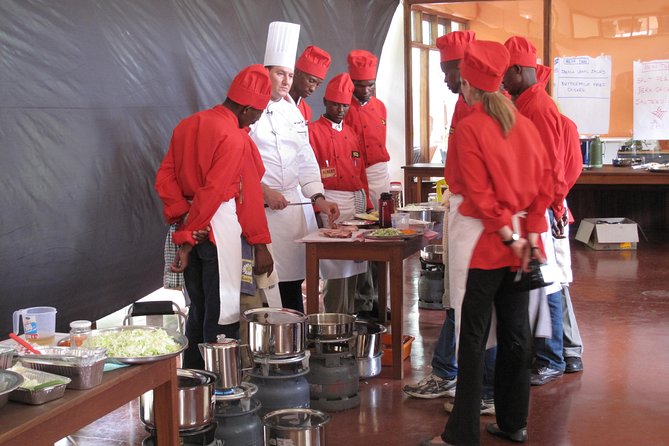
- Food is treated as part of the climb: The company describes farm-to-table meals and chefs trained at the Culinary Institute of America.
- Safari days are flexible: Lake Manyara is named directly, while the program also lists the Serengeti, Ngorongoro Crater, Tarangire, and Zanzibar as possible extensions.
- Strong social commitments: Tusker says it pays its mountain crew well and provides pensions and medical benefits, with additional support for a local Lions Club project and a school for deaf children.
Why Lemosho is a smart route to Kilimanjaro
The Lemosho Route approaches Kilimanjaro from the west. That matters because the first days are not just a race uphill. You begin in montane forest, cross the Shira Plateau, then circle through higher volcanic country before joining the southern approach to the summit.
That gradual pattern helps you get used to altitude. It does not make the climb easy, but it gives your body more time than a short route would. You still need fitness, patience, and a willingness to walk slowly.
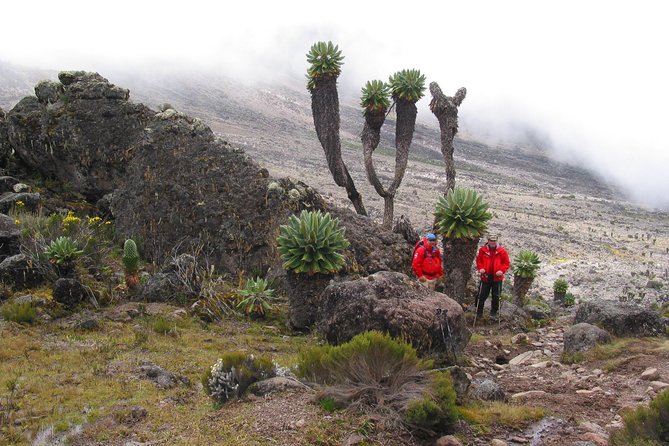
The route also gives you a better sense of Kilimanjaro as a living mountain. On the first trail, you may hear Colobus monkeys and spot the purple plumage of a Hartlaub’s turaco. Later, the forest gives way to heath, moorland, bare rock, and the strange giant plants of the alpine zone.
Tusker Trail has operated since 1977, and founder Eddie Frank is credited with 54 Kilimanjaro climbs. The company’s 99 percent summit success figure is impressive, though you should treat it as a company-reported rate rather than a promise. Altitude affects every person differently.
More Safaris in Kilimanjaro
- Great Migration Safari In Tanzania
★ 5.0 · 71 reviews - 6 Days Tanzania Classic Safari
★ 5.0 · 52 reviews - 6-day Private Camping Safari Tour from Kilimanjaro Airport
★ 5.0 · 27 reviews
Moshi preparation: two nights that matter
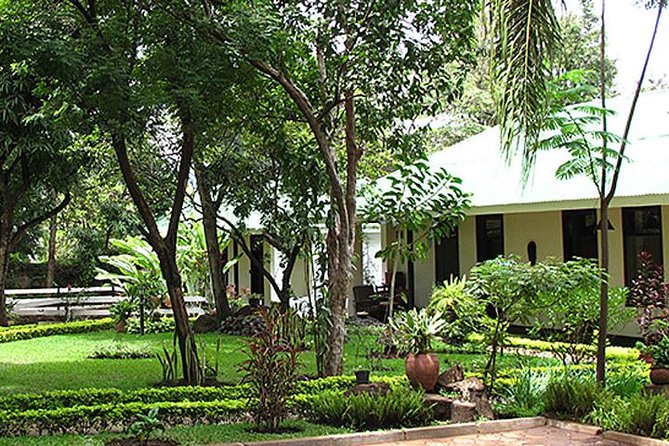
Your first night is at Bristol Cottages Hotel in Moshi. A driver collects you at Kilimanjaro Airport and takes you to the hotel, where you have time for a meal, a shower, and sleep before the climb begins.
That extra night is useful. You are not expected to land and start hiking. Moshi gives you a place to recover from the flight and get organized.
Day 2 focuses on the practical work. You meet the mountain guides, attend a climb orientation, and complete a final equipment check. Do not treat the gear check as a formality. This is your chance to make sure boots, warm layers, sleeping equipment, and other essentials are ready before you leave town.
You also have lunch in Moshi and time at the local market. That short outing gives you a glimpse of daily life at Kilimanjaro’s base rather than keeping you sealed inside a hotel. It is one of the more grounded parts of the program.
The booking information does not name the individual guides, so you should ask for the guide team before departure if that matters to you. It does identify the company’s high-altitude medical training as a major part of its operation.
Days 3 and 4: forest trails and the Shira Plateau
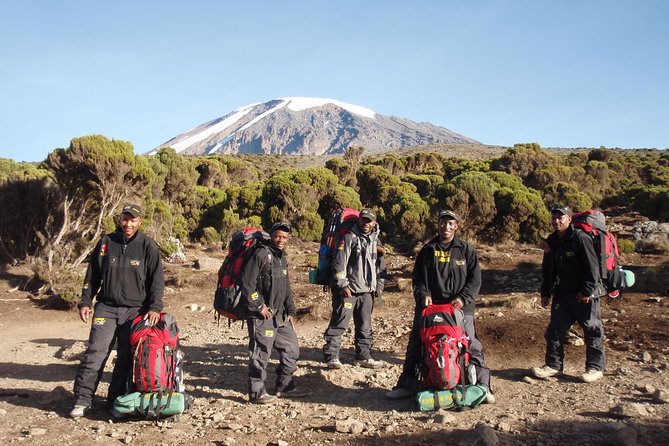
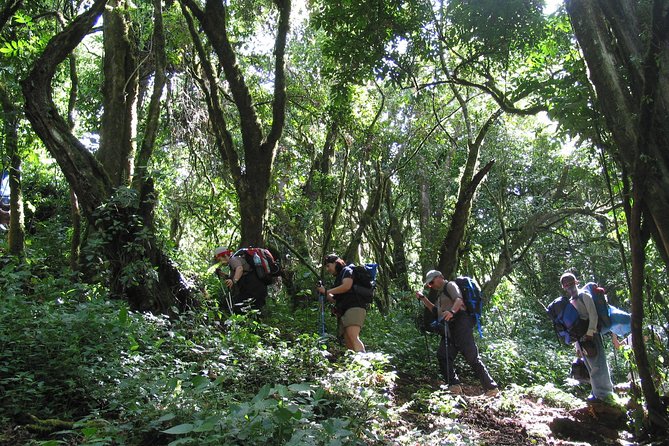
On Day 3, the drive takes you to Londorossi on Kilimanjaro’s western side. The hike begins in the Lemosho Glades, where thick montane forest shades the trail.
The first walk takes about three hours to Mti Mkubwa Camp. You can expect a gentle introduction compared with the harder days ahead, though the damp forest and uneven trail still require proper footwear. The setting is one of the route’s best features. Trees dominate the trail, birds call from above, and monkeys may make themselves heard from the canopy.
Tusker includes its own field guide to Kilimanjaro’s plants by Eddie and Amy Frank. That is a nice touch if you care about the mountain beyond the summit photo. Your guides can help identify local plants and explain how the scenery changes as you gain height.
Day 4 is much longer, at about eight hours. You leave the forest and head toward the Shira Plateau, a high volcanic caldera formed after one of Kilimanjaro’s original peaks collapsed.
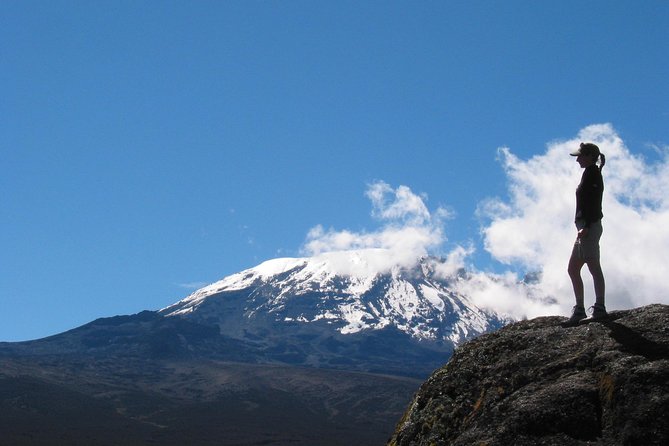
The trail climbs through heath and moorland to about 11,560 feet. You get your first clear views of Kibo Peak, the summit cone that dominates the rest of the climb. The open terrain also means less shelter from weather, so your clothing system now matters more.
This is an important acclimatization day. You gain significant height, then spend the night in the higher zone. The drawback is simple: eight hours on the trail can feel long this early in the trip, especially if you are still adjusting to sleep, food, and altitude.
Days 5 and 6: Shira, Moir Camp, and Lava Tower
Day 5 crosses the Shira Plateau toward Moir Camp. The route passes below a large lava flow and stops at Fisher Camp for a hot lunch before continuing.
The scenery here is spare and volcanic. You are no longer walking through a forest, and the mountain feels larger because there are fewer trees to frame it. The eight-hour day again requires steady pacing. This is not a sightseeing stroll, even though the views are excellent.
Day 6 brings one of the route’s most useful altitude exercises. You climb toward Lava Tower at 15,200 feet, eat lunch near the base, and then drop roughly 2,000 feet into Barranco Canyon.
That high point followed by a lower camp gives your body a chance to experience greater altitude without sleeping at the highest point of the day. It is a demanding but sensible pattern.
The scenery changes again. Giant senecios and lobelias appear in the alpine zone, giving the trail an otherworldly look. Barranco Camp sits below the Barranco Wall, which you tackle the next morning.
You should know that Lava Tower and the descent can be tiring. The day lasts about seven hours, and the steep drop into the canyon places stress on knees and legs. Trekking poles may be worth considering, though the supplied information does not confirm whether Tusker provides them.
More Lemosho Route climbs:
- Kilimanjaro climb by Lemosho Route (7-day)
★ 5.0 · 651 reviews - 8-Day Small-group Lemosho Kilimanjaro Summit Trekking
★ 5.0 · 186 reviews - Kilimanjaro Climbing Lemosho Route 8 Days.
★ 5.0 · 186 reviews - Kilimanjaro climb, Lemosho Route (8-day)
★ 5.0 · 148 reviews
Days 7 and 8: Barranco Wall and Barafu Camp
Day 7 begins with the Barranco Wall, the first major obstacle that looks technical from below. The route tests balance and endurance, but the itinerary describes it as a climb rather than a technical rock ascent.
After the wall, you descend sharply into Karanga Valley and then climb again to Karanga Camp. The day lasts about five hours, making it shorter than the two previous days. That gives you some recovery time before the final approach.
Kibo Peak remains in view for much of the day. Seeing the summit cone from different angles helps you understand how much height is still ahead, which can be motivating and intimidating at the same time.
On Day 8, you make a shorter four-hour push over rough ground to Barafu High Camp. Barafu means ice in Swahili, and the camp is cold and exposed. Mawenzi Peak rises behind you, adding a dramatic backdrop to the final preparation.
This is a quiet day on paper, but it may be one of the hardest mentally. You are close to the summit, the air is thin, and the next departure comes before sunrise. Use the afternoon to rest, organize your summit clothing, and follow your guide’s instructions about food and sleep.
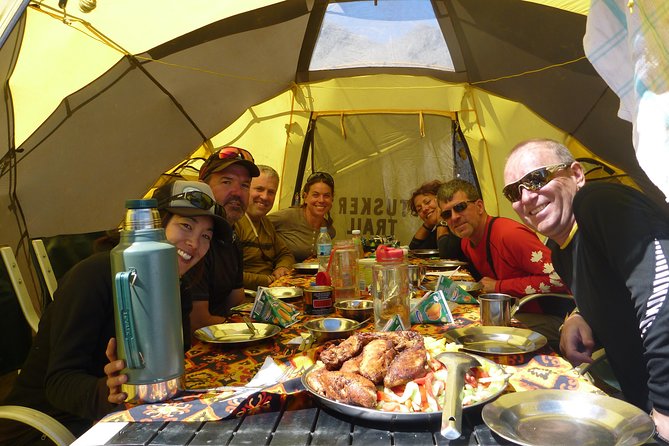
Tusker’s custom walk-in tents are a meaningful comfort here. A tent you can stand and move around in is easier to manage than a cramped shelter when you are tired and wearing layers. Still, a tent does not change the cold or the altitude, so comfort remains relative.
Day 9: Uhuru Peak and the optional crater camp
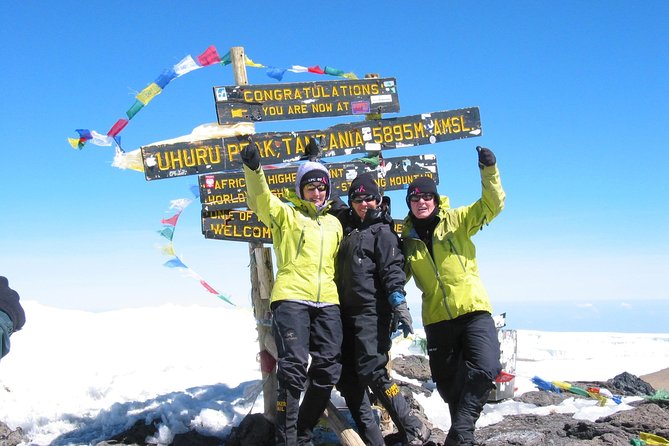
Summit day starts before sunrise. The climb to the crater rim is steep and demanding, with about seven hours listed for the day. You reach the rim around midday, with Mawenzi Peak behind you and the ice walls of the crater ahead.
Uhuru Peak is about an hour from the crater rim. Reaching the highest point in Africa is the clear goal of the climb, but the route does not pretend it will be easy. The thin air slows everyone down, and you may need frequent breaks.
The program gives you a choice after reaching the summit area. You can descend to Barafu Camp, or, if you choose the crater option, camp inside the crater for the night below the summit. That choice is significant. Crater camping offers a rare high-altitude experience, but it also means spending a night at extreme elevation. Ask Tusker about medical screening, availability, weather rules, and any additional cost before choosing it.
The schedule is ambitious. A summit push, time at Uhuru Peak, and a possible crater stay demand strong pacing and close attention to your condition. Tusker’s reported 99 percent summit success rate should not lead you to ignore symptoms. A good operator’s first duty is to get you safely up or down, not to force a summit.
Days 10 and 11: the long descent and a proper celebration
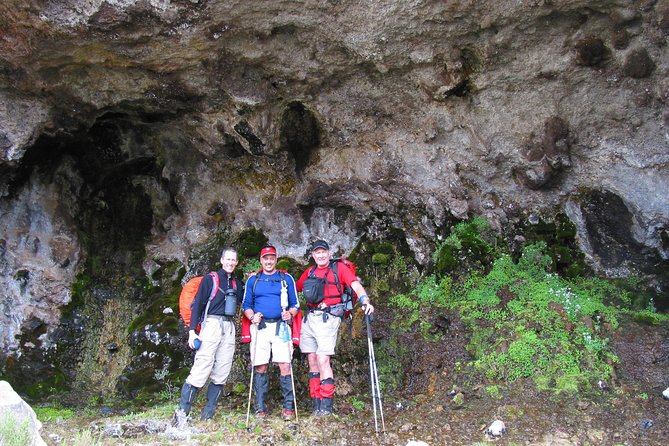
Day 10 begins with a scree descent to Barafu, followed by lunch and a continued hike to Millennium Camp. The total walking time is about six hours.
Descending loose volcanic scree can be awkward. Your legs may feel worse going down than they did going up, especially after summit day. Millennium Camp gives you a final night on the mountain and a chance to sleep before the last descent.
On Day 11, you hike downhill to the national park gate, sign out, and return by vehicle to Bristol Cottages Hotel in Moshi. A hot shower and cold drink will likely feel better than any luxury hotel amenity.
The evening group dinner is a good ending to the climb. The support team matters greatly on a trip like this, and the company’s mountain operation includes cooks, porters, and guides, not just the people walking beside you.
Tusker says it pays its crew at a high level and provides pensions and medical benefits for workers and their families. That matters to me because the quality of a climb is tied to how the mountain staff are treated. The company also supports a local Lions Club project, including a school for deaf children.
Days 12 and 13: adding safari time after the climb
The final two days shift from high mountain to northern Tanzania’s wildlife areas. Lake Manyara National Park is named directly, with a traditional wildlife lodge on the edge of the Rift Valley escarpment.
That setting gives you a strong contrast after the climb. Instead of cold camps and thin air, you get open plains, wildlife viewing, and a lodge with broad views.
The safari details are less fixed than the mountain section. The program also lists the Serengeti Plains, Ngorongoro Crater, Tarangire, and Lake Manyara as possible destinations. It mentions transport to a different airport gate and short flights into the wildlife reserves.
You should ask exactly what the $8,188 price includes. Confirm the park, number of game drives, lodge, internal flights, park fees, and whether the safari is private or shared. The mountain trip is described as private for your group, but the supplied details do not fully define the safari arrangements.
Zanzibar is also listed as a possible short-flight extension. That makes the package flexible, but it also means you should not assume the advertised 13 days include a full safari in every park named.
Food, tents, and the value of $8,188
The listed price is high, but this is not a basic group hike. Tusker describes custom walk-in tents, high-altitude first responder guides, and mountain chefs trained at the Culinary Institute of America. Meals are presented as farm-to-table cooking designed to support a hard physical effort.
Food matters more than many first-time climbers expect. You are walking for several hours on many days, often in cold conditions and at altitude. Reliable breakfasts, lunches, and dinners can help you maintain energy and morale. The package lists 12 breakfasts, 12 lunches, and 10 dinners, though you should confirm precisely which meals are included on travel and safari days.
The price may make sense if you value medical preparation, experienced operations, better camp equipment, and strong food. It may not suit you if you want the lowest-cost path to the summit or already own all your equipment and prefer a simpler outfitter.
Climbing gear and clothing rental are not included. Ask for the current rental list and rates before booking, especially if you are flying internationally and do not want to carry bulky cold-weather clothing.
Who should choose this Kilimanjaro trip?
I would consider this trip if you want a carefully supported climb rather than a bare-bones trek. It suits people who value experienced guides, substantial meals, more comfortable camp structures, and a slow route with varied scenery.
It is also a good match if you want to combine Kilimanjaro with wildlife viewing and prefer one company to coordinate the mountain and post-climb arrangements.
You should think twice if you dislike long walking days, cold camps, early starts, or uncertain altitude reactions. The itinerary includes several six-to-eight-hour days and a serious summit push. A 99 percent company success figure cannot predict your personal result.
The private format is another plus. Only your group participates in the activity, so you do not have to adapt to a large public tour. Ask how many climbers and support staff will be assigned to your departure, since group size affects pace and camp atmosphere.
Should you book Tusker Trail’s 13-day Lemosho climb?
Book it if safety systems, food, crew care, and a gradual route matter more to you than keeping the price low. The most praised features are consistent: professional guides, good equipment, excellent meals, and strong attention from the support team. One recorded climb had 21 support staff for three clients, which shows the level of service Tusker can provide, though you should confirm the staffing for your own date.
Before paying, get the safari plan in writing and ask for the full equipment, lodging, internal flight, and park-fee breakdown. If those details match your expectations, this is a serious, high-service way to approach Kilimanjaro, with the option of ending the adventure among Tanzania’s wildlife.
FAQ
Where does the Kilimanjaro climb begin?
The trip begins in Moshi, Tanzania, after pickup from Kilimanjaro Airport and a stay at Bristol Cottages Hotel.
How long is the experience?
The advertised duration is 13 days, including preparation in Moshi, the Kilimanjaro climb, the return to Moshi, and the safari portion.
Which Kilimanjaro route does the trip use?
The climb follows the Lemosho Route, beginning on the western side of Mount Kilimanjaro at Londorossi and passing through the Lemosho Glades.
Is Uhuru Peak included?
Yes. The itinerary includes a summit attempt at Uhuru Peak, the highest point in Africa.
How long is the summit day?
Day 9 is listed as about seven hours, beginning before sunrise and reaching the crater rim around midday, with Uhuru Peak about another hour away.
Can I camp in Kilimanjaro’s crater?
The itinerary says you can choose to descend into the crater and camp for the night, or continue down to Barafu Camp. Confirm the conditions and any added details with Tusker before booking.
Are meals included?
The package lists 12 breakfasts, 12 lunches, and 10 dinners. Confirm how the meals are allocated across the mountain, hotel, and safari days.
Is climbing gear included?
No. Climbing gear and clothing rental are not included in the listed package and must be arranged separately.
Is the tour private?
Yes. The experience is described as a private tour or activity for your group.
Can I cancel for a full refund?
You can cancel at least 24 hours before the local start time for a full refund. Cancellations or changes made less than 24 hours ahead are not accepted, and poor weather may result in a different date or a full refund.
More Trekking Tours in Kilimanjaro
- Kilimanjaro climb, Machame Route (7-day)
★ 5.0 · 262 reviews - Climbing Kilimanjaro – Machame Route
★ 5.0 · 170 reviews - Climbing Kilimanjaro through 7 days Machame Route
★ 5.0 · 151 reviews - Kilimanjaro climb, Lemosho Route (6-day)
★ 5.0 · 129 reviews
Just added around Kilimanjaro
- 6 days Machame route climbing Mt.Kilimanjaro★ 5.0 · 8 reviews
- machame route★ 5.0 · 16 reviews
- Mt Kilimanjaro 6 days Marangu route hike★ 5.0 · 3 reviews
- Private Cycle to Kilimanjaro Bike Park Safari★ 5.0 · 6 reviews
- West Kilimanjaro cycling Adventures★ 4.5 · 8 reviews
- Kilimanjaro Climb • Marangu Route ~ 9 Day★ 5.0 · 4 reviews
- 3 Days Private E-Bike Tour in West Kilimanjaro★ 5.0 · 3 reviews
- Kilimanjaro Climb • Machame Route ~ 10 Day★ 5.0 · 6 reviews