Reviewed · KILIMANJARO TOURS
Explore the 360° of Kilimanjaro
Cycling around Kilimanjaro gives you a far more varied view of the mountain than a standard sightseeing drive. Over six riding days, you move from coffee and banana country to dry acacia plains, Maasai villages, wildlife territory and the volcanic shores of Lake Chala.
I like the strong local focus, especially the overnight at Olpopongi Maasai Cultural Village, and I like that a support vehicle, mechanic, cook and first aid kit travel with you. The main thing to consider is the effort: 370 kilometers, mixed surfaces, steep climbs and long days require a moderate level of fitness.
Key points at a glance
- Six cycling days and about 370 kilometers around the lower slopes of Kilimanjaro
- Maasai culture at Olpopongi, including an overnight stay, songs, food and customs
- Enduimet Wildlife Management Area, near the Kenya border and an important elephant route
- Lake Chala camping, with a downhill ride to a crater lake fed by underground springs
- Ndoro Waterfall and Chagga villages, reached on the final eastern section of the route
- Full expedition support, including a bike mechanic, cook, driver, support vehicle and 3 liters of water per cyclist daily
What this Kilimanjaro bike tour is really like
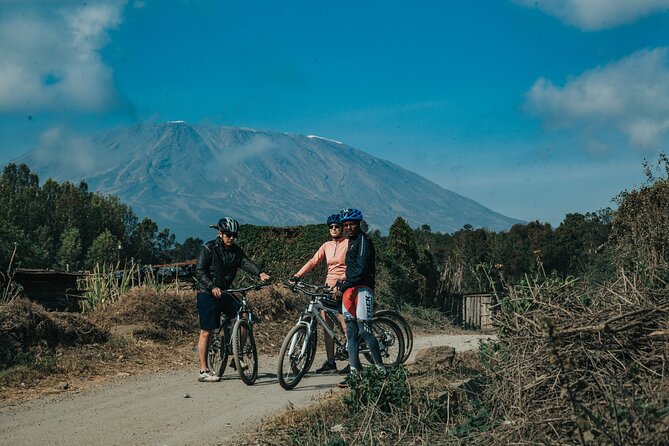
This is not a gentle cycle tour built around short rides and long café stops. It is a multi-day crossing of the regions around Kilimanjaro, using dusty tracks, rocky paths and some paved roads.
The mountain is your constant reference point, but the ride is not all about staring upward. You pass through working farms, forest, open grazing country and busy village roads. The changing scenery is one of the trip’s biggest rewards.
The route covers roughly 370 kilometers across six cycling days, with a seventh day used for arrival, preparation and the final ride back to Moshi. Daily schedules range from about four to eight hours, so you should expect a real physical challenge rather than a casual sightseeing outing.
The private format is useful. Only your own group takes part, and the team includes a guide, bike mechanic, driver and cook. A support vehicle gives you practical backup on long or rough sections, though the supplied details do not promise that you can skip any particular stretch of riding.
A few more Kilimanjaro trips worth comparing
- Kilimanjaro climb by Lemosho Route (7-day)
★ 5.0 · 651 reviews - Kilimanjaro climb, Machame Route (7-day)
★ 5.0 · 262 reviews - Kilimanjaro Climbing Lemosho Route 8 Days.
★ 5.0 · 186 reviews
Day 1: Airport pickup, bike fitting and a short test ride
Your trip begins with pickup at Kilimanjaro International Airport, followed by a transfer to Keys Hotel near Moshi. The hotel is close to the foot of Kilimanjaro and serves as the practical starting point.
You meet the guide, receive a briefing and fit your bicycle. If your flight arrives in the morning or afternoon, you have time for a short test ride through a nearby coffee plantation and surrounding villages.
This first day matters more than it may seem. A test ride gives you a chance to check saddle height, gears, brakes and general comfort before the longer sections begin. Speak up early if anything feels wrong. A small bike problem on day one is much easier to fix than a sore knee on day four.
The start time listed for the experience is 7:00 am. Confirm your exact pickup time when booking, especially if you are arriving by air on the same day.
Day 2: From fertile farms to Maasai country
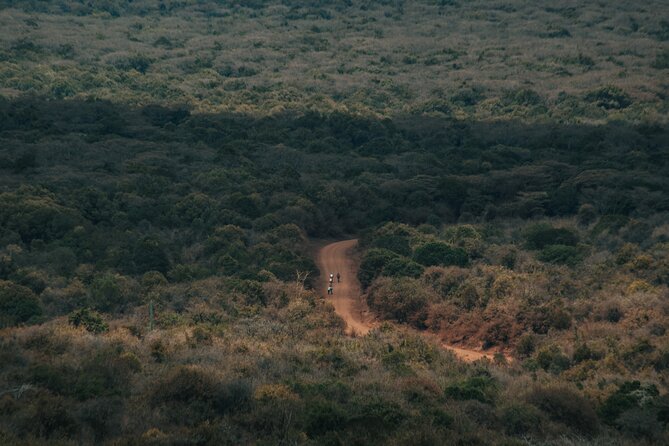
The first full riding day moves west from the greener southern side of Kilimanjaro. You begin among coffee and banana plantations, where cultivation makes the lower slopes look productive and settled.
As you continue, the ground becomes drier. Farms give way to open plains and acacia woodland. The change is gradual, which makes the day feel like a journey through several parts of northern Tanzania rather than one repeated mountain view.
Your destination is Olpopongi Maasai Cultural Village and Museum. The overnight stay gives the route a cultural center, not just a scenic one. You have the chance to learn about Maasai customs, hear songs and try local dishes.
The Maasai lands are also part of the appeal because people and wildlife share this dry country. You might see wildlife from the cycling route, although sightings are not guaranteed. Keep your expectations realistic: this is a bike journey through wildlife country, not a dedicated game drive.
The day lasts about seven hours. The mix of rough tracks, open country and cultural visits makes it one of the more distinctive days, but the dusty surface can be tiring. Bring eye protection and keep your water easy to reach.
Day 3: Elephant country in Enduimet
Day three enters the Enduimet Wildlife Management Area, a protected region near Kenya’s Amboseli National Park. It is also an important movement route for elephants.
The ride starts across wide plains dotted with acacia trees. As you approach the lower slopes of Kilimanjaro, the area becomes greener and cultivation returns. That contrast gives you another clear sense of how rainfall and elevation shape the region.
This part of the route is home mainly to Maasai communities, along with Chagga, Meru and Pare people. You are not simply circling a mountain in empty countryside. You are passing through places where farming, grazing and wildlife all share limited space.
The ride ends at Simba Farm, above large wheat and barley fields overlooking the western plains. The day is listed at about four hours, making it shorter than several others. That can be welcome after the longer first riding day, though the distance and exact effort may vary with the route and surface.
The support vehicle is particularly valuable here. It provides backup in a remote area, while the guide carries a pulse oximeter and the team has a first aid kit for emergencies.
Same corner of Kilimanjaro, a completely different kind of day:
- 8-Day Small-group Lemosho Kilimanjaro Summit Trekking
★ 5.0 · 186 reviews - Climbing Kilimanjaro – Machame Route
★ 5.0 · 170 reviews - Climbing Kilimanjaro through 7 days Machame Route
★ 5.0 · 151 reviews - Kilimanjaro climb, Lemosho Route (8-day)
★ 5.0 · 148 reviews
Day 4: Farmland, Rongai and the mountain’s northern side
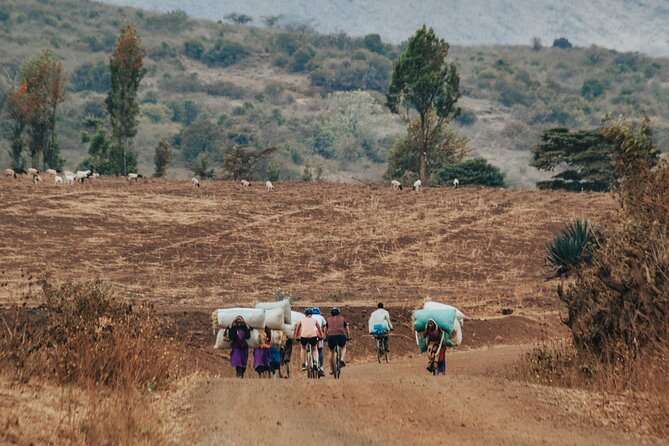
Day four is one of the longest, at about eight hours. You ride northeast toward Nalemoru village near the Kenyan border, where the Rongai route up Kilimanjaro begins.
The road passes through open farmland and several towns. Behind you, the western plains spread out below the mountain. Ahead, the foothills rise toward the Rongai forest.
This day is a good reminder that the ride is not only off-road. The route uses both paved and unpaved surfaces, and you should be ready for changing road conditions, traffic around towns and rougher stretches nearer the forest.
The night is spent at Snowcap Cottages on the edge of the Rongai forest. On a clear day, you may see Kilimanjaro’s two major peaks, Kibo and Mawenzi. Clouds are common around the mountain, so do not treat a clear summit view as guaranteed. The mountain often reveals itself in pieces.
An eight-hour cycling day can feel long even for a regular rider. Pace yourself rather than trying to race early sections. Eat the supplied snacks and fruit before you feel hungry, and take the water allowance seriously.
Day 5: A downhill ride to Lake Chala
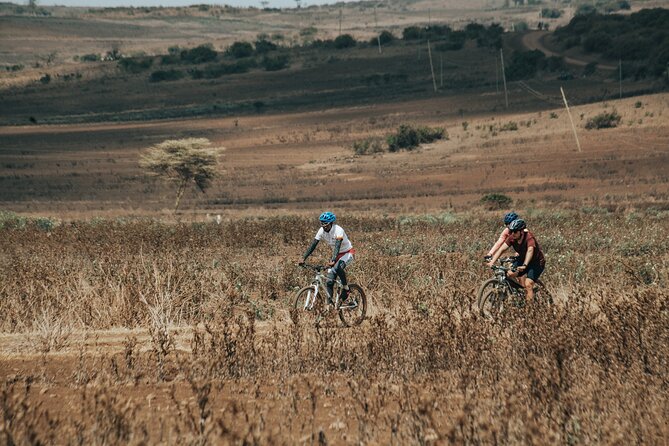
After the long northern section, day five turns toward Lake Chala. Much of the appeal is the downhill ride, though downhill does not always mean easy. Rough tracks, braking and control can still demand attention.
Lake Chala sits on the border between Tanzania and Kenya in a volcanic caldera. Its water comes from underground springs linked to Mount Kilimanjaro, and the lake is surrounded by plants, trees and wildlife.
You camp beside the lake, with the volcanic walls creating a dramatic setting. This is likely to be one of the quieter nights of the trip, a chance to rest away from towns and absorb the change from farmland and dry plains to crater country.
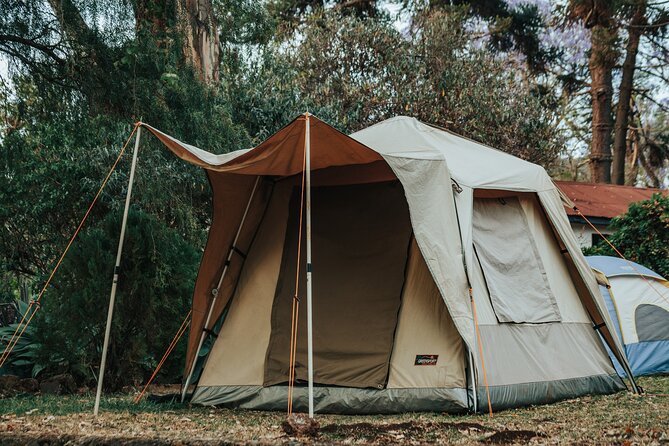
Camping equipment is included, including tents, sleeping mats, chairs and tables. A sleeping bag is not included, but you can rent one in Moshi if needed. That is an important packing detail, since your comfort at camp will depend partly on bringing or arranging suitable bedding.
The day lasts about six hours. It is still a full ride, but the lake stop gives the day a clear reward at the end.
Day 6: Chagga villages and Ndoro Waterfall
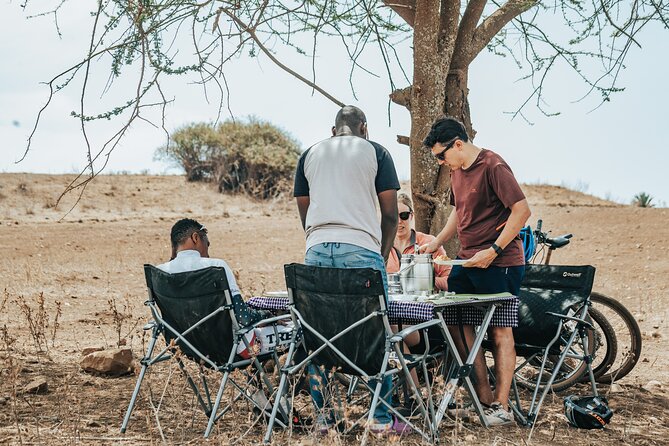
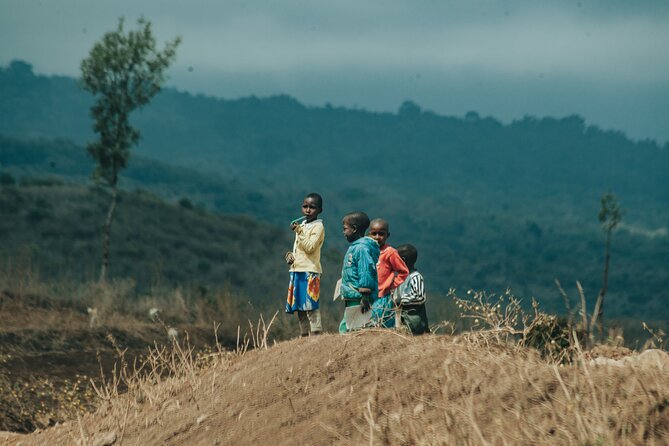
Day six is described as shorter but challenging because the route climbs toward Marangu village in the foothills. You pass banana and coffee plantations and ride through Chagga communities.
The Chagga people live on the slopes of Kilimanjaro, and the route gives you a direct look at the cultivated side of the mountain. You may hear people calling Jambo as you pass through the villages. These small encounters are part of what makes a bicycle useful here: you move slowly enough to notice daily life.
Before camp, you detour to Ndoro Waterfall. A local Chagga guide leads the walk down to the base and explains the area, Chagga traditions and the legend connected with the waterfall. The route also includes a visit connected with Chagga caves.
The waterfall stop breaks up the cycling, but the walk down and back adds effort after a demanding ride. Wear shoes that can handle a wet or uneven path, and do not assume that a short cycling day will feel easy.
The day takes about seven hours in total. The combination of climbing, village roads and the waterfall visit makes it one of the more varied sections.
Day 7: Final climbs, Moshi and a celebratory dinner
Your last riding day crosses villages and plantations on Kilimanjaro’s slopes. The first half includes several steep climbs and descents, followed by a gradual downhill ride toward Moshi.
You then use back roads through the suburbs and outskirts before returning to Keys Hotel. This ending gives you a sense of how the rural foothills connect with the town where the trip began.
After six days on two wheels, the finish includes a celebratory dinner and sparkling wine. It is a fitting close, especially after the final climbs. You should still expect a full seven-hour day, so save some energy for the first half rather than assuming the ride is mostly downhill.
What is included, and why it matters
The $2,100 price covers much more than bicycle guiding. Accommodation before and after the trip is included, along with camping equipment, meals, snacks, fruit and 3 liters of mineral water per cyclist.
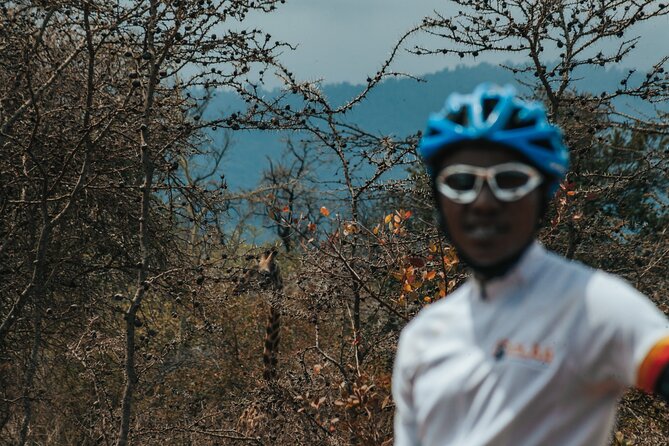
The team includes a tour guide, bike mechanic, driver and cook. That combination gives the trip a small expedition feel. A mechanic can deal with bike problems, the driver handles the support vehicle and the cook prepares meals while you concentrate on riding and recovery.
A pulse oximeter is carried by the guide, and a complete first aid kit is available for emergencies. These are sensible provisions for a route that moves through remote areas and includes long riding days.
The included items are:
- Breakfast, lunch and dinner
- Snacks and fruit
- Accommodation before and after the ride
- Support vehicle
- Tents, sleeping mats, chairs and tables
- 3 liters of mineral water per cyclist
- Oclaa Adventures Tanzania T-shirt
- Guide, bike mechanic, driver and cook
- First aid kit and pulse oximeter
- All listed fees and taxes
The main extras are tips for the guide, mechanic, driver and cook, a sleeping bag, personal items, medicine, Tanzania visa costs, health requirements and travel or medical insurance. Insurance is optional in the supplied details but strongly recommended.
Is $2,100 good value?
At first glance, $2,100 is a serious price for a seven-day cycling trip. The value becomes clearer when you count the support and services: airport pickup, hotels before and after, camping, three meals daily, water, a support vehicle, a mechanic, a cook and a private group format.
You are also paying for route planning across several very different areas. The experience links Kilimanjaro foothills, Maasai country, wildlife territory, a border lake, Chagga villages and a waterfall. Recreating that route independently would require transport planning, food arrangements, camping equipment and local route knowledge.
The price is less attractive if you want a short, easy bicycle holiday or prefer to arrange your own accommodation. This trip makes most sense for someone who values support and local guiding over a minimalist, low-cost ride.
Who should book this ride?
I would recommend it to a fit cyclist who wants culture and scenery as much as mileage. It suits you if you enjoy rough roads, simple camping, changing conditions and long days outside.
The family-friendly side is worth noting. One previous outing with the same company included children aged 10 and 11, and the company’s team handled the transport, food and route support well. That does not mean this exact six-day route will suit every child, but it shows that family groups have been part of the operator’s work.
You should think twice if you dislike dust, shared outdoor facilities, steep climbs or uncertain wildlife sightings. The route is private, but private does not mean easy. Your group still needs to keep a steady pace and manage fatigue.
Oclaa Adventures Tanzania has received strong praise for attentive care from team members including Octavian, while George and Rashid were specifically recognized for their care and reliability on a longer cycling and Lake Natron trip. Staff assignments can vary, so confirm who will lead your departure.
Practical preparation before you go
Start with bike comfort. Use the first-day fitting and test ride to check every contact point, including saddle, handlebars and pedals. If you use specialized footwear or prefer a certain saddle, ask the operator what can be accommodated before arrival.
Pack clothing for changing conditions. The route moves between forest, cultivated slopes, dry plains and lakeside camp. Light riding clothes, a warm layer, rain protection, sunglasses and a dust covering are sensible choices based on the surfaces and settings described.
Bring any personal medicine yourself. The team carries first aid supplies for emergencies, but personal medical needs are not included.
You should also arrange a sleeping bag or rent one in Moshi. Water is supplied at 3 liters per cyclist daily, but you still need a practical way to carry and access it while riding.
Free cancellation is available when you cancel at least 24 hours before the local start time. Changes or cancellations inside that window are not accepted for a refund.
Should you book the 360° Kilimanjaro ride?
Book this tour if you want to experience Kilimanjaro from many angles rather than simply photograph it from a vehicle. The strongest reasons are the variety of terrain, the Maasai overnight, the Enduimet wildlife area, Lake Chala and the dependable support setup.
Skip it if you are looking for a relaxed holiday with short rides and guaranteed wildlife. This is a demanding route with long days and mixed surfaces.
For the right cyclist, the $2,100 cost buys a well-supported journey through farms, villages, forest, dry plains and volcanic country. You finish with tired legs, a fuller sense of the communities around Kilimanjaro and a much better understanding of how large the mountain’s world really is.
FAQ
How long is the Kilimanjaro cycling experience?
The trip lasts about seven days, with six days of cycling. The total cycling distance is approximately 370 kilometers.
Where does the tour start?
The experience begins with pickup at Kilimanjaro International Airport, followed by transfer to Keys Hotel near Moshi.
What time does the tour start?
The listed start time is 7:00 am. Confirm the exact pickup details with the operator.
Is airport pickup included?
Yes. Pickup from Kilimanjaro International Airport is offered, and accommodation before and after the trip is included.
What type of roads will I ride on?
The route uses off-road tracks and paved roads. Surfaces are mainly dusty, with some rocky sections and asphalt roads.
Is camping included?
Yes. Camping equipment includes tents, sleeping mats, chairs and tables. A sleeping bag is not included, but you can rent one in Moshi.
Are meals included?
Yes. Breakfast, lunch and dinner are included, along with snacks, fruit and 3 liters of mineral water per cyclist.
Do I need a high level of fitness?
The activity requires a moderate level of physical fitness. Daily rides last about four to eight hours and include steep climbs, descents and mixed surfaces.
Is travel insurance included?
No. Personal travel and medical insurance are not included. The tour information describes insurance as optional but highly recommended.
Just added around Kilimanjaro
- 6 days Machame route climbing Mt.Kilimanjaro★ 5.0 · 8 reviews
- Mt Kilimanjaro 6 days Marangu route hike★ 5.0 · 3 reviews
- machame route★ 5.0 · 16 reviews
- Private Cycle to Kilimanjaro Bike Park Safari★ 5.0 · 6 reviews
- West Kilimanjaro cycling Adventures★ 4.5 · 8 reviews
- Kilimanjaro Climb • Marangu Route ~ 9 Day★ 5.0 · 4 reviews
- 3 Days Private E-Bike Tour in West Kilimanjaro★ 5.0 · 3 reviews
- Kilimanjaro Climb • Machame Route ~ 10 Day★ 5.0 · 6 reviews
Kilimanjaro Tours, compared.
7-Day Machame Kilimanjaro Summit Tour from Arusha
Read our review →
Private Full Day Hiking Experience to Marangu Route
Read our review →