
Reviewed · LEMOSHO ROUTE CLIMBS
7-Day Kilimanjaro Climb–Lemosho R. Scenic Adventure to the summit
Kilimanjaro’s Lemosho Route gives you the mountain in chapters: monkey-filled rainforest, open moorland, black volcanic rock, glacier views, and a sunrise summit at Uhuru Peak. The scenery changes often, and the trail feels quieter than some of the mountain’s other approaches.
I like the careful climb-high, sleep-lower pattern around Lava Tower and Barranco, and I like that the price includes the working team, meals, camping gear, and airport transfers. The main catch is the schedule: summit day can last 14 hours, and seven days is a serious commitment for anyone still learning how their body handles altitude.
Key points to know before you book
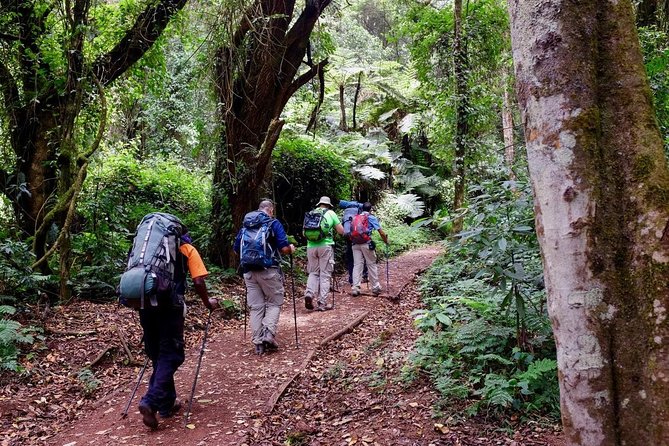
- Lemosho starts in rainforest: Your first three hours pass through montane forest, with a chance to spot colobus monkeys.
- The route reaches 4,630 meters before summit day: Lava Tower gives you useful acclimatization, but headaches and shortness of breath can begin there.
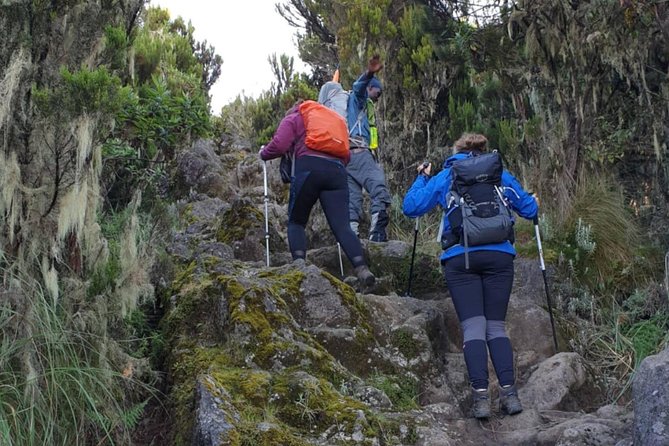
- Barranco Wall is a hands-on climb: It is described as a Class 2 section, followed by views of Heim Glacier and the clouds below.
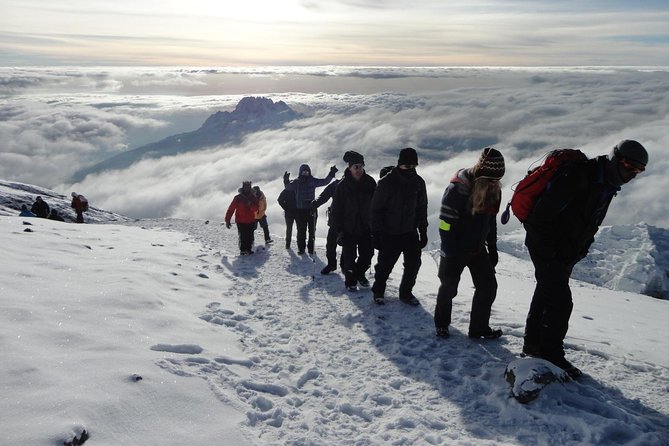
- The summit attempt begins around 11:30 p.m.: Expect stone scree, cold, darkness, sunrise at Stella Point, and a final push to Uhuru Peak.
- Your support team is part of the value: A mountain guide, assistant guides, porters, cook, tents, meals, water, and basic emergency equipment are included.
- This is a private trip: Only your own group participates, which can make the pace and daily rhythm more personal.
Why the Lemosho Route earns its seven days
Lemosho is a scenic approach to Kilimanjaro, but the scenery is only half the reason to choose it. The route also gives your body time to adjust before the highest point. You begin at about 2,100 meters at Londorossi Park Gate and finish at 5,895 meters at Uhuru Peak.
That height gain is not a small detail. A fit person can still feel sick on Kilimanjaro, and the itinerary itself warns that headaches and shortness of breath may begin near Lava Tower. You should treat the walking pace, rest breaks, water intake, and guide instructions as part of the climb, not as optional extras.
The first two days are steady rather than brutal. Days three and four are especially useful for acclimatization, since you climb high toward Lava Tower and then descend to Barranco before sleeping at nearly the same height as the previous camp. The short day to Karanga also gives you a chance to save energy for the upper mountain.
The route is private, so your group does not have to match the rhythm of a large mixed party. That can be useful during the long summit night. It also means you should ask before booking how many people will be in your group, since the listing confirms a private activity but does not state a standard group size.
More Lemosho Route climbs:
- Kilimanjaro climb by Lemosho Route (7-day)
★ 5.0 · 651 reviews - 8-Day Small-group Lemosho Kilimanjaro Summit Trekking
★ 5.0 · 186 reviews - Kilimanjaro Climbing Lemosho Route 8 Days.
★ 5.0 · 186 reviews
Day 1: Londorossi Gate to the montane forest
Your day begins with breakfast at your hotel and a briefing from the guide. From Moshi or Arusha, the drive to Londorossi Park Gate takes about two hours. Near the gate, you collect a packed lunch and can buy mineral water before the walk begins.
The final 45 minutes of the drive use a rough forest track, so the 4WD transfer is more than a convenience. It is the practical way to reach the trailhead. At the entrance, the guides and porters organize supplies and complete registration with the Tanzania National Parks Authority.
The hike takes about three hours through montane forest. This is a gentle opening compared with the days ahead, but you should not rush it. Colobus monkeys may appear in the trees, and the forest gives you a proper sense of leaving ordinary roads behind.
Your first night is in a tent. The support team sets up camp, prepares drinking and washing water, and cooks dinner. The included tent, sleeping mattress, camp chairs, and tables add real value here, since you are not carrying a full camping setup yourself.
Day 2: Shira Plateau and the first cold camp
Day two climbs out of the forest into heather moorland. The trail crosses streams and opens onto the Shira Plateau before reaching Shira Camp Two at about 3,840 meters. The walking time is roughly six and a half to seven hours.
This is one of the route’s best scenic changes. Trees give way to wide, exposed ground, with views toward the Western Breach and its glaciers. The open setting also brings colder nights. Temperatures at Shira Camp can fall below freezing, so your warm sleeping bag, insulated layers, hat, and gloves matter.
The camp sits beside a stream, and the crew provides hot water for drinking and washing. You receive evening snacks, then dinner cooked by the mountain chef. Six breakfasts, six dinners, and seven lunches are included, which removes much of the daily food planning. You still need to bring personal snacks, along with any drinks not listed in the package.
The long walking time can be tiring, but the pace is useful. This is not a sightseeing stop followed by a quick return to comfort. You sleep high, in a cold and exposed camp, and begin learning how your body responds.
Day 3: Lava Tower and the descent to Barranco
Day three moves through semi-desert terrain for about 15 kilometers and seven hours. After roughly five hours of walking east, you reach Lava Tower at 4,630 meters. Packed lunch is served there, and you may climb the tower if the weather allows.
Lava Tower is the day’s key acclimatization point. You reach a greater height than your evening camp, then descend to Barranco Camp at about 3,950 meters. That climb-high, sleep-lower pattern is one of the route’s practical strengths.
Do not be surprised if you develop a headache or feel short of breath at Lava Tower. The itinerary specifically warns about those effects, and this is the point to tell your guide exactly how you feel. Emergency oxygen is carried for emergencies, but it is not intended as a way to help you summit when your body is not coping.
The descent to Barranco changes the mood of the day. After the bare, rocky surroundings near Lava Tower, you arrive below the famous Barranco Wall, with the next morning’s challenge already visible. The camp is still high and the day is long, so expect dinner, a basic wash, and an early rest rather than a relaxed evening.
More treks and hikes around Kilimanjaro:
- Kilimanjaro climb, Machame Route (7-day)
★ 5.0 · 262 reviews - Climbing Kilimanjaro – Machame Route
★ 5.0 · 170 reviews - Climbing Kilimanjaro through 7 days Machame Route
★ 5.0 · 151 reviews - Kilimanjaro climb, Lemosho Route (8-day)
★ 5.0 · 148 reviews
Day 4: Climbing Barranco Wall to Karanga
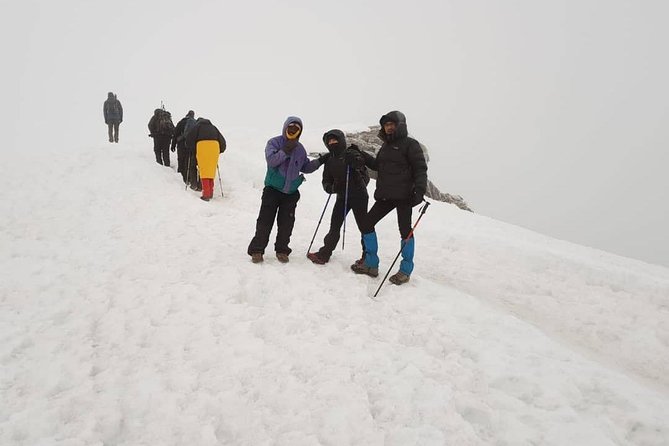
Day four is shorter, about four to five hours and approximately five kilometers. That shorter schedule is welcome because the Barranco Wall demands concentration and energy.
The wall can look intimidating from below. It is described as a Class 2 climb, meaning you use your hands in places, but it is not presented as a technical climbing route requiring ropes. Your guide will direct you through the section. Wear gloves if you like having extra protection for your hands, though personal hiking gear is not included and must be brought or rented in Moshi.
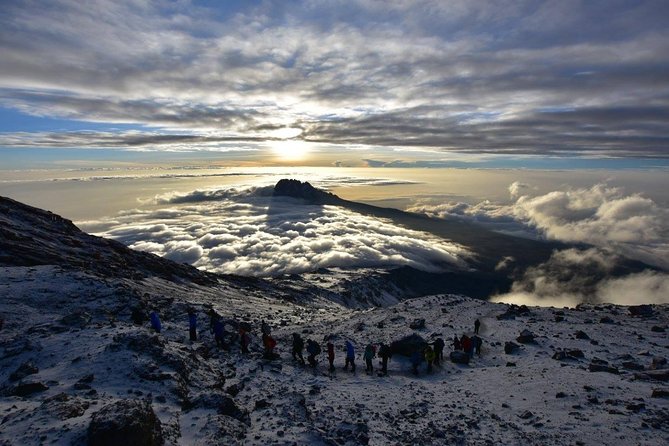
At the top, you can see Heim Glacier and look across the clouds. This is one of the route’s most memorable viewpoints, not because it is the highest point, but because the trail has taken you above the cloud layer while the summit remains ahead.
The trail then rises and falls through the Karanga Valley before reaching Karanga Camp at 3,950 meters. Dinner and washing water are provided. This is a good night to check your feet, adjust clothing, and make sure your headlamp, water, gloves, and summit layers are ready.
Day 5: The exposed ridge at Barafu Camp
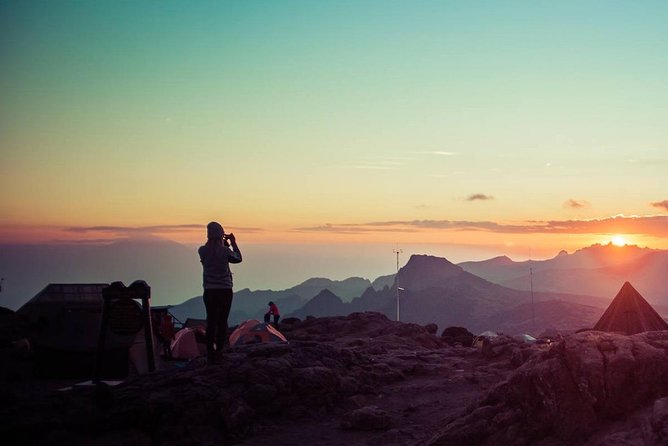
The walk to Barafu Camp is short, around two to three hours and four kilometers, but it is not a day to waste. You climb to about 4,550 meters, where the trail joins the Mweka Route used for the descent.
After passing Barafu Hut, you reach the last water stop available to the porters. There is no accessible water at Barafu Camp, so the water brought up for you becomes especially important. You should confirm that you have enough for your needs before settling in.
Barafu means ice in Swahili. The camp sits on a rocky, exposed ridge, and tents can be affected by wind and loose rock. Get familiar with the camp before dark, since you will wake around 11:30 p.m. for tea and biscuits.
An early dinner is served, followed by a short night of rest. The timing can feel strange. You may finish dinner while it is still light, sleep for a few hours, and then begin the hardest part of the trip. Keep your summit clothing organized and do not bury essential items inside a packed bag.
Day 6: Stella Point, Uhuru Peak, and Mweka
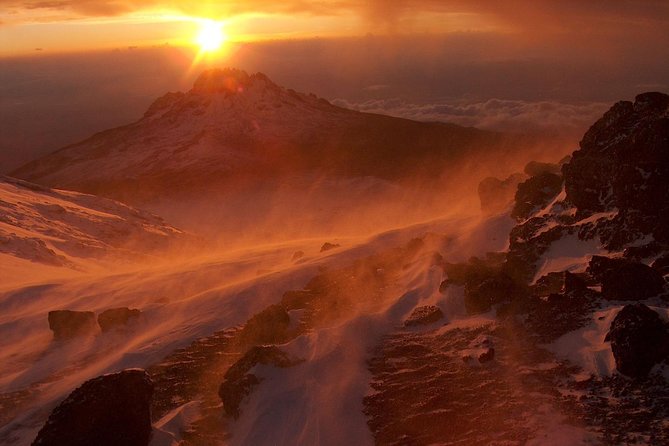
Summit day is the test. You start around 11:30 p.m. and climb northwest over stone scree. The ascent to Stella Point at 5,685 meters takes about six hours for the stated itinerary, though actual times can vary with weather, pace, and altitude.
Darkness hides much of the upper mountain. The walking is slow and repetitive, and the cold can make the hours feel longer. This is the time to follow the guide’s pace rather than trying to prove how fast you can go.
At Stella Point, you reach the crater rim and can watch the sunrise. The final two hours to Uhuru Peak follow a snow-covered trail toward the summit at 5,895 meters. The summit is the highest point in Africa, but the climb to it is not finished merely because you have reached the crater rim.
The stated schedule allows about eight hours to reach Uhuru Peak, then another seven to eight hours to descend to Mweka. The total is roughly 14 hours, with about seven kilometers of ascent and 23 kilometers of descent. That is why the day requires both fitness and patience.
After the summit, the route drops through the Mweka Route. Descending can be harder on tired knees than climbing was on your lungs. Trekking poles, if part of your personal gear, may be useful, but poles are not listed among the included equipment.
Day 7: Mweka Gate and the closing celebration
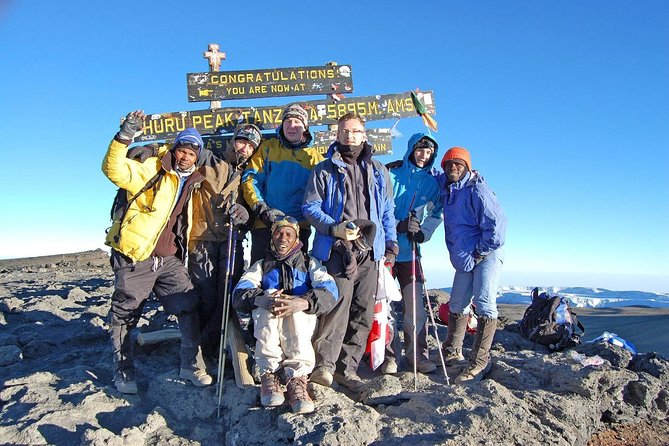
After breakfast, the mountain team holds a celebration with singing and dancing. You also present tips to the guide, assistant guides, chef, and porters. Tipping is not listed as included, so plan for it separately and ask the operator for current guidance before departure.
The final walk to Mweka Gate takes about three hours through forest. At the national park office, you sign your name and receive a completion certificate. Those who reach Stella Point receive green certificates, while those who reach Uhuru Peak receive gold certificates.
From the gate, the itinerary continues to Mweka village, about one hour and three kilometers away. The day is shorter than summit day, but your legs will know what they have done. Return airport transfers to and from Kilimanjaro Airport are included, though you should confirm the timing of your onward flight before booking.
What the $2,676.39 price covers
At $2,676.39 per person, this is a substantial purchase. The value depends on what you would otherwise need to arrange yourself.
The package includes park and other listed fees, airport transfers, a qualified mountain guide, assistant guides, porters, a cook, wages for that team, camping equipment, mattresses, chairs, tables, fresh drinking water, hot washing water, emergency oxygen, a basic first aid kit, and all listed breakfasts, lunches, and dinners.
That list covers the costly and complicated parts of a Kilimanjaro climb. You are not simply paying for a walking route. You are paying for transport into the park, registration, camp logistics, food preparation, water handling, and a support crew that moves supplies up the mountain.
You still need to budget for flights, visas, insurance, personal medication, water purification tablets, snacks, drinks not specified, and trekking clothing and equipment. A portable toilet is optional but strongly recommended, and it costs extra. Gear can be rented from equipment shops in Moshi, which may help if you do not want to buy a full high-altitude kit.
The package does not list health or travel insurance. Do not treat emergency oxygen as insurance or as a substitute for medical planning. The supplied information also notes that yellow fever vaccination is compulsory if traveling to Tanzania, so check the current entry rules for your route and nationality.
The support team and personal service
The human support is one of the strongest parts of this climb. Guides lead the route, assistant guides add support, porters move equipment, and the cook handles the meals. Past climbs on this route have been associated with guides Isa and Baraka, and the operator has also been praised for medical checks, extra food, and well-organized service.
Those details matter on a mountain. A warm meal, a filled water container, a quick health check, or an extra layer of practical care can change how manageable a camp feels. Still, you should ask before booking which guides will lead your dates, since named guides are not guaranteed in the tour information.
The trip is private, but no exact group size is given. Ask about that point, the porter-to-climber arrangement, gear rental, and the portable toilet before paying. Clear answers will help you compare this climb with other seven-day Lemosho options.
Who should book this climb
I would choose this route if you want the best mix of scenery and acclimatization within a seven-day schedule. It suits someone who wants a quieter approach, changing habitats, a private group, and a full support team rather than a self-supported trek.
You should be ready for cold camps, long walking days, basic tent living, and a very demanding summit night. The phrase most travelers can participate in should not be read as a promise that altitude will be easy for everyone. Fitness helps, but your response to height cannot be predicted from fitness alone.
The route is less suitable if you want comfortable accommodation, short daily walks, or a flexible summit schedule. Seven days is a sensible length for this route, but it leaves little spare time if weather, illness, or a slow pace disrupts the plan.
Cancellation is flexible only up to three full days before the local start time. Within three days, the payment is not refunded and changes are not accepted, so confirm your flights, insurance, health preparation, and equipment before that deadline.
Should you book the Lemosho climb?
Book it if you want Kilimanjaro’s forest, moorland, volcanic rock, glaciers, Barranco Wall, and sunrise summit in one carefully supported route. The included crew, food, camping setup, water, and airport transfers make the price easier to justify, and the climb-high, sleep-lower pattern gives the itinerary a sound rhythm.
Think twice if your main goal is a relaxed holiday. Summit day is long, Barafu is exposed, and the upper mountain is cold and physically demanding.
For a prepared walker who accepts the discomfort, this is a strong choice. Ask about the exact guide team, group size, portable toilet, gear rental, tipping, and current health requirements before you book. Those answers will tell you if this particular seven-day plan fits your needs.
FAQ
How long is the Kilimanjaro Lemosho climb?
The experience lasts approximately seven days, with hiking times ranging from about three hours on the first and final days to roughly 14 hours on summit day.
What is the highest point reached?
The summit is Uhuru Peak at 5,895 meters. The route also reaches Stella Point at 5,685 meters and Lava Tower at 4,630 meters.
Does the price include airport transfers?
Yes. Return transfers between Kilimanjaro Airport and Moshi are included.
Are meals included?
Yes. The package includes six breakfasts, seven lunches, and six dinners. Snacks and meals or drinks not specified are not included.
Is camping equipment provided?
Yes. Tents, camp chairs, tables, and sleeping mattresses are included. Personal hiking and trekking gear is not included, though you can rent equipment in Moshi.
Is this a private tour?
Yes. Only your own group participates. The available information does not state the standard number of people in each group.
What is the cancellation policy?
You can receive a full refund if you cancel at least three full days before the experience start time. Cancellations or changes made less than three full days before the local start time are not accepted for a refund.
More Seven-Day Trips in Kilimanjaro
- 7-Day Machame Kilimanjaro Summit Tour from Arusha
★ 5.0 · 125 reviews - 7 Days Kilimanjaro via Machame route affordable price
★ 5.0 · 110 reviews - Private Kilimanjaro Hike 7 Day Lemosho Route
★ 5.0 · 60 reviews - 7 Days Machame route – Kilimanjaro
★ 5.0 · 45 reviews
Just added around Kilimanjaro
- 6 days Machame route climbing Mt.Kilimanjaro★ 5.0 · 8 reviews
- machame route★ 5.0 · 16 reviews
- Mt Kilimanjaro 6 days Marangu route hike★ 5.0 · 3 reviews
- Private Cycle to Kilimanjaro Bike Park Safari★ 5.0 · 6 reviews
- West Kilimanjaro cycling Adventures★ 4.5 · 8 reviews
- Kilimanjaro Climb • Marangu Route ~ 9 Day★ 5.0 · 4 reviews
- 3 Days Private E-Bike Tour in West Kilimanjaro★ 5.0 · 3 reviews
- Kilimanjaro Climb • Machame Route ~ 10 Day★ 5.0 · 6 reviews