
Reviewed · LEMOSHO ROUTE CLIMBS
9 Days Kilimanjaro Climb via Lemosho Route
The Lemosho Route gives you one of Kilimanjaro’s best-balanced climbs: a quiet western approach, a gradual rise through several climate zones, and enough days for your body to adjust. You start in rainforest at 2,360 metres and finish at Uhuru Peak, 5,895 metres above sea level.
I like the long acclimatization plan and the route’s changing scenery. I also like the strong human side of the operation. Guides such as Mwinyi, David, Gasper, and Siza have been singled out for steady encouragement, good humour, and careful support. The main drawback is simple: this is still a hard climb, and the summit night is cold, dark, dusty, and physically demanding.
Key points to know
- Nine days gives you useful time at altitude: The route uses Shira 1, Shira 2, Lava Tower, Karanga, and Barafu camps before summit night.
- You approach from the west: The first walking day passes through dense rainforest, with possible monkey and bird sightings.
- The scenery changes dramatically: You move from forest to heath, then alpine desert and the stark upper slopes.
- Summit day is the test: You leave just after midnight, reach Stella Point in about six hours, continue to Uhuru Peak, then descend to Mweka Camp.
- The package includes practical mountain support: Meals, first-aid equipment, a pulse oximeter, emergency oxygen, airport pickup, and a private group are included.
- You need to budget for extras: Sleeping bags, health insurance, visa fees, and hotel laundry are not included.
Why the Lemosho Route is worth nine days
At $3,450 per person, this is not a casual weekend outing. You are paying for a nine-day private climb, airport pickup, a Moshi hotel night, mountain camps, meals, guides, porters, and a route built around acclimatization.
That last part matters most. Kilimanjaro is not a technical mountain for this route, but altitude is the great problem. A strong hiker can still struggle if the body rises too fast. The Lemosho plan gives you repeated nights at higher camps, plus shorter days that allow you to rest and take optional walks.
The route also has a stronger visual rhythm than a quick ascent. You begin among trees and birds, cross the open Shira Plateau, pass through a zone where almost nothing grows, then climb into the severe upper mountain. You get more than a summit photo. You get a week of seeing Kilimanjaro change.
The operator describes summit success rates as high. That should not be read as a promise. Your result depends on health, pacing, sleep, weather, and how your body reacts to altitude. Still, nine days is a sensible choice for people who want to give themselves a proper chance.
More Lemosho Route climbs:
- Kilimanjaro climb by Lemosho Route (7-day)
★ 5.0 · 651 reviews - 8-Day Small-group Lemosho Kilimanjaro Summit Trekking
★ 5.0 · 186 reviews - Kilimanjaro Climbing Lemosho Route 8 Days.
★ 5.0 · 186 reviews
Moshi arrival and the first night at Keys Hotel
Your trip begins with a pickup at Kilimanjaro International Airport. The driver takes you to Keys Hotel in Moshi, where you receive a briefing and spend the first night.
This arrangement is useful because it separates arrival day from the climb. You do not land and immediately head toward the gate. You have time to reach the hotel, meet the team, ask questions, and prepare your clothing and equipment.
The listed start time is 8:00 a.m., so plan your flight and airport arrival with that in mind. The package includes an airport pickup, but you should still confirm the exact arrival details with the company before flying.
A briefing is especially important for checking practical items. Sleeping bags are not included, so this is your chance to confirm that yours is ready. Health insurance and visa fees are also your responsibility. Laundry is available at the hotel for $1 per item, which may help before or after the climb, but it is not part of the package.
Day 2: From Londorossi Gate into the rainforest
The drive to Londorossi Gate takes about two and a half hours. National park registration happens there, followed by another 15-kilometre drive into the forest to the walking start.
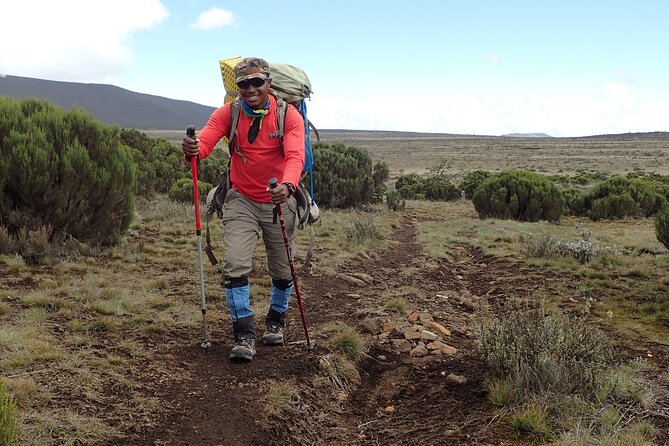
This first hiking day is relatively short, at about four hours. The path is moderately steep and leads to Big Tree Camp at 2,780 metres. The change in altitude is noticeable, but the short walking time gives you a gentle introduction.
The rainforest is one of the pleasures of this route. You may see monkeys and interesting birds, and the thick vegetation makes the early part of the climb feel far removed from the dry upper mountain. It is a good reminder that Kilimanjaro is not just a rock and ice summit.
When you reach camp, the tents are already set up. Hot tea and washing water are waiting, details that become increasingly welcome as the days pass. You sleep at Big Tree Camp, surrounded by the forest rather than the bare terrain found higher up.
Day 3: Heath country and the Shira Plateau
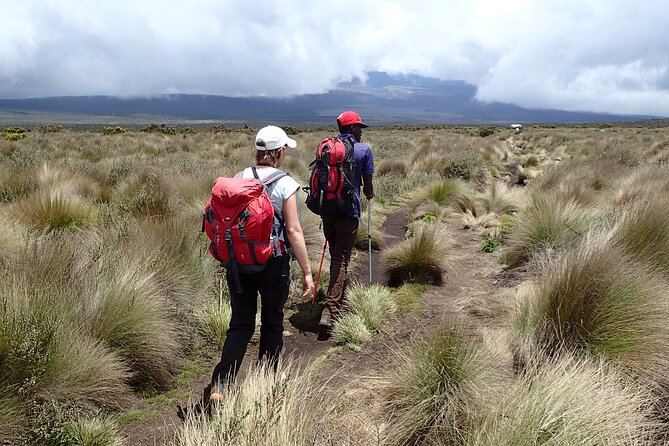
Day three takes about six hours. You leave the forested slopes and pass through Podocarpus and juniper forest before reaching the heath zone and Shira Plateau.
This is one of the route’s most satisfying transitions. The trees thin out, the views open, and the mountain begins to feel much larger. Lunch is taken on the trail, and you reach Shira 1 Camp in the middle of the afternoon.
The day has a useful balance. You walk long enough to gain altitude and make progress, but you arrive with time to eat and rest. At this point, you may still feel fresh. Do not spend that energy trying to race ahead. The climb rewards a slow, steady pace.
More treks and hikes around Kilimanjaro:
- Kilimanjaro climb, Machame Route (7-day)
★ 5.0 · 262 reviews - Climbing Kilimanjaro – Machame Route
★ 5.0 · 170 reviews - Climbing Kilimanjaro through 7 days Machame Route
★ 5.0 · 151 reviews - Kilimanjaro climb, Lemosho Route (8-day)
★ 5.0 · 148 reviews
Day 4: Shira 2 and a useful acclimatization day
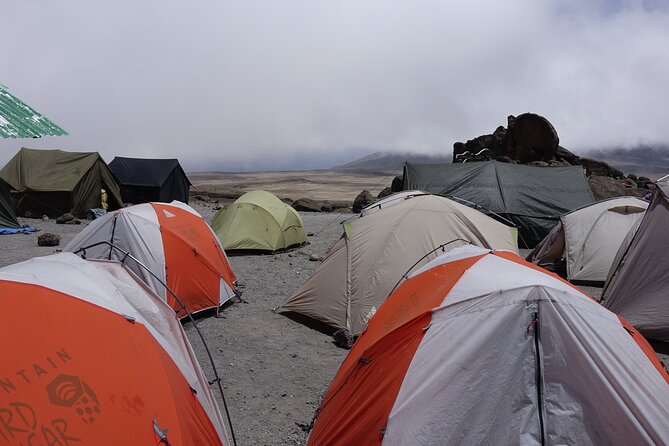
The move from Shira 1 to Shira 2 takes about six hours, with a relatively long hike and significant altitude gain. Despite that, you reach camp around lunchtime.
This is an important feature of the schedule. The afternoon can be used for rest or an optional walk with the guides. That gives your body more time at altitude without forcing you into another long transfer late in the day.
Shira 2 also lets you experience the open upper mountain before the route becomes more severe. The plateau can feel broad and exposed, with fewer trees and less shelter. Bring a warm layer where you can reach it quickly. Conditions can change as you move higher.
Day 5: Lava Tower and the alpine desert
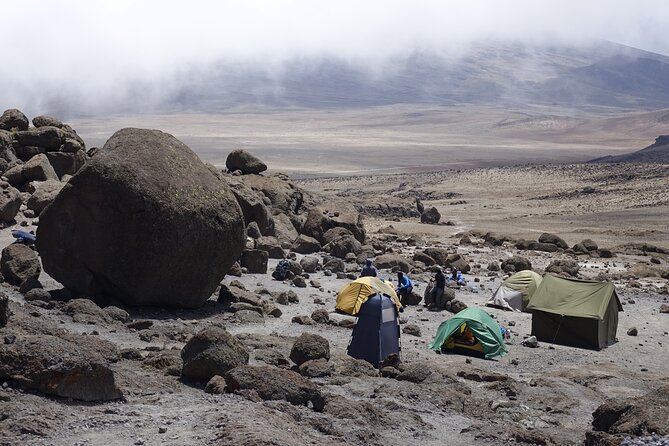
Day five shifts you from heath into alpine desert. The hike to Lava Tower takes about six hours, and the day is planned as two shorter halves. Lunch is taken in camp.
The upper mountain now looks stark. The temperature range can be severe, and very little plant or animal life survives here. That lack of vegetation gives the area a stripped-down quality. You see the mountain’s structure more clearly, without the forest and heath covering it.
If weather allows, you can make a scramble to the nearby Lava Tower. This is optional, and it should be treated as an acclimatization opportunity rather than a challenge to conquer. You do not need to prove anything on this day. Saving energy for the summit is the smart choice.
Lava Tower is also useful because it places you at significant altitude before you sleep lower at Karanga. Spending time high and then descending is a classic way to help the body adjust, although no itinerary can remove the risk of altitude sickness.
Day 6: Karanga Camp and southern glacier views
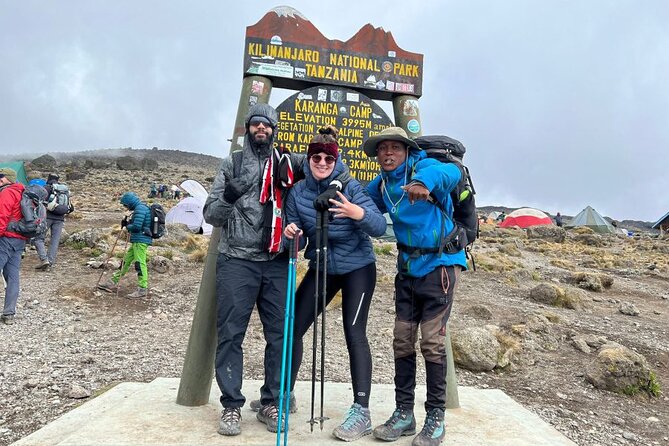
The walk to Karanga Camp takes about five hours and is described as a longer day after the two shorter halves at Lava Tower. The camp’s location is deliberate. You spend important time at altitude before the final approach.
The late afternoon arrival gives you a chance to settle in and watch the sun drop over the southern glacier valleys and ice fields. The upper ice can tower about 1,000 metres above the camp, creating one of the most dramatic views of the climb.
This is a day for restraint. You may feel excited because the summit is close, but the mountain is not finished with you. Eat, drink, and rest. Keep your pack light and your evening quiet.
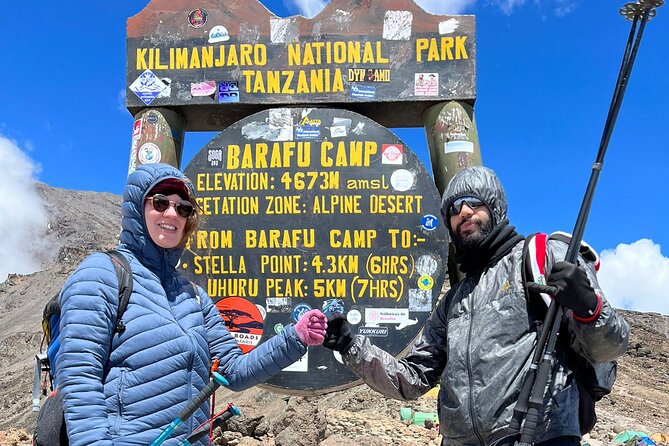
Day 7: Barafu Camp before the summit push
The ascent to Barafu Camp takes about five hours. Lunch is taken in camp, leaving the afternoon for rest before the summit attempt.
Barafu means ice, and the setting is appropriately harsh. The alpine desert is bare, and strong winds can sweep across the camp. In clear weather, Mawenzi Volcano provides a striking view.
You should expect this to be an early bedtime, even if sleep proves difficult. The camp is high, the conditions can be uncomfortable, and excitement can keep your mind active. Organize your headlamp, warm clothing, water, snacks, and gloves before lying down. You do not want to search through your bag at midnight.
The short afternoon schedule is valuable, but it does not guarantee rest. This is one of the clearest points where the nine-day format helps. You have not been pushed straight from a lower camp into the summit attempt.
Day 8: Stella Point, Uhuru Peak, and the long descent
Summit day begins just after midnight. It is dark and cold, and you climb frozen volcanic dust by headlamp toward Stella Point on the crater rim.
The ascent to Stella Point takes about six hours. The pace should be slow and controlled. This is where the guide team’s support matters most. Siza and other guides connected with past trips have been praised for motivation and patient care, while Mwinyi has been remembered for keeping spirits up with humour during the hard sections.
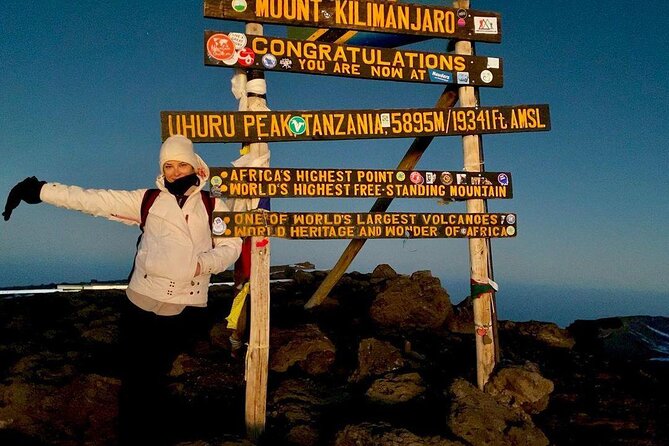
From Stella Point, you continue for another hour or two toward Uhuru Peak, the highest point on Kilimanjaro. The time at the top is usually brief. Take your photographs, share the moment with your group, and start down before the cold and altitude take more from you.
The descent is steep and dusty. The volcanic ash that was frozen during the night has thawed, making the footing loose. You return to Barafu for a short tea break, then continue downhill for about three more hours to Mweka Camp at 3,080 metres.
The full day is listed at about eight hours, but summit day can feel much longer because it begins before dawn and includes a major descent. Drink plenty of fluids and eat well at supper. You have done the hardest part, but you still need to recover.
Day 9: Forest descent and the return to Moshi
The final morning begins with a farewell ceremony from the porters. After about three hours of comfortable descent through the forest, you reach Mweka Gate.
The return to greener surroundings is welcome after the upper mountain. At the gate, your driver takes you back to Keys Hotel in Moshi for a hot shower, a cold drink, a debrief, and your certificate of achievement.
That return to the hotel gives the trip a proper ending. You are not simply dropped at a road and left to arrange your own way back. The certificate is a small detail, but after the summit and long descent, it will feel well earned.
The guides, porters, and feel of the climb
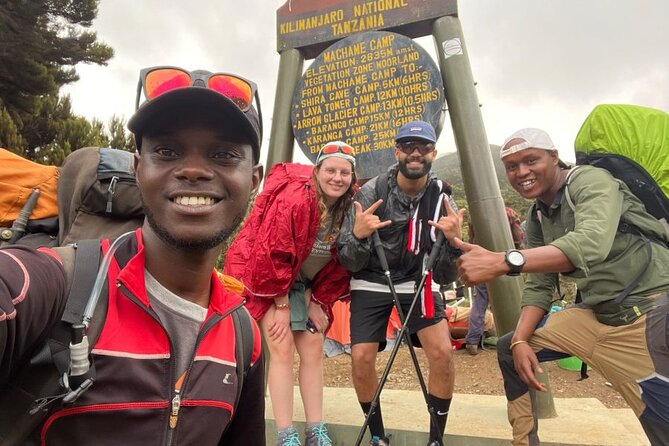
The human side is a major reason to consider this company. Past departures have included guides named Mwinyi, David, Gasper, and Siza. The strongest praise centers on daily encouragement, quick communication before arrival, caring treatment, and meals that helped climbers keep going.
One account describes the team changing from a climbing group into a close family. Another highlights the habit of making sure people could eat, stay motivated, and handle worries one day at a time. Those points matter on Kilimanjaro. A good guide does more than lead the path. The guide watches your pace, mood, and ability to continue safely.
The food also receives warm attention. The package includes seven lunches, seven dinners, and eight breakfasts. Specific menus are not provided, but the meal plan means you are not expected to arrange your own food on the mountain.
Porters carry the camp equipment and help make the prepared tents and hot drinks possible. You should still pack responsibly and respect the effort involved. Keep your personal luggage practical, use only what you need, and ask the operator about baggage limits before departure.
What the $3,450 price covers, and what it does not
The price makes more sense when you view it as a supported private expedition rather than a simple hike. It includes airport pickup, the Moshi hotel night, national park access as described, mountain transport, guides, porters, tents, meals, and the final return to Moshi.
You also receive a first-aid kit and pulse oximeter. An oxygen cylinder is carried for emergencies only. That is useful safety equipment, but it is not a substitute for proper acclimatization or a decision to descend if you become seriously unwell.
The main extra costs are:
- Health insurance
- Visa fees
- Sleeping bag
- Hotel laundry
- Personal drinks and items not covered by the stated meal plan
Three litres of bottled drinking water are provided on the first hiking day. The information supplied does not state the full water arrangement for every later day, so ask for a clear answer before you book. Hydration is too important to leave vague.
At this price, I would also ask what tipping customs are expected and how porter support is organized. Those details are not provided here, but they affect your final budget and the working conditions of the mountain crew.
Who should choose this climb
This trip suits you if you have moderate physical fitness, can walk for several hours on consecutive days, and are comfortable with basic camp conditions. You do not need technical climbing skills for the route as described, but you do need patience and stamina.
It is a good choice for someone who values time at altitude over the shortest possible schedule. The private format also suits a couple, family, or small group that wants the same guide team and a shared pace.
Think carefully if you dislike cold nights, simple camps, dusty descents, or uncertain sleep. The final summit day is especially demanding. The route has a high success rate in the operator’s description, but no one can promise that you will reach Uhuru Peak.
The cancellation terms are fairly forgiving: you can cancel for a full refund up to 24 hours before the local start time. Changes or cancellations inside that window are not accepted for a refund.
Should you book the Lemosho climb?
I would choose this trip if your priority is a well-paced Kilimanjaro route with strong scenery, a private group, and a team known for personal encouragement. The nine-day schedule is the biggest selling point. It gives you time to move from forest to summit without turning every day into a race.
I would not book it without first confirming your sleeping bag arrangements, later-day water supply, insurance needs, and expected extra costs. Also be honest about your fitness. A good route and caring guides help, but they cannot remove altitude, cold, fatigue, or the steep descent.
For a prepared climber who wants a scenic western approach and a better acclimatization plan, the $3,450 price is reasonable. You are paying for time, support, and a complete return to Moshi, not just a walk to the summit.
FAQ
How long is the Kilimanjaro climb?
The experience lasts approximately nine days. It includes arrival and briefing in Moshi, seven days of mountain meals and climbing, the summit day, and the return to Moshi.
Where does the climb begin?
You begin with registration at Londorossi Gate, then drive another 15 kilometres into the rainforest before starting on foot. The starting altitude is about 2,360 metres.
Is airport pickup included?
Yes. Pickup is offered from Kilimanjaro International Airport, and the driver takes you to Keys Hotel in Moshi for the briefing and first overnight stay.
What meals are included?
The package includes seven lunches, seven dinners, and eight breakfasts. Three litres of bottled drinking water are provided on the first day of the hike.
Is a sleeping bag included?
No. You need to arrange your own sleeping bag. Health insurance and visa fees are also not included.
What happens on summit day?
You leave just after midnight from Barafu Camp and climb by headlamp toward Stella Point. After reaching Uhuru Peak, you descend to Barafu for tea and continue to Mweka Camp for the night.
More Nine-Day Trips in Kilimanjaro
- Kilimanjaro 360° 9 days Tour
★ 5.0 · 6 reviews - 9 Days Mount Kilimanjaro Climb Machame Route
★ 5.0 · 6 reviews - 9 Days Kilimanjaro Hiking or Climbing via Northern Circuit route
★ 5.0 · 5 reviews - Kilimanjaro Climb • Marangu Route ~ 9 Day
★ 5.0 · 4 reviews
Just added around Kilimanjaro
- 6 days Machame route climbing Mt.Kilimanjaro★ 5.0 · 8 reviews
- machame route★ 5.0 · 16 reviews
- Mt Kilimanjaro 6 days Marangu route hike★ 5.0 · 3 reviews
- Private Cycle to Kilimanjaro Bike Park Safari★ 5.0 · 6 reviews
- West Kilimanjaro cycling Adventures★ 4.5 · 8 reviews
- Kilimanjaro Climb • Marangu Route ~ 9 Day★ 5.0 · 4 reviews
- 3 Days Private E-Bike Tour in West Kilimanjaro★ 5.0 · 3 reviews
- Kilimanjaro Climb • Machame Route ~ 10 Day★ 5.0 · 6 reviews