
Reviewed · MACHAME ROUTE CLIMBS
7 Days Machame Route
The Machame Route earns its nickname, the Whiskey Route, with a demanding but highly scenic climb through Kilimanjaro’s cloud forest, moorland, glacier country, and summit scree. The seven-day plan gives you more time to adjust to altitude than the shorter six-day version, and its high-point, low-sleep pattern is a real advantage.
I like the varied scenery, from moss-covered trees to the ice cliffs around the crater. I also like the practical camp setup: tents and supplies are carried by porters, and the crew has a reputation for filling meals, careful organization, and looking after belongings during the summit push.
The main drawback is the summit day. It lasts about 15 hours, begins around midnight, and includes a steep four-to-five-hour climb on loose scree before you even reach Stella Point. You need moderate fitness, patience, and a clear understanding that altitude, not distance alone, is the hard part.
Key points to know before booking
- Seven days helps with acclimatization: The route lets you climb high and sleep lower, including time near 4,600 meters before the summit.
- The scenery changes every day: Expect cloud forest, heather, tall grasses, wildflowers, high moorland, glaciers, crater ice, and views toward Mawenzi.
- The summit push is serious: You start near midnight, reach Stella Point at 5,739 meters, continue to Uhuru Peak at 5,895 meters, then descend to Mweka Camp.
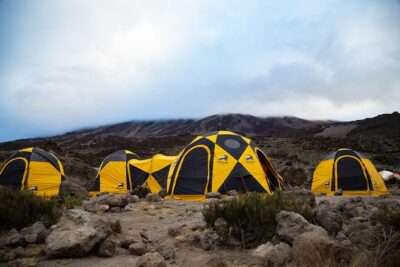
- Camping is part of the experience: Porters carry the tents and supplies, rather than you staying in mountain huts.
- The group is capped at 15 people: That is large enough for company but small enough for the guide team to keep the trek organized.
- The price is $2,000 per person: Its value depends on what your booking includes, so confirm meals, park fees, transfers, equipment, hotel nights, and gratuities before paying.
Why the seven-day Machame Route works
Kilimanjaro is not a technical climb in the usual sense, but it is a high-altitude trek with a tough final ascent. The Machame Route is popular because it does not simply point uphill from the first step to the last. It rises, traverses, and gives your body chances to adjust before the summit attempt.
The seven-day version matters. A six-day schedule is possible, but the extra day reduces the pressure of racing upward. On this route, you spend a day at altitude near 4,600 meters and then sleep lower. That walk high, sleep low rhythm is one of the most useful features of the plan.
You should still take altitude seriously. The tour asks for a moderate fitness level, but fitness alone cannot guarantee how your body will respond above 5,000 meters. Walk slowly, follow the guide’s instructions, and tell the crew promptly if you feel unwell.
The group limit of 15 is also worth noting. You will not have a private mountain experience, but a group of this size can share the work and the mood of the climb without becoming unwieldy.
More Machame Route climbs:
- Kilimanjaro climb, Machame Route (7-day)
★ 5.0 · 262 reviews - Climbing Kilimanjaro – Machame Route
★ 5.0 · 170 reviews - Climbing Kilimanjaro through 7 days Machame Route
★ 5.0 · 151 reviews
Day 1: Moss-covered forest to the high heathers
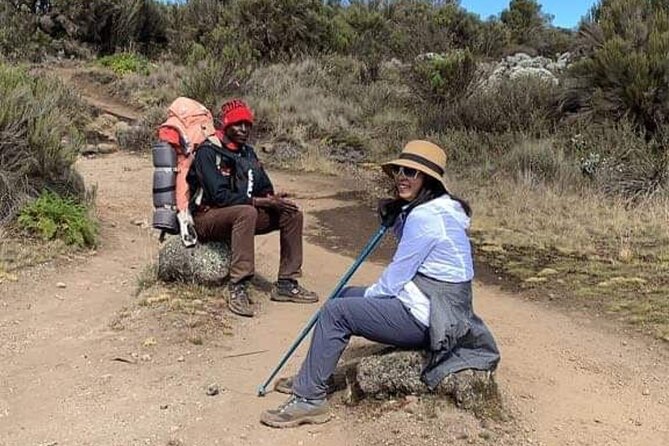
The first hike takes about six hours on Mount Kilimanjaro. You begin among moss-covered trees in the cloud forest, where the route feels shaded, damp, and enclosed. As you gain height, the forest thins and changes into heathers, tall grasses, and wildflowers.
This opening day gives you a gentle introduction to the rhythm of the trek. You will walk for hours, but the main challenge is settling into a steady pace while carrying your personal day gear. The tents and larger supplies are carried by porters, which keeps the climb manageable.
I like this first section because it makes Kilimanjaro feel like more than a summit. The mountain changes as you climb. You begin with forest, not bare rock, and the shift in plants helps you see how quickly altitude affects the surroundings.
The six-hour estimate is useful, but do not treat it as a strict schedule. Mountain pace can vary. Your first day is a good time to learn how the group moves, how meals are handled, and how much water and clothing you want close at hand.
Day 2: Reaching the Shira Plateau
Day two takes about five hours and continues upward through the forest before a steep ascent onto the Shira Plateau. This is where the views open up. Looking back, you may see Mount Meru rising above Arusha in the distance.
The Shira Plateau changes the feel of the trek. You leave the enclosed forest behind and gain broad mountain views. The climb is shorter than the first day, but the steep section can feel demanding because you are already at altitude.
This is one of the strongest days for scenery. The distant view of Mount Meru gives you a sense of the wider Tanzanian setting, while Kilimanjaro’s slopes begin to feel more exposed and expansive.
You should keep your pace controlled here. The goal is not to prove how quickly you can climb. The seven-day schedule works best when you conserve energy early, eat properly, and let the guide set a calm rhythm.
Day 3: High moorland and the walk-high, sleep-low plan
The third day is listed as an eight-hour hike across high moorland. You traverse the southwest side of Kilimanjaro, pass beneath Lava Tower, and move near the final section of the Western Breach before reaching camp.
The route reaches about 4,600 meters during the day. That sounds intimidating, but this is precisely where the climb-high, sleep-low pattern matters. You spend time at a useful altitude, then rest at a lower camp, giving your body a better chance to adjust than it would on a rushed ascent.
Lava Tower is an important point in the trek because it marks a clear change in terrain and altitude. The route is no longer a forest walk. You are now among high moorland and volcanic mountain scenery, with less shelter and more exposure to the conditions.
This is also likely to be one of the more tiring days. Eight hours on high ground is a long outing, even if the walking is not technical. Keep snacks and water available, and do not wait until you feel exhausted before taking a short break.
More seven-day trips in Kilimanjaro:
- Kilimanjaro climb by Lemosho Route (7-day)
★ 5.0 · 651 reviews - 7-Day Machame Kilimanjaro Summit Tour from Arusha
★ 5.0 · 125 reviews - 7 Days Kilimanjaro via Machame route affordable price
★ 5.0 · 110 reviews - Private Kilimanjaro Hike 7 Day Lemosho Route
★ 5.0 · 60 reviews
Day 4: A shorter high-altitude day
The fourth day is given as a four-hour walk through the same high moorland area, again near the Lava Tower and Western Breach section. The published description repeats much of the previous day’s route, so you should confirm the exact camp names and walking sequence with Golden Summit Adventures before departure.
That wording issue does not change the main point: this is a shorter day intended to keep you at useful altitude without forcing another very long march. A four-hour walking day can help you recover after the eight-hour traverse while keeping the acclimatization plan moving.
The setting remains stark and open. You are well above the forest, and the mountain scenery has a more volcanic, high-country character. This is not a day to expect a quick stroll, but it should feel less punishing than the previous stage.
The split between a long third day and shorter fourth day is one reason I prefer the seven-day version. You gain time to adjust without stacking several long efforts back to back.
Day 5: Glaciers and Barafu Camp
After breakfast, you walk for about four hours toward Barafu Camp. Along the way, you can see several of Kibo’s glaciers and the junction where the Mweka descent route connects with the Machame trail.
The route also passes near the Heim, Kersten, and Decken Glaciers. These names are a reminder that Kilimanjaro’s summit zone is not simply a pile of rocks. Ice remains part of the mountain’s character, even though summit conditions can change over time.
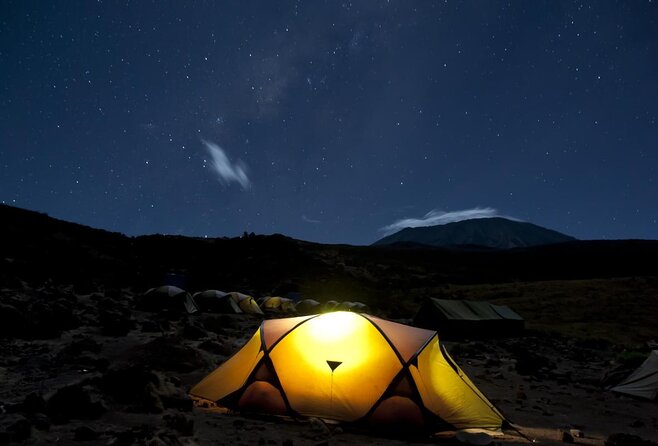
Barafu Camp is the launch point for the summit attempt. Reaching it is a major stage in the trek, but it is not the moment to celebrate too hard. You need to eat, rest, prepare your clothing and day pack, and try to sleep before the midnight start.
The short walking time can be misleading. You are now high on the mountain, and the air is thinner. Some people find this day physically manageable but mentally tense because the summit push is so close. That is normal. Use the time to keep your gear simple and ready.
Day 6: A 15-hour push to Uhuru Peak
Summit day begins at about midnight. You climb steeply toward the summit glaciers, moving over scree for four to five hours. Scree is loose volcanic gravel, and it can make every step feel slow. The route gains a great deal of height over a relatively short distance.
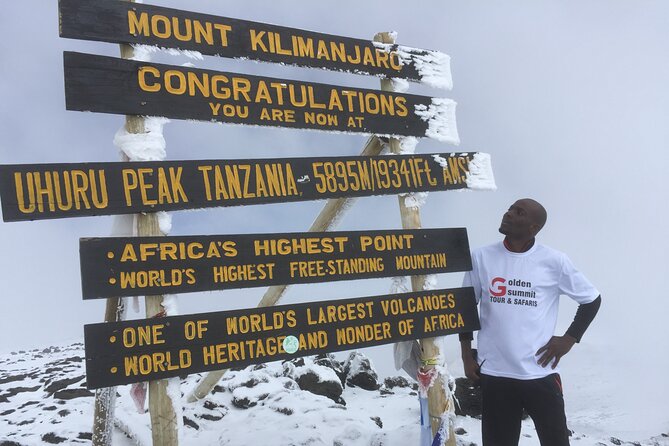
Your first major goal is Stella Point on the crater rim at 5,739 meters. The plan aims to reach it around sunrise, when the first light may spread across the summit ice and surrounding ridges. From Stella Point, the crater ice cliffs are close, and views toward Mawenzi Peak can be spectacular.
Uhuru Peak sits at 5,895 meters. The final hour from Stella Point is not necessarily easy, but it is less like the initial steep scree climb. You will likely be tired, cold, and moving slowly. The guide’s pacing and encouragement matter a great deal here.
The descent begins by returning to Stella Point and then dropping down the scree slope to Barafu Camp. You stop at Barafu for breakfast before continuing to Mweka Camp for a longer rest. Altogether, the day takes about 15 hours.
This is the day that should decide your booking. You need to be comfortable with a midnight start, a long effort at extreme altitude, and a large descent after reaching the summit. The route is scenic, but it is not gentle.
The crew’s practical support is especially valuable here. The company is described as organized with small details, including porters looking after belongings while you summit and meals that remain filling and varied. Those details matter when you are tired and cold.
Day 7: Rainforest, certificates, and Moshi
The final hike takes about three hours and descends through rainforest to Mweka Gate. The change from bare high mountain to wet forest can feel dramatic, and the shorter day gives your legs a chance to recover.
At the gate, you complete park formalities and receive summit certificates. Vehicles then meet you for the return to your hotel in Moshi, where you can shower, change, and celebrate with cold drinks.
The plan includes an overnight stay at your arranged hotel, but you should confirm whether that night is part of the $2,000 package or arranged separately. The same applies to any hotel night before the climb.
This final day is not just paperwork and transport. It closes the full ecological journey, from cloud forest to summit ice and back down through rainforest. That range of scenery is a major reason to choose Machame over a less varied route.
What the $2,000 price may be worth
At $2,000 per person, the trip sits in a price range where inclusions matter more than the headline figure. You are paying for a seven-day mountain operation, not just guiding for a few hours each day.
The supplied details confirm several useful parts of the experience: tents are carried by porters, admission tickets are included for the listed mountain stops, pickup is offered, and the group is limited to 15 people. The crew also provides meals and handles belongings during the summit period.
Still, do not assume every cost is covered. Before booking, ask for a written list covering park fees, porter and guide services, meals, airport or hotel transfers, hotel nights, sleeping equipment, medical support, and gratuities. The available details do not spell out every inclusion.
The price becomes better value if you want an organized trek rather than arranging each piece yourself. It becomes less attractive if major items are extra and you discover them only after booking.
The crew and the practical side of the climb
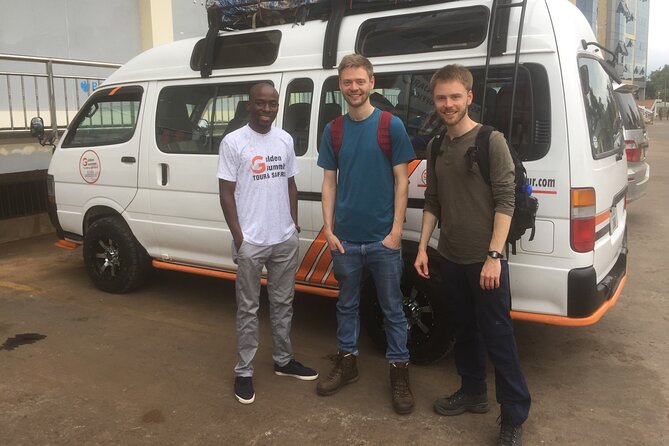
Golden Summit Adventures is the named operator. No individual guide names are provided, so I would ask who will lead your group and how many guides and support staff will be assigned to a group of up to 15.
The strongest practical points are the organization of the mountain operation, attention to belongings, and food. Meals are described as filling and varied, which is important because you will burn a lot of energy over seven days.
Pickup is offered, and the meeting time is 8:00 am. Confirm the exact pickup location in Moshi, especially if you are staying at a hotel arranged independently.
The booking confirmation is received at the time of booking. Cancellation is free up to 24 hours before the experience starts, with a full refund. Inside that 24-hour window, cancellations and changes are not accepted and the payment is not refunded.
Who should book this climb?
I would recommend this trek to you if you want a scenic Kilimanjaro route, prefer camping to mountain huts, and can handle long walking days. It suits people who value a slower seven-day pace and want more acclimatization time than a compressed schedule allows.
It is also a good fit if you want an organized group operation with porters, meals, transport back to Moshi, and a group limit of 15.
I would pause if your fitness is low, if you dislike very early starts, or if a 15-hour summit day sounds unreasonable. You should also confirm the exact day three and day four camp sequence, since the supplied schedule repeats part of the route description.
Should you book the 7-day Machame Route?
Book it if your priority is a scenic, properly paced Kilimanjaro climb with a strong acclimatization design. The forest, Shira Plateau, Lava Tower, glaciers, crater rim, and Uhuru Peak give you a changing mountain experience rather than one long uphill slog.
The decision comes down to preparation and expectations. At $2,000, confirm the full list of inclusions, ask for the guide names and staff plan, and prepare for the summit day as a serious endurance effort. If you do that homework and are comfortable with camping, the seven-day Machame Route offers a sensible balance of scenery, support, and time at altitude.
FAQ
How long is the Machame Route experience?
The trek lasts approximately seven days, including the return to Moshi on day seven.
Where does the trek start?
The experience is based in Moshi, Tanzania. Pickup is offered, and the stated start time is 8:00 am.
How high is Uhuru Peak?
Uhuru Peak is at 5,895 meters. The route reaches Stella Point at 5,739 meters before continuing to the summit.
How long is summit day?
Summit day takes about 15 hours. It begins around midnight, includes four to five hours of climbing over scree to Stella Point, and continues with the descent to Mweka Camp.
Are tents used on the Machame Route?
Yes. Hikers sleep in tents, and porters carry the tents up the mountain.
How large is the group?
The maximum group size is 15 people.
What is the cancellation policy?
You can cancel up to 24 hours before the experience start time for a full refund. Cancellations or changes made less than 24 hours before the start time are not accepted, and the payment is not refunded.
Just added around Kilimanjaro
- 6 days Machame route climbing Mt.Kilimanjaro★ 5.0 · 8 reviews
- machame route★ 5.0 · 16 reviews
- Mt Kilimanjaro 6 days Marangu route hike★ 5.0 · 3 reviews
- Private Cycle to Kilimanjaro Bike Park Safari★ 5.0 · 6 reviews
- West Kilimanjaro cycling Adventures★ 4.5 · 8 reviews
- Kilimanjaro Climb • Marangu Route ~ 9 Day★ 5.0 · 4 reviews
- 3 Days Private E-Bike Tour in West Kilimanjaro★ 5.0 · 3 reviews
- Kilimanjaro Climb • Machame Route ~ 10 Day★ 5.0 · 6 reviews
Machame Route Climbs, compared.
The Best of Machame Route in 6 Days: Your World’s Summit Guide
Read our review →Browse the lists this tour appears in