
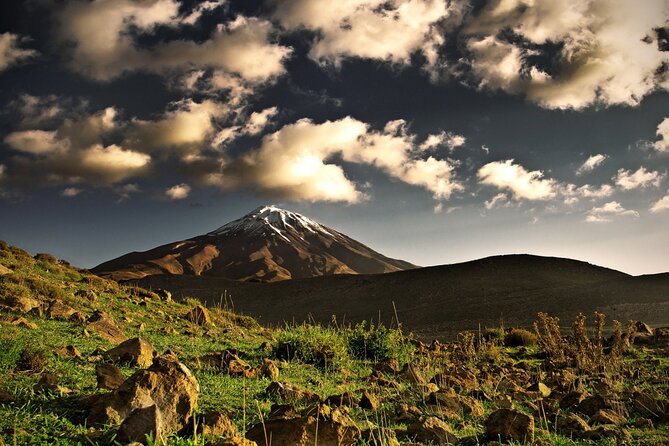
Reviewed · LEMOSHO ROUTE CLIMBS
7 Day Kilimanjaro Climbing Via Lemosho Route
Kilimanjaro’s Lemosho Route gives you the mountain in chapters: rainforest, open moorland, the Shira Plateau, giant groundsel, volcanic rock, and finally snow, wind, and thin air near Uhuru Peak. I like the slow route design and the dramatic approach from the west. I also like that camp meals, tents, pickup, and a local mountain crew are built into the plan.
The main catch is simple: seven days is a serious physical challenge. Summit day begins before midnight and combines a cold climb to 19,341 feet with a long descent. The itinerary also contains a confusing day count around Barafu Camp and summit day, so confirm the exact schedule with Spirit of Kilimanjaro before paying.
Key points to know before you book
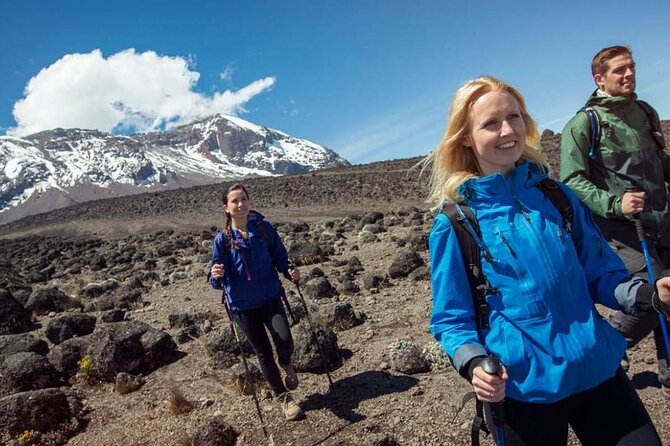
- Six ecological zones in one climb: You move from Afromontane rainforest to heather, alpine desert, and the harsh arctic zone near the summit.
- The Lemosho Route favors scenery and acclimatization: The path crosses the Shira Plateau and spends useful time around Karanga before the summit push.
- Barranco Wall is hands-on: You will use all four limbs in places, though the route description presents it as a climb rather than technical rock climbing.
- The summit attempt starts before midnight: Expect the coldest and windiest hours of the trip on the way to Stella Point and Uhuru Peak.
- Local guides are central to the experience: William, Rama, Emanuel Hoblen, and Emanuel Mkumbo are names associated with this Spirit of Kilimanjaro program.
- Signature camping adds comfort, not luxury: You sleep in tents and eat catered meals, with breakfast, lunch, and dinner provided throughout the trip.
Why Lemosho is a strong seven-day choice
Kilimanjaro is not a technical mountain in the usual mountaineering sense, but it is a demanding high-altitude trek. The difficulty comes from the height, the length of the days, the changing weather, and the need to keep moving when your body would rather stop.
Lemosho is a good route for seeing the mountain gradually. You begin on the western side, where the trail enters the rainforest at roughly 7,742 feet. From there, the route climbs through several plant zones before joining the high slopes of Kibo, the volcanic cone that holds Uhuru Peak.
I like the fact that the early walking is described as leisurely. That is not wasted time. A steady pace helps you conserve energy and adjust to altitude. The route also gives you changing views instead of repeating the same type of scenery every day.
The seven-day format includes time at Karanga Camp, around 13,123 feet, before the final rise to Barafu. That extra night at altitude can be useful for acclimatization, although no itinerary can guarantee that you will avoid altitude sickness. You should treat the guides’ instructions seriously and tell them at once if you feel unwell.
More Lemosho Route climbs:
- Kilimanjaro climb by Lemosho Route (7-day)
★ 5.0 · 651 reviews - Kilimanjaro Climbing Lemosho Route 8 Days.
★ 5.0 · 186 reviews - 8-Day Small-group Lemosho Kilimanjaro Summit Trekking
★ 5.0 · 186 reviews
Day 1: Forest Camp and the western approach
The day starts with a vehicle transfer from Arusha to Londorossi Gate, the entry point for the Lemosho Trail. The drive is long, so this is partly a transport day before it becomes a walking day.
At the gate, you meet the wider mountain crew and begin through Afromontane rainforest. The first walk covers about four miles, rising from 7,742 to 9,498 feet in roughly three to four hours. Lunch is taken on the trail, and Forest Camp is reached in the middle of the afternoon.
The forest is a fine opening scene. It is greener, warmer, and more sheltered than the upper mountain, and the route description notes the possibility of seeing wildlife. Do not expect a safari, though. Wildlife sightings are a bonus, not the reason to choose this climb.
You will sleep in a camping setup and receive breakfast, lunch, and dinner. The early finish gives you time to settle into camp, organize clothing, and rest before the first real altitude gain.
Day 2: From heather forest to the Shira Plateau
Day two climbs from 9,498 to about 11,500 feet over five miles. Expect five to six hours of walking, with lunch on the trail and arrival at Moir Hut in the afternoon.
The vegetation changes quickly. Podocarpus and juniper forest give way to heather and lichen-covered volcanic rock. This is where Kilimanjaro begins to feel wide open. The trees thin out, the air cools, and Kibo comes into view.
The Shira Plateau is one of the route’s major rewards. It was once part of Kilimanjaro’s third volcanic peak before that peak collapsed. You are not simply walking toward a summit here. You are crossing the remains of an old volcanic structure.
At this height, your body may begin to notice the difference. The walking time is not extreme, but the climb from the forest to 11,500 feet is a meaningful jump. Use the slow pace to settle your breathing, drink as directed by your guide, and avoid racing ahead simply because the trail looks easy.
Day 3: Lava Tower, giant groundsel, and Barranco Valley
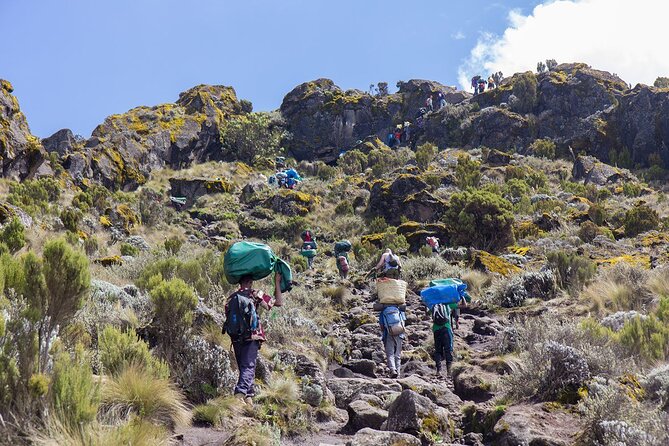
Day three is one of the best for acclimatization and scenery. From Moir, you traverse Kibo’s slopes, climbing toward roughly 15,223 feet at Lava Tower before descending to Barranco Camp at about 13,044 feet.
The listed distance is around seven kilometers, with four to six hours of walking. The route crosses a zone where little plant or animal life can cope with the severe temperature swings. Volcanic rock and open ground replace the forest.
Lava Tower rises about 300 feet and offers an optional ascent if you are feeling strong. I would treat that option with caution. The real purpose of this day is to climb high and sleep lower, a pattern that helps your body adjust. You do not need to add extra effort just to prove a point.
The descent to Barranco passes the Garden of the Senecios, filled with giant groundsel and giant lobelias. These strange plants give the high mountain a prehistoric feel. Barranco Valley is also described as one of the prettiest parts of the route, and it is easy to see why from the combination of cliffs, volcanic slopes, and unusual vegetation.
More treks and hikes around Kilimanjaro:
- Kilimanjaro climb, Machame Route (7-day)
★ 5.0 · 262 reviews - Climbing Kilimanjaro – Machame Route
★ 5.0 · 170 reviews - Climbing Kilimanjaro through 7 days Machame Route
★ 5.0 · 151 reviews - Kilimanjaro climb, Lemosho Route (8-day)
★ 5.0 · 148 reviews
Day 4: Across Barranco Wall to Karanga
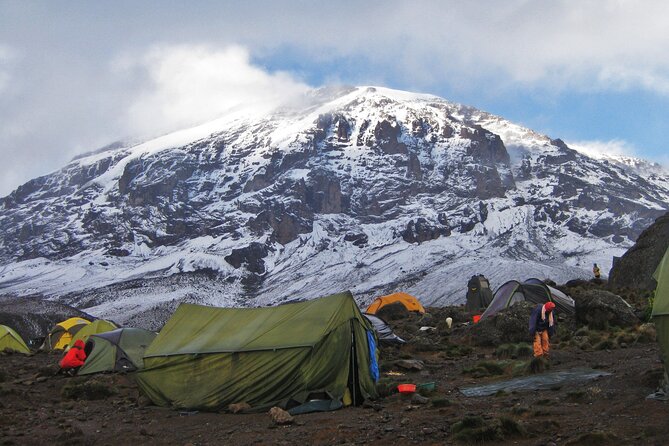
Day four is shorter on paper, covering about three miles in four to five hours. The gain is modest, from 13,044 to 13,123 feet, but the route is not a flat stroll.
First comes Barranco Wall. You should expect to use your hands and feet as you work upward. The wall can look intimidating from below, but the route description treats it as a manageable part of the trek rather than a technical climbing pitch.
After the wall, the path rises and falls across the Karanga Valley before reaching camp. Those repeated inclines and declines can be tiring, especially after several days on your feet. Keep your pace controlled and save energy for the next day.
Karanga is an important overnight stop. The point is not simply to break up the walking. Spending more time at altitude before Barafu gives your body another chance to adjust. The camp also has strong sunset views toward the southern glacial valleys and ice fields, which rise more than 3,000 feet above you.
Day 5: Barafu Camp and the final preparation
The published timing for day five is muddled, with summit figures appearing alongside the Barafu description. The practical sequence is clear enough: you climb from Karanga to Barafu Camp, eat lunch at high camp, rest, have an early dinner, and prepare for the summit attempt.
Barafu sits at about 15,288 feet in the alpine desert. It is exposed, dry, and often windy. Mawenzi Peak can appear across the mountain, making this a striking place to pause, but comfort is limited by the altitude and cold.
This is where rest becomes part of the climb. Do not spend the afternoon wandering around camp unless your guide tells you to. Organize your headlamp, warm layers, water, snacks, gloves, and camera before lying down. The summit attempt normally begins just before midnight, so even a short period of sleep matters.
The word signature camping may sound plush, but you should keep your expectations sensible. You are still sleeping at high altitude in a tent. The benefit is organized camp support, a dining tent, and prepared meals rather than a hotel-style stay.
Day 6: Stella Point, Uhuru Peak, and the long descent
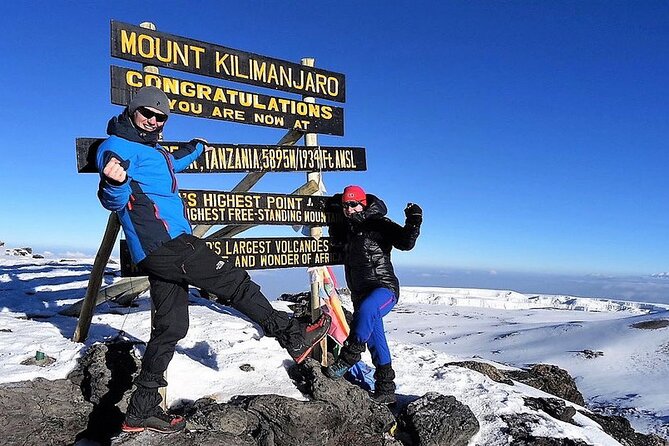
The summit day is the hardest part of the experience. You leave before midnight and climb through the coldest, windiest section of the route. The goal is Stella Point at about 18,652 feet, reached near dawn in the planned schedule.
Stella Point is on the crater rim. The sunrise over Mawenzi Peak is one of the great visual rewards of the climb, but you will also be tired, cold, and short of breath. The final section to Uhuru Peak is relatively short compared with the climb to the rim, yet altitude makes every step count.
Uhuru Peak is listed at 19,341 feet in the itinerary, while the overview gives 19,340 feet. That one-foot difference is not important. What matters is that you reach the highest point in Africa and one of the Seven Summits.
After a brief celebration and photographs, you descend. The supplied schedule gives about six miles and three to four hours for the descent to 5,380 feet, but the day’s narrative indicates a much longer summit-and-descent effort. Confirm the precise overnight location and walking times with the operator, since the published figures do not line up cleanly.
The descent can be harder than expected. Your legs have already worked for hours uphill, and loose volcanic ground can make downhill walking awkward. Take care with each step and follow the guide’s pace.
Day 7: Forest descent and return to the hotel
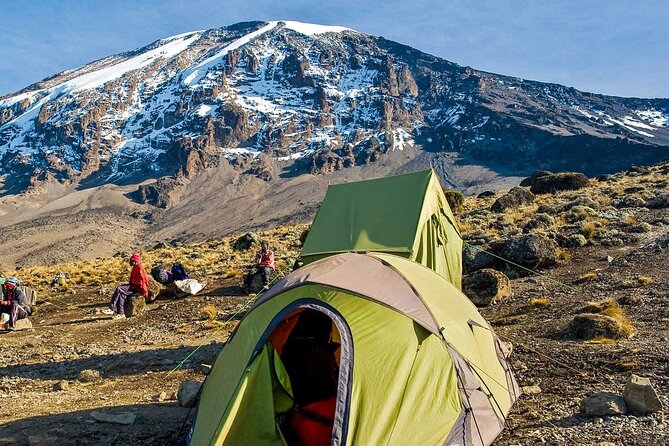
The final day takes you down through montane forest. The stated trekking time is four to seven hours, with pickup around midday after you say goodbye to the crew.
This is a welcome change from the summit push. The air becomes thicker as you lose height, vegetation returns, and the mountain feels less severe. You are still walking, so do not assume the final day is effortless.
A vehicle transfer takes you back to your hotel for a shower and celebratory dinner. Pickup is offered, which is useful after a long descent, especially if your legs are tired and your gear is dirty.
Food, tents, and the human side of the climb
Breakfast, lunch, and dinner are included for all seven days. The meals can be adapted for vegetarian, vegan, and gluten-free diets, but you should state your needs clearly at booking and confirm them before departure.
The food is a bigger part of a mountain trip than many first-time climbers expect. Warm meals and regular eating help you keep going when the altitude reduces your appetite. The dining tent also gives the group a place to sit together at the end of the day.
The crew is a major part of the experience. Names connected with this program include William, Rama, Emanuel Hoblen, and Emanuel Mkumbo. The praise directed toward these guides focuses on steady pacing, safety checks, kindness, local mountain knowledge, and practical care.
You should still ask who will lead your particular departure. A tour page can identify guides associated with the operation without guaranteeing which person will be assigned to your group. The same applies to porters and the chef.
One point deserves attention: the maximum group size is listed as 100 people. That is a large possible number for a mountain experience, even if the actual climbing group is smaller. Ask how many people will be in your group and how the guides are assigned. Group size affects pace, time at camp, and the feel of the trek.
Is $2,566 a fair price?
At $2,566 per person, this is not a cheap holiday, but it is not just a park entry ticket and a walking guide. The price covers a seven-day mountain program with pickup offered, camping, a crew, three meals daily, and a route with built-in acclimatization time.
The value depends on what is actually included in the final booking terms. The supplied details do not spell out every cost, so ask about park fees, transfers from the airport or hotel, sleeping equipment, porter support, tips, and any required medical or rescue arrangements. Visa costs are specifically excluded.
I like the value of the route itself. Lemosho offers more scenery than a short, direct approach, and the Karanga overnight helps avoid turning the climb into a rushed uphill race. The price makes the most sense if you want organized support and catered camping rather than arranging every part yourself.
Who should choose this Kilimanjaro climb?
This trip suits you if you want:
- A scenic route with several ecological zones
- A seven-day schedule rather than a very fast ascent
- A local guide team and organized camp support
- Catered meals with dietary options
- A serious physical challenge ending at Uhuru Peak
- A route that includes Barranco Wall, Lava Tower, and the Shira Plateau
It is less suitable if you want a relaxed holiday, dislike camping, or are not prepared for long walking days at altitude. A moderate fitness level is required, but that phrase should not mislead you. You need to be comfortable walking for several hours, handling steep sections, sleeping in basic conditions, and starting the summit climb around midnight.
Free cancellation is available up to 24 hours before the start time. After that point, the paid amount is not refunded, and changes are not accepted within 24 hours.
Should you book it?
I would consider booking this climb if your priority is a scenic, well-paced route with strong camp support. The Lemosho approach, Shira Plateau, Lava Tower, Barranco Wall, and sunrise at Stella Point give the week real variety.
Before booking, get three details in writing: your exact guide team, the actual group size, and the corrected schedule for Barafu, summit day, and the final descent. If Spirit of Kilimanjaro can answer those clearly, this is a good fit for a fit, determined climber who wants the full Kilimanjaro experience rather than the quickest path up.
FAQ
Where does the Kilimanjaro climb start?
The route starts at Londorossi Gate on the western side of Mount Kilimanjaro. The program includes a vehicle transfer from Arusha to the trailhead.
How long is the experience?
The climb lasts approximately seven days. Trekking times range from about three to eight hours on different days, with the summit attempt beginning just before midnight.
What route does the climb use?
It uses the Lemosho Route, known for its forest approach, the Shira Plateau, Lava Tower, Barranco Valley, Karanga Camp, and the summit approach via Stella Point.
How high is Uhuru Peak?
Uhuru Peak is listed at 19,341 feet in the itinerary. The overview lists 19,340 feet, which is a negligible difference for practical planning.
Are meals included?
Yes. Breakfast, lunch, and dinner are included for all seven days. Meals can be catered for vegetarian, vegan, and gluten-free diets.
Is camping included?
Yes. The overnight stays are provided as Kilimanjaro camping, with signature camping described as including spacious tents, a dining tent, and catered meals.
Is pickup available?
Yes. Pickup is offered, and the final day includes a transfer back to your hotel after the descent.
Do I need a visa?
A visa is not included in the price. You are responsible for arranging and paying for it.
What fitness level is required?
The experience requires a moderate physical fitness level. You should be ready for several hours of walking, steep sections such as Barranco Wall, high-altitude camping, and a cold summit climb beginning before dawn.
More Seven-Day Trips in Kilimanjaro
- 7-Day Machame Kilimanjaro Summit Tour from Arusha
★ 5.0 · 125 reviews - 7 Days Kilimanjaro via Machame route affordable price
★ 5.0 · 110 reviews - Private Kilimanjaro Hike 7 Day Lemosho Route
★ 5.0 · 60 reviews - 7 Days Machame route – Kilimanjaro
★ 5.0 · 45 reviews
Just added around Kilimanjaro
- 6 days Machame route climbing Mt.Kilimanjaro★ 5.0 · 8 reviews
- machame route★ 5.0 · 16 reviews
- Mt Kilimanjaro 6 days Marangu route hike★ 5.0 · 3 reviews
- Private Cycle to Kilimanjaro Bike Park Safari★ 5.0 · 6 reviews
- West Kilimanjaro cycling Adventures★ 4.5 · 8 reviews
- Kilimanjaro Climb • Marangu Route ~ 9 Day★ 5.0 · 4 reviews
- 3 Days Private E-Bike Tour in West Kilimanjaro★ 5.0 · 3 reviews
- Kilimanjaro Climb & Safari – Lemosho Route – 13 Day★ 5.0 · 10 reviews