
Reviewed · MACHAME ROUTE CLIMBS
7-Day Machame Route Kilimajaro
The big draw here is the Machame Route’s changing scenery. You begin among coffee plantations and rainforest, cross open moorland and volcanic rock, then climb through the cold alpine desert toward Uhuru Peak at 5,895 meters. It is a serious climb, but the seven-day schedule gives your body useful time to adjust.
I like the practical setup: pickup from your Moshi hotel or hostel, plus a guide, porters, and cook who handle the camp routine. I also like the climb-high, sleep-lower pattern on Day 3, when you reach Lava Tower before dropping into Barranco Valley. The main caution is simple: this is not a casual walking holiday. The summit night is long, cold, steep, and tiring, and altitude sickness can affect even fit people.
Key points to know before booking
- Seven days on the mountain: The route allows more adjustment time than shorter Machame itineraries.
- A true variety of zones: Expect rainforest, moorland, semi-desert, alpine desert, glaciers, and a forest descent.
- Midnight summit attempt: You climb from Barafu Camp toward Stella Point and Uhuru Peak in darkness.
- Full mountain support: Guides, porters, a cook, meals, accommodation, transport, park fees, and rescue fees are included.
- A group tour with up to 50 people: Ask how your group will be organized and how many people will be in your hiking party.
- Strong service reputation: Past bookings specifically praise guides including Leonard and Tom, along with careful planning by Williamson Adventures.
What the seven-day Machame Route feels like
At $2,550 per person, this is a substantial purchase. The price covers the main costs once you start the climb: park charges, private transportation, mountain accommodation, rescue fees, breakfast, lunch, and dinner for the seven trekking days. You are not paying only for a trail and a tent. You are paying for a support team that carries equipment, prepares food, organizes camps, and helps manage a demanding high-altitude trip.
You still need to budget for tips for the guides, porters, and cook. Hotel meals and drinks before and after the climb are also extra, as are flights and travel insurance. Those omissions matter because the summit attempt is physically demanding, and insurance should cover mountain trekking at the altitude involved.
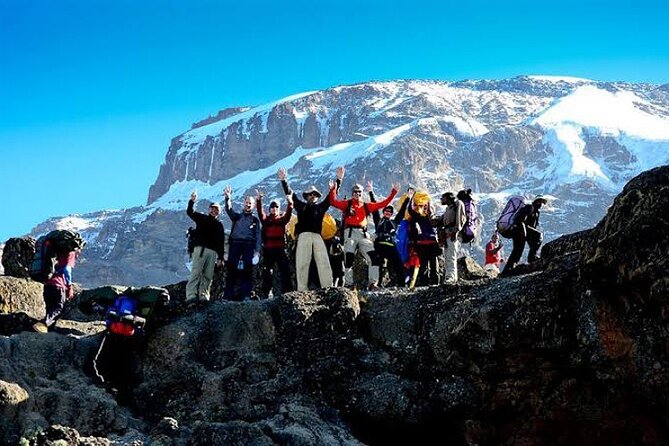
The trip is listed as a group experience, with a maximum of 50 people. That is a sizable possible group, even though the actual hiking party may be smaller. If you prefer quiet trails and a small team, ask for the expected group size before paying. If you like the security of company and the chance to share a major challenge, the group format can work well.
More Machame Route climbs:
- Kilimanjaro climb, Machame Route (7-day)
★ 5.0 · 262 reviews - Climbing Kilimanjaro – Machame Route
★ 5.0 · 170 reviews - Climbing Kilimanjaro through 7 days Machame Route
★ 5.0 · 151 reviews
Day 1: Machame Gate through rainforest
Your morning begins with breakfast and pickup in Moshi. The drive to Machame Gate takes about 45 minutes, where you register before walking into Kilimanjaro National Park.
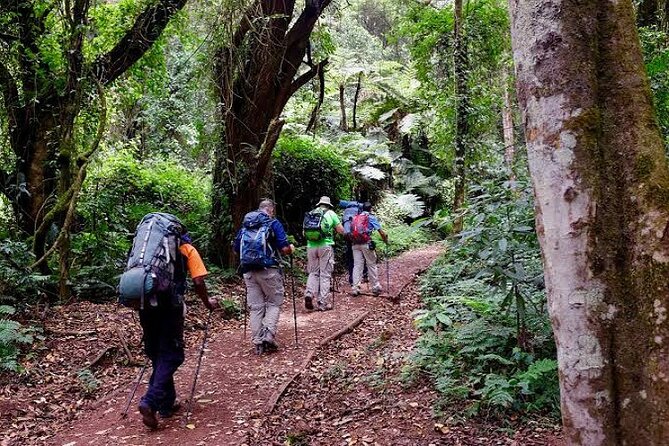
The first trail passes through montane forest and coffee plantations. The climb is steady rather than brutally steep, and the setting gives you a gentle introduction to the mountain. Your guide explains local plant and animal life, with possible sightings of black-and-white colobus monkeys and brightly colored birds.
The walk to Machame Camp takes about six hours. The camp sits at the edge of the rainforest, so this is a full first day, not a short warm-up. You may enjoy the cooler air and thick forest, but wet conditions can make the trail feel slower. Save energy, walk at the guide’s pace, and resist the urge to race ahead while you still feel fresh.
This is where the support team starts to matter. You carry your personal day needs while porters handle much of the camp equipment. Your cook prepares the included meals, so you can focus on eating, drinking, and resting rather than setting up a kitchen after a six-hour hike.
Day 2: Moorland and the Shira Plateau
You leave the forest behind and climb through the moorland zone. The slope becomes steeper, and the vegetation grows lower and more open. Kibo, Kilimanjaro’s main summit cone, begins to appear ahead.
The trail follows a rocky ridge toward Shira Plateau. Shira is a collapsed volcanic crater and one of Kilimanjaro’s three former volcanic cones. The broad views are a welcome change after the enclosed forest, but the openness has a price: Shira Camp is exposed, and temperatures can fall below freezing.
The day includes about 840 meters of ascent and five to six hours of hiking. This is a useful point to pay attention to your body. Headache, nausea, unusual tiredness, and poor appetite can be early signs of altitude trouble. Tell your guide promptly if you feel unwell. Hiding symptoms helps nobody, especially at the start of a climb where pacing and rest can make a real difference.
Bring warm layers within easy reach, not buried at the bottom of your bag. The temperature change from the forest to Shira can be sharp, and the camp’s exposed position may make the evening feel colder than the walking distance suggests.
Day 3: Lava Tower and Barranco Valley
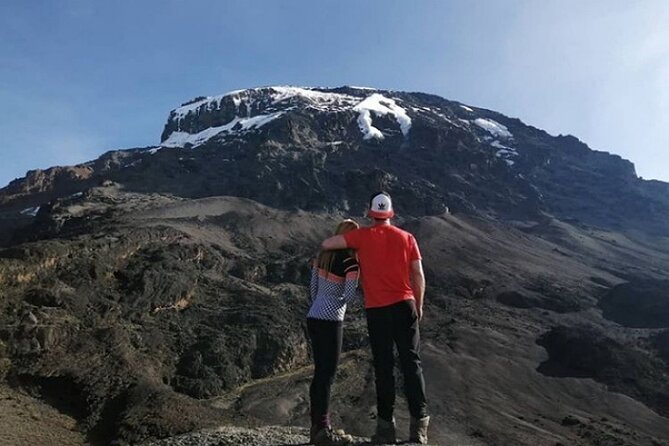
Day 3 is one of the most useful parts of the route. You climb into semi-desert and volcanic rock, reaching Lava Tower, a 300-foot volcanic formation. From there, the trail drops into Barranco Valley.
The day takes about seven hours and may feel tougher than the first two. You gain height at Lava Tower, then finish at roughly the same elevation where you began. That pattern is valuable for adjustment because your body works at a higher altitude before sleeping lower.
This is also the day when some climbers begin to feel altitude symptoms. You might find the rocky ascent tiring, and the descent into Barranco can be hard on your legs after the effort at Lava Tower. Keep your pace slow and steady. At this altitude, a modest pace is not a sign of weakness. It is the sensible way to protect your energy.
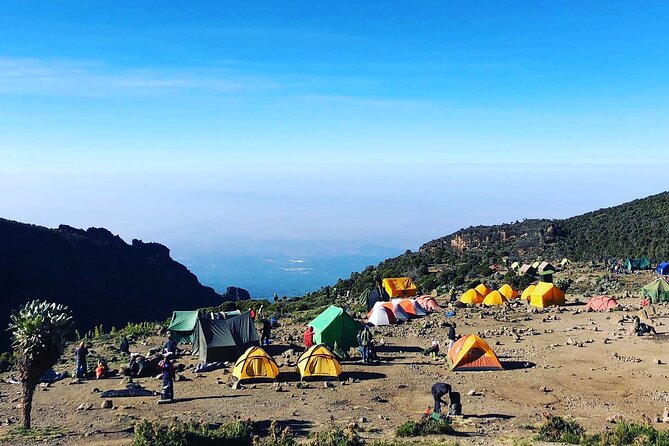
Barranco Camp lies below Barranco Wall in a sheltered valley. The setting is dramatic, with volcanic formations and a large wall rising above camp. It is a good place to rest before the next morning’s climb, though do not mistake the sheltered camp for an easy night. Cold and altitude can still affect sleep.
More seven-day trips in Kilimanjaro:
- Kilimanjaro climb by Lemosho Route (7-day)
★ 5.0 · 651 reviews - 7-Day Machame Kilimanjaro Summit Tour from Arusha
★ 5.0 · 125 reviews - 7 Days Kilimanjaro via Machame route affordable price
★ 5.0 · 110 reviews - Private Kilimanjaro Hike 7 Day Lemosho Route
★ 5.0 · 60 reviews
Day 4: Climbing Barranco Wall to Karanga
Day 4 is shorter, with about four to five hours of hiking and an ascent of roughly 145 meters. That shorter schedule is welcome because the route is still demanding and your body is adjusting.
After breakfast, you climb Barranco Wall. It looks intimidating from below, but the route is described as easier than it appears. You cross a series of hills and valleys, then descend into Karanga Valley before tackling another steeper section to Karanga Camp.
This is a day for careful footwork rather than speed. The trail’s ups and downs can feel more tiring than the elevation numbers suggest. Keep your hands free where possible, follow the guide’s instructions, and give yourself time on uneven ground.
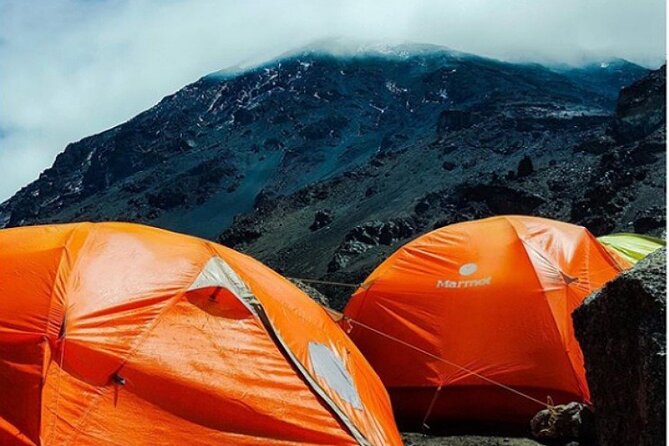
Karanga Camp sits in the alpine desert zone. You have an afternoon to rest before dinner and sleep. Use it well. Organize summit clothing, check your headlamp if you carry one, and keep essential warm layers ready. The next two days demand more from you, especially the midnight start.
Day 5: The narrow ridge to Barafu Camp
You leave Karanga after breakfast and join the junction with the Mweka Trail. From there, the route follows a rocky ridge for one to two hours before reaching Barafu Camp.
The day involves about 605 meters of ascent and three to four hours of hiking. It is shorter than Day 3, but Barafu is an important staging point, not a relaxed hill camp. Tents sit along a narrow, rocky ridge with high winds, and the camp offers views of Kilimanjaro’s summit from different angles.
Take time to learn where everything is before darkness. The ridge can feel exposed, and you will soon need to sleep before the summit attempt. Eat what you can, drink steadily, and keep your summit clothing organized.
The early bedtime may be difficult. You start around midnight, so do not expect a normal night’s sleep. The goal is to rest as much as possible rather than force yourself to sleep perfectly.
Day 6: Stella Point, Uhuru Peak, and the long descent
Summit day begins at about midnight. You climb steeply over scree toward the summit glaciers, usually spending four to five hours gaining height over a relatively short distance.
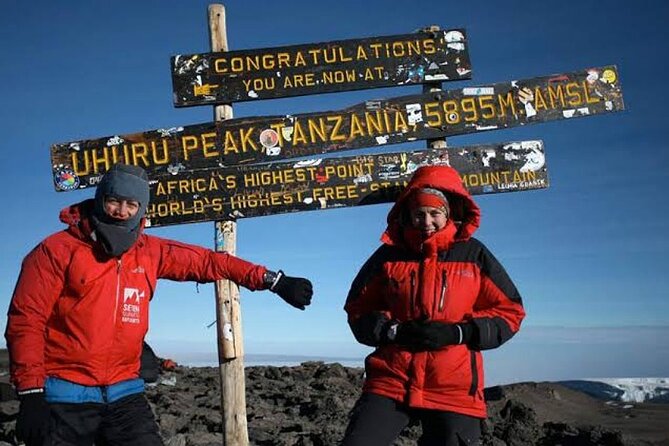
The first major goal is Stella Point on the crater rim at 5,739 meters. The plan is to arrive around sunrise, when the first light reaches the rim. From there, the route continues for about another hour to Uhuru Peak, the summit at 5,895 meters.
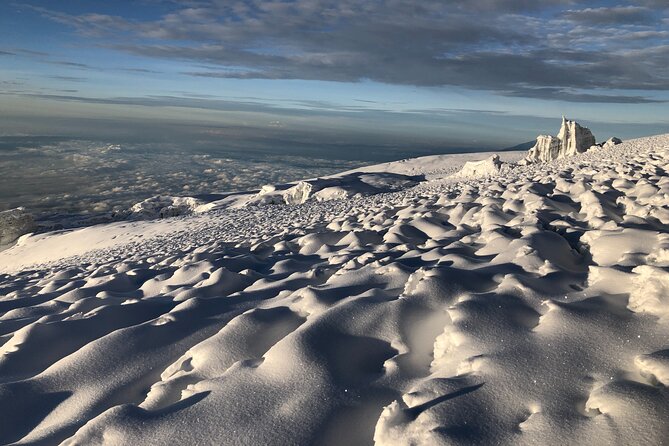
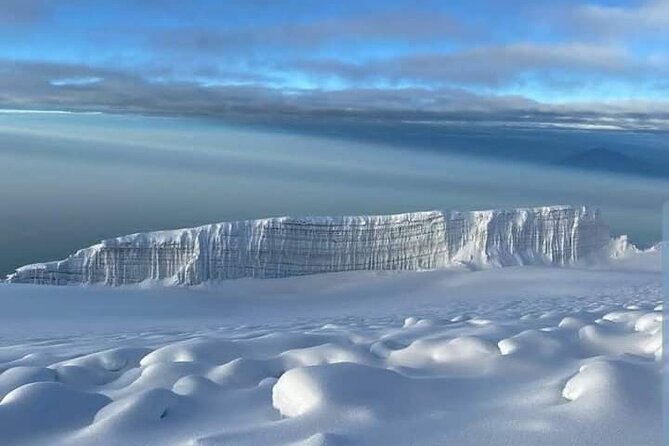
The views from the rim include ice cliffs within the crater and Mawenzi Peak beyond. This is the high point of the trip, both literally and emotionally. It is also the part that requires the most honesty about your limits. Reaching the summit is not guaranteed, and a guide may advise you to turn around if your condition worsens. That is a safety decision, not a failure.
After Uhuru Peak, you return to Stella Point and descend on scree to Barafu Camp for breakfast. The day then continues downhill to Millennium or Mweka Camp, making this a very long day of roughly seven hours as listed. The descent can be hard on tired knees, even though you are losing altitude.
Eat and drink at Barafu if you can. The return to camp is not the end of the day, and tired climbers often underestimate how much work remains after the summit.
Day 7: Forest descent to Mweka Gate
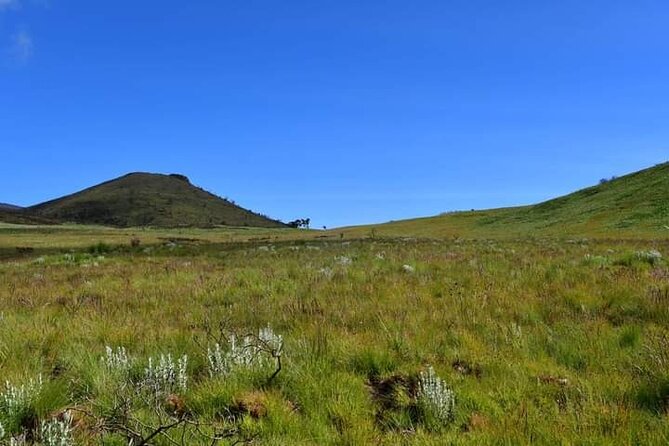
The final morning is the easiest section of the mountain route. After breakfast, you descend through forest toward Mweka Gate, losing about 1,280 meters over three to four hours.
The change back to rainforest can feel striking after the cold, dry upper mountain. Your legs may be tired, but the air becomes warmer and breathing usually feels easier as you lose altitude.
At the gate, climbers who reached Stella Point and Uhuru Peak receive certificates. Then private transport takes you back to your hotel, where a shower, dinner, and a Kilimanjaro beer provide a fitting finish.
The final descent deserves respect. Trekking poles, if you use them, can help on the downhill, but the supplied information does not specify equipment rental. Ask the operator what gear is available and what you must bring before arrival.
Guides, porters, and the food setup
The tour includes a guide, porters, and a cook. That support is one of the strongest reasons to consider this package instead of arranging every piece yourself. You do not need to manage park entry, camp logistics, meals, or the mountain transport on your own.
Several past bookings connected to Williamson Adventures specifically praise the organization and named guides such as Leonard and Tom. William is also described as responsive during planning. These names provide useful context, but they do not guarantee that one of them will lead your departure. Ask who your guide will be and how many porters and support staff are assigned to your group.
Breakfast, lunch, and dinner are included for all seven trekking days. Hotel meals and drinks before and after the climb are not included. Tipping is also separate. Carry enough personal snacks and water-related supplies for your needs, then confirm the exact food and drinking-water arrangements with the operator because the supplied trip details do not spell those out.
Who should choose this climb?
I would consider this trek a good fit if you have moderate physical fitness and want a structured mountain trip rather than an independent hike. The seven-day schedule, included meals, and support crew remove much of the practical burden.
It also suits you if you want varied scenery. The route moves from coffee and rainforest to moorland, the Shira Plateau, Lava Tower, Barranco Wall, alpine desert, glaciers, and back to forest. Few days feel alike.
I would hesitate if you dislike cold nights, basic mountain accommodation, steep scree, or a midnight start. You also need to accept that a group of up to 50 people may not feel intimate. Ask about group size, sleeping arrangements, equipment, guide assignments, and emergency procedures before booking.
The tour offers free cancellation up to 24 hours before the local start time. Changes or cancellations made inside that window are not refunded. That is useful flexibility, but it does not replace travel insurance, which is not included.
Should you book the 7-day Machame Route?
Book it if you want a supported Kilimanjaro climb with a well-paced seven-day plan, included mountain meals, and a route that gives you rainforest, volcanic rock, high camps, and a real summit attempt. The cost is easier to justify because major park, transport, accommodation, rescue, and food charges are bundled together.
Think twice if you want a small private party, a softer holiday, or a guaranteed summit. The midnight climb, cold camps, altitude, and long descent are real tests.
For the right person, this is a practical way to tackle Kilimanjaro without carrying the whole operation on your back. Go slowly, speak up about symptoms, prepare for cold, and confirm the details that matter before you pay.
FAQ
How long does the Kilimanjaro Machame Route experience last?
The experience lasts approximately seven days, with seven days of trekking listed in the itinerary.
Where does pickup take place?
Pickup is offered from your hostel or hotel in Moshi. The first drive to Machame Gate takes about 45 minutes.
Is airport pickup included?
The tour description says pickup is offered from your hotel or airport, while the first-day itinerary specifically describes pickup from a hostel or hotel in Moshi.
What is the highest point reached?
The route reaches Uhuru Peak at 5,895 meters. Stella Point on the crater rim is listed at 5,739 meters.
Are meals included?
Breakfast, lunch, and dinner are included for all seven trekking days. Hotel meals and drinks before and after the climb are not included.
Is accommodation included?
Yes. All mountain accommodation is included. The supplied details do not specify the exact type of accommodation at every camp.
Are park and rescue fees included?
Yes. All fees and taxes, including the rescue fee, are included.
Are tips included in the price?
No. Tips for the guides, porters, and cook are not included.
What fitness level is required?
A moderate physical fitness level is required. The route includes steep sections, long walking days, a midnight summit start, and substantial elevation changes.
Just added around Kilimanjaro
- 6 days Machame route climbing Mt.Kilimanjaro★ 5.0 · 8 reviews
- machame route★ 5.0 · 16 reviews
- Mt Kilimanjaro 6 days Marangu route hike★ 5.0 · 3 reviews
- Private Cycle to Kilimanjaro Bike Park Safari★ 5.0 · 6 reviews
- West Kilimanjaro cycling Adventures★ 4.5 · 8 reviews
- Kilimanjaro Climb • Marangu Route ~ 9 Day★ 5.0 · 4 reviews
- 3 Days Private E-Bike Tour in West Kilimanjaro★ 5.0 · 3 reviews
- Kilimanjaro Climb & Safari – Lemosho Route – 13 Day★ 5.0 · 10 reviews
Machame Route Climbs, compared.
The Best of Machame Route in 6 Days: Your World’s Summit Guide
Read our review →Browse the lists this tour appears in