
Reviewed · LEMOSHO ROUTE CLIMBS
Lemosho Route
Kilimanjaro’s Lemosho Route gives you the mountain in chapters: rainforest first, then open moorland, volcanic rock, high desert, glaciers, and a hard midnight push to Uhuru Peak. The slow rise is the main attraction. It gives your body more time to adjust before the summit.
I like the extra acclimatization built into the route, especially the walk to Lava Tower at 4,640 meters followed by a descent to Barranco Camp. I also like the practical setup: airport pickup, a Moshi hotel night, an equipment check, and a small group capped at 15 people. The catch is simple but important: this is a serious physical challenge, and the published schedule has a confusing eight-day label even though the day-by-day plan runs from arrival through Day 9.
Key points to know before booking
- Lava Tower and Barranco Camp: You climb high during the day, then sleep lower, a useful pattern for acclimatization.
- A midnight summit start: Expect hot tea and biscuits around 11:30 p.m., then a steep climb toward Stella Point and Uhuru Peak.
- A gradual western approach: Lemosho begins at 2,385 meters and builds altitude over several days rather than rushing upward.
- Moshi preparation: You meet your guide, check equipment, and rent missing gear before the mountain begins.
- A mixed crew experience: Past departures have included guides such as Omary, Fadhili, Wency Machiba, and others, but you should confirm your assigned team.
- A $2,310 starting point: The price can be reasonable for a long guided climb, but ask exactly what is included because the formal inclusion list is brief.
Why Lemosho is a smart route for Kilimanjaro
The Lemosho Route approaches Kilimanjaro from the west. Its early stages are quieter and more gradual than a rushed climb, and the scenery changes often enough to keep the long days interesting.
You begin among forest, then reach the Shira Plateau, where grassland and heather replace the trees. Higher up, the mountain becomes rougher and barer. By Barafu Camp, there is almost no vegetation at all.
That variety matters. Kilimanjaro is not a technical climbing mountain on this route, but altitude is the real opponent. You need to keep walking while your body is receiving less oxygen. A route that spreads the ascent across more days gives you more time to settle into that strain.
The eight-day version is generally marketed as a strong choice for acclimatization. Yet the supplied itinerary includes an arrival day, seven mountain days before the summit push, and a final descent day. Count the calendar carefully. You should ask Maua Adventures whether the quoted duration means eight days on the mountain, eight days including arrival, or approximately nine calendar days from airport pickup to hotel return.
More Lemosho Route climbs:
- Kilimanjaro climb by Lemosho Route (7-day)
★ 5.0 · 651 reviews - Kilimanjaro Climbing Lemosho Route 8 Days.
★ 5.0 · 186 reviews - 8-Day Small-group Lemosho Kilimanjaro Summit Trekking
★ 5.0 · 186 reviews
Day 1: Airport pickup and a useful night in Moshi
Your trip begins at Kilimanjaro International Airport, with a transfer to Lindrin Lodge in Moshi. The accommodation is listed with bed and breakfast, giving you a place to rest before the climb.
The most useful part of this day is the briefing and equipment check. Your guide goes through the plan and checks whether you have the needed mountain gear. If something is missing, the itinerary says you can rent it that day.
That small step can save trouble later. A trek is not the time to discover that your warm layers, headlamp, or water system is unsuitable. Ask what rental equipment is available, what condition it is in, and whether the listed $2,310 price includes any gear or only the services described separately.
The stated meeting time is 2:00 a.m. at Kilimanjaro International Airport, which does not obviously match the arrival-day hotel transfer or the Day 2 pickup around 8:00 a.m. Confirm the actual meeting time for your booking. This may be a system error, but you should not leave it unclear.
Day 2: Lemosho Glades to Big Tree Camp
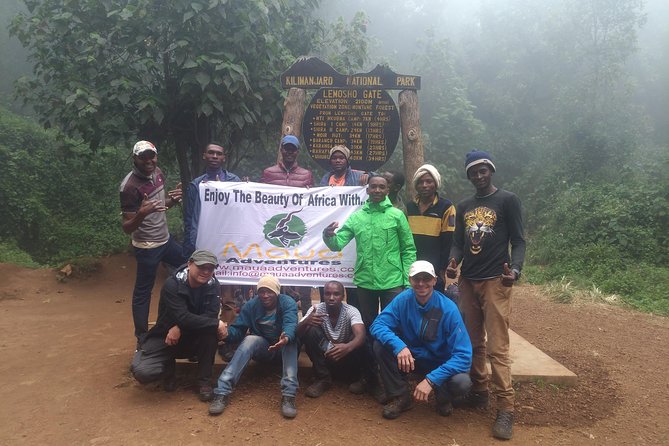
After hotel pickup at about 8:00 a.m., you transfer to the Lemosho gate on Kilimanjaro’s western side. Registration comes first, then you begin walking through the forest.
The day covers about 7 kilometers and takes roughly four hours. Big Tree Camp sits at 2,780 meters, only 395 meters above the trailhead elevation of 2,385 meters.
This is a gentle opening by Kilimanjaro standards. You get a first taste of the trail without being asked to cover a huge distance. Keep your pace slow from the start. The guides’ repeated advice in the supplied feedback centers on support, safety, and steady progress, and this is where that approach begins to matter.
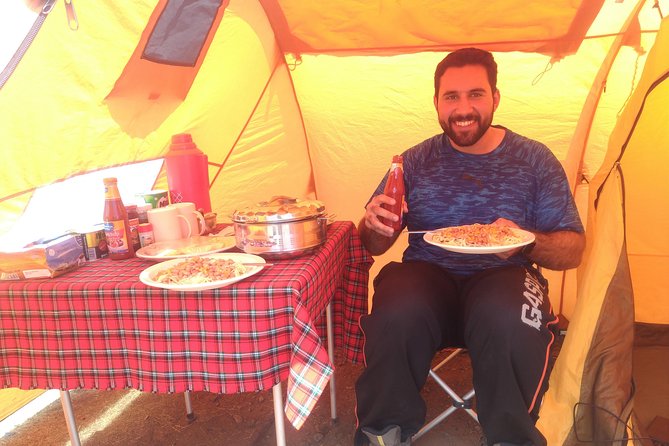
Breakfast, lunch, and dinner are listed for the mountain days. Meals are part of the practical value of a supported trek, since you do not need to carry your full food supply. Still, ask for the exact meal arrangements and dietary options before departure, especially if you have allergies or restrictions.
Day 3: Big Tree Camp to Shira 1
The route leaves much of the forest behind and crosses grassy moorland scattered with volcanic rock. The day covers 8.5 kilometers and takes about seven hours, ending at Shira 1 Camp at 3,500 meters.
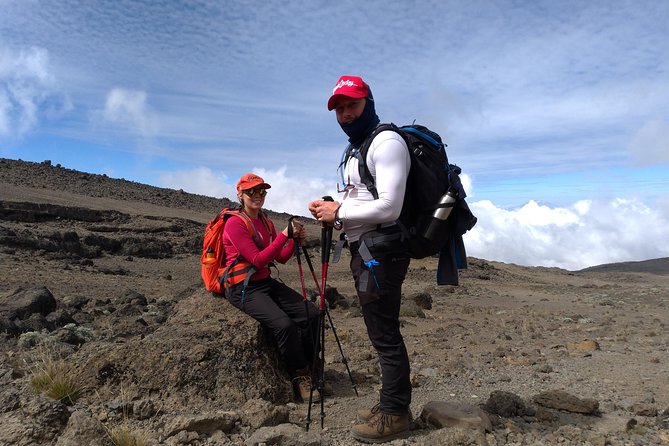
This is the first day when altitude may become more noticeable. You gain roughly 720 meters, and parts of the path are fairly steep. The reward is a wider view of Kibo, Kilimanjaro’s main summit, sometimes appearing above the clouds.
You should not measure success by speed here. A slow, even rhythm is more useful than charging uphill and needing frequent long stops. The route is not a race, and the guide’s job is to help you maintain a sustainable pace.
A few more Kilimanjaro trips worth comparing
- Kilimanjaro climb, Machame Route (7-day)
★ 5.0 · 262 reviews - Climbing Kilimanjaro – Machame Route
★ 5.0 · 170 reviews - Climbing Kilimanjaro through 7 days Machame Route
★ 5.0 · 151 reviews - Kilimanjaro climb, Lemosho Route (8-day)
★ 5.0 · 148 reviews
Day 4: Shira 1 to Shira 2
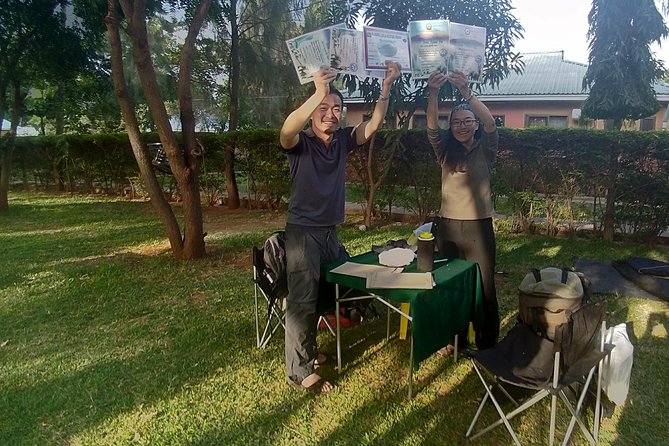
The walk from Shira 1 to Shira 2 covers about 8 kilometers in five hours. You remain on the high Shira Plateau, with broad views toward the mountain and the Northern Ice fields.
The camp sits at 3,900 meters. The altitude gain is moderate, but the setting is more exposed and open than the forest below. You can expect a steady climb across moorland, volcanic ground, and wide high-altitude views.
An afternoon acclimatization walk is included, followed by a return to camp for dinner and sleep. That extra walk is valuable because it lets you gain some height without spending the night at the higher point. It also gives your guide a chance to see how you are responding.
This is a good day to check your routine. Drink regularly, eat even if your appetite is low, and keep warm after sunset. The itinerary specifically emphasizes gradual acclimatization, and your habits at this stage can affect the summit night later.
Day 5: Shira 2, Lava Tower, and Barranco
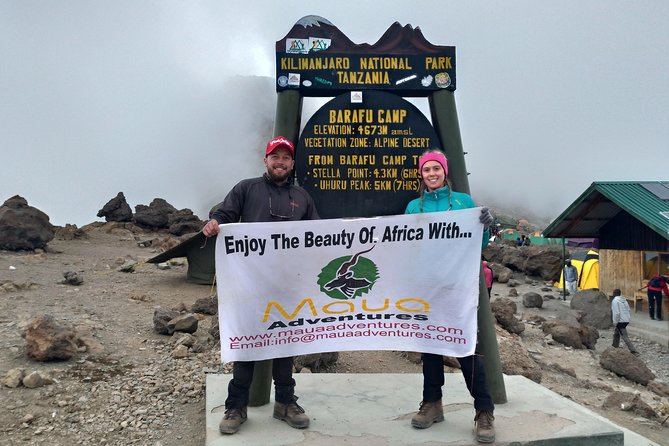
This is one of the most useful and memorable days on the route. You climb from Shira 2 at 3,900 meters to Lava Tower at 4,640 meters, then descend to Barranco Camp at 3,960 meters.
The distance is about 10 kilometers, with roughly seven hours of walking. The route crosses upland desert and lava ridges beneath the Western Breach. At Lava Tower, you reach the day’s high point and stop for lunch.
Then comes the key lesson of the day: climb high, sleep lower. You may feel the altitude at Lava Tower, but the descent to Barranco gives your body a better chance to recover before the night.
Barranco Camp sits beneath tall cliffs, with views across the plains below. The setting is dramatic, but do not mistake the descent for an easy finish. After several hours at altitude, the downhill section can be tiring on your knees and feet.
Day 6: Barranco Wall to Karanga Camp
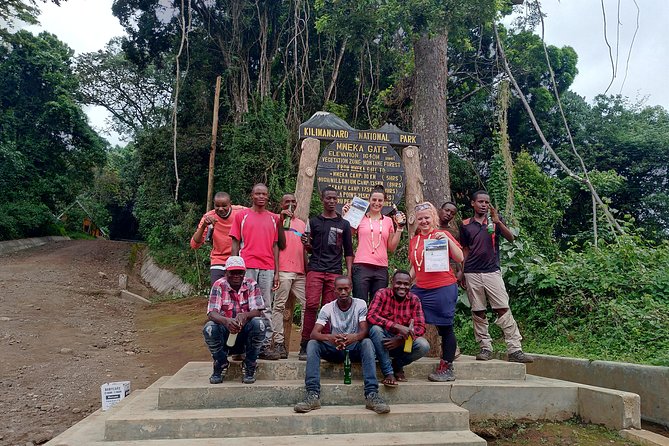
The morning begins by descending into the Great Barranco, then climbing the Barranco Wall. The wall is not described as technical climbing, but it is a long, steep scramble over rock and can be tiring.
You pass beneath the Heim and Kersten glaciers before heading toward the Karanga Valley. The day covers only about 5.5 kilometers, yet it takes approximately five hours because the terrain is steep and uneven.
Karanga Camp sits at 3,963 meters, almost the same elevation as Barranco. The small altitude gain hides the effort involved. This is a day when distance figures can mislead you. The path may be short on paper, but rock, altitude, and repeated climbs make it demanding.
A further acclimatization walk to around 4,200 meters may be offered in the afternoon for those feeling strong. It is optional in practical terms, so listen to your body. The point is to help your adjustment, not to collect extra kilometers.
Day 7: Karanga to Barafu Camp
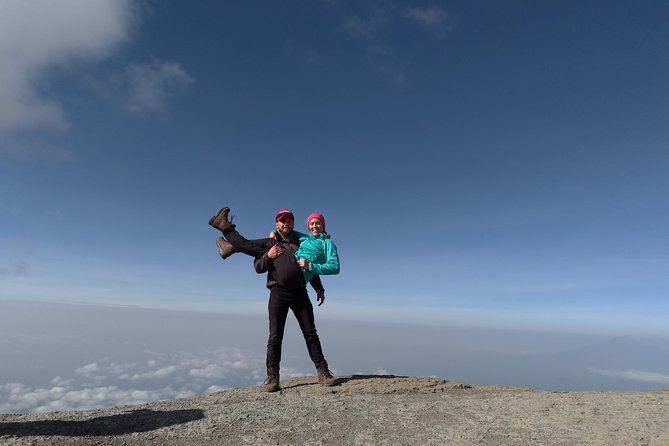
The final pre-summit climb covers only 3 kilometers, but it rises to Barafu Camp at about 4,640 meters. The path crosses steep, empty scree slopes with little or no vegetation.
The itinerary allows roughly three hours for this short section. At this altitude, a modest distance can feel like a full morning. The right plan is to arrive, eat, drink, organize your summit clothing, and rest.
Dinner is early, and the summit departure is scheduled between 11:00 p.m. and midnight. You may not sleep much. That is normal on a summit night, but you should still lie down, close your eyes, and conserve energy.
Prepare everything before dinner. Put your warm layers, headlamp, snacks, gloves, and insulated water reserves where you can reach them. A late search for gear in a crowded tent is a poor way to begin the hardest part of the climb.
Day 8: Barafu to Uhuru Peak, then Mweka Camp
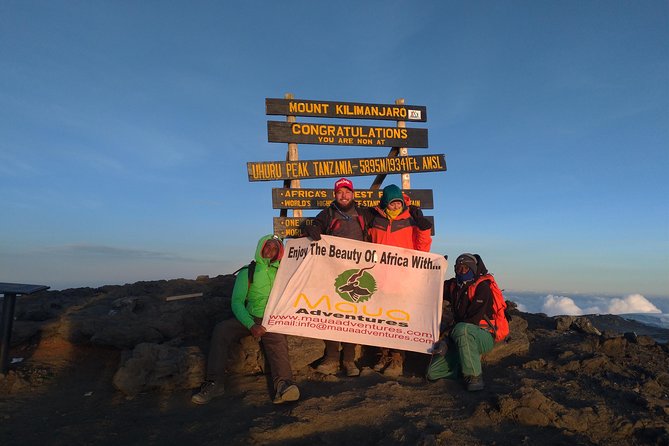
Summit day starts around 11:30 p.m. with hot tea and biscuits. At midnight, you begin the slow climb toward the crater rim.
The route to the rim takes about six to eight hours. The stated summit elevation is 5,895 meters at Uhuru Peak, while Stella Point sits at 5,739 meters. The climb is steep, cold, and slow. The best instruction in the itinerary is also the simplest: keep moving one step at a time.
You should expect this to be the hardest section of the trip. The effort comes from the combination of darkness, altitude, cold, limited sleep, and the long ascent. Reaching Stella Point is a major achievement, but the plan continues to Uhuru Peak for those who are able to proceed.
After the summit, you descend to Mweka Camp at about 3,100 meters. This is a very long day, listed at around 10 hours, and it can feel harder than the uphill section because your legs are tired. Keep drinking and follow your guide’s instructions during the descent.
Day 9: Mweka Camp to the gate
The final walk descends through rainforest to Mweka Gate at 1,640 meters. The distance is about 9 kilometers, with a walking time of three to five hours.
Compared with summit day, this is a pleasant finish, but tired legs and muddy or uneven trail can still slow you down. At the gate, successful climbers who reached Stella Point or Uhuru Peak receive certificates. The itinerary lists a green certificate for Stella Point and a gold certificate for Uhuru Peak.
Tipping the trekking crew is customary before your return to the Moshi hotel. This is worth planning for in advance. Your guide, cook, porters, and other crew members carry out much of the work that makes a supported climb possible, yet the supplied price does not state whether tips are included. Ask for current tipping guidance before you arrive.
Guides, porters, and the human side of the climb
The strongest praise attached to this experience concerns the crew. Names appearing in the supplied feedback include Omary, Fadhili, Wency Machiba, Kurwa-shef, Ramadhani, Regan, Subaru, Frank, and Said. Different departures may have different staff, so you should not assume a particular guide will lead your climb.
What you can reasonably expect is a guide-led expedition with porters and a cook. Feedback describes crews that paid close attention to safety, comfort, food, and encouragement. One eight-day Lemosho party had two guides, six porters, and a cook, although crew size can vary by group.
The group limit is 15 people. That is large enough to bring different walking speeds and fitness levels into the same trip, but still more manageable than a very large commercial group. Ask how the guides handle different paces and what happens if someone cannot continue toward the summit.
Is $2,310 good value?
At $2,310 per person, this is not a cheap holiday, but a Kilimanjaro climb involves permits, staff, food, transfers, accommodation, logistics, and mountain support. The price can be fair for a long Lemosho program if those costs are properly covered.
The formal inclusion section only lists parking fees, while the itinerary itself says breakfast, lunch, dinner, hotel accommodation, airport pickup, guide support, equipment checks, and transfers are part of the plan. That mismatch needs clarification before payment.
Ask these questions in writing:
- Is airport pickup and return transport included?
- Is Lindrin Lodge included, and for how many nights?
- Are park fees, camping fees, meals, tents, sleeping equipment, and porter services included?
- Is rental gear extra?
- What is the recommended tip for the crew?
- Does the $2,310 price change for a private group or a group of fewer than 15?
The trip offers free cancellation up to 24 hours before the start time. If poor weather cancels the experience, you should receive another date or a full refund. That is useful protection, but it does not remove the need for travel insurance suited to a high-altitude trek.
Who should book this Kilimanjaro climb?
I would choose this route if you want a scenic, gradual approach and can commit to several long days at altitude. It suits people with moderate physical fitness who are prepared to walk slowly, sleep in basic mountain camps, and handle a midnight summit start.
I would not choose it as a casual sightseeing add-on. The trek is tougher than many first-time climbers expect, and reaching the top is not guaranteed simply because the itinerary is well organized.
The best preparation is honest. Train for long uphill walks, carry a daypack comfortably, and practice using your footwear and layers before Tanzania. At altitude, comfort and patience matter as much as raw strength.
Should you book the Lemosho Route with Maua Adventures?
Book it if Maua Adventures confirms the schedule, inclusions, crew arrangements, and equipment details in writing. The route itself is excellent for a careful Kilimanjaro ascent, and the gradual altitude profile, Lava Tower acclimatization day, and strong emphasis on guide support make it attractive.
Before paying, clear up the eight-day versus nine-day calendar issue and the unusually short formal inclusion list. If those details are settled, the $2,310 price may offer solid value for a supported climb with airport pickup, Moshi preparation, meals, and a full route to Uhuru Peak.
FAQ
How long does the Lemosho Route experience take?
The tour summary describes the experience as approximately eight days, but the detailed schedule runs from an arrival day through Day 9, including the final descent from Mweka Camp. Confirm the exact calendar length with Maua Adventures before booking.
Where does the experience begin?
The stated meeting point is Kilimanjaro International Airport on Kilimanjaro Airport Road in Tanzania. Airport pickup is offered, but the published start time of 2:00 a.m. should be confirmed because the itinerary also describes an arrival transfer and an 8:00 a.m. pickup on the first mountain day.
What is the highest point reached?
The route aims for Uhuru Peak at 5,895 meters. Stella Point is listed at 5,739 meters, and Lava Tower is the highest point reached before summit night at 4,640 meters.
Are meals included?
Breakfast, lunch, and dinner are listed for the mountain days. The formal inclusion details are brief, so confirm the full meal plan and any dietary arrangements directly with Maua Adventures.
What level of fitness is required?
The activity requires a moderate physical fitness level. You should also be ready for steep, tiring sections, a summit departure around midnight, and a long summit day of about 10 hours.
Can I cancel for a full refund?
You can cancel up to 24 hours before the experience start time for a full refund. Cancellations or changes made less than 24 hours before the start are not accepted for a refund. If poor weather causes cancellation, you are offered another date or a full refund.
Just added around Kilimanjaro
- 6 days Machame route climbing Mt.Kilimanjaro★ 5.0 · 8 reviews
- machame route★ 5.0 · 16 reviews
- Mt Kilimanjaro 6 days Marangu route hike★ 5.0 · 3 reviews
- Private Cycle to Kilimanjaro Bike Park Safari★ 5.0 · 6 reviews
- West Kilimanjaro cycling Adventures★ 4.5 · 8 reviews
- Kilimanjaro Climb • Marangu Route ~ 9 Day★ 5.0 · 4 reviews
- 3 Days Private E-Bike Tour in West Kilimanjaro★ 5.0 · 3 reviews
- Kilimanjaro Climb • Machame Route ~ 10 Day★ 5.0 · 6 reviews