
Reviewed · GREAT MIGRATION SAFARIS
7 Days Wildebeest Migration – Ndutu Calving Season
The main event here is Ndutu during calving season, when roughly 500,000 wildebeest calves may be born across the short-grass plains. New life brings quick drama: calves can run within minutes, but lions, cheetahs, and hyenas gather for the meals that follow. I like the two full days based around Ndutu, plus the chance to see elephants, giraffes, buffalo, and birds among acacias and soda lakes.
I also like the route’s variety. Manyara’s groundwater forest changes the scenery early, while Ngorongoro Crater gives you a compact wildlife day before the open Serengeti. The main consideration is the pace: this is a road-based safari with long transfers, early starts, picnic lunches, and a final day that runs back toward Arusha and the airport.
Key points to know before booking
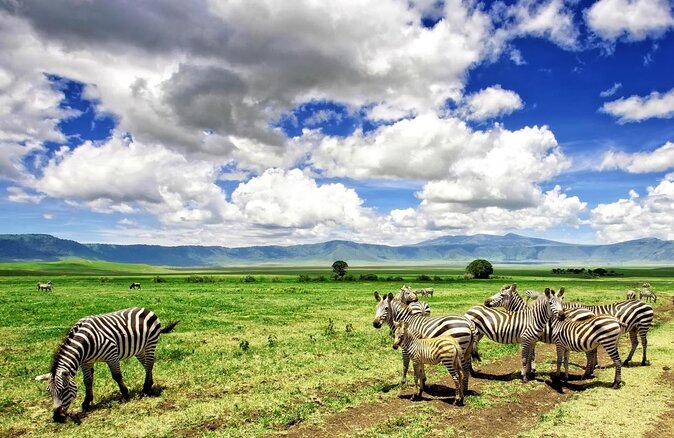
- Newborn wildebeest are the star: February is usually the key calving period, often lasting about three weeks.
- Two nights in Ndutu: You get more than a quick game drive through the calving area.
- Four major safari zones: Manyara, Ngorongoro Crater, Ndutu, and Serengeti each bring a different setting.
- Private group format: Only your own party takes part, which gives the trip a more personal feel.
- Meals and water are included: Breakfast, lunch, dinner, and bottled mineral water are covered during the seven-day program.
- Airport pickup and return: The trip begins and ends at Kilimanjaro International Airport, with a first night in Arusha.
Why Ndutu calving season is worth planning around
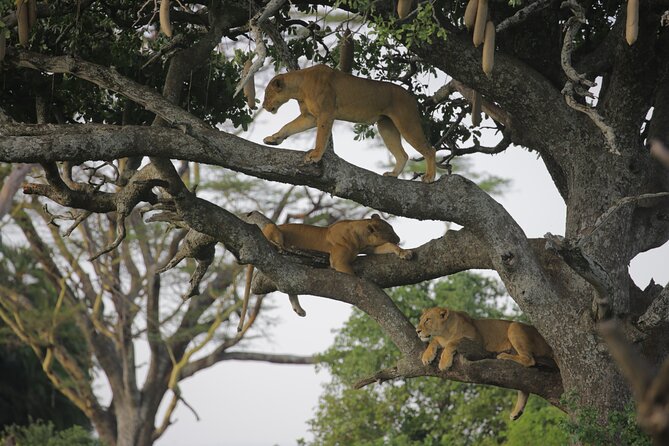
Most safaris focus on the big animals. This one gives you a seasonal event as its centerpiece. Around Ndutu, wildebeest gather on short grass, give birth in large numbers, and quickly move with the herd. The timing is not just a detail. It shapes the entire safari.
Calves are born with a useful head start. They can run within minutes and become strong enough to keep up with the herd after about three days. That makes a newborn sighting especially striking, but it also explains why the area draws predators.
Lions, cheetahs, and hyenas follow the herds. You might see a hunt, a chase, or the tense pause before one begins. Wildlife viewing is never guaranteed, so you should not book this expecting a constant parade of kills. The strength of the season is the concentration of animals and the chance to watch the daily struggle between birth, movement, and survival.
Ndutu sits within the Ngorongoro Conservation Area and belongs to the wider Serengeti ecosystem. The setting includes swamps, woodlands, soda lakes, and short-grass plains. That mix helps keep the two Ndutu days from feeling repetitive.
More wildebeest migration trips in Kilimanjaro:
- Great Migration Safari In Tanzania
★ 5.0 · 71 reviews - 8 Days Great Wildebeest Migration – Mara River Crossing
★ 5.0 · 28 reviews - 6 Days Mara River Crossing – The Great Migration
★ 5.0 · 5 reviews
Day 1: A practical start in Arusha
Your safari begins with pickup at Kilimanjaro International Airport. A Gilmag Safaris representative meets you, handles the initial briefing, and transfers you about 60 kilometres to Mount Meru Hotel in Arusha.
This first night is useful rather than decorative. Arusha is a major base for northern Tanzania’s parks, and the stop gives you a place to settle after your flight before the long drives begin. The city has a comfortable climate and sits close to several of the country’s main safari areas.
The schedule allows up to 12 hours on this first day, though your actual time will depend on your flight and airport formalities. You should arrive with enough energy for a briefing, a good meal, and an early night.
Mary is named repeatedly in the planning experiences connected with Gilmag Safaris, and Gilbert, Nickson, Nicholas, and Jimmy are among the guides associated with the company. Your specific guide is not guaranteed in advance, so ask who will lead your safari and how to contact the company before departure.
Day 2: Forest, escarpment, and elephants at Manyara
After breakfast, you leave Arusha with a picnic lunch and drive about 120 kilometres to Lake Manyara National Park. The park lies below the Rift Valley escarpment, and its groundwater forest offers a clear change from the broad grasslands you will see later.
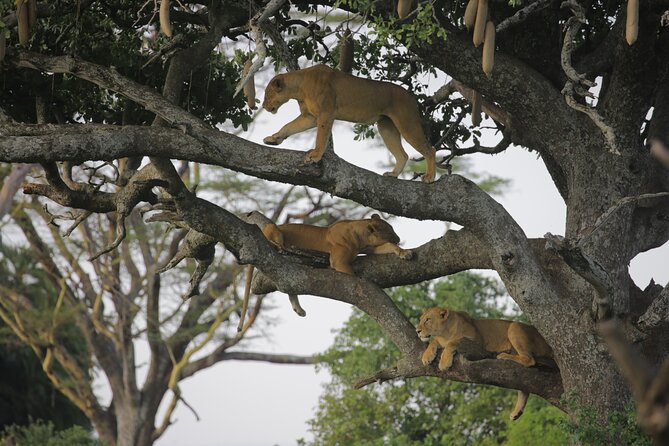
Manyara is known for tree-climbing lions, though you should treat that as a possibility rather than a promise. The big cats are not always easy to find. Elephants are a more dependable part of the park’s appeal, and the forest gives you a chance to see wildlife in a tighter, greener setting.
The full day of game viewing can make this a demanding start. You then drive to Karatu for dinner and an overnight stay at Ngorongoro Coffee Lodge. The day is listed at about 15 hours, so this is not a gentle introduction for anyone who dislikes long road days.
Still, Manyara earns its place in the program. It gives you forest, escarpment views, and a different animal-watching rhythm before the open country around Ndutu and Serengeti. I would treat the stop as a useful contrast, not simply a box to tick.
Day 3: A full day inside Ngorongoro Crater
The next morning takes you toward Ngorongoro Conservation Area and down more than 600 metres into the crater. The descent is one of the trip’s most memorable changes in scale. From the rim, the crater feels immense. Once below, the enclosed setting helps bring many kinds of wildlife into one long game drive.
Ngorongoro has year-round water and grazing, so you might see wildebeest, zebra, buffalo, eland, warthogs, hippos, and large African elephants. The itinerary also includes Lake Magadi, a broad, shallow alkaline lake in the crater’s southwest corner.
The crater is valuable for a simple reason: you can see a lot in one day. It is not the same as tracking animals across the open Serengeti, but the concentration of habitats gives you strong odds of varied sightings.
After the crater tour, you climb back to the rim and stay at Ngorongoro Serena Safari Lodge. The day again runs to about 15 hours, and the long descent, game drive, ascent, and transfer require stamina. Pack a small day bag so you do not need to sort through your main luggage during the drive.
More seven-day trips in Kilimanjaro:
- Kilimanjaro climb by Lemosho Route (7-day)
★ 5.0 · 651 reviews - Kilimanjaro climb, Machame Route (7-day)
★ 5.0 · 262 reviews - Climbing Kilimanjaro through 7 days Machame Route
★ 5.0 · 151 reviews - 7-Day Machame Kilimanjaro Summit Tour from Arusha
★ 5.0 · 125 reviews
Days 4 and 5: Two chances to find the herds at Ndutu
After breakfast, you head toward Ndutu and arrive around lunchtime at Sense of Wilderness Migration Camp. After lunch, your first game drive begins in the Ndutu area.
The timing matters. Wildebeest are usually concentrated here around December and March, with the main calving period normally falling in February. Since the precise movement of the herds depends on conditions, two days in the area are much more useful than a short stop between parks.
Day 5 gives you a full day of game viewing. You can look for herds of wildebeest and zebra across the short grass, while also watching the edges of swamps, woodlands, soda lakes, and open plains.
Ndutu is also home to elephants, birds, and resident animals outside the migrant herds. That is important because the wildebeest do not control every moment of the day. You may have a quiet spell around the lake or woodland before a herd appears.
The two nights at Sense of Wilderness Migration Camp keep you close to the main focus of the safari. Camp details beyond the name are not specified, so ask about room style, bathroom arrangements, electricity, and charging before you travel if those details matter to you.
For photography, this is likely the strongest section of the route. Newborn calves, dust, open grass, acacia trees, and predators can produce powerful images. Bring spare batteries and memory cards, but keep your expectations realistic. Wildlife decides the timing, not the itinerary.
Day 6: The wide-open Serengeti
After breakfast, you leave Ndutu with a picnic lunch and continue toward Serengeti National Park, enjoying game viewing along the way. Serengeti is Tanzania’s largest and most famous park, covering about 14,763 square kilometres and bordering Kenya’s Maasai Mara.
The park’s appeal is its sense of space. Grass plains stretch toward acacia trees, and large stone kopjes rise from the open ground. Those rocky outcrops create small wildlife zones of their own, while the broad plains show why the Serengeti supports such large herds.
This is a long transfer day, but it is not simply a drive from one hotel to another. Animals may appear along the route, and the changing views help you understand how Ndutu fits into the larger Serengeti ecosystem.
You spend the night at Tanzania Pure Tented Camp in Central Serengeti. The central location makes sense for the route, though it also means you should expect another early start and more road time rather than a relaxed resort-style stay.
Day 7: Game viewing on the way back to Arusha
The last day begins with breakfast and a packed lunch. You drive back toward Arusha through the Ngorongoro Conservation Area, with game viewing along the way.
The itinerary allows about 12 hours, and the final airport transfer is scheduled for the evening. That timing may work well with a later flight, but you should confirm your departure time carefully. If your flight is earlier than expected, the final day could feel rushed.
The return journey gives you one more chance to see wildlife outside a formal game-drive block. It also provides a last look at the northern Tanzanian route before drop-off at Kilimanjaro International Airport.
What the $4,004 price covers
At $4,004 per person, this is a serious purchase. Its value depends on how much you want handled for you and how important the Ndutu season is to your plans.
The price includes all fees and taxes, airport pickup and return, the listed accommodation, park access, breakfast for seven days, lunch for seven days, and dinner for six days. It also includes an unlimited supply of bottled mineral water and Flying Doctor emergency evacuation cover.
Those inclusions reduce the number of expenses you need to manage during the trip. Park fees and long transfers can add up quickly on a private safari, so you should compare complete packages rather than comparing only the headline price.
Tips for guides are not included. Set aside money for that separately. The package also does not list international flights, personal purchases, or any other expenses outside the included meals, water, taxes, fees, lodging, and emergency evacuation service.
Group discounts are offered, and the tour is private. For couples, families, or a small group of friends, that can make the cost easier to justify because you are not sharing the vehicle with unrelated people. Ask how the discount is calculated for your party size.
How the private format changes the trip
A private tour means only your own group participates. That matters most during long driving days and wildlife sightings. You can discuss the pace with your guide rather than adjusting to a large mixed group.
The exact vehicle details are not specified here, but past company experiences describe clean, spacious open safari vehicles and snacks. Treat those details as something to confirm rather than a fixed promise for this particular departure.
The company has been praised for quick planning communication, flexible payment arrangements, detailed preparation information, and careful trip organization. Mary is frequently involved in planning, while guides such as Gilbert, Nickson, Nicholas, and Jimmy are associated with the safari operation.
That communication can be especially useful for a calving-season trip. Ask about the expected Ndutu dates, your guide, the type of camp accommodation, airport timing, and what happens if your flight schedule changes.
The physical rhythm and who will enjoy it
Most people can participate, but this is not a low-effort holiday. You will have early breakfasts, long drives, picnic lunches, uneven roads, and two days that may run for about 15 hours.
You should choose this trip if you care more about wildlife and seasonal timing than about spending long afternoons at a hotel. It suits photographers, first-time safari visitors, couples, and small private groups who want several major northern Tanzania parks in one week.
It is less suitable if you want slow travel, frequent free time, or a fixed guarantee of seeing a particular animal. The route covers a lot of ground, and the best moments may happen after a quiet stretch of road.
The schedule also gives you only one night in Manyara, one night on the crater rim, two nights in Ndutu, and one night in central Serengeti. That is a good spread for variety, but it does not allow extended stays in each park.
Practical booking advice before you commit
The tour requires good weather. If poor weather causes cancellation, you are offered another date or a full refund.
For ordinary cancellations, a full refund requires at least six full days’ notice before the local start time. Cancellation two to six full days ahead receives a 50 percent refund, while cancellation less than two full days before departure receives no refund. Changes follow the same time limits.
Confirmation is normally issued when you book. If you book within 12 hours of departure, confirmation is provided as soon as possible, subject to availability.
The trip starts and ends at Kilimanjaro International Airport. Since the last day includes a long drive from Serengeti toward Arusha, confirm that your outbound flight leaves late enough to allow for road delays.
Should you book this Ndutu safari?
I would book it if calving season is your main reason for visiting Tanzania and you want a private, fully arranged route through Manyara, Ngorongoro, Ndutu, and Serengeti. The two Ndutu days are the key advantage, giving you a better chance to see newborn wildebeest and the predators that follow them.
I would hesitate if you dislike long road days or want a leisurely lodge holiday. At $4,004, the package offers strong convenience and a broad route, but you are paying for access to a brief seasonal event as well as transport, park fees, meals, lodging, water, and emergency cover.
Ask about the guide assigned to your group, the camp setup, vehicle details, and the exact flight timing before paying. If those answers suit you, this is a focused way to see northern Tanzania when the plains are full of new life.
FAQ
Where does the safari begin and end?
It begins at Kilimanjaro International Airport and ends back at the same meeting point, with drop-off for your onward flight.
How long does the experience last?
The safari lasts approximately seven days.
Is this a private tour?
Yes. Only your own group participates in the activity.
Which parks and areas are included?
The route includes Lake Manyara National Park, Ngorongoro Crater, the Ndutu area, and Serengeti National Park.
When is the wildebeest calving season?
The main calving period normally occurs around February and lasts about three weeks. Wildebeest are generally found around Ndutu from December through March.
Are meals included?
Yes. Breakfast is included for seven days, lunch for seven days, and dinner for six days. Bottled mineral water is also included.
What happens if bad weather cancels the safari?
If poor weather causes cancellation, you are offered a different date or a full refund.
Just added around Kilimanjaro
- 6 days Machame route climbing Mt.Kilimanjaro★ 5.0 · 8 reviews
- machame route★ 5.0 · 16 reviews
- Mt Kilimanjaro 6 days Marangu route hike★ 5.0 · 3 reviews
- West Kilimanjaro cycling Adventures★ 4.5 · 8 reviews
- Private Cycle to Kilimanjaro Bike Park Safari★ 5.0 · 6 reviews
- Kilimanjaro Climb • Marangu Route ~ 9 Day★ 5.0 · 4 reviews
- 3 Days Private E-Bike Tour in West Kilimanjaro★ 5.0 · 3 reviews
- Kilimanjaro Climb • Machame Route ~ 10 Day★ 5.0 · 6 reviews
Great Migration Safaris, compared.
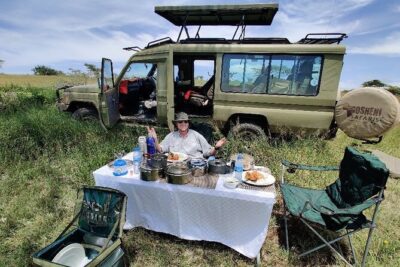
8 Days Great Wildebeest Calving Migration Safari from Arusha
Read our review →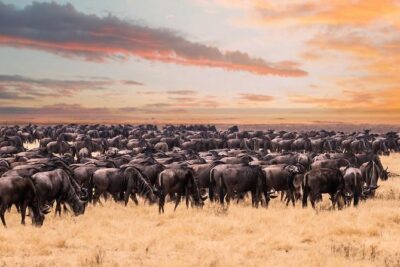
8 Day Spectacular Migration Serengeti mid -Range Tanzania Safari
Read our review →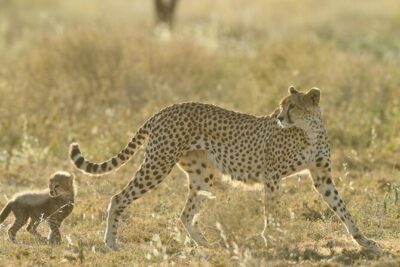
Private 6-Day Great Migration Ndutu Serengeti Safari Tour
Read our review →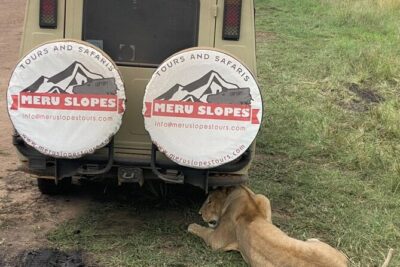
6 Days Tanzania Budget Camping Safari with Migration
Read our review →10-Day Wildebeest Migration Calving Safari -All Inclusive
Read our review →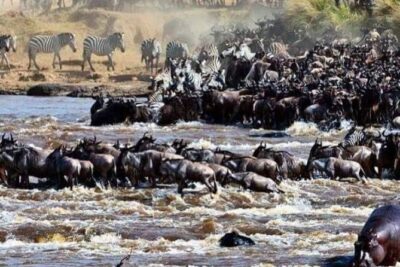
8 Days Great Wildebeest Migration – Mara River Crossing
Read our review →
Tanzania Safari – The Great Migration in the North of the Serengeti and Lake Natron
Read our review →
5-Days Private Serengeti Wildebeest Migration Lodge Safaris
Read our review →Browse the lists this tour appears in